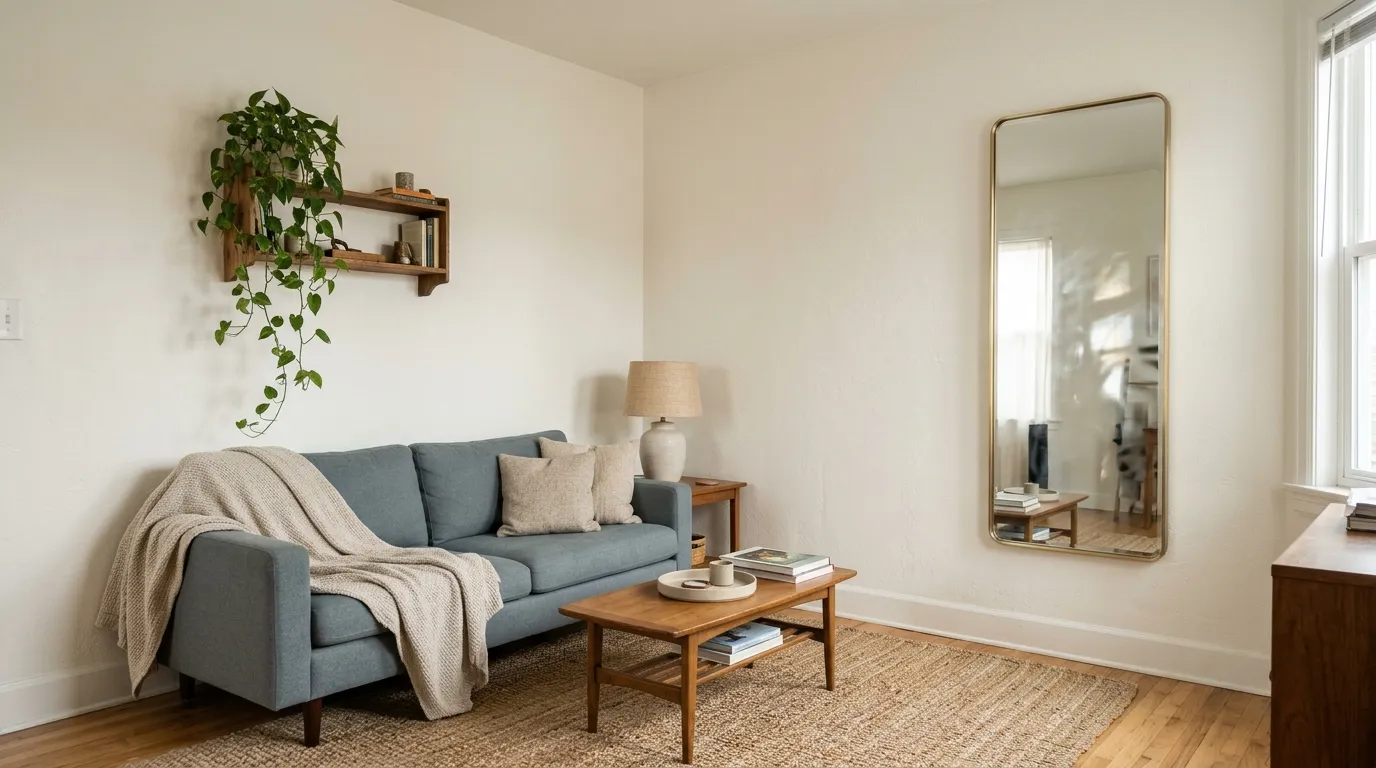

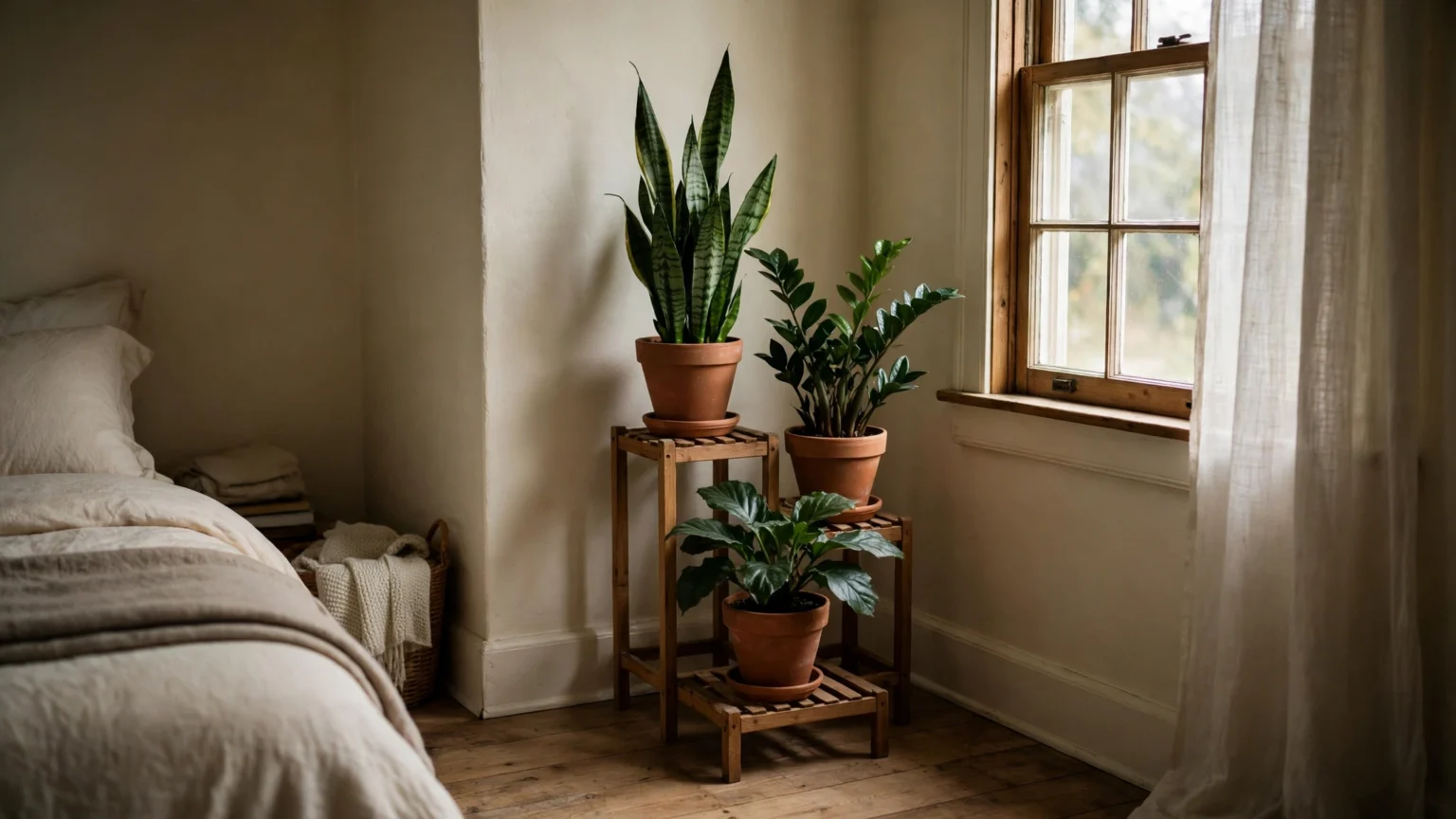
The corner of the bedroom is 2 by 2 feet, the window is 3 feet wide, and the room is 10 by 11 feet. Every tag in the plant aisle says “tolerates low light”, and it is easy to read that as a promise that the plant will grow there. It does not mean that. These houseplants that survive low light are the ones that keep growing in a dim room, and this article separates them from the ones that only stay alive for a while.
The difference matters because light decides almost everything else: how often the soil dries, how much food the plant can use, and whether new leaves come in small and pale or full size. A plant that only tolerates dim light will still drink slowly and still need feeding less often, so the care in this article follows the light, not the tag.
Pick by light first, then by budget. Measure your spot, match it to the plants in the first two themes, and keep the $100–$150 starter set — 3 plants in 4–6 inch pots — for the ones that truly grow where you put them.
Quick Tips Before You Start
What Low Light Actually Means
This theme answers the question everything else depends on: how dim is your spot, really? Your eyes adjust to a dim room in minutes, so a corner that looks fine to you can still be too dark for most plants. Measure it, and the plant list gets simple.
1. Low Light Is 25 to 100 Foot-Candles
Low light has a number, and it is lower than most people guess. The University of Florida extension service puts low light at 25 to 100 foot-candles, measured at midday, with medium light at 100 to 500 and high light at 500 to 1,000. Direct sun is over 1,000 foot-candles, and a plant that needs direct sun wants 4 or more hours of it. Your dim corner is almost certainly in that 25 to 100 band, and that is the band this article uses. Some guides stretch low light up to 250 foot-candles, so if a tag or a shop page uses the wider band, the plants it calls low-light may still want more light than your corner gives.
You do not need a meter to find your band. The hand shadow test takes 10 seconds and costs nothing: on a clear day at midday, lay a white sheet of paper where the plant will sit and hold your hand flat about 12 inches above it. A sharp, dark shadow with crisp edges means direct sun. A soft shadow with fuzzy edges means bright indirect light. A faint, blurry shadow means medium light. A shadow you can barely see, or no shadow at all, means low light, and that is the honest result for most corners more than a few feet from a window.
Test twice, because the same spot changes with the season. A corner that reads as medium light in June can read as low light in January, when the sun sits lower and the days are shorter. Measure at leaf height, not at eye height, and measure again on a cloudy day if you want the worst case. The number that matters is the light where the leaves will sit, in the darkest part of the year, not the light in the brightest hour of the brightest week.
2. Three Feet From the Window, Half the Light Is Gone
Light does not fade gently as you walk away from a window. It falls off fast, and that is why two plants in the same room can live in two different worlds. At the glass, a plant gets 100 percent of the window light. At 3 feet, it gets about 50 percent. At 6 feet, about 20 percent. At 10 feet, about 5 percent. Those are approximate proportions, but the shape of the drop is the point: the first few feet cost the most light, so a plant that sulks in your 2-by-2-foot corner may only need to move 2 to 3 feet closer to the window to start growing again.
Window direction changes the starting point. A north window gives steady indirect light and no direct sun, so true low-light plants go closest to its glass. An east window gives gentle morning sun for 1 to 3 hours, then bright indirect light, which suits most foliage. A south or west window is the brightest of the four, and a low-light plant there belongs 2 to 5 feet back, or behind a sheer curtain. The Illinois Extension distance table makes the same point in foot-candles: low light of about 75 foot-candles sits a few feet from a north window, or 3 to 10 feet from an east or west window.
So before you buy anything, walk the room with the shadow test. The sill and the first 2 feet are the brightest zone. The 3-to-5-foot band is where light drops noticeably. The 6-to-10-foot band is low light, and only the toughest plants belong there. Past 10 feet, most plants are surviving on borrowed time. In a 10-by-11-foot bedroom with a 3-foot window, your dim corner is in that low band, and the plants in the next theme are the ones that can actually live in it.
Use the scale below as a quick map of your own room. Find where your corner sits — the sill, the 3-foot band, the 6-foot band, or past 10 feet — and match the plant to that band, not to the room as a whole.
The Plants That Truly Grow There
This theme names the short list. Only five plants genuinely keep growing in true low light, and two pairs cover most of what a small rental needs: one pair that stores its own water, and one pair that keeps making new leaves in the shade.
3. The ZZ Plant and the Snake Plant Store Their Own Water
The ZZ plant and the snake plant survive a dim corner for the same reason: they carry their own water supply. The ZZ plant stores water in thick underground rhizomes, small potato-like swellings under the soil, and the snake plant stores it in thick, sword-shaped leaves. That storage is what lets them sit for weeks without a drink, and it is also what makes overwatering, not dimness, their main killer. In a 2-by-2-foot corner, that is exactly the trade you want: a plant that waits patiently instead of one that sulks the moment the soil dries.
Both still grow in low light, slowly. A ZZ plant pushes new stems every few months even in a dim room, and a snake plant stays upright for years in very low light. Water them only when the soil is completely dry all the way through, which in a dim room means about every 2 to 4 weeks. A pot with drainage holes is not optional for either one: water until it runs out, wait about 30 minutes, and empty the saucer, because standing water rots the very roots that store their supply.
They are also the two cheapest ways into the dim corner. A snake plant in a 4-inch pot usually costs $8 to $20 at a big-box home store, and a 6-inch pot runs $15 to $40. A ZZ plant in a 4-inch pot usually costs $22 to $34 from an online nursery, and a 6-inch pot runs $28 to $40. A 6-inch snake plant at about $23 and a 4-inch ZZ at about $28 leave room in the $100–$150 starter set for a third plant and plain pots. Buy the common green ZZ, not a dark-leafed cultivar: the rare-looking ones cost more and want the same light.
Both plants are toxic to cats and dogs if chewed, so place them where a pet cannot reach them. The snake plant carries saponins, and the ZZ plant carries calcium oxalate crystals, the same irritant found in pothos. Neither belongs on the floor beside a pet bed. If a pet chews a leaf and drools or vomits, call a vet or the ASPCA Animal Poison Control line at (888) 426-4435. Check that a plant is safe for pets before buying, and keep these two up high or behind a closed door if a pet shares the room.
4. The Cast Iron Plant and the Parlor Palm Keep Growing
If the ZZ and the snake plant survive by waiting, the cast iron plant and the parlor palm survive by working slowly in the shade. The cast iron plant handles down to about 50 foot-candles indefinitely, which makes it one of the most shade-tolerant houseplants there is, and the parlor palm is the only palm that genuinely tolerates low light. The others that shops sell for dim rooms — areca, majesty, and kentia palms — all want bright indirect light, and they thin out and brown in a dark corner. These two do not. They keep making new leaves, slowly, in the same light where a fiddle-leaf fig would drop its leaves within weeks.
Slow is the honest word, and it changes what to buy. A cast iron plant grows to 2 to 3 feet tall, so buy it at the size you want rather than hoping a small one fills a corner this year. A 6-inch pot usually costs $39 to $60, the most expensive plant in this article. A parlor palm grows to 2 to 4 feet tall and stays compact enough for a nightstand or a plant stand; a 4-inch pot starts at about $15, and a 6-inch pot runs $38 to $40.
Both want the same simple care. Water when the top 2 to 3 inches of soil feel dry for the cast iron plant, and when the top inch feels dry for the parlor palm, which in a dim room works out to about every 2 weeks. Direct sun bleaches and scorches the cast iron plant, so keep it out of the sunbeam entirely. Both are non-toxic to cats and dogs, so they are the safe pair for the dim corner in a home with a pet. A cast iron plant plus a parlor palm plus a spider plant near the window is the pet-safe version of the starter set, and it still fits the $100–$150 budget.
The numbers below are the short version of this pair: the lowest light the cast iron plant handles, and the heights both plants reach when mature.
The Ones That Only Survive — Barely
This theme is the correction. Three plants in it are sold as low-light plants, and all three will stay alive in a dim room. Staying alive is not the same as growing, and this theme shows you how to tell the difference before the plant tells you itself.
5. Pothos Grows in Low Light — and Tells You So
Pothos is the fastest-growing plant in this article, and it is also the most honest about bad light. A dark-green pothos, the plain Jade type, genuinely grows in low light, slower than it would near a window but steadily, and it is the cheapest trailer you can buy: a 4-inch pot usually costs $12 to $22. The variegated types — Golden and Marble Queen — are a different story. In low light they lose their variegation and revert to plain green, because the plant makes more chlorophyll to catch the little light there is. If you bought the plant for its pattern, low light takes the pattern away.
The plant measures the light for you in the gaps between its leaves. Near a window, a pothos makes a new leaf every 5 to 7 centimeters. In low light, the gap stretches to 20 to 30 centimeters, with long bare stems between small leaves. That stretching has a name, legginess, and it does not reverse: the stretched stem never compacts again, and the small pale leaves never grow to full size. The fix is to move the plant 2 to 3 feet closer to the window or add a grow light, then prune the stretched stems just above a leaf node so new growth branches out full again. Recovery only ever shows in new growth.
Water a pothos when the top 1 to 2 inches of soil feel dry, which in a dim room is about every 1 to 2 weeks. Like the snake plant, it is toxic to cats and dogs if chewed: its leaves carry insoluble calcium oxalate crystals that irritate the mouth, so hang it high or keep it out of reach of a chewing pet. Check that a plant is safe for pets before buying, and treat pothos as a trailer for a shelf near the window, not a floor plant in the dim corner. In the corner it survives; 2 to 3 feet closer to the glass, it grows.
6. Spider Plants, Calatheas, and Peperomias Need a Brighter Spot
The spider plant, the calathea, and the peperomia are the three plants most often mis-sold for a dark corner, and all three fail the same test: they survive dim light, but they do not look good in it. A spider plant in true low light grows slower, makes fewer plantlets, and turns pale. A calathea keeps its pattern only with medium light and humidity above 50 percent; in a dim, dry room its pattern fades and its edges crisp. A peperomia stays compact only in medium to bright indirect light; in a dim room it stretches and thins. None of them dies quickly, which is why the mistake lasts so long.
The fix is placement, not patience. All three belong 2 to 3 feet from the window, or under a grow light, not in the 2-by-2-foot dim corner. That distance is the difference between surviving and growing, and it is the same 2-to-3-foot move that rescues a struggling pothos. A spider plant in a 4-inch pot usually costs $7 to $17, a calathea $15 to $29, and a peperomia $12 to $22, so the three together fit easily inside the $100–$150 starter set — but only if you give them the brighter spot they need.
Three Mistakes That Starve a Tolerant Plant
The first mistake is reading “tolerates low light” as “grows in low light.” Tolerates means stays alive, and a plant that only stays alive is slowly spending its reserves. The second mistake is watering on a bright-room schedule: a spider plant that wants water every 1 to 2 weeks near a window still wants the finger test first, and a calathea that wants evenly moist soil still rots if the pot never dries. The third mistake is skipping the move: the plant has been pale for two months, and nobody has tried the 2-to-3-foot shift toward the window that costs nothing. Fix the spot first, then judge the plant.
All three are non-toxic to cats and dogs, which is one real advantage: a spider plant is the classic pet-safe trailer, and cats often chew its arching leaves without harm. That does not make it a dim-corner plant. It makes it a pet-safe plant for the bright end of the room, 2 to 3 feet from the glass, where it can make the plantlets that earn it its name.
The side-by-side below sorts the eight plants from this article into the two groups that matter: the ones that grow in the dim corner, and the ones that only survive there.
Keeping Them Alive in the Dark Corner
This theme is the care routine, and it follows one rule: the darker the room, the less the plant drinks and eats. Light drives everything, so the watering can and the fertilizer bottle both follow the light meter, not the calendar on the tag.
7. Water Like the Room Is Dark, Not Like the Tag Says
Overwatering is the number one killer of houseplants in low light, and it kills quietly. Less light means the plant photosynthesizes less, its leaf pores open less, and it loses less water — so the soil stays wet far longer than it would near a window. A plant in a dim corner watered on a bright-window schedule is watered for a demand it no longer has. The extra water sits in the root zone, pushes the air out, and rots the roots. The leaves turn yellow from the bottom up, soft and limp, and the plant looks thirsty — so people water it again, and the rot spreads. Check the soil before you water, every time.
The check is the same for the whole article: push a finger 2 inches into the soil every 2 weeks. If the soil feels dry at that depth, water deeply until it runs from the drainage holes, wait about 30 minutes, and empty the saucer. If it still feels cool and damp, wait. In a dim room that usually means watering every 2 to 3 weeks, against every 5 to 7 days for the same plant in a bright window. Snake plants and ZZ plants go longer still, every 2 to 4 weeks, and in winter every plant in the room needs 30 to 50 percent less water than in summer. The pot matters as much as the schedule: no drainage hole means the water has nowhere to go, and a layer of pebbles at the bottom does not fix that. Use a pot with holes, a free-draining mix with perlite or bark, and never let the plant sit in standing water.
A pot that stays wet for weeks is telling you about the light, not just the water. Move the plant 2 to 3 feet closer to the window and the soil starts drying on a normal schedule again, because the plant finally has the light to use the water you give it.
8. A Grow Light and Half-Strength Food Close the Gap
When the corner is truly too dark, a grow light is the honest fix, and it is a renter-friendly one. A full-spectrum white LED bulb of 9 to 15 watts screws into a lamp you already own, and one bulb covers one low-light plant. Hang it or clip it 12 to 24 inches above the leaves and run it 12 to 14 hours a day if the plant also gets some daylight, or 16 to 18 hours if it gets none. A cheap outlet timer, about $10, keeps the hours consistent, and consistency matters more than brightness. The plant also needs 6 to 8 hours of complete darkness every night, so never run the light around the clock. If the leaves bleach or crisp, the bulb is too close; if the stems stretch and the new leaves come in small, it is too far or too weak.
Feeding follows the same rule as watering: follow the light. A plant growing slowly in dim light uses far less food than the label assumes, because labels are written for faster-growing plants outdoors. Mix a balanced liquid fertilizer at half strength, and feed fast growers like pothos every 2 to 4 weeks in spring and summer only. Slow growers like the snake plant and the ZZ plant need food only 2 to 3 times in the whole growing season. Stop feeding entirely from October through February, when growth slows and unused salts build up and burn the roots. Never feed a dry, stressed, or newly repotted plant to fix it — check the light and the water first, and feed only when you see new growth. With the light fixed, the water checked every 2 weeks, and food at half strength in the growing season, the $100–$150 starter set in your 10-by-11-foot bedroom stops being a gamble and starts being a routine: 3 plants in 4–6 inch pots, in the right spots, checked on the same day every 2 weeks.
Frequently Asked Questions
What counts as low light for a houseplant?
Low light is 25 to 100 foot-candles at midday, according to the University of Florida extension service. Medium light is 100 to 500 foot-candles, and high light is 500 to 1,000. If the hand shadow test shows barely any shadow on white paper at noon, your spot is in the low band.
Can a snake plant really live in a dark corner?
Yes, for years, as long as the corner has some daylight from a window in the room. A snake plant stores water in its thick leaves and grows slowly in dim light. Its main killer is overwatering, so water only when the soil is completely dry, about every 2 to 4 weeks.
Why did my variegated pothos turn plain green?
The plant makes more chlorophyll to catch the little light there is, and the white or yellow pattern fades. The leaves will not turn variegated again in the same spot. Move it 2 to 3 feet closer to the window or under a grow light, and new leaves can come in patterned again.
How often should I water plants in low light?
Check every 2 weeks with a finger pushed 2 inches into the soil, and water only when it feels dry at that depth. In a dim room that usually means watering every 2 to 3 weeks, against every 5 to 7 days near a bright window. Give 30 to 50 percent less water in winter.
Which low-light plants are safe for cats and dogs?
Spider plants, parlor palms, cast iron plants, calatheas, and peperomias are listed as non-toxic by the ASPCA. Snake plants and pothos are toxic if chewed, and ZZ plants should be treated as toxic too. Check that a plant is safe for pets before buying, and keep toxic plants out of reach.
What Houseplants That Survive Low Light Actually Need
The answer is smaller than the plant aisle makes it look. Five plants truly grow in low light — the ZZ plant, the snake plant, the cast iron plant, the parlor palm, and the dark-green pothos — and the rest only survive there, slowly getting paler. Light decides the rest: measure the spot with the shadow test, put the true growers in the dim corner, and give the tolerant ones a spot 2 to 3 feet from the window or a 9-to-15-watt bulb above their leaves. Water by the finger test every 2 weeks, feed at half strength only while the plant is growing, and keep the $100–$150 starter set to 3 plants in 4–6 inch pots that fit your 10-by-11-foot bedroom. Once the plants are in place, these small apartment decorating ideas show how to finish the rest of that 10-by-11-foot bedroom around them.