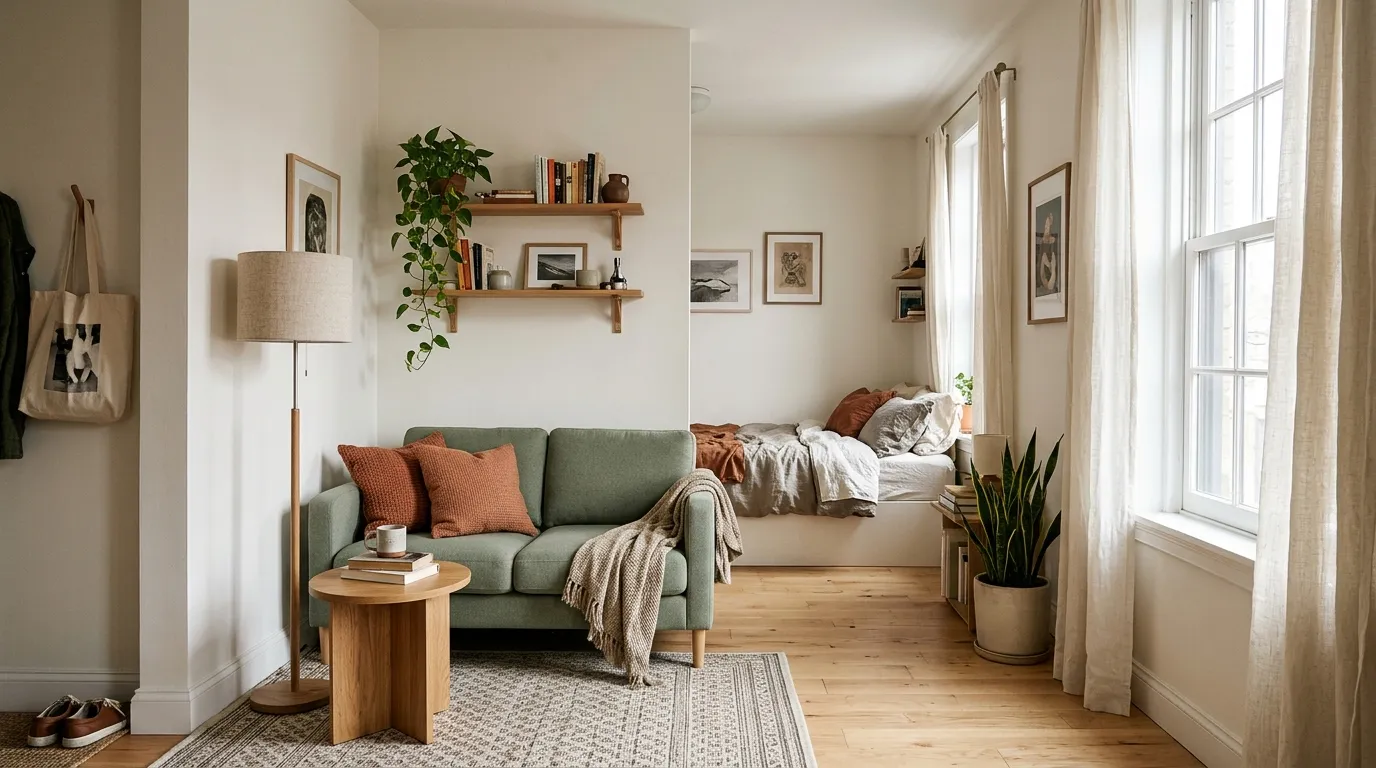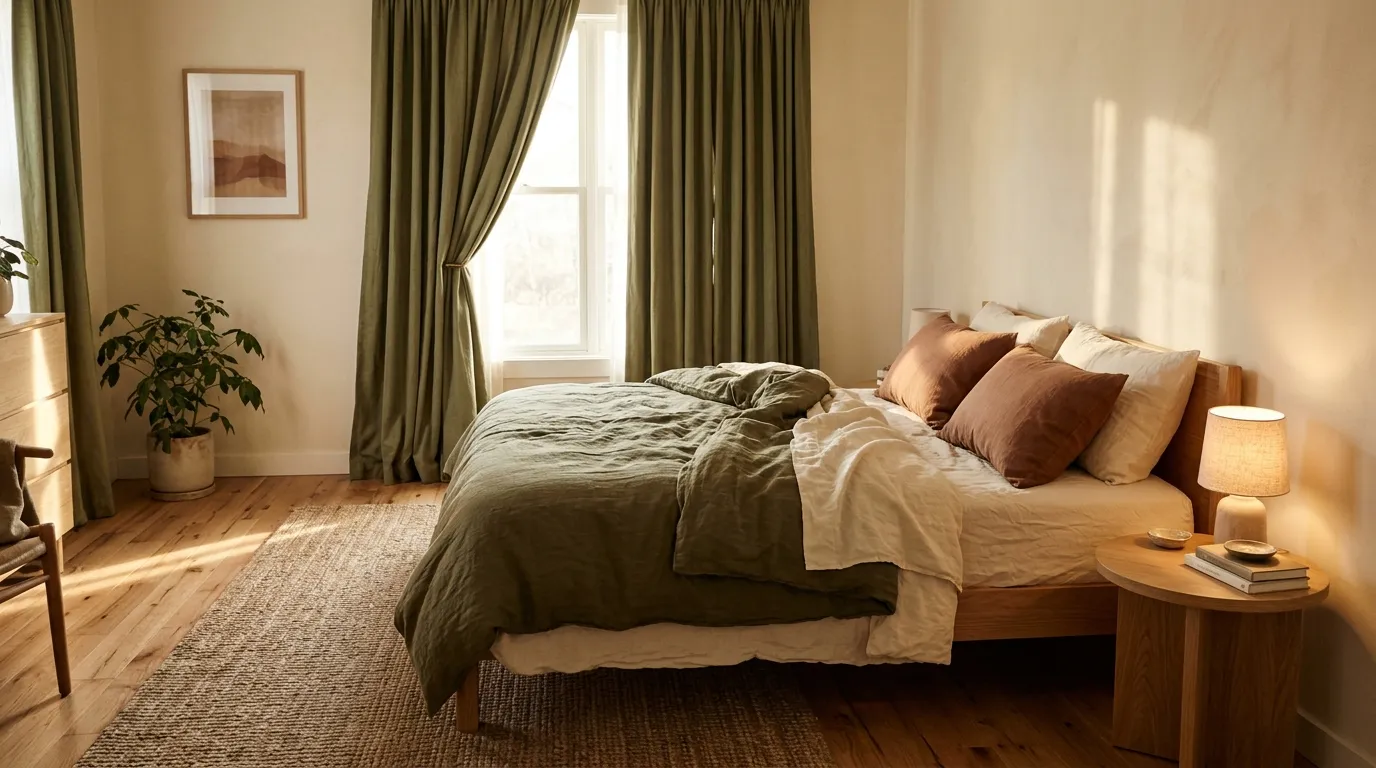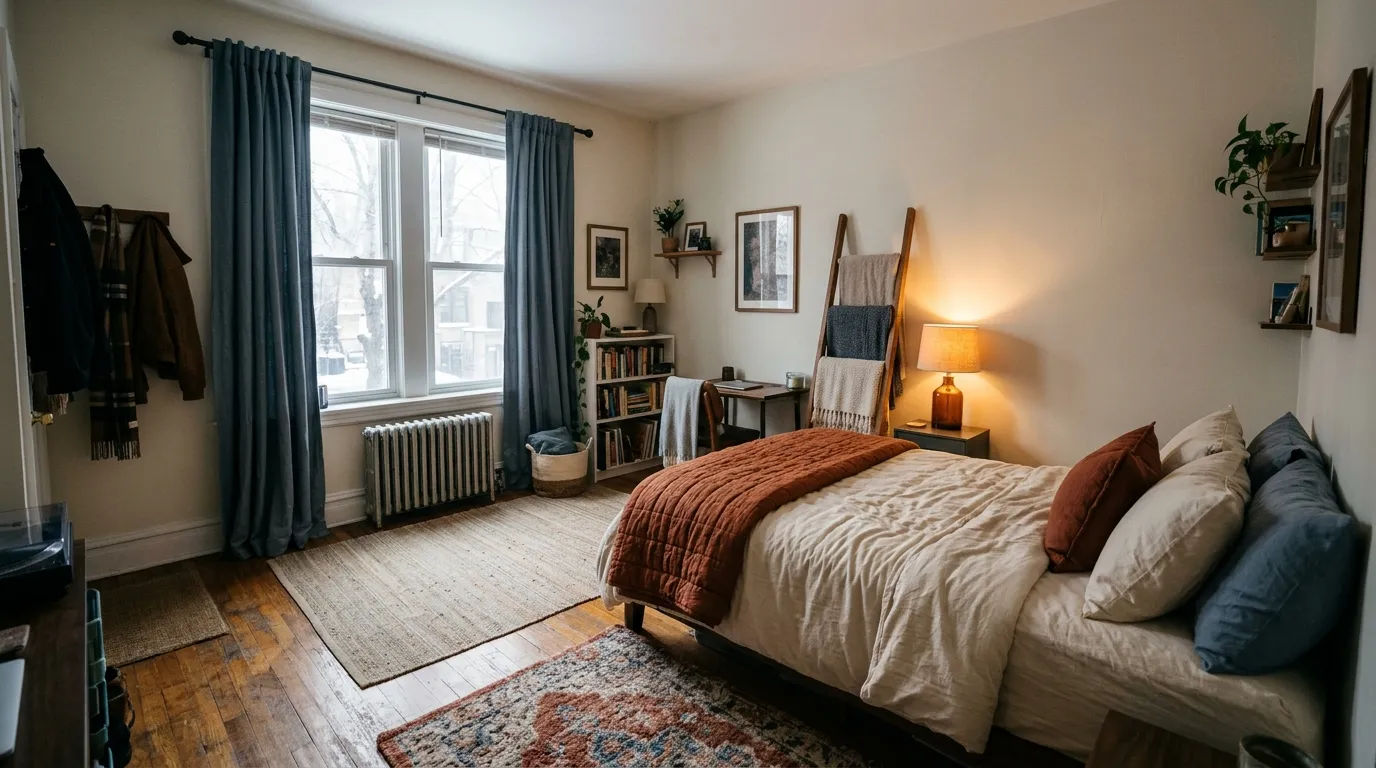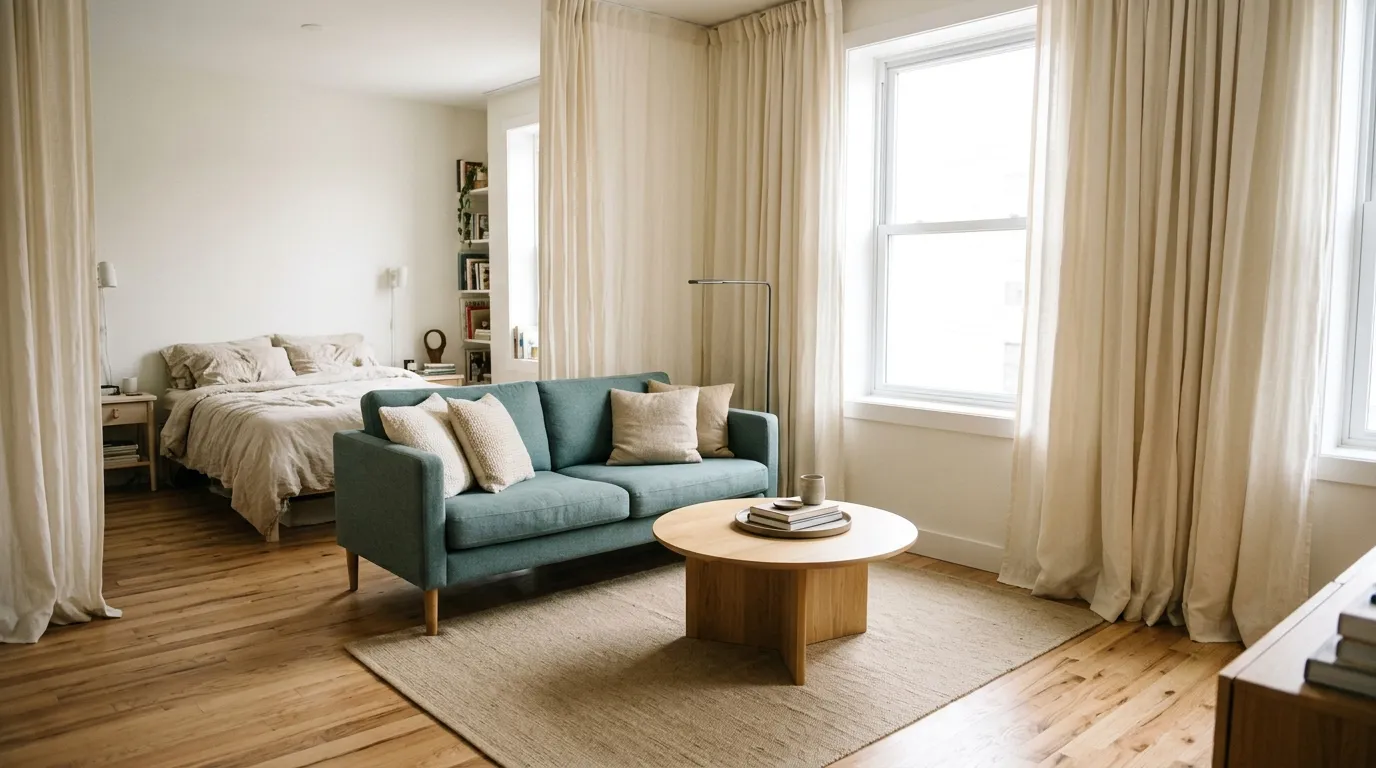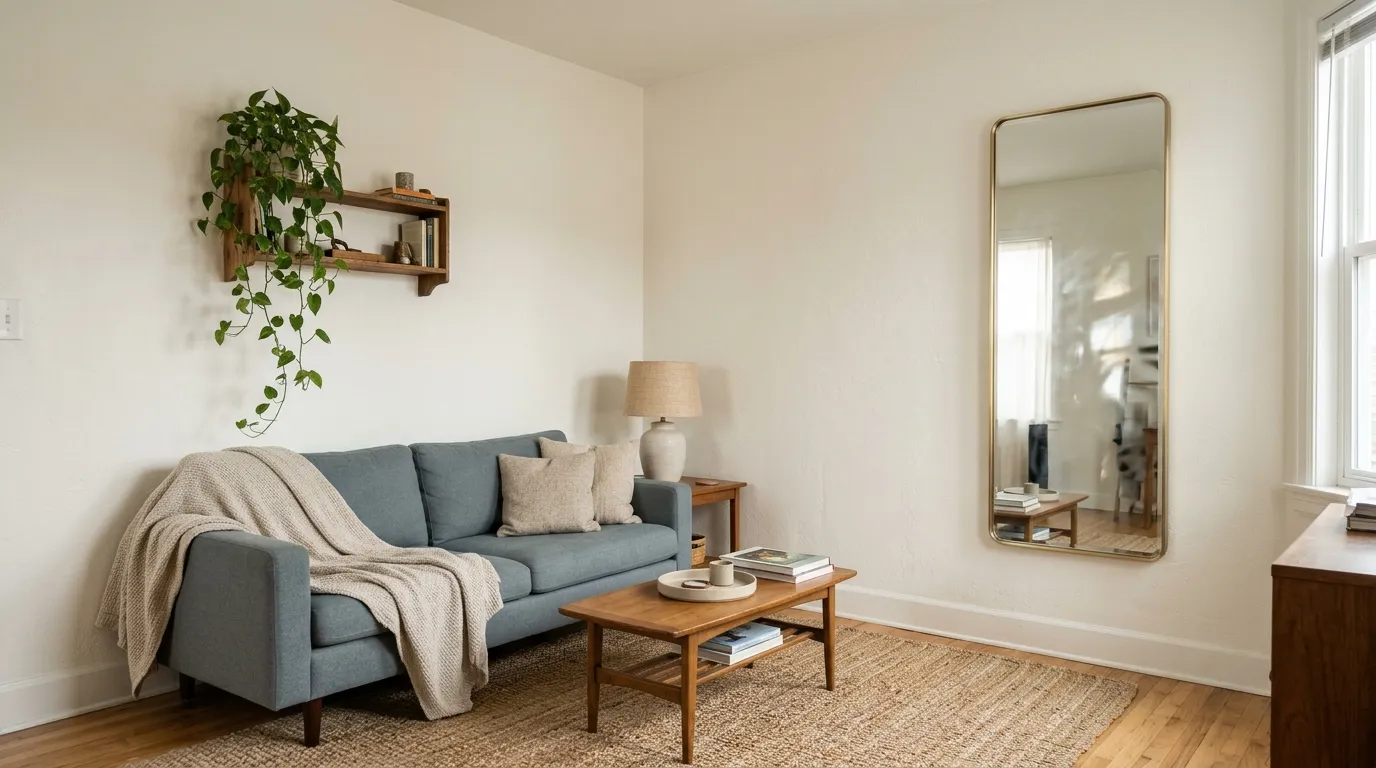

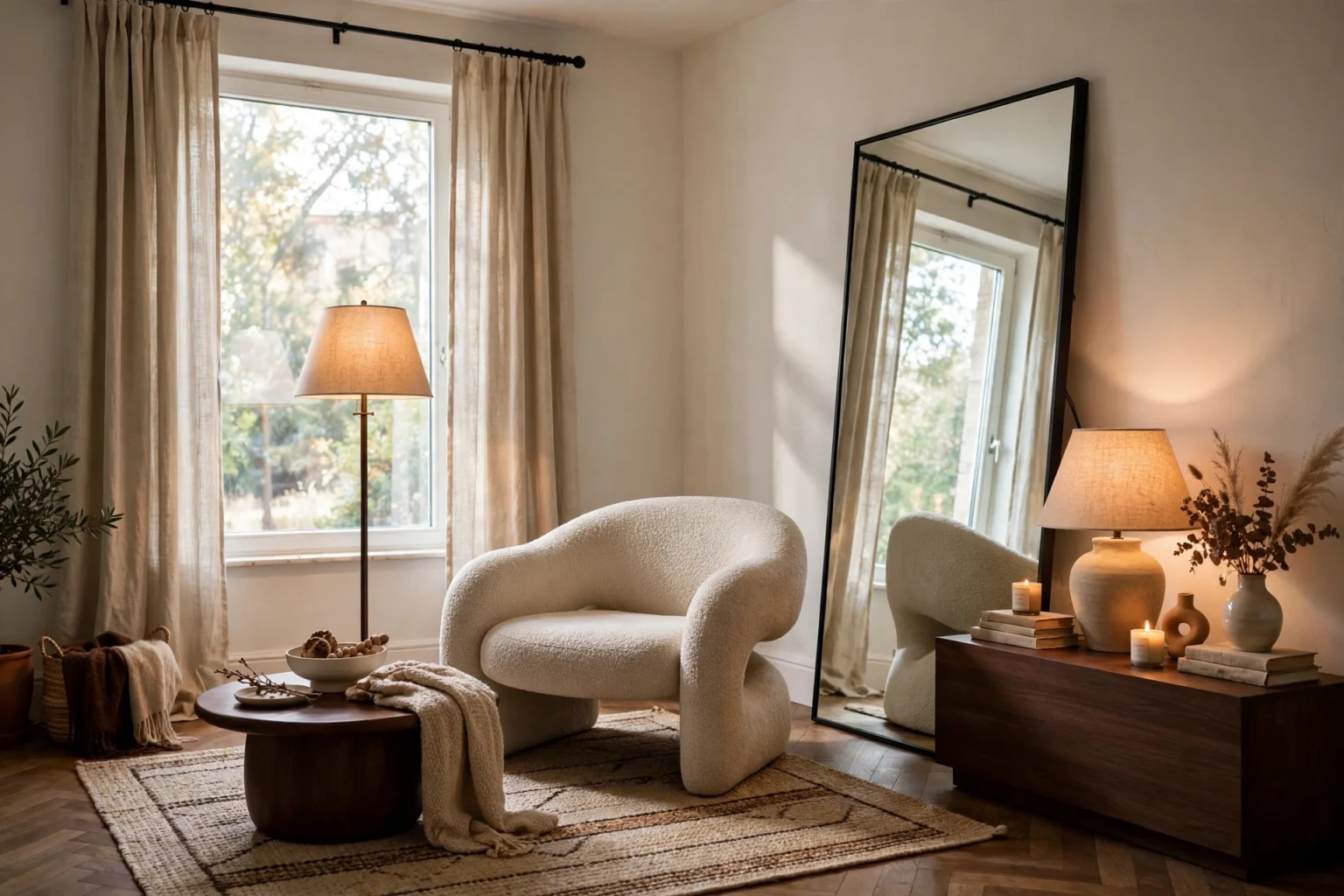
A bare rental has a way of feeling temporary no matter how long you live in it: flat white walls, shiny chrome knobs, one harsh ceiling light, and a window that looks smaller than it is. The good news is that small apartment decorating ideas are less about buying more and more about making a few deliberate moves that read as expensive — ten moves, in one 480-square-foot one-bedroom rental, for $600 to $1,150 all in, one weekend afternoon each.
None of these ideas needs a renovation, and most of them are reversible, which matters when the lease is not yours to rewrite. Each one works on its own, so you can start with the single move that bothers you most and let the room catch up from there.
Pick by light first, then by budget: the light moves cost the least and change the most, and the bigger buys — the rug, the mirror and the hero piece — are worth doing in that order.
Quick Tips Before You Start
1. Hang Curtains High and Wide
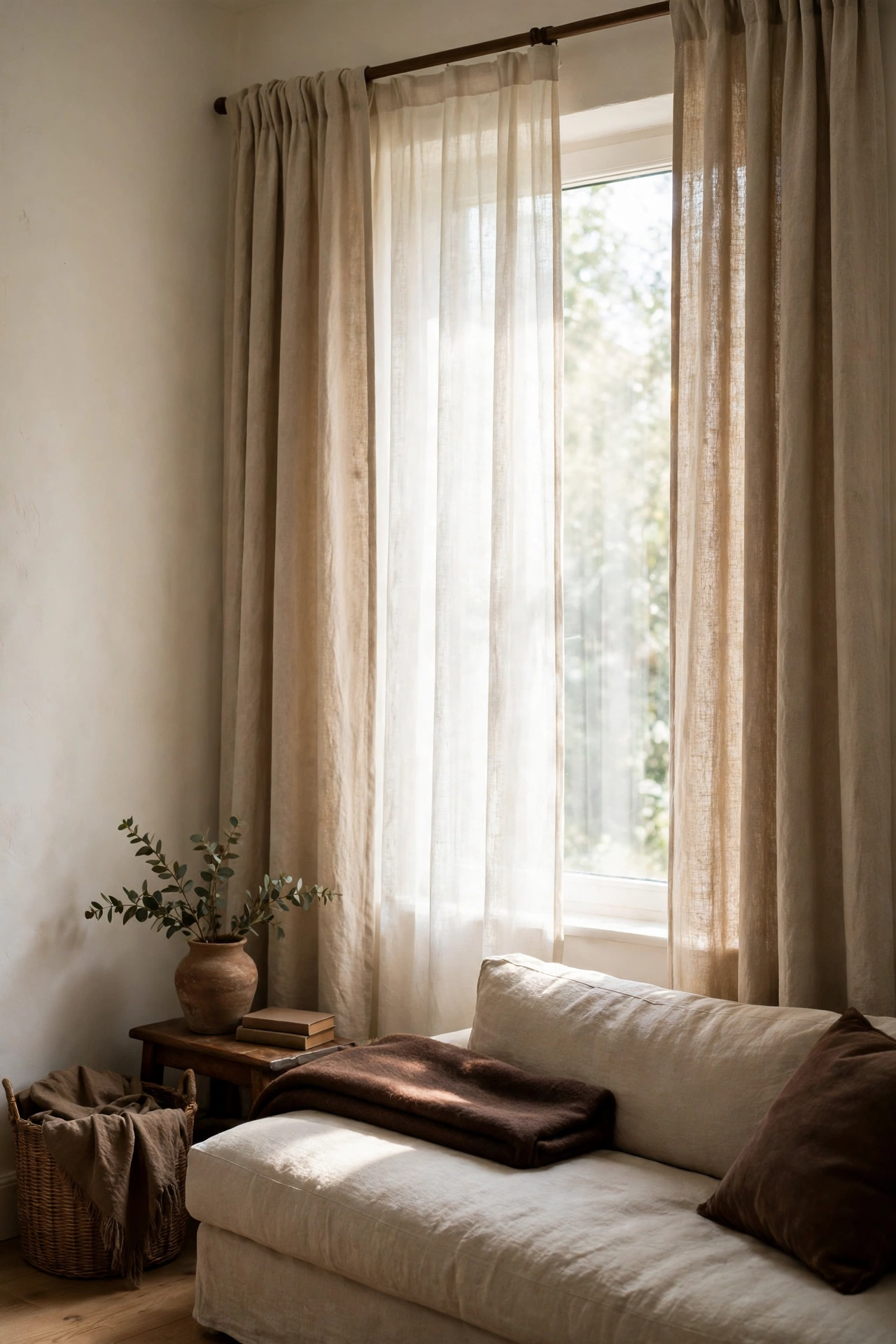
A bare window makes good furniture look unfinished, and one pair of full-length curtains, hung high and wide, turns that same window into the tallest, brightest feature in the room.
Mount the rod 4–6 in above the window frame, or 2–4 in below the ceiling when the gap is small, and extend it 4–10 in past the frame on each side. Panels totalling 2–2.5 times the rod length keep their folds deep when closed, and a hem that just skims the floor — about a ½-inch gap — stays clean. On an 8-foot ceiling that usually means 95- or 96-inch panels, not 84-inch ones.
The eye follows the long vertical line of fabric to the ceiling and reads that height as the height of the room, while panels stacked on the wall instead of over the glass let in more daylight. The trade-off is upkeep: long panels need a quick steam now and then, and a hem that pools on the floor collects dust fast.
Cost: $40–$90Time: One afternoonRod height: 4–6 in
2. Lean One Oversized Mirror
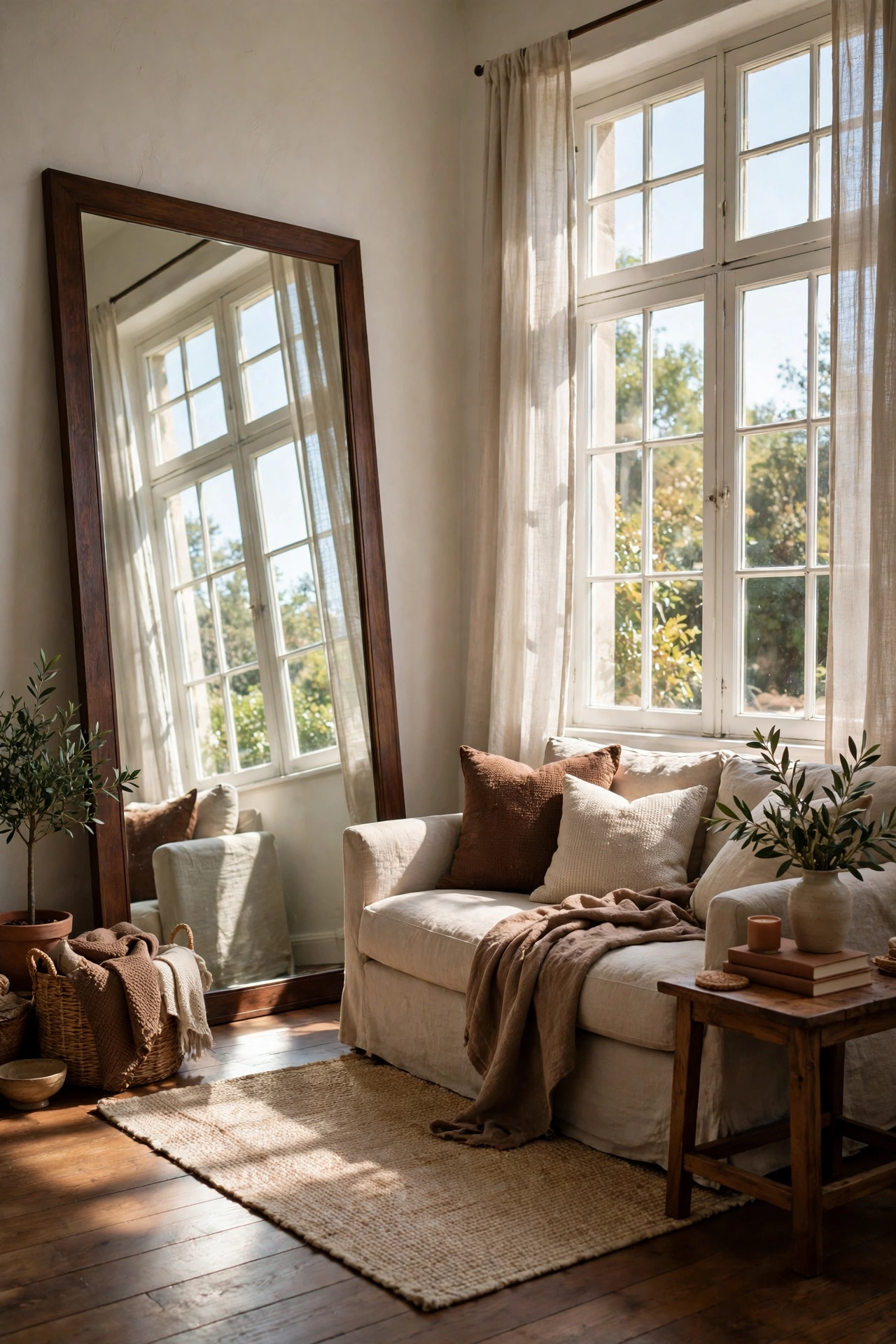
A small room needs light more than it needs things, and one large mirror moves light further than any lamp.
Lean a nearly floor-to-ceiling mirror opposite a window and it doubles the width the eye perceives, pulling daylight into the corners the sun never reaches. One big mirror reads as a deliberate choice, while a cluster of small ones reads as a dorm room, and antique-style glass softens the reflection so the room glows instead of glaring.
A mirror works like a second window: it catches the brightest thing in the room and hands it back from another angle. It is the same logic behind how to use mirrors in decor to brighten a dark apartment: one mirror, placed well, does more than three placed at random. The trade-off is honesty: a big mirror shows every smudge and every pile you meant to put away, so it asks for a quick wipe and a tidy corner behind you.
Cost: $80–$150Time: Under an hourPlacement: Opposite a window
3. Layer Light in Three Tiers
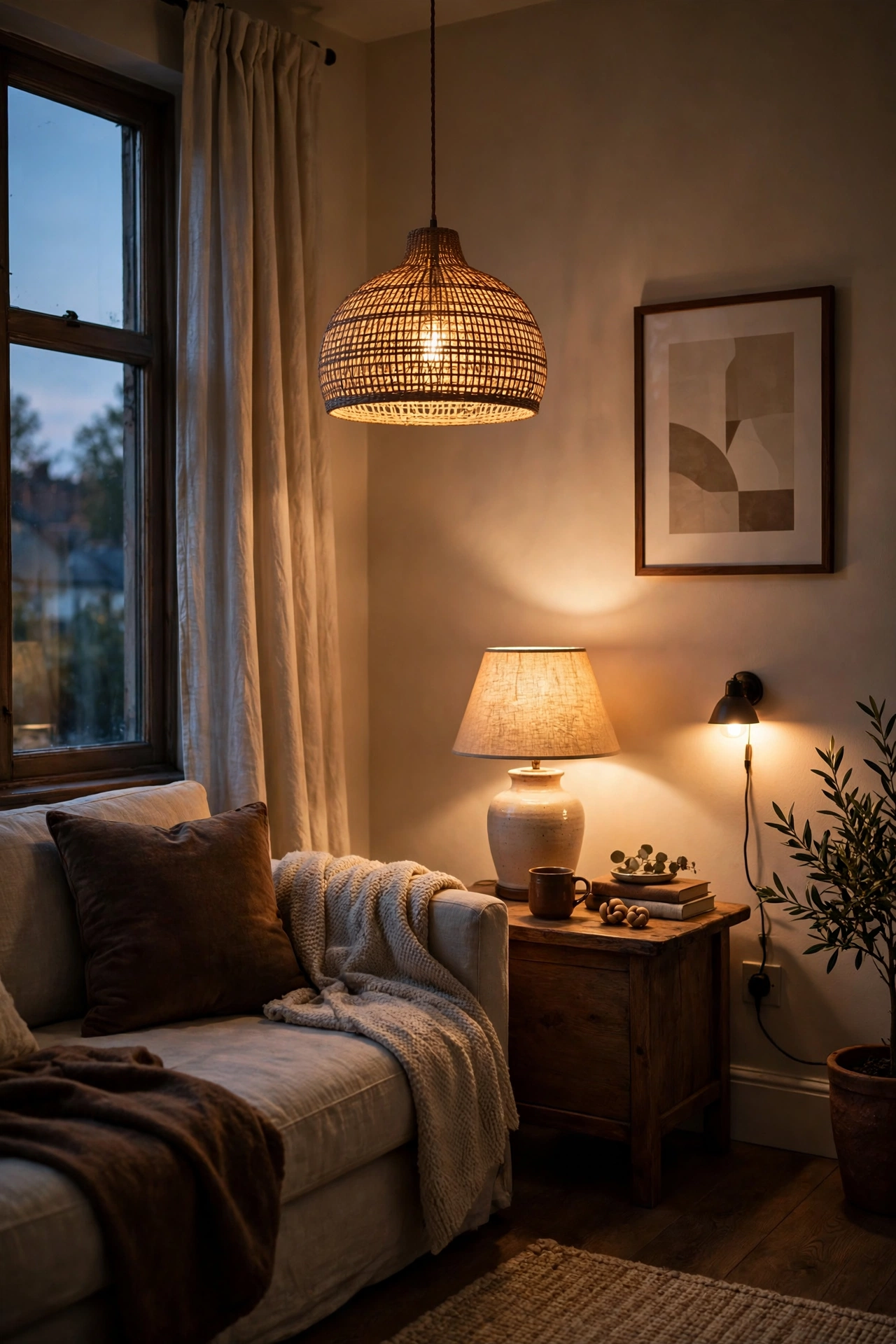
One ceiling light flattens a room: it washes everything from above and leaves no shadow for the eye to rest on.
Three light sources at three heights do the opposite. A dimmable floor lamp behind the sofa defines the seating area, a table lamp at eye level gives you light to read by, and a low accent light pools warmth where the ceiling light never reaches. Bulbs at 2700–3000K mimic golden-hour light, so wood grain, fabric and skin all look richer, while cool bulbs make the same room feel sterile.
The trade-off is cords and outlets: three lamps need three plugs and a plan for hiding the cables, so keep a cord cover or a basket nearby. Anything beyond plugging something in means hiring a licensed electrician. On a brightness scale of 0 to 100, the accent glow sits near 10, the task lamp near 50 and the overhead near 90, so each tier has a job the others cannot do.
Cost: $60–$120Time: One eveningBulbs: 2700–3000K
4. Swap the Hardware for Warm Metal
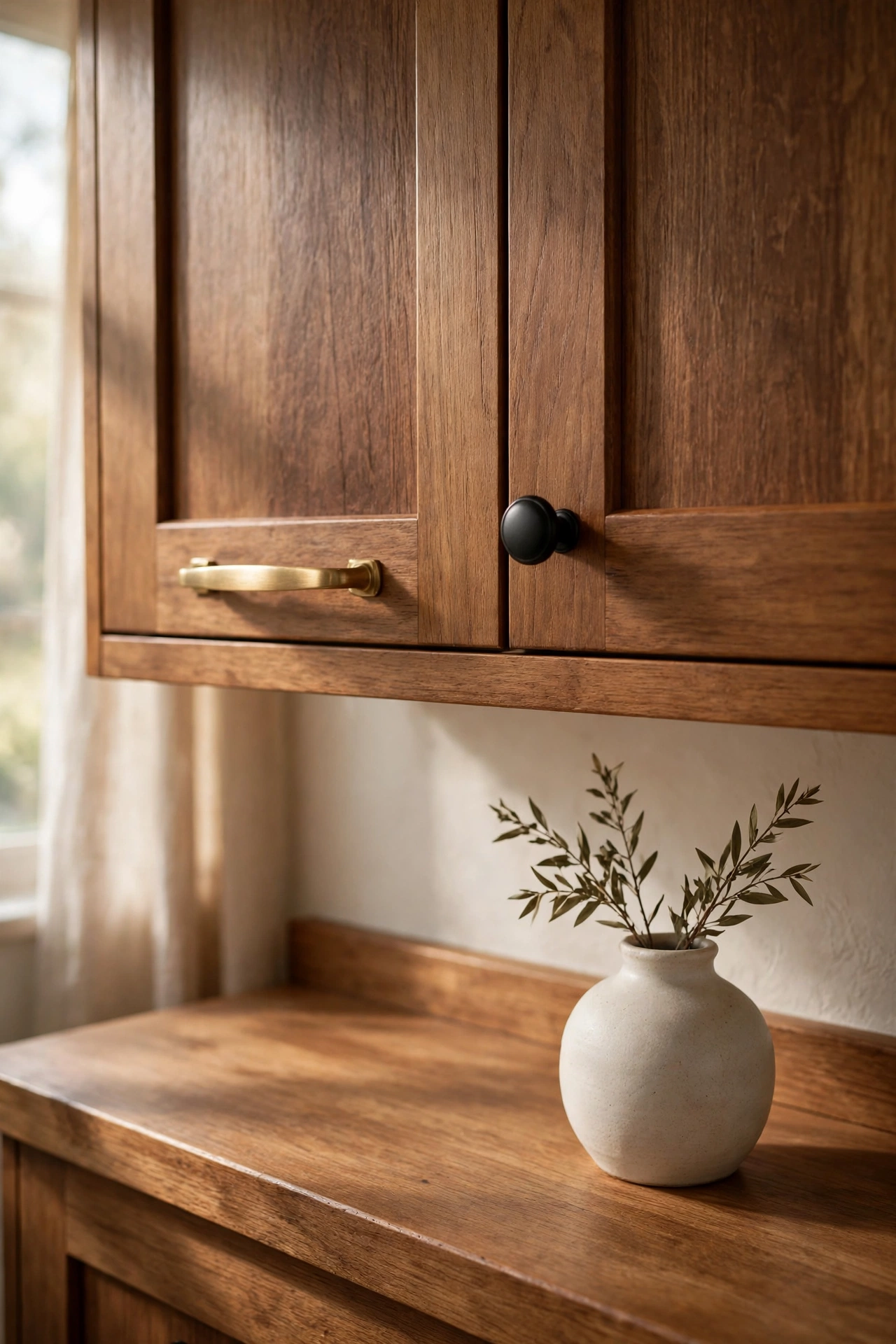
The same kitchen cabinets can look custom or builder-grade depending on one small thing: the hardware.
Swap shiny chrome or plastic knobs for brushed brass, matte black or aged bronze, and the whole room reads as chosen rather than issued. Hardware is the jewellery of a room because it is the touchpoint your hand meets every day, and people judge a space by its touchpoints.
The trade-off is all or nothing: swap every visible knob and pull in one room at once, because a half-swapped kitchen looks more unfinished than the original. New pulls are the quickest way to update rental cabinets without painting, and the whole swap takes less than an hour. Keep the originals in a labelled bag for move-out day, and check your lease before touching a faucet or anything fixed to plumbing.
Cost: $25–$60Time: Under an hourFinish: Brushed brass
5. Size the Rug Right
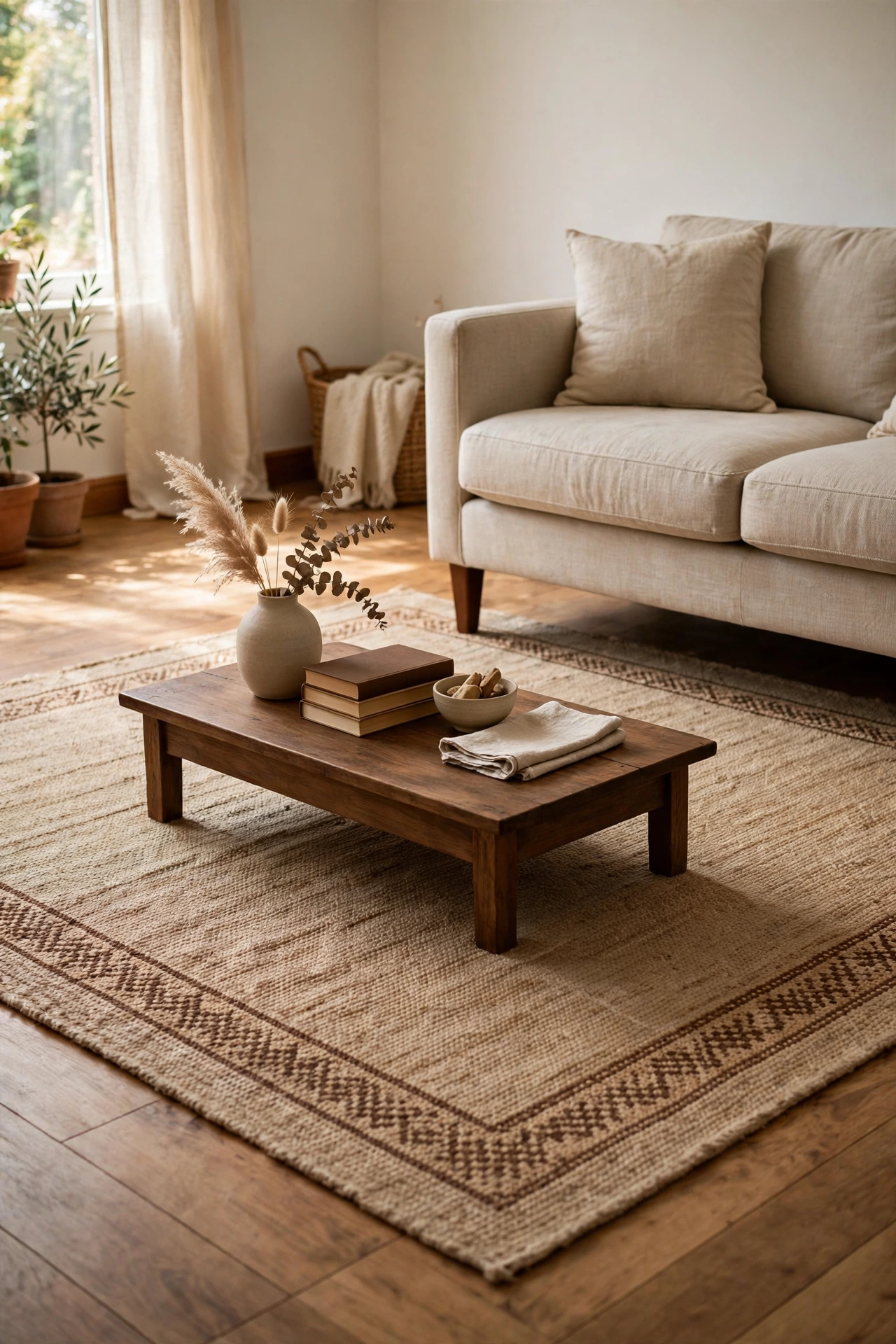
A rug draws the outline of the seating area the way walls do in a bigger home, so its size decides how big the room feels.
When the front legs of the sofa and chairs sit on the rug, the seating group looks anchored, not scattered across bare floor. A 6×9 rug is the sweet spot for a small room, and when in doubt, go one size up: a rug that only fits under the coffee table shrinks the room and leaves the furniture adrift.
Slide the rug 6–8 in under the front of the sofa and chairs, let it run at least 6 in past each end of the sofa — 8–10 in where space allows — and leave 10–18 in of bare floor at the walls. Centre the rug on the seating group, not on the room. Once the size is right, a studio apartment rug layout shows how to angle the rug when the room is not a neat rectangle.
Cost: $120–$200Time: One afternoonSize: 6×9 ft
6. Choose One Hero Piece
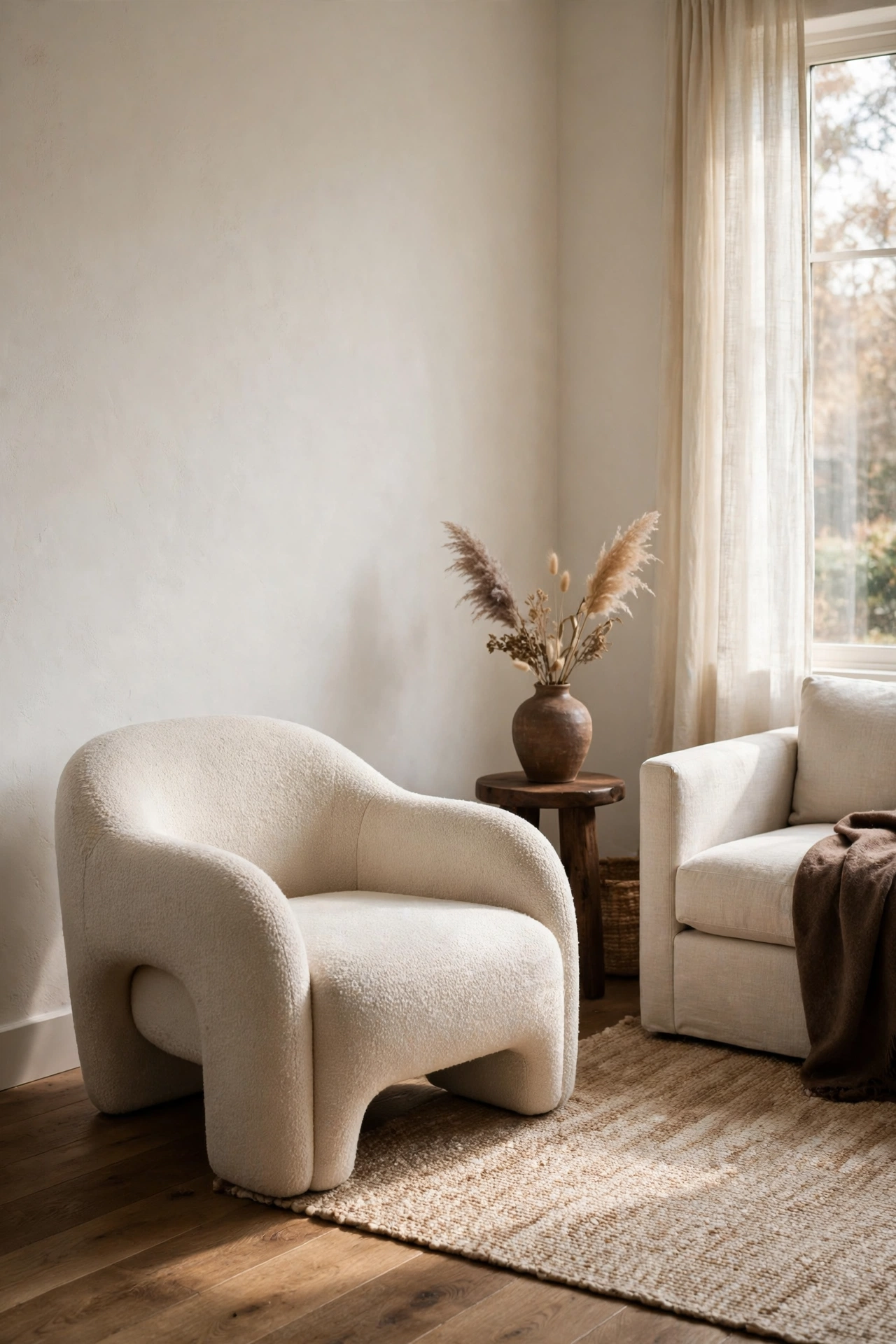
Expensive rooms have one focal point and breathing room around it.
Pick one statement piece per room — a sculptural chair, a low curved sofa, a marble-topped coffee table, a vintage wood sideboard — and let everything else support it. Two mistakes both read cheap: a full matching furniture set, which looks like a showroom floor, and a room full of uniformly tiny furniture, which looks like a dollhouse.
Mixing one larger anchor with smaller flexible pieces creates the scale contrast that makes a room feel designed, and pieces open at the base keep sightlines clear. Measure doorways first: an 84-inch-wide piece will not pass a 30-inch doorway, and a 36-inch hallway leaves no room to turn it. Float the sofa at least 3 in away from the wall, keep about 36 in of walkway clear and about 18 in of reach between sofa and coffee table. A sculptural chair makes a natural hero, and the right one can anchor a reading corner too.
Cost: $100–$200Time: One afternoonWalkway: 36 in
7. Keep the Palette Tight and Tonal
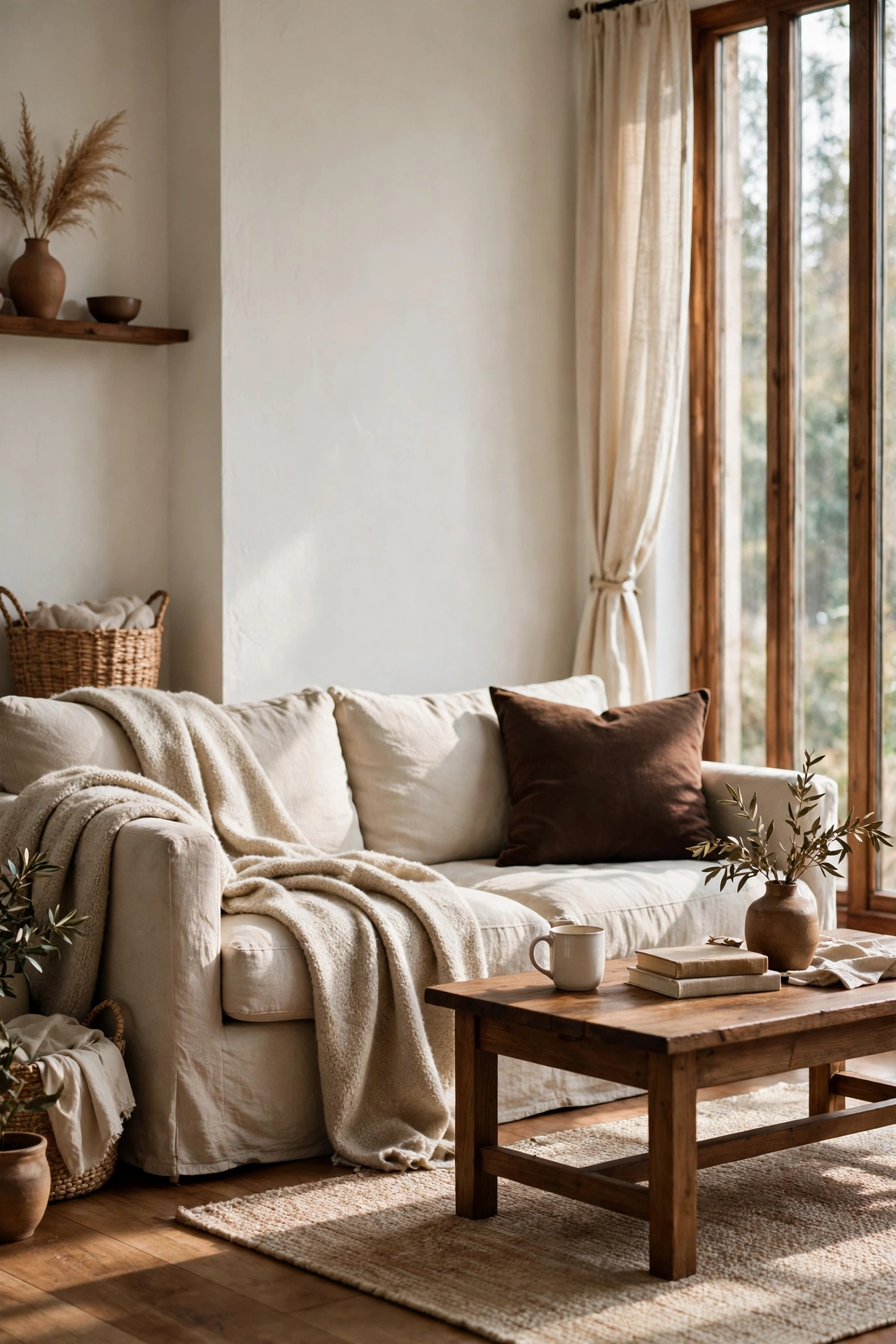
Walk through a home that feels expensive and the colours repeat: cream in the living room, oatmeal in the bedroom, the same deep brown on a throw and a cushion.
The whole apartment runs on one warm neutral family with one mid-tone and one deep accent, so the rooms flow into each other instead of chopping the small space into colour blocks. Think of it as about 80 percent neutral, 15 percent mid-tone and 5 percent deep accent — intention is what reads as expensive.
The trade-off is variation: vary the shades within the family instead of matching one flat colour everywhere, because one flat neutral looks like a showroom. A deep accent used sparingly adds weight and drama, and a dark wall can even blur the corners so the walls seem to recede. Pick two to three main colours plus one accent per room and stop there, and let textiles carry the palette so the scheme can change without paint.
Cost: $40–$80Time: One afternoonSplit: 80 / 15 / 5
8. Layer Three Textures
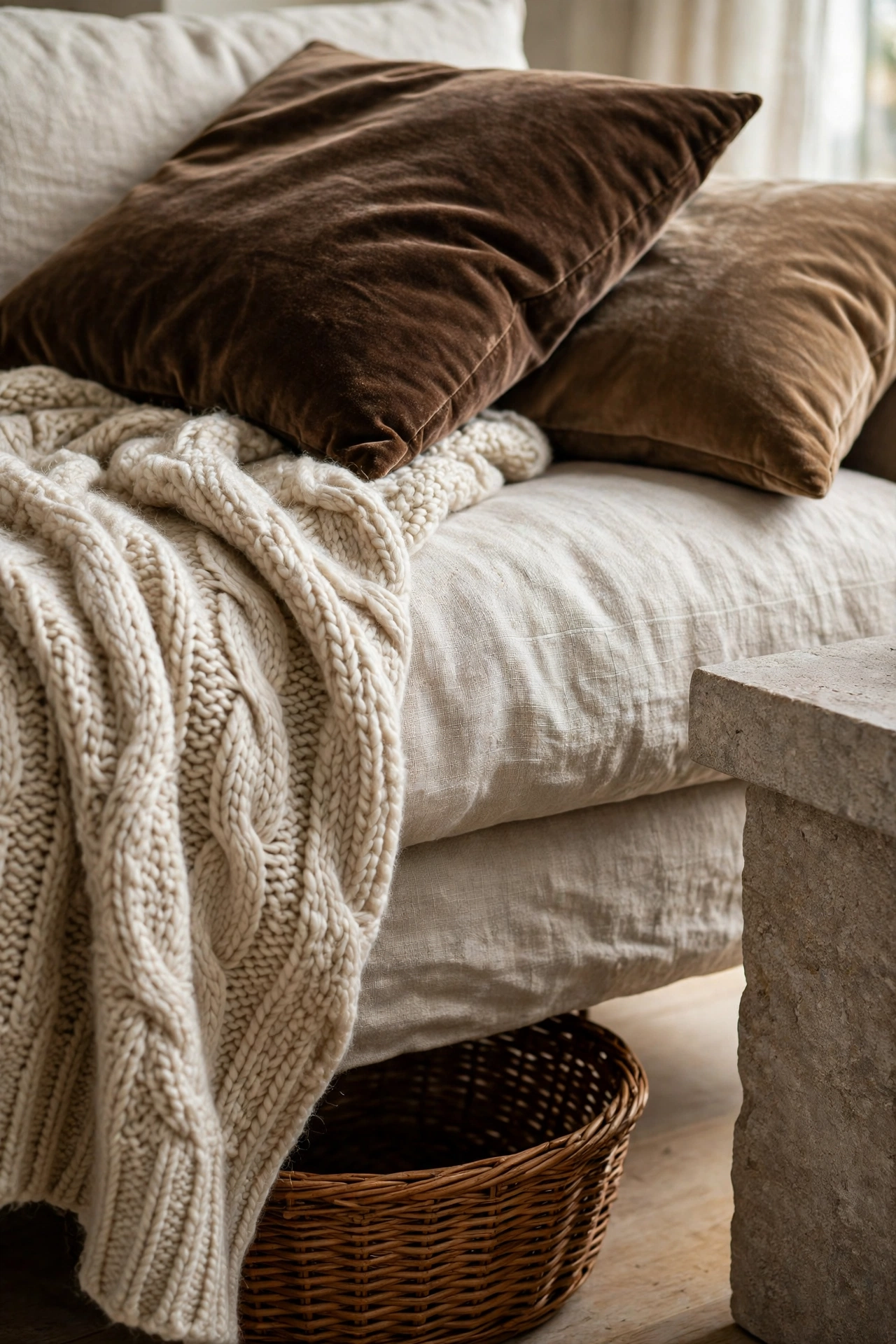
Texture is the cheat code for an expensive-looking small room: it creates depth without adding objects, which is exactly what a small footprint needs.
Velvet cushions on a linen sofa, a chunky wool throw over a smooth wood chair, a woven basket beside a stone-topped table — the room gains contrast you can feel, not just see. A smooth, cool surface against a rough, organic one creates a tension that feels intentional, and a room in a single flat texture reads like a showroom.
The trade-off is restraint: one high-contrast texture is often enough to anchor a seating area, and more than that needs a calm palette to hold it together. Use at least three distinct textures per room — velvet, linen and polished stone, or wool, rattan and travertine-look — and repeat one texture in two places so the mix reads as a choice, not an accident. Textiles and objects are fully reversible, which makes this the safest luxe move in the whole list.
Cost: $30–$60Time: Under an hourTextures: At least 3
9. Give One Wall a Limewash Look
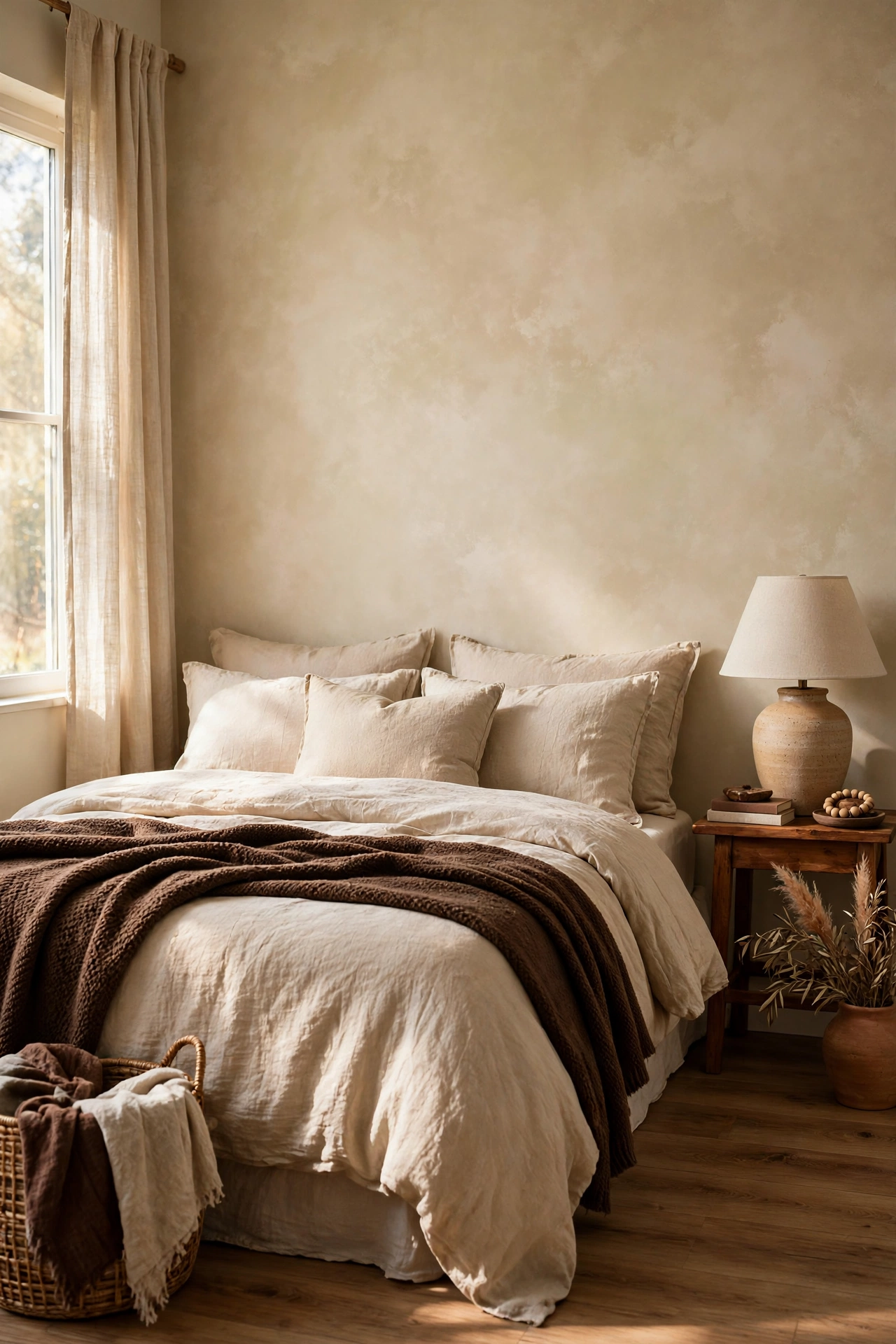
Flat white rental walls are the single biggest builder-grade signal in a small apartment.
One wall with a soft, cloudy, chalky finish — the limewash look — gains the weight of a plastered wall, and everything on that wall suddenly looks more considered. The renter version is a peel-and-stick paper that mimics limewash, grasscloth or Venetian plaster, and the technology has matured into matte vinyls and woven fabrics that look convincingly tactile.
Test a sample swatch for 72 hours, especially on heavy orange-peel drywall, where adhesion is weakest. The trade-off is commitment to one wall only: papering a whole room can close it in, so pick one wall: behind the bed, the sofa, or the front door. If you prefer pattern over plaster, a peel and stick wallpaper install takes one afternoon and peels off clean.
Real limewash is paint, so check your lease before opening a can, and whatever you use, follow the product label and ventilate the room while you work.
Cost: $40–$80Time: One afternoonTest: 72 hours
10. Hang One Oversized Art Piece
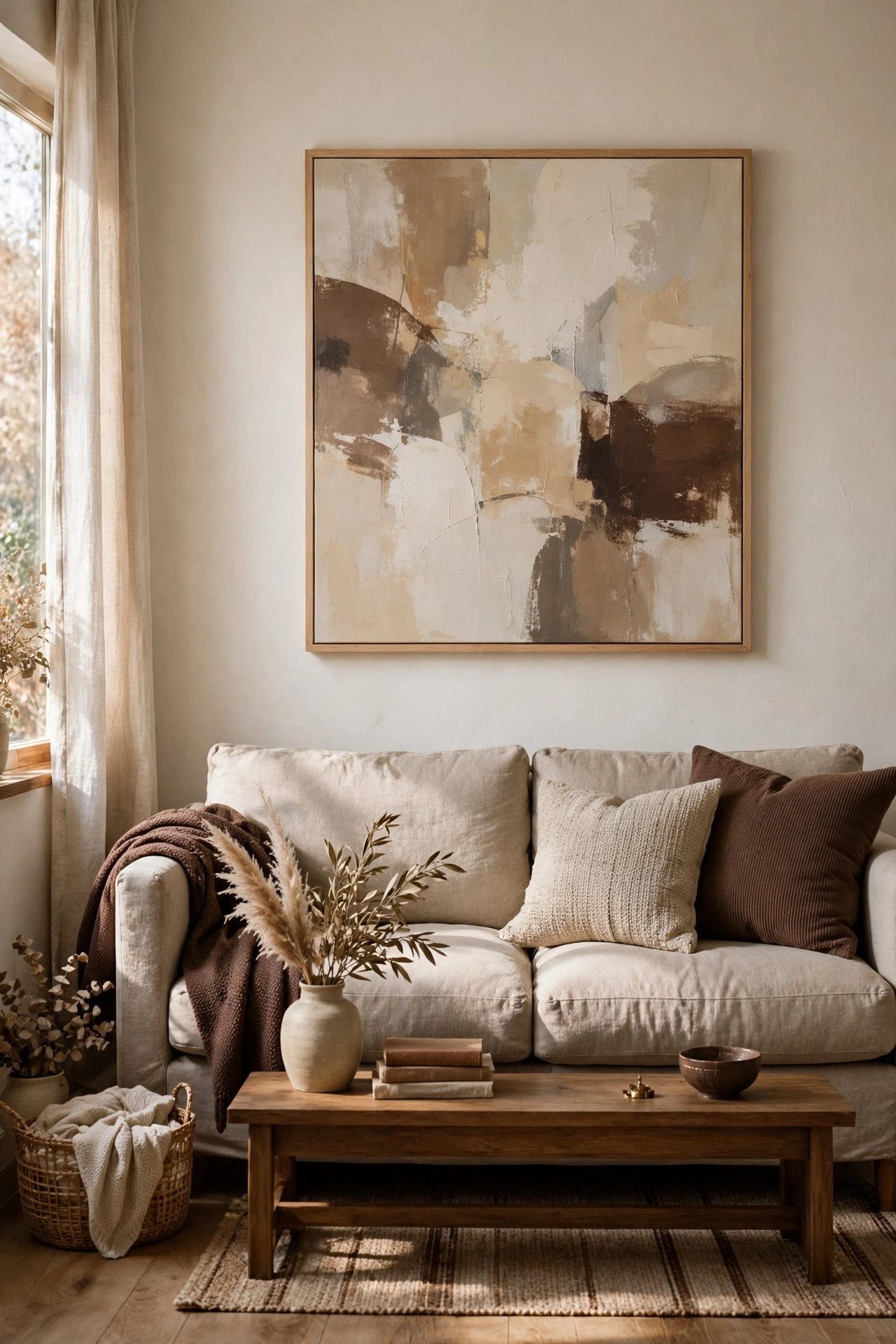
A single large art piece, centred on the main wall at eye level, anchors the wall the way a headboard anchors a bed.
The room instantly has a focal point that is not the television, and the wall feels designed rather than decorated around. Scale is the difference between a gallery and a dorm room: one oversized piece reads as a confident, collected choice, while a scatter of tiny frames hung too high reads as an afterthought.
Centre the art at 57–60 in from the floor — museum height — and size it to roughly two-thirds the width of the furniture below it, such as the sofa or sideboard. A large canvas in a plain frame still reads expensive when you make cheap frames look expensive with a wide mat and simple wood. If a gallery wall is preferred, keep the same 57–60 in centre line and use matching frames, and lean large art on a sideboard or the floor where the lease forbids nails.
Cost: $50–$120Time: Under an hourHeight: 57–60 in
Frequently Asked Questions
How much do small apartment decorating ideas cost?
For the ten moves in this list, plan on $600 to $1,150 all in, in a 480-square-foot one-bedroom rental. Start with the cheapest moves — hardware at $25–$60 and textures at $30–$60 — and save the rug and the hero piece for last.
Can I make a rental look expensive without drilling?
Yes. Lean the mirror, hang curtains on adhesive rod brackets, use adhesive hooks within their stated weight limit, and swap hardware with a screwdriver. Check your lease before drilling, painting or touching anything fixed to the wall.
What size rug should I buy for a small living room?
A 6×9 rug fits most small living rooms. Slide it 6–8 in under the front legs of the sofa and chairs, leave 10–18 in of bare floor at the walls, and let it run 6 in past each end of the sofa.
What colour temperature should my bulbs be?
Use 2700–3000K everywhere, with a CRI of 90 or above. Warm light makes wood, fabric and skin look rich, while cool bulbs make the same room feel sterile.
How high should I hang art in a small apartment?
Centre it at 57–60 in from the floor — museum height — and size it to about two-thirds the width of the furniture below it. Lean large art on a sideboard or the floor where the lease forbids nails.
Pick by Light, Then by Budget
Start with the light: swap the bulbs to 2700–3000K, add the three tiers and lean the mirror, and the room changes for under $300 before you buy a single piece of furniture. Then spend the rest of the $600 to $1,150 on the rug, the hero piece and the art, in that order, because those are the three things that define the room. Measure first and buy second, and do one move per weekend afternoon so the room can tell you what it needs next. Write down your decorating budget first and check every pick against it before you order. These small apartment decorating ideas work because each one makes a single decision and commits to it, instead of hedging with many small ones — and that is a habit any renter can copy in a weekend.