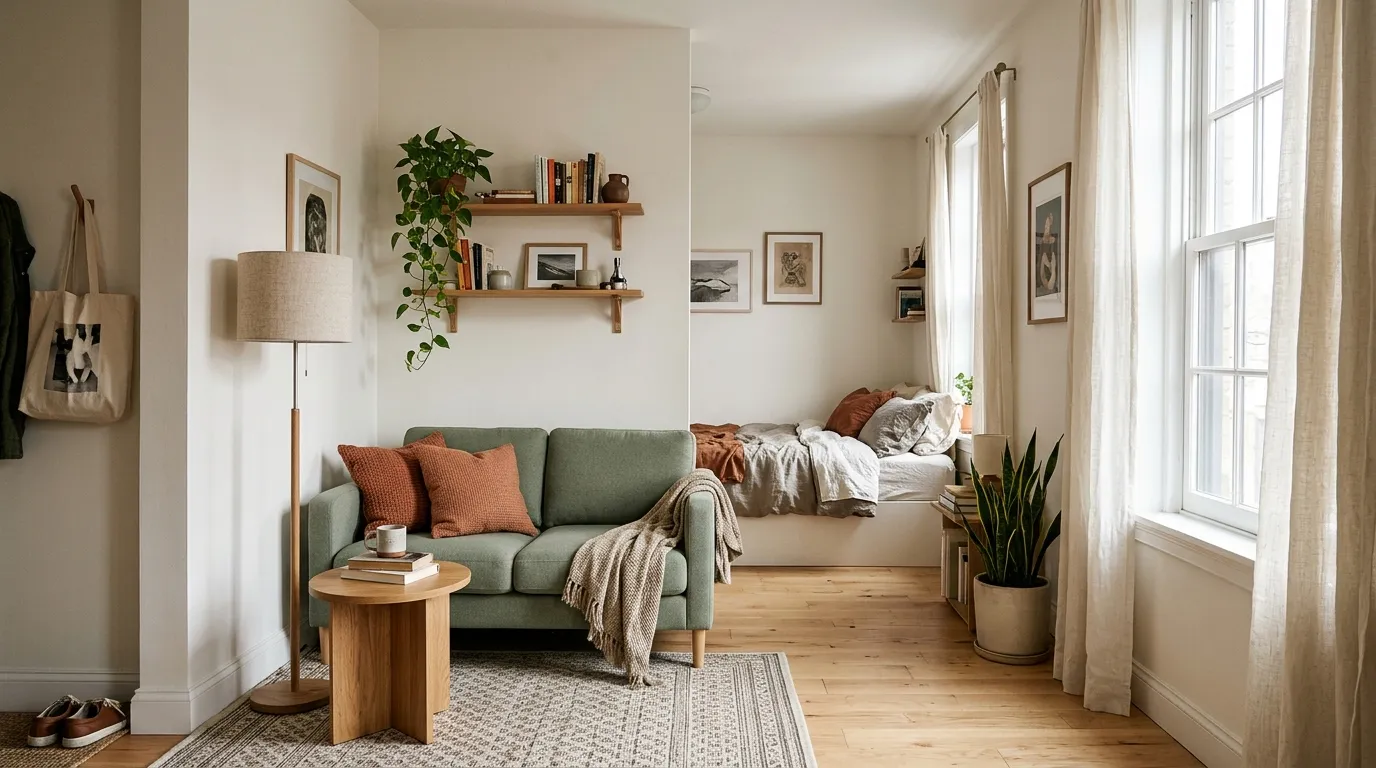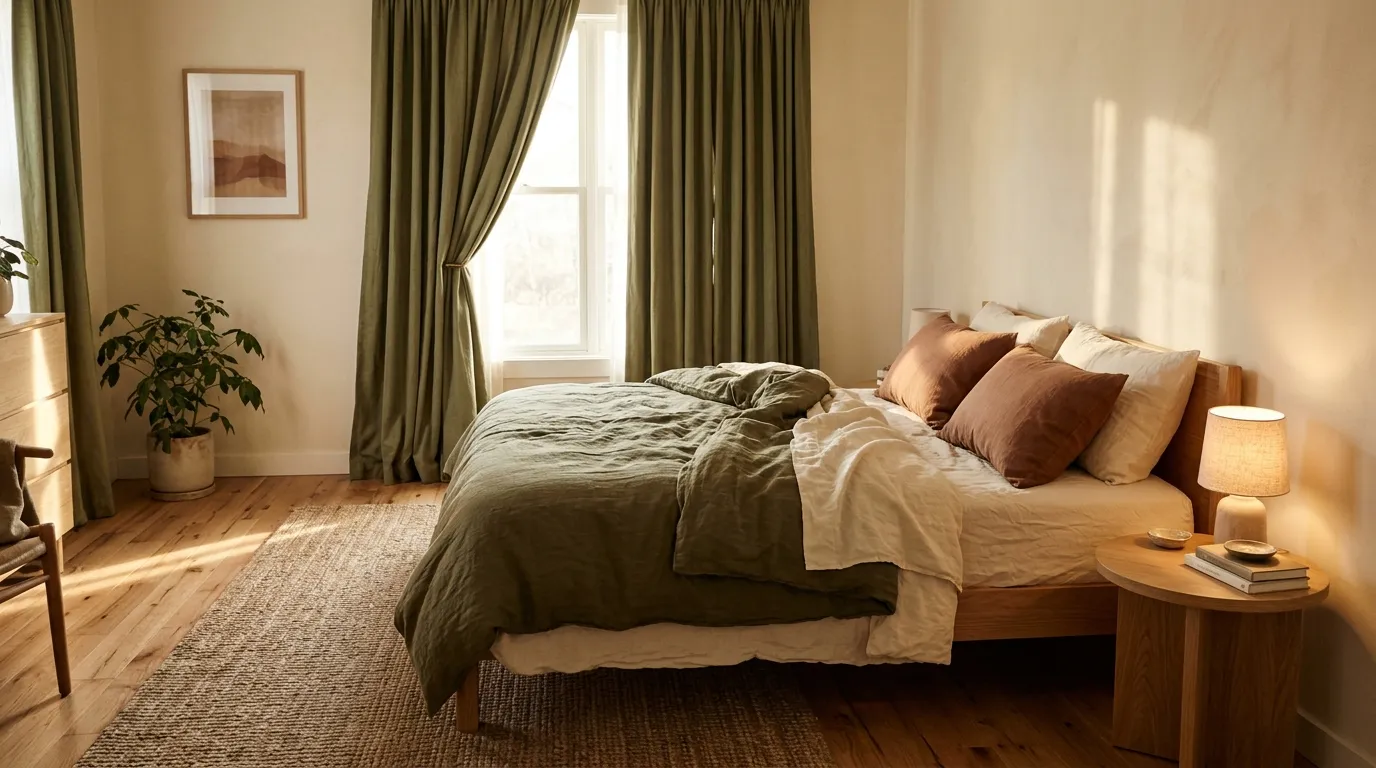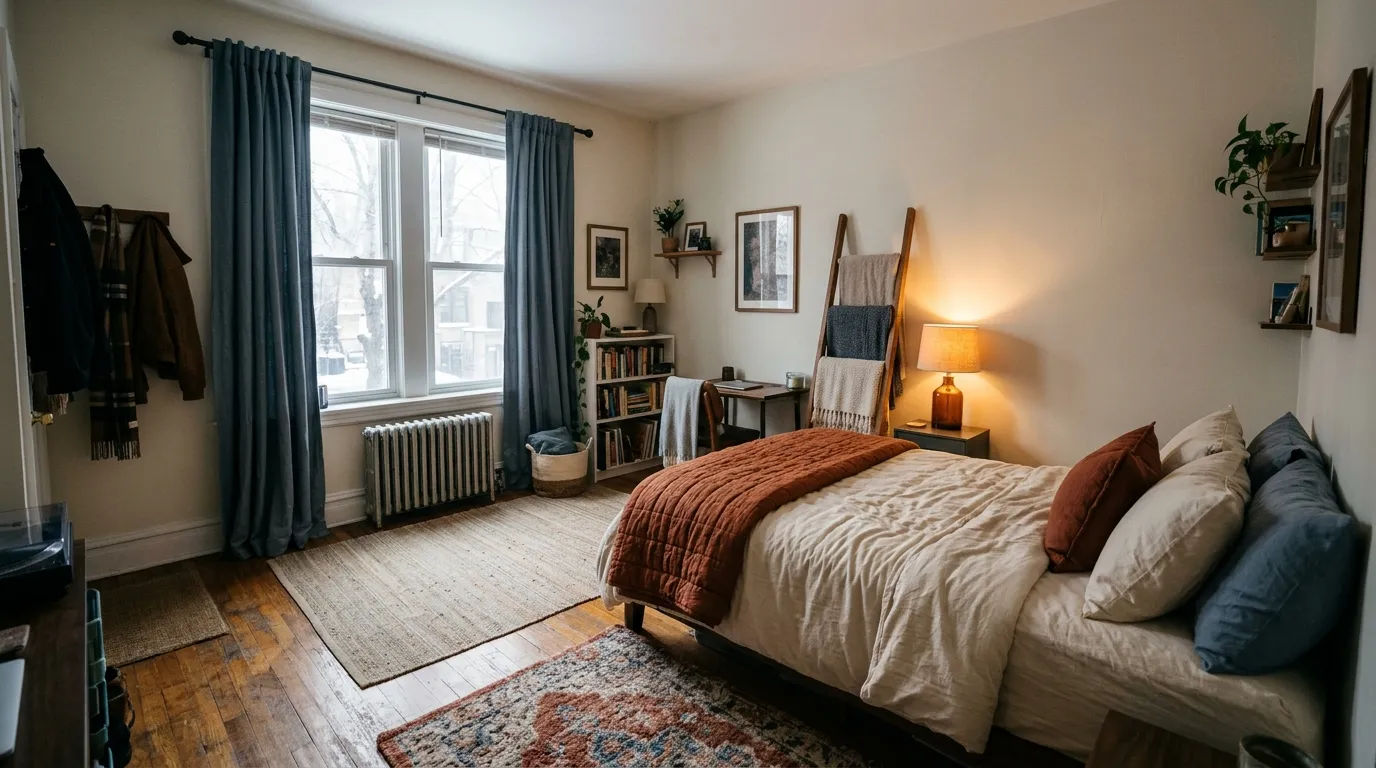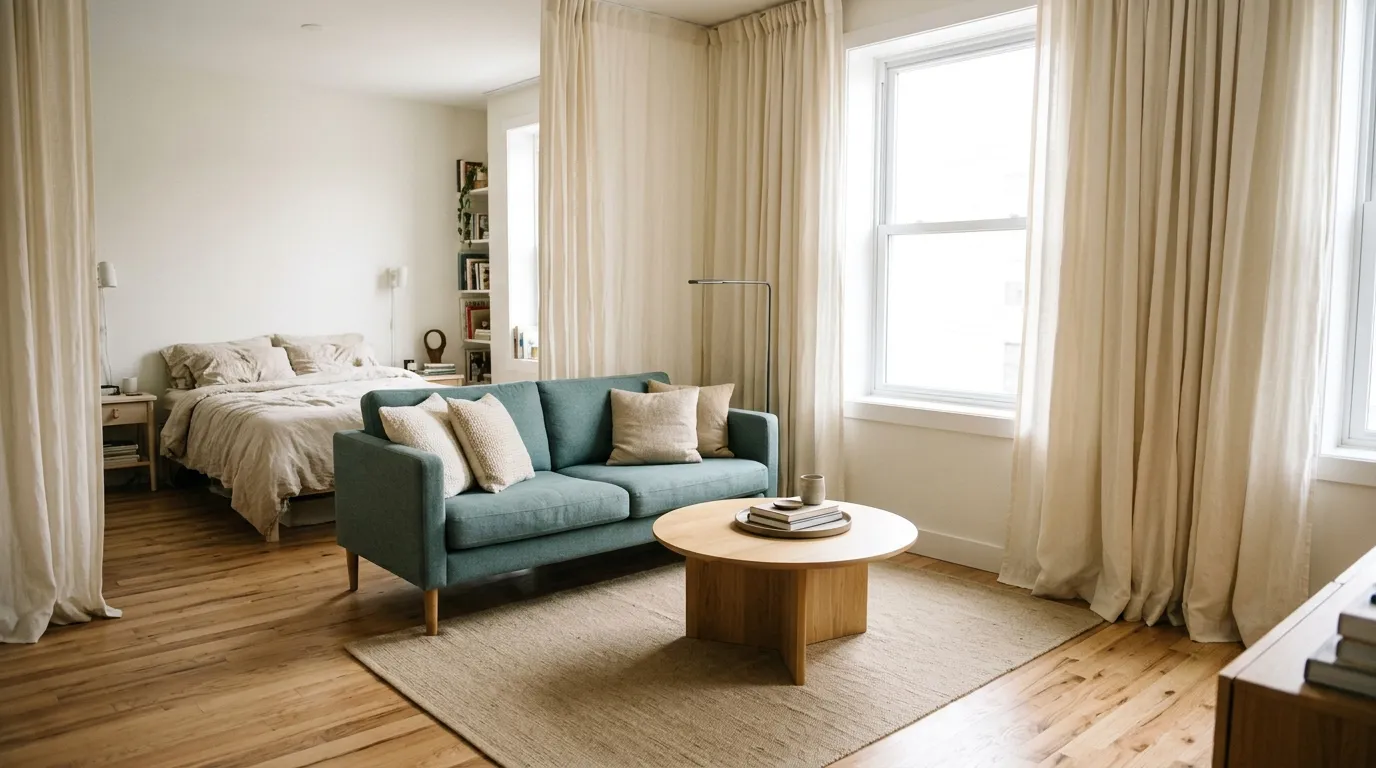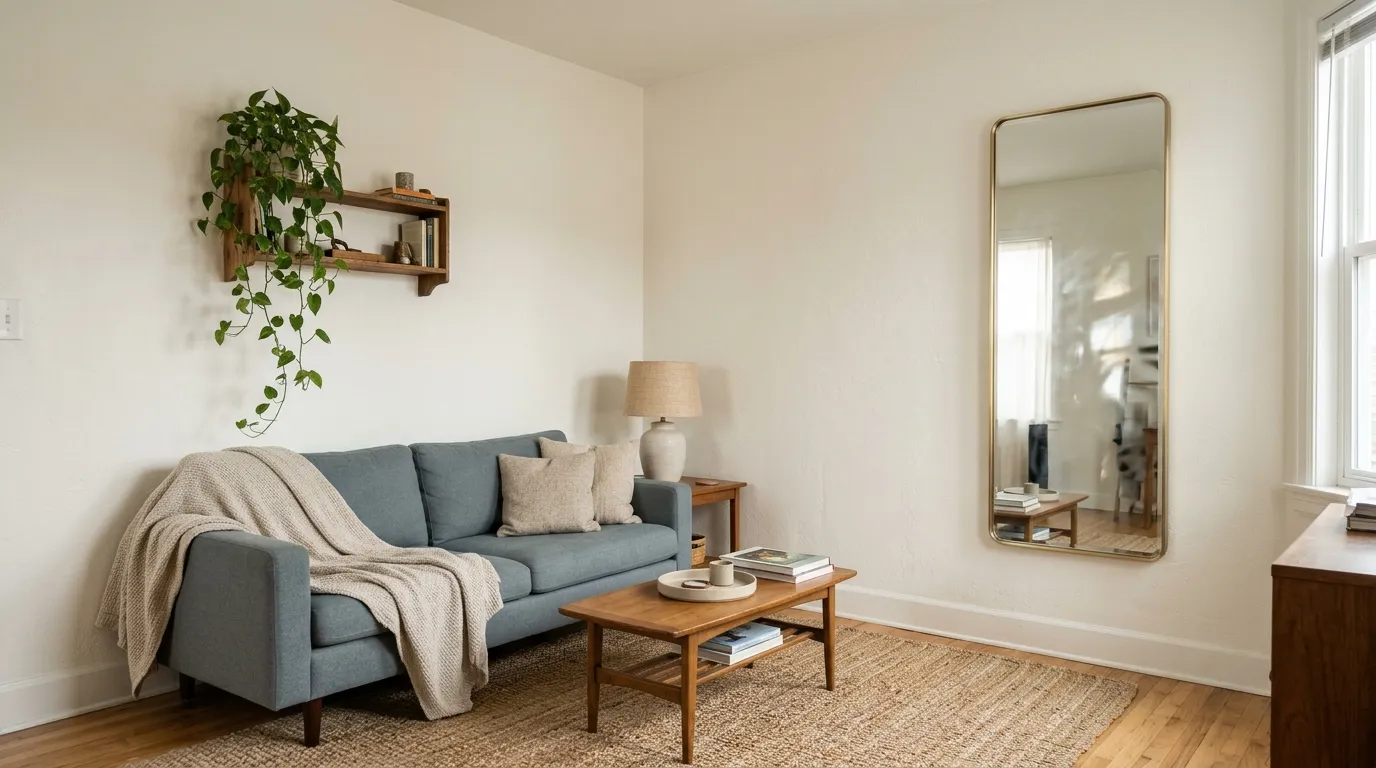

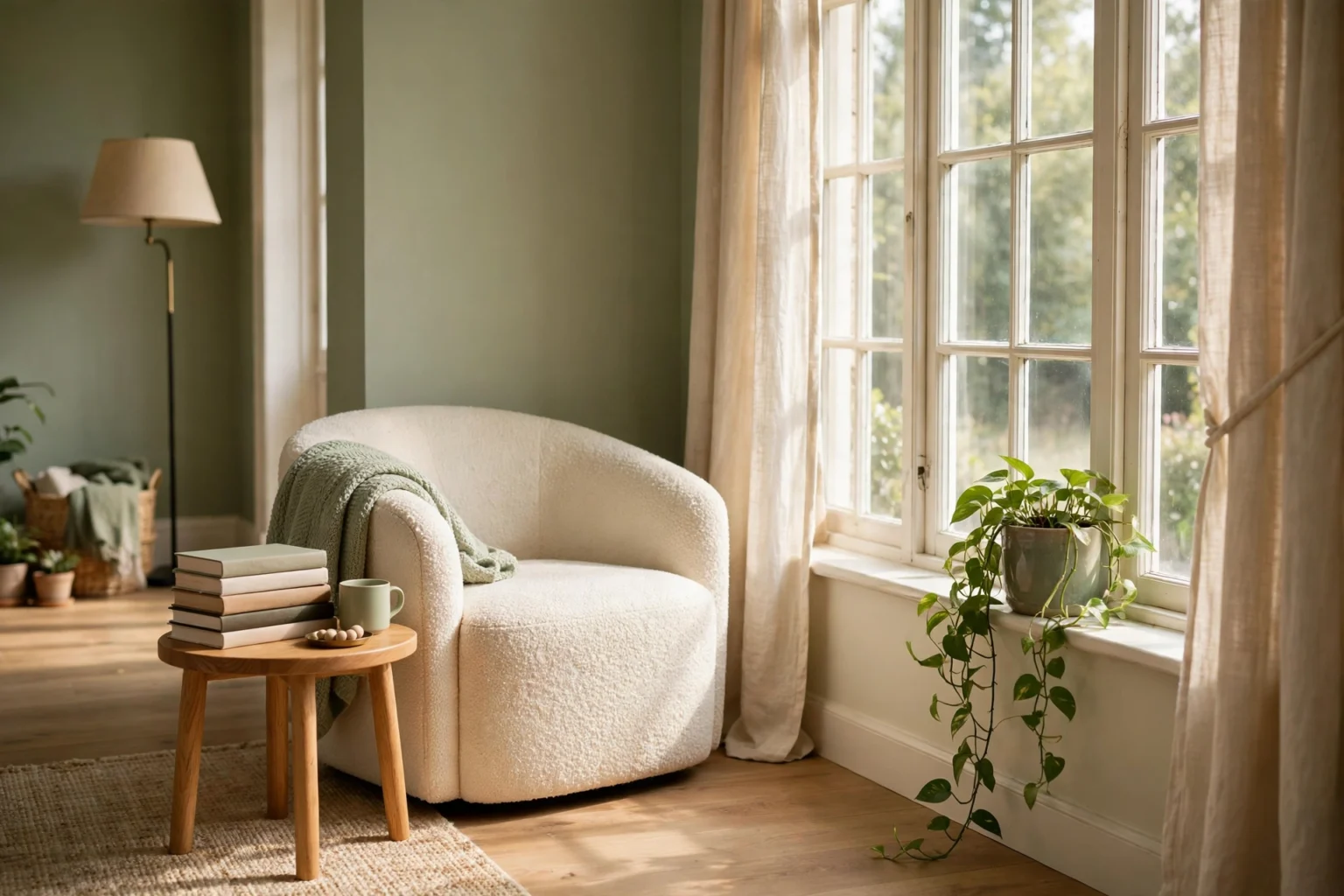
There is a corner in my home that has been waiting for a chair for months. It holds a small stack of books, a floor lamp, and good intentions, but no place to actually sit. The best accent chairs reading nook owners choose solve exactly that problem: they fit a small corner without crowding it, and they hold you comfortably through a whole chapter.
The trick is not to buy the prettiest chair, or the biggest one. It is to match the chair to the corner you have, the way you like to sit, and the light that is already there. A chair that is too wide swallows the room. A chair that is too deep pushes you too far from the lamp. A chair with the wrong seat height makes your feet dangle or your knees rise.
I would start with the eight looks below, and check each one against your corner before you fall for it. Every look follows the same simple formula — one anchor piece, one or two supporting pieces, and one small accent — so you can mix and match them until the corner feels like yours.
1. The Cocoon Barrel Chair
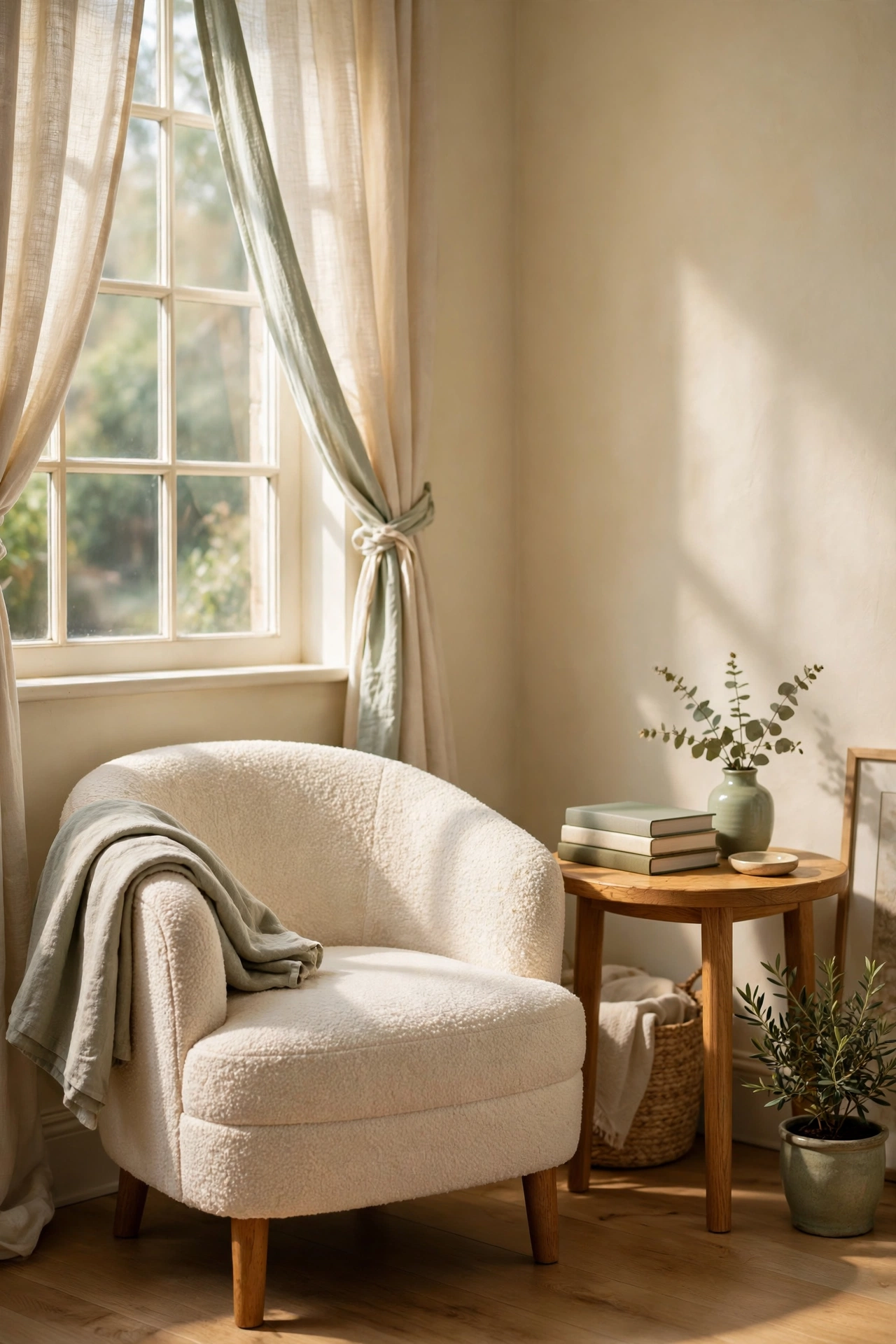
A barrel chair wraps around you, and that is the whole point. Its curved back hugs your shoulders, blocks the draft from the window, and turns an open corner into a small room of its own. If your nook is a tight corner between two walls, start here. The rest of the corner follows the same simple logic as other cozy reading nook ideas: one light, one table, and one soft layer.
The Formula
- Anchor: a barrel chair in a soft, nubby fabric like bouclé or chenille
- Support: a small round side table and a warm floor lamp
- Accent: a folded linen throw over one arm
Why It Works
The curve does two jobs at once: it supports your back on three sides, and it makes the chair look smaller than it is. A square chair shows its full width from every angle, while a barrel chair softens its edges and leaves the corner feeling open.
Space Needed
Look for a barrel chair under 30 inches wide and about 24 inches deep. Leave at least 3 inches of breathing room on each side of the chair, so the corner needs about 36 inches of wall in total. A chair as narrow as 25 inches wide fits corners that nothing else will.
Save or Invest
- Save on: the side table — a simple wooden stool holds a mug and a book just as well as a matched set
- Invest in: the seat cushion, because a barrel chair you sink into for an hour needs foam that springs back
Renter Note
A barrel chair needs no drilling, no wall anchors, and no permission. It moves in one trip, and it moves out the same way, so it is an easy first piece for a rented room.
2. The Classic Wingback Chair
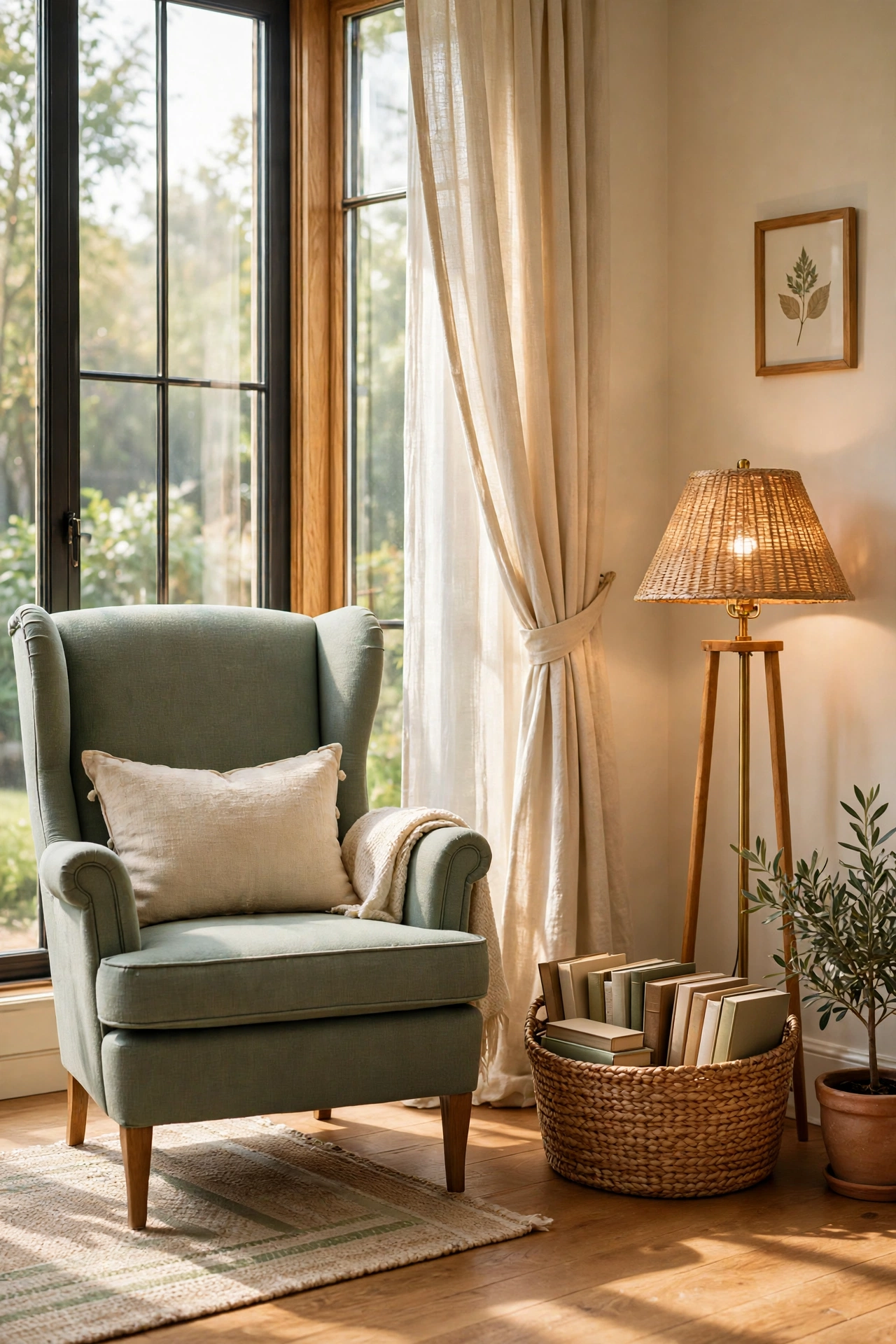
A wingback is the chair for readers who like to sit upright, head supported, book held high. The tall back and side wings cut out the rest of the room, which is exactly what a long chapter needs. It looks formal in a shop, but in a corner with a soft throw it feels like a library chair that happens to live at home.
The Formula
- Anchor: a wingback chair with a tall back and padded wings
- Support: a floor lamp with a warm bulb and a small bookshelf or stack of books
- Accent: a lumbar cushion in a contrasting solid color
Why It Works
The wings hold your head when you lean back, and the tall back keeps the light from the lamp from spilling across the whole room. It is the best shape for readers who finish chapters, not just start them, because the chair keeps your posture upright instead of letting you slide down.
Space Needed
Plan for a chair about 28 to 30 inches wide and about 30 inches deep, with at least 3 inches of breathing room behind it so the back does not rub the wall. Measure the doorway too: a chair about 30 inches deep fits through most doorways without tilting.
Save or Invest
- Save on: the lumbar cushion — any firm cushion in a color you already own does the job
- Invest in: the frame and the wing padding, because thin wings go flat after a season of daily reading
3. The Easy Swivel Armchair
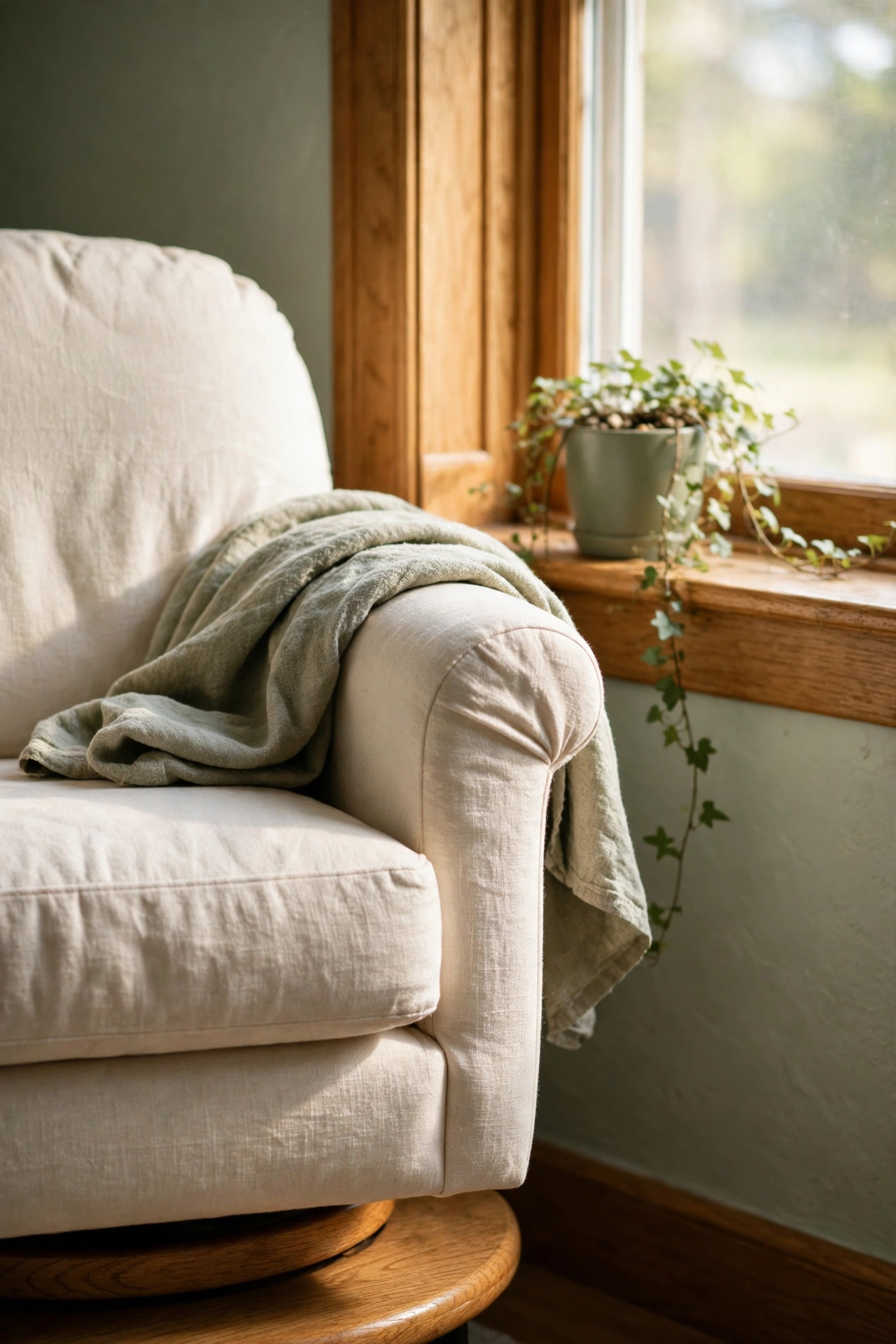
A swivel chair is the practical pick for a corner with a window. You sit down facing the room, then turn toward the light when the sun moves, without dragging the chair across the floor. It is the one chair that adjusts to the day instead of asking you to adjust to it.
The Formula
- Anchor: a swivel armchair on a smooth-turning round base
- Support: a slim side table that stays put while the chair turns
- Accent: a small trailing plant on the windowsill behind it
Why It Works
The turn is the feature. Morning light comes from one side, afternoon light from the other, and a swivel chair follows it with a nudge of your foot. The round base also suits small rooms, because it has no legs sticking out to catch your toes in the dark.
Space Needed
Give the chair a turning circle about 32 inches across, and keep the side table outside that circle so nothing knocks. A seat height around 18 inches suits most readers, letting feet rest flat on the floor or on a low footstool.
Save or Invest
- Save on: the plant — a small trailing plant costs little and softens the corner more than another cushion
- Invest in: the swivel base, because a base that sticks or wobbles turns the chair from a pleasure into a chore
4. The Slim Slipper Chair
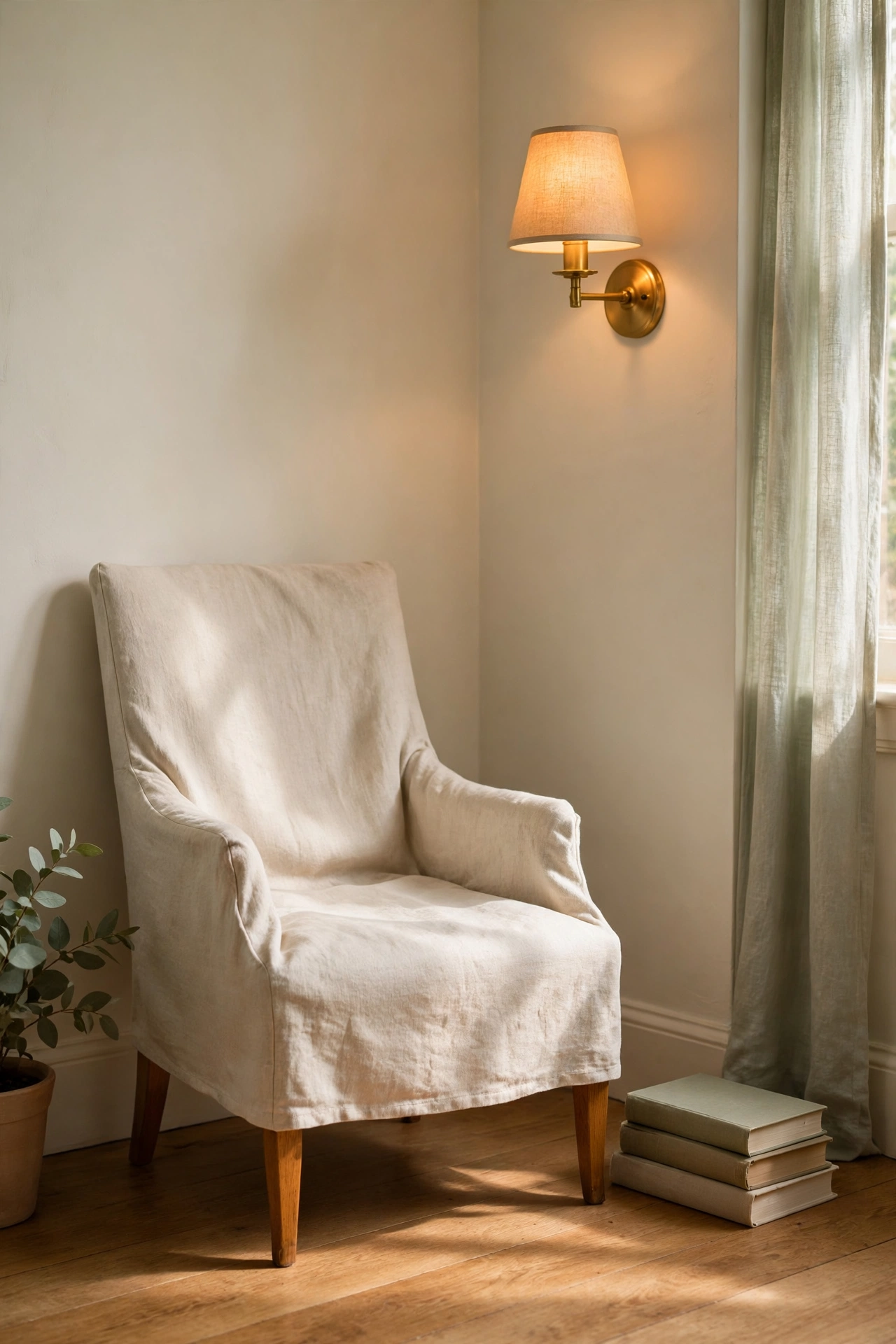
A slipper chair is the smallest real chair you can buy, and sometimes the smallest is the right answer. It has no arms, a low back, and a footprint so narrow it fits against a bedroom wall or in a hallway corner that nothing else will. It will not hold you for a three-hour read, but for a chapter before bed it is perfect. In a small bedroom, the right chair also changes how big the room feels, which is why it helps to know how to make a small bedroom look bigger before you pick the bulkiest seat.
The Formula
- Anchor: an armless slipper chair in a smooth linen-look fabric
- Support: a wall lamp and a narrow floating shelf for the book you are reading
- Accent: a small cushion in a warm solid color
Why It Works
No arms means no wasted width, and the low back keeps the chair from blocking the window or the art above it. It suits readers who sit upright and like to keep their feet on the floor, and it leaves the room looking bigger because your eye travels straight over it.
Space Needed
Look for a slipper chair under 26 inches wide with a seat height around 17 to 18 inches. It needs only about 24 inches of depth, so it works in corners as shallow as a hallway. Before you order, measure the doorway and the hallway turn, then ask will it fit through both without tilting the chair. Most doorways are about 30 inches wide, so a slim chair passes with room to spare.
Enter your chair size and doorway size to see if it should fit through.
Save or Invest
- Save on: the shelf — one short floating shelf holds tonight’s book and a small clock
- Invest in: a firm seat cushion, because a low armless chair with a soft seat makes you slide forward
5. The Deep Club Chair
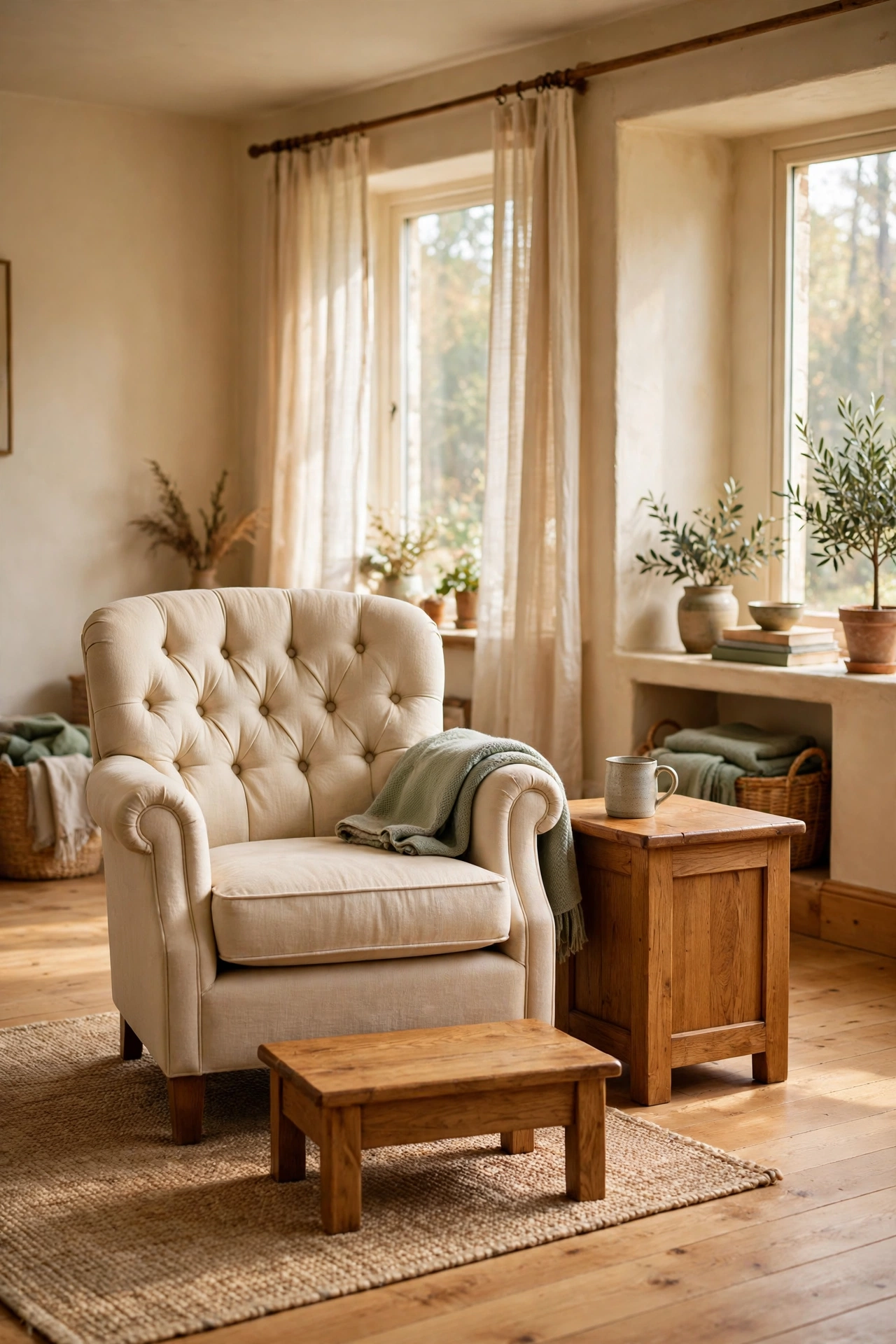
A club chair is the deep, tufted seat you sink into on a rainy afternoon. It has real arms, a real back, and enough depth to tuck one foot up beside you. If your corner has the room, this is the chair that turns reading from a habit into a ritual. A chair alone does not finish a corner, though, and the steps for how to create a reading nook in any corner cover the light, the table, and the layout around it.
The Formula
- Anchor: a deep club chair with a tufted back and wide arms
- Support: a sturdy side table and a small ottoman or footstool
- Accent: a folded throw in a soft sage green
Why It Works
Depth is the difference. A seat about 22 inches deep lets you shift position, cross a leg, and settle in for a long stretch without feeling pinned in place. The wide arms hold a mug, a phone, or an open book while you reach for the next chapter.
Space Needed
Plan for a chair about 28 to 30 inches wide and about 32 inches deep with the ottoman in front. Leave at least 3 inches of breathing room on each side of the chair, so the corner needs the chair width plus 6 inches in total. That breathing room is what keeps a deep chair from making a small room feel full.
Try it: type in your chair width and your corner width to see if the fit works.
Save or Invest
- Save on: the ottoman — a firm floor cushion or a low footstool gives your feet the same rest
- Invest in: the seat depth and the arm padding, because those are the parts your body touches for hours
6. The Curl-Up Cuddle Chair
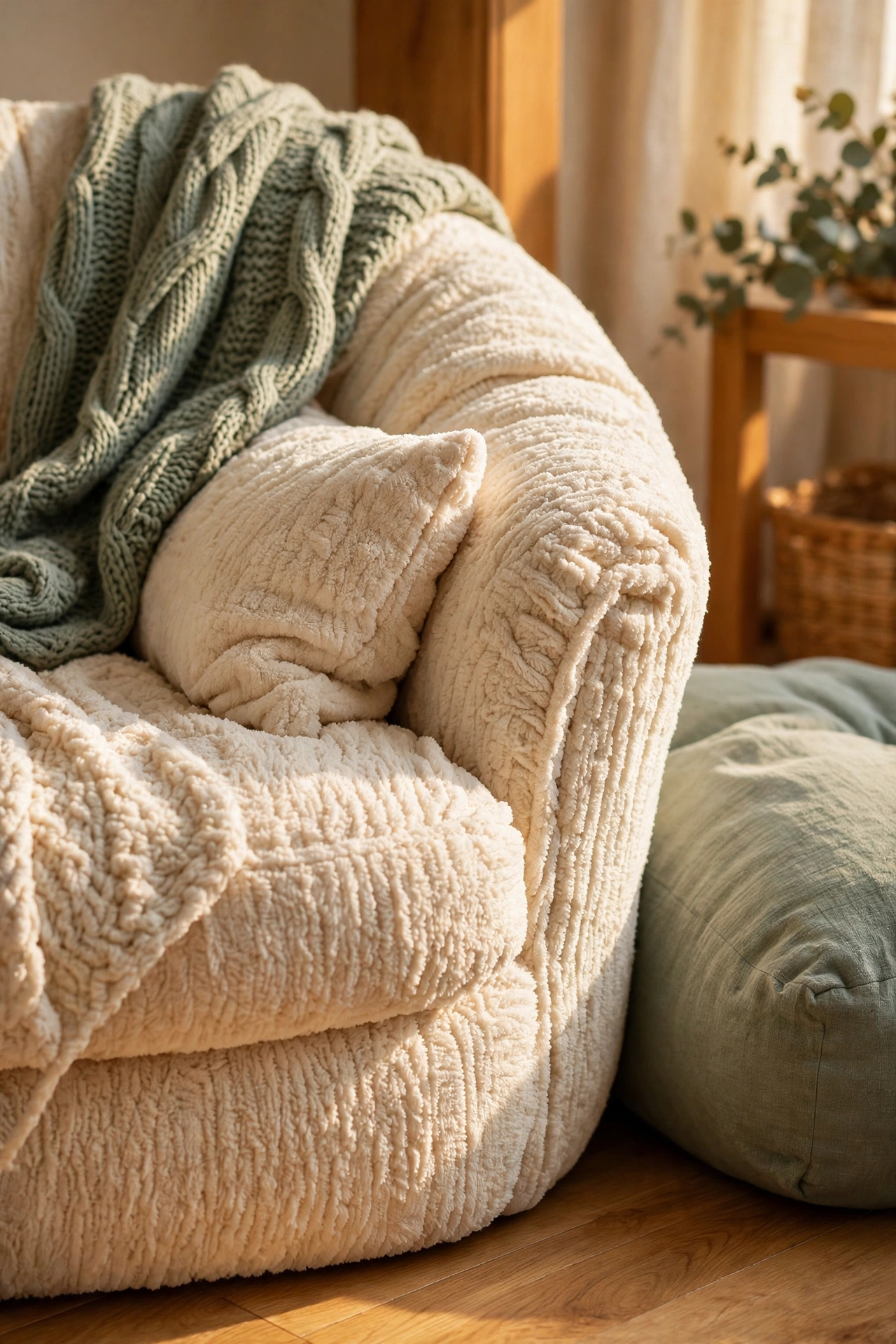
A cuddle chair is a wide, soft seat made for one reader who likes to curl sideways, knees up, book balanced on one knee. It is the closest a chair comes to a small sofa, and it is the pick for readers who never sit the way the chair expects them to.
The Formula
- Anchor: an oversized cuddle chair in soft chenille or sherpa fabric
- Support: a large floor cushion for extra seating and a warm floor lamp
- Accent: a chunky knit throw draped over the back
Why It Works
Width is comfort here. A seat about 38 to 41 inches wide gives you room to shift, stretch, and curl up without one arm digging into your side. It is the best chair for slow weekend mornings, when the book matters more than the clock.
Space Needed
A cuddle chair needs a real corner: about 38 to 41 inches wide and about 36 inches deep. Leave at least 3 inches of breathing room on each side, and keep the lamp outside the chair’s footprint so the shade never crowds your shoulder. This is not the chair for the narrowest corner — it earns its space by being used every day.
Save or Invest
- Save on: the floor cushion — a simple cushion in a matching fabric adds seating for a guest
- Invest in: the fabric, because a chair you curl up in touches skin all day, and a soft, washable cover is worth it
7. The Stretch-Out Chaise
A chaise is the chair for readers who like to lie almost flat, legs stretched out, book held above their chest. It is the longest piece in this list, and it suits a corner with one long wall rather than a square nook. If your reading style is horizontal, this is your chair.
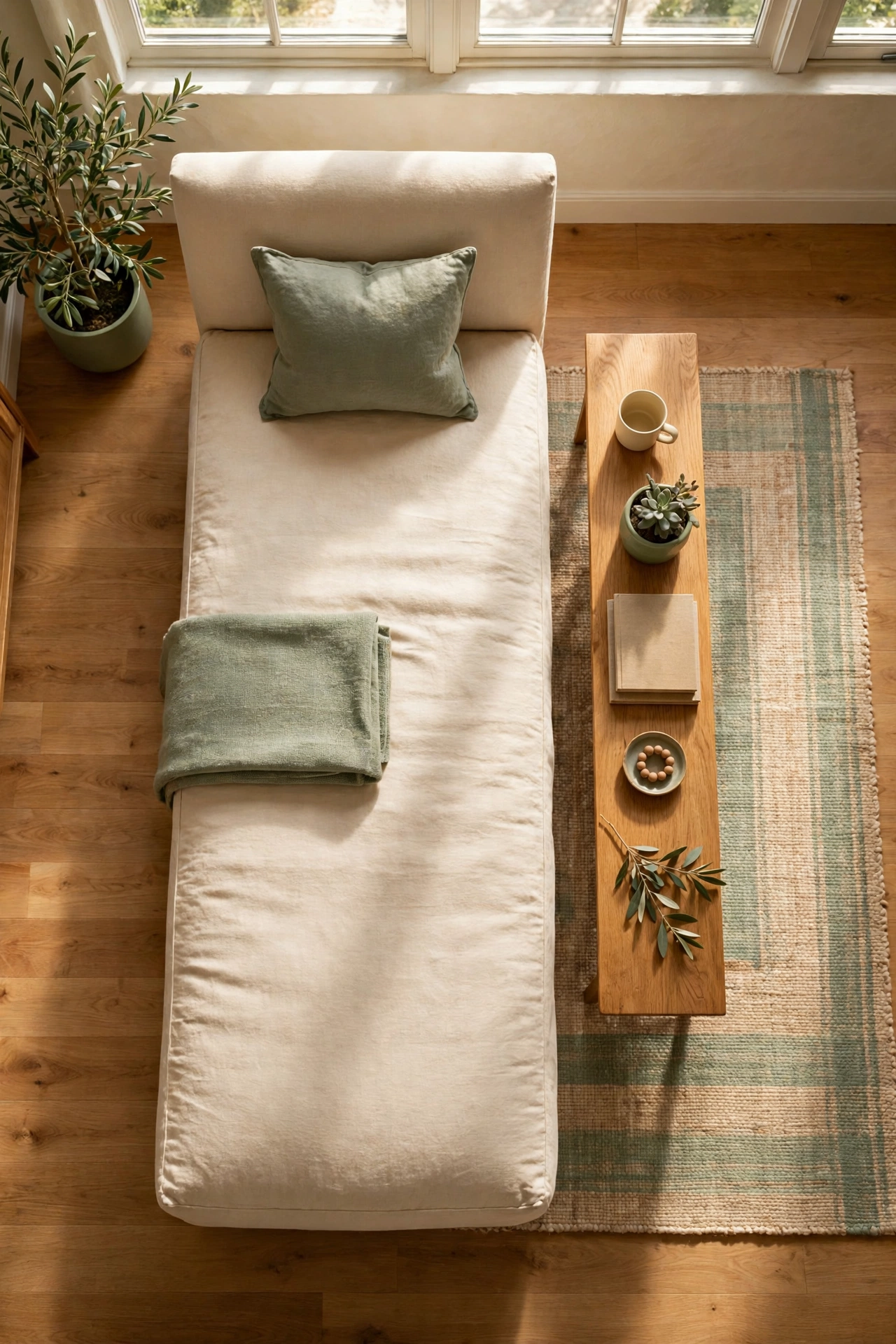
The Formula
- Anchor: a chaise lounge with a raised back at one end
- Support: a long, low side table and a floor lamp with a warm bulb
- Accent: a small cushion at the raised end for your head
Why It Works
Length is the point. A chaise about 55 inches long lets you stretch fully, which no upright chair can do, and the raised end supports your head without a stack of pillows sliding around. It is the best seat for slow afternoons when the book is long and the day is short.
Space Needed
A chaise needs about 55 inches of wall and about 30 inches of depth. Leave at least 3 inches of breathing room at the foot end so you can stand up without turning sideways. Place it along the longest wall, not across the corner, or the room will feel cut in half.
Save or Invest
- Save on: the cushion — one firm cushion at the head end is enough, the rest is the chaise itself
- Invest in: the frame, because a long seat puts more weight on the middle, and a weak frame sags first there
8. The Lean-Back Recliner
A recliner is the chair for readers with a sore back or long evenings ahead. It leans back, lifts your feet, and holds you at the angle where the page stays in focus and your shoulders drop. It looks like the least delicate chair here, and it is also the most forgiving.
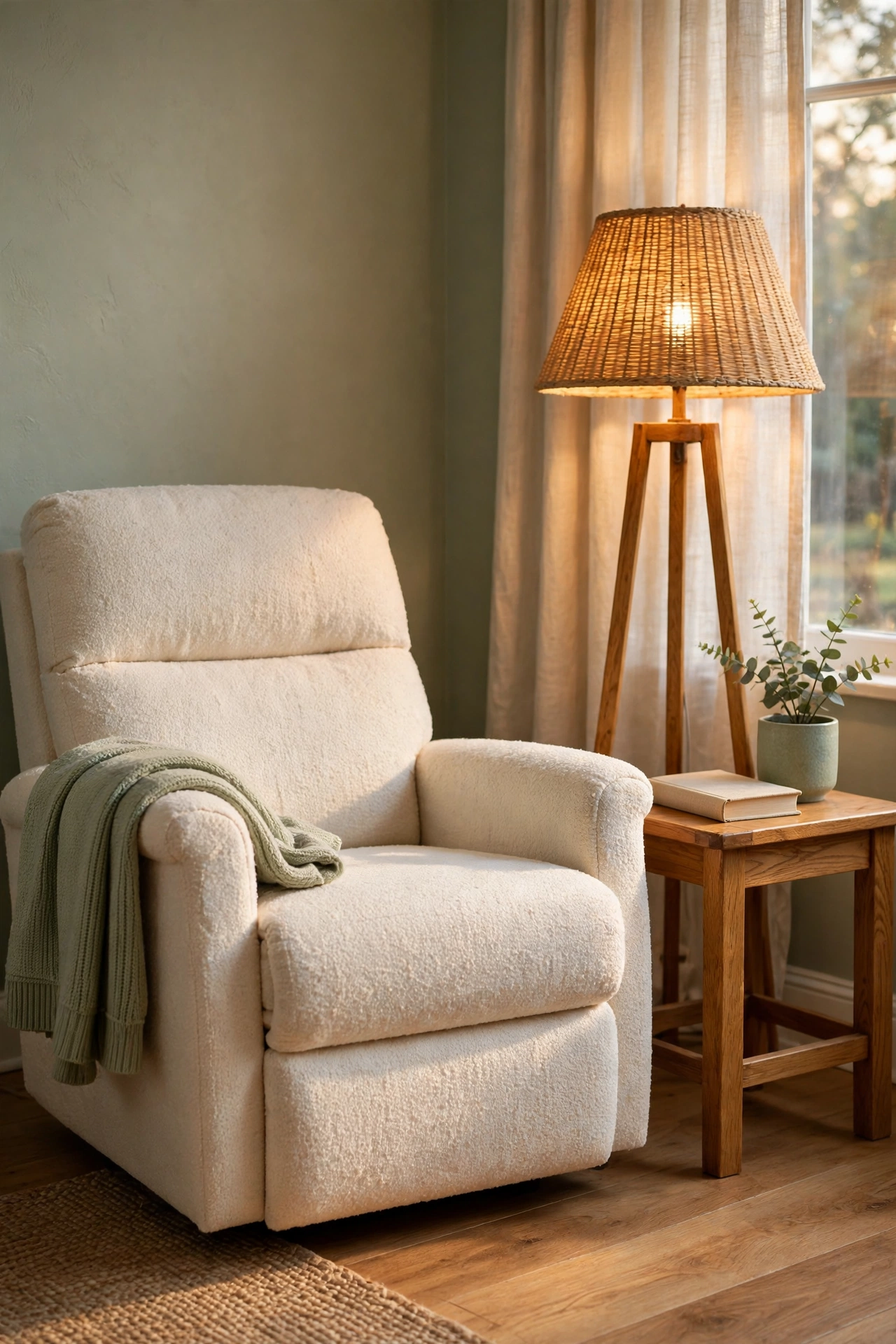
The Formula
- Anchor: a recliner with a smooth, quiet mechanism
- Support: a side table within arm’s reach and a small reading light
- Accent: a folded throw over the arm for cool evenings
Why It Works
The lean-back angle is what your back has been asking for. A chair that reclines a little takes the weight off your lower back, and a footrest lifts your legs so your feet do not swell during a long read. It is the chair for readers who finish the chapter because the chair lets them, not in spite of it.
Space Needed
Plan for about 30 inches wide and about 36 inches deep when open, with about 12 inches of clear space behind it so the back can lean without hitting the wall. Leave at least 3 inches of breathing room on each side. Check that the reclining handle or button is easy to reach while you are sitting down.
Save or Invest
- Save on: the throw — any soft throw you already own keeps the chair warm
- Invest in: the reclining mechanism, because a stiff or noisy mechanism is the part you will notice every single day
Quick Look Cheat Sheet
Use this table to compare the eight looks at a glance, then check the measurements against your corner.
| Look | Anchor Piece | Budget Swap |
|---|---|---|
| Cocoon Barrel Chair | Barrel chair | Wooden stool table |
| Classic Wingback Chair | Wingback chair | Any firm cushion |
| Easy Swivel Armchair | Swivel armchair | Small trailing plant |
| Slim Slipper Chair | Slipper chair | Short floating shelf |
| Deep Club Chair | Club chair | Firm floor cushion |
| Curl-Up Cuddle Chair | Cuddle chair | Simple floor cushion |
| Stretch-Out Chaise | Chaise lounge | One firm cushion |
| Lean-Back Recliner | Recliner | Any soft throw |
The Formula Behind These Looks
Every chair above follows the same three-part formula, and that is why the list works as a set. Once you see the formula, you can build a nook from any chair you already own.
The Best Accent Chairs Reading Nook Formula Starts With the Anchor
The chair is the anchor, and everything else supports it. Pick the chair first, then add the light and the table to suit it — not the other way around. A lamp bought first often ends up too tall, too dim, or on the wrong side of the chair.
Repeat One Color or Material
One repeated color or material ties the corner together. A honey oak side table beside a honey oak shelf, or a sage green throw that matches a sage cushion, makes the corner look planned instead of collected. Two repeats are enough; three start to feel like a set.
Leave Breathing Room
Breathing room is the space around the chair that lets it look like furniture instead of clutter. Sketch the furniture layout on paper before you move anything heavy, and mark the walking path first. If the path is clear, the corner will feel calm even when the chair is large.
Match the Scale to the Corner
A small corner needs a small chair, and a long wall can hold a long chaise. The mistake is not buying a big chair — it is buying a big chair for a small corner. Measure the corner first, then choose the look whose numbers fit it.
Common Reading Nook Mistakes Worth Skipping
Buying Before Measuring
The chair arrives, it does not fit through the door, and the return takes a week. Measure the doorway, the hallway turn, and the corner itself before you order, and write the numbers down. A tape measure costs less than a return label.
Filling the Corner With Too Many Small Pieces
Three small tables, two baskets, and a plant stand crowd a corner faster than one large chair does. Pick the chair, one table, and one light, then stop. If the corner still feels empty, add one plant — not three.
Forgetting the Light
A chair without a light is a chair you will not use after dark. Put the lamp within arm’s reach of the seat, with a warm 2700K bulb that lights the page without lighting the whole room. A clip-on light works when there is no room for a lamp at all.
Ignoring the Walkway
A chair that blocks the path to the bed or the door will be moved, resented, and eventually replaced. Leave a clear walking path past the nook, even if it means choosing the slimmer chair. A nook you can walk past is a nook you will actually use.
Reader Questions Answered
What size chair fits a small reading corner?
Look for a chair under 30 inches wide with at least 3 inches of breathing room on each side. That means the corner needs the chair width plus 6 inches in total. A barrel chair as narrow as 25 inches wide fits corners that nothing else will.
Which fabric is best for a reading chair?
Pick a fabric you can clean easily and sit against for an hour: chenille, bouclé, velvet, and linen-look fabrics are all good choices. Check the care label before you buy, and choose a washable cover if the chair will be used every day.
Can a reading nook work in a rented room?
Yes. A chair needs no drilling, no painting, and no permission from a landlord. If you add a wall lamp or a floating shelf, check your lease first, and prefer plug-in lighting, adhesive hooks within their stated weight limit, and leaning art instead of fixed fixtures.
Do I need an ottoman?
No. An ottoman is pleasant, but a firm floor cushion or a low footstool rests your feet just as well and takes up less floor. Buy the ottoman only if you have the space and you know you will use it every time you sit down.
What light works best for reading?
A warm 2700K bulb in a lamp placed within arm’s reach of the chair, with the shade at about shoulder height when you sit. That lights the page without glare and without lighting the whole room, so the rest of the evening stays calm.
Final Tips for Success
Measure Twice, Order Once
Keep these numbers together before you shop, so every chair you look at gets the same honest check.
- Corner width and depth, in inches
- Doorway width and hallway turn, in inches
- Seat height that lets your feet rest flat, around 18 inches
- At least 3 inches of breathing room on each side
- The lamp position, within arm’s reach of the seat
Test the Sit Before You Commit
Sit in the chair the way you actually read: feet up, book open, ten minutes at least. A chair that feels good for thirty seconds in a shop can still be wrong for a chapter. If you are buying online, check the return terms before you order.
Keep the Nook Easy to Tidy
A nook with one chair, one table, and one light takes two minutes to tidy. A nook with five small pieces takes ten, and you will stop doing it. Fewer pieces means the corner stays inviting, even on a busy week.
Let the Chair Earn Its Corner
Give the chair two weeks of real use before you decide it is the wrong one. A new chair feels strange on the first day and familiar by the second week. If it still does not suit you after two weeks of daily reading, that is the time to swap it.
Conclusion
The best accent chairs reading nook owners love are not the biggest or the most expensive ones. They are the chairs whose numbers fit your corner, whose seat suits the way you read, and whose fabric you want to touch every day.
Start with the corner, not the chair. Measure it, note the light, and pick the look whose width, depth, and breathing room match what you have. A barrel chair for a tight corner, a wingback for long chapters, a swivel for a sunny window — each one earns its place the same way, by fitting the room you live in.
Save this guide for the next time you rearrange the room, and start with the tape measure.