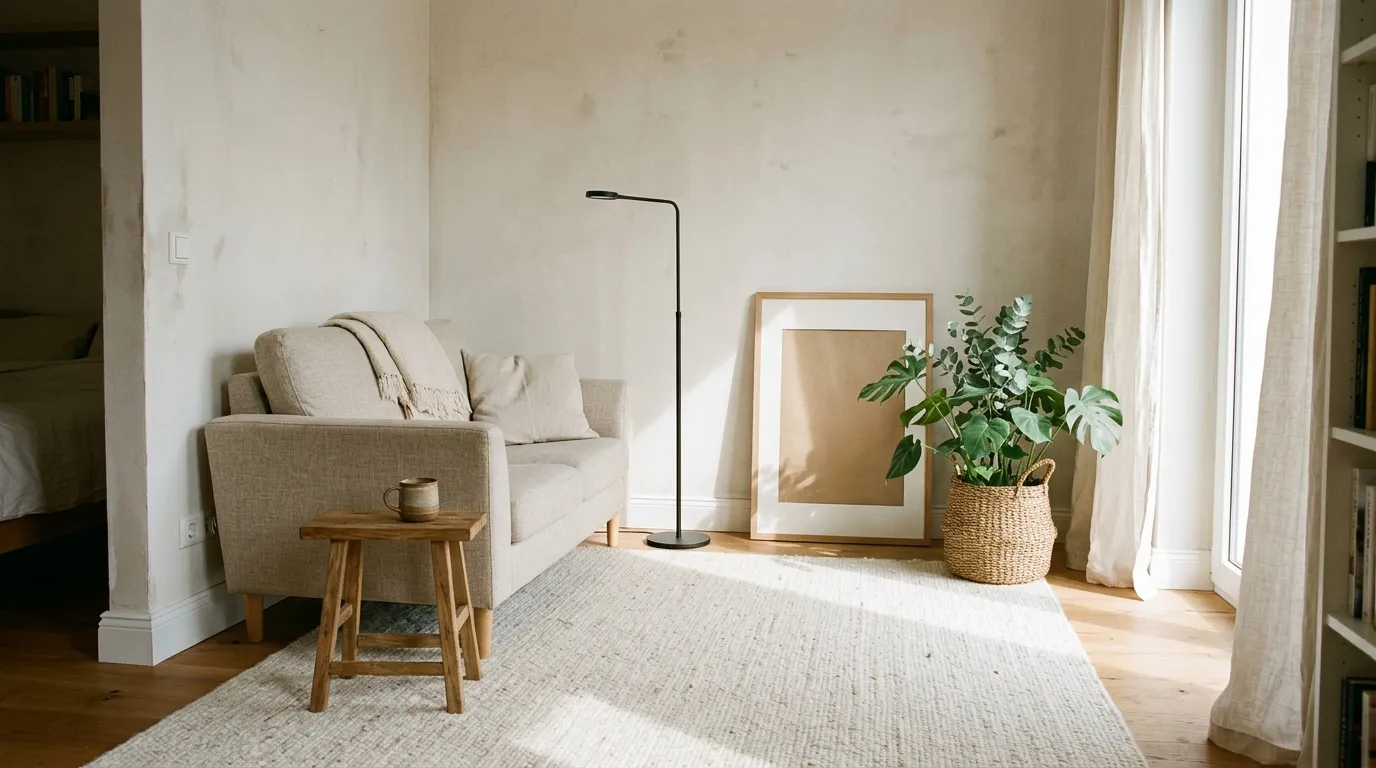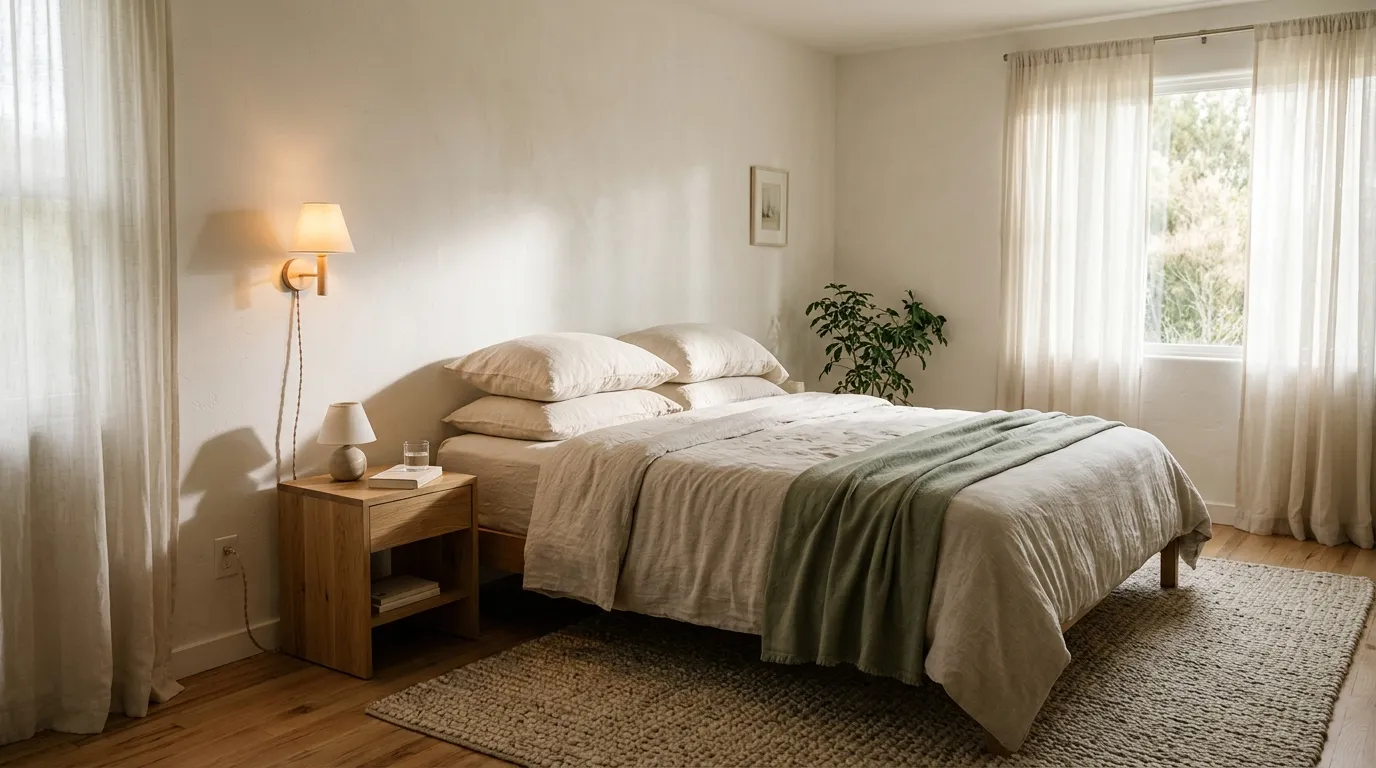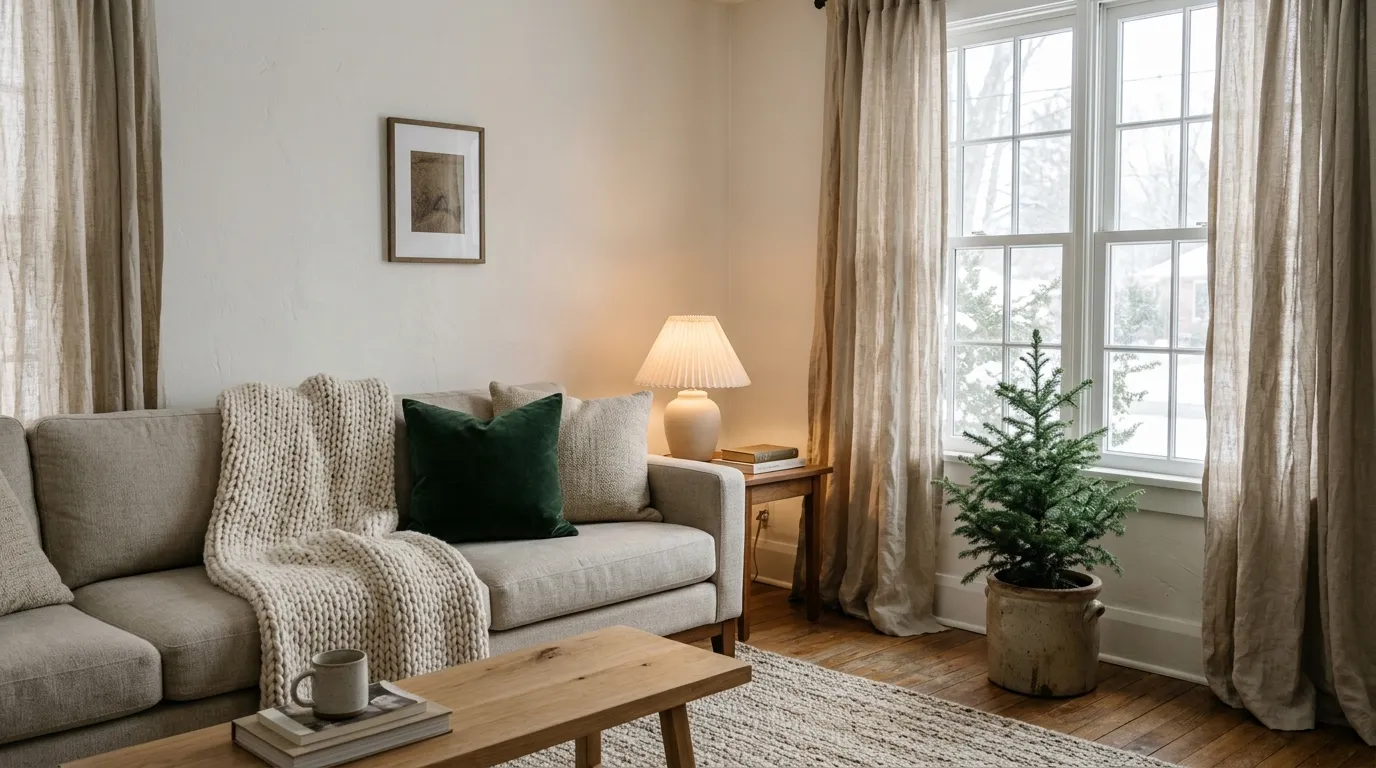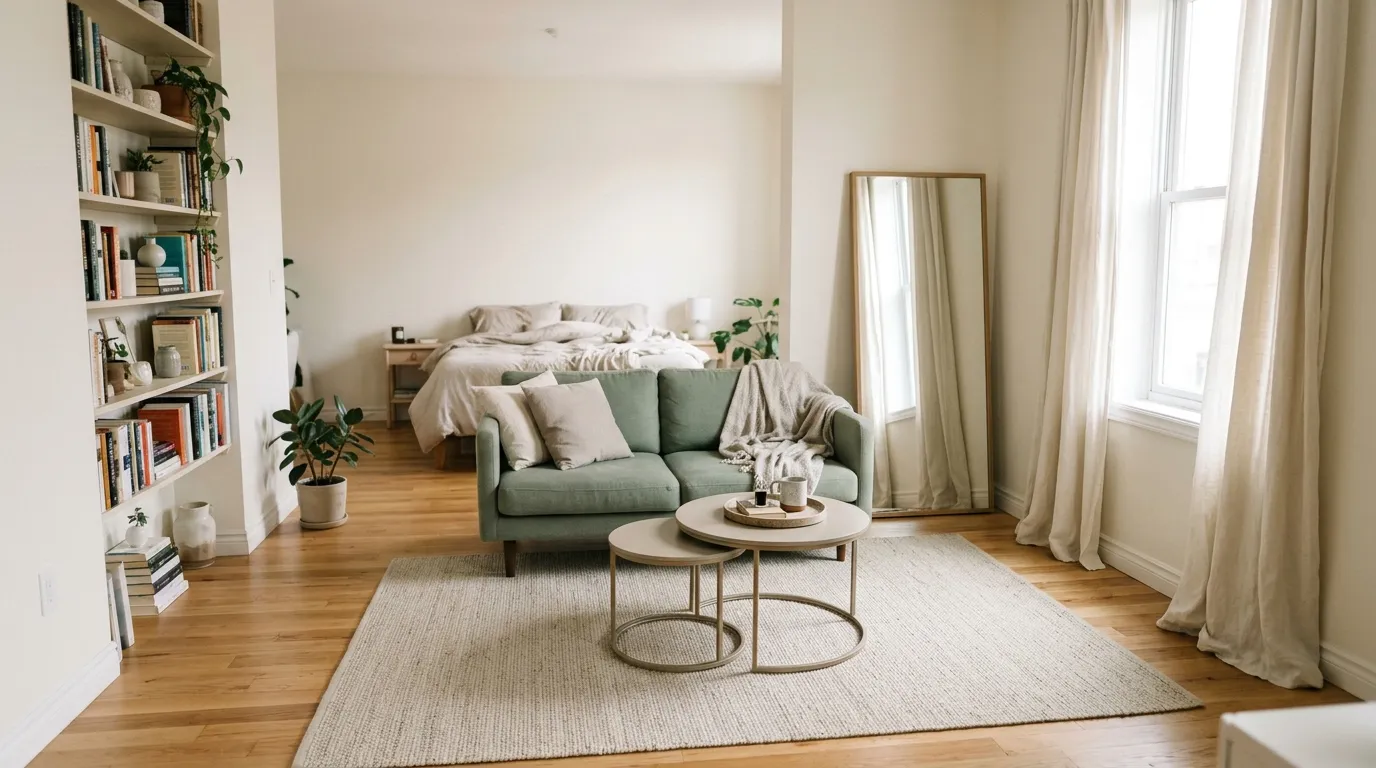

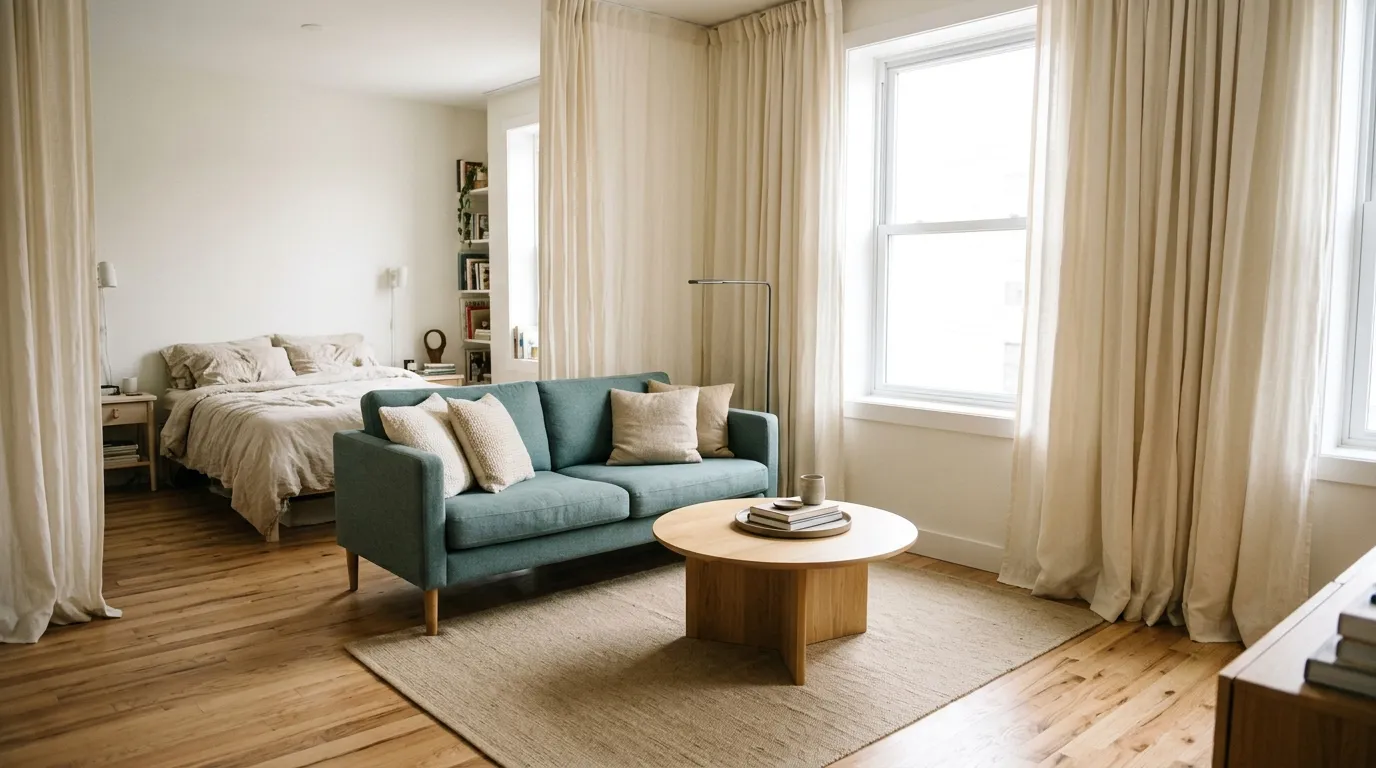
The sofa is buried under a laundry pile, so dinner happens on the edge of the bed with a plate on your knees. When one room has to work as bedroom, entryway, and lounge, finding small living room ideas for studio apartments is less about style and more about giving each job a spot of its own.
The goal is a sitting area that looks chosen rather than leftover, with a clear edge, a path you can walk without turning sideways, and furniture sized for the floor you really have.
Each look below runs on one recipe: a single anchor, a helper or two, and a small finishing detail. I’d start with whichever one fixes your most annoying problem.
1. Daybed That Doubles as the Sofa
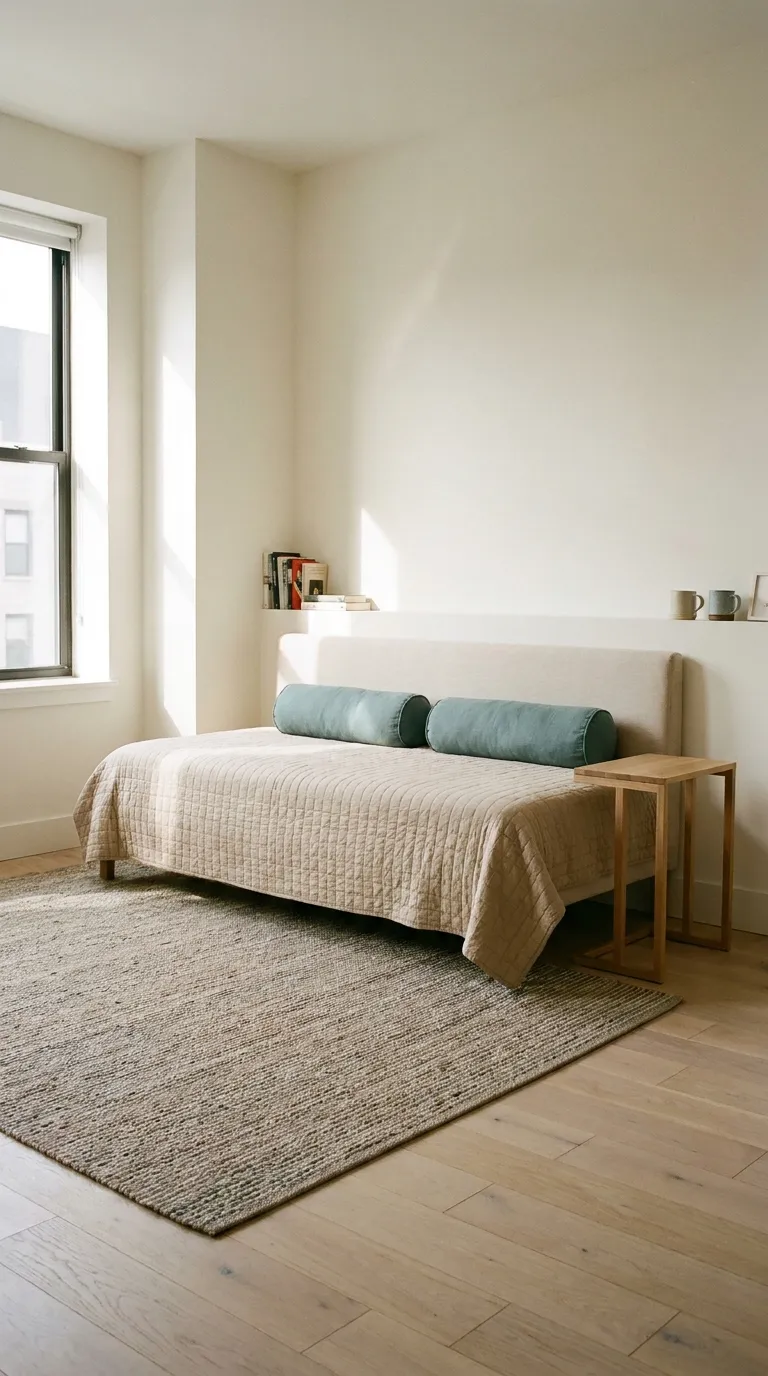
When the bed is the biggest object in a studio and the sofa gets whatever space is left, combine them. A daybed or sofa bed with a firm back puts sleeping and lounging in one footprint, which gives the room a clear front and back.
The Formula
- Anchor: a twin daybed or a sofa bed with a firm back and arms
- Support: two bolsters or square pillows to lean on, plus a narrow side table at one end
- Accent: a quilted coverlet in a muted tone that echoes your rug
Why It Works
Once the mattress wears a tailored cover and a row of pillows, it reads as a sofa during the day, so no seat faces a bed. The catch is a nightly routine, because the pillows and extra bedding need somewhere to land.
Space Needed
A twin mattress measures about 38 × 75 inches, so reserve roughly 80 inches of wall and 30 inches of clear floor along the open side. The seat is deep, so add a couple of back pillows if you like sitting upright, and expect it to host you plus one guest rather than a crowd.
Save or Invest
- Save on: bolster and coverlet fabric, which is quick to replace
- Invest in: the mattress or the sofa-bed mechanism, since it handles bedtime and daytime sitting alike
2. Rug Zone With a Floor Border
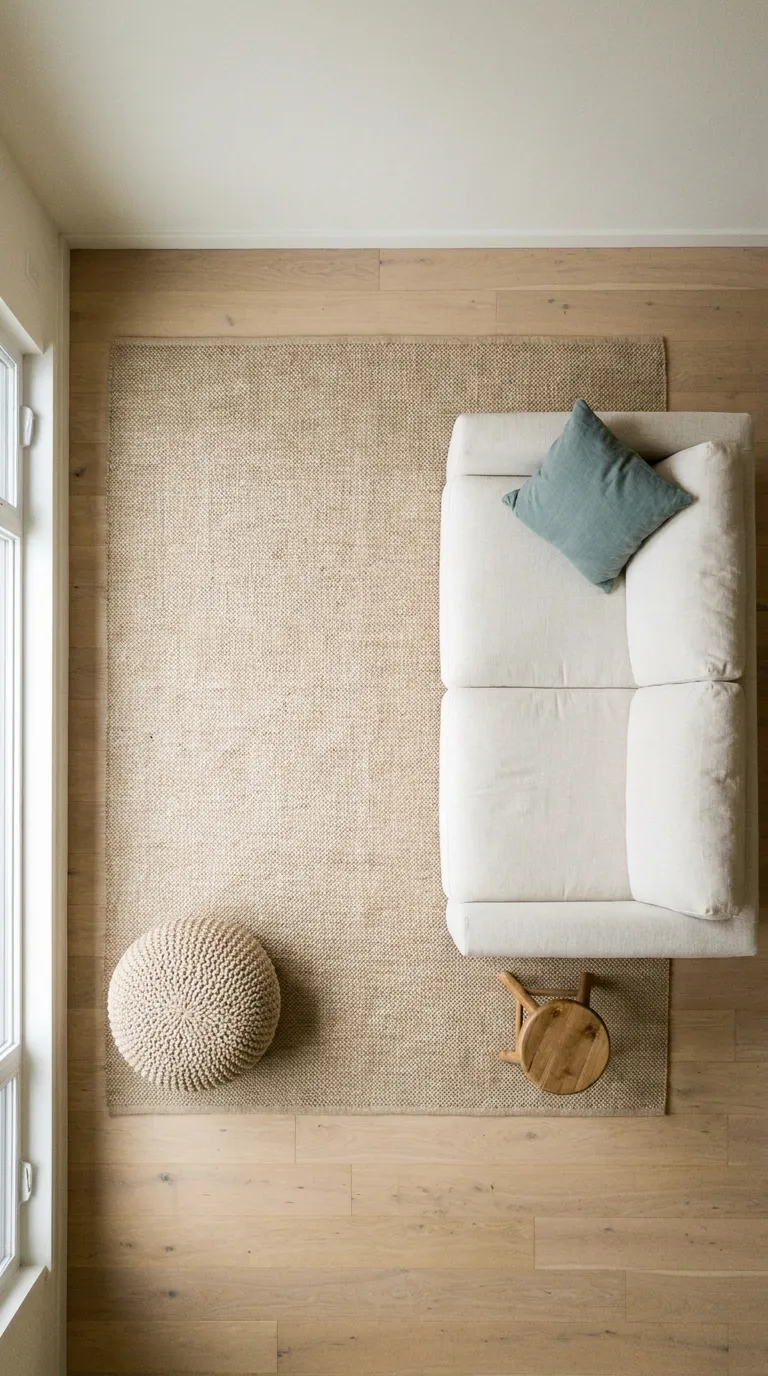
A sofa that floats in open floor with nothing around it makes the whole studio blur together, and the seating never feels like a destination. A rug is the least expensive way to draw an edge you can read from the front door.
The Formula
- Anchor: a sand or oatmeal flat-weave rug wide enough to catch the sofa’s front feet
- Support: a round pouf tucked beside the sofa and a petite stool at the far corner
- Accent: a throw pillow that picks up the rug’s quiet second shade
Why It Works
Think of the rug as a picture frame: anything on it reads as one group, and anything off it belongs to the rest of the room. The frame fails when the rug reaches every wall, since the edge you wanted is gone.
Space Needed
A 5 × 8 rug is a sensible starting size, and 6 × 9 works in a roomier studio. Stop the rug about 12 inches short of the walls so a strip of bare floor outlines it. Low-pile or flat weaves also let a door swing past without catching.
Save or Invest
- Save on: a loud print, since a quiet weave outlines the zone equally well
- Invest in: a grippy rug pad, which keeps corners from curling and cushions each step
3. Raised-Leg Apartment Sofa
Deep, skirted sofas can eat half a studio’s sitting area before any side table arrives. A compact sofa that shows its legs still gives you a proper seat, and it leaves more of the floor visible.
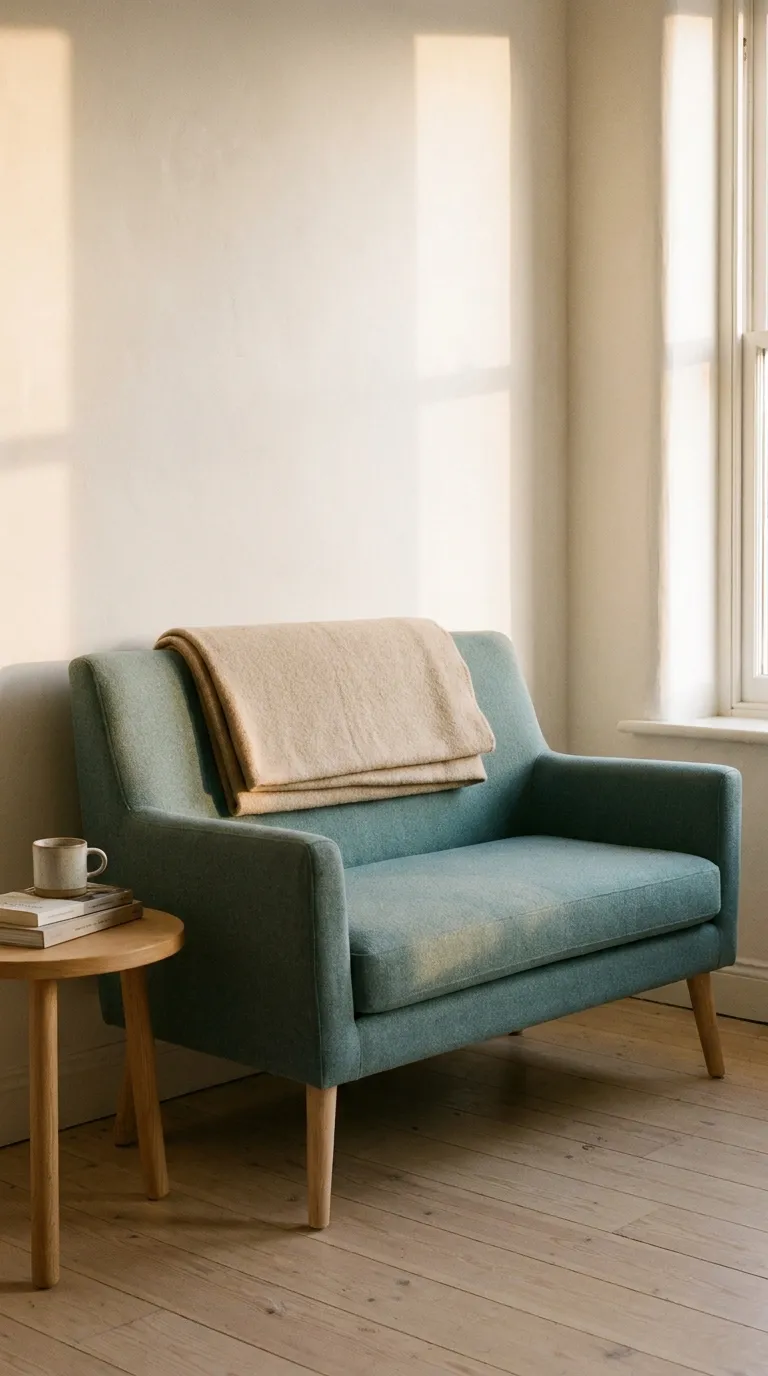
The Formula
- Anchor: a compact sofa, roughly 72 to 80 inches long, with narrow arms and tall tapered legs
- Support: a small table within reach of one end seat
- Accent: a wool blanket folded along the backrest
Why It Works
Floor visible beneath the sofa, plus narrow arms, lets light slide through, so the piece looks smaller than its measurements. You give up some lounging space, which makes it better for you and the odd visitor than for movie night with friends.
Space Needed
Pick the wall first and shop second, because compact sofas of this kind usually run 72 to 80 inches. Start from your studio’s square footage, draw a furniture layout on graph paper, and leave 30 inches open on every route you walk daily.
Type in your studio’s length and width, then add each piece you own, and the bar shows what share of the floor they use.
Save or Invest
- Save on: the side table and the blanket, both easy to find secondhand
- Invest in: a solid frame and resilient cushions, because this piece takes the most wear
4. Round Pedestal Coffee Table
Rectangular coffee tables have corners that find your shins in a tight studio. A round one on a single pedestal lets you glide past, and it still gives you a landing spot for a mug or a laptop.
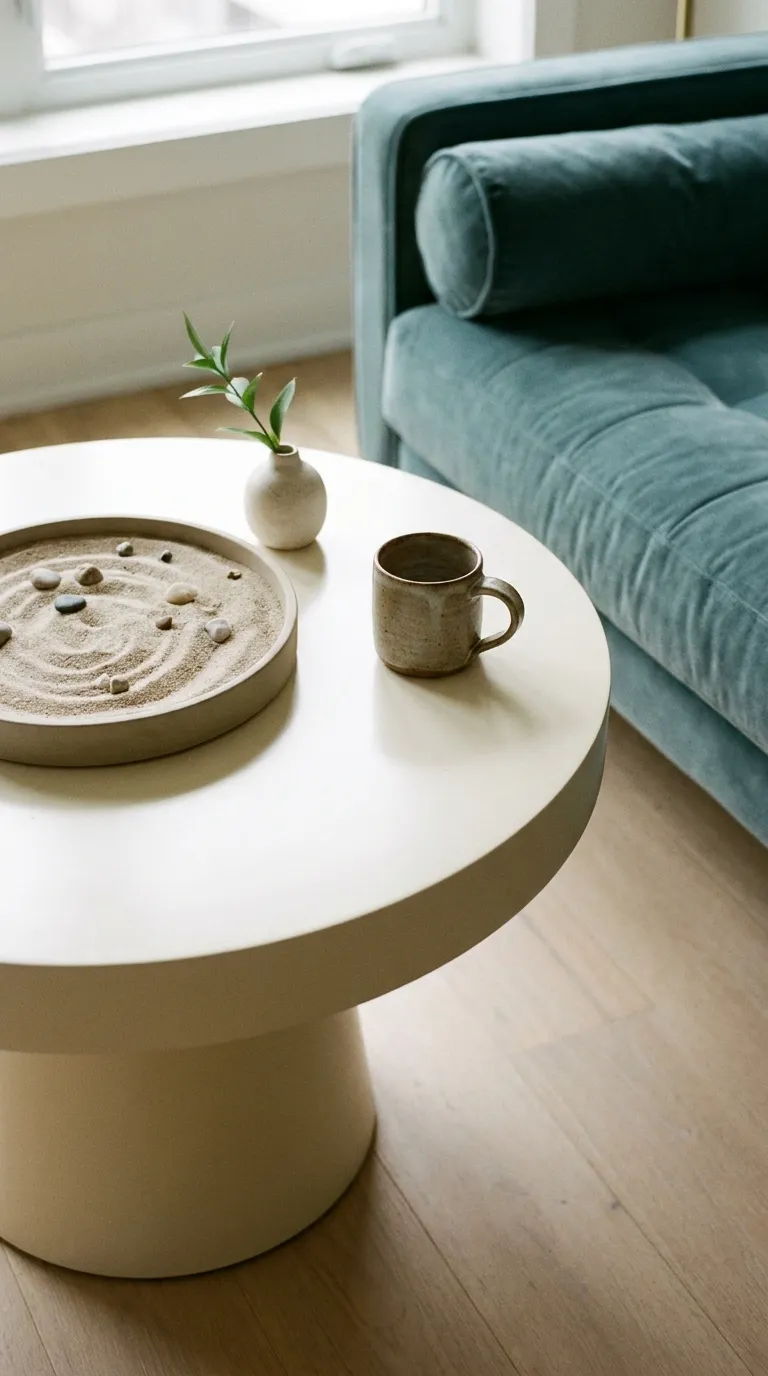
The Formula
- Anchor: a round pedestal table about 30 inches across
- Support: a shallow tray that corrals everyday odds and ends
- Accent: a stoneware mug or one stem in a bud vase
Why It Works
Curves give your hips and knees a gentle route around the table, and the single base leaves legroom underneath. The top is small, so it carries a drink and a book instead of a full dinner for guests, which is usually all a studio needs from it.
Space Needed
Keep 14 to 18 inches between the table edge and the sofa, close enough to reach and far enough to spare your knees. If the sofa sits near a wall, slide the table slightly off center so the path to the kitchen stays open.
Save or Invest
- Save on: the tray and the vase, since styling bits cost little to replace
- Invest in: a weighty pedestal base, since a light one wobbles whenever you lean
5. Waist-High Cube Shelf Divider
When the bed sits only a few steps from the sofa, your pillow is in view from every seat. Turning a cube bookcase into a divider separates the two areas while still passing light between them.
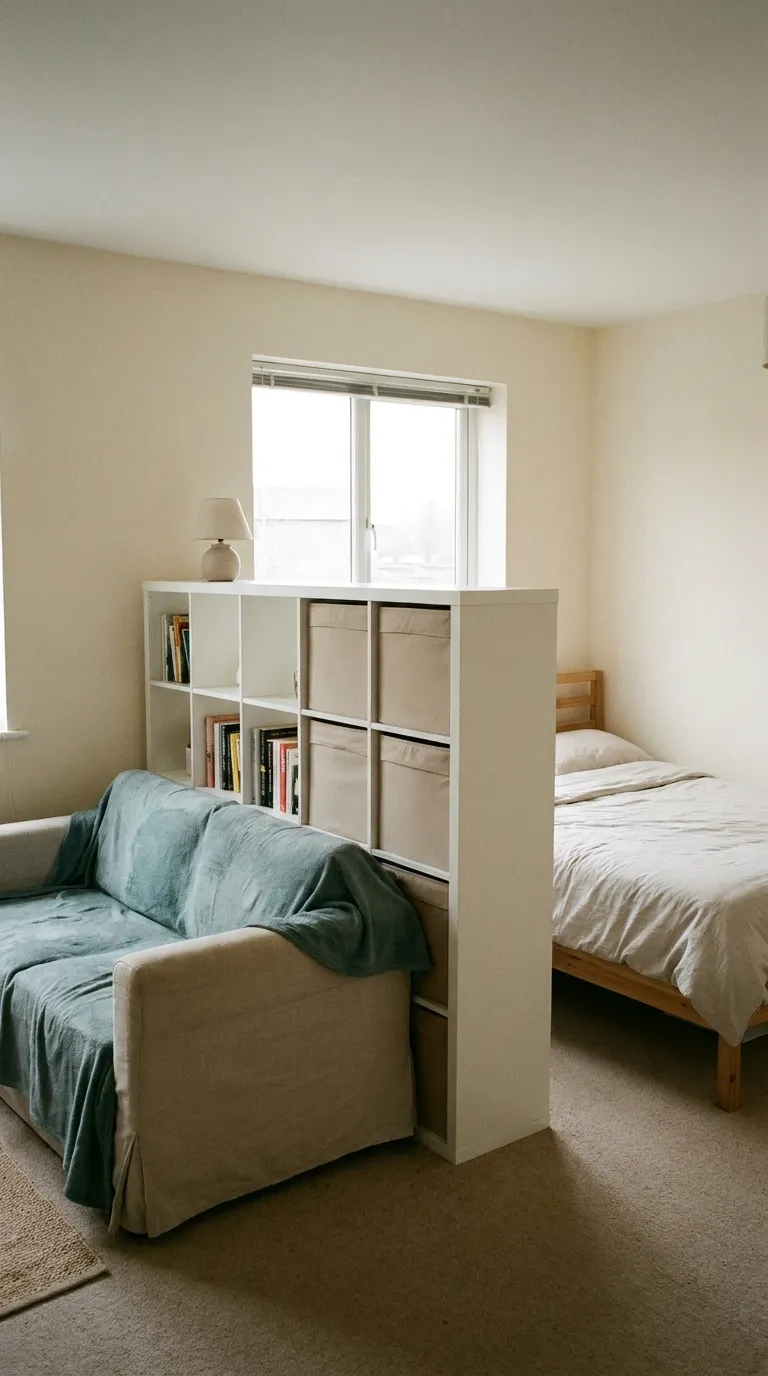
The Formula
- Anchor: a cube bookcase between the sofa and the bed, no taller than your chest
- Support: lidded bins on the bed side and open cubes with books on the sofa side
- Accent: a framed print or a small lamp resting on top
Why It Works
Bins hide the bedside mess while the open cubes show a few favorites, so each zone keeps its own character. A divider that stays under chest height lets the room read as one wide space. It blocks sightlines, not sound, so it can’t stand in for a wall.
Space Needed
Choose a unit about 12 to 16 inches deep and as wide as the back of the sofa. Hold 30 inches of walkway open at one end at least, so neither zone becomes a dead end.
Save or Invest
- Save on: baskets and bins, which you can rotate whenever you like
- Invest in: a sturdy frame, since dividers get leaned on and bumped
Renter-Friendly Swap
Read your lease before putting any hardware into the wall. A low, wide freestanding unit is stable on its own, and for a taller one you can use anchors rated for the load and follow the maker’s instructions.
6. Window Storage Bench
The wall under a studio window is usually bare, and your spare blankets are usually somewhere worse. A lidded bench fills that spot with seating, hidden storage, and a place to perch with a mug.
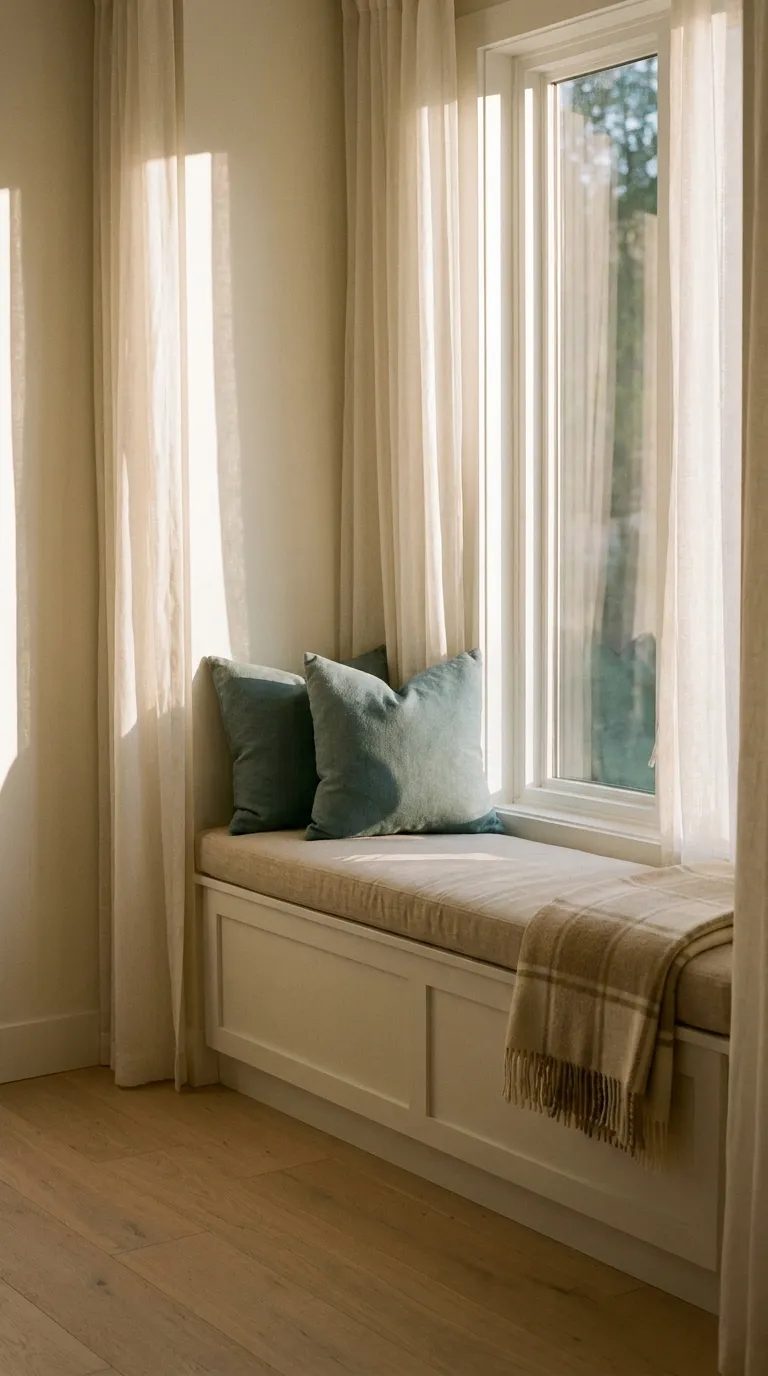
The Formula
- Anchor: a lidded storage bench that fits beneath the window
- Support: a seat cushion and one or two pillows along the wall
- Accent: a folded wool blanket at one end
Why It Works
A seat by the window pulls your eye toward the daylight, and the lid hides what would otherwise pile up on the floor. It also gives a visitor somewhere to sit without dragging a chair across the room. The idea works best under a sill with open space below and no radiator, so check what’s down there before you buy.
Space Needed
A bench around 36 to 48 inches wide suits most studio windows, so measure the wall below the sill first. Keep about 18 inches of clear floor in front so the lid opens all the way.
Save or Invest
- Save on: cushion and pillow covers, since fabric swaps are cheap
- Invest in: sturdy hinges, because you’ll open the lid constantly
7. Three-Lamp Triangle
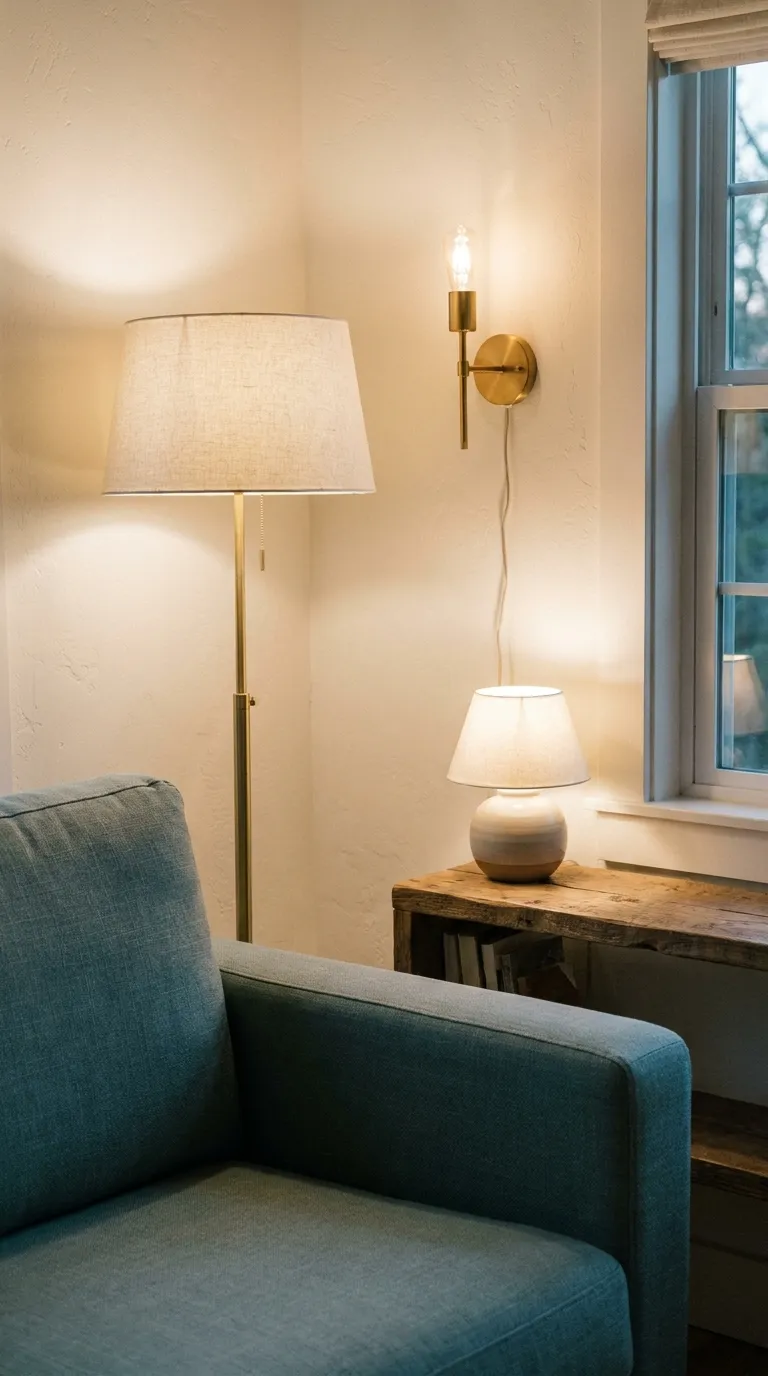
A single ceiling light turns a studio into a flat, bright box after dark. Placing three small light sources around the sitting area gives the evening a warm center without lighting the whole room.
The Formula
- Anchor: a floor lamp standing beside the sofa
- Support: a small table lamp on a shelf, with a plug-in sconce as the third light
- Accent: soft white bulbs under fabric shades
Why It Works
Three pools of light at three heights form a soft triangle around the sofa corner and let the rest of the studio fade back. The trade-off is a few cords, so you need an outlet near the seating.
Space Needed
Set the floor lamp about 12 to 18 inches from the sofa arm so the shade clears your shoulder, and look for a shelf at least 8 inches wide for the second lamp. Run cords along the baseboard so they stay out of your walking path.
Save or Invest
- Save on: bulbs and shades, which you can change later
- Invest in: a heavy base, because tall lamps with light bases fall over
Renter-Friendly Swap
Plug-in lamps and sconces require no wiring. Mounting even a plug-in sconce touches the wall, so read your lease first, and call a licensed electrician for any job beyond plugging in.
8. Rolling Cart Side Table
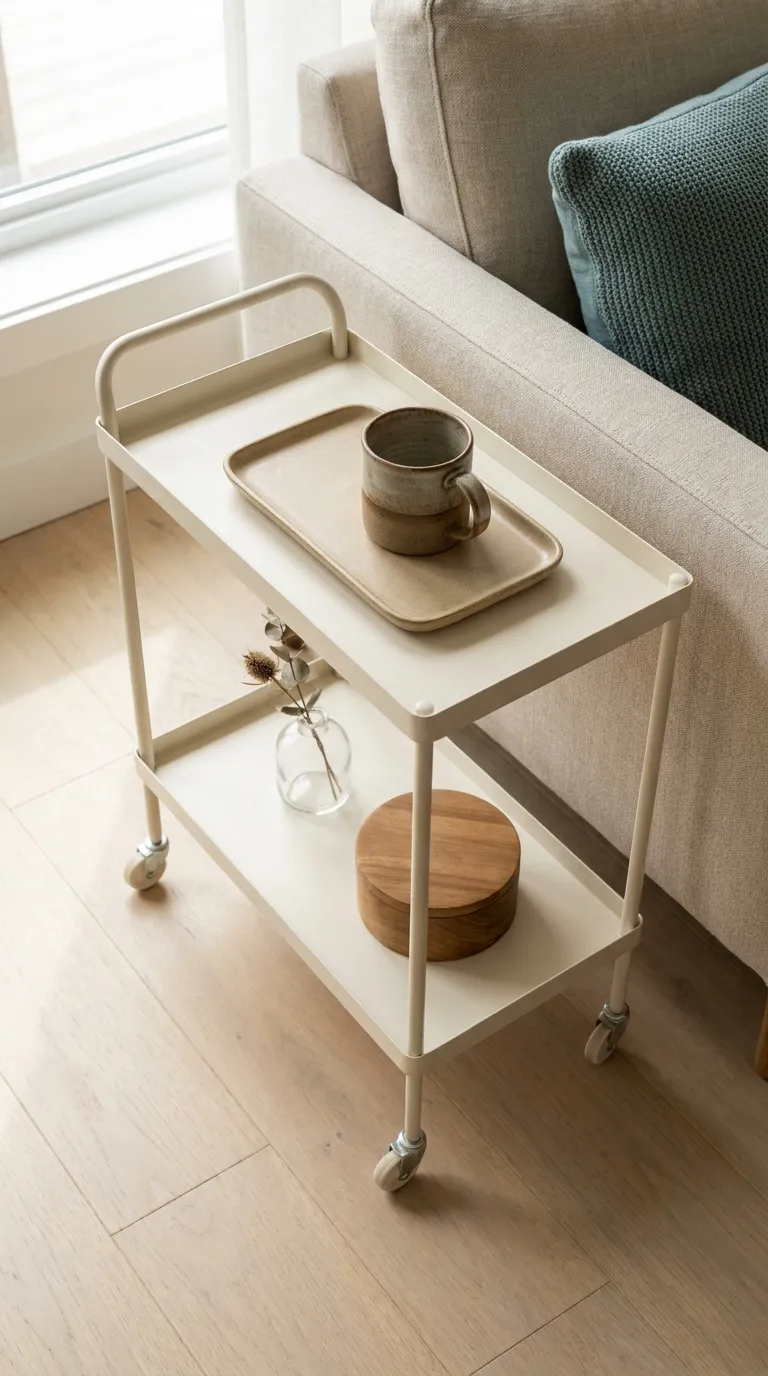
A fixed side table always seems to be in the wrong place. A slim rolling cart travels from the sofa to the kitchen counter and parks beside you whenever you want a surface within reach.
The Formula
- Anchor: a narrow rolling cart with two or three tiers
- Support: a small tray on the top tier and a lidded box on the lower shelf
- Accent: a bud vase holding one stem
Why It Works
A cart earns its place by moving, so the floor around the sofa stays open whenever it’s parked elsewhere. It holds less than a real table, and wheels without locks will let it drift.
Space Needed
Choose a cart about 12 to 16 inches wide so it can slide into the gap beside the sofa arm. Pick a parking spot outside your 30 inch walking path, so the cart never becomes the obstacle.
Try it: slide each gap to the number you would tape on the floor, then check it.
Save or Invest
- Save on: the tray and vase, which cost little to change
- Invest in: smooth casters with locks, since sticky or runaway wheels ruin the idea
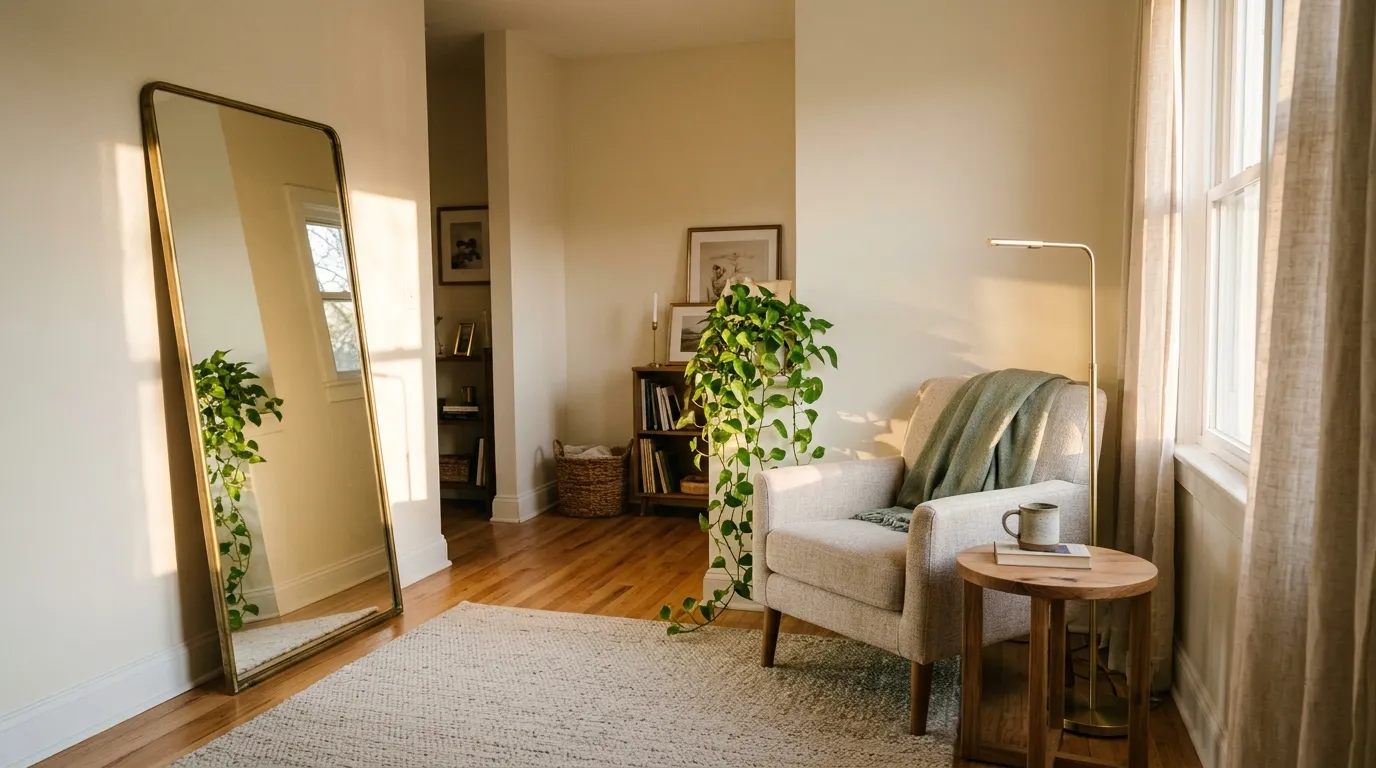
9. Long-Wall Floor Mirror
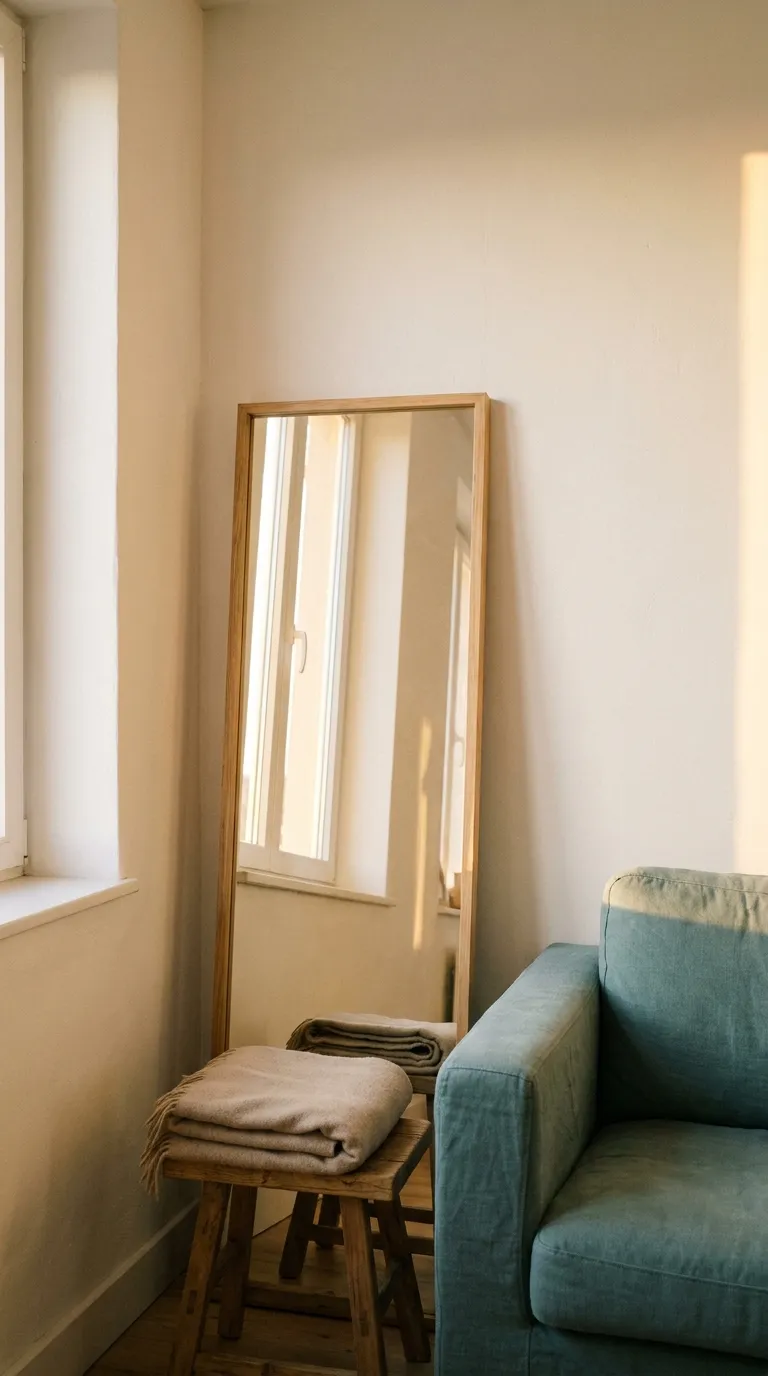
A long, plain wall beside the sofa makes a studio feel like a corridor. A tall mirror leaned on it adds depth and bounces the window’s daylight toward the seating.
The Formula
- Anchor: a tall floor mirror leaned on the wall and angled toward the window
- Support: a low stool or small basket at its base
- Accent: a folded blanket on the stool
Why It Works
A mirror repeats whatever stands across from it, so aim it toward the window to double the daylight rather than toward the laundry basket. It asks for tidy surroundings, because a studio doubles its clutter too.
Space Needed
Leave about 18 to 24 inches of floor depth at the base for the lean and keep the path beside it clear. A mirror as tall as you are, or taller, reads best on a long wall.
Save or Invest
- Save on: the stool and the basket, since any sturdy stand-in works
- Invest in: solid backing and a stable base, because a tall mirror is heavy and can slide
Renter-Friendly Swap
Resting the mirror on the wall means no holes, which most leases allow, but confirm yours. Because tall glass is heavy, add a safety strap or anchor rated for its weight where the wall permits, following the product’s instructions.
10. Ceiling-High Curtain Panels
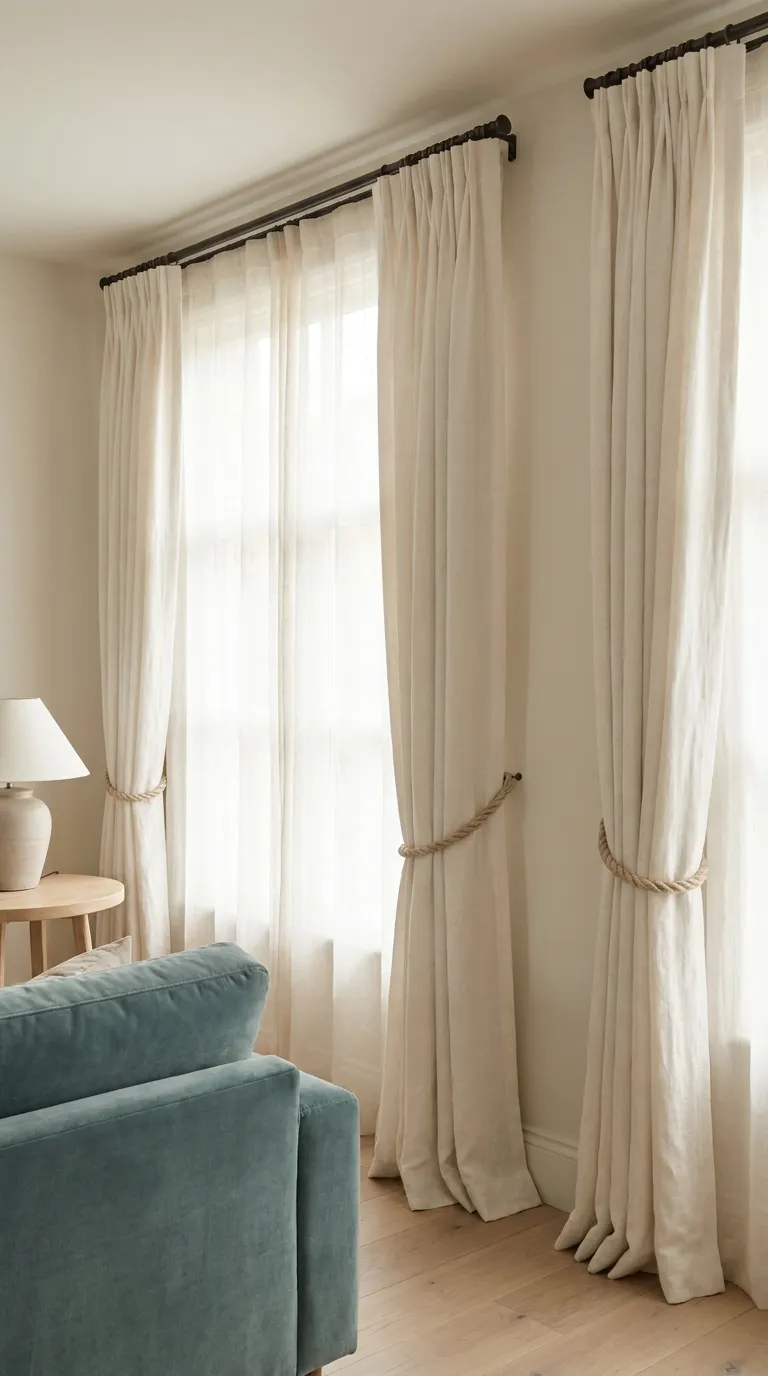
Panels that begin at the window frame leave a band of bare wall above, and that band makes a low ceiling feel even lower. Mounting them near the ceiling lengthens the wall and gives the sofa corner a soft backdrop.
The Formula
- Anchor: floor-length panels in a light linen-look weave
- Support: a rod that spans wider than the window and a thin sheer behind the panels
- Accent: a simple fabric tieback
Why It Works
A high, wide rod frees the entire glass, so the window looks broader and the wall looks taller. You’ll need longer panels, and a radiator or sofa parked beneath the window makes this look harder to pull off.
Space Needed
Fix the rod 4 to 6 inches above the frame and let it reach 6 to 8 inches past both sides. Hang the panels so they hover about ½ inch off the floor.
Save or Invest
- Save on: plain hardware, since a simple rod and rings look tidy
- Invest in: fabric that drapes well, which matters most because it’s the part everyone sees
Renter-Friendly Swap
Look at your lease before drilling. A tension rod, or adhesive hooks used under their stated weight limit, can hold light panels, and the packaging lists those limits.
Quick Look Cheat Sheet
Here is every look at a glance, with the piece to buy first and an easy way to spend less.
| Look | Anchor Piece | Budget Swap |
|---|---|---|
| Daybed That Doubles as the Sofa | Twin daybed or sofa bed | Used frame, fresh cover |
| Rug Zone With a Floor Border | Large flat-weave rug | Plain weave, no print |
| Raised-Leg Apartment Sofa | Compact sofa on tall legs | Used sofa, washable cover |
| Round Pedestal Coffee Table | Round pedestal table | Thrifted table, new tray |
| Waist-High Cube Shelf Divider | Cube bookcase | Used shelf, simple bins |
| Window Storage Bench | Lidded storage bench | Lidded chest plus cushion |
| Three-Lamp Triangle | Floor lamp | Plug-in table lamp, warm bulb |
| Rolling Cart Side Table | Narrow rolling cart | Thrifted kitchen trolley |
| Long-Wall Floor Mirror | Tall floor mirror | Plain frame, leaned on wall |
| Ceiling-High Curtain Panels | Floor-length panels | Basic panels, tension rod |
The Formula Behind These Looks
What Ties These Small Living Room Ideas for Studio Apartments Together
Begin each look with one anchor piece, the item that decides how large and how heavy the group feels. After that, the helpers only have to echo it.
Repeating a Color or Material
Choose one shade or material and let it show up two or three times, like sand in a rug, a pillow, and a basket. The echo makes unrelated pieces feel related, so a tight room reads settled rather than busy.
Leaving Bare Floor and Wall
Open floor and a stretch of quiet wall give your eyes a pause. Keep 30 inches clear along the paths you walk most.
Choosing Pieces That Read Small
Slim arms, visible legs, and open backs look lighter than chunky blocks of upholstery. Let your own floor set the scale instead of the display in a store.
Common Studio Living Room Mistakes Worth Skipping
Buying Before You Measure
A piece can look perfect online and swallow the room on delivery day. Mark its outline on the floor with tape and spend an evening walking around the shape.
Filling the Floor With Small Pieces
Lots of tiny stools and tables make a studio look busy. Replace a handful of little items with one solid anchor and notice how much calmer the floor looks.
Cutting Off the Path to the Window
Pieces that interrupt your route to the door, the kitchen, or the window shrink a room faster than their size suggests. If a path measures under 30 inches, shift the offending piece until it clears.
Final Tips for Success
Fix the Loudest Problem First
Which one annoys you most: the sofa that floats, the dark corner, or the missing surface? Solve that, and the next purchase becomes obvious.
Live With the Tape
Stick painter’s tape where a new piece would sit and go about your evening. If you catch an edge or squeeze past a corner, adjust before you spend anything.
Basics Worth Owning
A short list covers most studio living areas:
- a flat-weave rug
- a compact sofa or daybed
- a floor lamp
- a round table or rolling cart
- a lidded storage bench
Conclusion
A studio living area doesn’t depend on extra square feet. It depends on a clear anchor, a helper or two, and one finishing touch.
Choose the look that answers your most frequent frustration, whether the sofa floats, the corner stays dim, or your mug has no landing spot, and add another look later.
With the right small living room ideas for studio apartments, the seating area can feel deliberate without swallowing the whole studio.
Pin this guide for the next time the room needs a reshuffle.