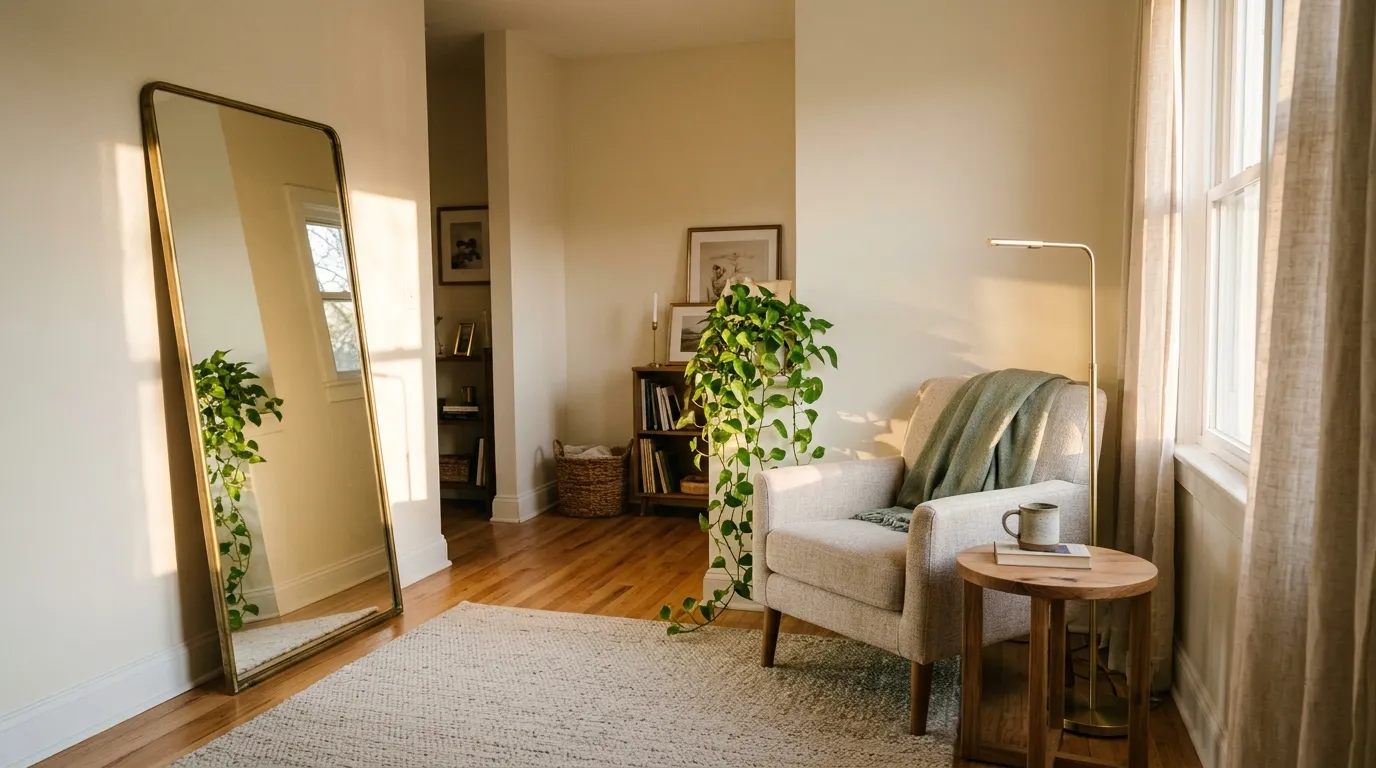

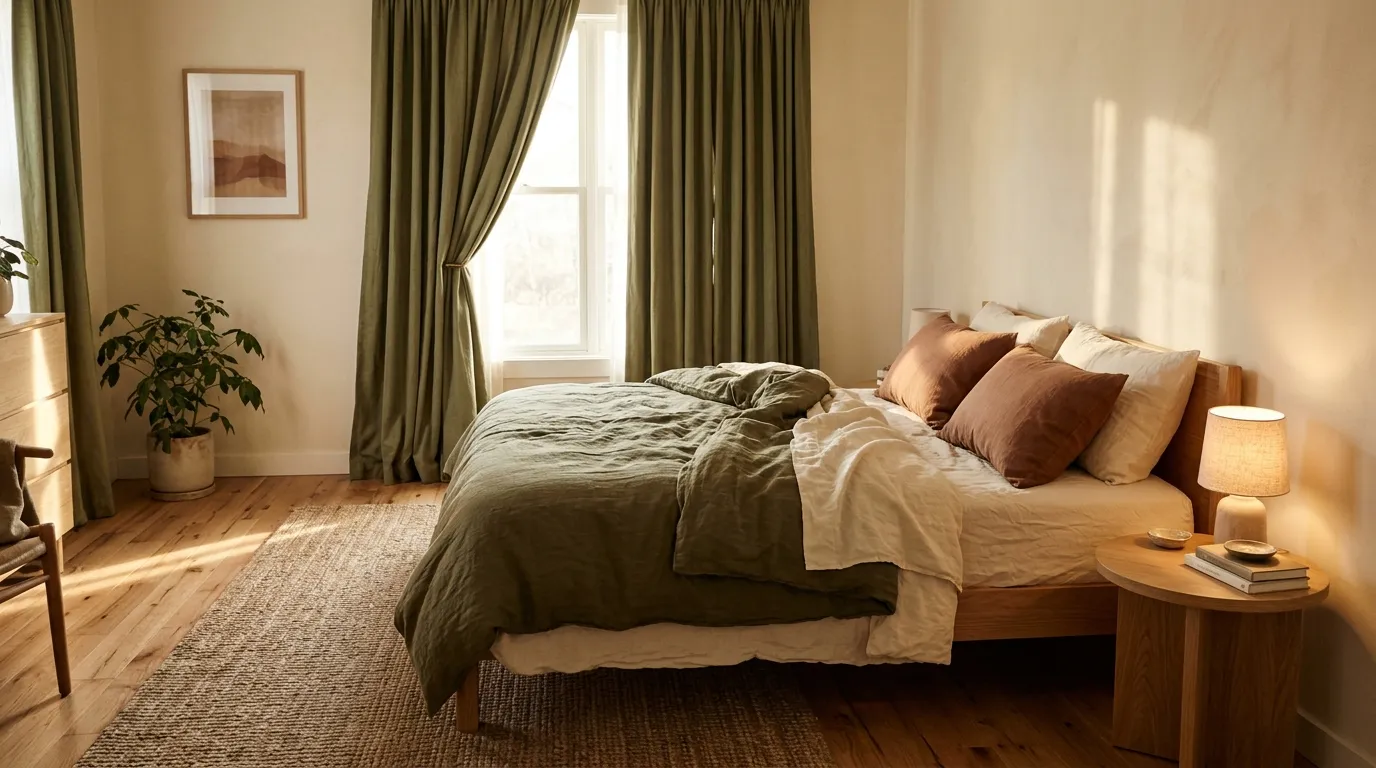
Most bedrooms get furnished in a single afternoon and never revisited. The bed arrives, the dresser goes against a wall, and years later you’re still sitting up under a bright ceiling light, wishing the room felt as comfortable as it looks in photos. If you’ve been collecting cozy bedroom ideas for women, you probably want that feeling to show up the moment you close the door.
The good news is that comfort comes from small decisions: where the light sits, what touches your skin, how many soft layers the bed has, and whether your things have somewhere to go. None of that needs a renovation, and most of it works in a rental.
I’ve ordered these 25 ideas the way you’d naturally walk through the room: light first, then the bed, then walls, floor, and corners. Start wherever you like, and stop when the room feels finished.
1. Lamplight in Place of the Ceiling Fixture
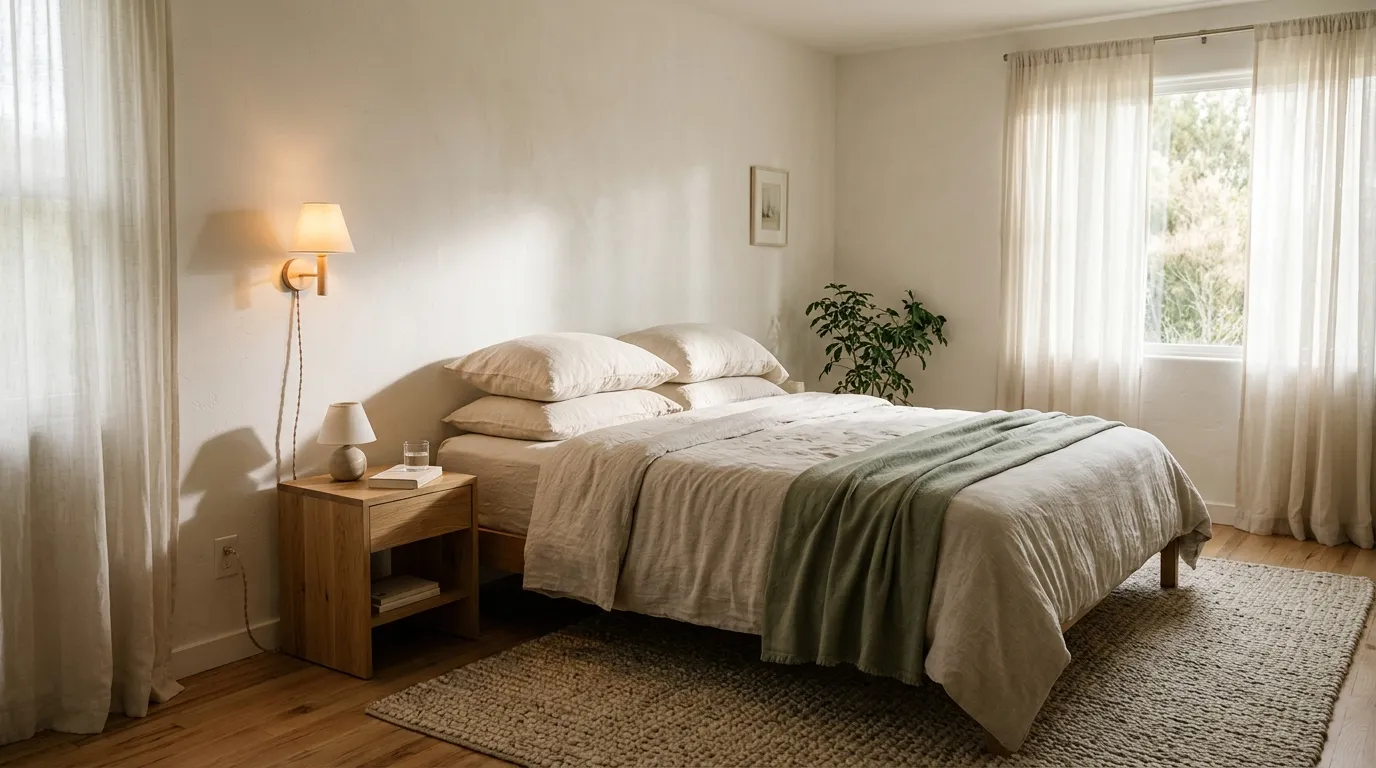
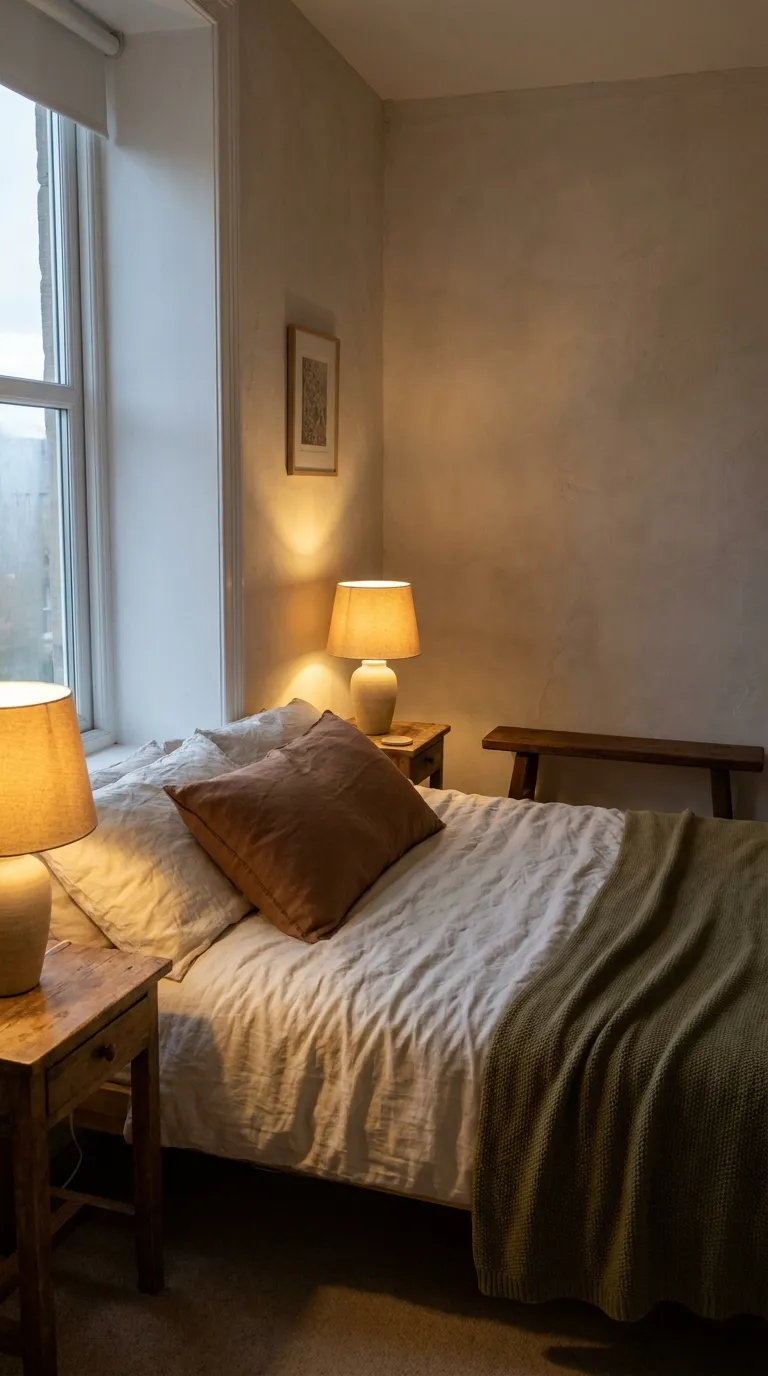
Switch the overhead light off after dinner and let two or three lamps do the work. A bedroom lit at lap height and below feels like a small, private room instead of a space under a spotlight, and no other change on this list shifts the atmosphere as quickly.
The trade-off is a little planning. You need outlets near the bed and lamps that are easy to reach, otherwise the ceiling light will win by default.
What You Need
- Two table lamps with fabric shades
- Warm white bulbs for every lamp
- A small lamp for a low corner
- Cord clips or a cord cover
Why It Works
Light that sits below eye level casts soft shadows and leaves the ceiling dim, so the room feels lower, snugger, and more enclosed. Warm bulbs also keep wood, linen, and skin tones looking rich instead of gray.
How to Recreate It
- Swap every bulb in the room for a warm white one
- Put a lamp on each side of the bed, or one lamp if the room is narrow
- Add a small lamp low in a corner
- After sunset, use only the lamps
Budget Tip
Bulbs are the least expensive change here, so start with them. Check each lamp’s label for its maximum bulb size before you buy replacements.
2. A Low Plug-In Glow for Late Walks
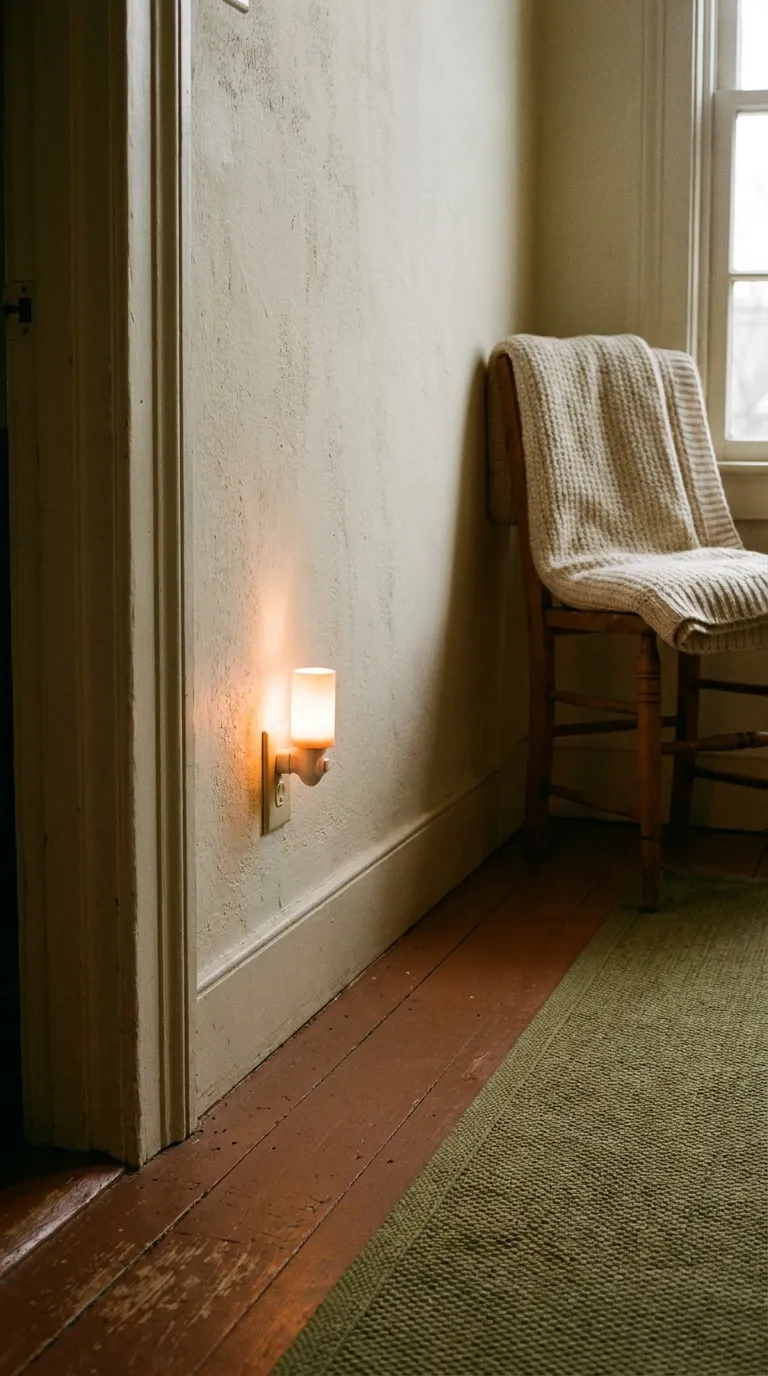
A small plug-in light near the floor gives you a dim path to the bathroom or kitchen without switching on anything bright. It also leaves a faint glow in the room after dark that reads as settled and calm.
It takes one outlet and about a minute to set up, and it quietly removes the habit of flipping on the overhead light for a quick trip.
What You Need
- A plug-in light with a warm, soft glow
- An outlet low on the wall near the doorway
- A light with adjustable brightness, if possible
- Short cord clips, if the light has a cord
Why It Works
Light placed low stays out of your eyes, so the room never feels bright even while you’re walking through it. Choosing a warm tone means it blends with your lamps instead of competing with them.
How to Recreate It
- Choose an outlet between the bed and the door
- Pick the lowest brightness that still shows the floor
- Make sure no curtain or laundry pile will cover it
- Turn it on at dusk so it becomes part of the evening
Budget Tip
A light with adjustable brightness can move to a hallway later, so it keeps earning its place. Follow the product’s instructions and keep it clear of fabric.
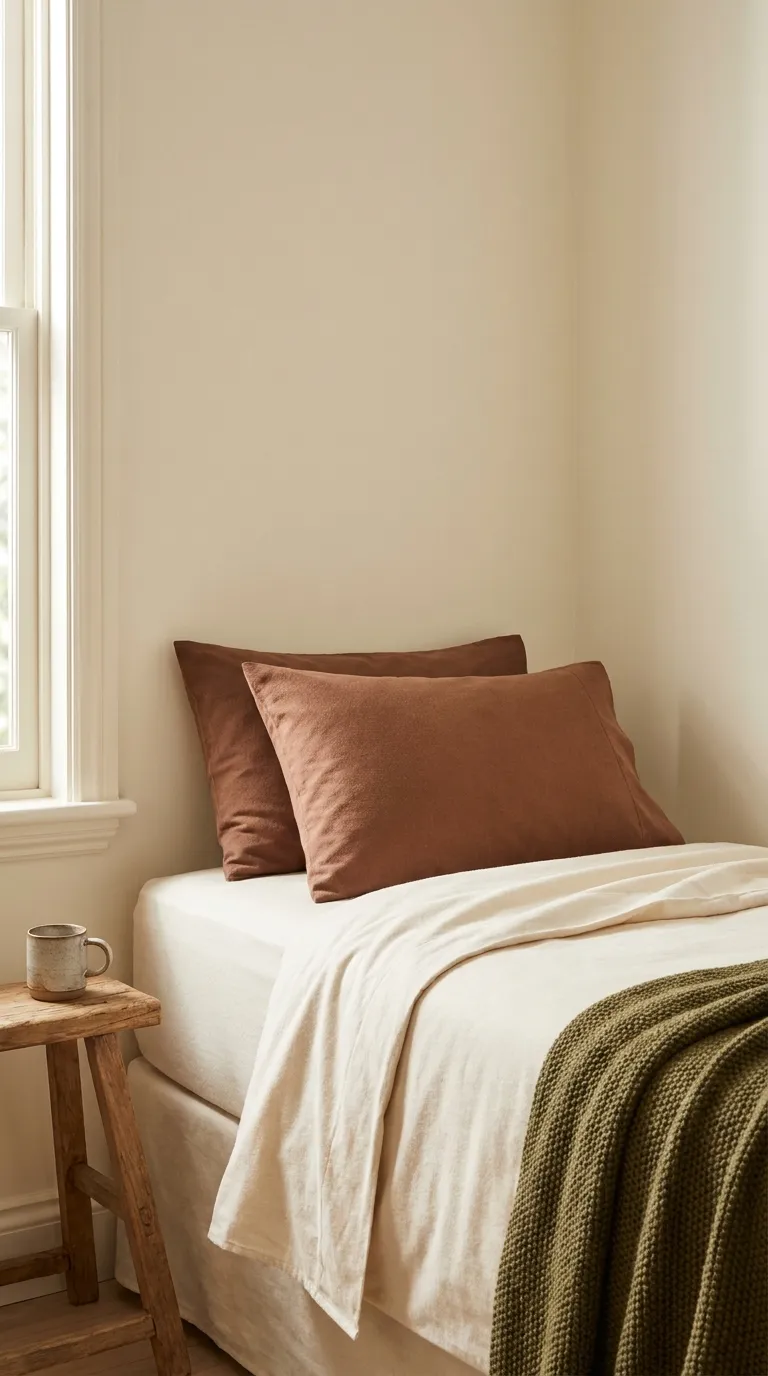
3. Flannel Sheets for Cooler Months
Flannel feels warm the second you slide in, and its soft, brushed surface makes a plain bed look cozy before you add anything else. Put it on when the temperatures drop and store your lighter cotton set until spring.
It does run warm, and thinner weaves can pill after repeated washing, so a medium weight is the safer choice if you’re not sure.
What You Need
- A flannel fitted sheet and flat sheet
- Two pillowcases in the same fabric
- A lighter cotton set for warm months
- A bin or bag for the set you aren’t using
Why It Works
The brushed surface has a matte, slightly fuzzy look that adds texture even in a solid color. Choosing cream or a soft clay tone keeps the bed calm instead of busy.
How to Recreate It
- Wash the new set once first, following the care label
- Make the bed with flannel during the first cold week
- Match the sheet color to your duvet’s color family
- Fold the summer set and store it with spare pillowcases
Budget Tip
One good set is a better buy than several thin ones. Flannel often has different washing instructions from regular cotton, so check the care label.
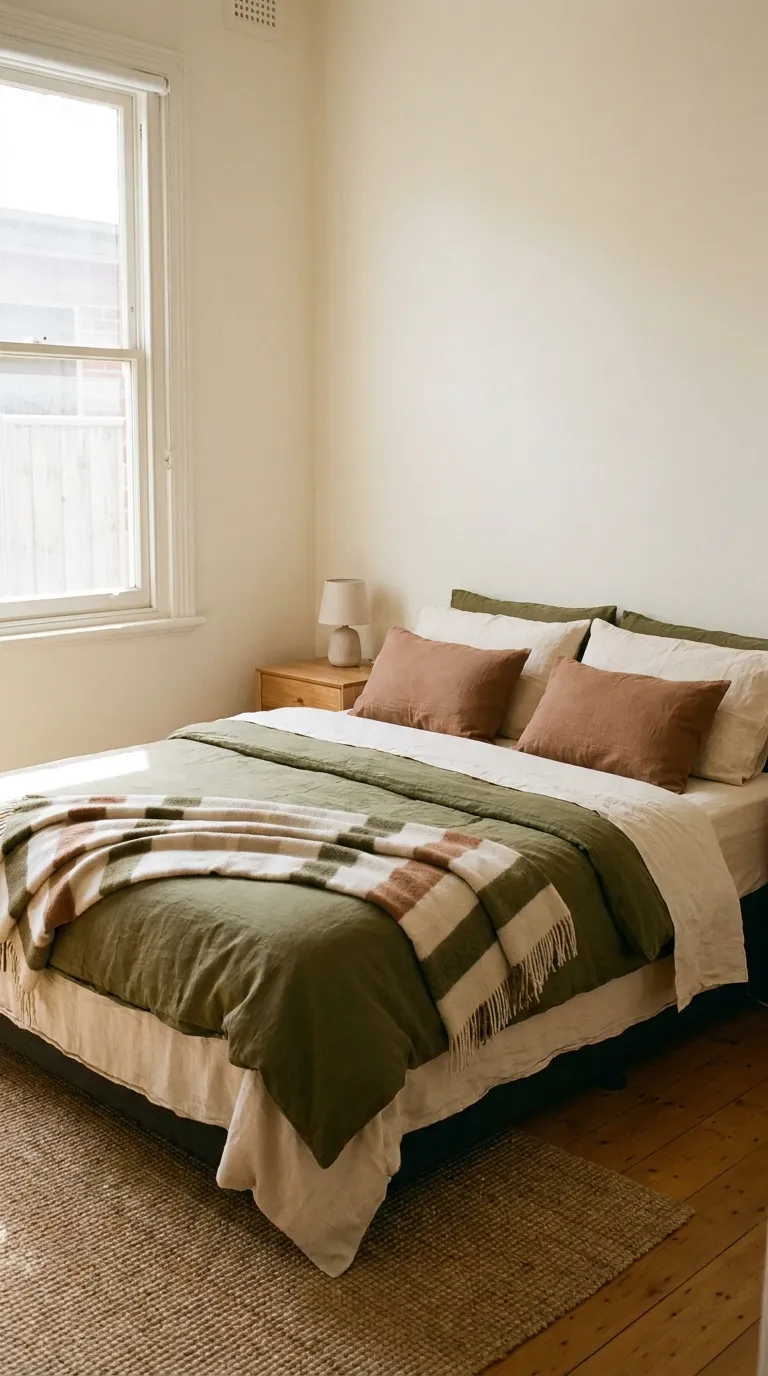
4. A Bed Made in Six Layers
A bed with real layers looks inviting from the doorway, and the order you stack them in matters more than how many pieces you own. Done well, it takes about two minutes and reads as comfortable instead of messy.
The cost is the daily reset. Layers shift overnight, so you’ll straighten them each morning, and if that sounds like too much, simplify to three: sheet, duvet, and pillows.
What You Need
- A fitted sheet and a flat sheet
- One duvet or comforter
- Two sleeping pillows
- Two accent pillows
- A throw blanket
Why It Works
Each layer has a job: the sheets sit closest to you, the duvet adds the warmth and bulk, and the pillows and throw finish the top. Getting the order right means nothing has to be pulled out from underneath later.
How to Recreate It
- Start with the fitted sheet, then the flat sheet
- Spread the duvet and fold its top edge back about 12 inches
- Stack the sleeping pillows against the headboard or wall
- Lean the accent pillows in front, then lay the throw across the foot
Budget Tip
Use what you already own first. An extra throw and a couple of pillows from the sofa can finish the bed at no cost. Check the care label before washing anything new.
Try it: tap the six layers in the order you would add them and watch the bed fill up.
5. Clay-Toned Pillows on Cream Sheets
Two or three pillows in a warm clay shade give a cream bed a clear focal point without adding any pattern. The color reads as earthy and soft, so the bed feels settled even when everything else in the room is plain.
Keep the count small. Past three accent pillows, getting into bed turns into a nightly job of moving them off first.

What You Need
- Two square pillow covers in clay
- One rectangular pillow in cream or sand
- Inserts that match the cover sizes
- A cream duvet or sheet set as the base
Why It Works
One saturated color against a pale base pulls the eye straight to the head of the bed. Mixing square and rectangular shapes also breaks up the line, so the group looks gathered instead of matched.
How to Recreate It
- Choose inserts about 1 to 2 inches larger than the covers for a fuller look
- Place the two squares at the sides
- Set the rectangular pillow in the middle, slightly forward
- Keep all three in front of your sleeping pillows
Budget Tip
Replace the covers instead of the inserts when you want a new color. Check the care label on each cover, especially on textured fabrics.
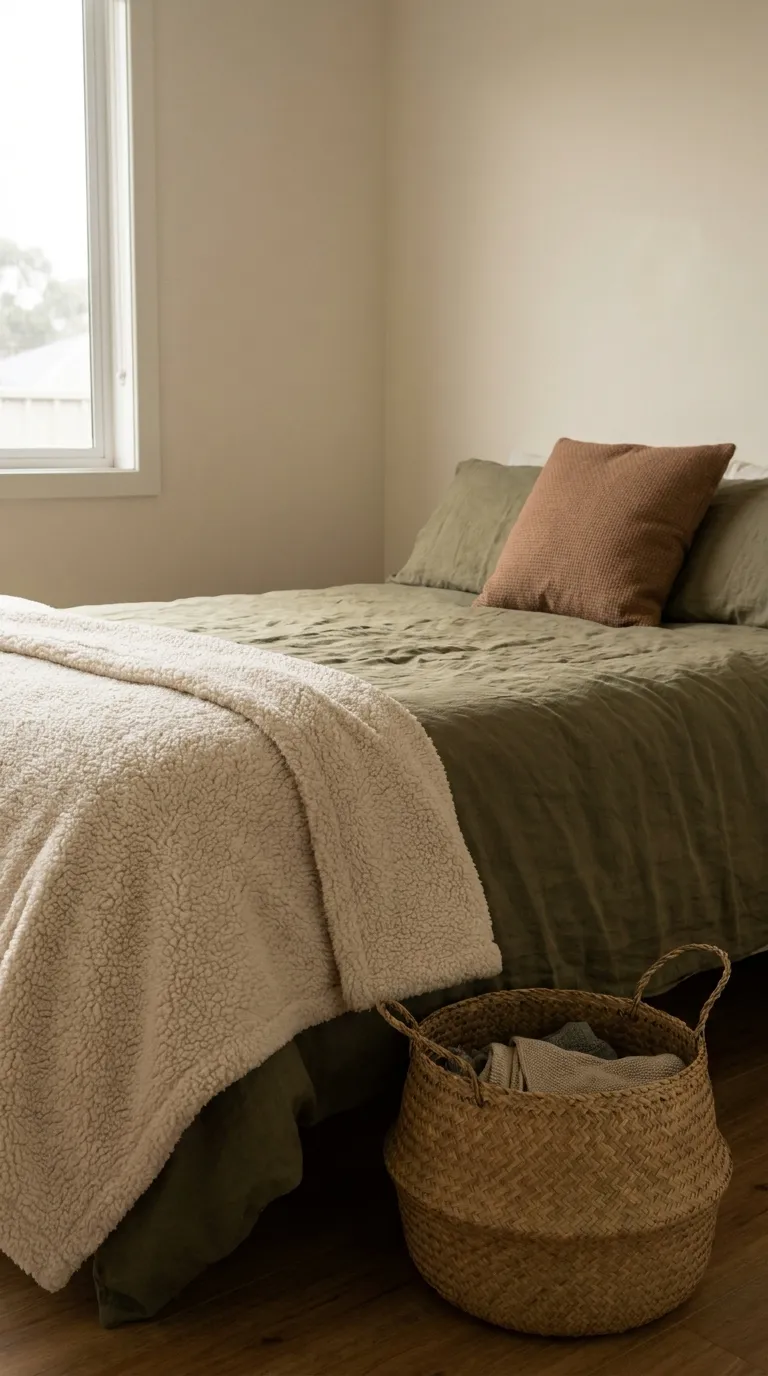
6. A Sherpa Blanket Over One Corner
Instead of folding a throw neatly across the foot of the bed, let a thick sherpa blanket fall over one corner. The uneven drape looks relaxed, and the fluffy texture reads as warm even from across the room.
It sheds a little at first and the pile picks up lint, so a quick lint roller pass keeps it looking fresh.
What You Need
- A thick sherpa or faux fur blanket
- A duvet in a smooth fabric for contrast
- A lint roller for quick touch-ups
- A chair or bench to hold the blanket in the daytime
Why It Works
A fluffy, uneven texture against a smooth duvet creates contrast, and contrast is what makes a plain bed look layered. Dropping the blanket over a corner also breaks the straight line of the mattress.
How to Recreate It
- Fold the blanket once so the fluffy side faces up
- Drape it over the corner nearest the door
- Let about a third of it hang down the side
- Move it to a chair on days you want the bed to look tidier
Budget Tip
Choose a shade close to your sheets so it doesn’t compete with the clay pillows. Check the care label first, since many faux fur fabrics need gentle washing.
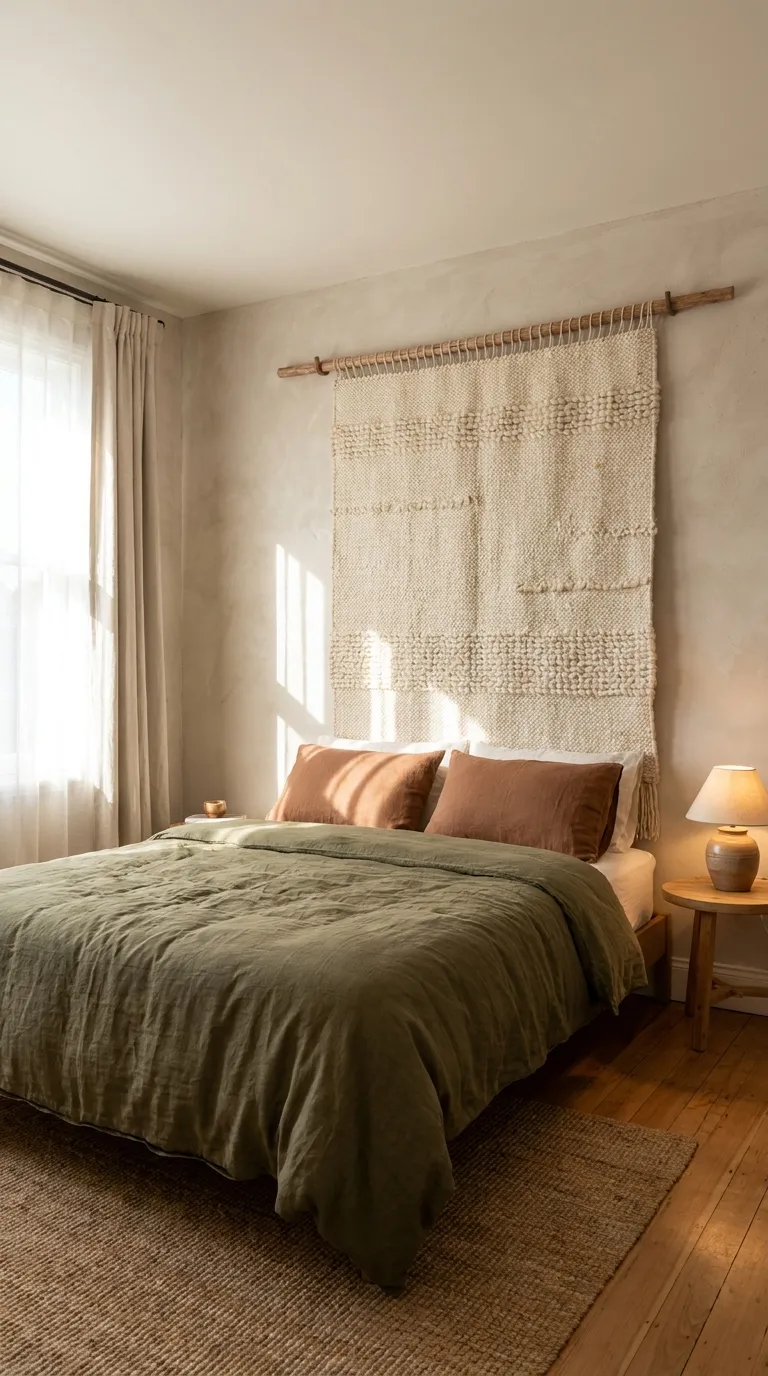
7. A Hung Textile Behind the Bed
A large piece of fabric hung behind the bed does the job of a headboard without any construction. A woven blanket, a quilt, or a length of linen on a rod gives the wall a soft focal point and keeps the head of the bed from looking bare.
It works best on a wall with nothing else going on, and the fabric needs to stay lightweight so it hangs safely above your pillows.
What You Need
- A large woven blanket, quilt, or length of linen
- A wooden dowel or curtain rod a bit wider than the fabric
- Hooks or brackets rated for the weight
- Clips or a sewn pocket to hold the rod
Why It Works
A wide textile frames the bed and adds texture right where your eye lands when you walk in. Hanging it slightly wider than the mattress makes the bed look planned instead of pushed against a wall.
How to Recreate It
- Measure the mattress and pick a textile a bit wider
- Set the rod height so the bottom edge skims the top of the pillows
- Attach the fabric to the rod with clips
- Check that it hangs flat and the hooks hold firmly
Renter Note
Check your lease before drilling. Adhesive hooks within their stated weight limit can hold a light textile, or you can lean a large framed fabric piece on the floor against the wall instead.
8. A Wall Shelf Where a Nightstand Would Go
A slim shelf on the wall beside the bed holds a lamp, a book, and a glass of water without using any floor space. In a small bedroom, getting that patch of floor back makes the whole room feel less crowded.
It only works when the shelf is mounted securely and kept light, so skip it if the wall can’t take anchors or you tend to pile things on.
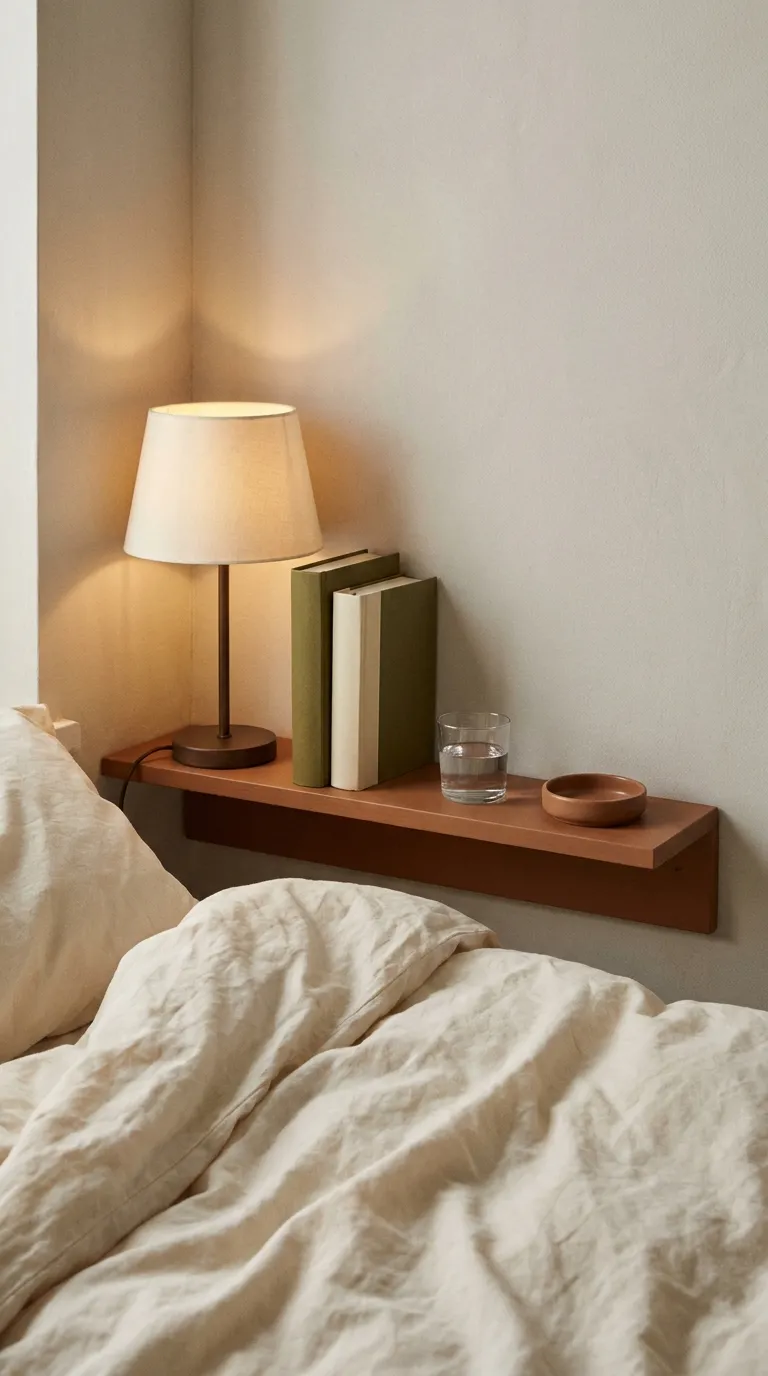
What You Need
- A narrow wall shelf
- Wall anchors rated for the shelf’s weight
- A small lamp with a short cord
- A level and painter’s tape
Why It Works
Lifting storage off the floor frees the space under it, which makes the room look larger. Setting the shelf near mattress height keeps everything within reach from your pillow.
How to Recreate It
- Mark the shelf height at about mattress level with painter’s tape
- Check the marks with a level
- Install the anchors and shelf following the product’s instructions
- Keep the shelf to one lamp, one book, and one drink
Renter Note
Check your lease before drilling. If it isn’t allowed, a slim stool or a short stack of storage crates works as a bedside table with no holes.
9. A Round Side Table With Soft Edges
Square corners are easy to bump in a small bedroom, and a round side table fixes that while softening the room’s lines. Next to the bed or a chair, a curved top feels friendlier than a boxy nightstand.
Round tops hold less than rectangular ones, so this suits a lamp and a book rather than a full collection.
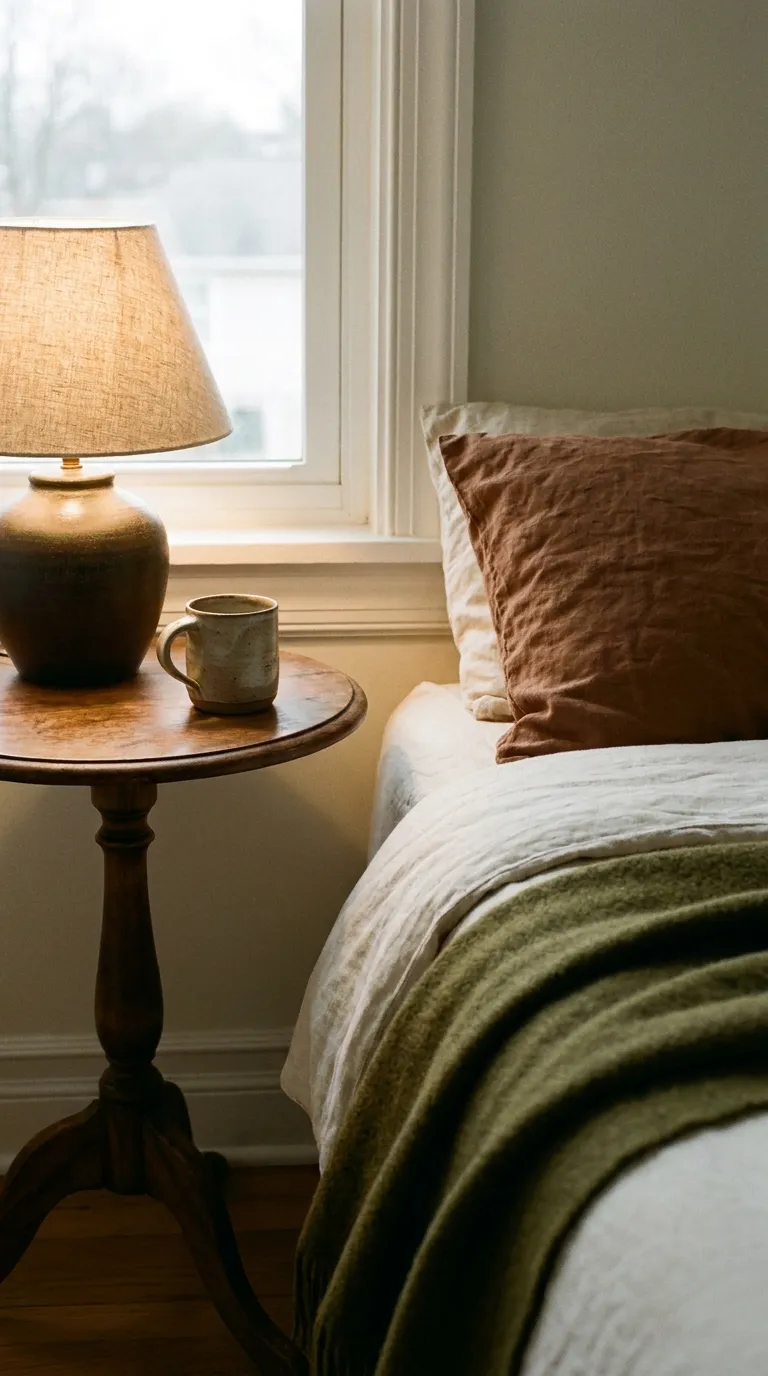
What You Need
- A small round side table or drum table
- A table lamp with a narrow base
- A coaster or small dish for a mug
- Felt pads for the base
Why It Works
Curves break up the straight lines of the bed and dresser, and they let you walk past without catching a hip. A round top also looks balanced from every angle, which matters when the table is seen from both the door and the bed.
How to Recreate It
- Measure the gap beside the bed so the table won’t block the walkway
- Pick a table whose top sits close to mattress height
- Stick felt pads under the base
- Keep the top to a lamp and one or two small items
Budget Tip
A stool, a plant stand, or a thrifted accent table works just as well. Check that it’s sturdy before you set a lamp on it.
10. Two Runners Beside the Bed
Instead of one large rug under the whole bed, lay a narrow runner along each side. Your feet land on something soft the moment you stand up, and the pair frames the bed like bookends.
Each runner needs a non-slip pad, and this approach suits rooms where one big rug would be too large for the space or the budget.
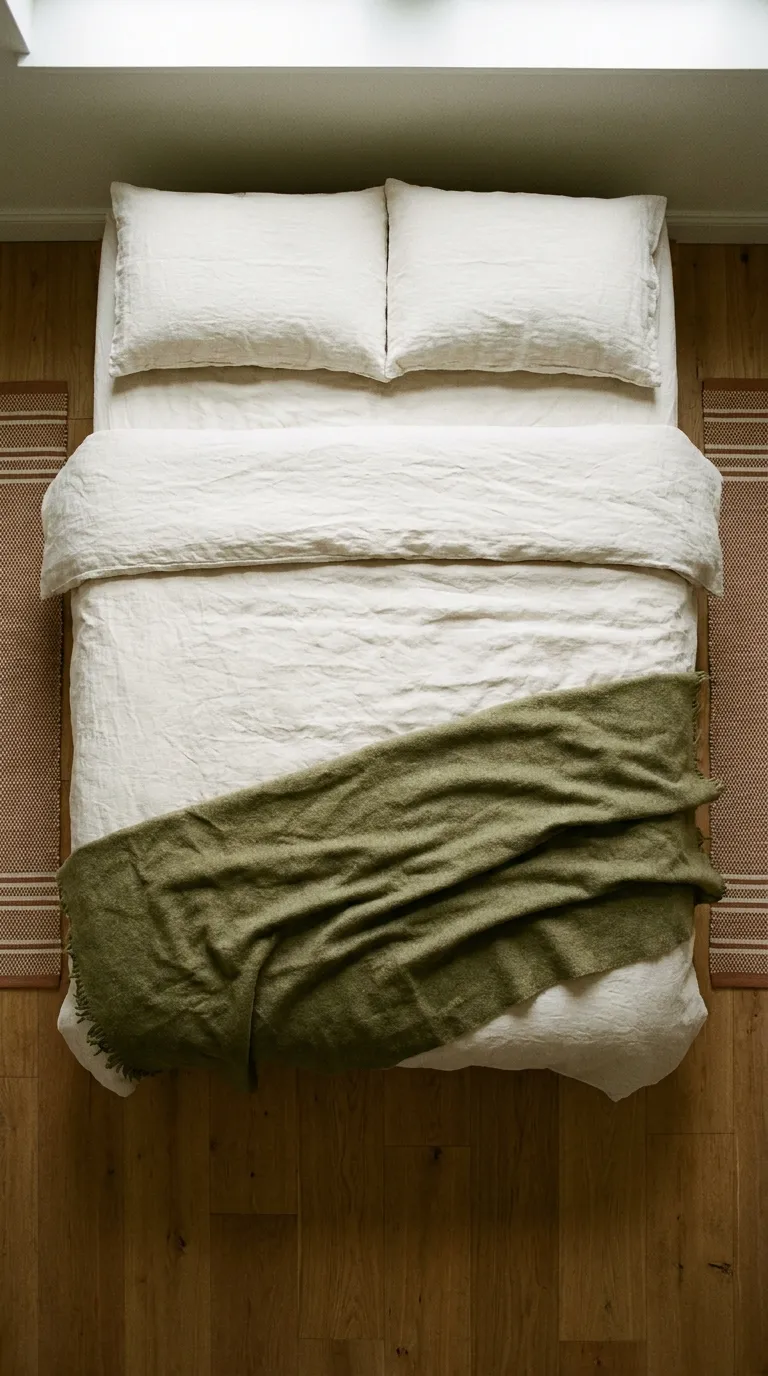
What You Need
- Two matching runners in a low-pile or flatweave style
- Non-slip pads cut to size
- A tape measure
- Painter’s tape for marking outlines
Why It Works
Runners add softness exactly where you step, and two of them usually cost less than a single rug big enough to go under the bed. Choosing a matching pair keeps the room symmetrical, which makes it feel calmer.
How to Recreate It
- Before you buy, arrange your furniture where it will stay and tape each runner’s outline on the floor
- Leave a few inches between the runner and the bed frame so it doesn’t ride up
- Lay a non-slip pad under each runner
- Check that doors and drawers still clear them
Budget Tip
Two runners that don’t match can still look intentional if they share one color family. Check the care label before washing either one.
11. Lined Curtains for Quiet Evenings
A pair of lined curtains in a heavier cotton or linen blend closes off the window at night and makes the room feel snug and sealed. They also block more light in the morning, which is useful if streetlights or early sun come through.
They’re heavier than sheers and need a sturdy rod, so check the rod’s weight limit before you hang them.
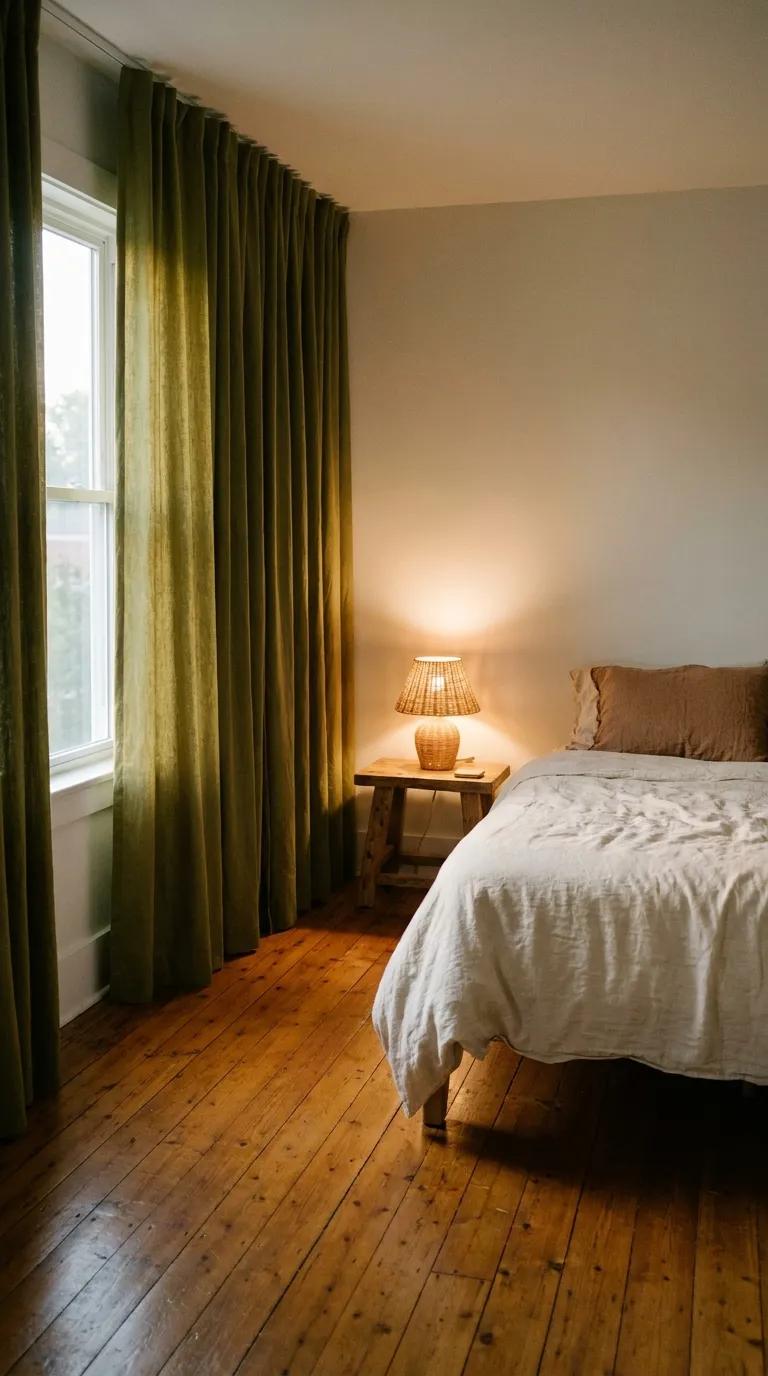
What You Need
- Lined curtain panels in olive or clay
- A sturdy curtain rod and brackets
- Clip rings or a rod pocket
- Anchors or screws rated for the curtain weight
Why It Works
A heavier fabric falls in full, vertical folds that soften the whole wall, and the lining gives the panels body so they look substantial even in a plain color. Closed in the evening, they hide a dark window and give the room a finished edge.
How to Recreate It
- Mount the rod a few inches above the window frame and extend it several inches past each side
- Choose panels long enough to just touch the floor
- Pull them closed at dusk
- Open them fully in the morning so daylight still comes in
Renter Note
Check your lease before drilling into the wall or window frame. A tension rod can hold lighter curtains, but heavy lined panels need properly anchored brackets, so follow the product’s weight limits.
12. A Three-Shade Rule for the Whole Room
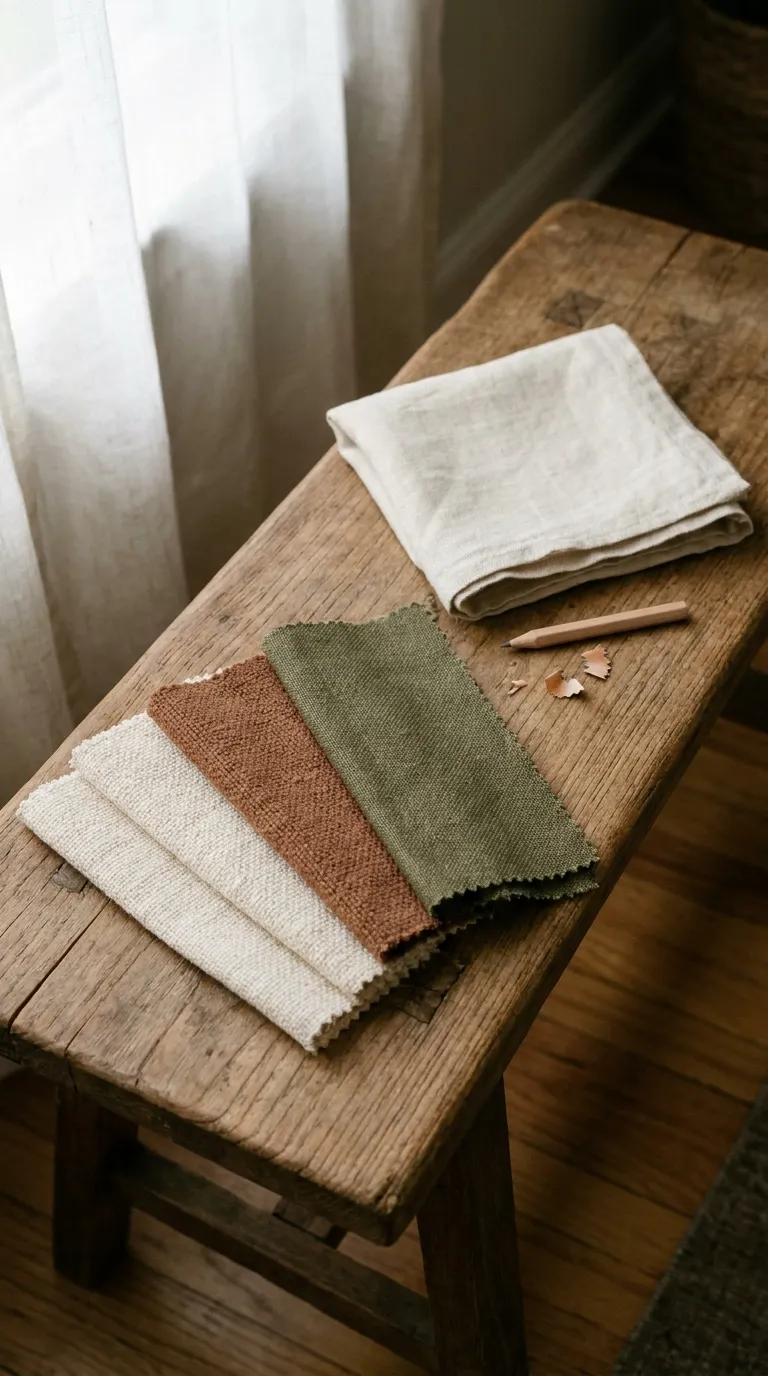
A bedroom feels calmer when it sticks to three shades: a light base, a warm middle tone, and a deeper accent. In this room that’s cream, clay, and olive green, repeated on the bed, the curtains, the rug, and the small things.
It means saying no to extra colors, which is often the hardest part. The payoff is a room that looks pulled together even when every piece came from a different place.
What You Need
- Three shades: cream, clay, and olive green
- Fabric swatches or small pieces to compare
- Your phone camera for a quick check
- A notepad to track which shade goes where
Why It Works
A widely used guideline splits a room 60-30-10: roughly 60 percent in the main shade, 30 percent in the second, and 10 percent in the accent. In this bedroom that means cream on the walls and sheets, clay on the duvet and rug, and olive on pillows and plants.
Pick your color palette from pieces you already own, since sheets, a rug, and curtains usually supply two of the three shades before you buy anything.
How to Recreate It
- Say your three shades out loud before you shop
- Use cream on the largest surfaces, like sheets and curtains
- Add clay to the rug, duvet, or pillows
- Save olive for plants, a throw, or one small piece
- Take a photo and check that no single shade overpowers the rest
Budget Tip
Order or borrow swatches before buying anything large. A swatch costs far less than returning a rug, and you can check it in your own light.
Enter the main shade you’re leaning toward and choose a style to see five shades that sit well with it.
13. Wood and Rattan Accents
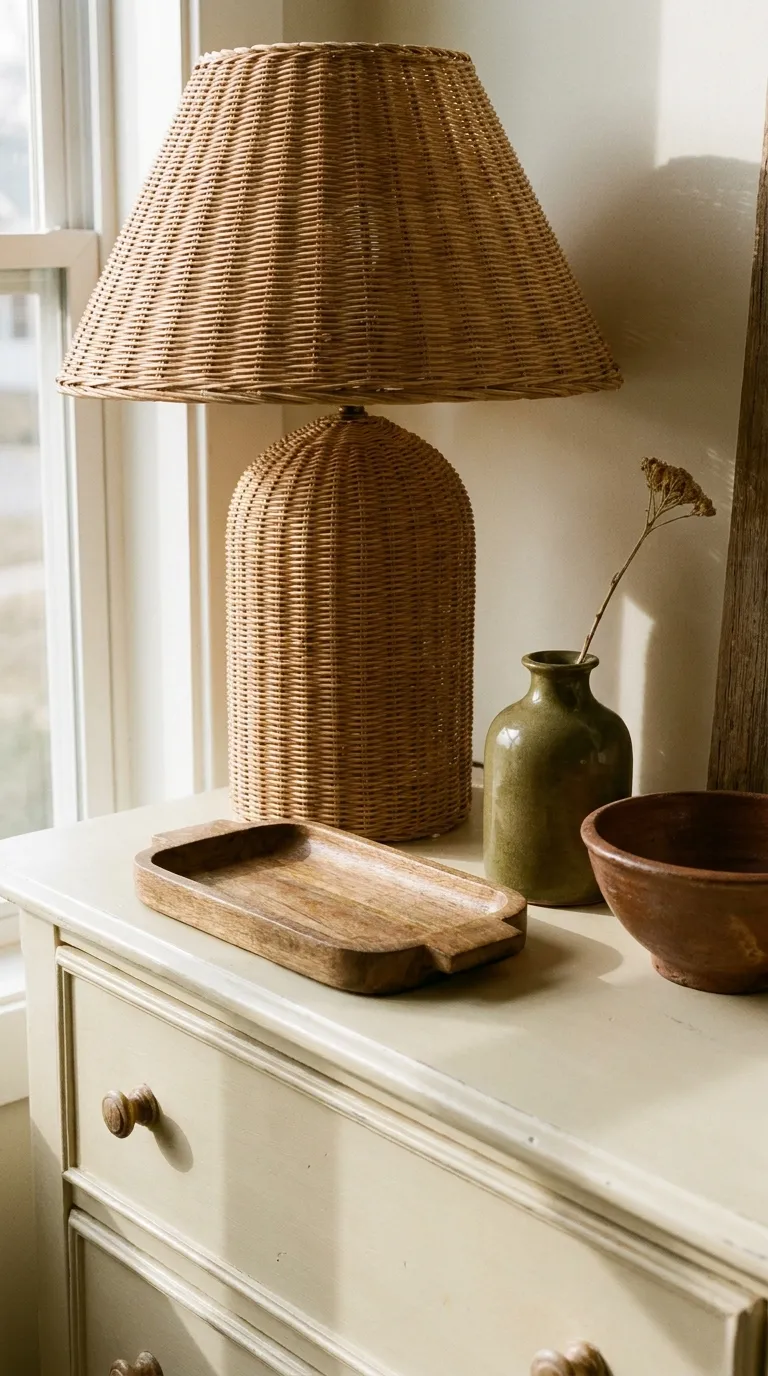
A little natural wood or rattan keeps a soft, fabric-heavy bedroom from feeling flat. A woven lamp shade, a wooden tray, or a cane-framed mirror adds a warm, handmade texture that sits comfortably next to cream and clay.
Choose one or two pieces. Too many natural fibers can start to look like a themed room, so let the textiles stay the main event.
What You Need
- A rattan or woven lamp shade
- A small wooden tray or bowl
- A cane or wicker accent, such as a mirror frame
- A soft cloth for dusting the weave
Why It Works
Natural materials bring a warmth and slight irregularity that fabric can’t, and their grain and weave catch light differently from soft textiles. A touch of wood also grounds a room that is otherwise built from pale, soft layers.
How to Recreate It
- Choose one wood piece and one woven piece
- Put the wood item on the dresser or a shelf
- Place the woven piece at a different height, like a lamp shade
- Stop there and leave some bare surface
Budget Tip
Thrift stores and online marketplaces often carry wicker and wood pieces. Check for splinters or loose weave before you bring one home.
14. One Large Frame in Place of Many Small Ones
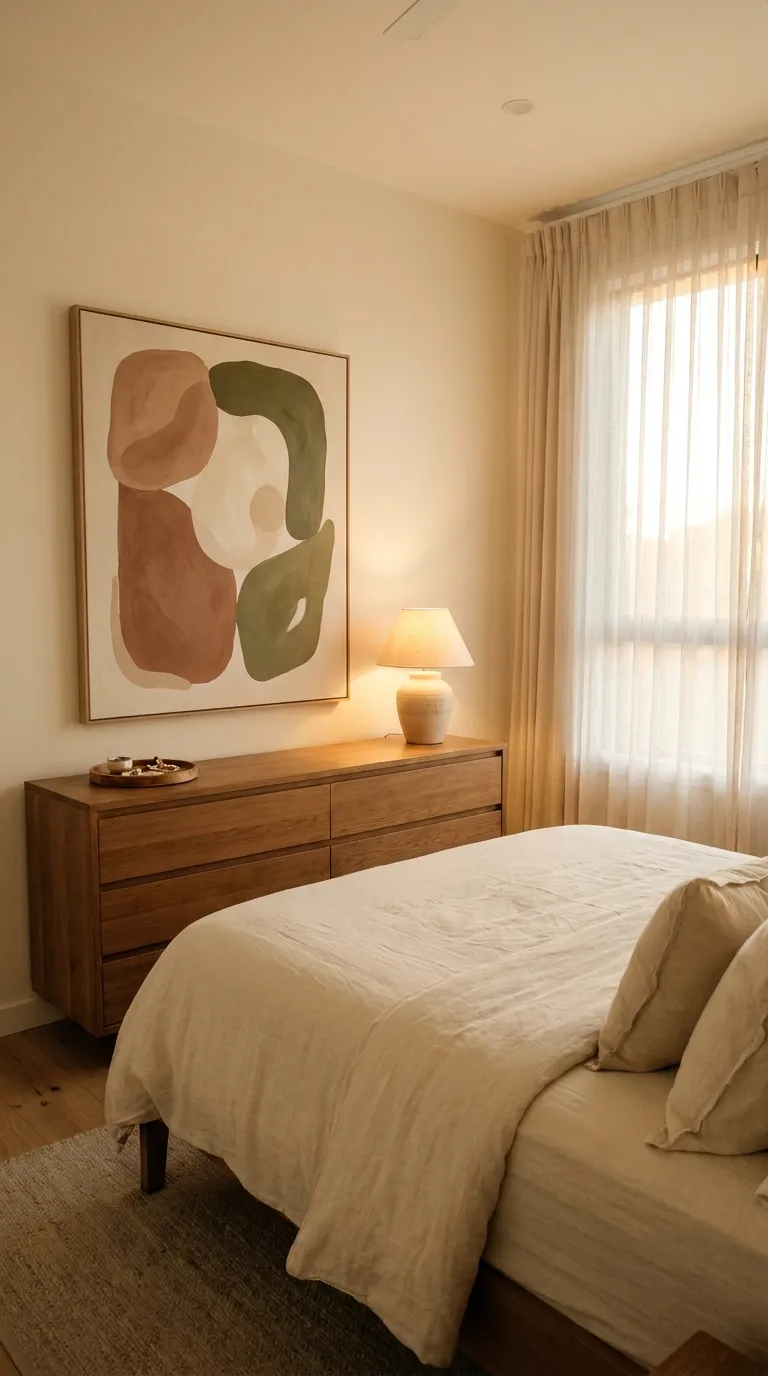
A single big frame says calm more clearly than a cluster of small ones. Choose a piece with soft shapes in your three shades and let it fill the wall above the dresser or beside the bed.
Large frames can be heavy, so the mounting matters more than the art. If your wall can’t take anchors, lean it instead.
What You Need
- One large frame, about two-thirds the width of the furniture below it
- Abstract art with soft shapes, or a blank frame
- Hooks or anchors rated for the frame’s weight
- A level and painter’s tape
Why It Works
One large piece reads as a decision, while many small ones can look like clutter on a quiet wall. Sizing the frame to about two-thirds of the furniture below keeps it in proportion.
How to Recreate It
- Tape the frame’s outline on the wall to preview the size
- Hang it a few inches above the dresser so the two read as one group
- Use hooks or anchors rated for the weight, following the product’s instructions
- Check it with a level
Renter Note
Check your lease before drilling. If it isn’t allowed, lean the frame on the dresser top against the wall with felt pads under the bottom edge.
15. A Round Mirror That Catches Lamplight
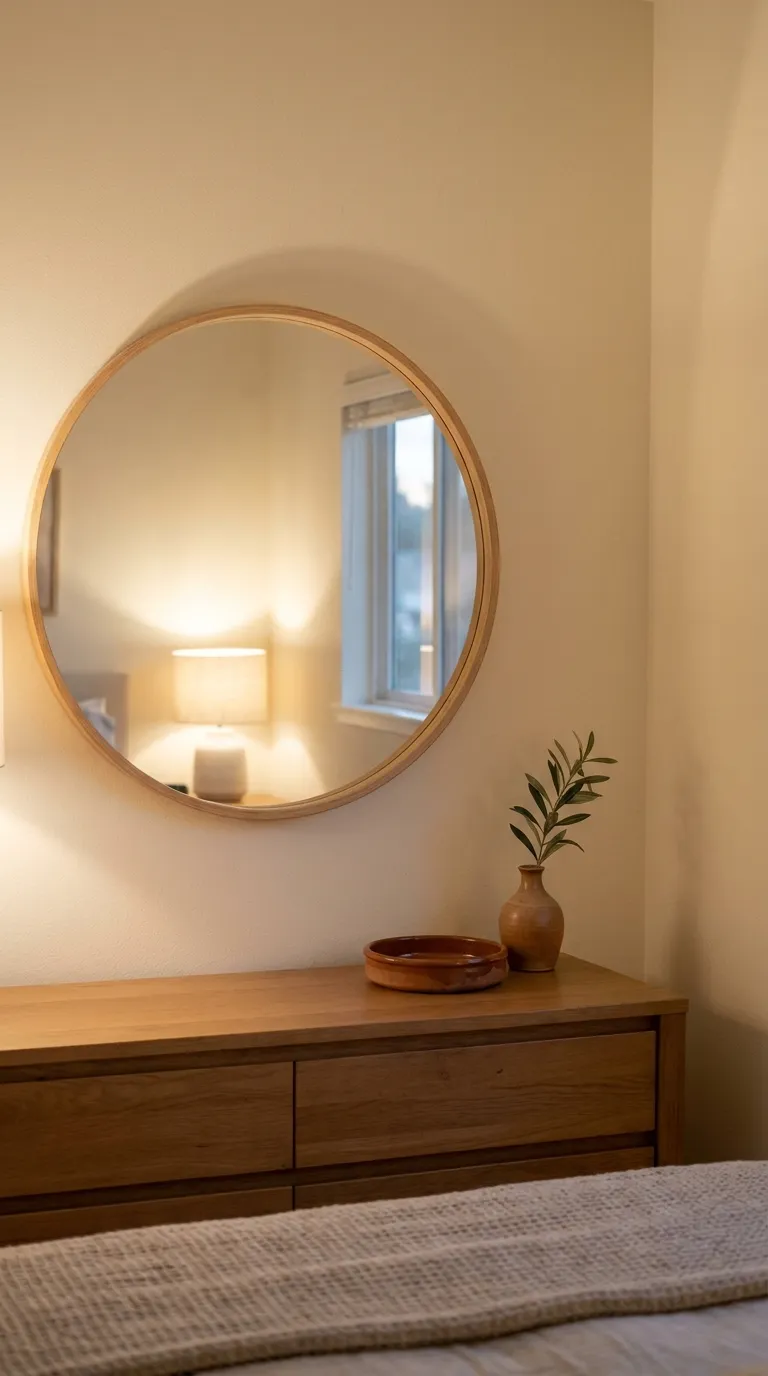
A round mirror placed where it can reflect a lamp doubles the soft glow and adds a gentle curve to a wall of straight lines. It also gives the dresser area a finished look.
It needs the right spot. A mirror that reflects a messy corner adds clutter, so check what it shows before you commit.
What You Need
- A round mirror with a thin or wooden frame
- Hooks or anchors rated for the mirror’s weight
- A lamp that sits beside or below it
- A soft cloth for the glass
Why It Works
Glass bounces light, so a mirror near a lamp spreads that warm glow across more of the wall. The circle also echoes the curves of pillows and lamp shades, which keeps the room consistent.
How to Recreate It
- Stand where you usually look in the mirror and note what it reflects
- Place the lamp beside or just below it so you see a soft reflection, not a glare
- Hang the mirror around eye level
- Wipe the glass and step back to check the glow
Renter Note
Heavy mirrors need anchors rated for their weight, so check your lease before drilling. If you can’t, lean a lightweight round mirror on the dresser with felt pads under the edge.
16. A Dresser Top Styled Around a Tray
A dresser top collects everything: coins, hair ties, receipts, one earring. A single tray turns that pile into a deliberate corner by giving the loose things a boundary.
Add one tall piece and one low piece around it, and keep the rest of the surface clear. It only stays tidy if the tray has a limit.
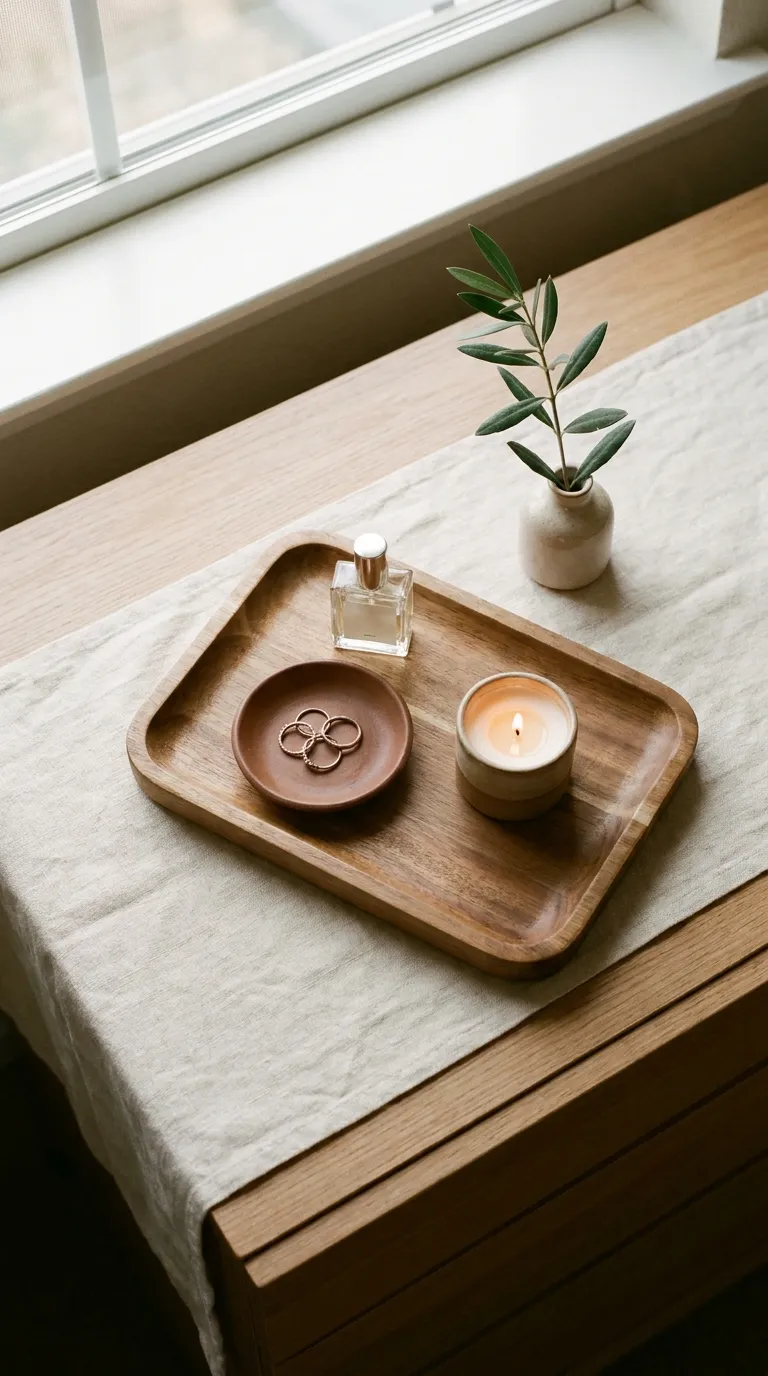
What You Need
- A medium tray in wood or ceramic
- A small dish for rings and earrings
- One tall item, like a lamp or a vase with stems
- One low item, like a candle or a small bowl
Why It Works
A tray defines a boundary, so the eye reads the group as one object instead of a scatter. Mixing a tall piece with a low piece gives the arrangement a simple shape.
How to Recreate It
- Clear the whole surface first
- Set the tray toward one end
- Place the tall piece at the back and the low piece in front
- Return loose items to the dish each evening
Budget Tip
A thrifted wooden tray or a plate from the kitchen works as well as a new one. If you use a candle, follow the label and never leave it burning unattended.
17. A Trailing Plant on a High Shelf
A trailing plant on top of a wardrobe or a tall bookcase adds a soft green line that falls down the wall. It brings life to a corner that would otherwise stay empty, and keeping it high leaves your nightstand and floor free.
It only works if the plant suits your light and you remember to water it. If you’d rather not, a faux trailing vine gives a similar shape.
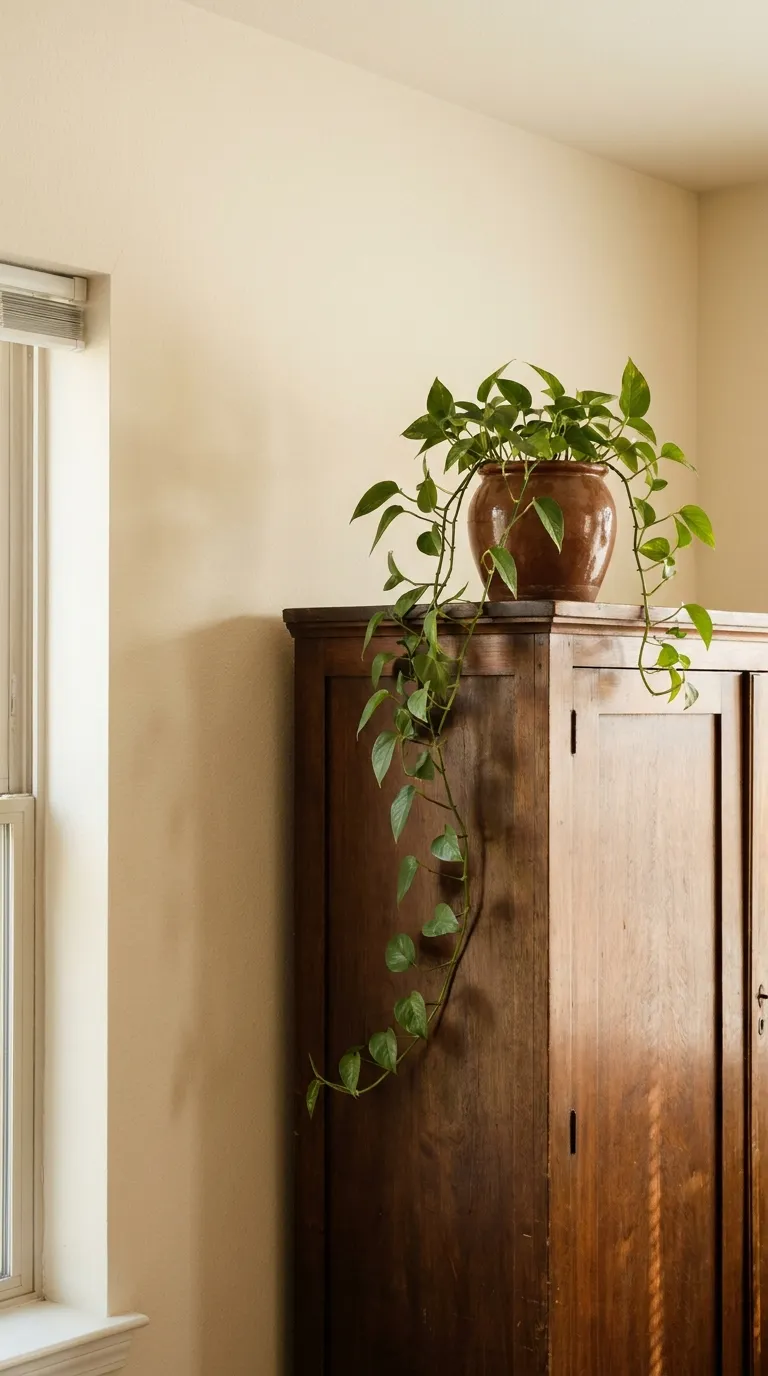
What You Need
- A trailing plant, such as pothos
- A ceramic pot with a drainage saucer
- A sturdy high surface, like a wardrobe top or bookcase
- A watering can with a narrow spout
Why It Works
A trailing shape draws the eye upward and softens the hard line where furniture meets the wall. Placing it up high also keeps the green out of the way of the bed.
How to Recreate It
- Check the plant tag for its light needs and choose a spot to match
- Set the pot on a saucer so water can’t reach the wood
- Push the pot well back from the edge so it can’t tip
- Let the vines trail down the side and water only as the tag directs
Budget Tip
A cutting rooted in a glass jar is a free way to start. If a pet shares your home, check that the plant is safe for pets before buying.
18. A Cushioned Bench Under the Window
A low bench under the window with a long cushion gives you a place to sit that isn’t the bed. It’s somewhere to put on shoes or hold a cup of tea, and the cushion adds one more soft surface to the room.
It needs a window wall with enough clear depth, and the bench should stay away from heaters and radiators.
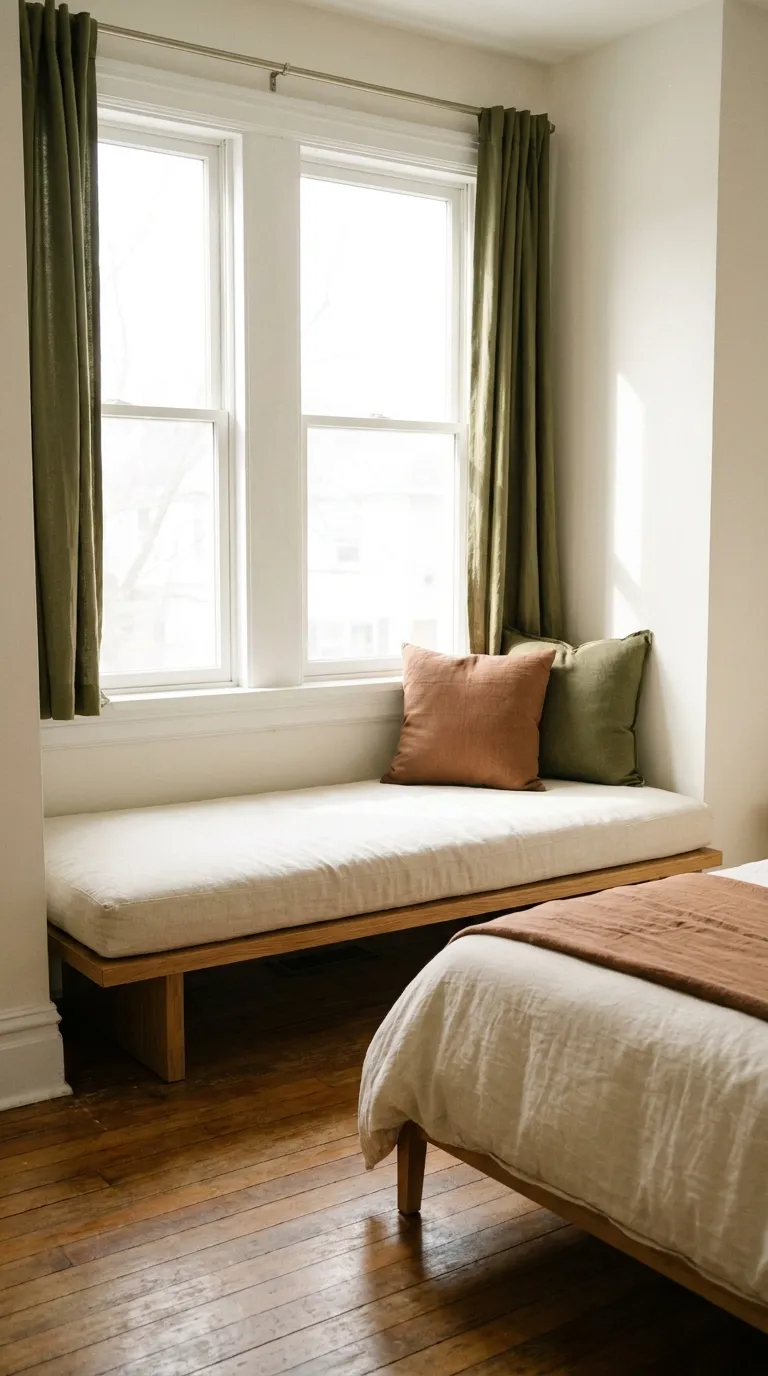
What You Need
- A low, narrow bench that fits under the window
- A long cushion in cream or clay
- A non-slip grip pad for under the cushion
- Two small pillows for the ends
Why It Works
Furniture below the window keeps the center of the room open and uses a spot that is usually empty. A cushion gives the bench a soft top and turns it into a seat you’ll actually use.
How to Recreate It
- Measure the window wall and the height of the sill
- Choose a bench that sits lower than the sill
- Lay the grip pad down, then the cushion
- Keep curtains from bunching behind it
Budget Tip
A hallway bench or a sturdy storage cube works just as well. Check that it can hold your weight before adding the cushion.
19. A Floor Cushion Reading Spot
A large floor cushion in a corner makes a casual reading spot with no chair at all. Add a small lamp and a short stack of books, and the corner becomes a place to sit that takes up very little room.
It suits people who are comfortable sitting low, and it needs a wall or bookcase behind it for back support.
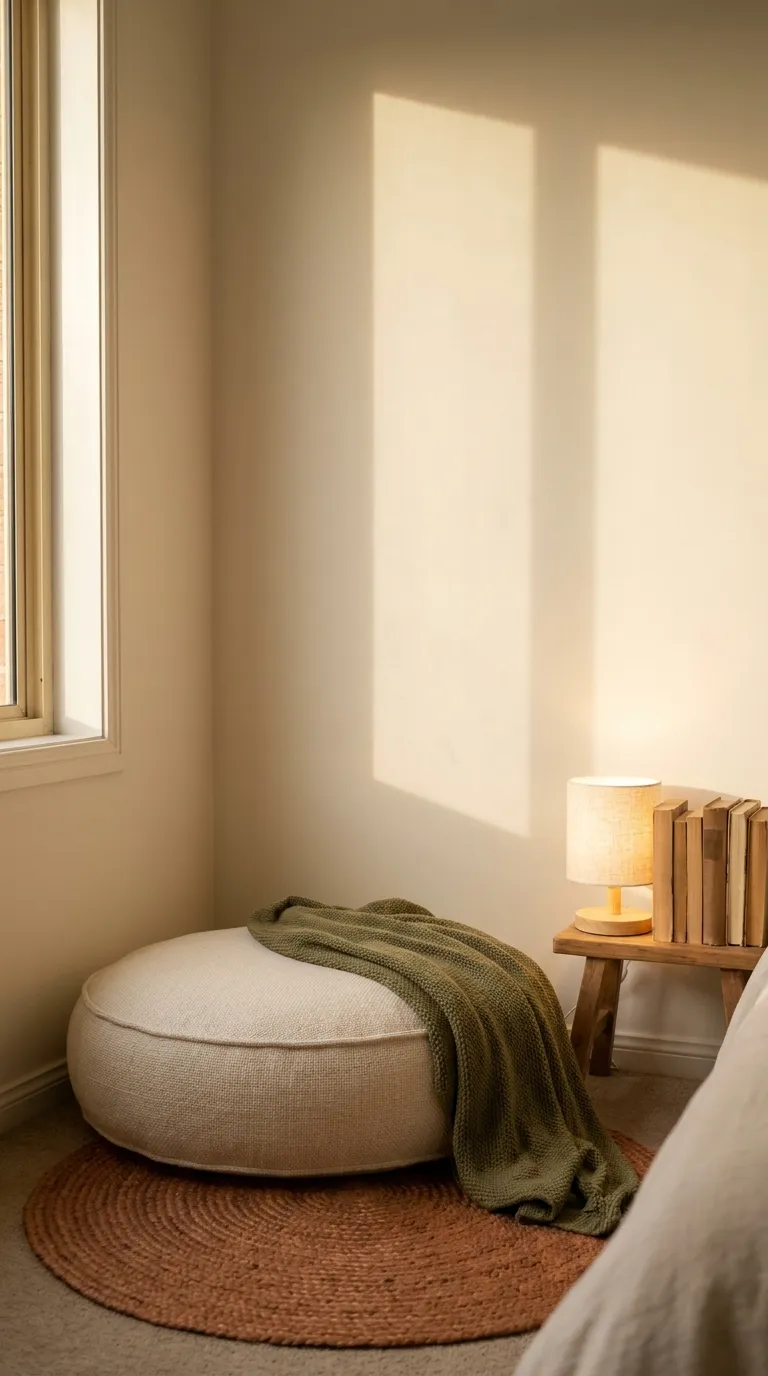
What You Need
- A large, firm floor cushion
- A small lamp or clamp-on light
- A short stack of books
- A small rug to define the spot
Why It Works
Sitting on the floor changes your height in the room, and that new viewpoint makes the space feel more varied. A light and a rug turn the corner into its own small area.
How to Recreate It
- Choose the corner with the best daylight
- Set the cushion against the wall for back support
- Put the lamp where light falls over your shoulder
- Tuck the cord along the baseboard so nobody trips
Budget Tip
Pick a firm cushion, since soft ones flatten quickly. Check the care label for the cover.
20. A Lap Tray for Slow Mornings
A lap tray with short legs turns the bed into a place for a slow breakfast, a laptop, or a notebook. It keeps drinks and crumbs off the duvet and makes lingering in bed feel intentional.
Hot drinks on a soft bed can tip, so choose a stable model and keep it for small jobs.
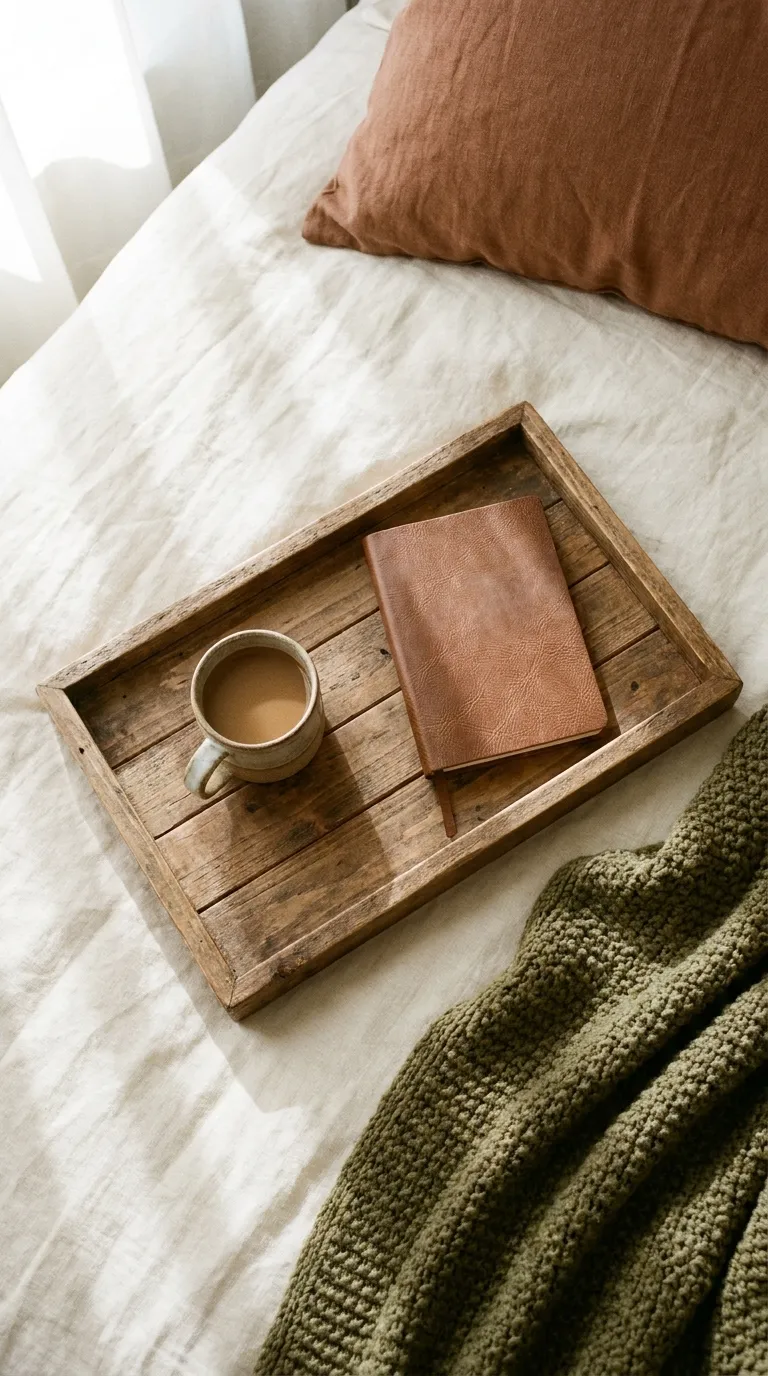
What You Need
- A lap tray with folding legs
- A stoneware mug or glass with a wide base
- A cloth napkin
- A flat spot to store it, such as behind a door
Why It Works
A flat, stable surface lets you use the bed for more than resting without wrecking the layers. The tray also marks out a small zone on the duvet, so the rest of the bed stays tidy.
How to Recreate It
- Make the bed first so the tray sits level
- Choose a tray whose legs clear your lap on both sides
- Use a mug with a wide base
- Slide the tray against the wall when you’re finished
Budget Tip
Any sturdy tray with raised edges works. Check that it doesn’t wobble on the duvet before you put a drink on it.
21. A Robe and Slipper Station
A hook on the back of the door for your robe and a small tray for your slippers makes mornings and late nights feel easier. The robe is where you reach for it, and the slippers wait in one place instead of getting lost under the bed.
It works on almost any door, but only if you keep to one robe and one pair, so the hook isn’t overloaded.
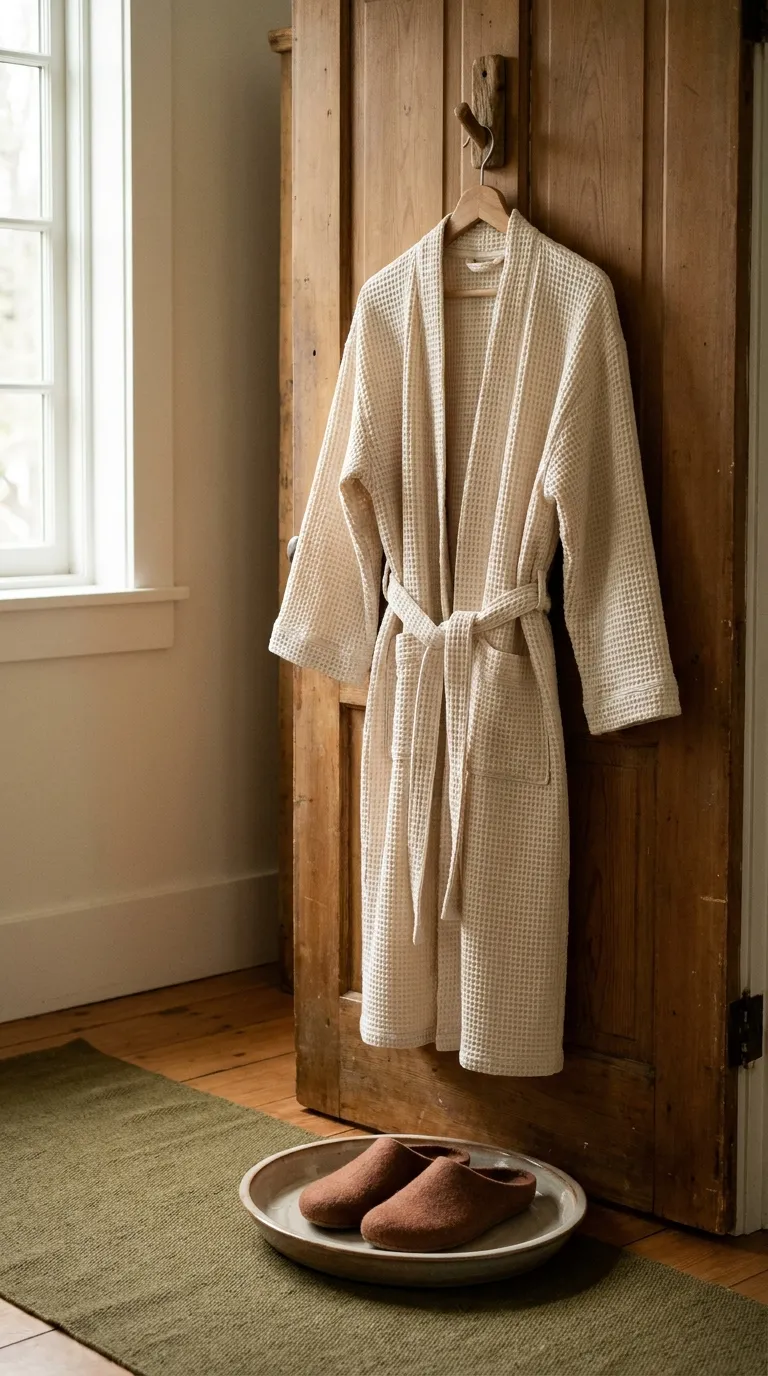
What You Need
- An over-the-door hook or adhesive hook
- A cotton or waffle-weave robe
- A shallow tray for slippers
- A felt pad to protect the door
Why It Works
Giving daily items a visible home makes the room feel organized and welcoming. A robe hanging in view also adds a soft vertical line to a flat door.
How to Recreate It
- Pick the back of the door you open least
- Hang the hook at a height where the robe clears the floor
- Set the tray on the floor beside the door
- Hang the robe each night so it’s ready
Renter Note
Over-the-door hooks need no tools. If you prefer adhesive hooks, check the weight limit on the package and follow the product’s instructions.
22. Under-Bed Boxes That Clear the Floor
Shallow boxes on rollers under the bed hold off-season bedding, spare shoes, and everything else that otherwise ends up on a chair. Clearing the surfaces you can see is one of the quickest ways to make a room feel calm.
Measure the clearance first, since some frames sit too low, and lids that don’t fit can catch the edge of the bedding.
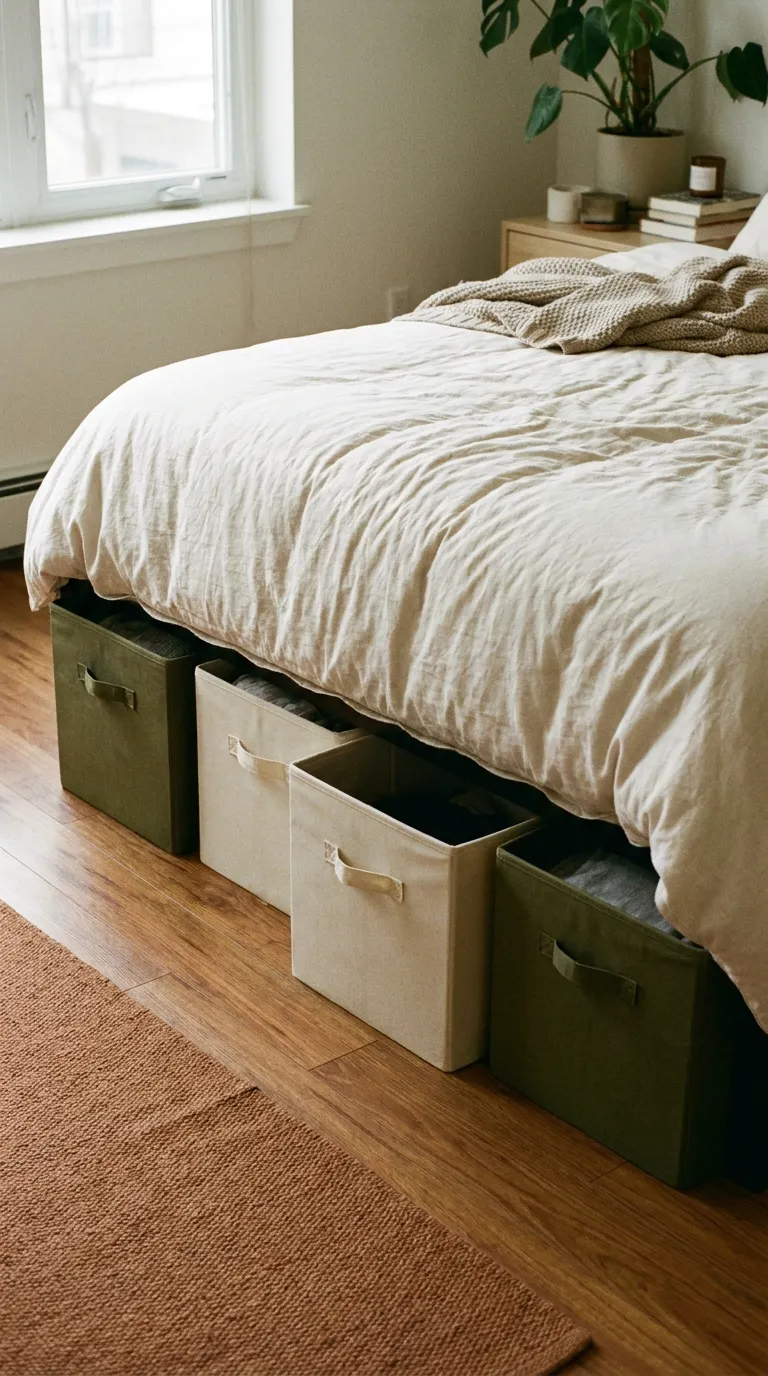
What You Need
- Two or three shallow under-bed boxes
- A tape measure
- Labels or small tags
- A dust mop for the first clean-out
Why It Works
Hidden storage reduces visual noise because the things you don’t use every day are out of sight. The floor under the bed is already empty space, so using it takes nothing from the room.
How to Recreate It
- Measure the gap between the floor and the bed frame
- Buy boxes a little lower than that height
- Put off-season bedding at the back and spare shoes in front
- Label each box so you can find things quickly
Budget Tip
Sturdy cardboard or plastic works as well as fabric. If you choose cardboard, keep it away from damp areas.
23. A Lidded Hamper That Looks Like Furniture
A laundry hamper with a lid hides the pile of clothes that otherwise sits in the corner. In woven fiber or wood, it reads as a piece of furniture instead of a chore.
It only hides mess, so empty it on a regular day. A lid won’t fix a hamper that’s overflowing.
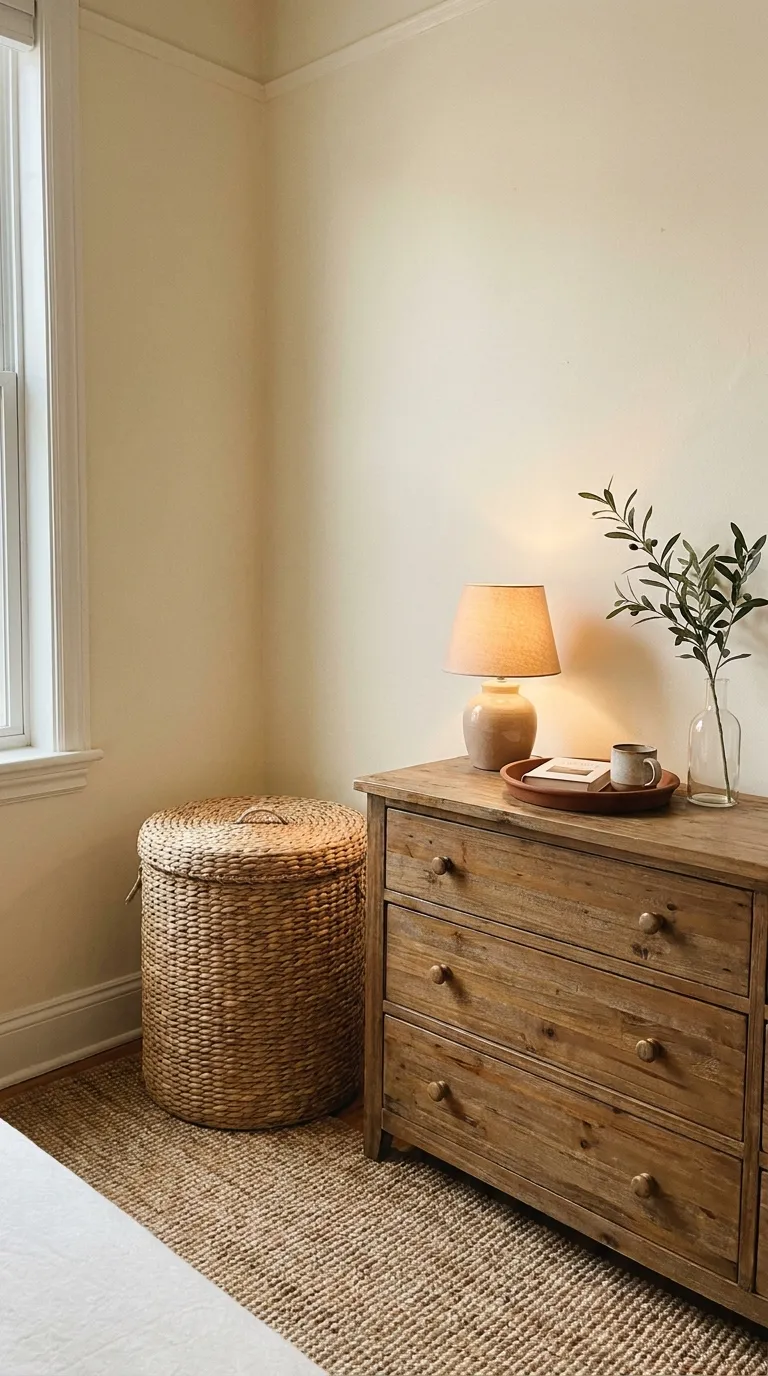
What You Need
- A hamper with a lid in woven fiber or wood
- A removable cloth liner
- A spot near the closet or the door
- A flat lid that can hold a small tray
Why It Works
A closed hamper keeps clothes out of sight, which makes the room look cleaner at a glance. A natural material also blends with the wood and rattan elsewhere in the room.
How to Recreate It
- Measure the corner you plan to use
- Choose a hamper with a removable liner you can wash
- Place it near where you usually undress
- Keep the lid closed and the top clear
Budget Tip
Thrifted baskets with lids are often sturdy. Check for loose fibers or rough edges first.
24. A Light Scent From One Source
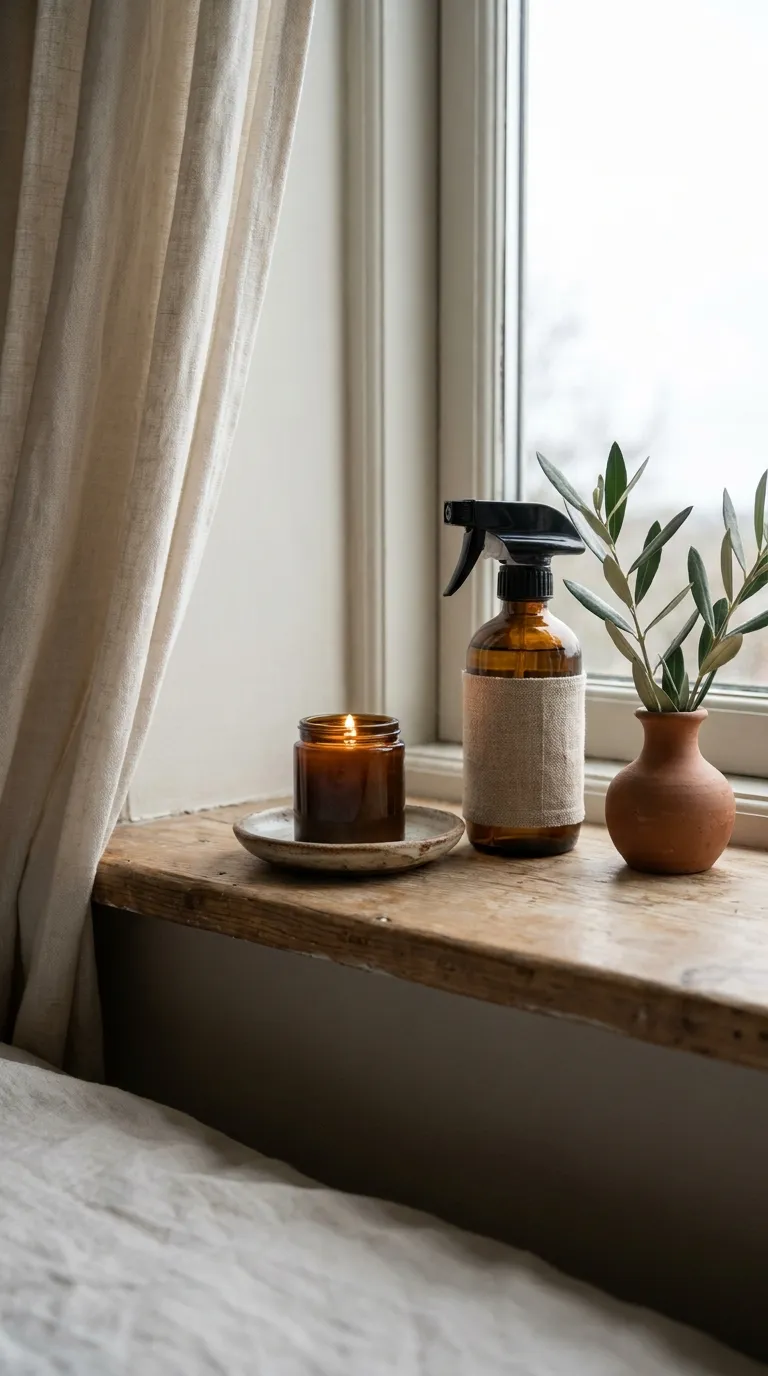
One soft scent in the room is enough. A linen spray on the sheets, a small diffuser, or a single candle gives the bedroom a quiet signature that’s noticeable when you walk in but doesn’t take over.
More than one source starts to compete, and some scented products can bother people or pets, so keep it light and easy to turn off.
What You Need
- One linen spray, small diffuser, or candle
- A heat-safe dish if you choose a candle
- A spot away from fabric and curtains
- A small tray or shelf to hold it
Why It Works
Scent works quietly alongside light and texture to make a room feel finished. Sticking to one source keeps it from smelling crowded.
How to Recreate It
- Choose a soft, simple scent rather than a strong one
- Mist linen spray lightly on the sheets and let it dry
- Set a candle on a stable, heat-safe surface away from fabric
- Never leave a candle burning unattended, and blow it out before you leave the room
Budget Tip
A small bottle of linen spray lasts a long time. Follow the product label, test fabric on a hidden corner first, and keep the room ventilated.
25. A Two-Minute Evening Reset
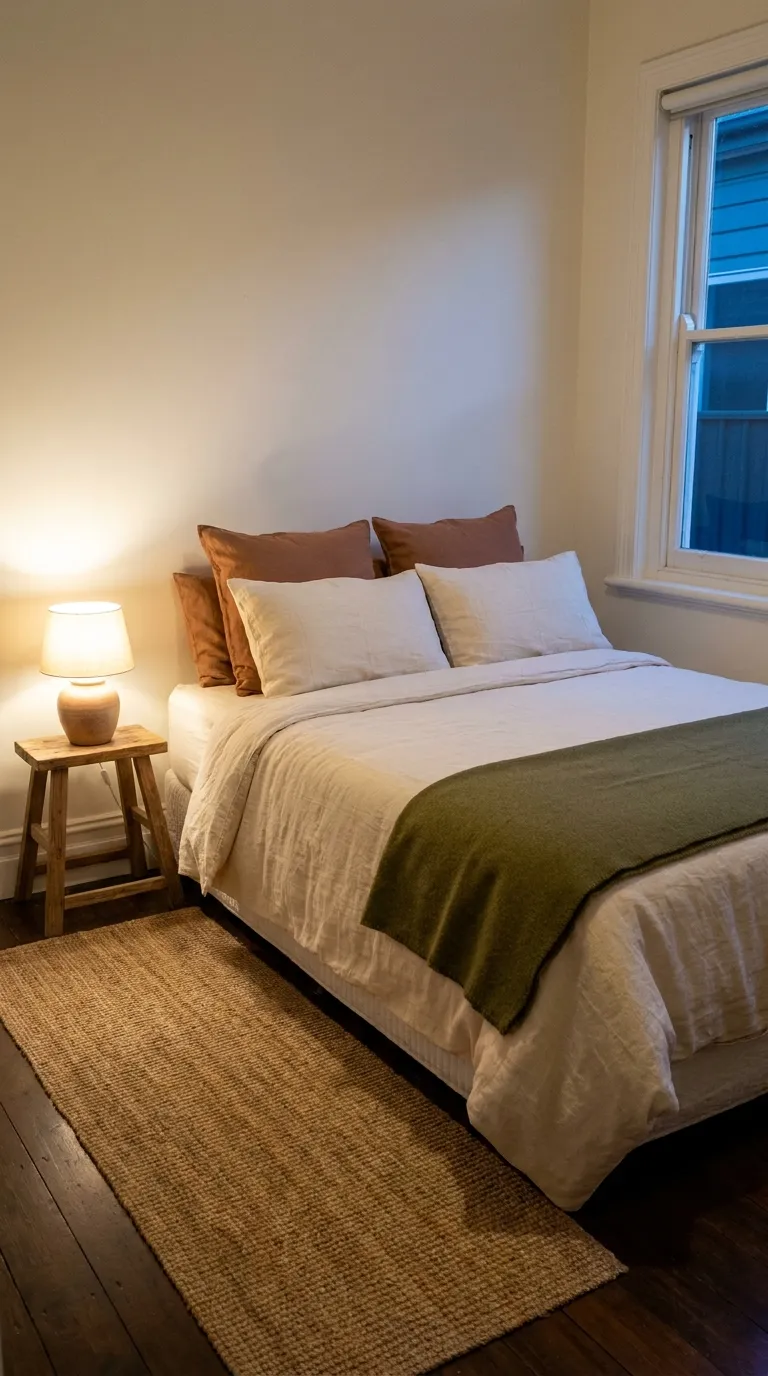
The last idea costs nothing: a two-minute reset when the day winds down. Fold the throw, straighten the pillows, return the tray to its spot, and the room looks the way you wanted it to look all along.
It only helps if it stays small, so keep it to the few things that make the biggest visible difference.
What You Need
- A throw or sherpa blanket
- Your accent pillows
- A tray or dish for loose items
- A hamper or basket with a lid
Why It Works
A room reads as cozy when its soft layers are visible, and they only stay visible if someone straightens them. A short, repeatable routine keeps every other idea on this list working without a weekend cleanup.
How to Recreate It
- Pick up anything that doesn’t belong and return it to its spot
- Fold the throw and straighten the pillows
- Put loose items back in the tray or dish
- Switch off the overhead light and turn on the lamps
Budget Tip
This is the least expensive idea here, and it makes every other one look better. Do it at the same point each evening, like right after dinner, so it becomes automatic.
Quick Idea Cheat Sheet
Use this table to match an idea to the problem you’re trying to solve.
| Idea | Key Pieces | Best For |
|---|---|---|
| Lamplight Instead of Ceiling Fixture | Lamps, warm bulbs | Harsh overhead light |
| Low Plug-In Glow | Warm plug-in light | Late-night walks |
| Flannel Sheets | Flannel set, cotton backup | Cooler months |
| Six-Layer Bed | Sheets, duvet, pillows, throw | Beds that look flat |
| Clay-Toned Pillows | Clay covers, cream base | Adding one accent |
| Sherpa Corner | Sherpa blanket, lint roller | Texture contrast |
| Hung Textile | Rod, woven blanket, hooks | Bare wall behind bed |
| Wall Shelf Nightstand | Narrow shelf, anchors, lamp | Tight bedside space |
| Round Side Table | Round table, felt pads | Bumpy corners |
| Twin Runners | Two runners, non-slip pads | Soft landing underfoot |
| Lined Curtains | Lined panels, sturdy rod | Dark, quiet evenings |
| Three-Shade Rule | Cream, clay, olive swatches | Mismatched rooms |
| Wood and Rattan | Wood tray, woven shade | Flat, fabric-heavy rooms |
| One Large Frame | Large frame, anchors | Busy or bare walls |
| Round Mirror | Round mirror, lamp | Spreading lamp glow |
| Dresser Tray | Tray, dish, tall piece | Cluttered dresser tops |
| Trailing Plant | Pothos, saucer, high surface | Empty upper corners |
| Window Bench | Low bench, cushion | Unused window wall |
| Floor Cushion Spot | Cushion, lamp, books | Tiny reading corners |
| Lap Tray | Tray, wide-base mug | Slow mornings in bed |
| Robe Station | Door hook, slipper tray | Cluttered doors and floors |
| Under-Bed Boxes | Shallow boxes, labels | Visible clutter |
| Lidded Hamper | Woven hamper, liner | Laundry piles |
| Single Scent | Linen spray or candle | Finishing touches |
| Evening Reset | Throw, tray, lamps | Keeping everything cozy |
How to Pull Together Your Own Cozy Bedroom Look
You don’t need all 25 ideas. A handful of principles do most of the work, and they apply no matter which pieces you choose.
Cozy Bedroom Ideas for Women Start With Light, Not Furniture
If you only change one thing, change the light. Three sources at three heights, a lamp by the bed, a lamp low in a corner, and a small glow near the floor, will do more for the room than a new bed frame.
Keep every bulb warm and let the ceiling fixture be the backup.
Choose One Anchor Piece
Pick the item that carries the room, whether that’s the layered bed, a hung textile, or one large frame. Everything else should support it instead of competing with it.
Stay Inside One Family of Textures
Mix two or three textures in the same color family, such as flannel, sherpa, linen, and a little wood. Contrast in touch keeps the room interesting while the colors stay quiet.
Leave Half the Surfaces Empty
A dresser or side table with half its top bare looks styled. Fill all of it, and the eye has nowhere to rest.
Cozy Bedroom Mistakes Worth Skipping
It’s Easy to Light the Room From One Spot
A single ceiling fixture flattens everything. Add at least two lamps at different heights and use them instead of the overhead light in the evening.
It’s Easy to Say Yes to Every Color
When each new piece brings its own shade, the room starts to feel busy. Stick to three shades and say no to anything that doesn’t fit them.
It’s Easy to Hide Clutter Instead of Editing It
Baskets and boxes help, but they work best after you’ve sorted what you actually use. Edit first, then store.
Final Tips for Success
Start With the Cheapest Change
Warm bulbs, a throw, and two pillow covers take less than an hour and give the biggest visible difference for the least effort.
Check Your Lease Before Drilling
Several ideas here are easy to do without tools, but shelves, mirrors, and large frames need anchors rated for their weight. If you rent, check your lease first, and follow the product’s instructions every time.
Basics Worth Owning
- Warm white bulbs
- Two lamps with fabric shades
- A cream sheet set and a duvet
- A throw blanket
- A rug or runners with a non-slip pad
Let the Room Fill In Slowly
It doesn’t have to be finished in a weekend. Add one thing, live with it for a few days, and decide what’s still missing.
Conclusion
A cozy bedroom doesn’t come from one big purchase. It comes from warm light, a bed with a few soft layers, a short list of shades, and a place for your things to live.
Whichever of these cozy bedroom ideas for women you try first, start small and notice how the room feels at the end of the day. The change you can feel tonight is usually the one worth keeping.
Add one idea, then another, and let the room fill in at its own pace. You’re building a place that works for you, one lamp and one soft layer at a time.
Save this guide for the next time you rearrange the room.