
Free planning tools
Decor Planning Tools
Twelve free tools for planning a home on your own terms. Measure the room, plan the layout, set a budget and pick colors, one small decision at a time.
No tool matches that search. Try a shorter word.
Plan a Room in Nine Steps, in the Right Order
Most decorating regrets come down to order. The rug that turned out too small, the sofa that would not clear the doorway, the paint picked before anyone looked at the light. A short plan prevents nearly all of them.
This page gathers twelve tools that each answer one question. The guide below shows the sequence that works, what each tool hands you, and how to carry that answer into the next step. You do not need all twelve, only the ones that fit your project, in a sensible order.
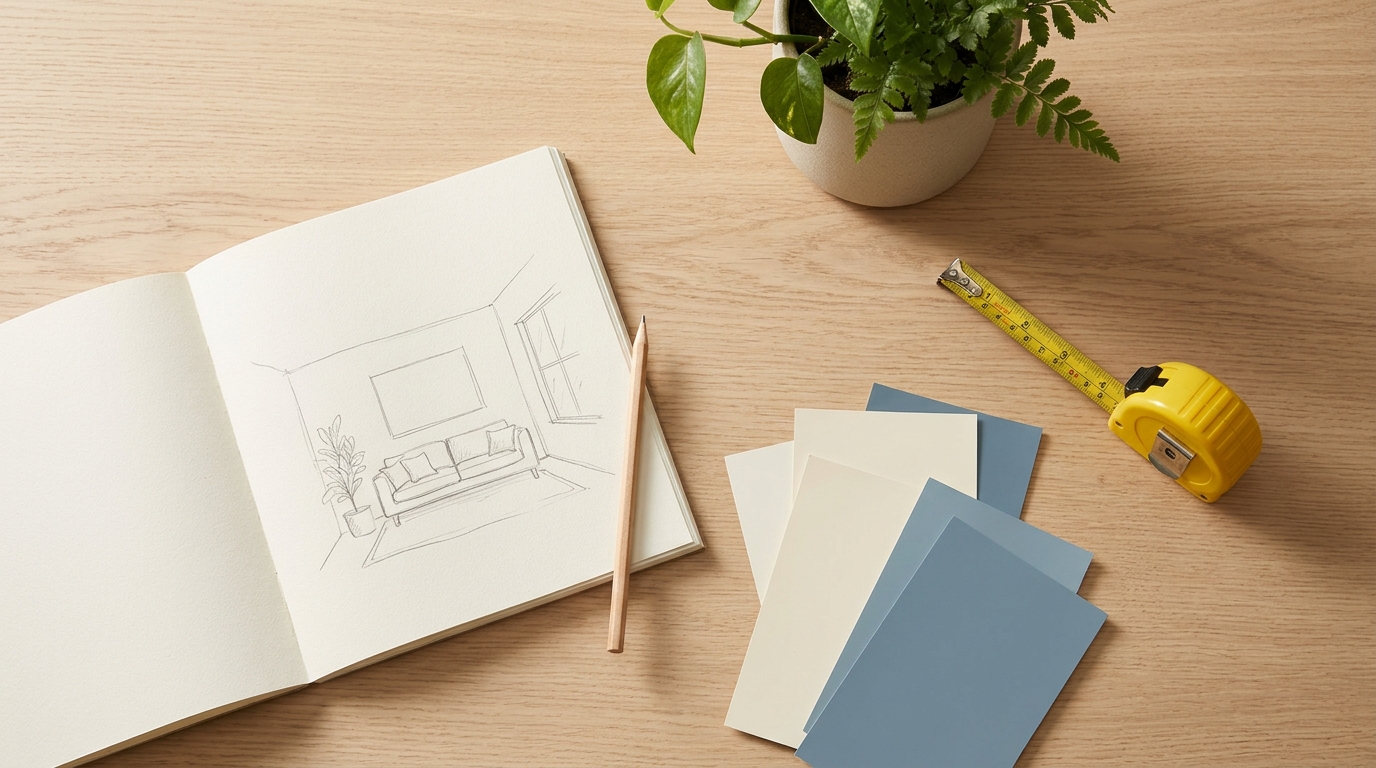
The Order at a Glance
| Step | Question | Tool |
|---|---|---|
| 1 | How big is the room? | Room Size Calculator |
| 2 | Will my furniture fit? | Will It Fit? Checker |
| 3 | Where does everything go? | Furniture Layout Planner |
| 4 | How much can I spend? | Decorating Budget Planner |
| 5 | Which colors? | Color Palette Generator |
| 6 | How much paint or wallpaper? | Paint and Wallpaper Calculators |
| 7 | Which rug and curtains? | Rug Size Guide, Curtain Size Calculator |
| 8 | Is there enough light? | Lighting Calculator |
| 9 | How should I hang art? | Gallery Wall Planner |
The Nine Steps in Detail
Step 1: Measure the room
Everything else depends on the floor area, so open the Room Size Calculator first. Enter length and width, add extra sections for alcoves or an L-shape, and write down both the square feet and the ceiling height.
Carry forward: floor area, ceiling height, window and door positions.
Step 2: Check what will fit
Before you fall for a sofa or a bed, run it through the Will It Fit? Checker. A piece that suits the room can still fail at a narrow stairwell or a tight door frame.
Carry forward: the maximum size of any piece you can take in.
Step 3: Plan the layout
Sketch where everything goes with the Furniture Layout Planner. Leave walking paths first, then place the largest piece, then fill around it. Rearranging a drawing costs nothing, unlike rearranging a sofa.
Carry forward: a furniture list with exact sizes.
Step 4: Set the budget
With the layout in hand, divide your money using the Decorating Budget Planner. Putting the big, long-lasting pieces first stops small purchases from eating the budget.
Carry forward: a spending limit for each category.
Step 5: Choose colors
Start from one shade you already love and build around it with the Color Palette Generator. Pick the palette before paint, rug and curtains so they work as a set.
Carry forward: a short palette of three to five colors.
Step 6: Calculate paint or wallpaper
Take wall measurements to the Paint Calculator for gallons, or to the Peel-and-Stick Wallpaper Calculator for an accent wall. Buy a little extra and keep the leftover can for touch-ups.
Carry forward: paint quantity and finish for each surface.
Step 7: Add the rug and curtains
Use the Rug Size Guide to choose a standard size that anchors the furniture, then the Curtain Size Calculator for rod width and drop. Both work better once the layout and palette are settled.
Carry forward: final sizes to order.
Step 8: Fix the lighting
Run the room through the Lighting Calculator to see whether one ceiling fixture is doing too much. Layering lamps at different heights usually fixes a room that feels flat.
Carry forward: how many light sources, and where.
Step 9: Finish the walls
Last, plan frames and art with the Gallery Wall Planner. Laying the arrangement out to scale first means fewer holes, which matters a great deal if you rent.
Carry forward: a frame layout you can trace onto the wall.
A Worked Example: A 12 × 10 ft Bedroom
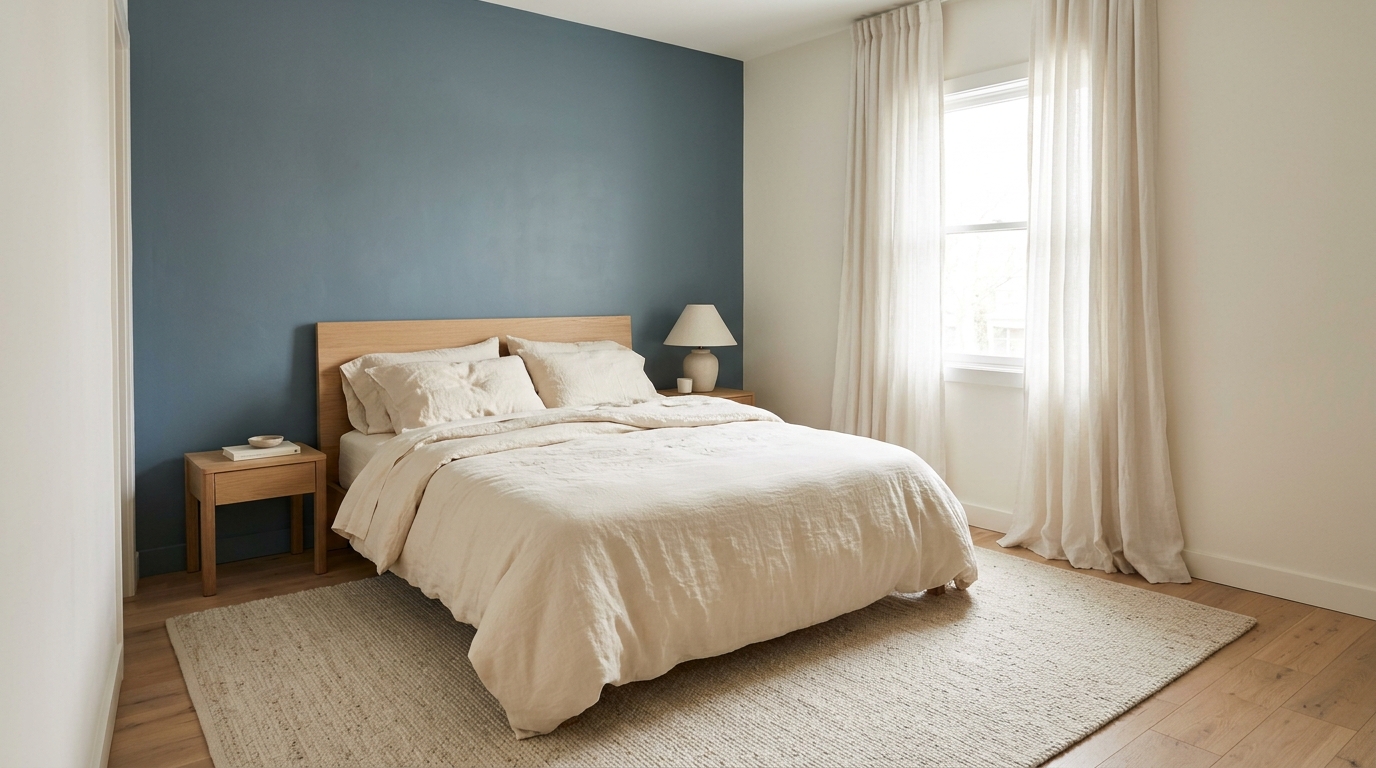
Here is how the numbers move from step to step in a small bedroom with an 8 ft ceiling, one door and one window.
- Measure: 12 ft × 10 ft is 120 sq ft, about 11.1 m².
- Furnish: following the one-third rule, furniture should cover about 40 sq ft, which keeps the rest of the floor open for walking.
- Rug: a queen bed with about 18 inches of rug past each side points to an 8 × 10 ft rug.
- Paint: the four walls add up to 44 ft × 8 ft = 352 sq ft. Subtract roughly 36 sq ft for a door and a window and you have about 316 sq ft. At a typical 350 to 400 sq ft per gallon, that is a bit under one gallon per coat, so buy two gallons for two coats.
Mistakes These Tools Help You Avoid
- Buying the rug or sofa before measuring the room
- Picking paint colors without checking the light at different hours
- Skipping the delivery path, then discovering the sofa cannot turn the corner
- Spending the budget on small decor and having nothing left for the big pieces
- Hanging art one frame at a time without a layout
- Treating a calculator result as exact and not adding a small safety margin
Keep Your Numbers in One Place
Each tool gives you a figure you will need later, so keep a running list in your notes app: floor area, ceiling height, furniture sizes, budget by category, palette colors and the quantities of paint and fabric. When you shop, you will have every answer in one spot instead of rebuilding it from memory.
Planning Tools FAQ
Which tool should I open first?
The Room Size Calculator, because nearly every other answer depends on your floor area. If you are moving into a first place, begin with the First Apartment Checklist and measure afterward.
Do I have to use all twelve tools?
No. A paint job may need only the Paint Calculator and the Color Palette Generator, while a full makeover can use most of them. Pick the tools that match your project.
Do the tools cost anything or need an account?
They are free and need no sign-up. The First Apartment Checklist stores your progress in your browser, so use the same browser and device to see it again.
What order should I decorate a room in?
Measure, check that furniture fits, plan the layout, set a budget, choose colors and paint, then add the rug, curtains, lighting and wall art. This order prevents buying things that turn out to be the wrong size or color.
Can I trust the results for a final purchase?
Treat them as careful estimates. Re-measure before you order, check the product’s own dimensions and read the retailer’s return policy.
Do the tools work on a phone?
Yes. They are built to work on small screens, and the results are easy to copy into your notes app.
The tools give estimates. Always re-measure and check product dimensions and return policies before you buy.