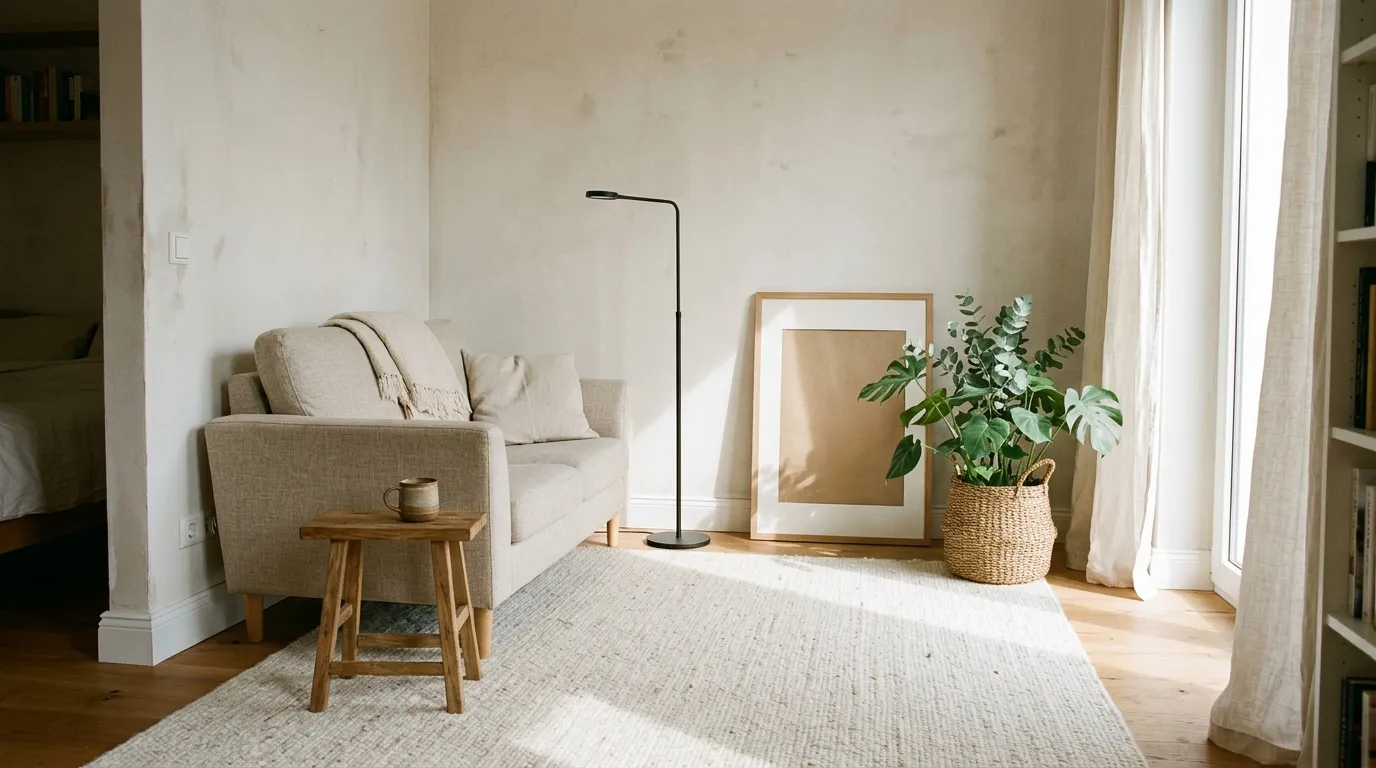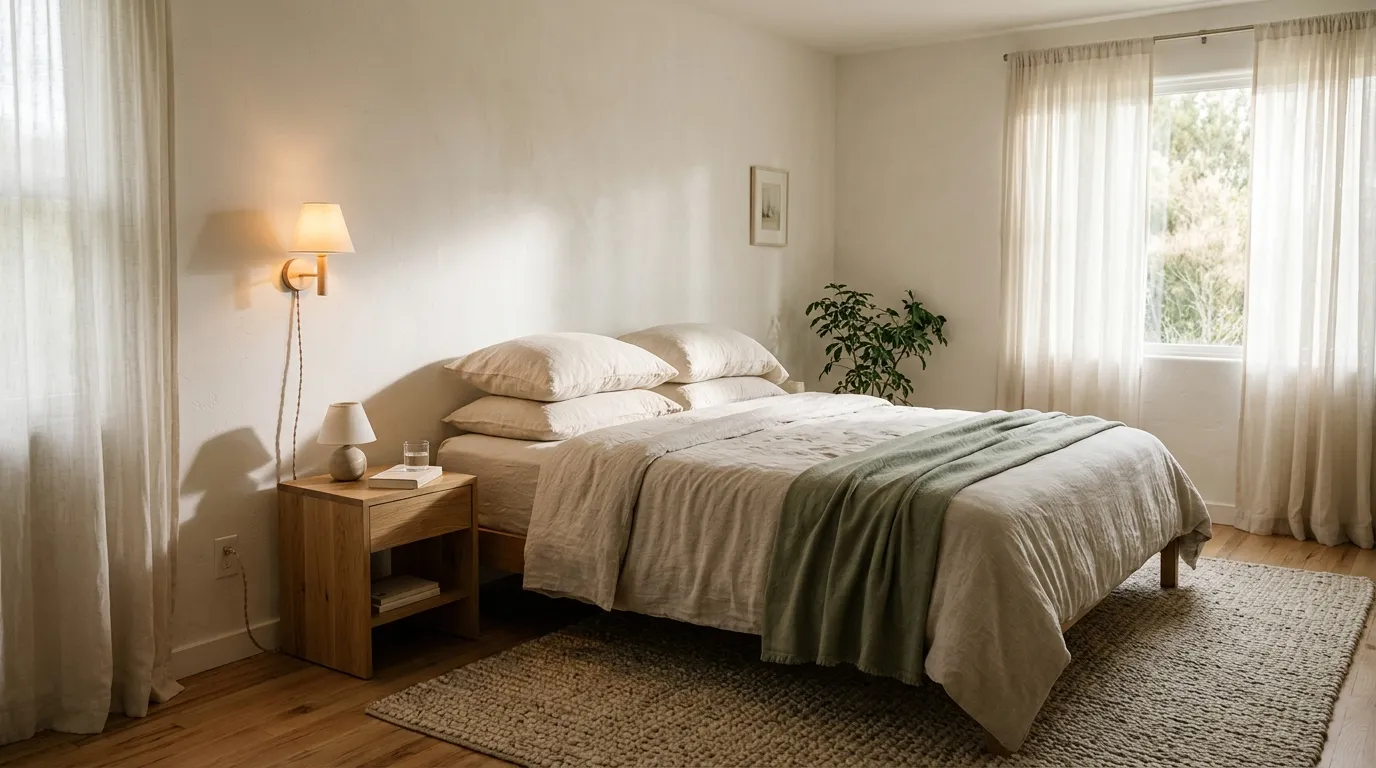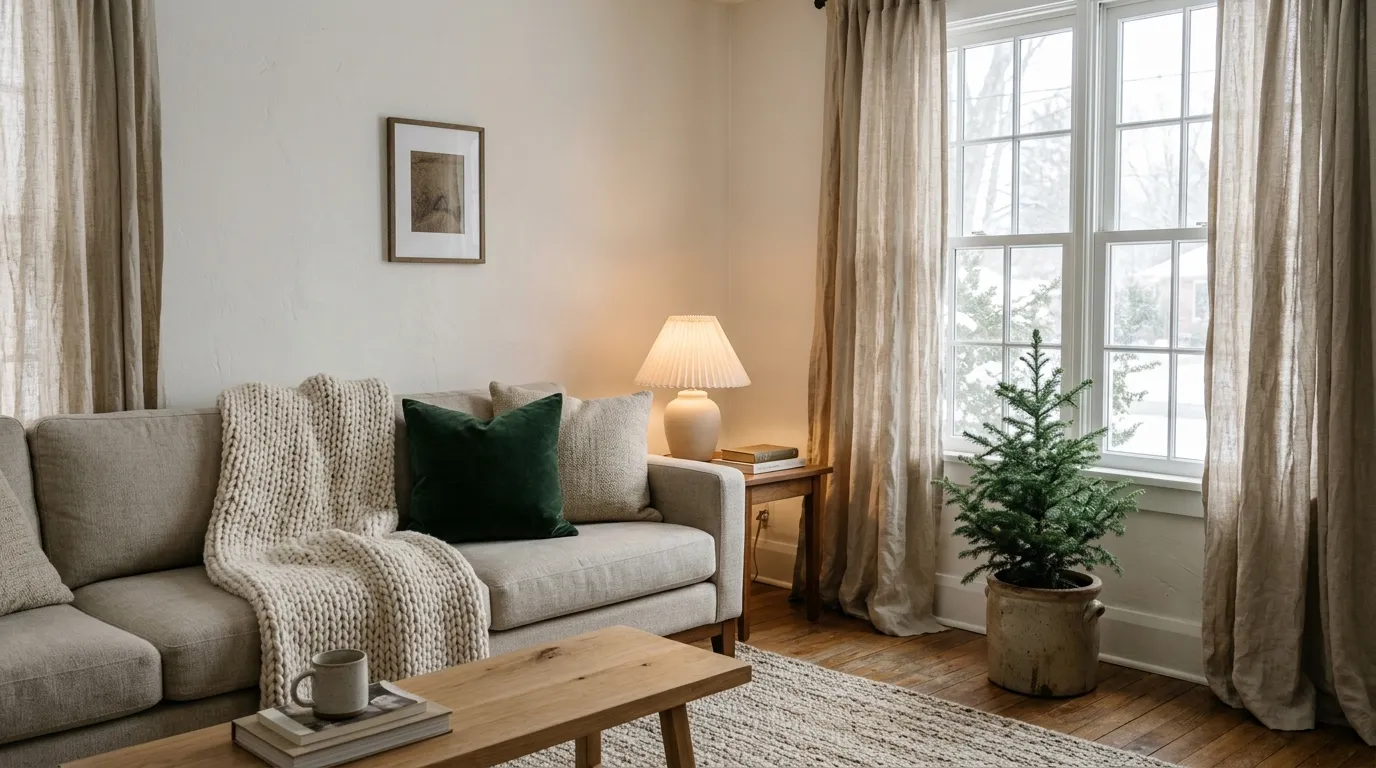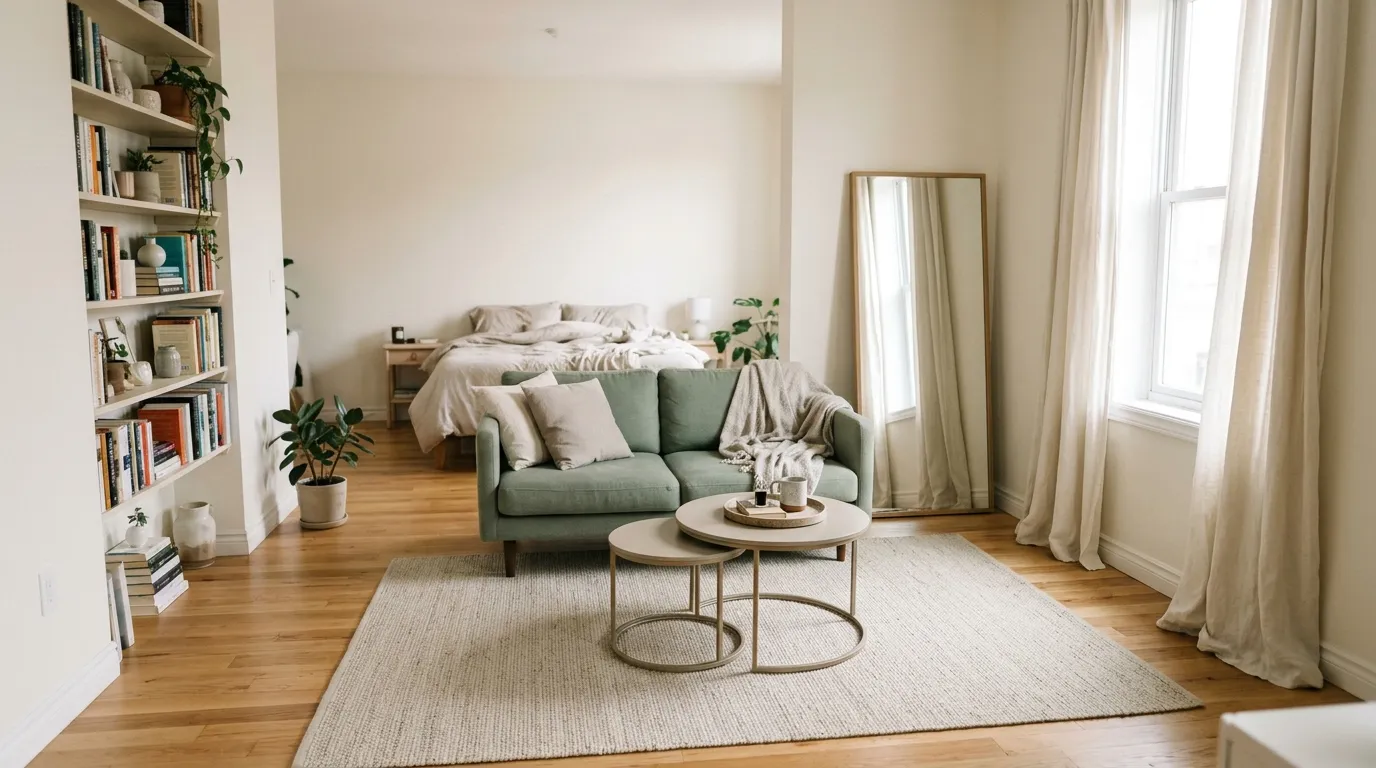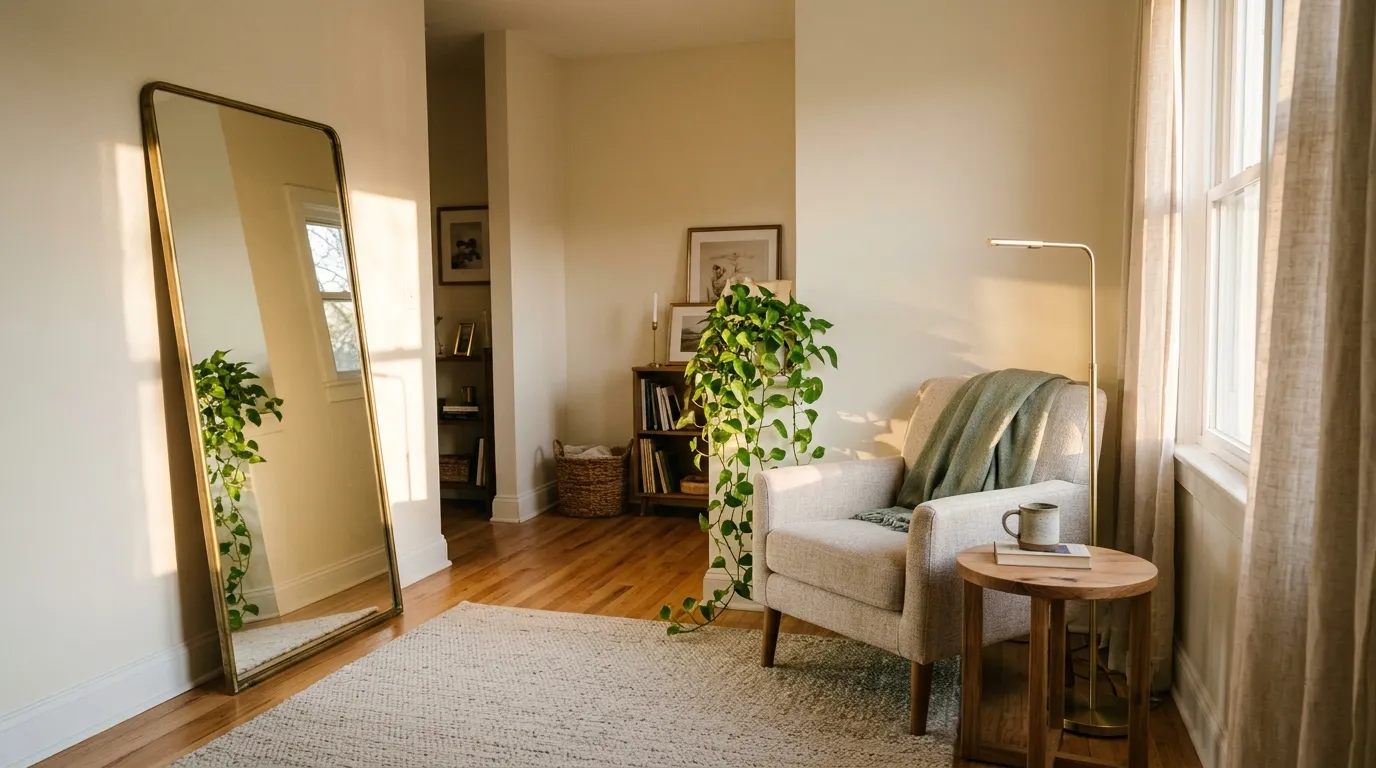

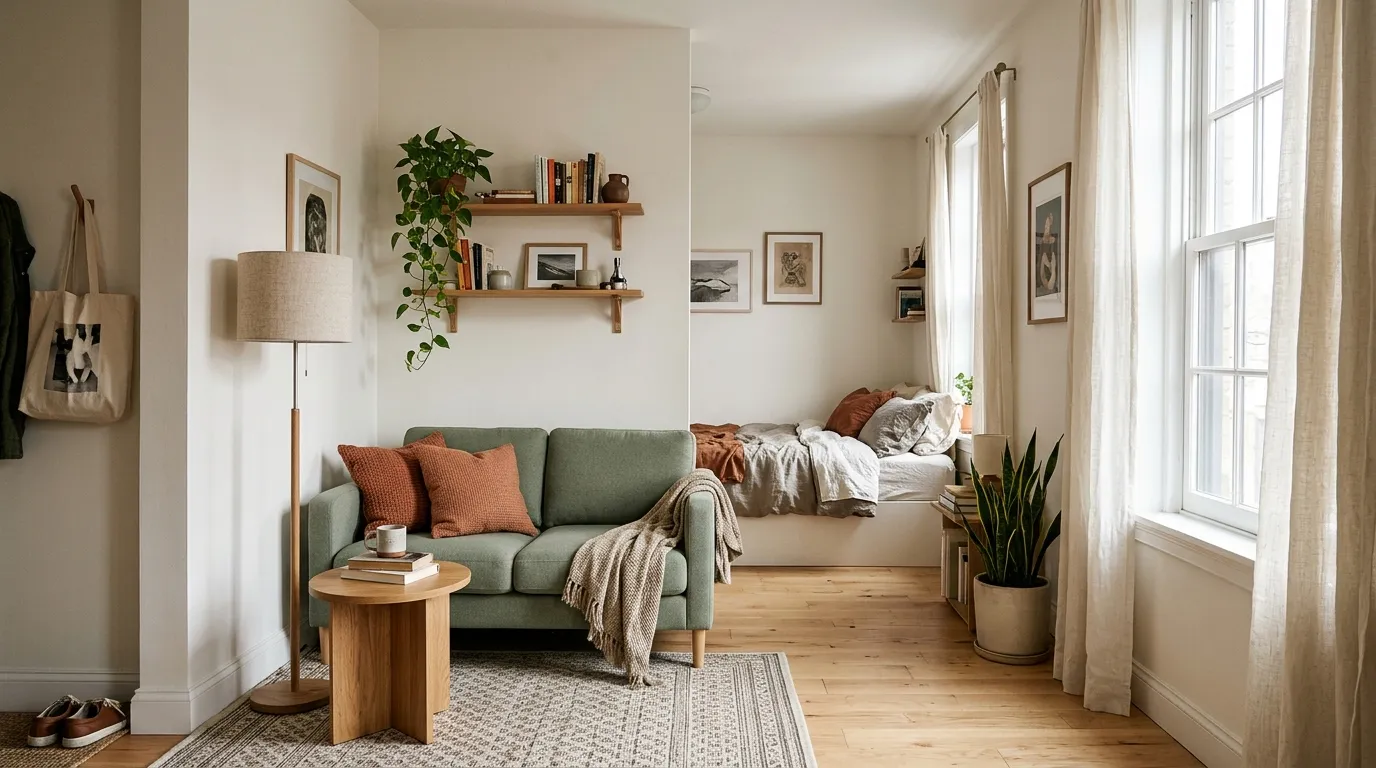
You carry the last box up the stairs, set it down, and the whole place echoes back at you. There is a bed frame, no lamps, plain landlord-white walls, and a bank balance that suddenly feels small. If you are trying to decorate first apartment on a budget, the order you buy things in will protect your wallet more than any sale ever will.
What helps most is a short list of stages, each one telling you what to do now and what can safely wait. Six are below, running from taking measurements to hanging art, and none of them asks for a big weekend of shopping.
I’d treat this as a month-long project rather than a sprint. Start at stage one, stop whenever your money or your energy runs low, and the room will still be perfectly livable.
1. Take Your Room’s Numbers
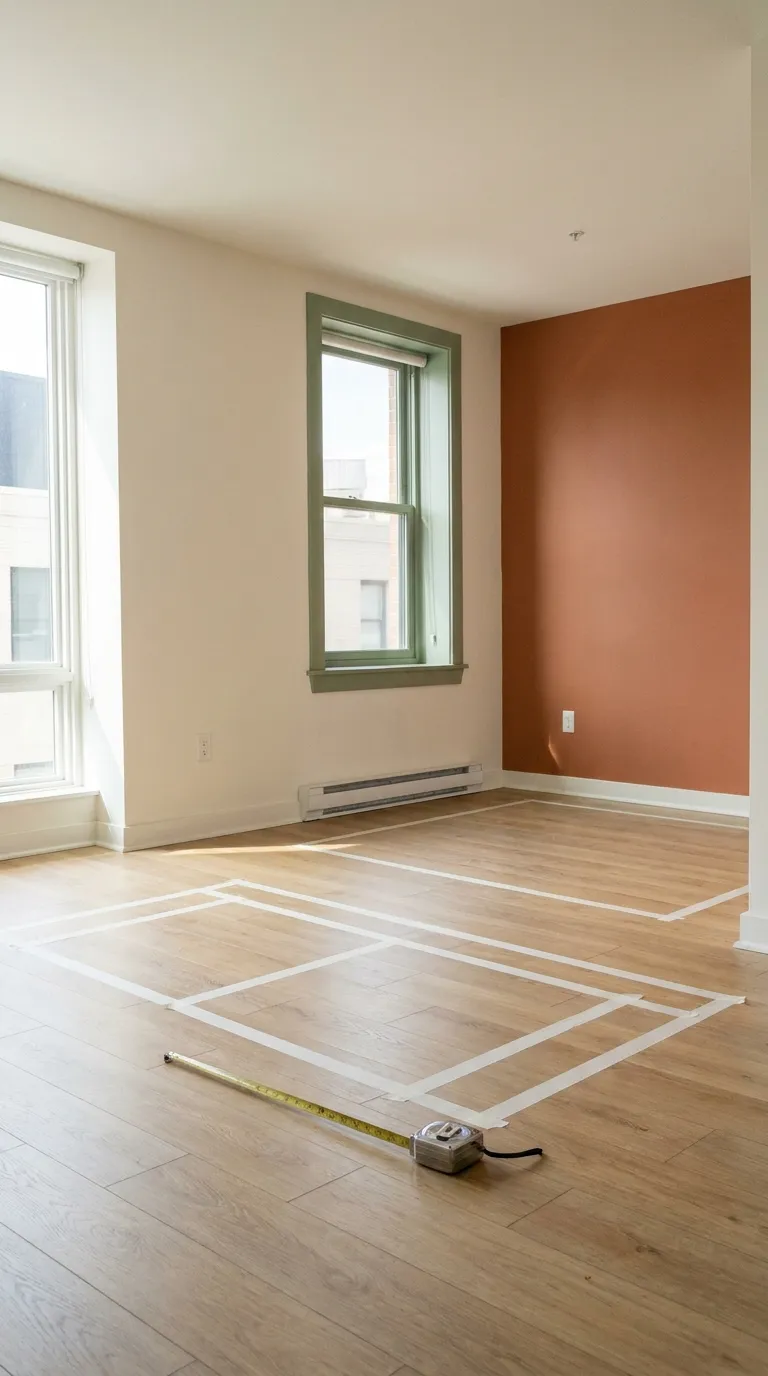
Before anything goes in a cart, get the room onto paper. A cheap tape measure and ten quiet minutes will teach you more than hours of scrolling, and they head off the priciest beginner error: ordering something that jams in the stairwell.
Do This First
- Sketch the floor as a simple box and label each wall
- Note the ceiling height and the width and height of every window
- Circle outlets, vents, and radiators on your sketch
- Check how far each door swings open
- Find the narrowest point on the route from the street door to your room
- Lay painter’s tape on the floor in the footprint of any big item you are eyeing
Why It Matters
A taped rectangle on the floorboards shows at a glance whether a couch will crowd the room, something no product page can do. As a baseline, keep at least 30 inches open along the paths you walk every day.
What to Look For
Walk the room with your sketch in hand and flag these:
- A wall with space for the head of a bed
- Windows that will need curtains, plus how high the sills sit
- Where a lamp cord can actually reach a socket
- Any bend or squeeze in the route from the door to the bed
Skip for Now
- Choosing wall colors, which look different once a bed and sofa are in
- Drawing to scale, since numbers on a loose sketch are plenty
A Simple Rule to Remember
Write it down before you pay for it.
2. Set a Spending Plan by Priority
Once the room is on paper, decide who gets the money. A plan built around how often you will use things is steadier than a wish list, because one pretty rug cannot quietly eat the whole pot.
Do This First
- Set a ceiling you can hit without touching rent money
- Park a small slice for shipping, screws, and the unplanned
- Tag every want as daily, weekly, or now-and-then use
- Funnel the largest portion to daily items: where you sleep and where you sit
- Keep a running tally in your phone so the total is never a surprise
Why It Matters
A decorating budget stays honest when you sort it by habit. The bed you sleep in every night and the chair you sink into after work deserve real money; a decorative tray does not. A hard cap on each category also gives you a polite reason to leave the store without that extra thing.
Renting with strict rules about painting and drilling? Shift part of the plan toward rugs, lamps, and fabric, which all work without touching a wall.
Type in the total you are working with and choose a preset, and the widget spreads it across eight categories.
What to Look For
- Categories named after your habits rather than your rooms
- A spare line for delivery fees and hardware
- Thrift, sale, and hand-me-down routes for the pricier pieces
- A cap written beside each line before you start browsing
Skip for Now
- Trinkets and styling props, which cost nothing to postpone
- Upgrading a perfectly serviceable chair just because it is plain
3. Source Your Big Pieces Smartly
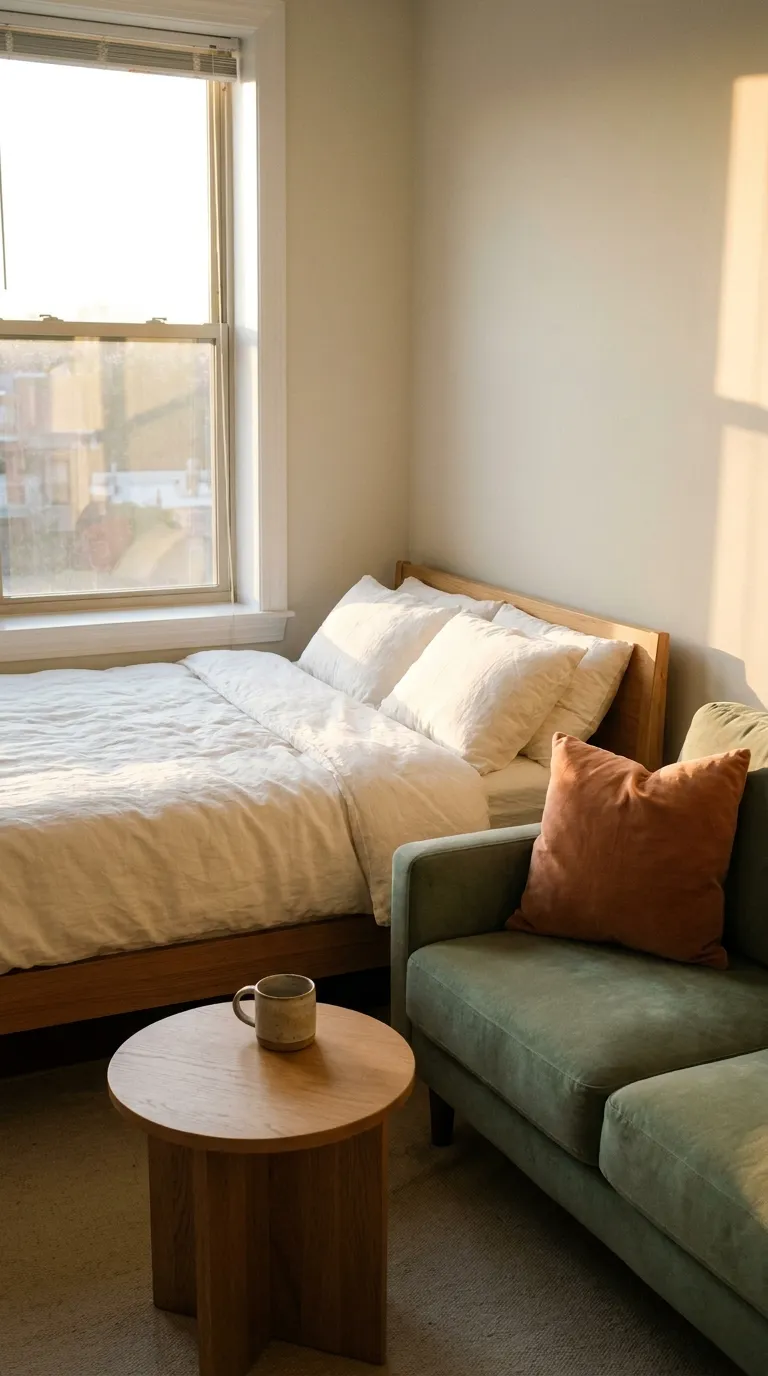
Bed, seat, surface: three pieces carry most of the room. They dictate where you walk, which colors you lean toward, and how much space is left, so they earn your attention before anything small does.
Do This First
- Settle on a bed setup that gives you good nights, not just a pretty frame
- Choose one chair or loveseat you would be glad to come home to
- Pick a table that can be a desk at noon and a dinner spot at night
- Hold each candidate up against your tape outlines
- Check thrift shops, local marketplace listings, and floor-model sales for solid options
Why It Matters
A handful of anchors is usually enough to make a first place livable, and listing them at the top of your first apartment checklist keeps small buys from crowding in. Test any layout with simple math: take the room’s width, subtract the depths of the pieces facing each other, and see what remains. That gap should be 30 inches or more.
Try it: enter a room width and the depths of two facing pieces to see whether you can still walk between them.
What to Look For
- Compact sizes made for one person, such as a loveseat in place of a sectional
- Raised legs, so the floor shows underneath and the room reads lighter
- Tight joints, steady frames, and covers that unzip for washing
- Calm base shades: oatmeal, warm white, soft gray
- On secondhand pieces, a close look at seams, joints, and upholstery before you carry them in
Skip for Now
- A coordinated set, since mixed finds look more personal anyway
- Spare seating, until guests actually become a habit
- Pictures and knickknacks that can follow the layout
A Simple Rule to Remember
Comfort first, decoration last.
Renter Note
Leases often restrict drilling, so confirm before fastening furniture to a wall. A tall bookcase you cannot anchor is a poor pick; go low instead. Anything heavy needs wall anchors rated for its weight, installed per the maker’s instructions.
4. Soften It With Rugs, Curtains, and Throws
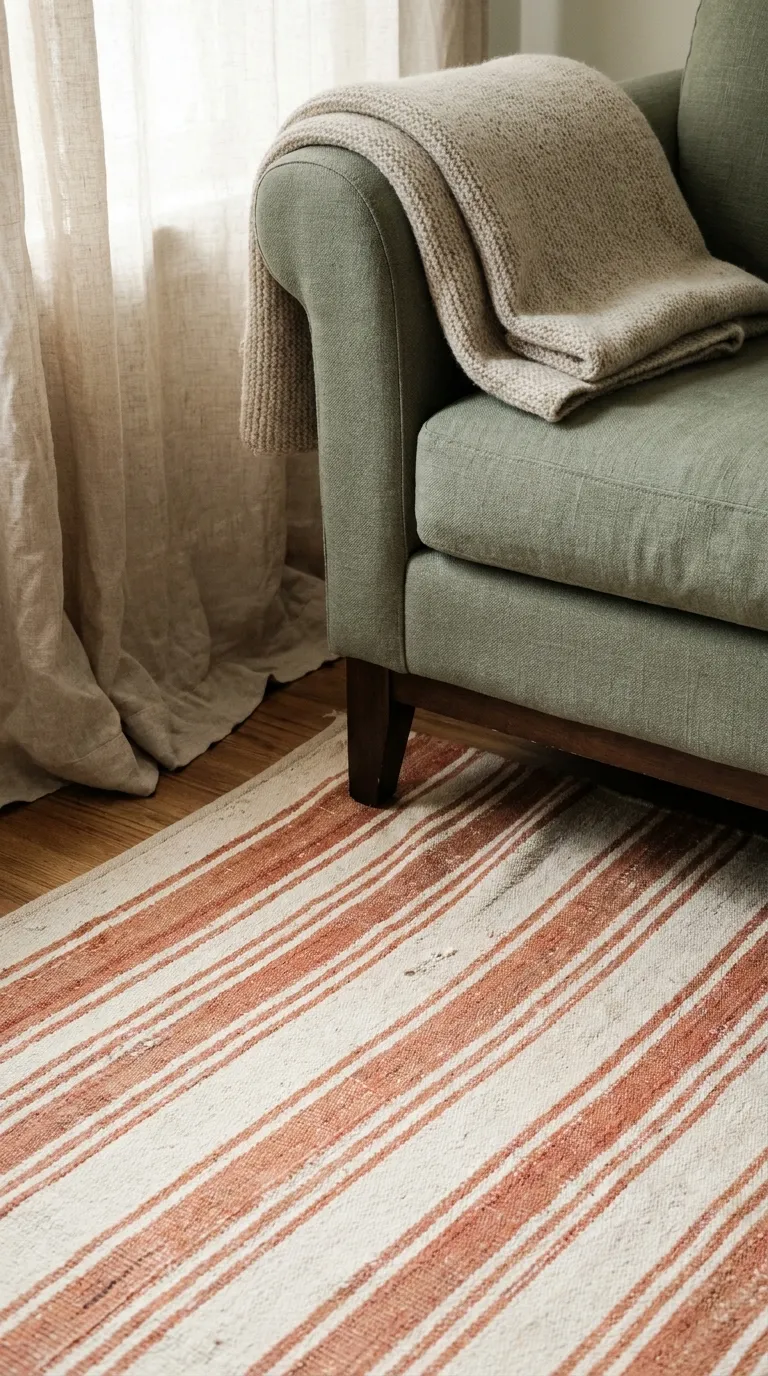
Fabric is where a rental stops feeling like a rental. Even just a rug, two curtain panels, and one blanket deaden echo, add texture, and fill a lot of eye space for little money.
Do This First
- Choose a rug that reaches under the front of your sofa or chair
- Hang curtains high, near the ceiling, with fabric long enough to graze the floor
- Add one blanket worth snuggling into
- Pick two cushion covers in shades from your palette
- Check the care label before you buy any fabric item
Why It Matters
Fabric covers scuffed floors and bare windows, and a good rug ties loose furniture into one group. Size is what makes it work, so let the front legs of your seating rest on it.
What to Look For
- A rug that extends under furniture instead of floating in the middle
- Curtain panels that overhang each side of the window for a fuller look
- Flat-weave or low-pile rugs that lie smooth and vacuum easily
- Washable throws and covers with removable fabric
Skip for Now
- Bedding wardrobes with a set for every season, since one solid set carries you through the first months
- Cushion stockpiles, until you see which colors you reach for
Renter Note
Check your lease before drilling for a curtain rod. A tension rod inside the window frame can hold lightweight panels without any holes.
5. Trade Overhead Glare for Lamp Light
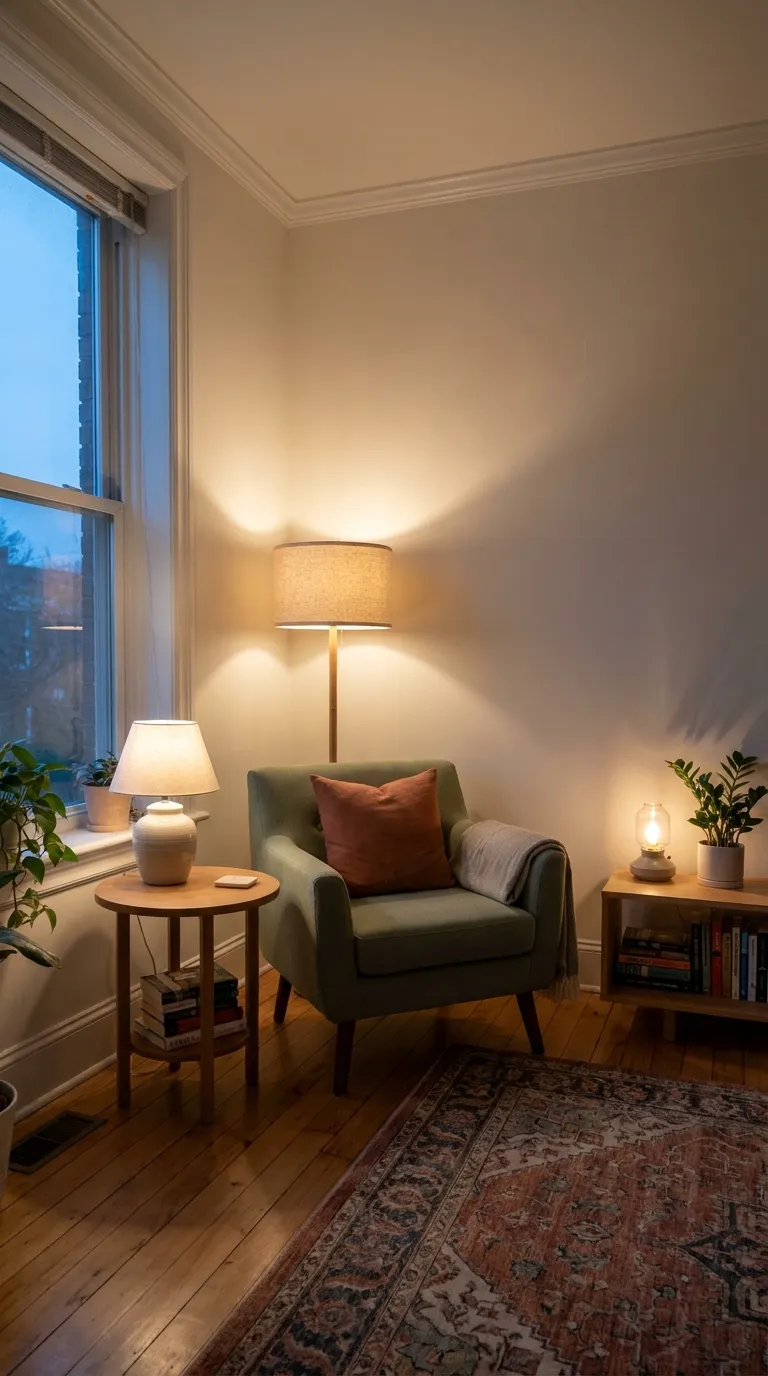
A room lit only from above feels like a waiting room. Most rentals leave you with that one fixture, and a few lamps at staggered heights are the cheapest fix, with no tools needed.
Do This First
- Notice which walls catch daylight and which stay dim
- Park a floor lamp in a corner for background glow
- Aim a task lamp at your reading chair or desk
- Perch a small accent lamp on a bookcase or dresser top
- Screw warm-toned bulbs into the rooms you use after dark
Why It Matters
Lamps at different heights wash the room from several angles, so evenings feel softer and the overhead can stay off.
What to Look For
- Lamps with a plug, so nothing needs installing
- Fabric or frosted shades that diffuse the glow
- Cords long enough to reach a socket without crossing a path
- Bulbs of the same warmth in every lamp, so the glow matches
Skip for Now
- Smart bulbs and hubs, since ordinary lamps already do the job
- A new ceiling fixture, which you can revisit after living there a while
Renter Note
Keep to lamps that plug into a wall socket. Changing a ceiling fixture is electrical work and may break your lease, so read the lease first and bring in a licensed electrician if you want it done.
6. Let the Walls Wait
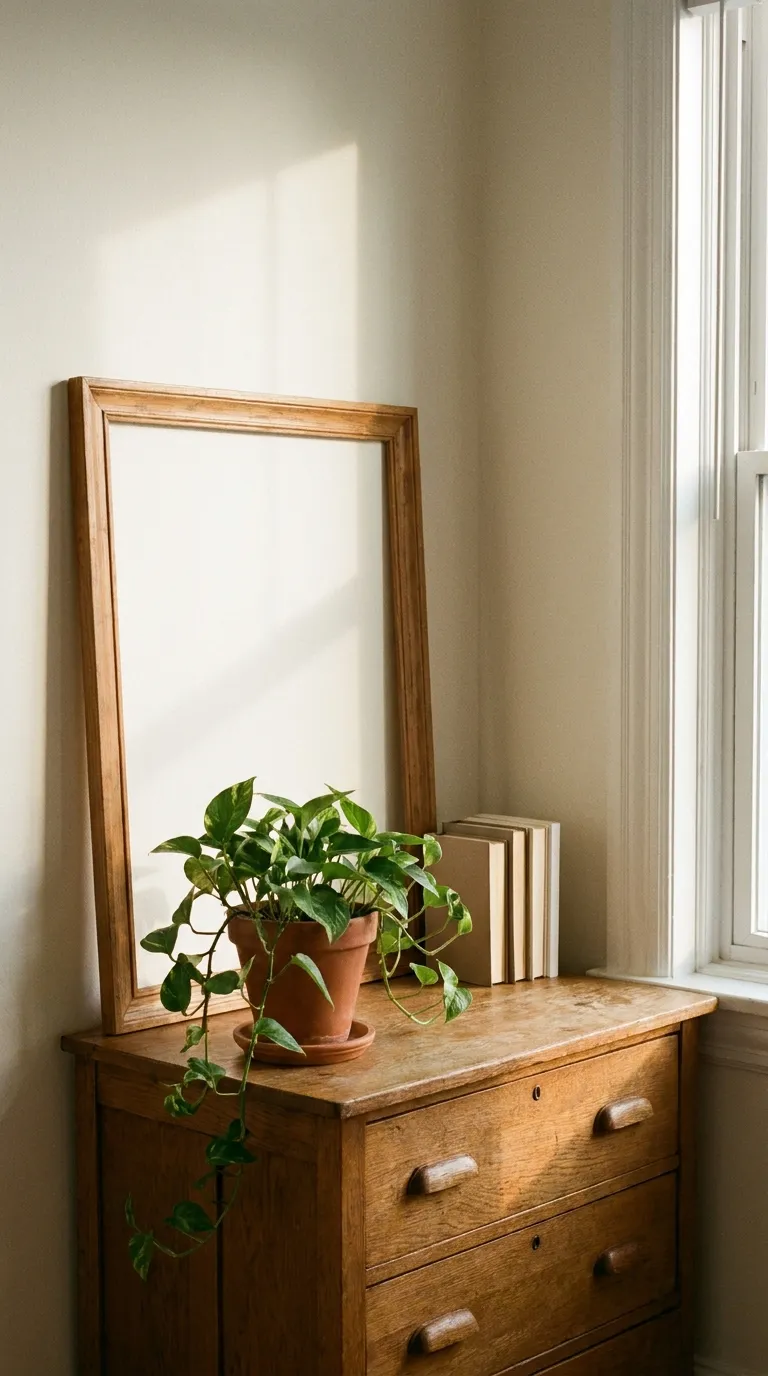
Walls tempt you into overspending and then into regret. Hold off until furniture, fabric, and lamps have found their places, then choose pieces for the room as it now looks.
Do This First
- Leave the walls blank for the first few weeks
- Prop frames on a dresser, shelf, or the floor to preview them
- Favor two or three big works over a scatter of small ones
- Trace each frame onto paper and tape the paper where it might go
- Stick to adhesive hooks and respect their weight rating
Why It Matters
Previewing with props and paper shows what a wall truly needs before you drill or spend. Aim for the center of each piece to sit about 57 inches off the floor, roughly eye level.
What to Look For
- A single large frame to claim an empty stretch
- Frames that share a finish, for a calmer look
- Breathing room around each piece
- Empty frames you can fill later
Skip for Now
- A gallery wall of many small frames, which demands time and patience
- Painting or wallpapering until the lease says it is allowed
Renter Note
Many leases ban painting and drilling, so read yours before picking up a brush or drill. A heavy mirror calls for wall anchors rated for its weight, installed as the manufacturer directs.
Quick Checklist Cheat Sheet
Screenshot this table before you shop so the next move is never a guess.
| Stage | Do This | Skip for Now |
|---|---|---|
| Room numbers | Tape outlines, measure doors | Wall colors |
| Spending plan | Sort by daily use | Trinkets and props |
| Big pieces | Bed, seat, one surface | Matching sets |
| Soft layers | Rug, curtains, one throw | Cushion stockpiles |
| Lamp light | Floor, task, accent lamps | Smart bulbs |
| Walls | Prop art up first | Gallery walls |
The Principles Behind This Checklist
Numbers Come Before Shopping
Most returns trace back to a size nobody checked. Once you know what your rooms and doorways allow, every later choice gets narrower and easier.
Work From Big to Small
Start with the largest objects and finish with the smallest. Each round shows what the following one lacks, which means fewer impulse buys.
Give the Room a Few Weeks
Cook a few dinners, read in each chair, then notice which spot always feels dim or empty. Those observations are better shopping guides than any inspiration board.
Money Follows Daily Use
The things your body touches every day deserve real spending. Decorative items can wait their turn.
Beginner Mistakes Worth Skipping
Emptying the Cart in One Trip
A burst of shopping feels like progress yet fixes your guesses in place. Fix it by spreading purchases across several weeks.
Trusting the Scale of a Product Photo
A rug or bookcase can look perfect online and swamp the real floor. Fix it by taping its size on the floor before ordering.
Letting a Sale Set the Plan
A discount on something outside your plan is still money spent. Fix it by checking every deal against your category limits first.
Final Tips for Success
Decorate First Apartment on a Budget in Short Sprints
Treat each stage as its own mini project. Finish it, sit in the room for a few evenings, and let that decide the next purchase.
Start a Cooling-Off List
Screenshot or note whatever tempts you, then close the tab. Anything still on your mind a few weeks later has earned a place in the plan.
Read Your Lease Once, Early
Landlords often set limits on what you can change. Reading the lease once now spares you a repair bill or an argument later.
Basics Worth Owning
- Tape measure
- Painter’s tape
- Pencil and notebook
- Small level
- Step stool
- Adhesive hooks with clear weight limits
Conclusion
Nobody’s first place looks complete after one week, and it does not have to. What it needs is to be comfortable to live in, and a sensible order of purchases gets you there without panic buying.
Measure, plan the spending, bring in the anchors, soften with fabric, add lamps, then decorate the walls. Every stage points to the next.
To decorate first apartment on a budget with confidence, lean on patience: it costs nothing, and the pieces worth owning will still be around after you have settled in.
Save this guide for the next time you shuffle the furniture.