
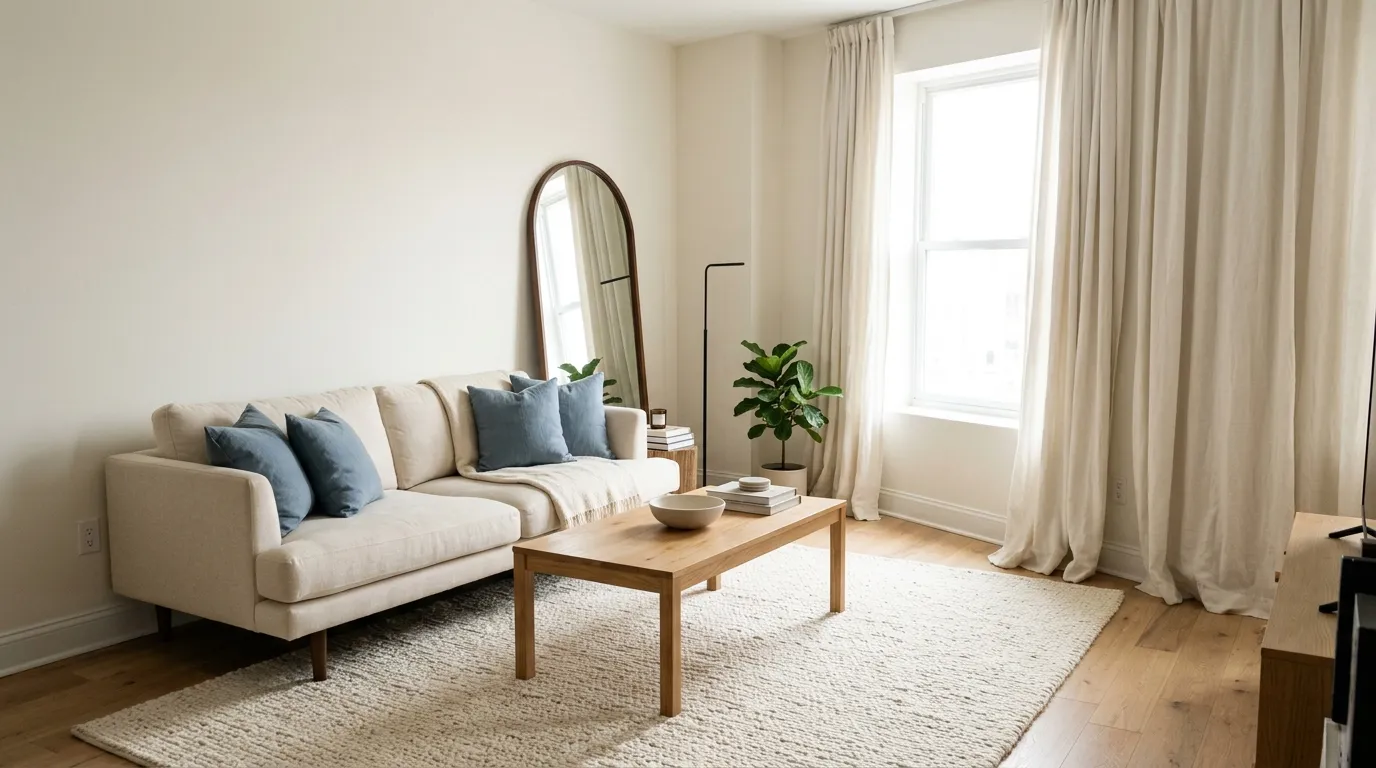
Some rooms feel cramped long before they run out of floor. If you have ever typed “make small apartment look bigger” into a search bar, you were probably hoping for a clever trick, and the closest thing to one is changing what your eyes have to process.
Everything below works in a rental, costs little and can be done in short bursts, so you never have to give up a whole weekend.
I’ve ordered the changes from quick and free to a bit more involved. Start at the top and stop whenever the room feels right.
Before You Start: Materials and Time
- Time: a weekend in total, or about an hour a night
- Difficulty: easy
- Budget level: budget-friendly
- Renter-friendly: mostly yes; ask your landlord before drilling into walls
What You’ll Need
- A tape measure
- Lidded boxes or baskets
- A rug sized to your seating area
- Two or three plug-in lamps
- One large mirror
- Light curtains and a tension rod
1. Edit What You See From the Doorway
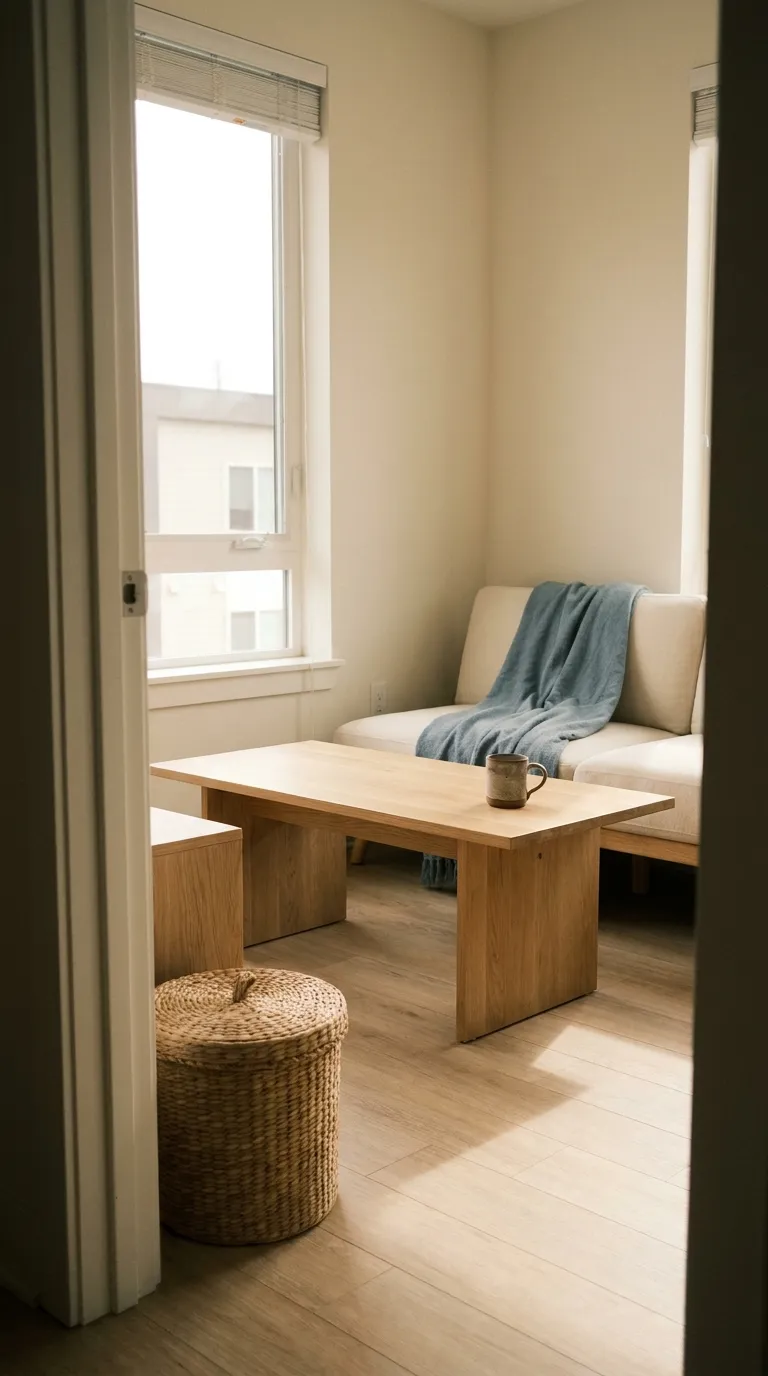
Stand just inside your front door and notice where your eyes land first. A heap of shoes, an overloaded shelf or a desk covered in mail sets the mood for the whole room, and fixing that single view takes about an hour.
Everything else in this guide works harder when the surfaces are quiet. A collection you love can stay, just give it one shelf and keep the others calm.
How to Do It
- Stand at the entrance and jot down the first three things you notice.
- Lift every item off the coffee table, dresser and desk, then wipe each one down.
- Return only the things you reach for weekly or simply enjoy looking at.
- Stop when roughly one-third of each flat surface is empty.
- Send the leftovers to a drawer, a closet shelf or a box with a lid.
Why It Works
Empty patches give your eyes places to land, which is why a pared-down room reads as calmer and larger. Lids matter too, because a basket you can see into still counts as clutter.
Common Mistakes to Avoid
- Shopping for organizers before sorting
- Cleaning the coffee table while the entry floor stays buried
- Using open bins for everything
A Simple Rule to Remember
If it has no home, it leaves the room.
2. Anchor Your Seating With One Big Rug
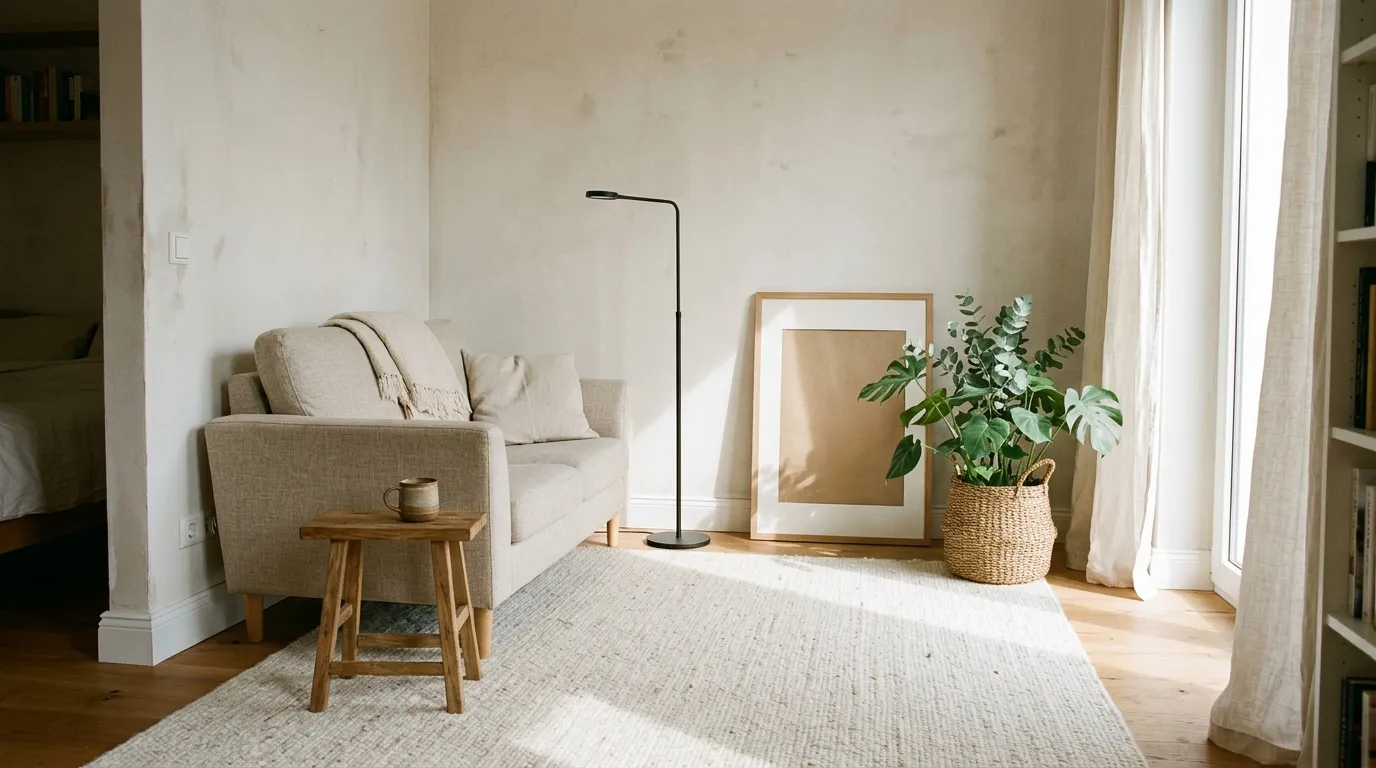
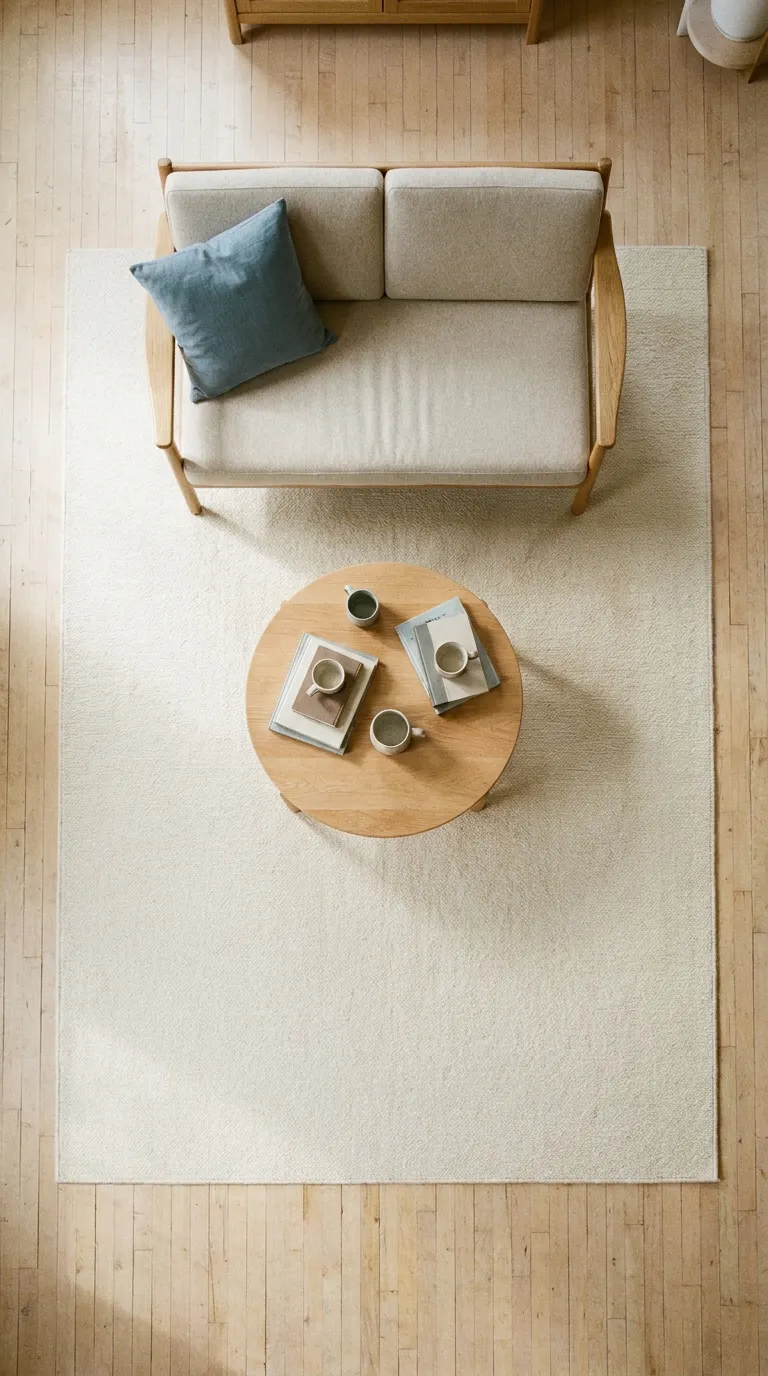
A rug that is too small looks like a postage stamp and chops the floor into scraps. One large rug does the opposite: it ties the sofa, the table and the open floor into a single shape, so the room reads as one calm area.
Before you shop, measure your room and the spot where the seating sits, then pick a rug big enough for at least the front legs of the sofa and chairs to rest on it. In a tiny studio, choose a rug that defines the sitting zone instead of chasing every wall. Large rugs cost more and are harder to move, so a low pile that vacuums easily is a practical choice.
How to Do It
- Note the room’s length and width, plus the patch of floor your seating group covers.
- Outline the rug’s size on the floor with painter’s tape before you buy.
- Aim for a size that lets the front legs of every seat rest on the rug.
- Leave a border of bare floor between the rug and the walls.
- Pick a plain weave or a soft, low-contrast pattern so the floor stays calm.
Why It Works
One large shape gives your eyes a single anchor instead of several small ones to compare. It also makes the seating group look planned rather than scattered.
Common Mistakes to Avoid
- Buying a rug that only fits under the coffee table
- Choosing a loud pattern that competes with everything else
- Letting a thick rug edge jam the door
Plug your length and width into the box below for a quick read on floor area, then compare it with the rug sizes you are considering.
3. Layer Light at Three Heights
A single ceiling fixture floods the middle of the room and leaves the edges in shadow, and shadowy edges make walls seem to creep inward. Lighting the perimeter is one of the cheapest ways to push them back out.
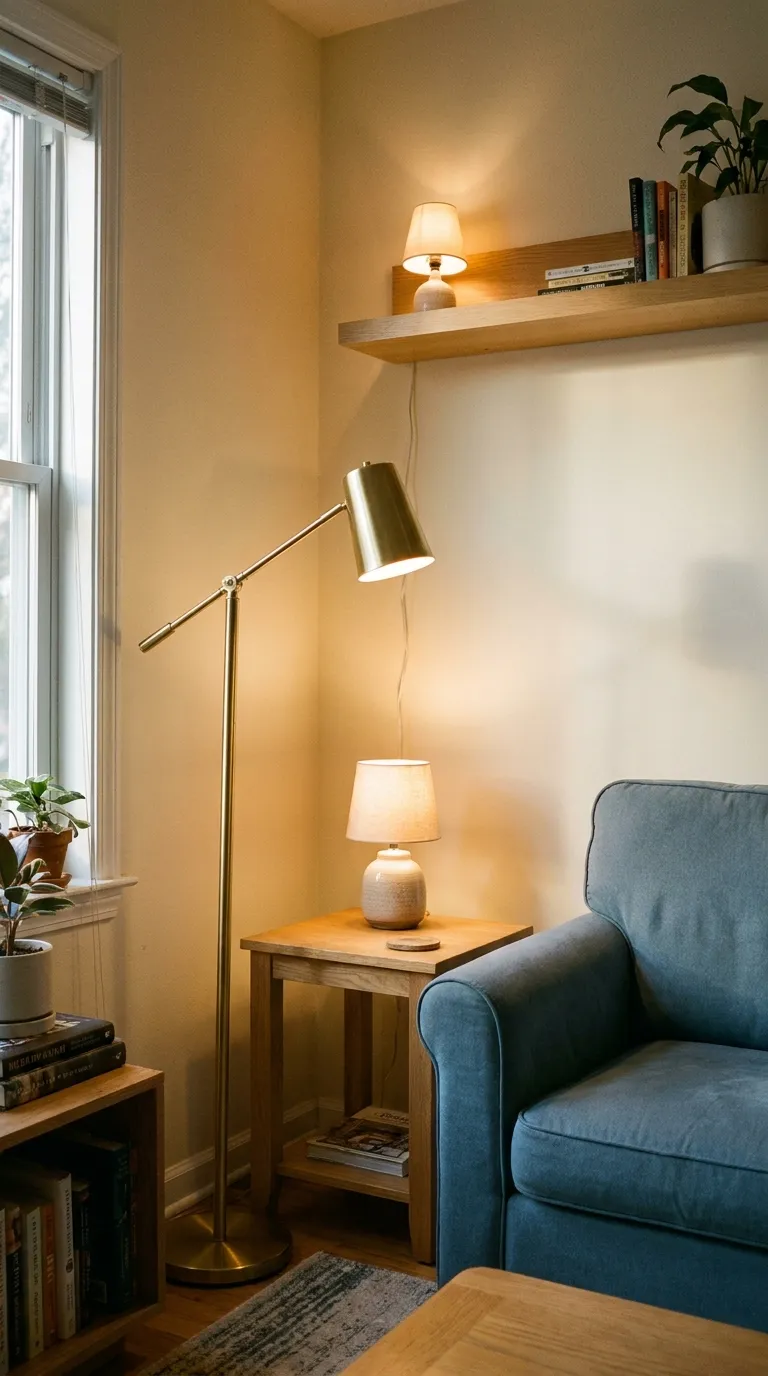
Think in three levels: a floor lamp near the dimmest corner, a lamp on a side table or desk at sitting height, and a small one perched on a shelf. All three can plug into an outlet, so there is no wiring involved.
How to Do It
- Wait until evening, turn off the ceiling light and see which corners vanish.
- Stand a floor lamp in the dimmest one.
- Set a lamp beside your reading chair or on the desk, roughly at seat height.
- Tuck a small lamp onto a shelf so it washes the wall above it.
- Buy bulbs in one warm shade for all three so the glow stays even.
Why It Works
When light reaches the corners and the upper wall, your eyes can see where the room actually ends. A room with clear edges feels less like it is pressing in on you.
Common Mistakes to Avoid
- Relying on the overhead light alone
- Combining cool white bulbs with warm ones
- Pointing all your lamps at one area
Renter Note
Lamps that plug in leave no trace on the walls. Swapping a hardwired fixture is a job for a licensed electrician, and your lease may require landlord approval.
4. Hang Curtains High and Art at Eye Level
Your eyes follow vertical lines upward, which is why high curtains and well-placed art make ceilings feel taller. Hang the same pieces badly and the effect reverses.
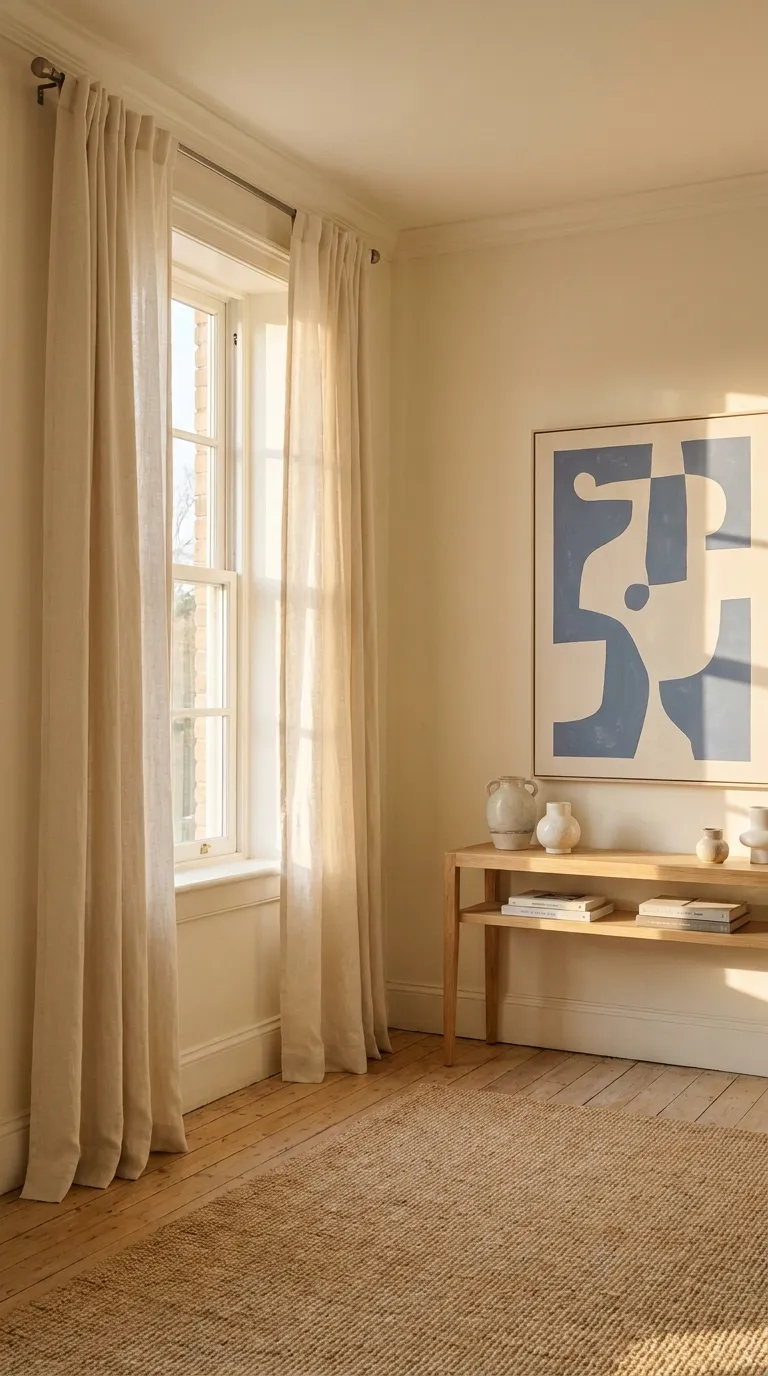
Mount the rod as near the ceiling as you can and let it stick out beyond each side of the window, so the panels frame the glass instead of covering it. Choose a pale fabric close to your wall color; the curtains then read as part of the wall rather than a stripe across it.
How to Do It
- Check how much wall sits between the top of the window frame and the ceiling, then choose a rod position.
- Install the rod above the frame, extending a little past the window on both sides.
- Choose floor-length panels that just brush the floor.
- Replace a gallery of small frames with one large piece.
- Hang that piece with its center about 57 inches above the floor.
Why It Works
A long drop from rod to floor and one steady focal point on the wall guide the eyes upward. The walls look taller and the room feels less low-slung.
Common Mistakes to Avoid
- Putting the rod right on top of the frame
- Using short panels that float above the floor
- Scattering small frames across the wall
Renter Note
Ask your landlord before drilling. Without holes, a tension rod can hold light panels inside the window frame, and a big print can lean against a shelf or console.
5. Bounce Daylight With One Large Mirror
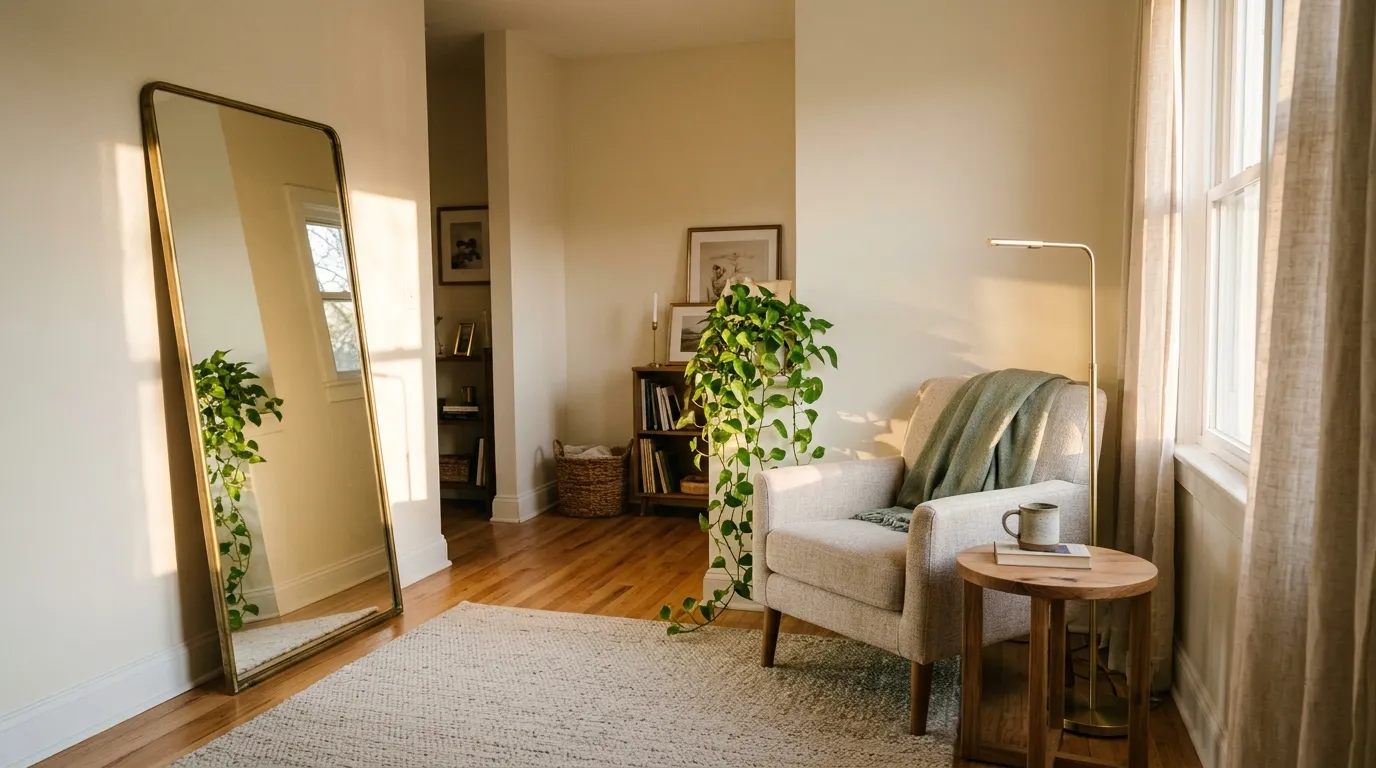
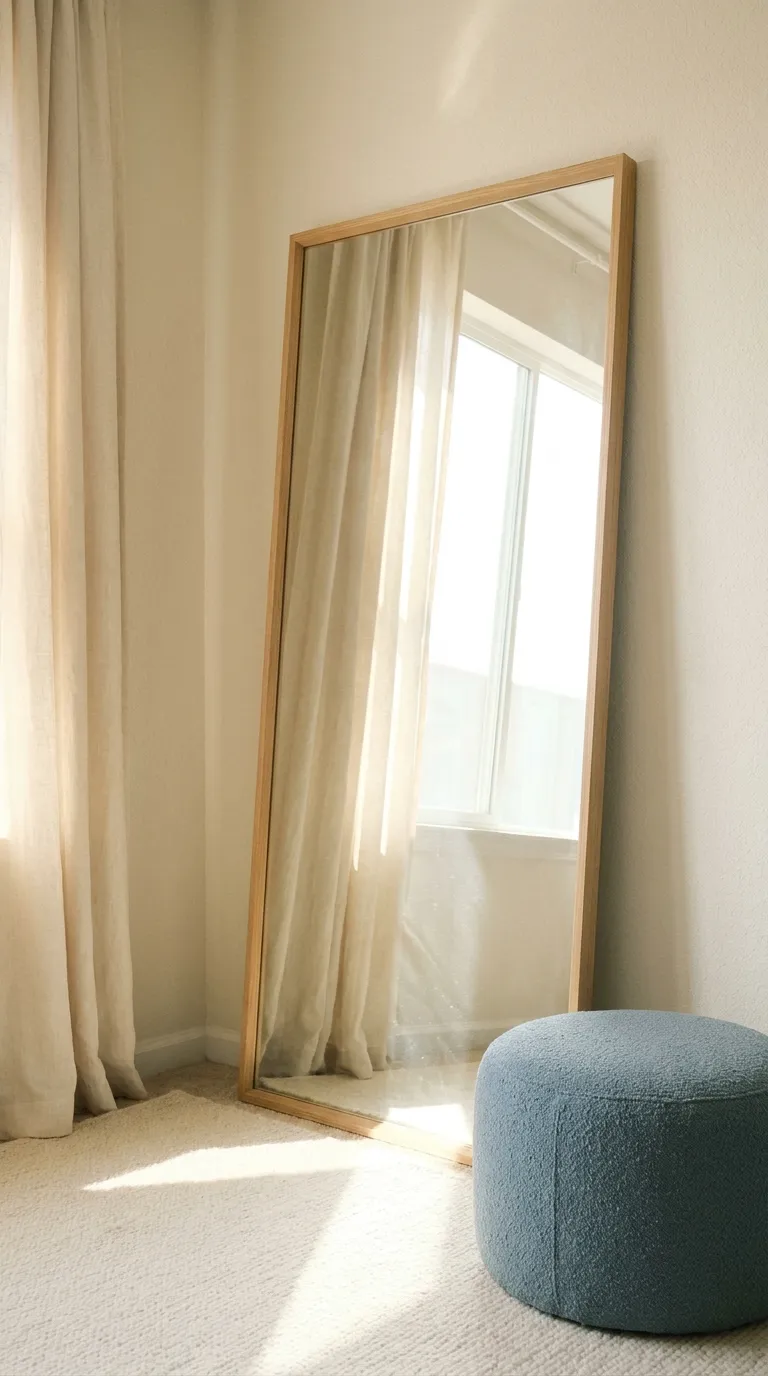
Think of a mirror as a borrowed window: in the right place it pushes daylight deeper into the room, and in the wrong place it simply shows you a second copy of the mess.
Start with the wall opposite your main window, or the one right beside it. Sit down where you spend most evenings, look at what the glass would face, and if it’s a stack of laundry, try another wall.
How to Do It
- Notice where daylight comes in while you sit in your usual spot.
- Pick the wall opposite or beside the window.
- Prop the mirror there and check its reflection from the sofa and the desk.
- Go for one tall or wide mirror rather than a cluster of small ones.
- Hang it with hardware rated for its weight, following the maker’s instructions.
Why It Works
A big mirror doubles the view of the window and the bright wall across from it. The room seems wider and its corners look softer.
Common Mistakes to Avoid
- Reflecting a cluttered corner
- Hanging a group of tiny mirrors
- Facing it toward a shadowy, empty wall
Renter Note
Heavy mirrors need anchors rated for their weight, and drilling may need your landlord’s okay. If holes aren’t allowed, a large floor mirror can lean on the wall, secured as the product instructions describe.
6. Choose Furniture That Lets the Floor Show
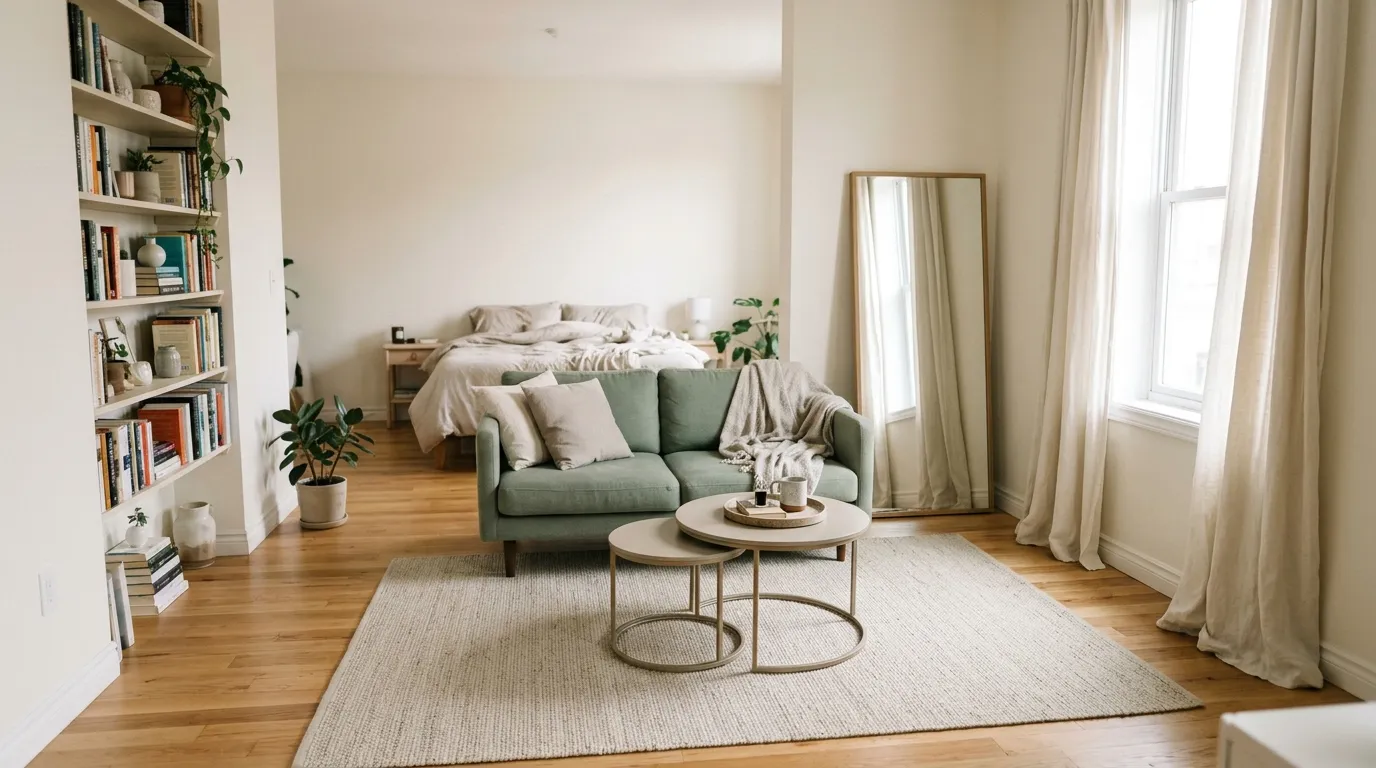
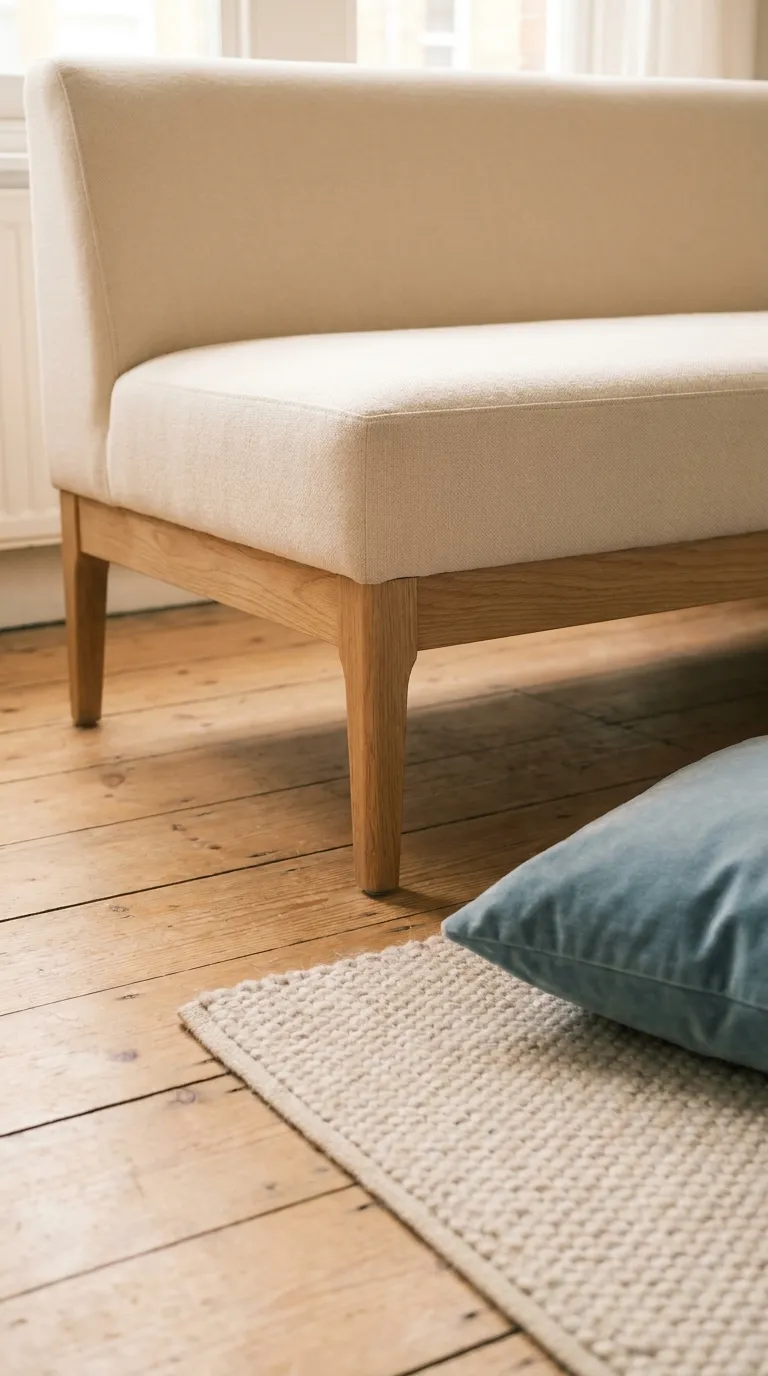
Seeing more floor makes a room feel larger. Slim legs let your eye travel beneath a piece, while heavy, boxy shapes sit like blocks and split the room into small pockets.
When you shop, favor visible legs, a low back, a shade from your palette and a footprint that leaves paths open. Measure the doorway, the stairwell and any hallway turns before you order, and run a will it fit check first so delivery day brings no surprises.
How to Do It
- Tape the piece’s footprint on the floor and make sure about 30 inches stays open for walking.
- Look for sofas, beds and tables that show about 6 inches of floor beneath them.
- Favor low backs and slim arms over tall, chunky silhouettes.
- Where you can, pick pieces that do two jobs, such as a storage bench or nesting tables.
- Measure the doorway width and height, and any tight corner, before you order.
Why It Works
More visible floor gives the eye a longer path, and low backs leave sight lines open so more wall shows.
Common Mistakes to Avoid
- Falling for a deep sofa without checking your room
- Forgetting to measure the entry and hallway
- Mixing a dark, bulky piece with a bare floor
A Simple Rule to Remember
Choose the piece you can see under.
Try it: drag the sliders to match your room and see which checks pass.
7. Repeat Three Colors Across the Room
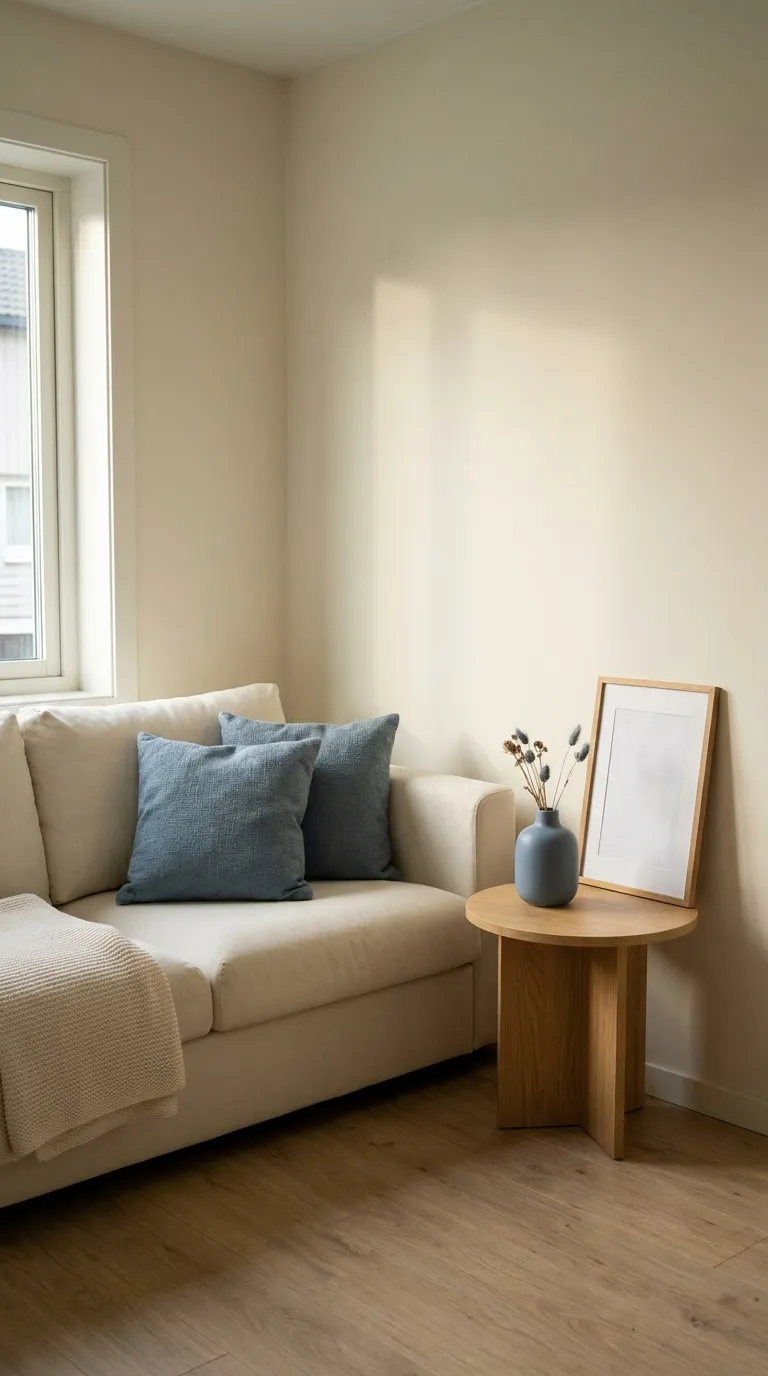
Color is the finishing layer, and the goal is repetition. A few shades that return throughout the room let your eye keep moving instead of stopping at every change, and pale, quiet tones also bounce more light.
Choose one light base, one middle tone and one accent. I’m using cream, light oak and dusty blue here, but any trio that suits what you already own will do.
How to Do It
- Use the light base on the walls, curtains and biggest pieces.
- Bring in the middle tone through the rug, a throw and pillows.
- Repeat the accent in three or four small touches.
- Keep the sofa and bed in the base or the middle tone.
- Check fabric swatches against the wall by daylight and again under lamps.
Why It Works
When colors recur, the room reads as one composed space rather than a collection of separate things. Fewer color jumps mean fewer places for the eye to snag.
Common Mistakes to Avoid
- Giving every corner its own accent color
- Putting a very dark sofa on a dark floor with no light rug
- Matching so closely that the room looks flat
Renter Note
Ask your landlord before painting, and follow the product label and ventilate the room if you do. If the walls have to stay, carry the palette through curtains, bedding, rugs and art that you can remove.
Quick Step Cheat Sheet
Screenshot or pin this table for a quick refresher.
| Step | Why It Works | Quick Fix |
|---|---|---|
| 1. Edit What You See From the Doorway | Gives your eyes room to land | Leave a third of each surface empty |
| 2. Anchor Your Seating With One Big Rug | Ties the zone into one shape | Tape the rug outline before buying |
| 3. Layer Light at Three Heights | Pushes shadows out of corners | Floor, table and shelf lamps |
| 4. Hang Curtains High and Art at Eye Level | Draws the gaze upward | High rod, art centered near 57 inches |
| 5. Bounce Daylight With One Large Mirror | Sends light deeper in | Face it toward the window |
| 6. Choose Furniture That Lets the Floor Show | Keeps sight lines open | About 6 inches of floor beneath |
| 7. Repeat Three Colors Across the Room | Makes the room read as one | One base, one middle, one accent |
The Principles Behind These Steps
Numbers Before Muscle
If a layout feels wrong, check your measurements before you lift anything heavy. A dimension on paper is the cheapest thing in the room to change.
Keep a Clear View Across the Room
Stand at the entrance and look straight toward the window. If a tall cabinet or chair back interrupts that view, move it or swap it for something lower.
Let Each Piece Do One Job
A lamp lights, a mirror reflects, a rug anchors a zone. When every piece has a clear job, you need fewer of them.
Treat Empty Space as Part of the Plan
Open floor and bare tabletops aren’t gaps to fill. They are the pause that helps the pieces you chose stand out.
What “Make Small Apartment Look Bigger” Really Means
Nothing here adds an inch of floor. What changes is how the room is read: calmer surfaces, light along the edges, more visible floor and walls that seem to rise.
Common Small-Space Decor Mistakes Worth Skipping
Buying a Sofa Before Measuring
A showroom hides how much floor a sofa swallows at home. The fix: outline it in tape on your own floor before you pay.
Using Many Tiny Pieces Where One Big One Works
A cluster of small frames or mirrors chops up a wall. The fix: choose one larger piece and give it breathing room.
Lighting Only the Middle of the Room
A lone ceiling fixture lights the center and abandons the edges. The fix: put a lamp in the dimmest corner first.
Final Tips for Success
Remove Before You Add
Before a new purchase comes in, ask what can go out. Notice how the room feels with that gap before you decide whether to fill it.
Change One Thing, Then Wait
Make one change, then leave the room alone for a few days. You will quickly learn which adjustment did the heavy lifting.
Basics Worth Owning
- Plug-in lamps
- A rug that fits your seating area
- One large mirror
- Lidded baskets or boxes
- Painter’s tape
- A tape measure
Conclusion
A small apartment doesn’t need extra square feet to feel roomy. It needs fewer things competing for attention, light in the corners and a clear line across the floor.
Next time the room feels tight, skip the shopping cart. Edit first, then add a rug, light, a mirror and only the furniture you still need.
Searching “make small apartment look bigger” is a fine place to start, but most of the answer is already sitting in your doorway.
Pin this guide for your next rearranging weekend.