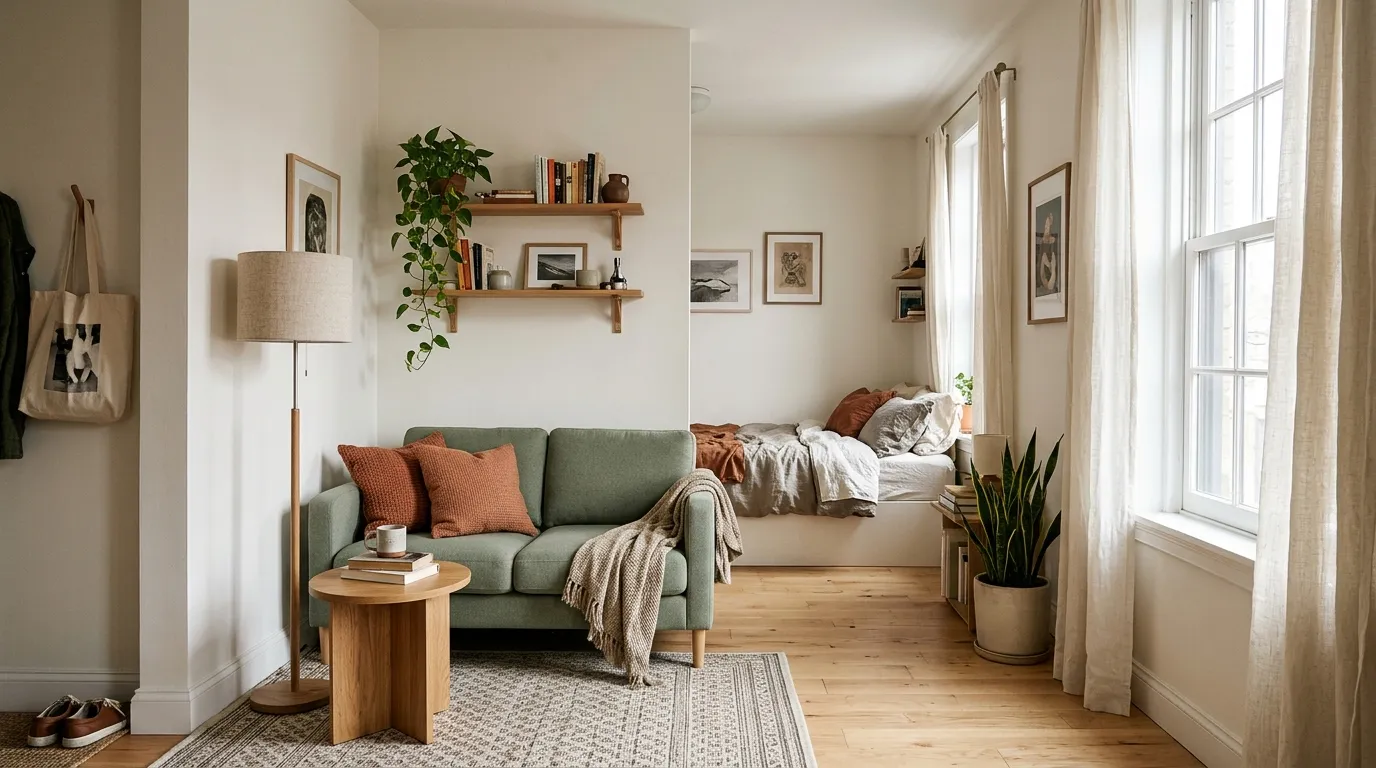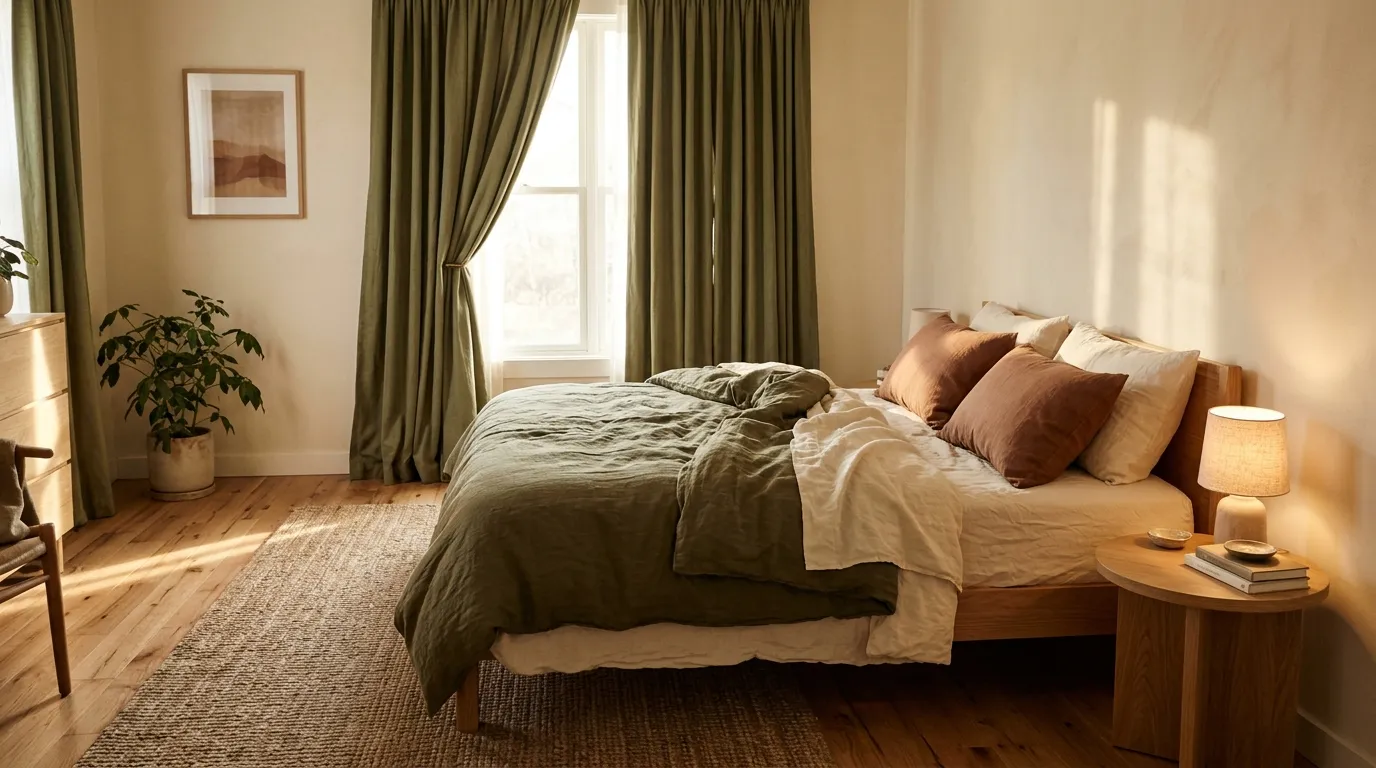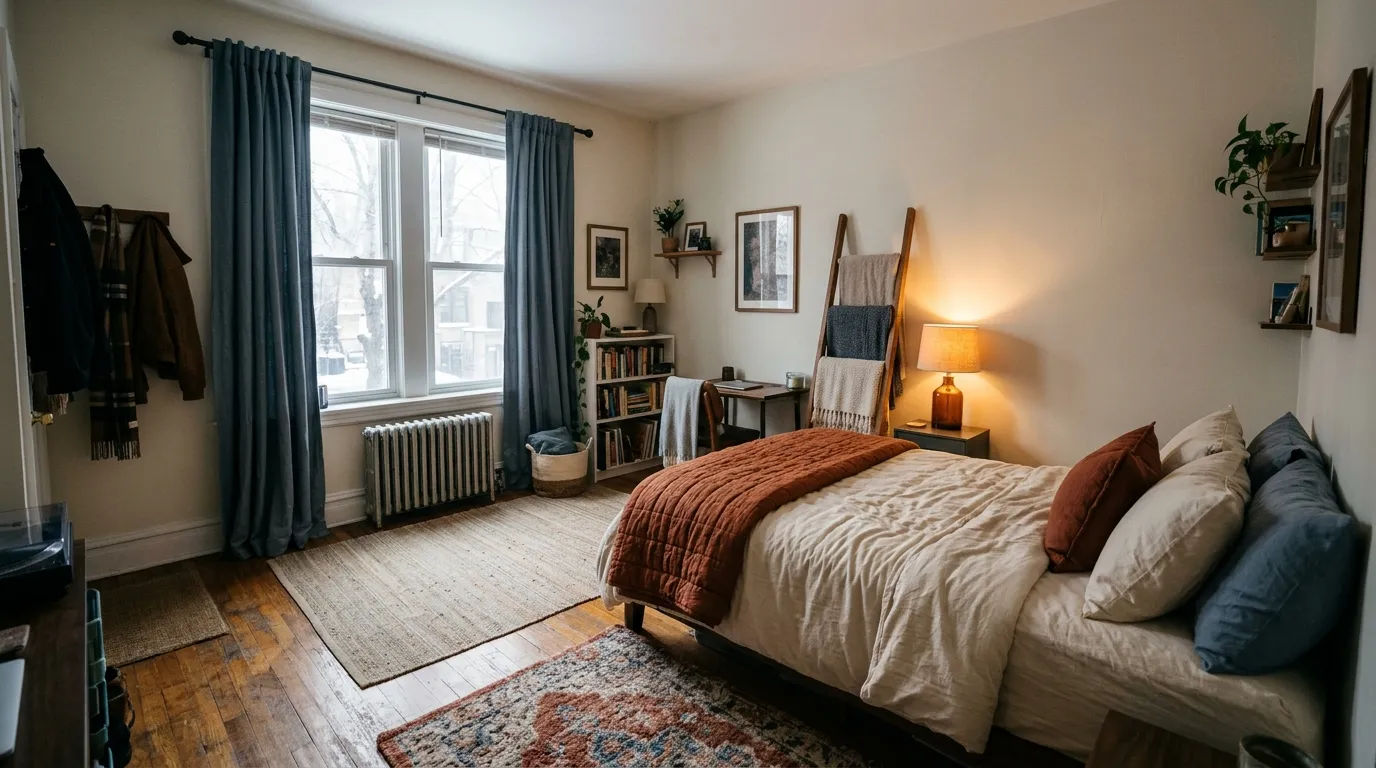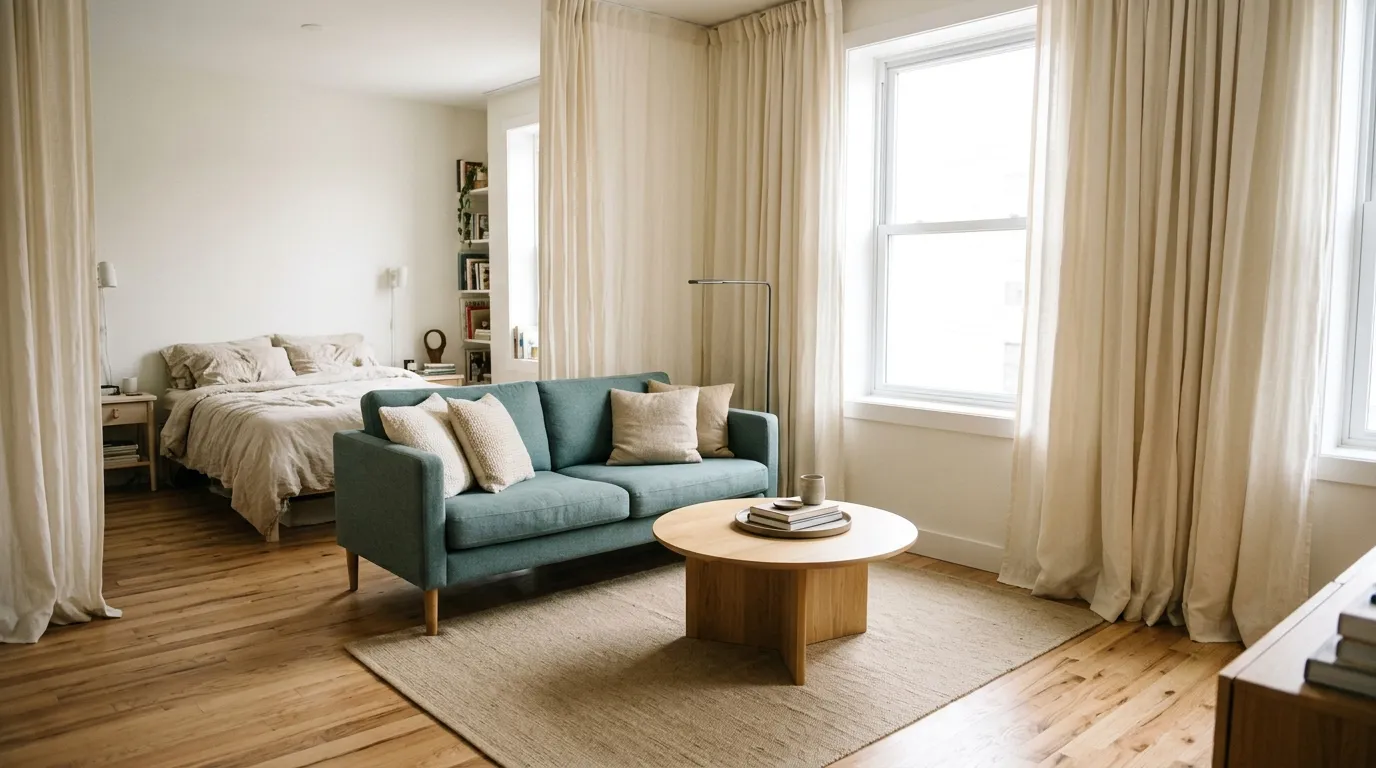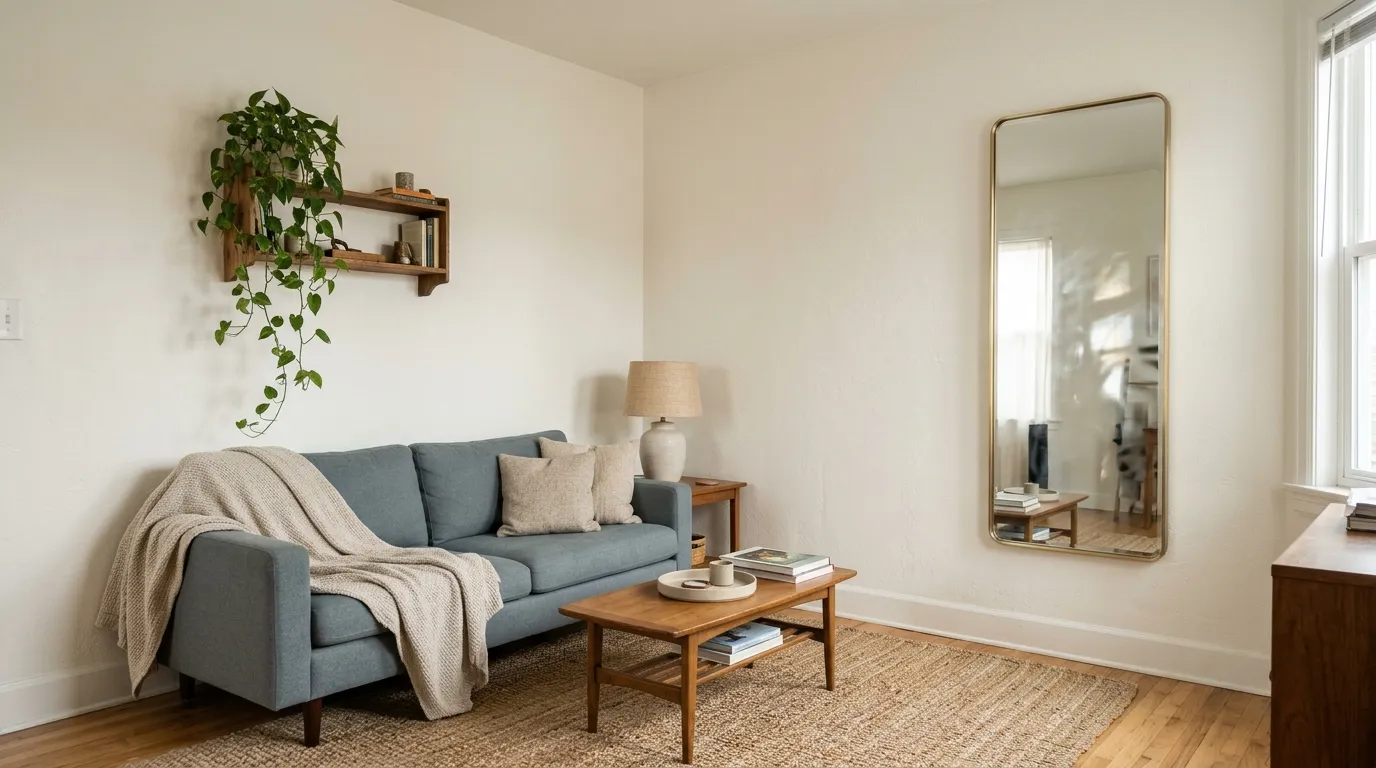

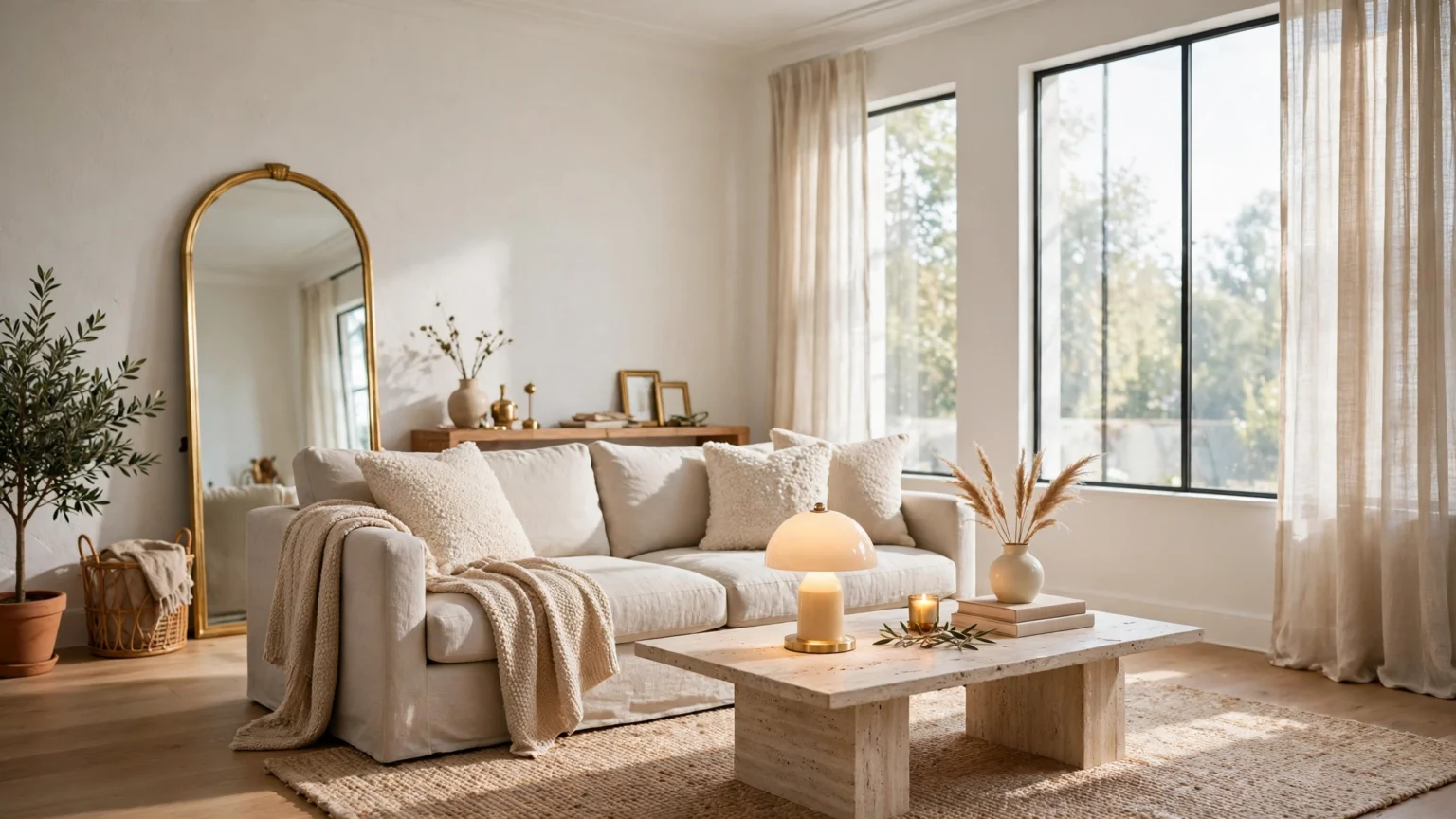
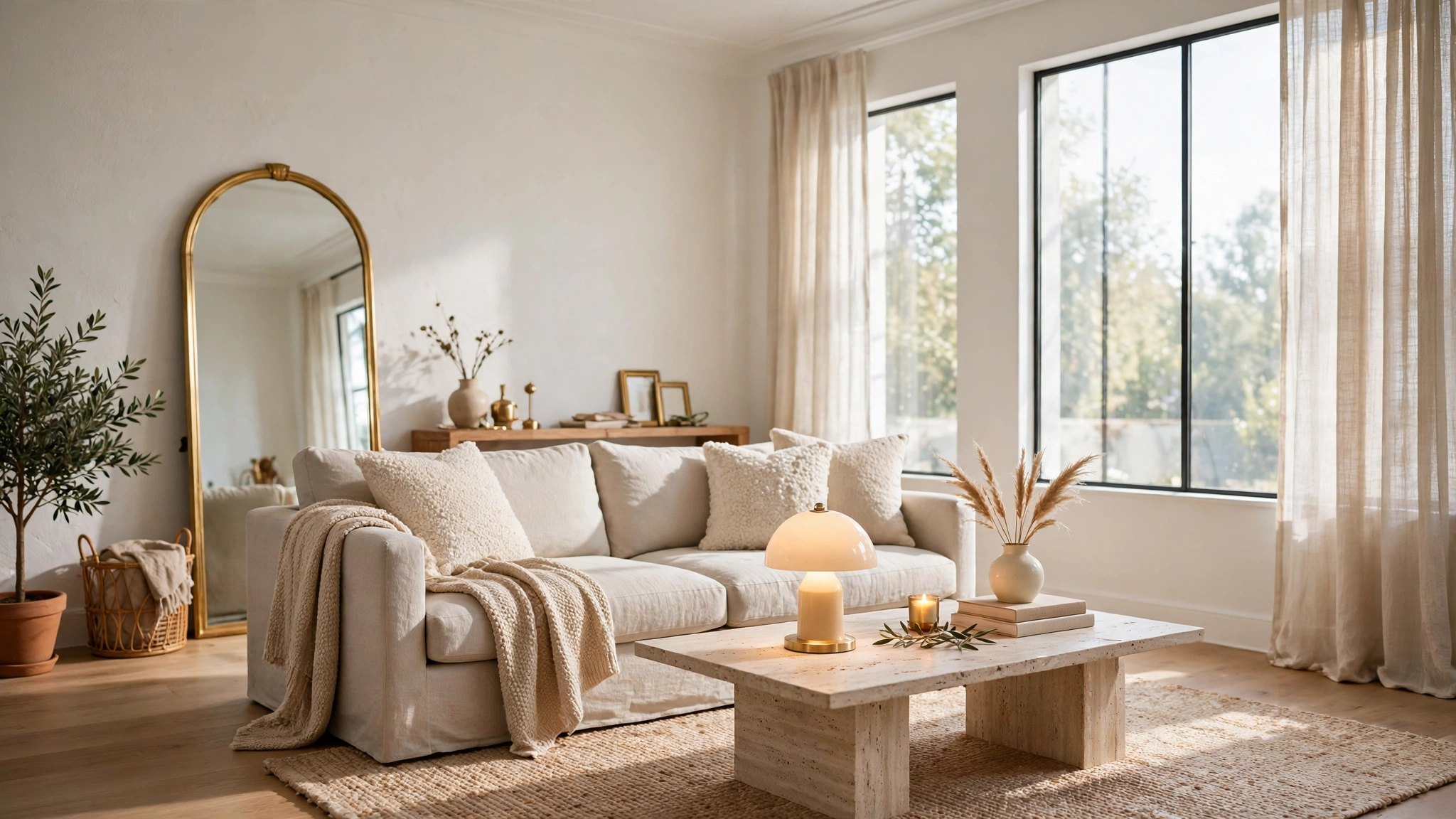
She has the screenshot saved: an arched gold mirror priced at $1,598, a cloud sofa at $5,885, a terracotta vase at $80. The look is right there on her phone, and the bill is not. That gap is what high end look for less decor is for — and this list closes it with fifteen real projects, priced from the sources, for one renter in one 550-square-foot one-bedroom apartment.
The whole room — living room only, about 12 by 14 feet — comes to $2,500 all-in. The fifteen mid-range dupe prices add up to $2,487, and the designer originals they copy come to at least $15,500. That is about $13,000 saved, roughly 84% cheaper, for the same look in the same room. One project per weekend afternoon, fifteen weekends, and the room is done in under four months.
We start with the easiest wins — a mirror swap, pillow covers, a $16 vase — and end with the bigger furniture projects, so you can stop anywhere and still have a room that reads expensive.
Quick Tips Before You Start
1. The Arched Gold Mirror That Makes the Room
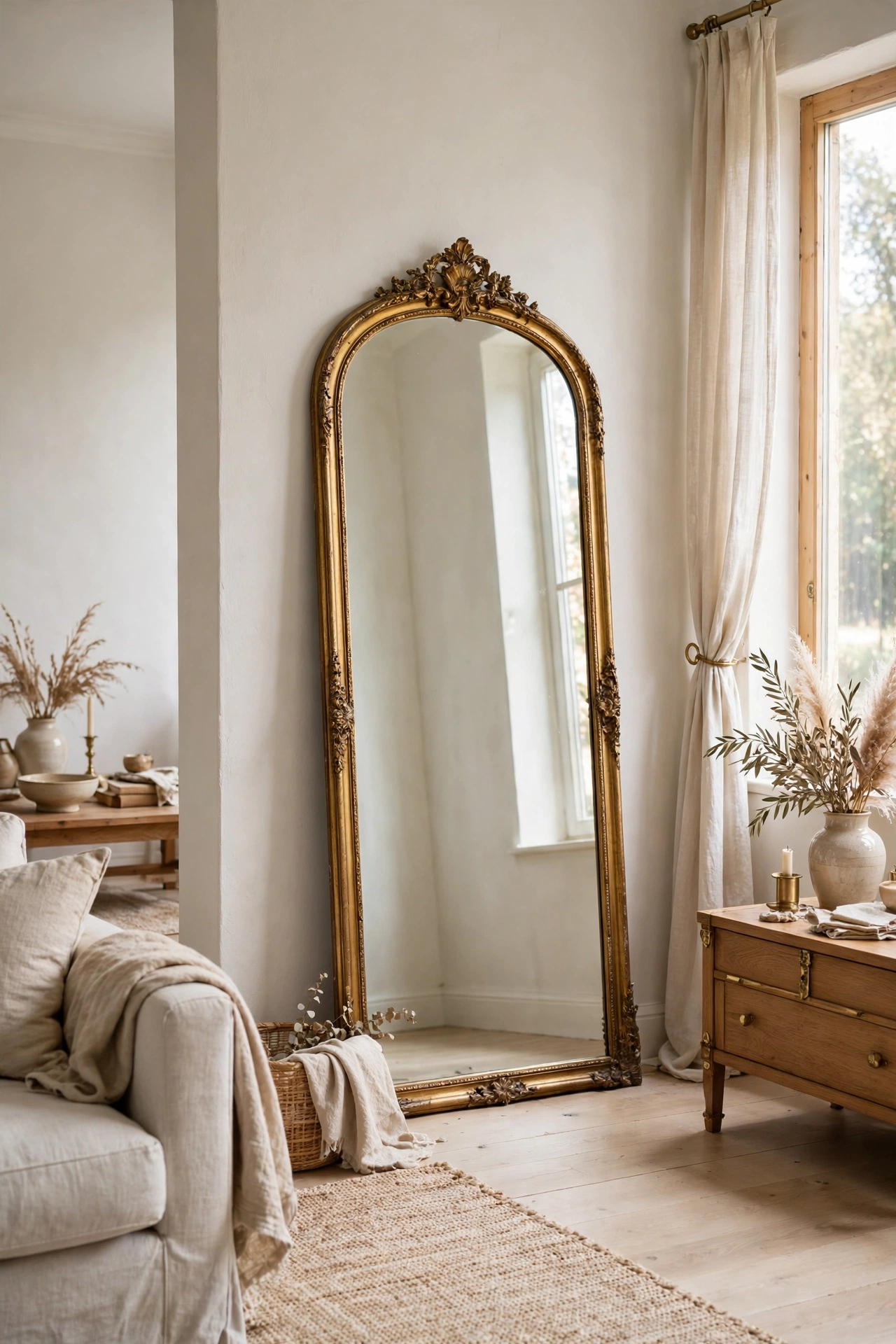
Every designer living room on her feed has the same mirror: tall, arched, wrapped in a baroque gold frame. It is the Anthropologie Gleaming Primrose Mirror, $548 to $1,598 depending on size, hand-finished in antique gold — and it has 10M+ TikTok posts behind it. The arched silhouette and the gold frame are the whole look. Size is the tell: the original’s presence comes from going tall, so a small arch will never read the same.
The dupe is a near-identical arched gold mirror from Amazon, Wayfair, or Target, $79 to $250, with do-it-yourself recreations starting from $75. The named pick is the Kate and Laurel Arendahl Arch Mirror at $74.99 — the same arch, the same gold, about $475 less than the smallest Primrose. In our $2,500 plan this one costs $120, and it takes about half an hour from box to wall.
Lean it. A large piece — 30 inches or taller — leans safely against the wall, needs no holes, and reads intentional rather than temporary. Secondhand leaning mirrors run $45 to $90 if you would rather hunt than buy new. Put it opposite a window so it doubles the daylight, and give it a clear patch of wall: the mirror is the focal point now, so the clutter beside it has to go.
The trade-off is the finish. Cheap gold can read brassy up close, so look at the frame in daylight before you commit, and skip any mirror whose gold looks orange under warm bulbs. This one suits anyone who wants a single focal point without touching a wall — the easiest win on the list, and the reason it sits first. If you are still deciding where it goes, our guide on how to use mirrors in decor walks through the placement rules that make a lean look intentional.
2. Bouclé Pillow Covers That Fake a $68 Pillow
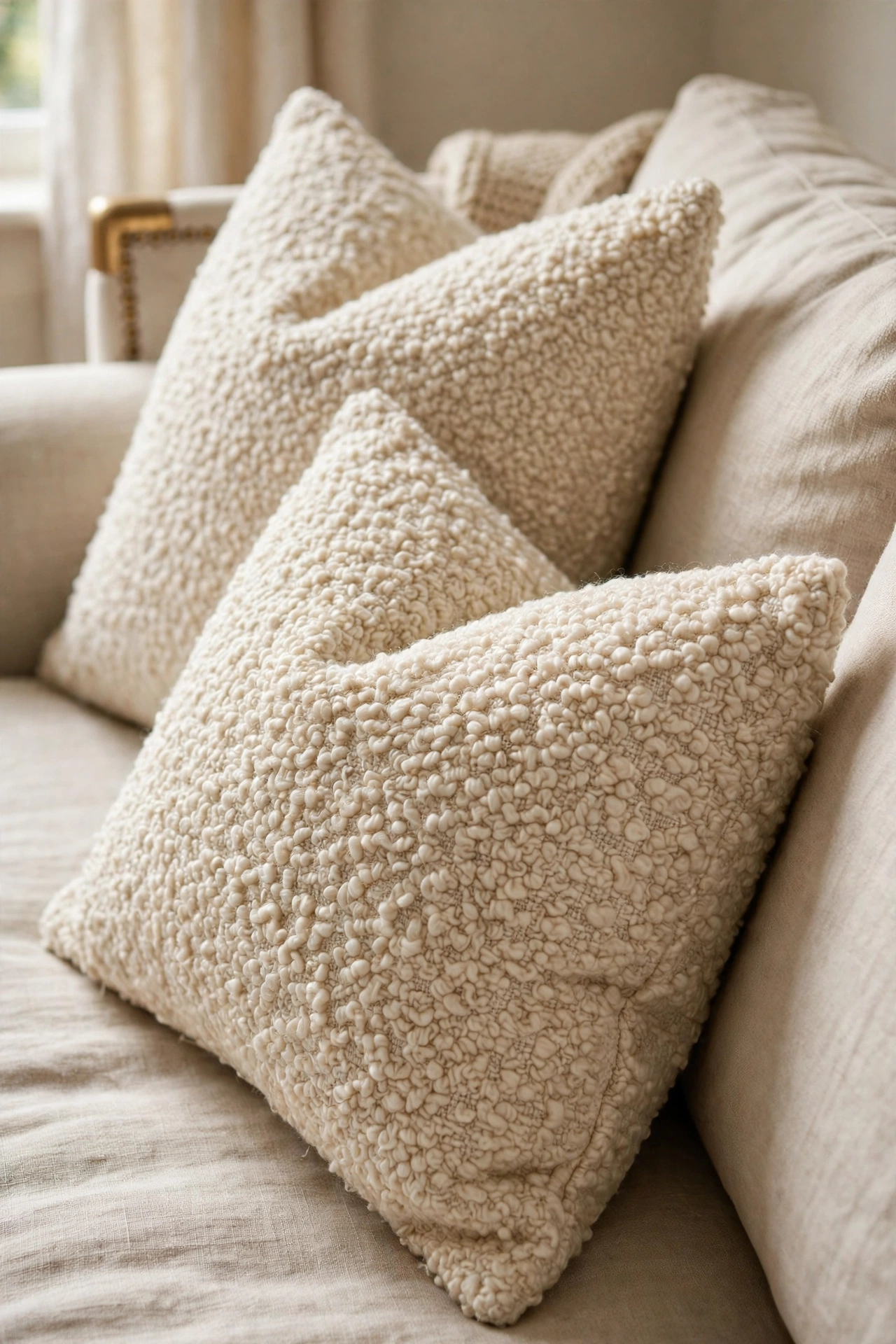
Anthropologie sells a bouclé throw pillow for $68 to $108 each. Two of them cost $136 to $216, and the only thing you are paying for is the texture — that nubby, cloud-like boucle that makes a plain sofa look considered. The cover is the whole trick: the pillow inside is just a pillow.
Buy the cover, not the pillow. Amazon sells bouclé covers for $16 to $35 for a two-pack — the MIULEE 20-by-20 set is about $19 — and Target carries velvet and shearling two-packs for $13.99 to $15.99. Then add real down inserts, $20 to $30 each, sold separately. In our $2,500 plan this one costs $25, and the swap takes ten minutes.
Unzip the old covers, slide the down insert into the bouclé cover, and fluff the corners out so the pillow holds a square shape instead of a sad triangle. Put the pair at the two ends of the sofa and leave the middle open — two plump pillows frame the seat, and the room reads finished. The down insert is what makes the cheap cover read expensive, so do not skip it.
The trade-off is upkeep. Bouclé catches crumbs and dust, so a quick brush or a wash keeps it fresh — check the care label first. This one suits any renter: nothing is fixed, nothing is drilled, and the covers come off in a minute at move-out.
3. The Plaster Vase That Copies an $80 Pottery Barn Original

Pottery Barn sells the Artisan Handcrafted Terracotta Vase for $80. The price buys a grainy, wheel-thrown texture — the kind of surface that makes a $3 bunch of dried grasses look like a still life. The texture is the whole look, and it is the easiest texture in this list to fake.
Start at the thrift store. A weighty glass vase with a simple shape and a wide opening costs $13 at Goodwill or $6 at Savers — some are under $2 — and the rest is paint. Mix acrylic paint and baking soda one-to-one, about $3 each, and brush it on horizontally. In our $2,500 plan this one costs $16, and the whole project takes about an hour.
Brush in one direction only — horizontal — to mimic wheel-thrown lines, and let the first coat dry before you judge it; the texture shows up as it dries. Avoid cracked pieces, plastic, and super-glossy finishes, which reject the paint. For a combed texture instead, spread joint compound with a $2 toothed tiling tool. Making four at once costs about $42 in supplies, so this is the dupe to batch for every shelf in the room.
The trade-off is fragility. The plaster finish chips if the vase gets knocked, so keep it on a shelf or a sideboard rather than a hallway table. This one suits anyone with a thrift store nearby and an hour to spare — the cheapest project on the list, and the one guests always ask about.
4. Marble Contact Paper for a Renter’s Countertop
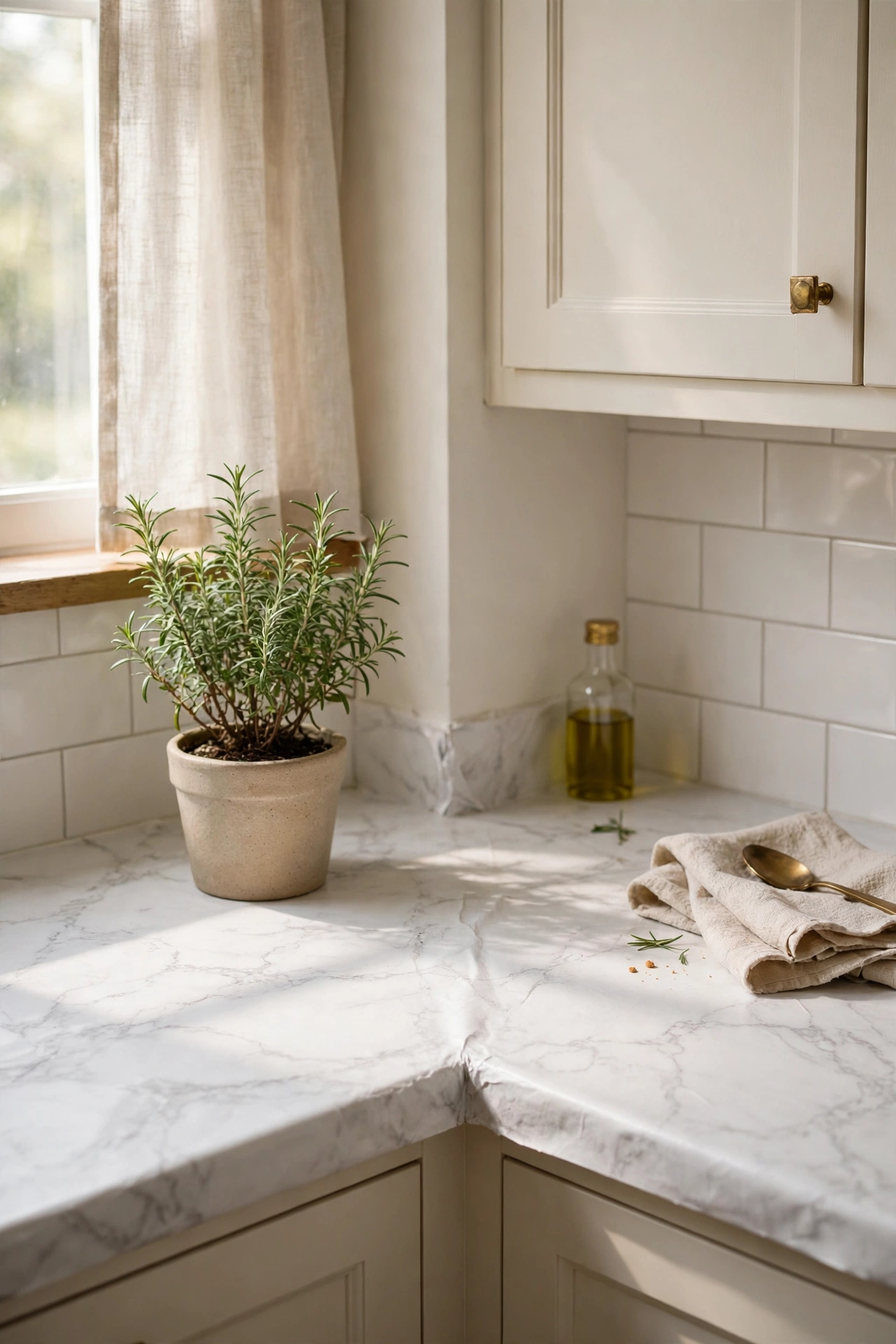
Real marble costs $40 to $100 per square foot installed, and the average countertop job lands around $3,000 — the range runs $600 to $15,000. A marble coffee table alone retails for $300 to $2,000. The look is white stone with soft grey veins, and contact paper copies that surface for $26 a roll.
One roll of marble contact paper costs $25.99 — 23.62 by 196.85 inches, about $0.80 per square foot — and it covers a small kitchen counter run or a coffee table top. Premium removable film runs $30 for a 24-by-36-inch sheet and $60 for 24 by 72. In our $2,500 plan this one costs $26, and the job takes about thirty minutes.
Clean the surface, measure, and cut with an extra inch to spare. Peel a few inches at a time and smooth as you go, pushing air bubbles toward the nearest edge with a flat card. It works on countertops, tables, backsplashes, and shelves, and it removes cleanly for up to a year — durability runs to five years if you leave it alone.
The trade-off is the touch. It looks like marble from the sofa and feels like plastic up close, so this one is for the eye, not the hand. It suits any renter: the film peels off at move-out, the counter underneath is untouched, and the whole room looks several thousand dollars richer for $26.
5. The Limewash Wall That Changes the Room’s Light
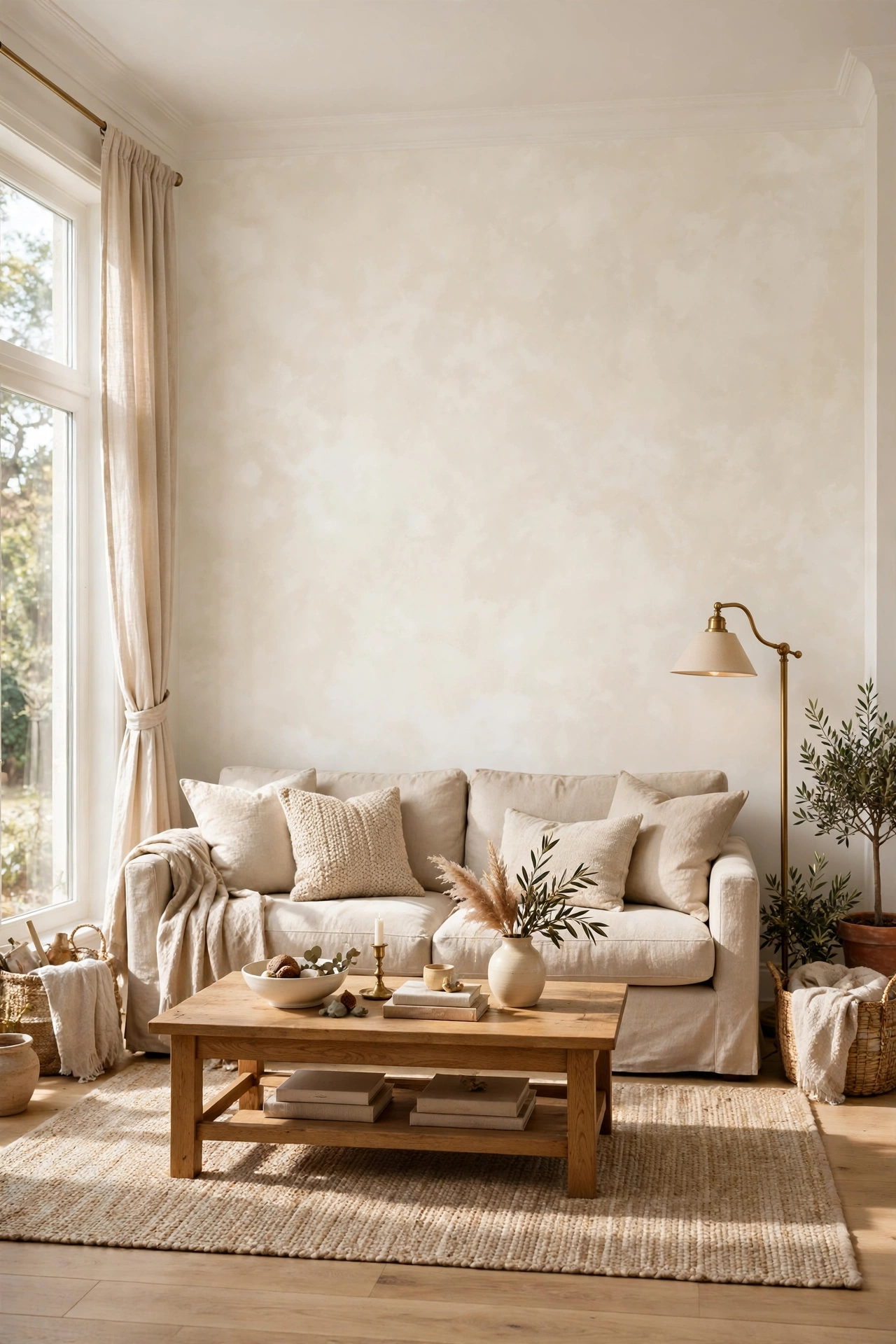
Limewash is the most searched wall finish of the year — Houzz reported searches up 53% from January to March 2026 — because it does something flat paint cannot: it gives the wall cloudy, mineral depth that shifts as the light moves. Real limewash for a 12-by-9-foot wall costs $185 to $235 all-in, and a professional charges $500 to $1,200 per wall. The depth is the look.
The budget version costs $50 all-in: a gallon of budget limewash for $35, a block brush for $7, painter’s tape for $5, and a canvas drop cloth for $3, done in one afternoon. The renter’s version is cheaper still: ordinary matte paint in two closely related shades, the second ragged loosely over the base, for $0.15 to $0.30 per square foot — about 70% of the look. A third route thins chalk paint with water, seven parts paint to three parts water, dry-brushed in layered circles for under $25 a wall. In our $2,500 plan this one costs $50.
Real limewash is paint, so it needs lease permission — ask before you open the can. The two-tone fake repaints away with one coat at move-out, and peel-and-stick limewash-look paper, $30 to $120 a wall, needs no paint at all. If paint feels like too much commitment, a peel and stick wallpaper install gives you the same accent wall in an afternoon. Pick the wall the sofa faces, not the wall behind it: you want to look at the texture, not sit against it.
The trade-off is honesty. The fake never fools anyone standing six inches from the wall — but from the sofa, where the room is actually lived in, it reads beautifully. This one suits anyone whose lease allows paint — and if it does not, the peel-and-stick paper gives the same cloudy depth with zero paint.
6. The Mushroom Lamp That Glows Like $500
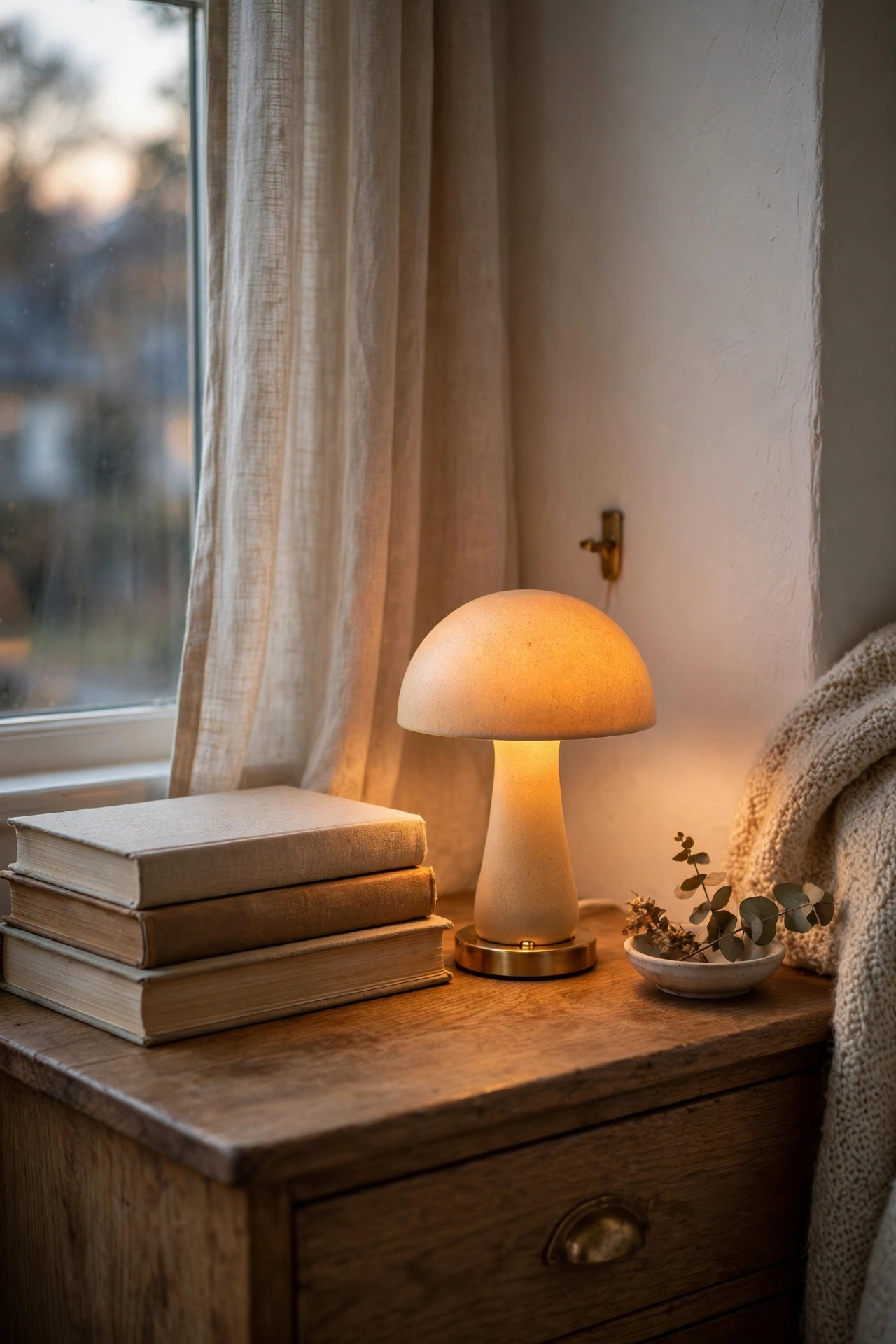
The mushroom lamp is a silhouette joke that works: a domed cap on a short stem, glowing warm from underneath. The Artemide Nesso runs about $490 to $500, McGee & Co sells its version for $899, and designer mushroom lamps generally land between $300 and $1,000 or more. The silhouette is the whole look.
The dupes start at $7 and top out around $50. Amazon’s mushroom lamps run $10 to $33.99 with 15,000 or more reviews behind them, Walmart sells a dupe of the McGee lamp for $24, the Notoc pick lands at $21 to $30, and Target lists dimmable LED versions under $20. In our $2,500 plan this one costs $33, and it takes five minutes — plug it in.
At 12 to 16 inches tall, the lamp reads the same from across the room as the $500 original — the glow matters more than the brand. Warm 2700K light is the part to get right: it turns the dome amber and throws a soft pool onto the wall behind it. Put it on a nightstand, a shelf, or a side table where that glow lands on something, not in a corner where it dies.
The trade-off is quality control. Cheap lamps can buzz or flicker on a dimmer, so test yours on the setting you will actually use and keep the receipt for a week. This one suits anyone who wants the room to feel lit rather than just bright — the smallest spend on the list with the biggest change to the evenings.
7. Brass Hardware, Spray-Painted for $24
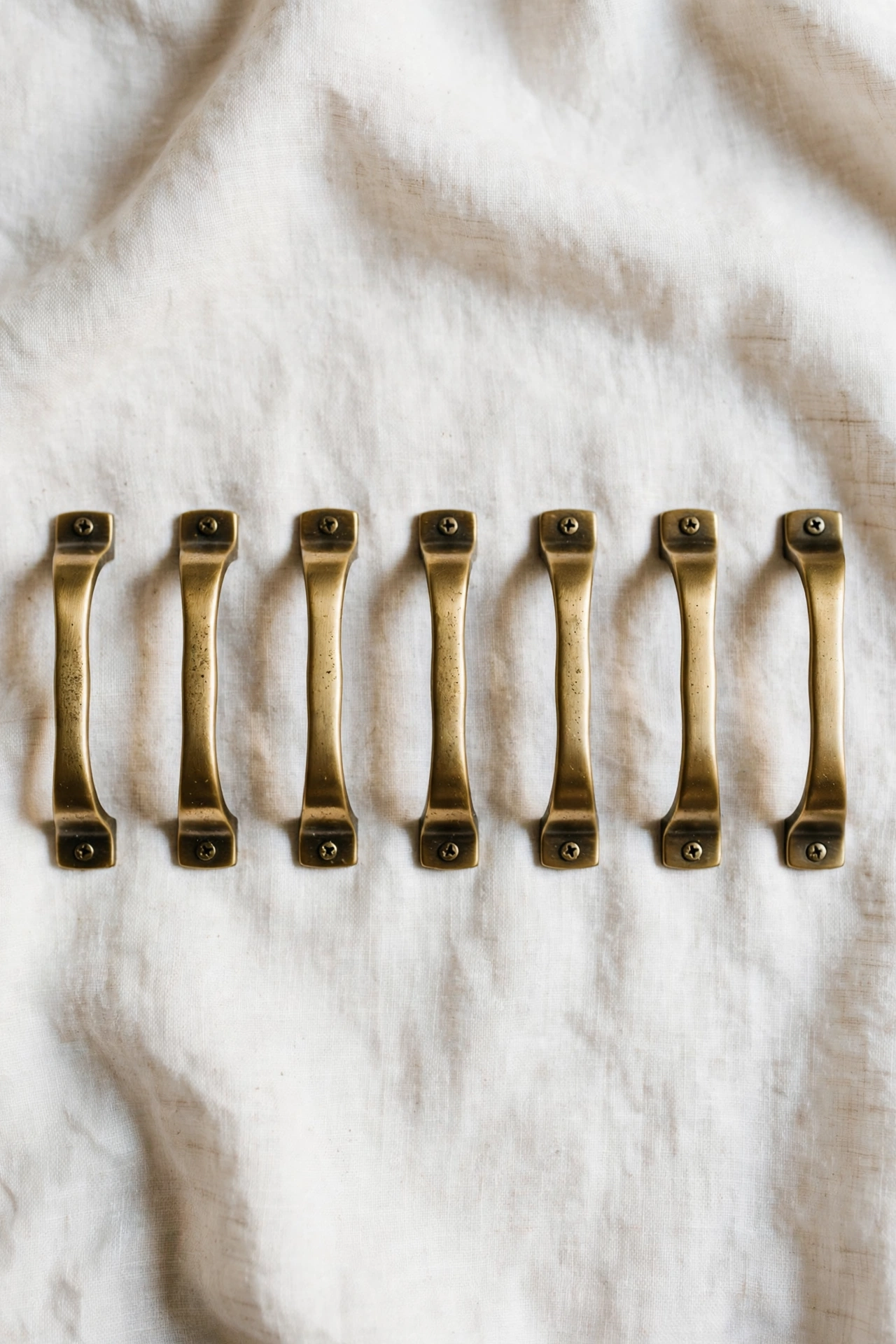
New hardware adds up fast across a kitchen: every pull, knob, and hinge, multiplied by every door and drawer. One can of paint changes all of them at once. Rust-Oleum Metallic Warm Gold was the winner of a 2026 head-to-head test of four brass spray paints, and it turns $2 thrift finds into pieces that look like $25.
One 11-ounce can costs $11.39 and covers 10 to 12 square feet — enough for every pull in a small kitchen, with paint to spare. Add cheap pulls from Amazon and a clear coat to seal them, and the whole project lands around $24 all-in. Rub ‘n Buff, a gold-leaf wax at $7 to $9, adds dimension on top of the paint if you want it. In our $2,500 plan this one costs $24, and it takes one afternoon.
Take the pulls off before you spray — never paint them on the door. Clean, give them a light sand, and lay down two or three thin coats, letting each one dry; one thick coat drips and never hardens properly. Krylon Gold Leaf is the closest gold-leaf match if you want more shine. When you move out, the original pulls go back on: keep them in a labelled bag and the whole project reverses in an hour.
The trade-off is wear. Paint rubs off the pulls you touch every day, so the clear coat is not optional — and if a pull chips, one more thin coat fixes it. This one suits anyone whose kitchen reads builder-grade: one can, one afternoon, and every drawer looks like it belongs to a more expensive room. The pulls are the cheapest part of the job — if the doors themselves need love too, here is how to update rental cabinets without painting.
8. Oversized Art From a $5 Download
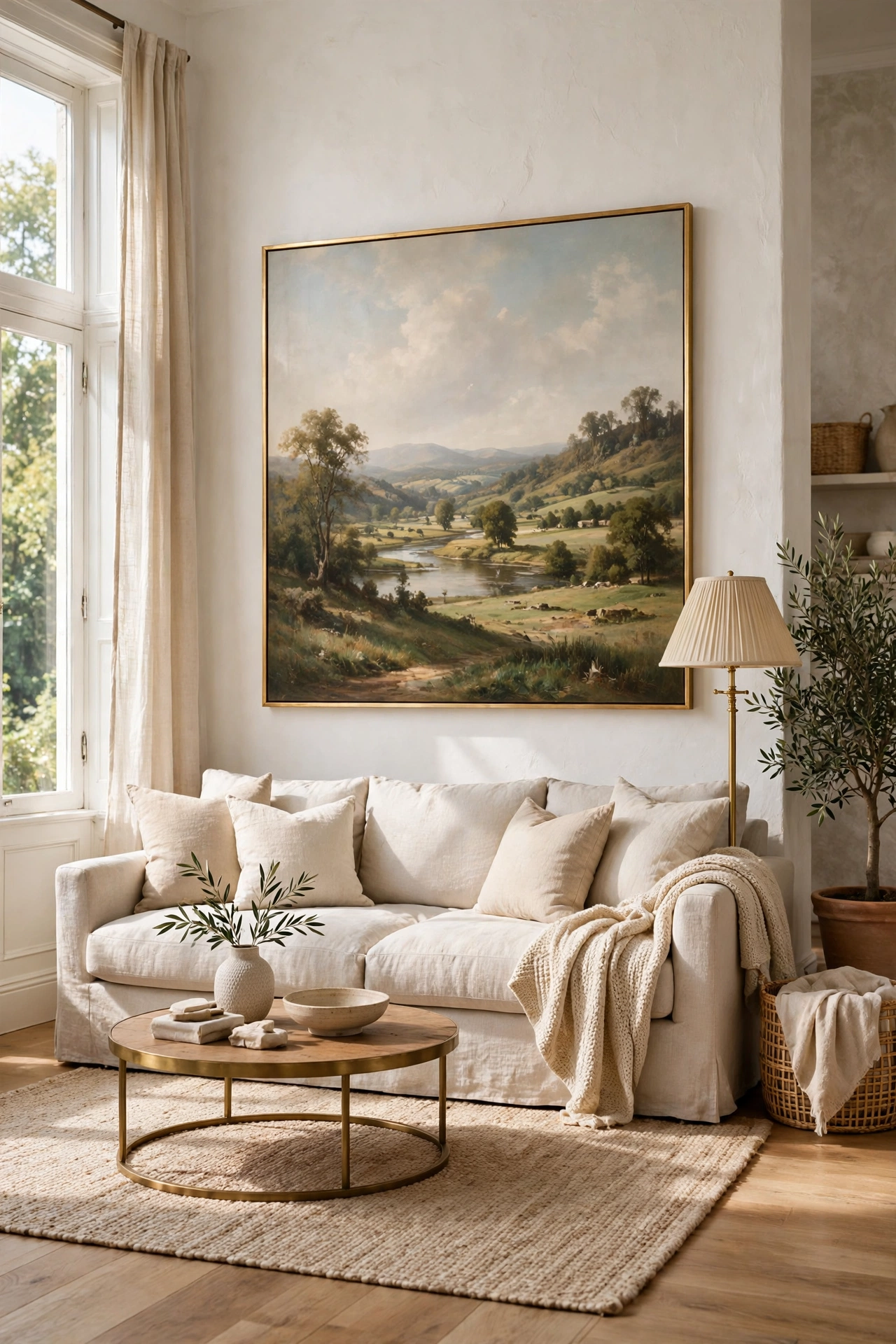
A framed canvas from a gallery costs $150 to $500 or more, and a gallery-wrapped 24-by-48-inch canvas lists at $249.99. The price buys scale: in a 550-square-foot living room, one 36-by-48-inch piece reads designed, while a cluster of small frames reads like a dorm. Scale is what reads expensive — the art inside is almost beside the point.
Start with the art for free. The Met and the Rijksmuseum publish open collections of public-domain work. An Etsy digital download costs $5 to $30, a large paper print $40 to $120, and a custom 3-by-4-foot canvas from Canvas Discount runs $98 including shipping, against a list price of $409. The frame is the expensive-looking part: a 42-by-34-inch gold frame turned up on Facebook Marketplace for $1. In our $2,500 plan this one costs $98, and it takes an afternoon. If your frame is a thrift find, here is how to make cheap frames look expensive before it goes on the wall.
Three Costly Shortcuts
Mistake: printing too small. A letter-size print floating in a big frame reads like a poster in a dorm room. Fix: print at least 24 by 36 inches, and let the art fill the frame.
Mistake: glossy paper. Glare kills the gallery look under a window. Fix: matte paper or canvas, always.
Mistake: hanging it too high. Art hung near the ceiling looks lost. Fix: hang it so the middle of the piece sits at eye level, and step back to check before the strips set.
Hang the framed print with adhesive strips rated for its weight — four large pairs hold 16 pounds, enough for a 24-by-36-inch frame — or lean the big canvas against the wall. Leaning a large piece reads intentional, not temporary, and it needs no holes at all. Give the art a clear wall: one large piece with breathing room beats a crowded gallery every time.
9. The Pharmacy Lamp That Jewels the Room
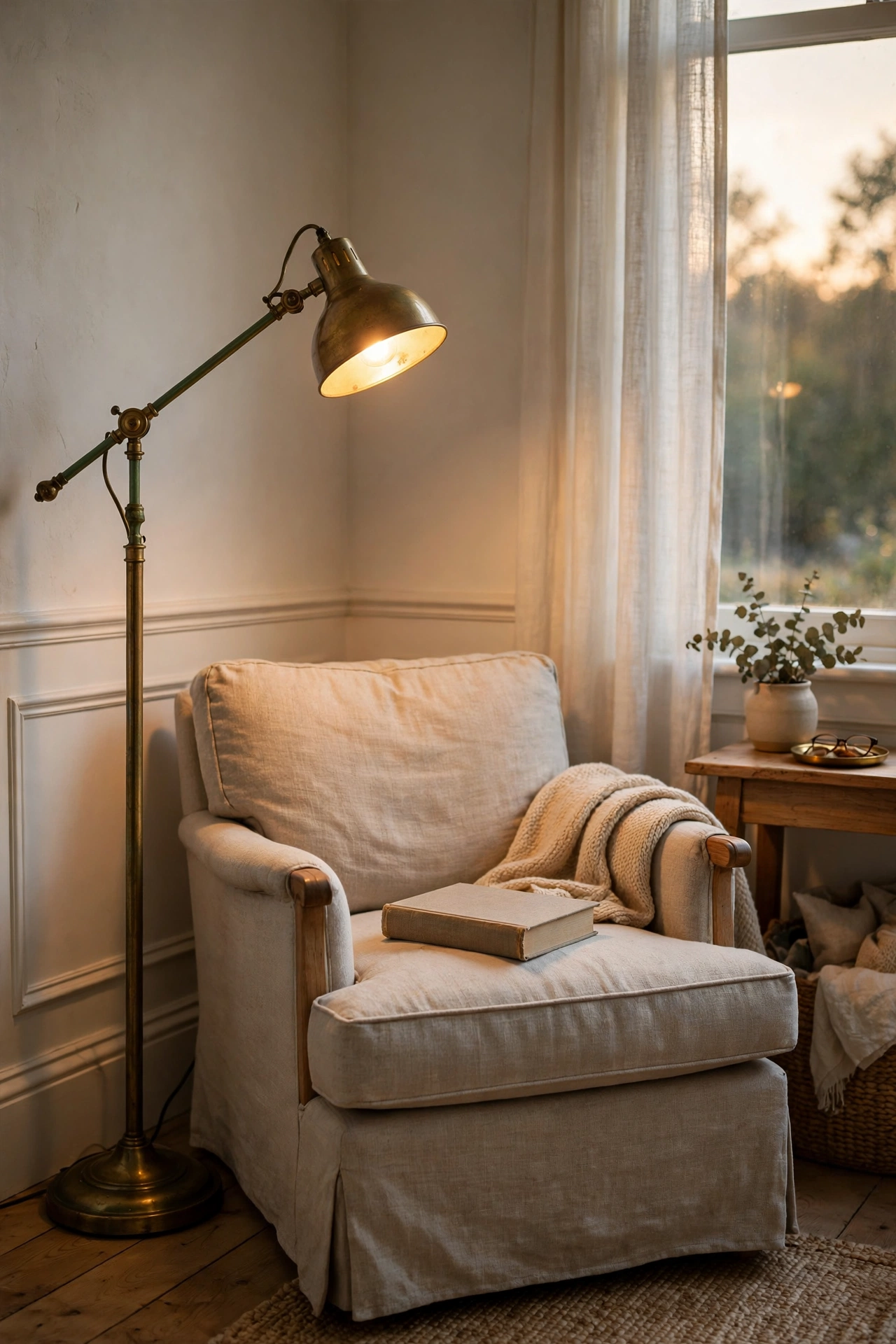
A floor lamp is the room’s jewellery: one brass arc or pharmacy lamp lifts every other cheap piece around it. The originals are priced like jewellery, too — a Visual Comfort pharmacy floor lamp is $749, McGee & Co asks $679, Soho Home $995, and a Serge Mouille arc lamp runs $900 to $1,400. The brass stem and the adjustable arm are the whole look.
The dupes are a tenth of that. Amazon’s O’Bright pharmacy lamp is $75, an Amazon arc floor lamp runs $80 to $150, and the Sneedville arc dupe is $160. The same trick works across the lamp family: a Flowerpot lamp over $150 has a $90 dupe, a Panthella over $280 has a $26 one, and an Akari 24N over $250 has a $30 one. In our $2,500 plan this one costs $75, and assembly takes about fifteen minutes.
Put the pharmacy lamp beside the reading chair, where the arm swings over the book, not the walkway. The arc lamp should curve over the sofa, not the traffic path — and check the base weight before you buy, because a cheap arc lamp with a light base wobbles every time someone brushes past it. Tighten every joint on assembly day and the lamp stays put.
The trade-off is stability, not looks. A $75 pharmacy lamp reads the same as a $749 one from the sofa — but only if it stands straight. This one suits any renter: no wiring, no holes, just a plug, and it moves to the next apartment in the same box it arrived in.
10. The Travertine Coffee Table at a Third of the Price
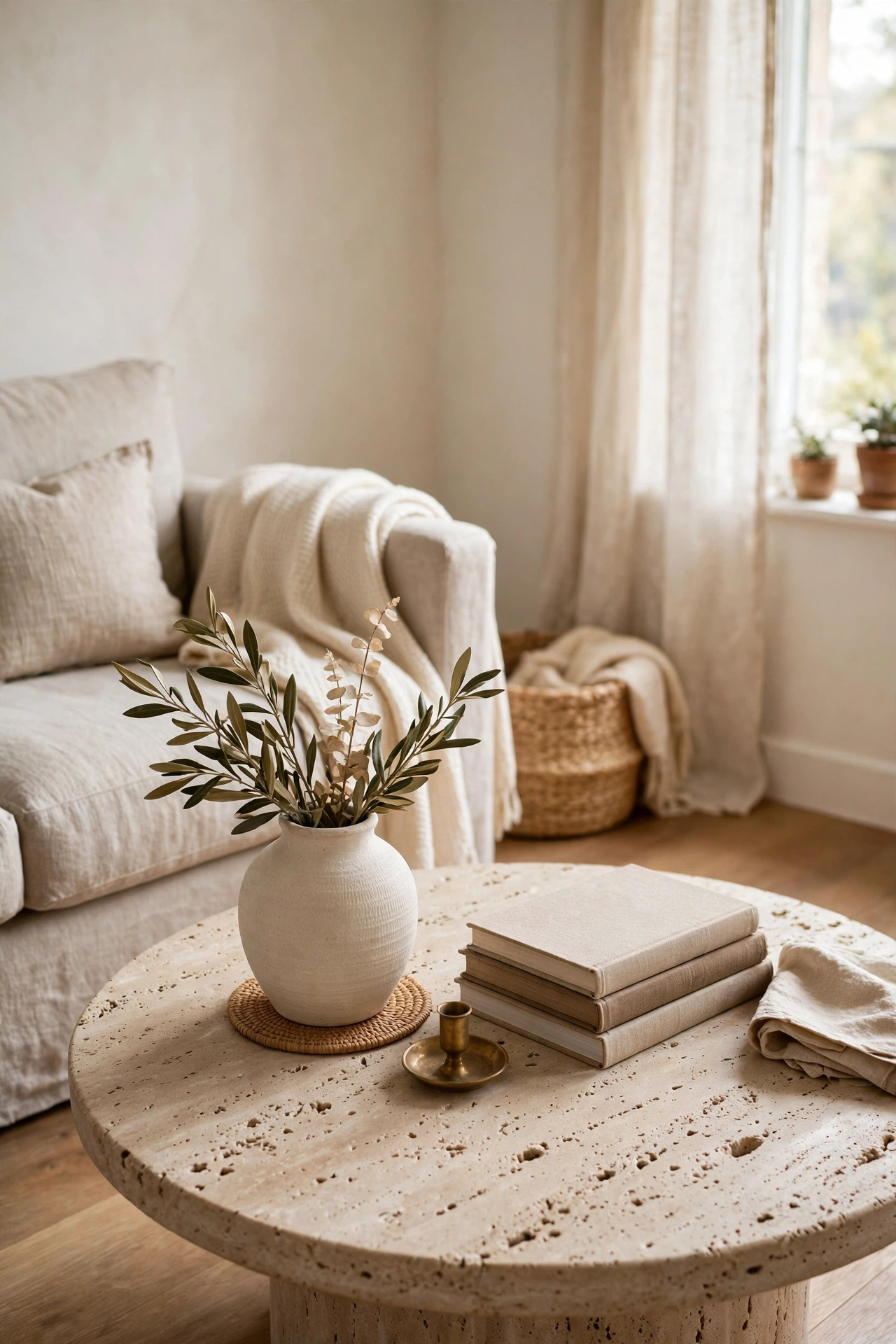
The CB2 Reeve Marble Coffee Table costs $700 or more, and marble coffee tables generally retail from $300 to $2,000. Here is the part that makes the dupe honest: travertine slab itself costs only $5 to $60 per square foot. The stone is not the expensive part — the retail markup is. A printed or cast travertine look gets you the same pale, veined top without the quarry bill.
A round travertine-look coffee table from Amazon runs $150 to $300, and an RH-style coffee table lands around $230 as a centrepiece. In our $2,500 plan this one costs $225, and assembly takes about thirty minutes. Round is the right shape for a 12-by-14-foot room: no corners to catch a shin on in the dark.
Measure the sofa and the walkway before you order. The table should leave a comfortable gap you can step around without turning sideways, and it should sit low enough that a coffee cup is a reach, not a stretch. A light stone tone keeps the small room feeling open; a dark top would anchor the room down and shrink it.
The trade-off is the touch. The top is printed or cast, so it will never have real stone’s cool feel or natural variation — but from the sofa, where the table is actually seen, nobody can tell. This one suits anyone whose living room needs an anchor piece: the table is the first thing the eye lands on, and at $225 it costs a third of the CB2 original.
11. Cane Webbing That Turns an IKEA Dresser Designer
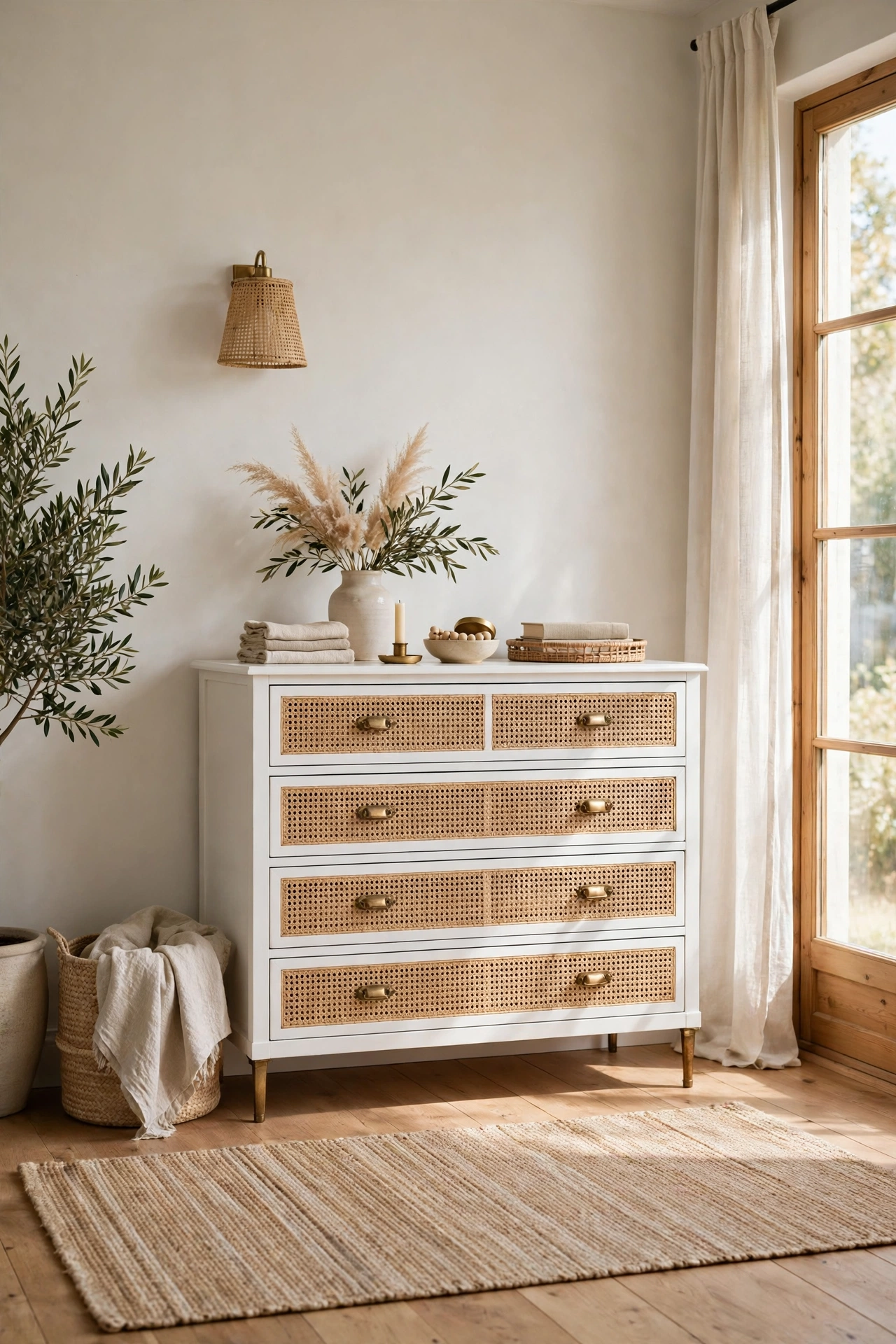
Cane webbing is the single most recognisable designer texture of 2025 and 2026. Cane-front pieces from Crate & Barrel and West Elm cost $1,000 or more, and one dresser front of webbing changes the whole piece — the same carcass, the same drawers, a completely different read. The texture is the look.
Rattan cane webbing costs $8 to $20 per yard. Cut a rectangular opening in each drawer front, attach the webbing behind it, and the project lands at $25 to $60, takes two to four hours, and asks for intermediate skill. Skip the saw and buy ready-made fronts instead: Norse Interiors cane fronts run $40 to $250, and one worked example — an IKEA Besta at $64, cane doors at $360, a solid ash side at $80 — comes to $504 against $1,000 or more at retail. Etsy sells Kallax cane overlays from about $11 to $60. In our $2,500 plan this one costs $40, the do-it-yourself version.
Measure the drawer front, mark the opening, cut with a jigsaw, sand the edges smooth, and staple or glue the webbing behind the frame before you reattach the front. Only cut furniture you own — never a landlord’s piece. Practice the first cut on a scrap board: a crooked opening shows, and webbing hides nothing.
The trade-off is skill. This is the most hands-on project in the first half of the list, and a wobbly cut is worse than no cut at all. It suits anyone with a jigsaw, a free afternoon, and an IKEA dresser that already does its job but looks like every other IKEA dresser on the block.
12. The Fluted Sideboard Worth a Whole Weekend
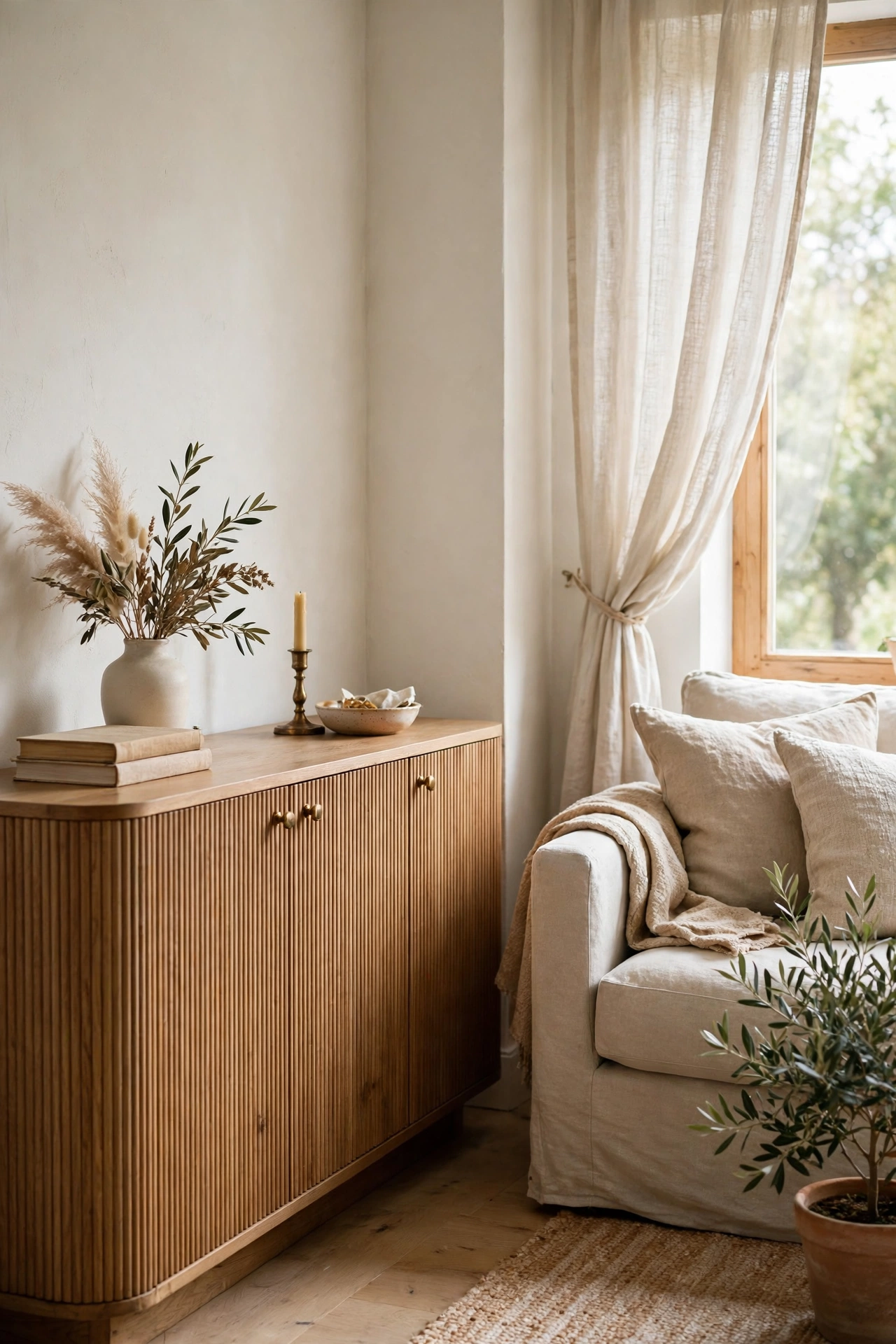
A designer fluted sideboard costs $1,000 plus hefty shipping, and the fluting is the whole look — the same vertical rhythm, the same shadow lines, whether the wood came from a workshop or an IKEA box. This is the biggest furniture saving on the list, and the most work: a full weekend, and worth it.
Besta vs. STÄLL: Which Cabinet to Hack
The Besta route is the classic sideboard shape: moulding, caulk, filler, primer, and a quart of satin paint on a Besta cabinet. The STÄLL route is the cheapest path to the tall fluted look: two $150 cabinets plus about $150 of trim, glue, and paint each — $600 all-in against over $2,000 retail. The EKET route needs the most cutting: 72 moulding pieces at 26¾ inches. Pole wrap is the shortcut.
The materials are the same family whichever cabinet you start with: fluted trim panels from Home Depot in about 10-foot lengths, Gorilla Glue, primer, Behr Swiss Coffee paint, and brass finger pulls from Amazon. In our $2,500 plan this one costs $600. Glue the trim, fill the gaps, prime, and paint — the paint is what makes forty strips read as one piece.
Two pieces take 60% of the budget — the $900 cloud sofa and this $600 sideboard — while the other ten dupes together cost $442. Most projects land between $16 and $98 with those two out of the picture.
The trade-off is time: a weekend of measuring, gluing, filling, and painting, and the trim shows every rushed cut. It suits anyone staying put — this is the piece the room is built around, and at $600 against $2,000 or more, it pays for half the rest of the list.
13. The Rattan Armchair That Brings the Texture
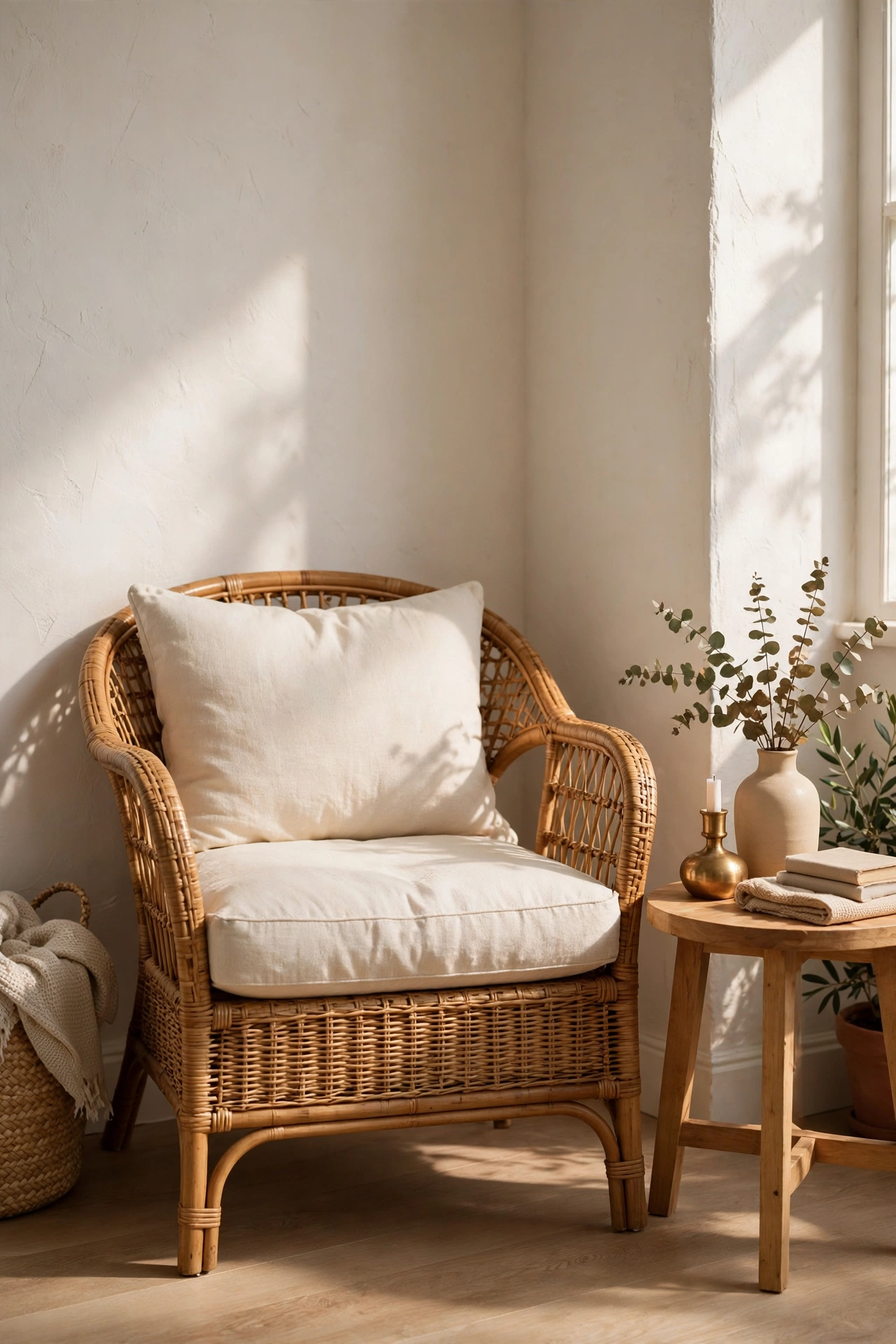
Rattan plus a cushion is the whole look. The chair everyone is copying is the Serena & Lily Balboa — the look, not the label, is what matters here — and the chair’s job in the room is texture and silhouette, not brand. One woven chair in a corner changes the light in the room the way a plant does, without the watering.
The Birch Lane Tenerife rattan armchair is $349. Amazon’s mid-range rattan and wicker armchairs run $120 to $280 — $90 to $210 on Prime Day — and Walmart and Target carry rattan-look chairs in the $150 to $250 band. In our $2,500 plan this one costs $200, and it takes about an hour, most of it unboxing and tightening the legs.
Angle it into the corner that needs texture, facing the sofa rather than the wall, and add a cushion in a solid linen tone. The chair should look sat in, not staged: a cushion, a throw over one arm, and it belongs to the room. Keep the receipt until you have lived with it for a week — rattan reads differently in your light than in a product photo.
The trade-off is the weave. Rattan creaks, and the open weave can snag a chunky knit, so keep a cushion on the seat and skip the heavy throw. This one suits anyone who wants the texture without the build — no tools, no paint, no weekend lost.
14. The Linen Slipcover That Replaces a $2,000 Sofa
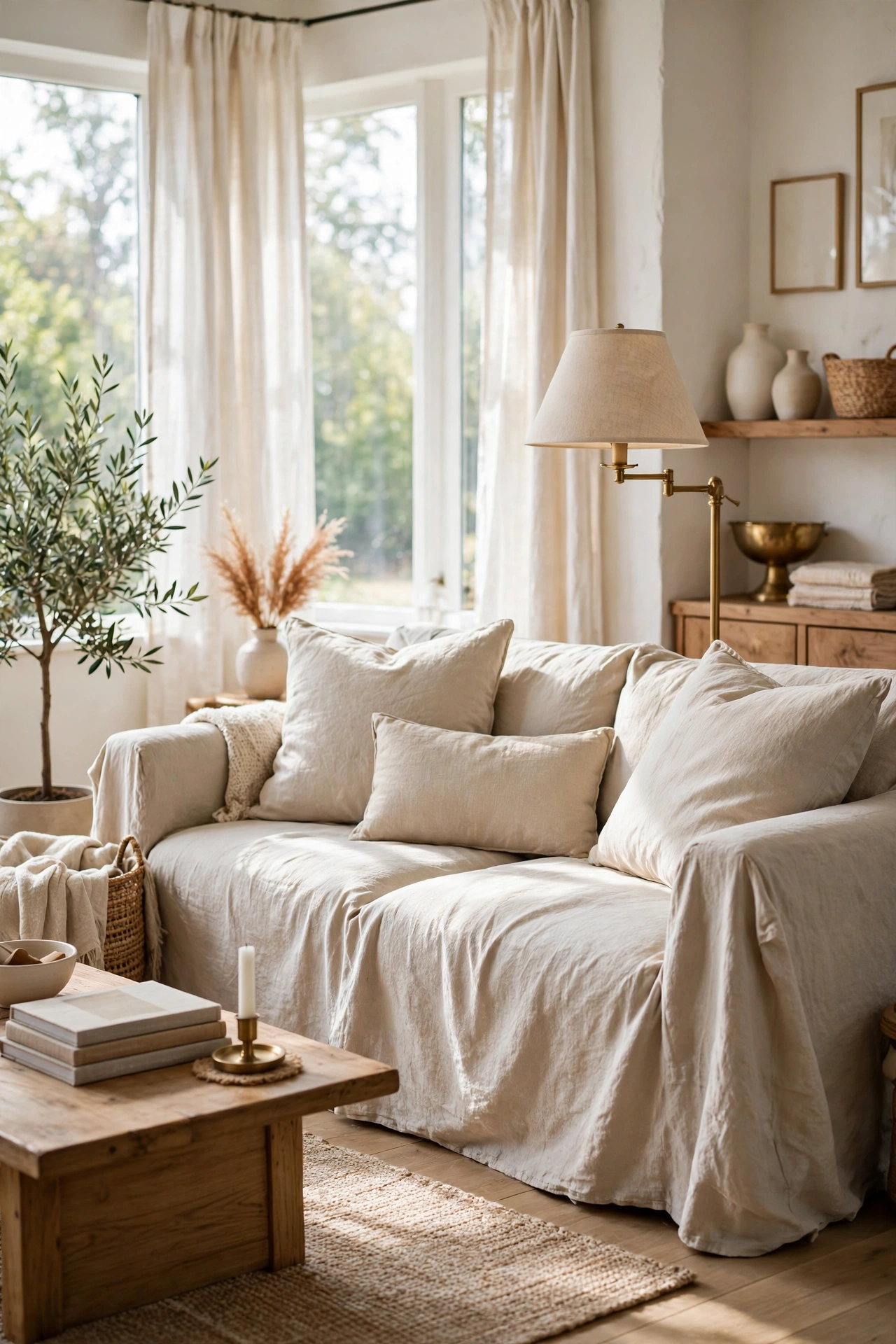
A new linen sofa from West Elm or CB2 runs $2,000 to $4,000 or more. A slipcover changes the sofa’s entire silhouette and texture in one afternoon — no tools, fully removable — which makes it the most renter-friendly furniture dupe there is. The linen texture is the look, and the sofa underneath can be anything.
A H.Versailtex stretch sofa slipcover costs $30.90 to $79.99, and the IKEA Helmingby plus a bouclé slipcover turns a basic IKEA sofa into a cloud-look piece. In our $2,500 plan this one costs $55. Measure the sofa first — length, depth, and arm height — and match the cover’s size range: stretch covers forgive a few inches, loose linen covers do not.
Tuck the excess fabric into the seat creases and smooth the skirt over the arms. Check the care label before the first wash, and wash the cover before you judge the fit — linen relaxes after one wash. If the sofa underneath is an IKEA ÄPPLARYD at $600 to $900, the cover still costs less than the difference to a $2,000 sectional.
The trade-off is tailoring. A stretch cover never looks as sharp as a custom one, and the skirt will never sit perfectly straight. From across the room, though, the linen texture does the work — and at move-out, the cover comes off in five minutes and the sofa underneath is exactly as it was.
15. The Cloud Sofa That Anchors the Whole Budget
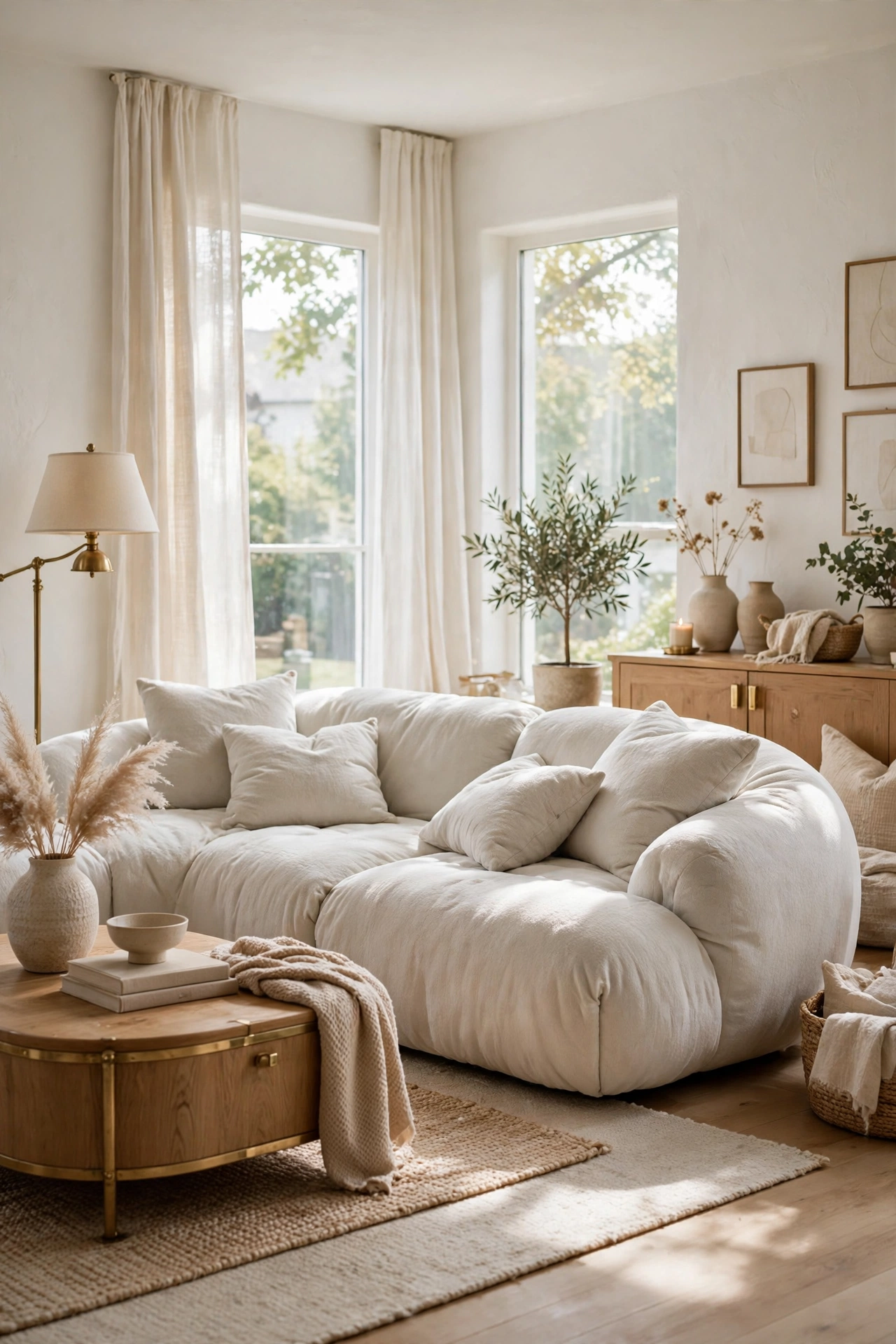
The RH Cloud Couch starts at $5,885 for a three-seat, and the standard configuration runs $10,000 or more — up to $20,000 and beyond. The cloud couch alone has 182M TikTok views under #FurnitureDupes. The look is deep seats, a loose low back, and no visible legs: a sofa that looks like it is exhaling.
Amazon’s cloud-style sofas — Stone & Beam, Poly & Bark, Novilla — run $750 to $1,400, and $600 to $1,000 on Prime Day. The named pick is the Novilla 104.3-inch modular cloud couch: a three-seater with two ottomans. In our $2,500 plan this one costs $900 — the biggest single spend on the list, which is why it sits last. Delivery plus an hour to unbox and fluff is all the work it asks.
Measure the doorway and the 12-by-14-foot room first. A 104.3-inch sofa leaves about three feet of a 12-foot wall for a side table and a lamp, and any deep-seat modular sofa in a light fabric reads the same from across the room as the $5,885 original. Keep the fabric light: a pale cloud sofa is what makes the small room feel larger, and a dark one would swallow it.
The trade-off is commitment. This is the hardest piece to move, the cushions need regular fluffing to keep the cloud look, and $900 is real money. It suits anyone staying put for a while — and it is the dupe that makes the whole list honest: the room really does look like the $15,500 version, because the piece your eye lands on first is the cloud.
Frequently Asked Questions
Can I really get the high-end look for $2,500?
The fifteen mid-range dupe prices add up to $2,487, and the designer originals they copy come to at least $15,500 — about $13,000 saved, roughly 84% cheaper. One project per weekend afternoon, fifteen weekends, and the living room is done in under four months. The only rule is to spend the money in the order the list gives it: the easy wins first, the sofa last.
What if my lease bans paint or adhesives?
Use the renter-safe version of each project. The two-tone limewash fake repaints away with one coat, peel-and-stick limewash-look paper costs $30 to $120 a wall and needs no paint at all, the mirror leans instead of hanging, and the original hardware goes back on at move-out. Check the lease wording before buying adhesive strips in bulk — some leases ban adhesives outright.
Which dupe should I start with?
Start with the mirror at $120, the pillow covers at $25, or the vase at $16 — the three easiest wins on the list, and the three that change the room fastest for the least effort. If you only do one thing this weekend, do the mirror: it is the focal point everything else hangs around.
Will the dupes last, or will I replace them in a year?
The buys last like any furniture — the mirror, the lamps, the sofa, and the table are real pieces, not props. The makeovers need a little care: contact paper removes cleanly for up to a year and lasts up to five, spray-painted hardware needs its clear coat, and the slipcover washes. Nothing on this list is disposable if you treat it like the real thing.
Where do I find the thrifted pieces?
Thrift the shape and buy the surface new. Goodwill and Savers carry glass vases for $2 to $13 and picture frames for $1 to $5; Facebook Marketplace has large leaning mirrors for $45 to $90 and the occasional $1 frame; Dollar Tree starts at $1.25 an item. The shape is what costs money at retail — the surface is what you can change for $10 to $30.
Pick Your High End Look for Less Decor by Budget and Floor Space
Start with the three easy wins — the $120 mirror, the $25 pillow covers, the $16 vase — and let the room change before you spend another dollar. Ten of the fifteen dupes cost under $100 each, and the only two big cheques are the $600 sideboard and the $900 cloud sofa, which is why they sit at the end of the list. Work one weekend at a time, in the order the list gives you, and the 12-by-14-foot living room is done in under four months for $2,500 all-in — against at least $15,500 for the designer originals. That is the whole promise of high end look for less decor: the same room, the same light, the same first impression, for about $13,000 less. Pick the project that fits this weekend, and start there. Write down your decorating budget first, so the $2,500 total stays a plan and not a surprise.