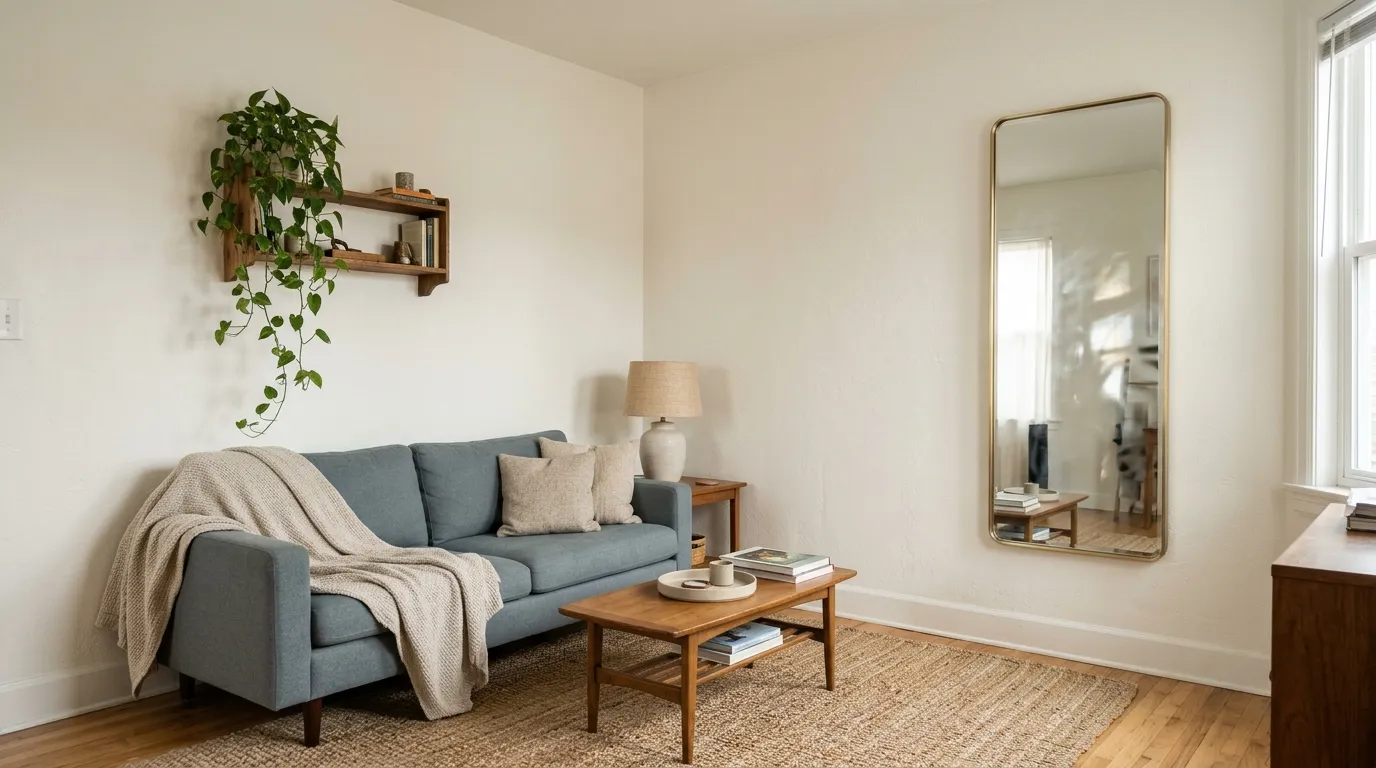

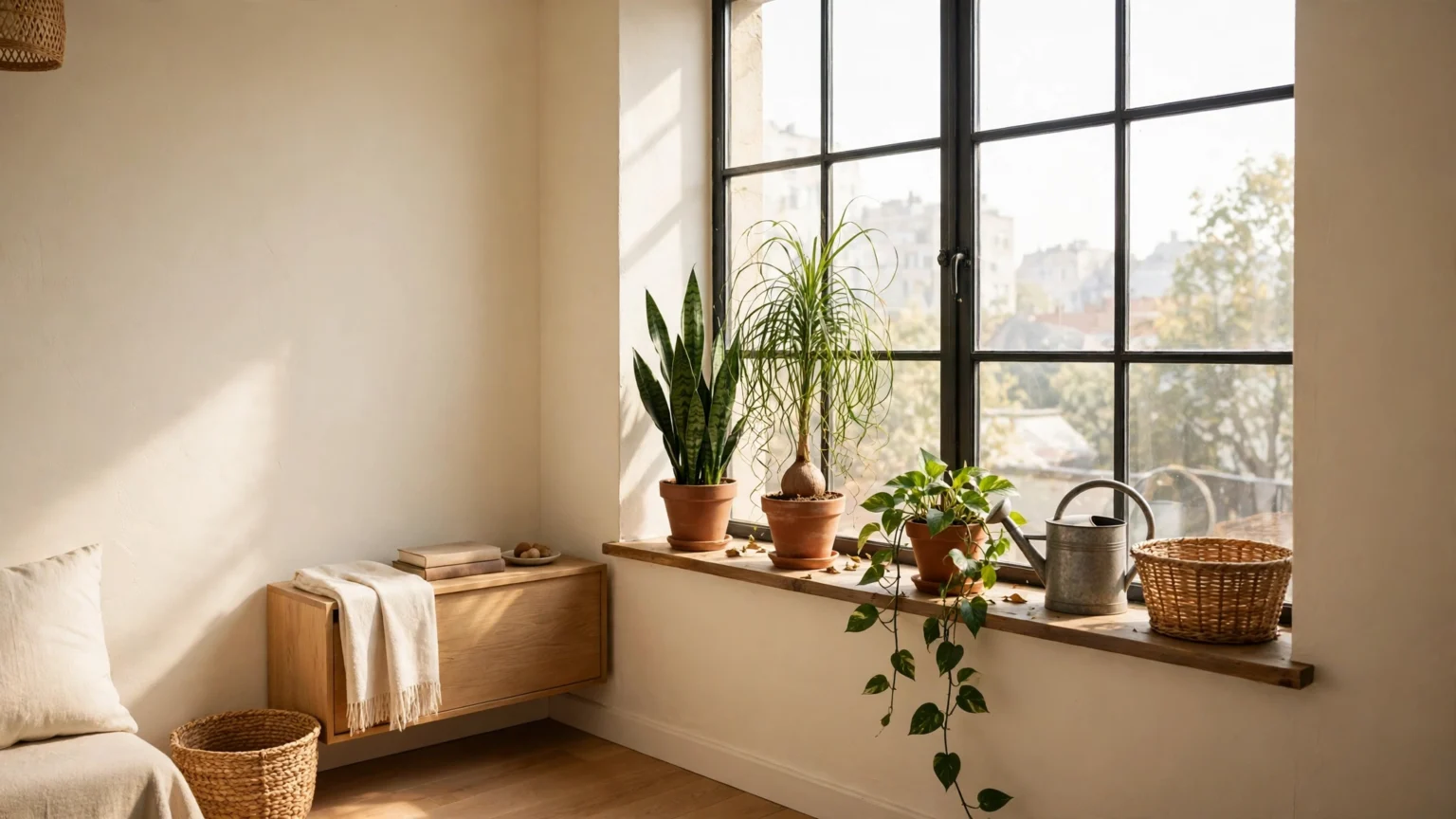
The plant on your windowsill has not had a drink in three weeks, and it still looks the same as the day you brought it home. That is the promise of these easy indoor plants — not that they never need water, but that they forgive you when life gets busy and the watering can stays in the cabinet.
Picture one rented one-bedroom apartment: a sunny windowsill 4 feet wide, a dim hallway corner, and a starter set of 3 plants in 6-inch pots. The rule for the whole set is one watering check every 2 weeks — push a finger 2 inches into the soil, water only if it feels dry, and leave it alone if it still feels damp. Every plant below is judged against that same test: how long it waits happily, how much light it asks for, and what it does when you forget.
The list runs from most forgiving to least, so the first three are the ones to buy if you travel or simply forget. Choose by light first, then by how often you realistically water — the sunny-window plants and the dim-corner plants are marked in every entry, along with one honest weakness each.
Quick Tips Before You Start
1. Snake Plant
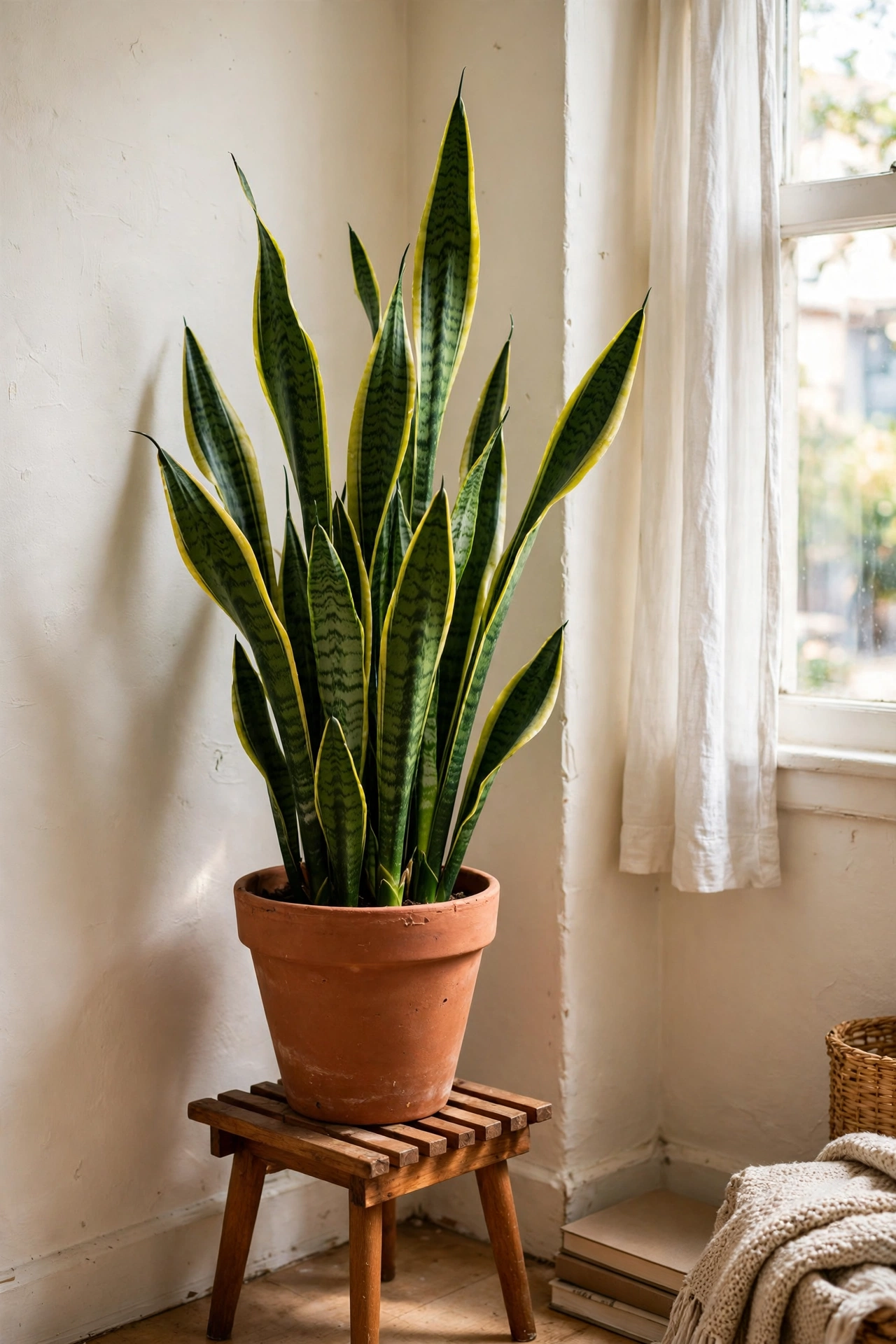
The snake plant is the plant this whole list is measured against. Its tall, upright leaves are thick and fleshy because they store water, the same trick that lets it wait 2 to 4 weeks between waterings in spring and summer, and 4 to 6 weeks in fall and winter. A healthy plant grows slowly to 2 to 4 feet tall, with leaves up to 4 feet long and 2 to 4 inches wide, and it keeps that shape with almost no attention — no misting, no fussy feeding schedule, no daily check-ins.
Its real strength is how little it asks for. It grows best in bright indirect light, yet it tolerates a dim corner that gets only a little daylight, which makes it the easiest plant here to place. Its weakness is water, not drought: soggy soil rots the roots, and harsh midday sun can scorch the leaves. Plant it in a gritty, fast-draining mix in a pot with a drainage hole, choose a pot only 1 to 2 inches wider than the one it came in, and water it well only when the soil is dry. If a cat or dog shares your home, check that a plant is safe for pets before buying — snake plant is toxic to cats and dogs if chewed, so keep it where a curious pet cannot reach the leaves.
Why It Made the List
It waits the longest of any plant here — 4 to 6 weeks between waterings in winter — and it still stands upright and green when you finally remember the watering can.
Best For
The traveler, the chronic forgetter, and the dimmest corner that still gets some daylight.
2. ZZ Plant
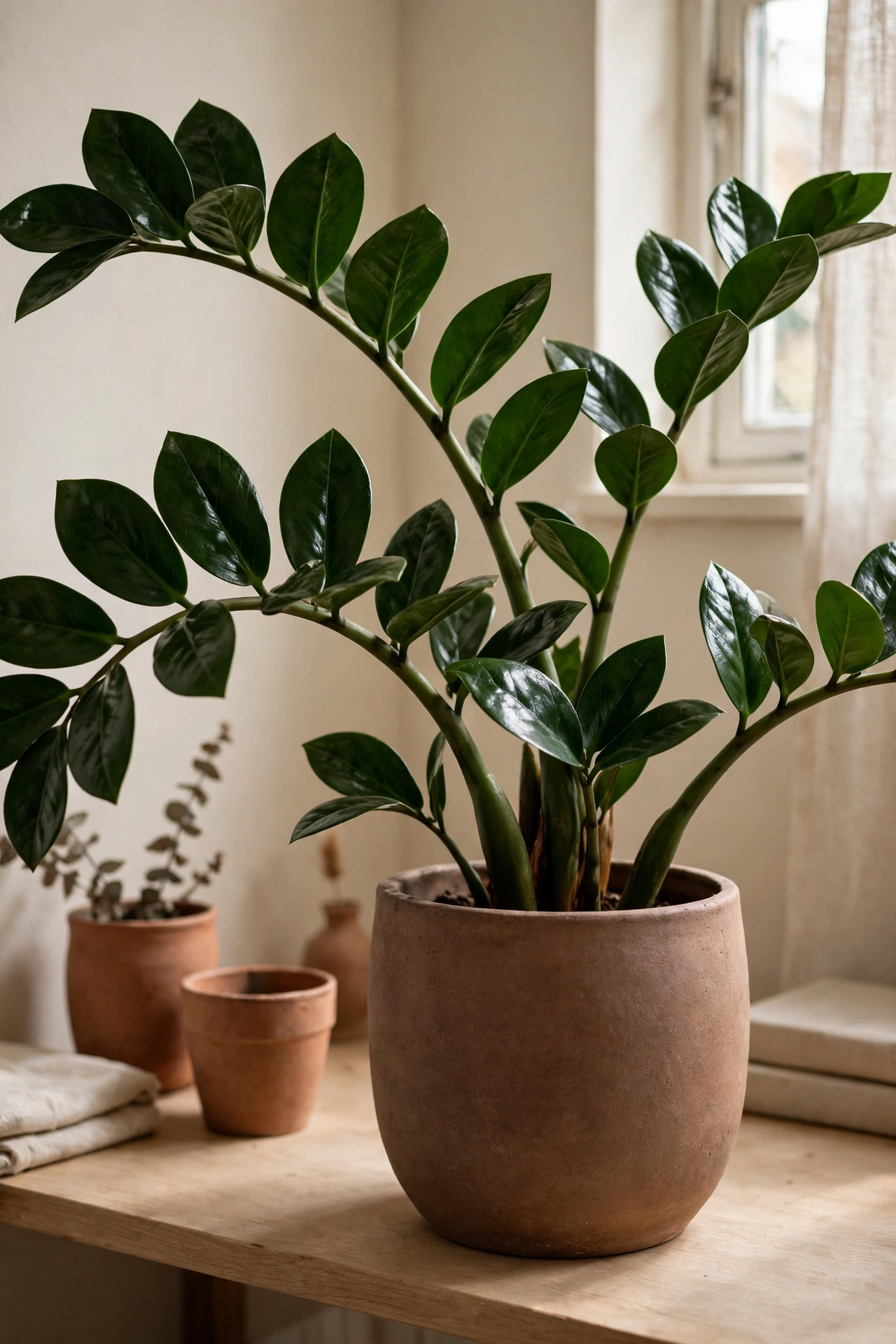
The ZZ plant stores its water underground, in thick rhizomes that work like a pantry. That is why it only needs water about twice a month in summer and once a month in winter, and why it shrugs off a forgotten watering the way most plants cannot. It grows slowly to 2 to 4 feet tall and wide, with glossy dark leaves that look polished even after weeks of neglect.
It asks for bright indirect light, though it tolerates low and fluorescent light — growing more slowly there. Direct sun scalds the leaves, so keep it out of a harsh blast from a south-facing window. The weakness is the same as the snake plant’s: too much water. Yellow leaves and soft rhizomes mean the soil has stayed wet, not that the plant is thirsty. Use a free-draining mix with perlite or pumice and a pot with drainage holes, and do not mist it — dry indoor air suits it. Repot only every 2 to 3 years, when the rhizomes press against the pot. If a cat or dog shares your home, check that a plant is safe for pets before buying — ZZ plant is toxic to cats and dogs, so place it out of chewing reach.
Feed it only once or twice in the growing season, if at all — less attention suits it better.
Why It Made the List
Its rhizomes store weeks of water underground, surviving the forgotten month that kills most houseplants.
Best For
A dim bedroom corner or an office shelf with only fluorescent light.
3. Ponytail Palm
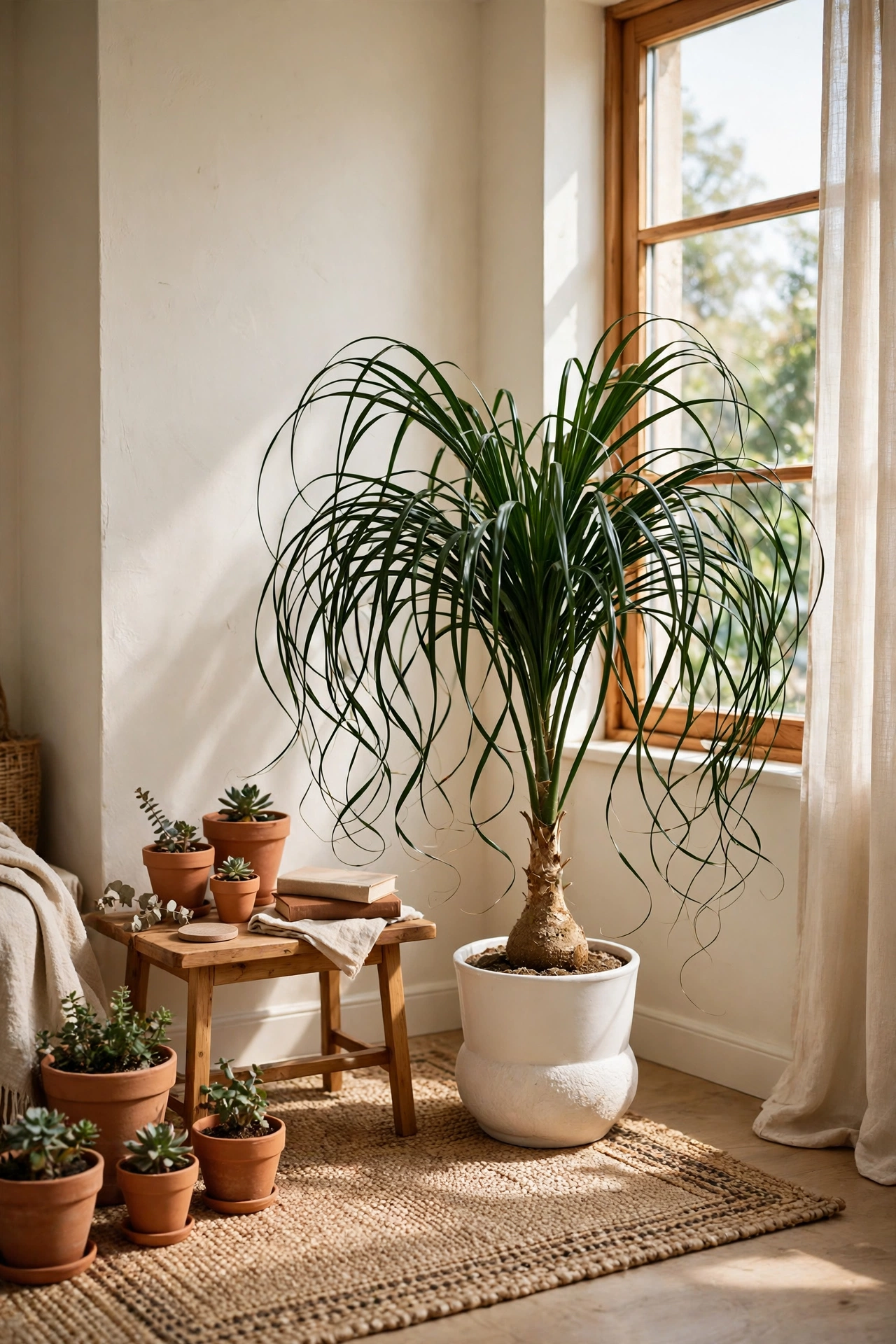
The ponytail palm is not a true palm at all, but a desert plant with a swollen base that works like a water tank. That caudex is the reason it only needs a deep watering every 2 to 3 weeks in spring and summer, and once a month to every 4 to 6 weeks in winter — a mature plant in a cool room can even stretch that to 6 to 8 weeks. It grows very slowly indoors, reaching 6 to 8 feet in a pot over many years, though it stays much smaller in a small pot for years.
It wants the brightest spot you have: full sun, 6 or more hours of direct sun a day, in your sunniest window. Low light slows it further, though it survives. The weakness is wet soil — overwatering is the most common cause of failure, and a soft or mushy caudex is the warning sign. Use a fast-draining cactus mix in a pot with drainage holes, keep humidity low at 30 to 50 percent, and follow one rule: if in doubt, do not water. Repot only every 3 to 4 years. If a cat or dog shares your home, check that a plant is safe for pets before buying — ponytail palm is non-toxic to cats and dogs, one of only three pet-safe plants on this list.
The plant is honest about trouble — the signs show up early.
Three Signs You Watered Too Much
- Soft, mushy base: stop watering at once and let the mix dry out completely before the next drink.
- Brown leaf tips: trim only the brown tips, not whole healthy leaves, and check that the pot drains.
- Yellow, drooping leaves: the roots are sitting wet — empty the saucer and wait.
Why It Made the List
Its swollen base stores weeks of water, so it forgives the drought you fear.
Best For
Your sunniest window — and anyone who wants a slow, sculptural plant.
4. Aloe Vera
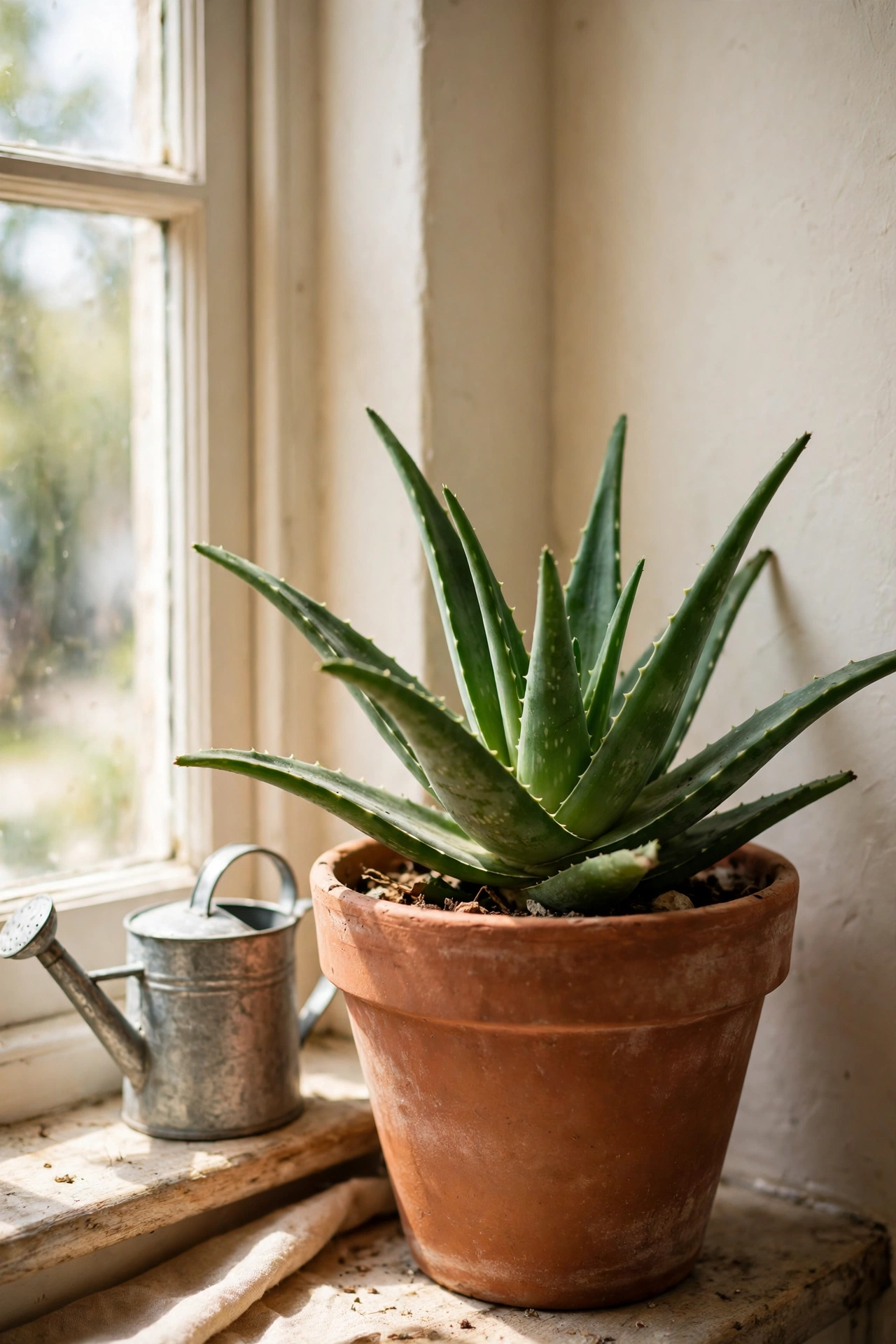
Aloe vera is a succulent with a built-in water tank: its thick leaves hold the drink so the plant does not need one often. The method is soak and dry — water deeply only when the soil is completely dry, then empty the saucer — about every 2 to 3 weeks in spring and summer, and every 4 to 6 weeks in winter. A mature rosette grows 24 to 39 inches tall, and it produces small pups at its base that you can separate once they reach 3 to 4 inches tall.
It needs a lot of light — your sunniest window, with 6 or more hours of bright light. Guides disagree on direct sun, so introduce it a little at a time — unacclimated leaves scorch in harsh afternoon sun. Its weakness is the same as every succulent here: overwatering rots the roots. Use a coarse, fast-draining cactus mix in a clay pot with drainage holes — it dries faster. Turn the pot every few weeks so the rosette grows evenly instead of leaning. If a cat or dog shares your home, check that a plant is safe for pets before buying — aloe vera is toxic to cats and dogs, so keep it on a high sill away from chewing.
The pups are the real reward: each one can be potted on its own.
Why It Made the List
Its leaves are a water reservoir you can see, and it pays you back with free pups.
Best For
Your sunniest kitchen sill — and anyone who wants a plant that multiplies.
5. Cast Iron Plant
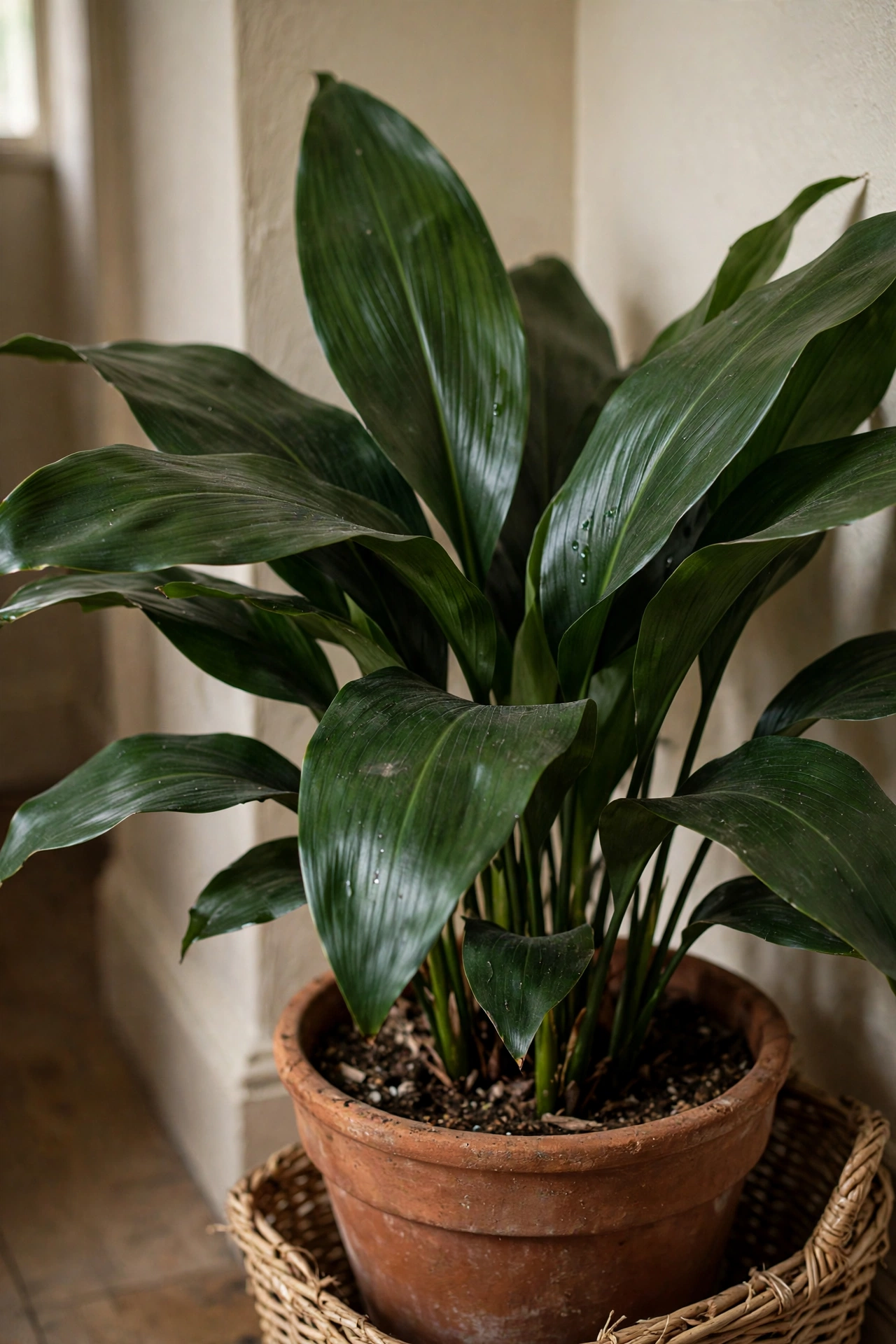
The cast iron plant earns its name: the toughest low-light plant on this list, long kept in hallways and offices. It is drought-tolerant once established, so water only when the mix feels dry to the touch — about every 2 to 3 weeks in spring and summer, and sparingly in winter. It grows very slowly to 1 to 3 feet tall and wide, adding only 2 to 5 new leaves a year — that is normal, not a problem.
It takes the lowest light of any plant here: partial to full shade, or low to medium indirect light, and direct sun scorches its broad leaves. A north-facing window or a corner several feet from a window suits it. The weakness is soggy soil — standing water is the main killer — so let the mix dry between waterings and never leave the pot sitting in a saucer of water. It tolerates dry air and cool rooms down to 45 degrees Fahrenheit. If a cat or dog shares your home, check that a plant is safe for pets before buying — cast iron plant is non-toxic to cats and dogs, one of only three pet-safe plants on this list.
Feeding is optional: a half-strength feed 2 to 3 times in spring and summer is plenty.
Why It Made the List
It is the best plant here for a dim room, and it forgives both forgotten watering and low light at the same time.
Best For
A north-facing window or a dim corner.
6. Jade Plant
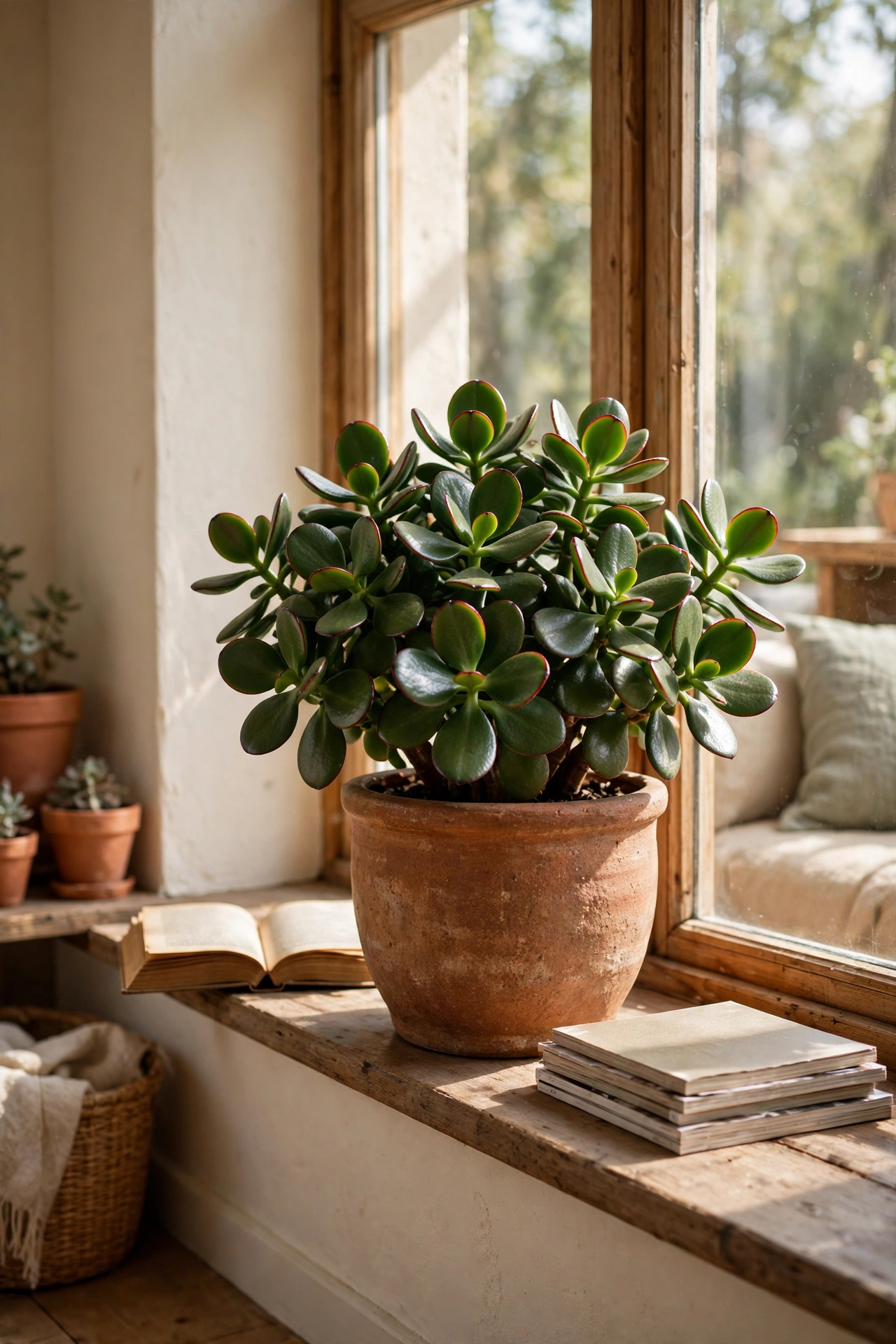
The jade plant is a slow-growing shrub with thick leaves and stems that store water, so a forgotten watering does far less harm than an extra one. Water deeply, then wait until the soil is dry or nearly dry — roughly every 10 to 15 days in summer, and every 3 to 4 weeks in winter, when the plant rests from October to February. Most apartment plants stay 1 to 3 feet tall for years, though a jade can reach 5 feet over many years, which makes it the longest-lived plant on this list.
It needs the most light of the succulents here: 4 or more hours of direct sun a day, ideally in a south-facing window. In bright indirect light it still grows, but stretched and droopy, dark green without the red leaf edges that sun brings. Protect it from the harshest midday sun. The weakness is overwatering — leaf drop and stem rot follow a wet mix — and a top-heavy plant tips over, so use a fast-draining cactus mix in a heavy pot with a drainage hole. Feed lightly only in the growing season, and keep it above 45 degrees Fahrenheit. If a cat or dog shares your home, check that a plant is safe for pets before buying — jade plant is toxic to cats, dogs, and horses, so keep it out of reach.
Why It Made the List
It is the plant you keep for years — slow, sturdy, and better looking with age.
Best For
A south-facing window and a reader who wants one plant for years.
7. Spider Plant
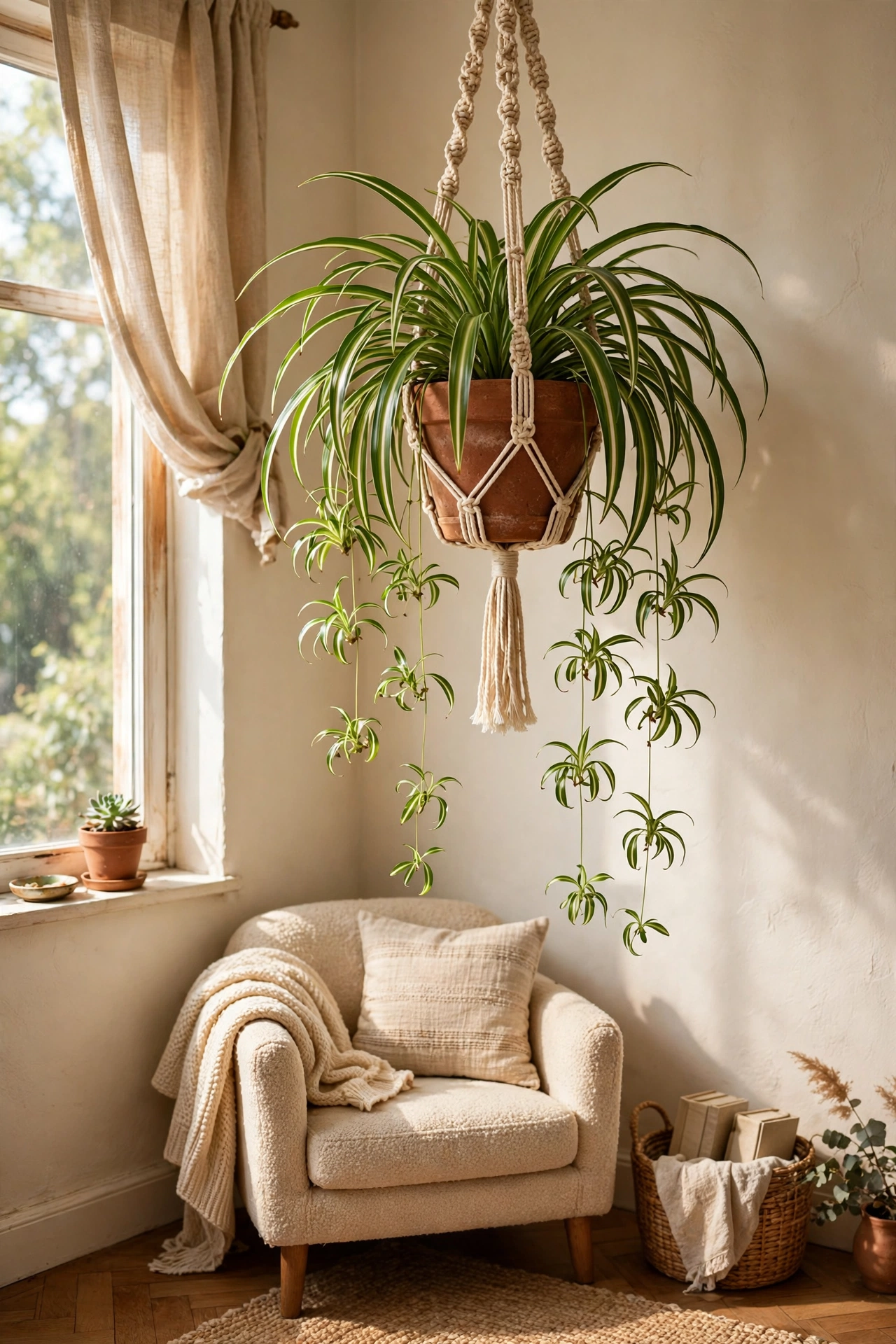
The spider plant is the fastest payoff on this list. It grows quickly into a clump 12 to 24 inches tall and wide, then sends out long stems with baby plantlets — spiderettes — that dangle below the mother plant and root easily. Water when the top 1 inch of soil is dry, about every 7 to 10 days in the growing season, and reduce that by 30 to 50 percent in winter. Its thick, fleshy roots store water, so a missed watering is forgiven — but it is not a weeks-without-water plant like the snake plant or the ZZ plant.
It likes medium to bright indirect light, tolerates low light, and grows more slowly there, with variegation that can fade. Hot midday sun scorches the leaves, so keep it out of a harsh blast. Brown leaf tips are common and usually cosmetic — often linked to fluoride and salts in tap water — so filtered water and an occasional flush of the pot help. If a cat or dog shares your home, check that a plant is safe for pets before buying — spider plant is non-toxic to cats and dogs per the ASPCA, though a chewed leaf can still cause mild stomach upset.
Why It Made the List
It grows fast, makes free plants, and is one of only three pet-safe plants here.
Best For
A hanging spot above a curious cat — and anyone who wants free plants.
8. Golden Pothos
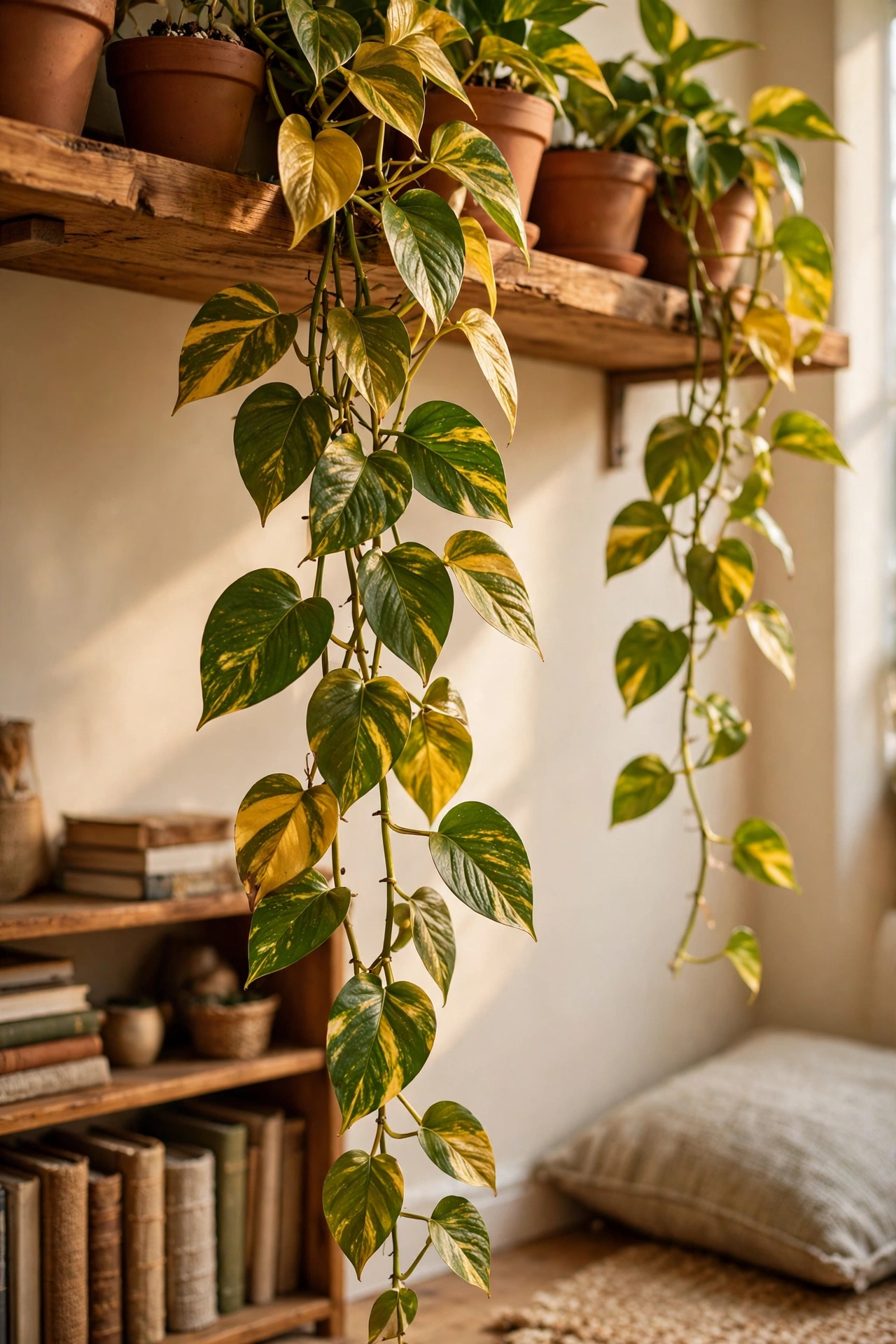
Golden pothos is the least drought-proof plant on this list, and it earns its place for a different reason: it is the fastest-growing trailer here, turning a bare shelf into a green curtain in a single season. It needs the most regular checking of the eight — water when the top 2 inches of soil feel dry, about every 7 to 10 days in warm, bright conditions, and every 10 to 14 days in cooler or darker rooms, stretching to 14 to 21 days in winter. It tolerates a short dry spell, but do not leave it for weeks the way you can leave a snake plant.
Bright indirect light suits it best, and it tolerates low to medium light, though growth slows and the gold variegation fades there. Harsh afternoon sun scorches the leaves. Indoors, the vines commonly reach 3 to 6 feet long — train them up a support, let them trail, and prune leggy stems in spring to keep the plant full. Always empty the saucer after watering and never let it sit in water. If a cat or dog shares your home, check that a plant is safe for pets before buying — golden pothos is toxic to cats and dogs, so hang it high, out of reach of chewing pets, and rotate it so growth stays even.
Why It Made the List
It is the fastest way to fill a bare shelf, and it asks only for a weekly check in return.
Best For
A high shelf or the top of a bookcase where vines can trail down.
Frequently Asked Questions
How often should I water plants I keep forgetting?
Check the soil first, not the calendar. The water-storers on this list — snake plant, ZZ plant, ponytail palm, and aloe vera — wait 2 to 3 weeks or more between waterings, and the snake plant waits 4 to 6 weeks in winter. Spider plant and golden pothos need a weekly check instead: water when the top 1 to 2 inches feel dry. When in doubt, wait — these plants die from too much water far more often than from too little.
Which of these 8 plants are safe for cats and dogs?
Three are non-toxic to cats and dogs per the ASPCA: spider plant, cast iron plant, and ponytail palm. The other five — snake plant, ZZ plant, golden pothos, jade plant, and aloe vera — are toxic if chewed, so check that a plant is safe for pets before buying and keep the toxic ones out of reach. Note that even a non-toxic spider plant can cause mild stomach upset if a cat chews a leaf.
Can these plants live in a room with almost no natural light?
Snake plant, ZZ plant, and cast iron plant tolerate low light — cast iron plant is the best of the three for a dim corner. They grow more slowly there, so expect fewer new leaves and water even less often, since the soil dries slowly. Jade plant, aloe vera, and ponytail palm need the opposite: give them your brightest window, with 6 or more hours of direct sun for the ponytail palm.
What kills a forget-proof plant most often?
Overwatering, by a wide margin. Watering on a fixed schedule instead of checking the soil, a pot with no drainage hole, and a saucer left full of water all rot the roots of plants built to stay dry. The fix is simple: a fast-draining mix, a pot with a drainage hole, and one finger test — water only when the top 2 inches feel dry.
What size pot should I start with?
Start with 6-inch pots — they suit the starter set of 3 plants in this article and dry out at a forgiving pace. Repot only when the roots press against the pot: ZZ plant every 2 to 3 years, ponytail palm every 3 to 4 years. When you do repot, choose a pot only 1 to 2 inches wider than the last one, since extra soil holds extra water.
Pick Your First Three Easy Indoor Plants by Light and Memory
Start with light, not with a shopping list. Walk your apartment at noon and mark the brightest sill and the dimmest corner — those two spots decide your first three plants. A snake plant takes the dim corner, a ponytail palm or aloe vera takes the sunny sill, and a spider plant hangs where a cat cannot reach it. That is the whole starter set: 3 plants in 6-inch pots, one watering check every 2 weeks, and the same finger test every time. The rest of this list waits for the day you want a fourth plant, or a trailing vine for a bare shelf. Buy the plant that fits the light you have, not the light you wish you had, and these easy indoor plants will still be standing there when you finally remember the watering can.