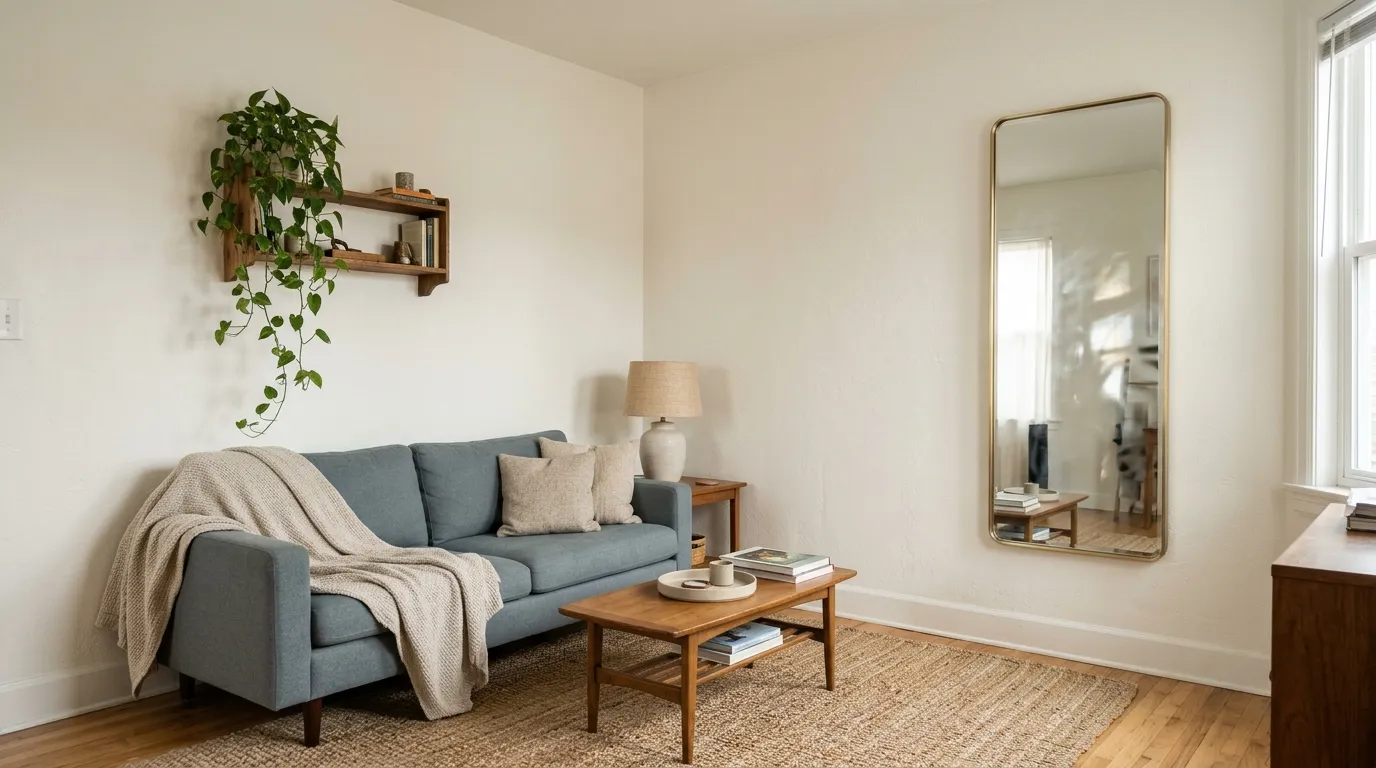

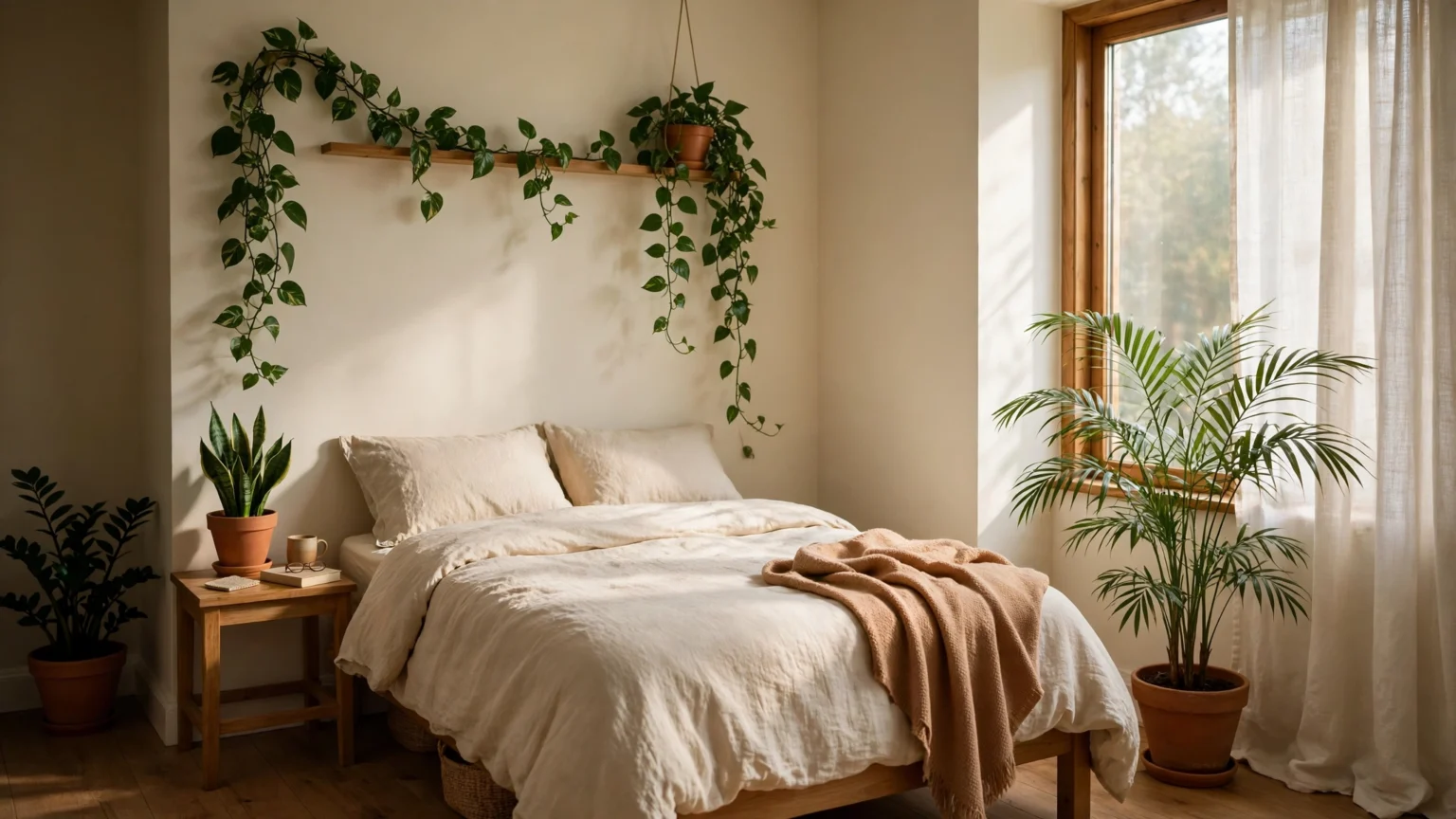
Your bedroom is 10 by 11 feet, the window is 3 feet wide, and the far corner is a 2-by-2-foot patch of dim floor that has killed every plant you put there. Here is how to grow houseplants that actually thrive in that room — not plants that hang on for a few months and fade, but plants that push out new leaves in the light you actually have.
Picture the same room through the whole guide: one window, one dim corner, and a starter set of 3 plants in 4- to 6-inch pots for $100–$150 all in, pots included. The rule for the set is one watering check every 2 weeks — push a finger 2 inches into the soil, water only if it feels dry, and leave it alone if it still feels damp. Every step below is judged against that same room: does it fit the spot, does it survive the light that spot actually gets, and does it stay small enough for a rented one-bedroom apartment.
Work by light first, then by budget — measure the light, pick the plant that fits it, and only then spend money on pots, soil, or a grow light.
Quick Tips Before You Start
1. Measure the Light You Actually Have
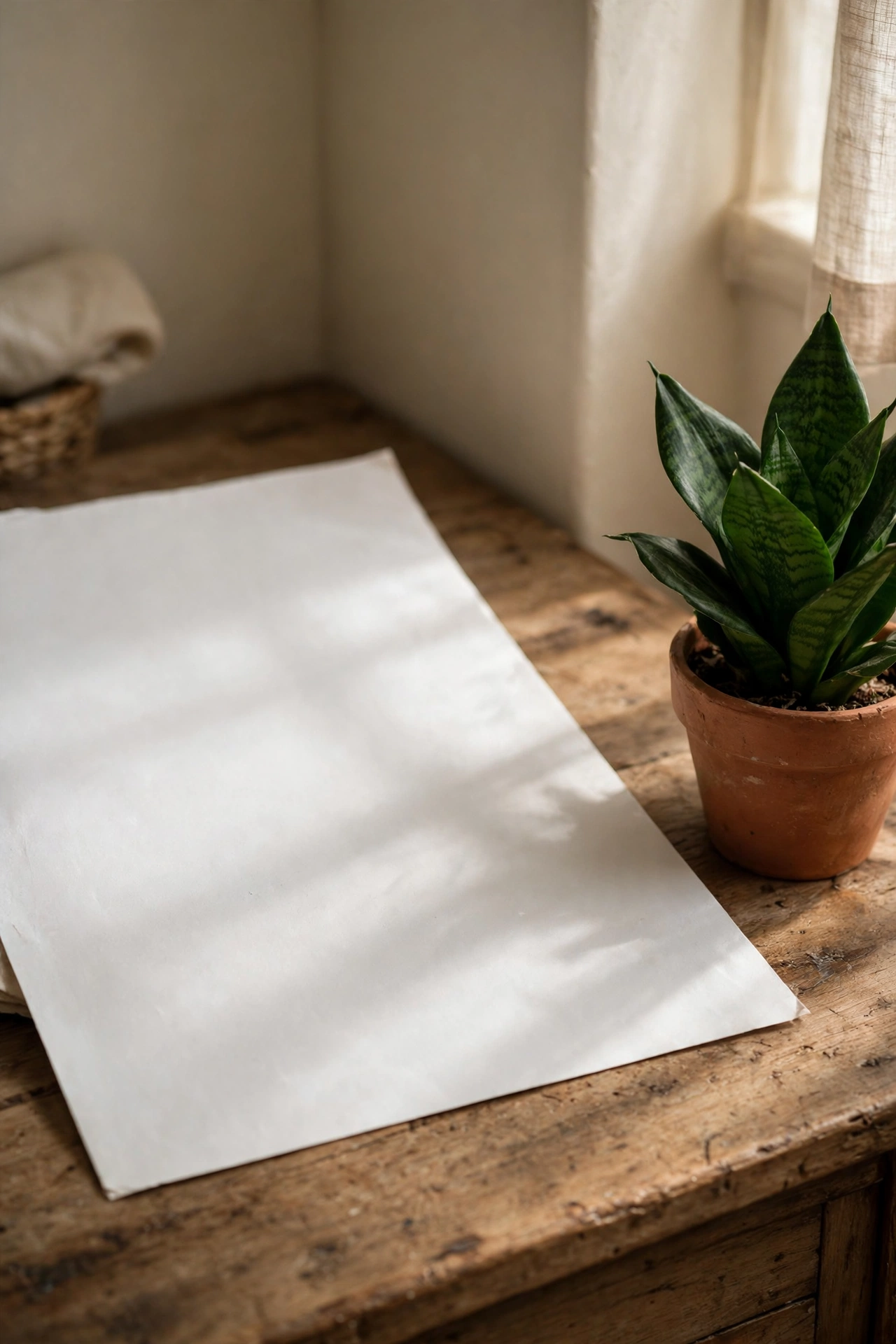
You cannot pick the right plant until you know how much light the spot actually gets — and your eyes will lie to you about it.
Start with the hand shadow test: at noon on a clear day, lay a white sheet of paper where the plant will sit and hold your hand flat about 12 inches above it. It costs nothing and takes 10 seconds. A sharp, dark shadow means direct sun. A soft shadow with fuzzy edges means bright indirect light. A faint, blurry shadow means medium light, and a shadow you can barely see — or none at all — means low light.
Test every spot you are considering, and test again in winter, when the same corner is much darker because the sun sits lower. A room that feels bright after two minutes indoors can still be low light for a plant, because human eyes adjust to dimness and plants do not.
If you want a number, a free phone light-meter app is accurate enough for houseplants. Measure at leaf height, at midday, on a sunny day and a cloudy day, and average the readings. Low light is roughly 25 to 100 foot-candles, medium is 100 to 500, and bright indirect is 500 to 1,000. Direct sun reads over 1,000.
Cost: $0 with your hand and a sheet of paperTime: 10 minutes at noonLight: Measured at leaf height
You know it worked when every spot in the room has a name — low, medium, or bright — and you can point to the dimmest corner without guessing.
2. Pick Plants That Truly Grow in Low Light
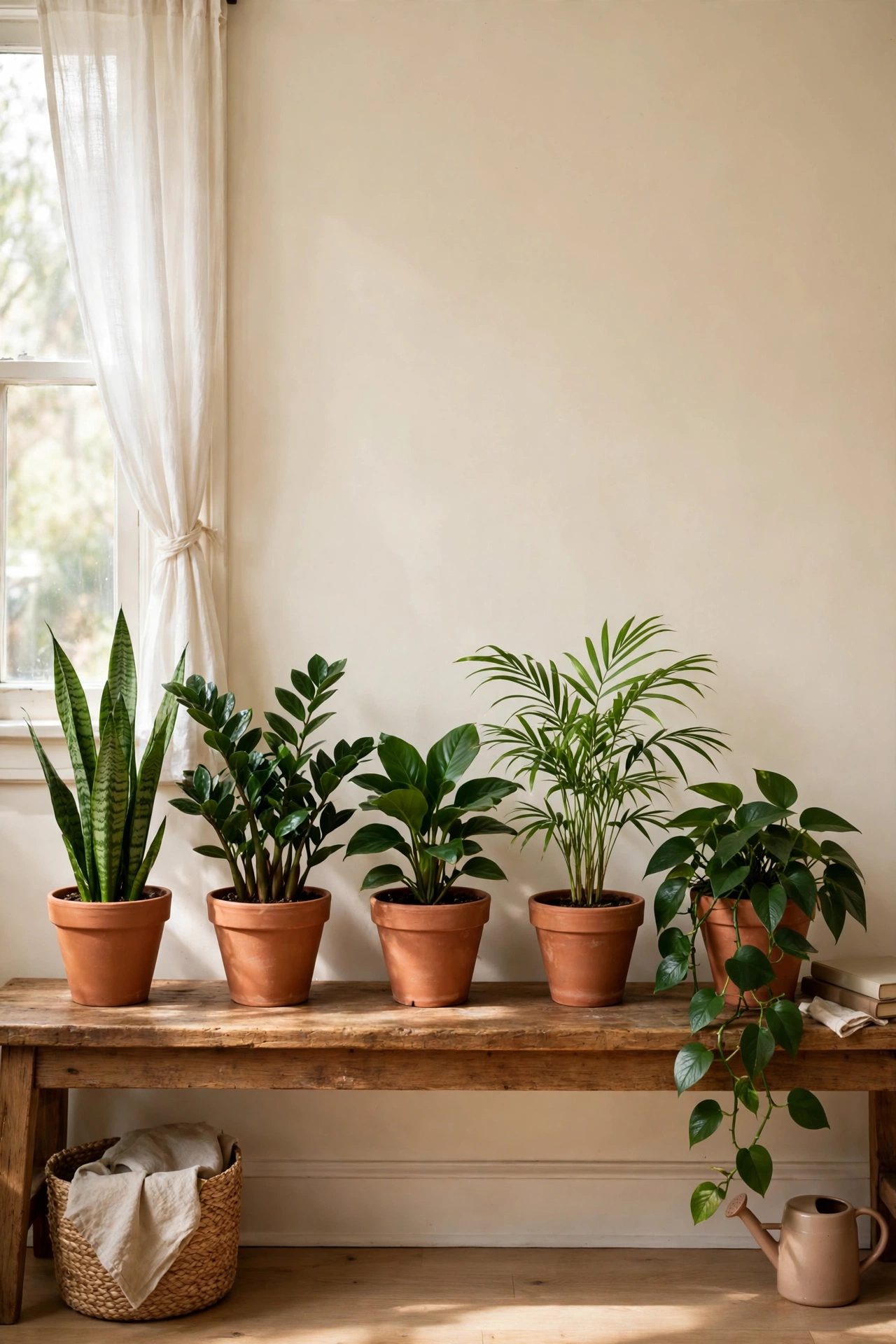
“Tolerates low light” on a plant tag means the plant will stay alive — not that it will grow or keep its colour.
Thriving means steady new growth; surviving means alive but leggy, pale, and slowly declining. Five plants genuinely grow in low light. The ZZ plant is the toughest: it stores water in thick rhizomes and keeps glossy leaves in a dim room. The snake plant stores water in its sword leaves and stands upright for years — overwatering, not dimness, kills it. The cast iron plant handles down to about 50 foot-candles. The parlor palm is the only palm that genuinely tolerates low light. And dark-green pothos — the plain ‘Jade’ type — is a forgiving trailer for a dim room.
The plants the tag only calls “low-light tolerant” belong nearer the window. Spider plant, calathea, peperomia, haworthia, and string of hearts all need medium to bright indirect light. In true low light they stretch, pale, or lose their pattern — fewer plantlets on the spider plant, a fading pattern on the calathea without humidity above 50 percent, long gaps between the string of hearts’ leaves. Give them a spot 2 to 3 feet from the window or a grow light.
Variegated pothos also loses its variegation in a dim room and reverts to plain green — and the pattern does not come back. No plant thrives in darkness: even the toughest five need a window or a grow light. If a cat or dog shares your home, check that a plant is safe for pets before buying — snake plant and pothos are toxic if chewed, while parlor palm and cast iron plant are non-toxic, so the two safe ones are the easy picks for the floor corner.
Cost: $12–$30 per plantTime: 20 minutes at the shopLight: Low, 25–100 fc
You know it worked when the plant you buy is on the true low-light list.
3. Put the Plant at the Right Distance from the Window
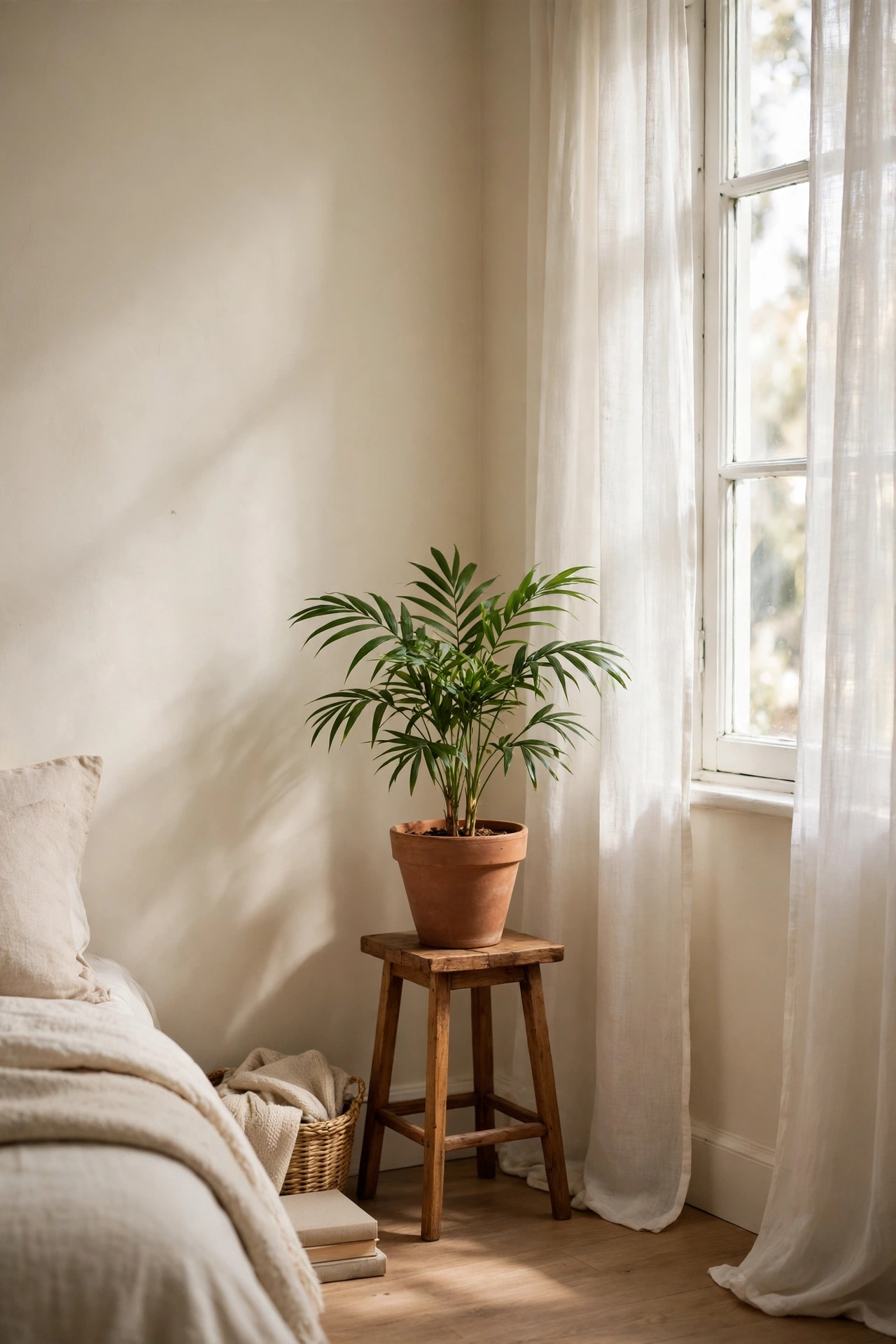
The same plant lives or slowly starves depending on how many feet stand between it and the glass.
Light falls off fast indoors: at the glass you get all of it, at 3 feet about half, at 6 feet about a fifth, and at 10 feet about 5 percent. That is why the 2-by-2-foot dim corner is a different light world from the sill — and why moving a struggling plant 2 to 3 feet closer is often the whole fix.
Use the zones. Within 2 feet of the window is the brightest band — the sill and the nightstand beside it. At 3 to 5 feet the light drops noticeably, which is medium light. At 5 to 8 feet you are in low light, and only the true low-light five belong there. Past 10 feet most plants will only survive, not grow.
Window direction changes the math. A north window gives steady indirect light, so low-light plants can sit close to the glass. An east window gives gentle morning sun for 1 to 3 hours. A south or west window runs hot, so keep plants 2 to 5 feet back or behind a sheer curtain on a tension rod — no drilling, and it suits a rental. Do not block the window with heavy curtains, and clean the glass, because dirty glass measurably cuts the light.
A plant that leans hard toward the window is telling you the spot is too dim — a quarter turn will not fix a spot that is simply too far from the glass.
Cost: $0 to move; $15–$30 for a standTime: 5 minutesLight: 2–3 ft bright, 5–8 ft low
You know it worked when new leaves come in full size and the plant stands upright.
4. Water on the Soil’s Schedule, Not the Calendar
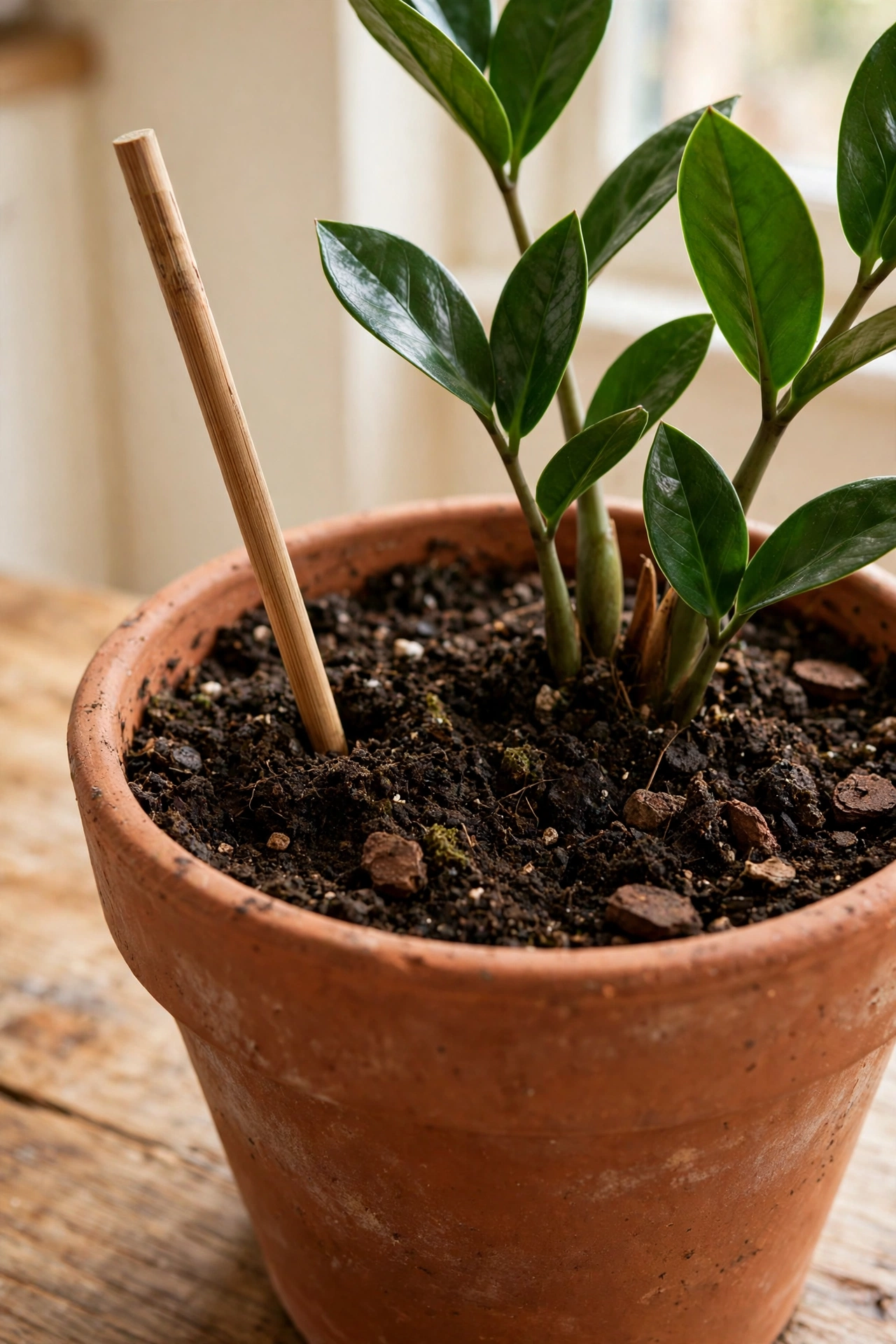
In a dim room the soil stays wet for weeks, so watering on a bright-room schedule drowns the roots.
Light drives how fast a plant drinks: less light means less water lost to the air, and a pot that stays wet far longer. A plant in a bright window drinks every 5 to 7 days; the same plant in low light drinks every 2 to 3 weeks, and a snake plant or ZZ plant in a dim winter room can wait 3 to 4 weeks. Most houseplants need 30 to 50 percent less water in winter. That is why the rule is a check every 2 weeks, not a watering every 2 weeks: push a finger 2 inches in, water only if it feels dry at that depth, and leave it alone if it still feels damp.
When you do water, water deeply and slowly until it runs freely from the drainage holes, then empty the saucer after about 30 minutes. Deep, infrequent watering builds stronger roots than frequent shallow sips.
Overwatering and underwatering both make a plant droop, so do not diagnose by droop alone — check the soil first. Overwatered leaves turn yellow and soft, the soil smells sour, and the roots turn brown and mushy. Underwatered leaves turn dry and crispy brown from the tips inward, and the soil pulls away from the pot edges. A plant that perks up within hours of a deep soak was thirsty; one that only gets worse after watering was drowning.
Before You Water
- Push a finger 2 inches in — dry means water, damp means wait.
- Lift the pot — light is dry, heavy is still wet.
- Empty the saucer 30 minutes after watering.
- Soft yellow lower leaves mean too much water, not too little.
Cost: $0; the finger test is freeTime: 2 minutes per checkLight: Low slows every plant’s thirst
You know it worked when the soil dries out between waterings and the lower leaves stay green and firm.
5. Give Every Pot a Drainage Hole
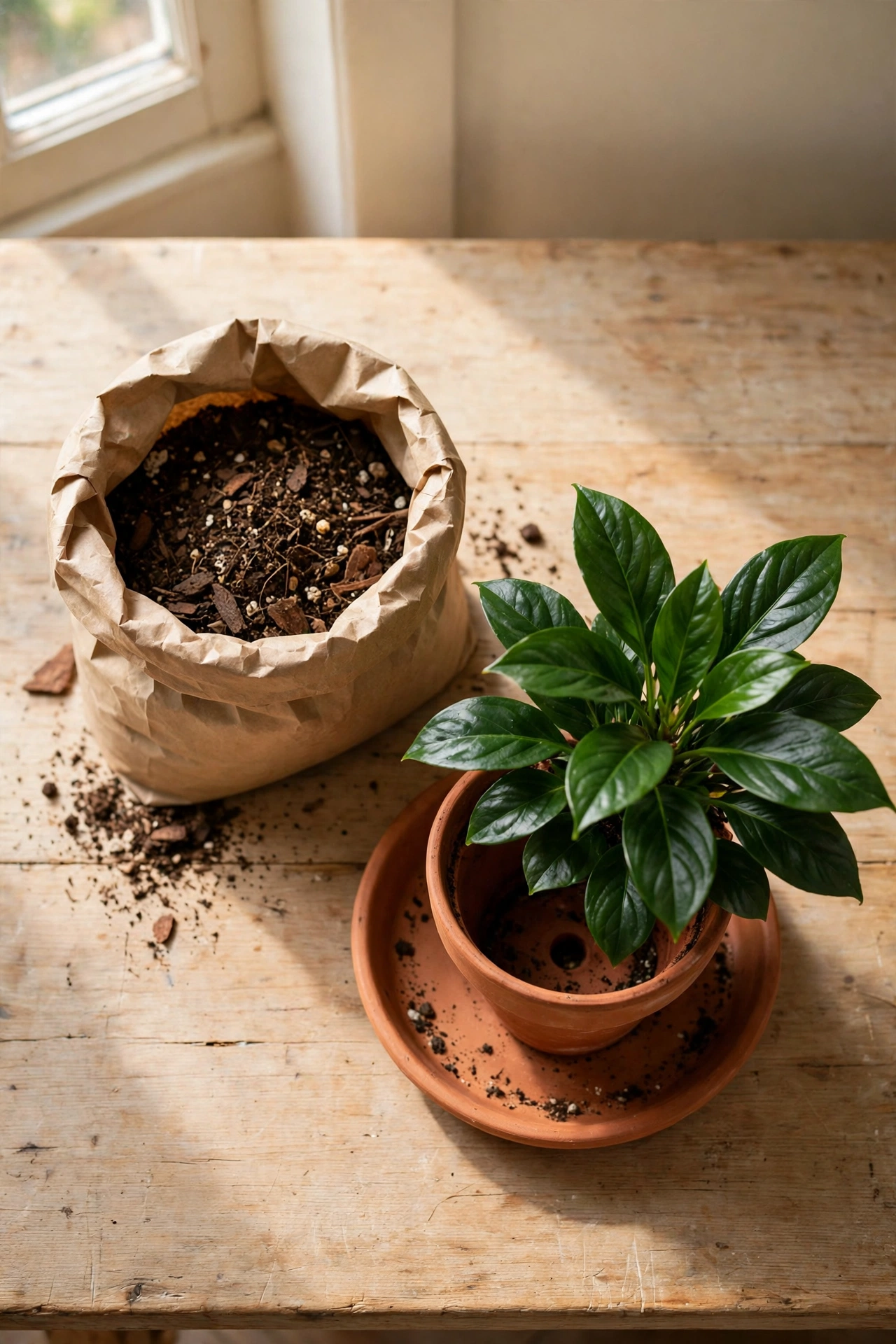
A pot with no drainage hole is a puddle with a plant in it.
Water has nowhere to go in a sealed pot, so the roots sit in a puddle after every watering and rot within weeks — faster in a dim room, where the soil already dries slowly. Every pot in this guide needs a drainage hole, and every saucer needs emptying about 30 minutes after watering. If the plant lives in a decorative cachepot with no hole, keep it in its nursery pot inside the cachepot and lift the inner pot out to water and drain it, then set it back. Never let the plant sit in standing water, even for a day.
A layer of pebbles at the bottom does not fix a pot with no drainage. The water still pools at the bottom, the roots still sit in it, and the pebbles only steal soil space. If you love a pot without a hole, drill one with a ceramic bit if the material allows it, or use it as a cachepot and keep the plant in a plastic nursery pot that fits inside — a 4- to 6-inch nursery pot costs $1 to $3 and hides completely inside a decorative pot.
A pot that drains well forgives the occasional heavy hand with the watering can, which is exactly the forgiveness a low-light plant needs.
Cost: $1–$3 for a nursery potTime: 10 minutes to repotLight: Any; drainage matters most in low light
You know it worked when water runs freely from the hole after every watering and the saucer is dry half an hour later.
6. Mix Soil That Dries Out in Dim Rooms
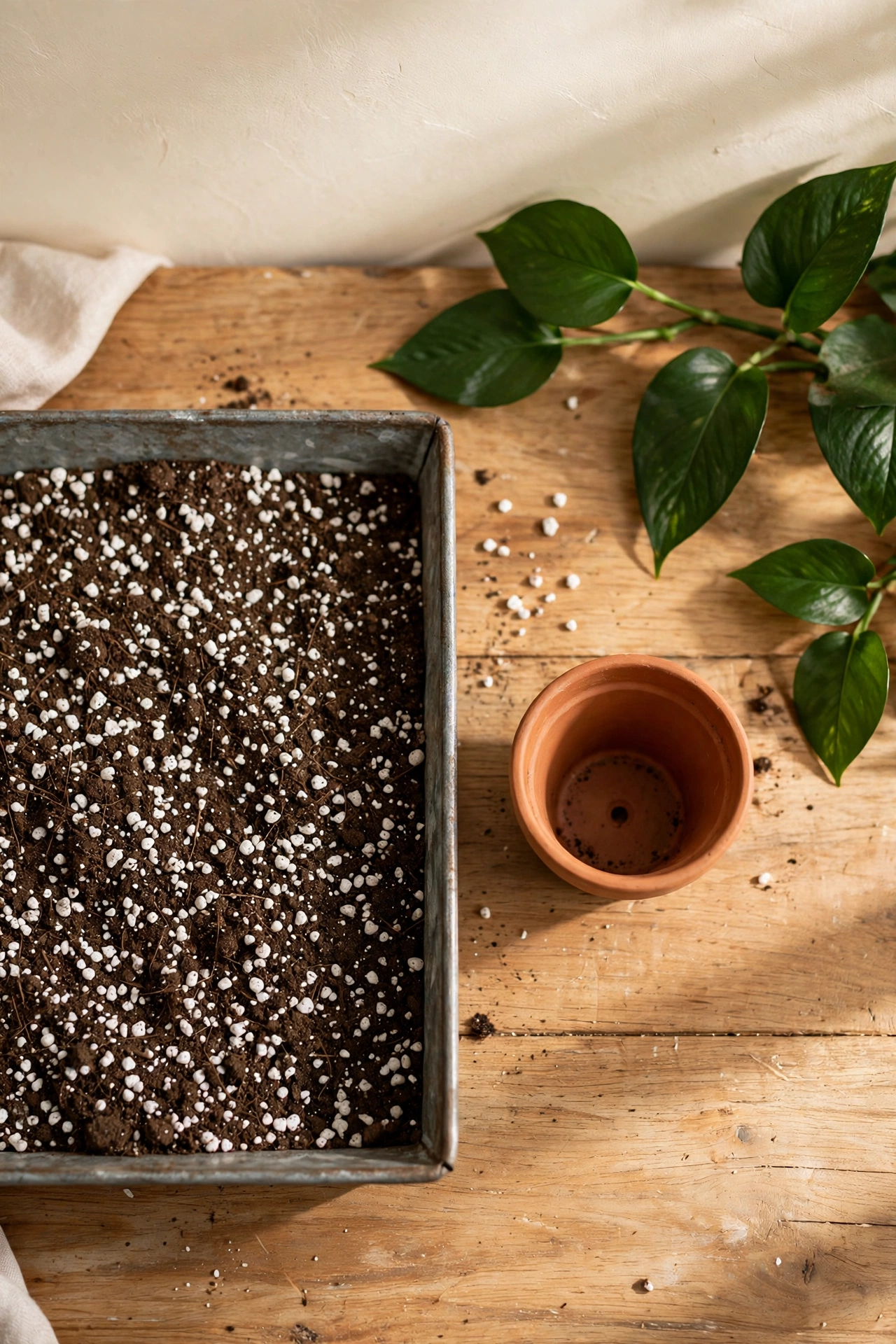
Dense, peat-heavy mix stays wet for weeks in a dim room — exactly what rots roots.
A low-light plant needs soil that holds moisture for a few days, not a few weeks, and still lets air reach the roots. Start with a standard well-draining potting mix and add perlite, orchid bark, or coarse sand for aeration: two parts potting mix to one part perlite is a good starting mix for snake plant, ZZ plant, and pothos. The mix should feel loose and crumbly in your hand, not heavy and wet like a sponge. Never reuse soil that smells sour or musty — sour soil has already gone airless, and fresh mix costs less than a replacement plant.
Repot into fresh mix when the old soil stays wet for weeks after watering, smells sour, grows mould on the surface, or draws fungus gnats. That is the soil telling you it has compacted past the point of recovery, and no amount of careful watering fixes compacted soil. A bag of potting mix and a bag of perlite cost $8 to $15 together and cover the whole starter set of three plants, with mix left over.
Cost: $8–$15 for mix and perliteTime: 15 minutes to mix and potLight: Any; airy soil matters most in low light
You know it worked when the soil feels loose and crumbly, water drains through in seconds, and the surface dries within a week.
7. Feed Half-Strength, Only in the Growing Season
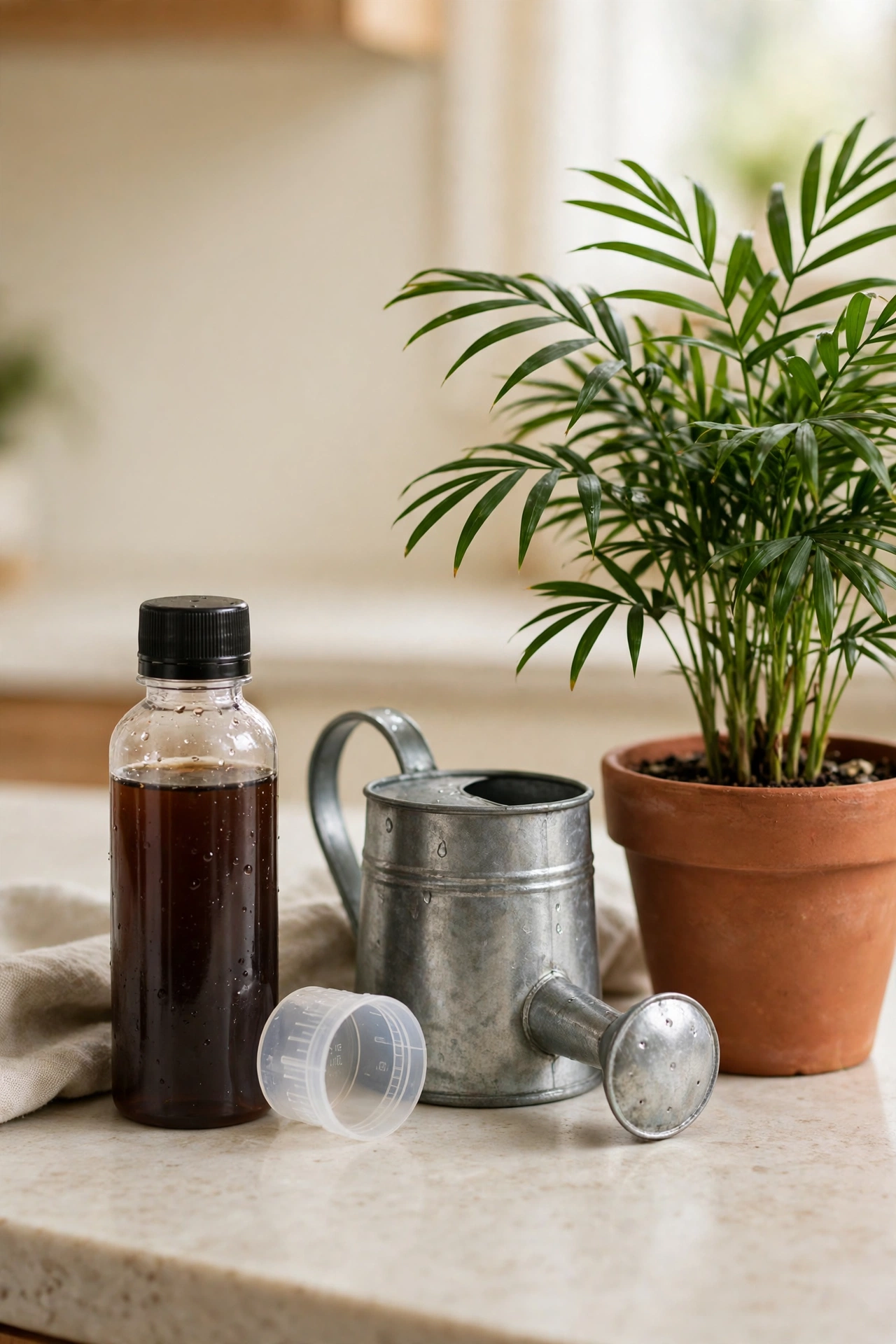
In low light a plant grows slowly, so it eats slowly — full-strength food burns roots it cannot use.
Light is the most limiting factor indoors, so feeding has to follow the light. Use a balanced liquid fertilizer, such as 10-10-10 or 3-1-2, at half the label strength — labels are written for faster-growing outdoor plants, and houseplant guides from Iowa State and other extension services recommend half or quarter strength. Fast growers like pothos and spider plant take a half-strength feed every 2 to 4 weeks in spring and summer. Moderate growers take one every 4 to 6 weeks. Slow growers like snake plant and ZZ plant need only 2 to 3 feeds in the whole growing season, and a low-light plant with no new growth can skip feeding entirely.
Stop feeding in early fall and feed nothing from October through February, when growth slows and unused salts build up and burn roots. Restart in spring only when new growth appears, again at half strength. The one exception is a plant actively growing under strong grow lights in winter, which may take a light half-strength feed every 6 to 8 weeks. Always water first, then feed, and flush the pot with plain water every few months to clear salt build-up. Never fertilize a dry, stressed, or newly repotted plant to “fix” it — check the light and the water first.
A bottle of balanced liquid fertilizer lasts the whole starter set a full season at half strength, which is why the $8 to $12 bottle is the cheapest item in this guide.
Cost: $8–$12 for a bottle of liquid fertilizerTime: 5 minutes per feedLight: Feed follows the light, not the calendar
You know it worked when new leaves come in a healthy green and the leaf tips stay clean, with no brown, burnt edges.
8. Turn the Plant a Quarter Turn Every Time You Water
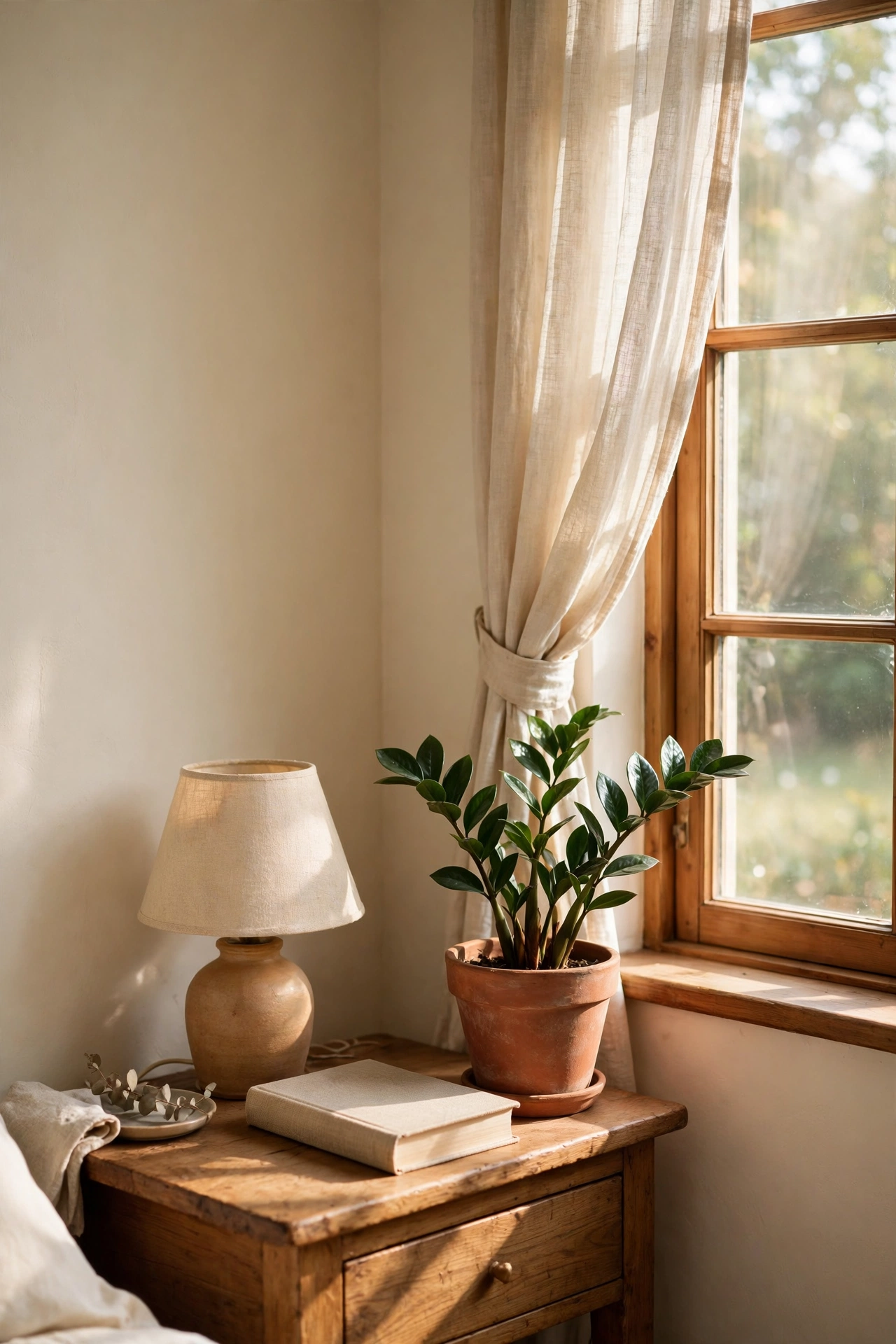
A plant that never turns grows toward the window and leans like a tower.
Light comes from one side indoors, so a plant that sits still grows lopsided: the stems stretch toward the glass, the leaves crowd on the bright side, and the pot looks fine from the window and crooked from the bed. Turn the pot a quarter turn every 1 to 2 weeks — every time you do the watering check is an easy rhythm to remember. Mark the pot with a small dot of nail polish or a sticker so you can see which side faced the window last time, and turn it the same direction each time so the plant makes a slow, even circle over a month.
Turning keeps a healthy plant even, but it will not fix a spot that is simply too dim. If the plant still leans hard toward the window after a month of turning, the problem is distance, not direction — move it 2 to 3 feet closer to the glass and keep turning it there.
Cost: $0Time: 5 seconds per turnLight: Any; turning shares the light evenly
You know it worked when the plant grows straight up instead of leaning toward the glass.
9. Wipe the Dust Off the Leaves
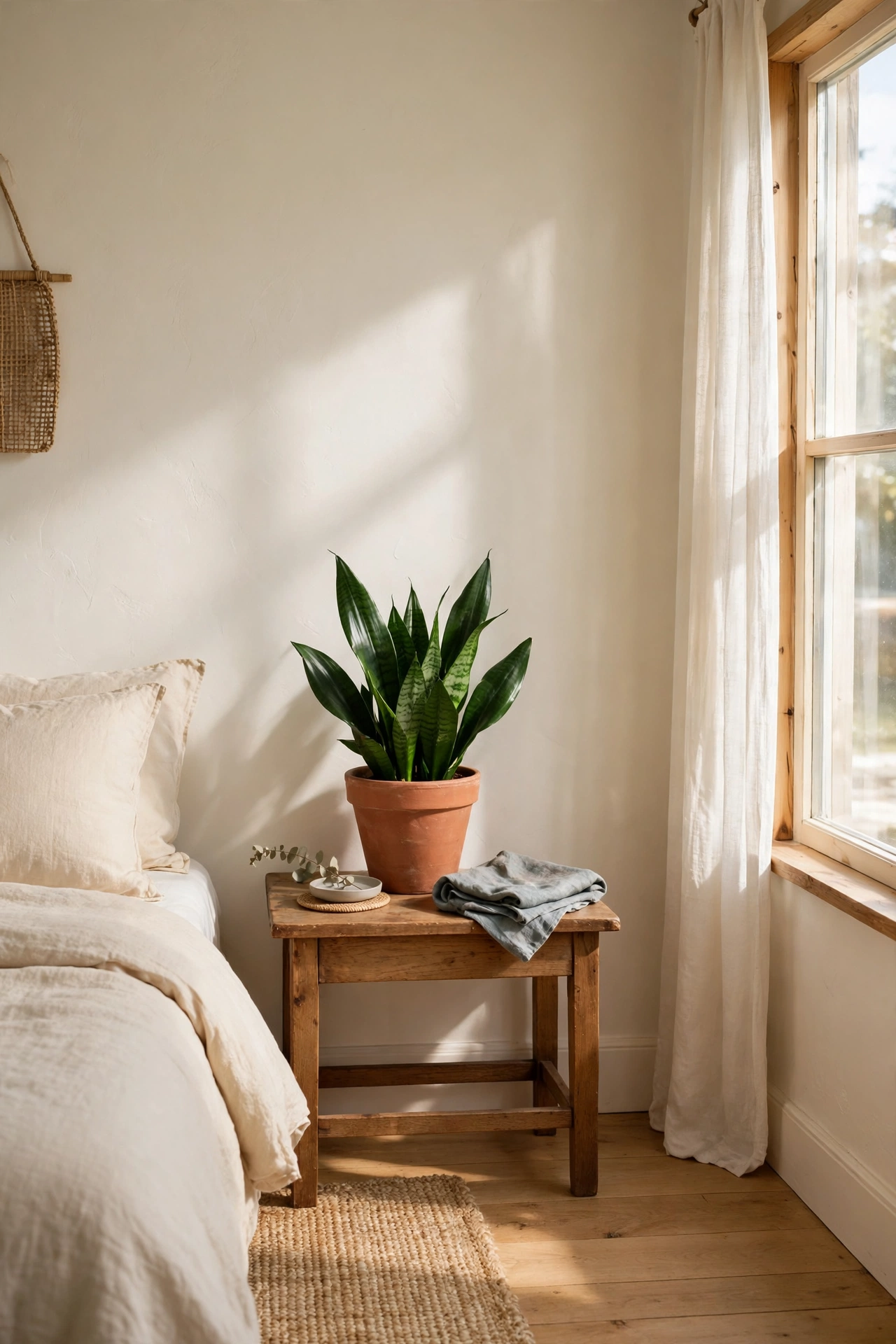
Dust blocks the little light there is — and in a dim room, every bit of light counts.
A dusty leaf catches less light and photosynthesises less efficiently, which is the last thing a low-light plant needs. Wipe the leaves with a damp cloth every few weeks, when you do the watering check, so it becomes part of the same habit. A gentle lukewarm shower works too for plants with many small leaves. Never use chemical leaf-shine cleaners — they clog the pores the leaf breathes through and leave a film that blocks even more light.
Smooth, broad leaves like snake plant, ZZ plant, and cast iron plant are the easiest to wipe: one pass with a damp cloth and they shine again. Tiny or trailing leaves like string of hearts need a lighter touch — shake the strands gently or rinse them lightly instead of rubbing each leaf. Clean leaves also show you the plant’s real colour, so you notice fading or yellowing weeks earlier than you would through a layer of grey dust.
Cost: $0; a damp cloth is enoughTime: 5 minutes per plantLight: Clean leaves catch more of it
You know it worked when the leaves look glossy again and water beads on them instead of sitting on grey dust.
10. Read the Four Signs Your Plant Is Starving for Light
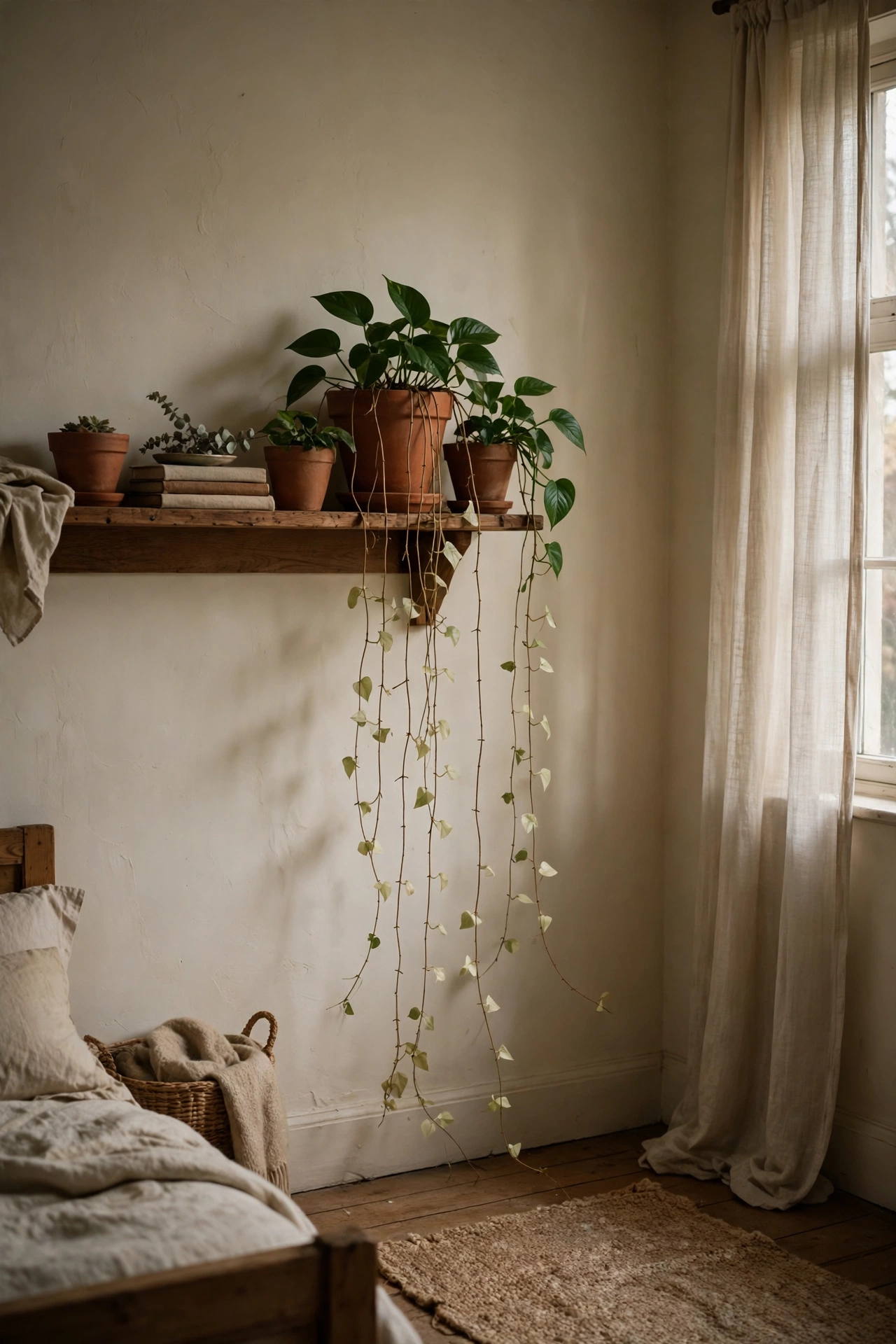
A plant cannot say it is dark — it shows you, in its leaves and stems.
The first sign is legginess: long, thin, weak stems with long gaps between the leaves. A pothos near a window makes a new leaf every 5 to 7 centimetres; the same pothos in low light makes one every 20 to 30 centimetres, and the plant stretches sideways toward the window as it does. The second sign is new leaves that come in smaller and paler than the older ones, with thin, limp tissue. The third is variegation loss: a variegated pothos or snake plant reverts to plain green in a dim room, because the plant is maximising chlorophyll and the pattern does not come back. The fourth is growth that stops altogether from March to September, after you have ruled out overwatering and root rot — no new leaves in the growing season means light is the most likely cause.
Two things to remember about recovery. Stretched stems and pale old leaves do not shrink back or re-green — only the new growth shows the fix, so be patient and judge the plant by its newest leaf, not its oldest one. And soil that stays wet for weeks while the lower leaves yellow is often a light problem disguised as a watering problem: the plant cannot drink because it has too little light to grow. If a stem has stretched badly, prune it just above a leaf node to encourage branching — the stretched part will not compact again.
Cost: $0 to diagnoseTime: 5 minutes to inspectLight: The signs all point to it
You know it worked when you can name the sign — leggy, pale, plain green, or stalled — instead of just saying the plant looks sad.
11. Move a Struggling Plant Closer — Slowly
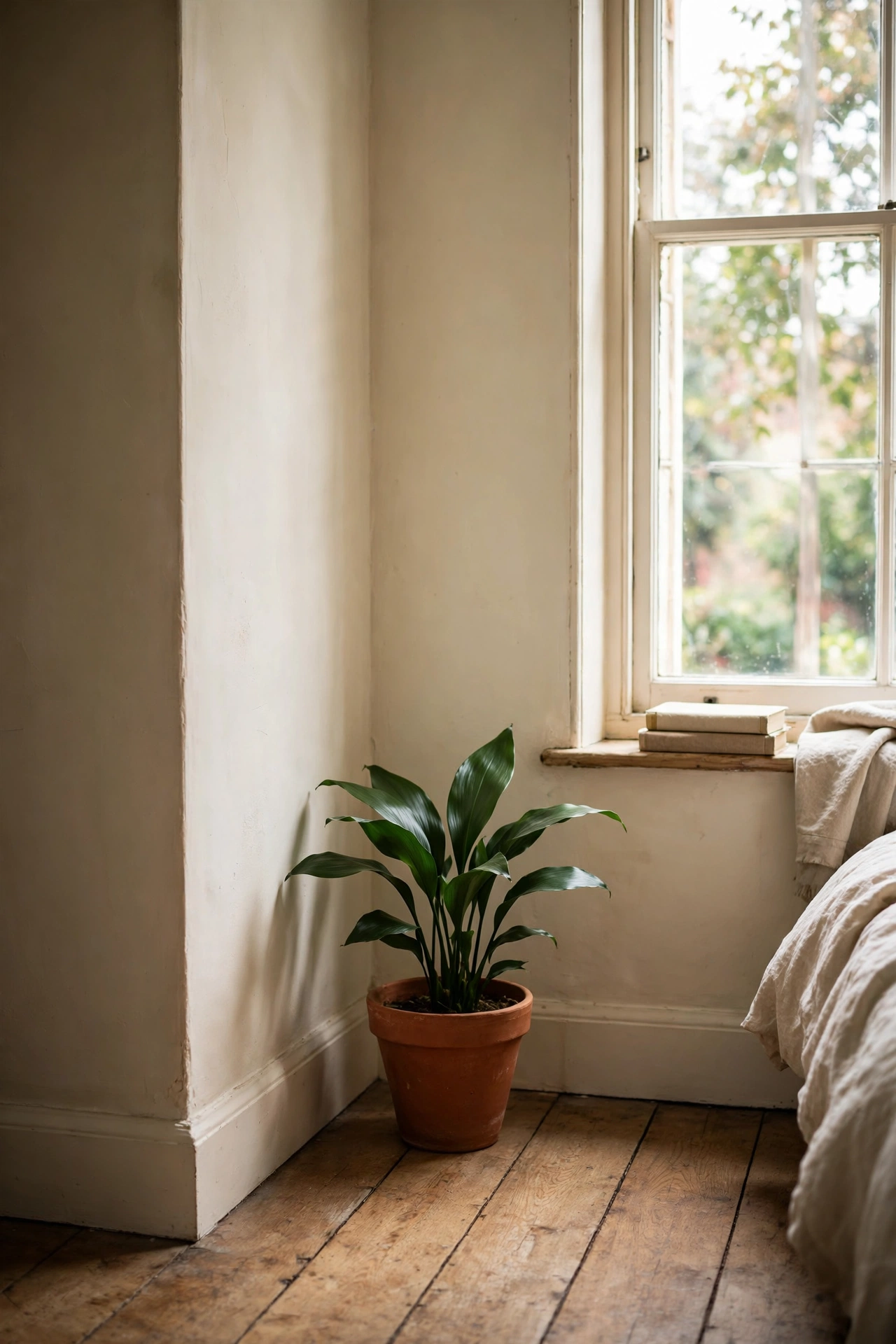
The fix is usually two feet toward the window — but never all at once.
A shade-grown plant moved straight into strong sun scorches: bleached or crispy brown patches appear after 2 to 4 hours of intense direct sun, and scorched leaves do not recover. Move the plant 2 to 3 feet closer instead, and let it acclimate over 7 to 14 days — start with 1 to 2 hours a day of the brighter light, ideally gentle morning sun, and add 30 to 60 minutes a day. A sheer curtain on a tension rod, or keeping the plant a few feet back at first, softens the change the same way.
Know the limits for the light you are moving into. Low-light plants want 0 hours of direct sun as the target, though some guides allow 1 to 2 hours of gentle direct sun as an upper limit, never the goal. Bright-indirect plants take no more than 1 to 2 hours of direct sun a day. If the plant holds its colour and pushes out a new leaf within a month of the move, the brighter spot was the fix — and if it scorches, move it back a foot and try again more slowly.
Cost: $0Time: 10 minutes, spread over two weeksLight: Closer, step by step
You know it worked when the plant holds its colour in the brighter spot and pushes out a new leaf within a month.
12. Add a Grow Light the Renter-Friendly Way
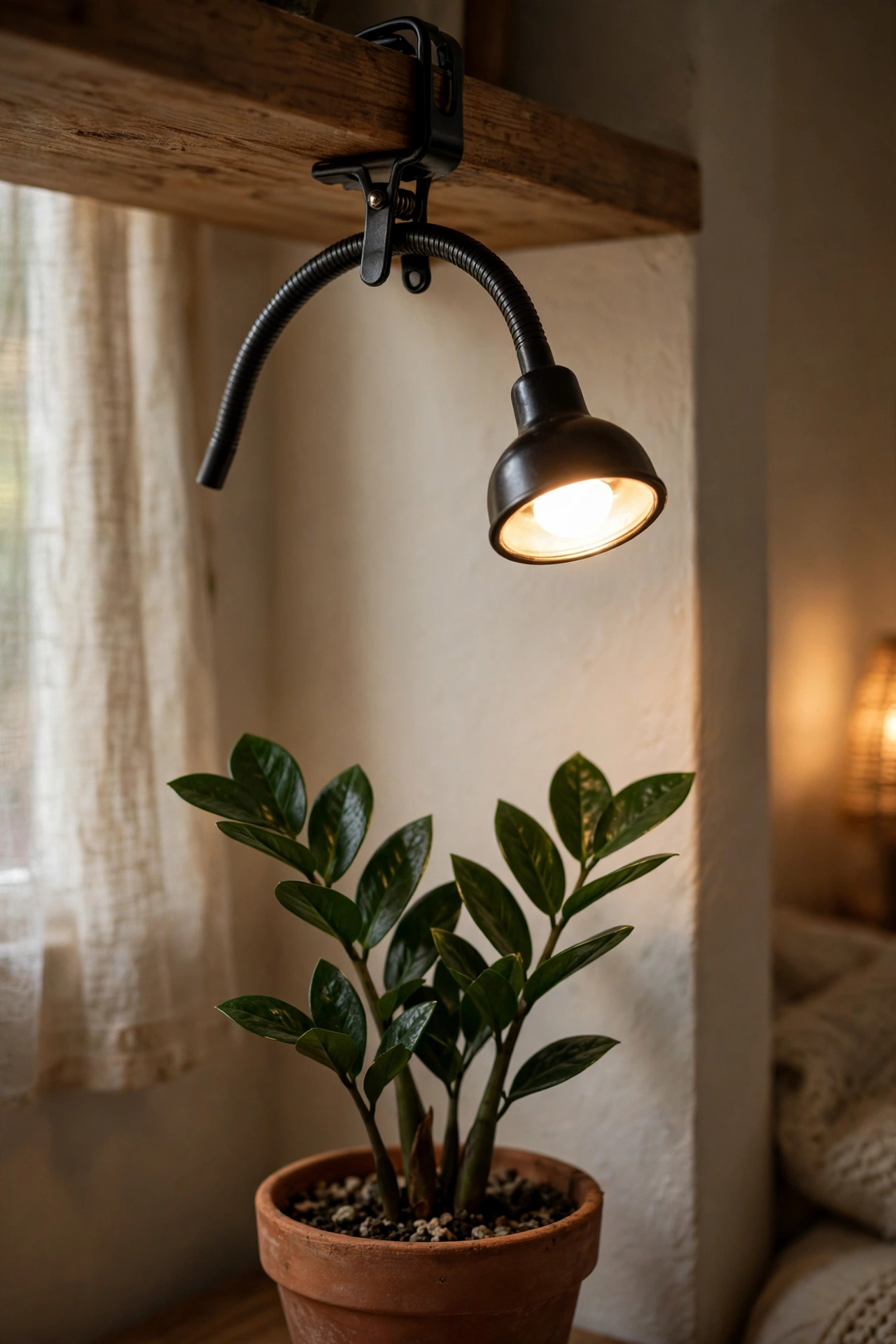
When the corner is truly too dark, a bulb does what moving the plant cannot.
Buy a full-spectrum white LED bulb of 9 to 15 watts that screws into a lamp you already own, or a clip-on gooseneck lamp of 10 to 24 watts that grips a shelf or a table edge. One bulb covers one plant; a 20- to 40-watt LED bar covers a whole shelf. Both are renter-friendly — no drilling, no hanging hardware, nothing to patch when you move out. Watts are the number on the box a renter can shop by, and 10 to 15 watts per low-light plant is the right starting point.
Hang the light 12 to 24 inches above the leaves — start at about 12 to 18 inches and watch the plant. Pale or scorched patches mean it is too close; stretched stems and small new leaves mean it is too far away, because light falls to about a quarter when the distance doubles. Run it 12 to 14 hours a day if the plant also gets some daylight, or 16 to 18 hours if it gets none. Plants need 6 to 8 hours of complete darkness every night, so never run the light 24 hours a day.
Three Grow-Light Mistakes
- Too close: bleached patches mean the bulb is scorching the leaves — raise it to 18 inches.
- Too far: stretched stems and small new leaves mean the light is too weak — lower it to 12 inches.
- Never off: lights left on all day and night rob the plant of its 6 to 8 hours of darkness — put the lamp on a timer.
A clip-on lamp on a shelf above the dim corner turns the darkest spot in the room into a growing spot, and it moves with you when the lease ends.
Cost: $10–$25 for a bulb or clip-on lamp, plus about $10 for a timerTime: 10 minutes to set upLight: 9–15 W, 12–24 in above the leaves
You know it worked when new leaves come in full size and the plant stops stretching toward the window.
13. Keep Pets Safe: Put Toxic Plants Out of Reach
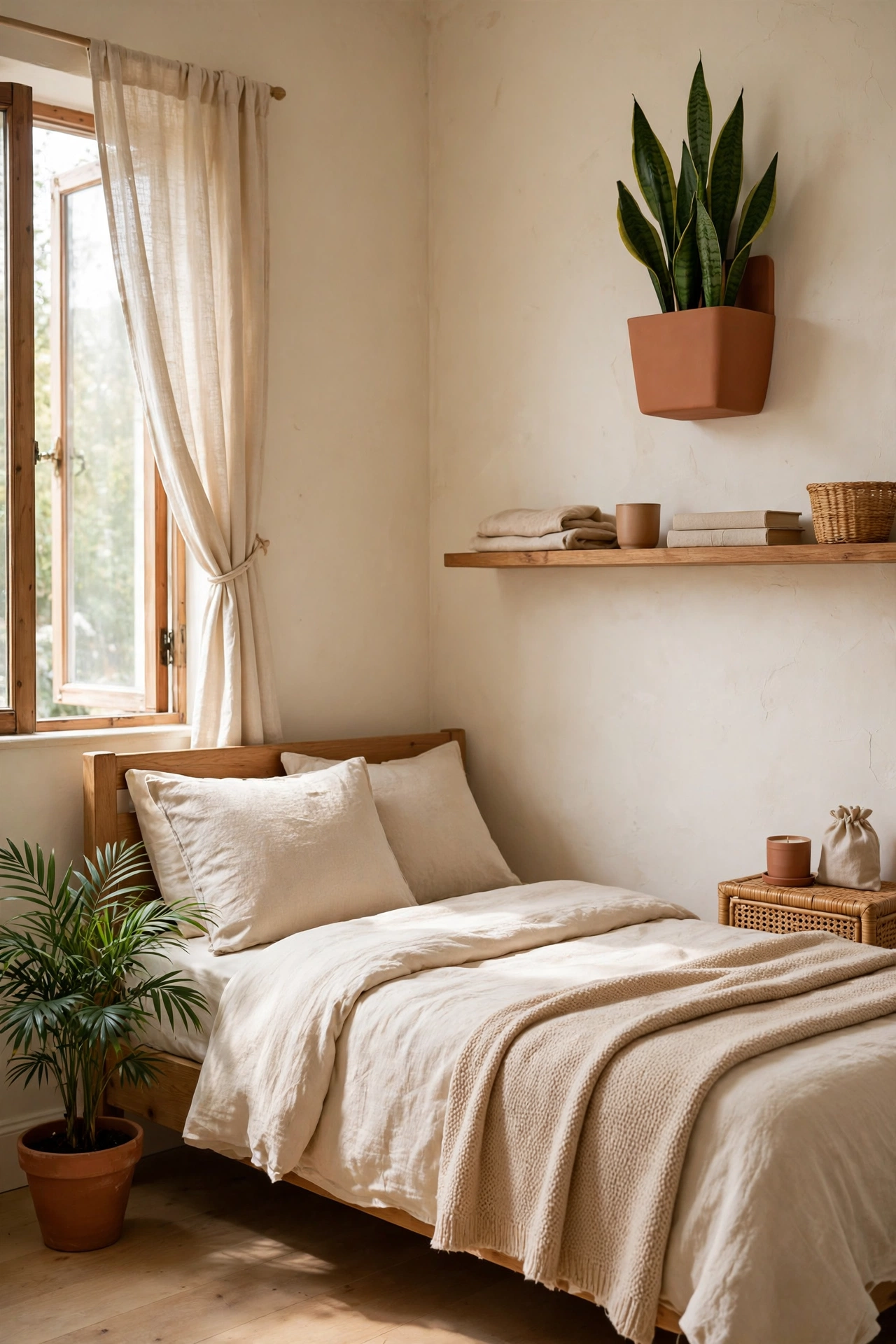
The toughest low-light plants are also the ones a chewing pet should never reach.
Three of the true low-light five are toxic to cats and dogs. Snake plant contains saponins, which cause vomiting, diarrhoea, and drooling if eaten. Pothos contains insoluble calcium oxalate crystals, which cause mouth irritation, drooling, pawing at the mouth, and difficulty swallowing. ZZ plant is treated as toxic by every extension and guide source for the same calcium oxalate reason, even though it is not on the ASPCA’s published list — treat it as toxic and keep it out of reach. Jade plant is toxic too, but it needs bright light with direct sun, so it does not belong in this dim room anyway.
The safe picks grow in the same light. Spider plant, parlor palm, cast iron plant, calathea, peperomia, and haworthia are all listed as non-toxic by the ASPCA. String of hearts is generally considered pet-safe and is not on the ASPCA’s toxic list, though it is not formally on the non-toxic list either — hang it out of reach of chewing pets anyway. Check the scientific name in the ASPCA database before buying, because “pet-safe” on a plant tag is not a source. The pet-safe starter set for this room is cast iron plant plus parlor palm plus spider plant, with the spider plant nearest the window. If a pet chews a plant and shows symptoms, call a vet or ASPCA Animal Poison Control at (888) 426-4435.
Cost: $0 to check the listTime: 5 minutes before buyingLight: Pet-safe picks grow in the same light
You know it worked when every plant a pet can reach is on the non-toxic list, and the toxic ones sit high or behind a closed door.
14. Repot Only When the Plant Asks for It
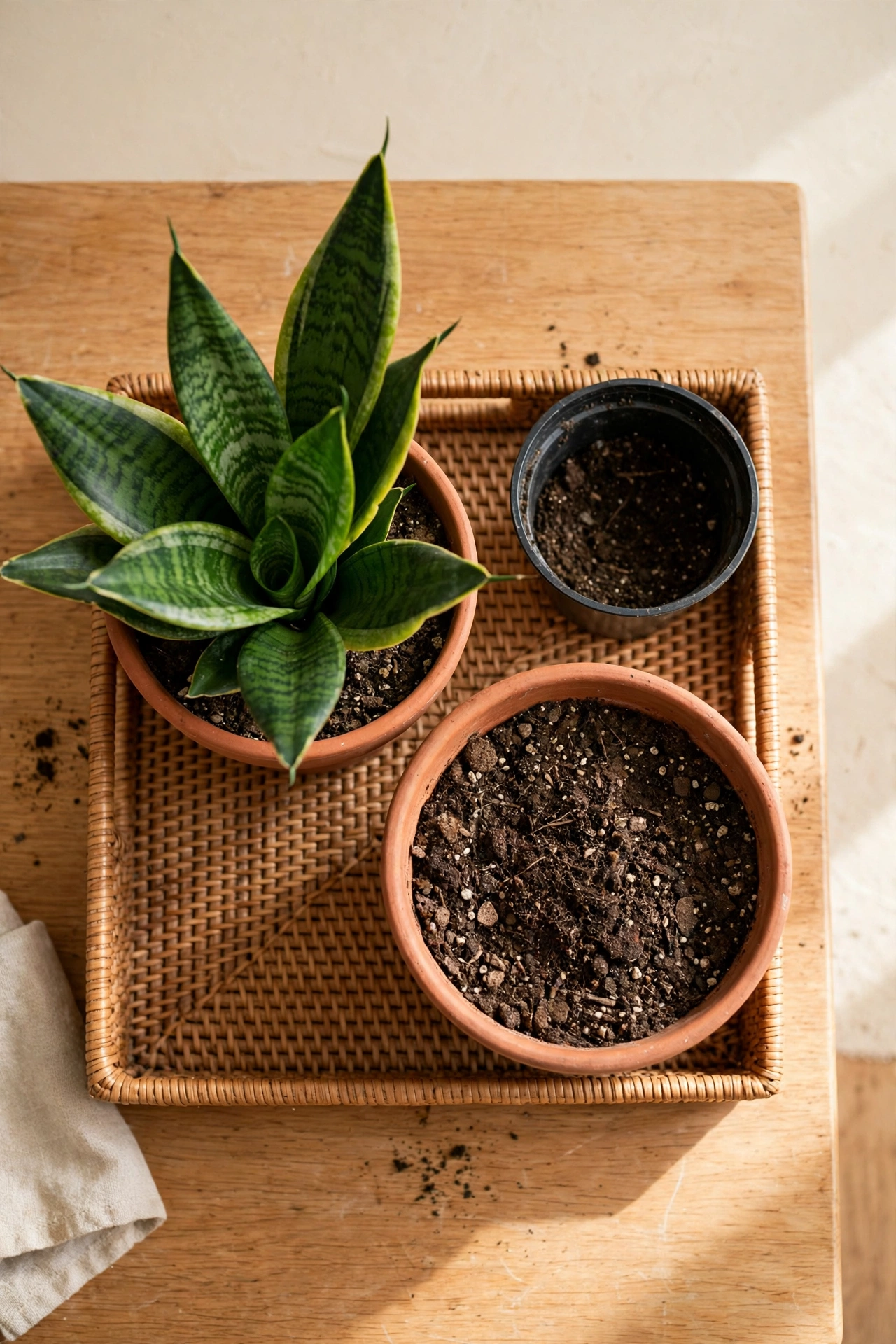
A bigger pot is not a kinder pot — extra soil stays wet longer in a dim room.
Repot when the plant asks: roots circling out of the drainage hole, water running straight through the pot in seconds, soil that dries out in days despite the dim room, or a pot that is cracking under the pressure of the roots. Go one size up only — 1 to 2 inches wider — and use fresh well-draining mix, two parts potting mix to one part perlite. Spring is the best time, when the plant is about to grow, and the whole starter set of three plants takes one afternoon.
Repotting into a much larger pot is a common low-light mistake. The extra soil holds water the small root system cannot drink, stays wet for weeks, and rots the roots it was meant to help. Water lightly after repotting, keep the plant in its usual spot, and skip fertilizer for a few weeks while the roots settle — never fertilize a newly repotted plant to “fix” it.
Cost: $10–$15 for a pot and fresh mixTime: 20 minutes per plantLight: Repot in spring, in any light
You know it worked when the pot holds water for a week again and the plant pushes out new growth within a month.
15. Build the 3-Plant Starter Set for the Room
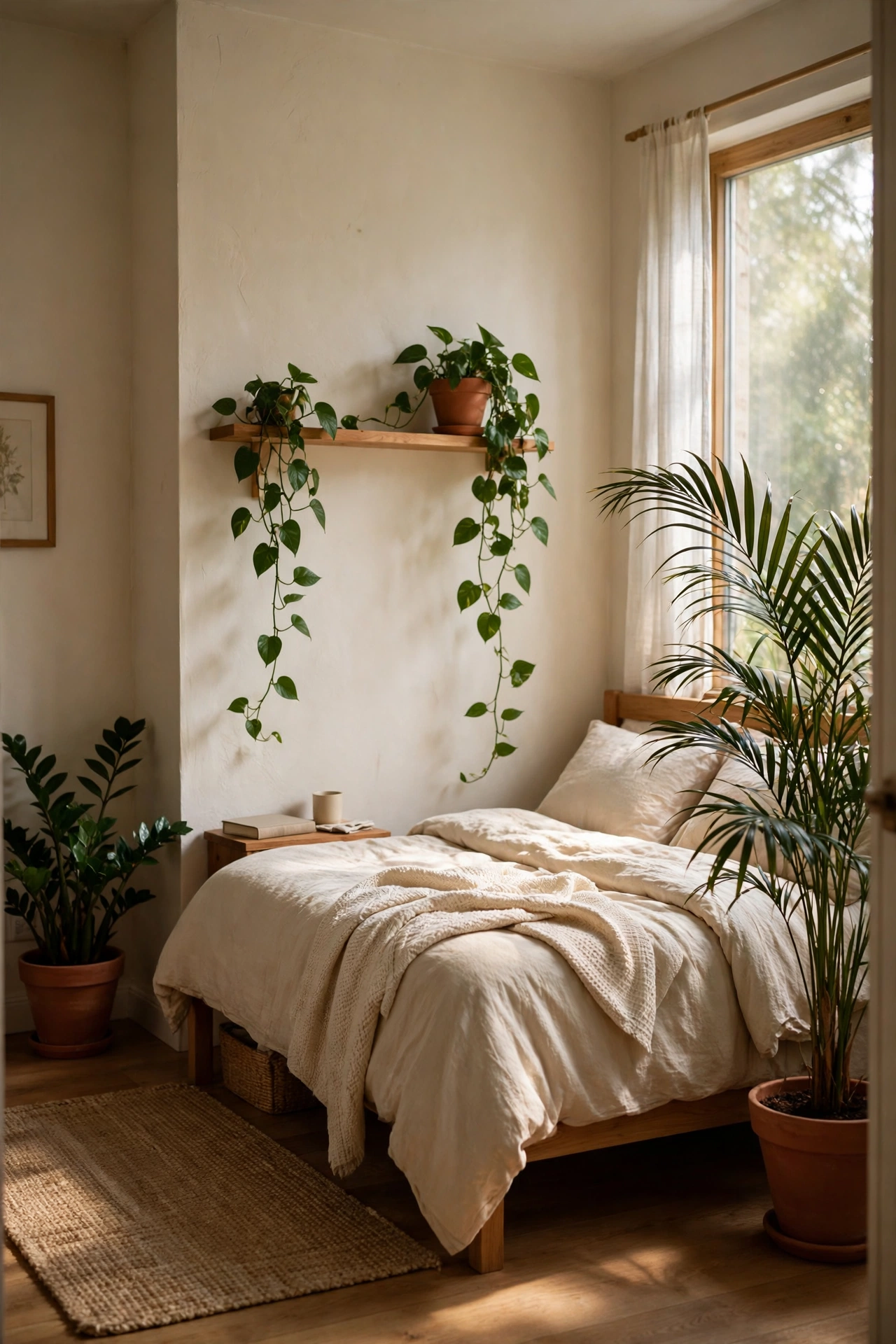
Three plants, one per light zone, for $100 to $150 all in.
Put the ZZ plant or snake plant in the dim corner, 5 to 8 feet from the window, where only the toughest plants belong. Put dark-green pothos mid-room, 3 to 5 feet from the window — a shelf above the bed is ideal, where the vines can trail without taking floor space. Put parlor palm or spider plant nearest the window, 2 to 3 feet from the glass, where the light is brightest. All three go in 4- to 6-inch pots, and the whole set — plants, pots, and one hook — costs $100 to $150 all in.
If a cat or dog shares your home, build the pet-safe version instead: cast iron plant plus parlor palm plus spider plant, with the spider plant nearest the window. If no pets share the room, the lowest-maintenance trio is ZZ plant plus snake plant plus dark-green pothos. Either way, buy one plant at a time: the nightstand plant first, then the trailing plant, then the floor plant, two months apart, so you learn each plant’s rhythm before adding the next.
Cost: $100–$150 all inTime: One afternoon to shop and potLight: One plant per zone
You know it worked when all three plants are alive and growing two months later — and the room finally feels finished.
Frequently Asked Questions
How little light is too little for a houseplant?
Below about 25 foot-candles most plants only survive, and no plant thrives in darkness — even the toughest need a window in the room or a grow light. Do the hand shadow test at noon: if you can barely see a shadow, or none at all, the spot is too dim for most plants, and a windowless room needs a grow light for anything to grow there.
Which houseplant is hardest to kill in low light?
The ZZ plant. It stores water in thick underground rhizomes, keeps glossy leaves in a dim room, and drinks only every 3 to 4 weeks. The snake plant comes second: it stands upright for years in very low light, as long as you do not overwater it.
How often should I water houseplants in low light?
Check the soil every 2 weeks and water only when a finger pushed 2 inches in feels dry — most low-light plants drink every 2 to 3 weeks, and snake plant and ZZ plant every 2 to 4 weeks. In winter most houseplants need 30 to 50 percent less water than in summer, so the same plant may go a full month between drinks.
Can I use a regular LED bulb as a grow light?
Yes, if it is a full-spectrum white LED of 9 to 15 watts, hung 12 to 24 inches above the leaves and run 12 to 14 hours a day when the plant also gets some daylight. Put it on a cheap outlet timer for consistency, and give the plant 6 to 8 hours of complete darkness every night — never run the light 24 hours a day.
Are low-light houseplants safe for cats and dogs?
Some are, some are not. Snake plant, pothos, and ZZ plant are toxic to cats and dogs if chewed, while spider plant, parlor palm, cast iron plant, calathea, peperomia, and haworthia are listed as non-toxic by the ASPCA. Check the scientific name in the ASPCA database before buying, and if a pet chews a plant and shows symptoms, call a vet or ASPCA Animal Poison Control at (888) 426-4435.
How to Grow Houseplants That Actually Thrive: Start with the Light
Measure the light, pick from the true five, place by distance, water on the soil’s schedule, and feed half-strength in spring and summer only. That is how to grow houseplants that actually thrive in a room with one small window — not by buying more plants, but by matching each plant to the light it stands in.
Do the hand shadow test at noon today, and buy the nightstand plant first: one plant in a 4- to 6-inch pot, in the brightest spot you measured, watered only when a finger pushed 2 inches in feels dry. When it has lived happily for two months, add the trailing plant, then the floor plant — and the dim corner that killed every plant before will finally hold one that grows. Once the plants are settled, the rest of the room is the easy part — these small apartment decorating ideas that feel expensive show how to pull the whole small space together without spending like a designer.