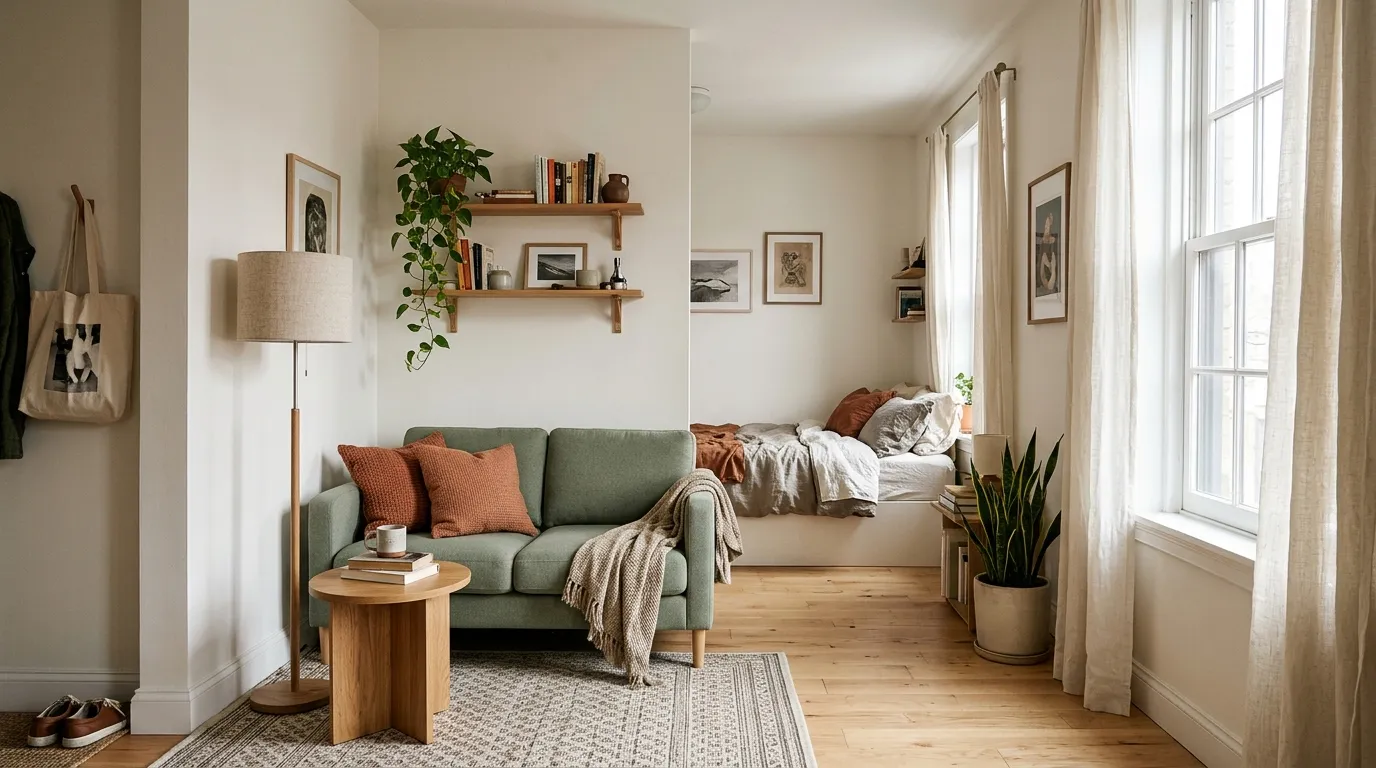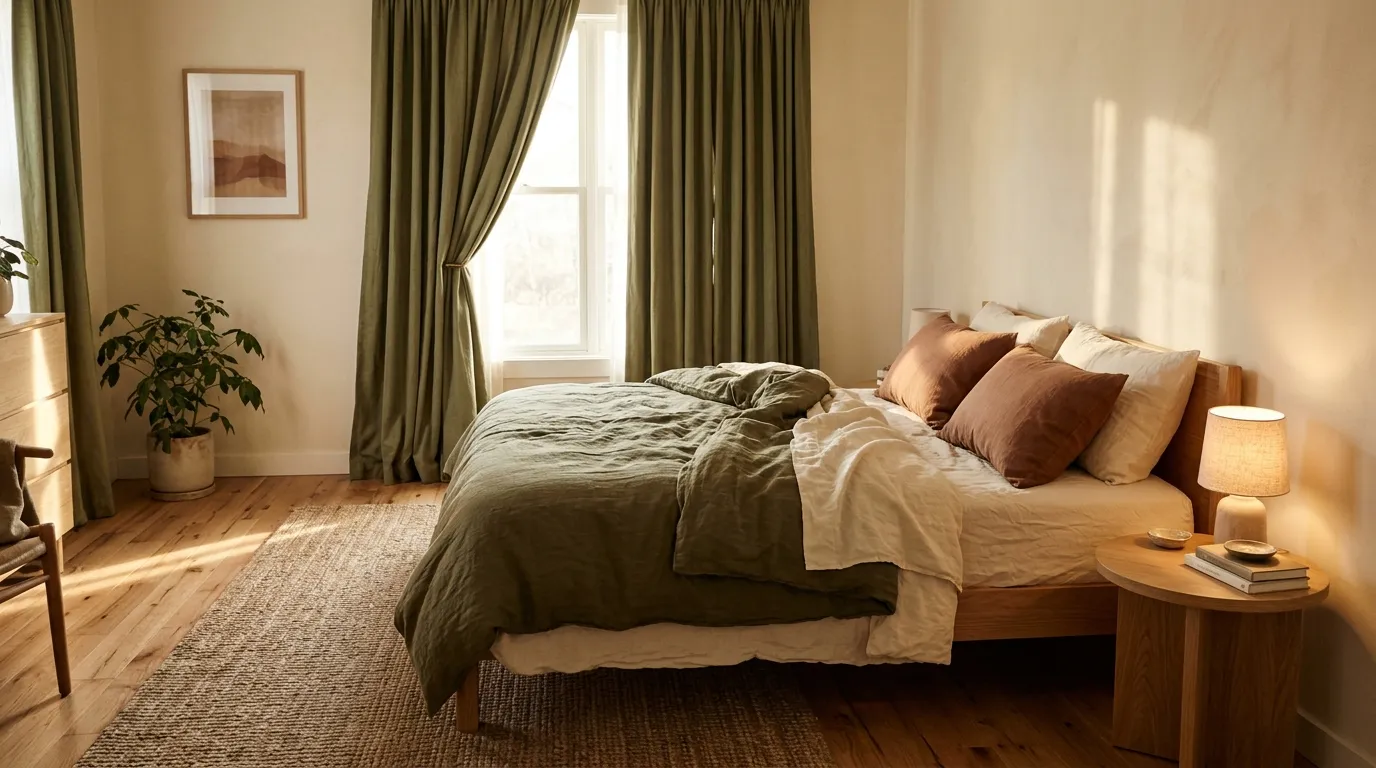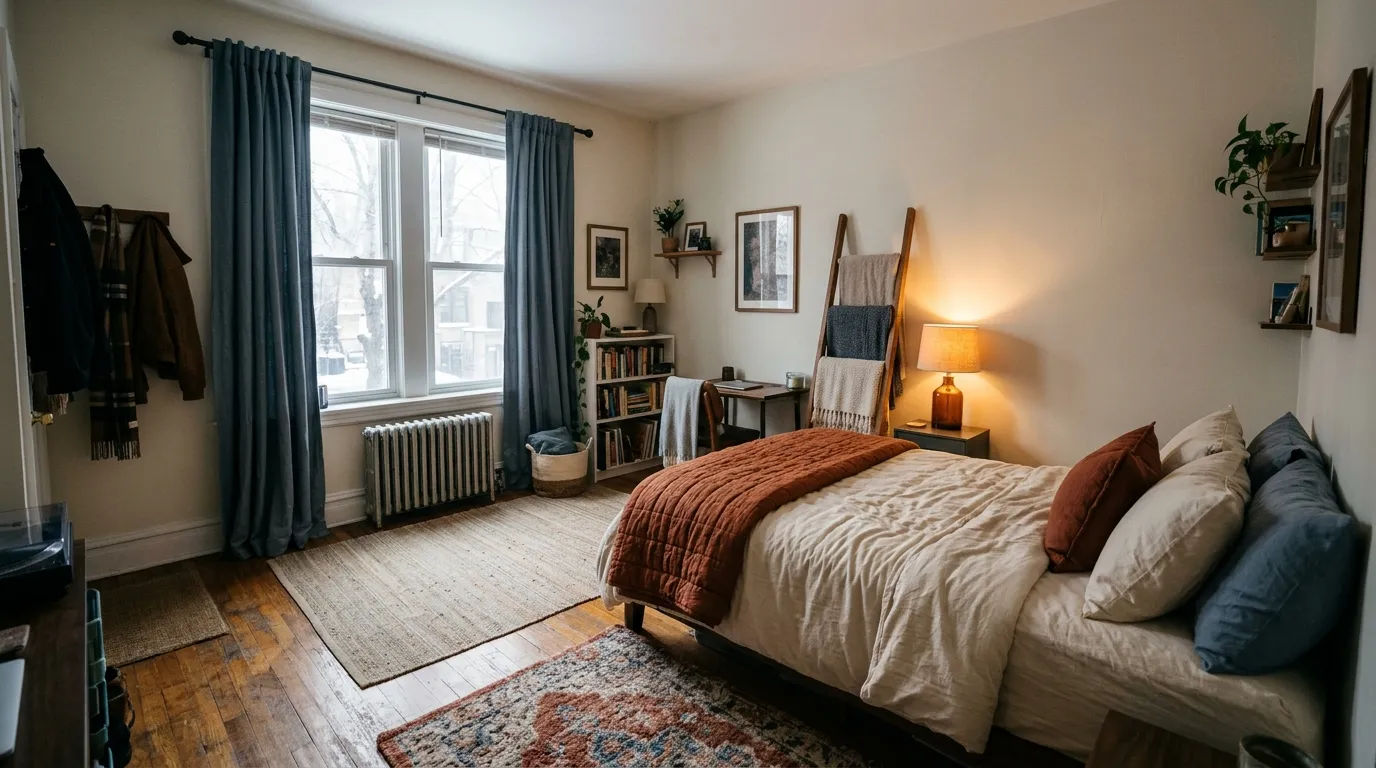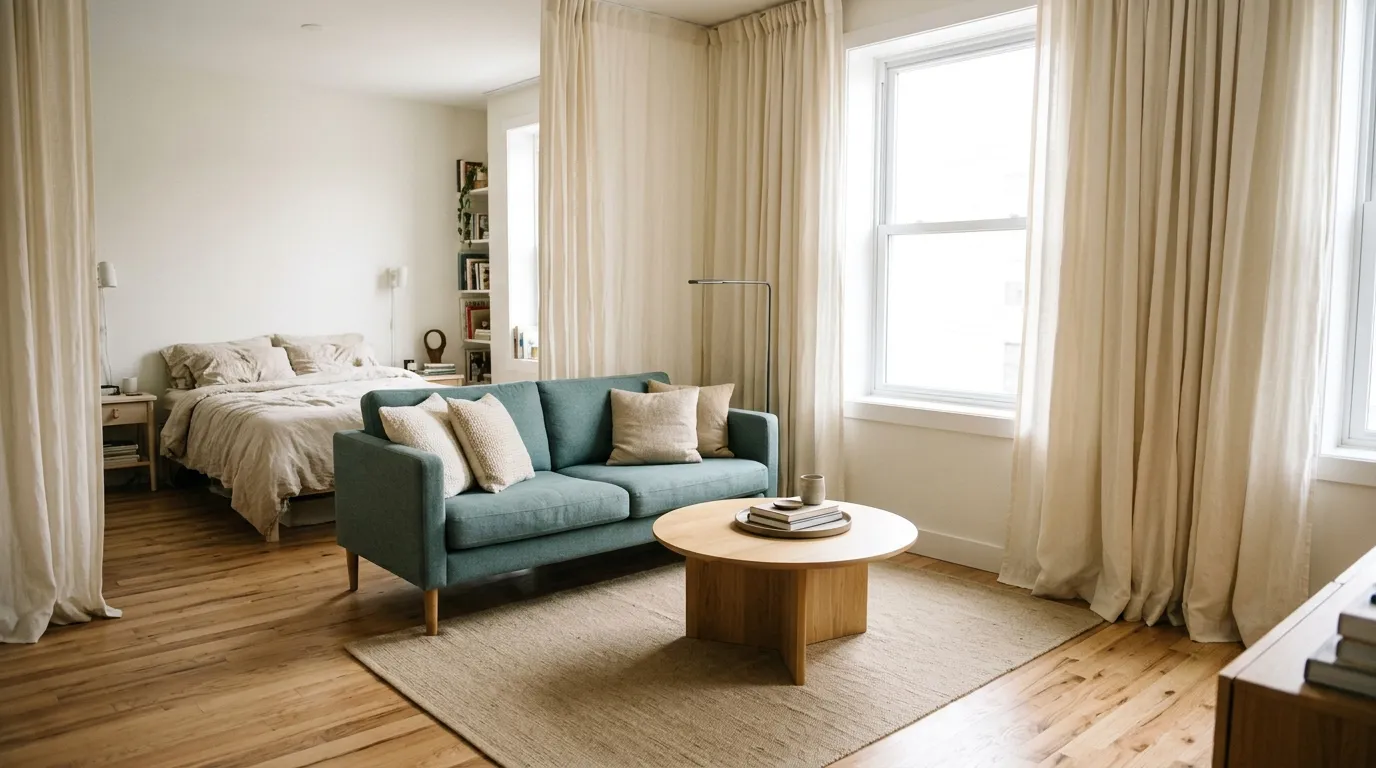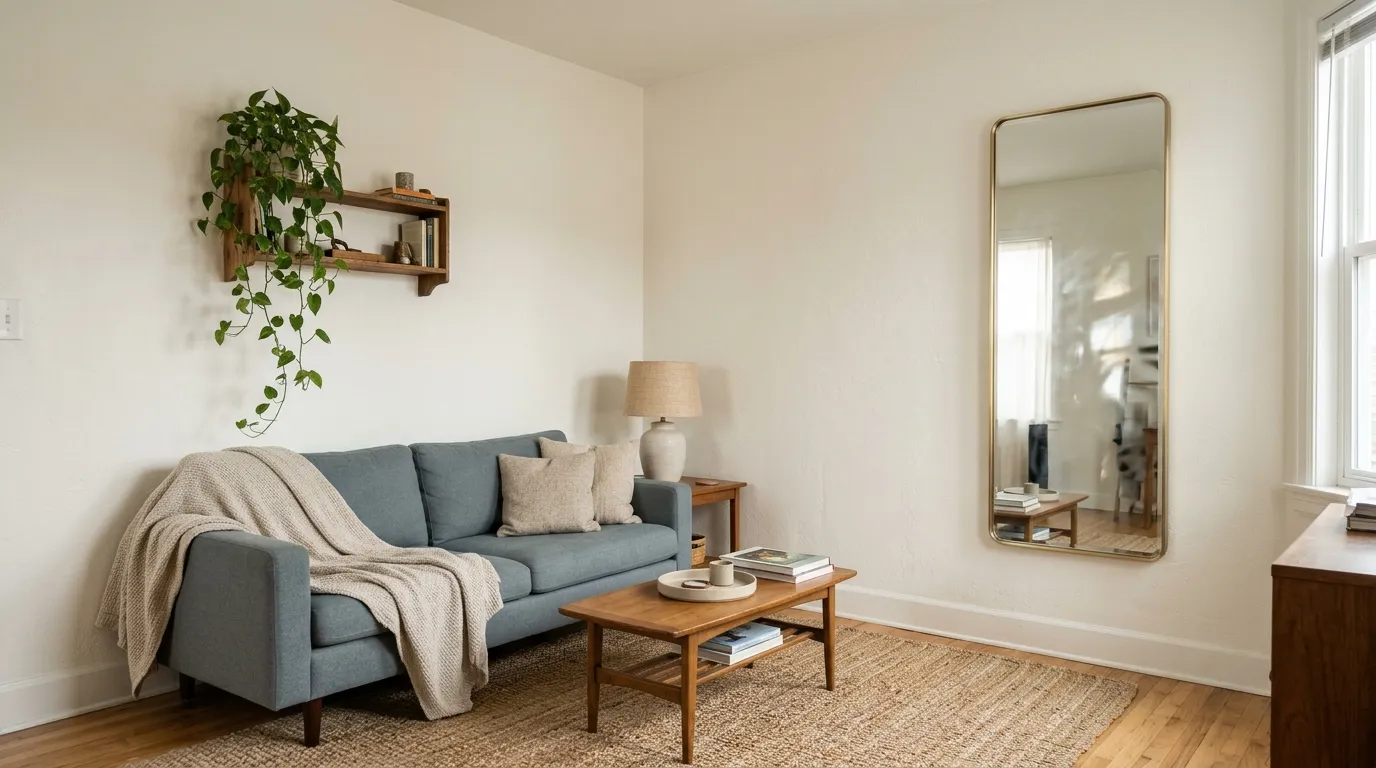

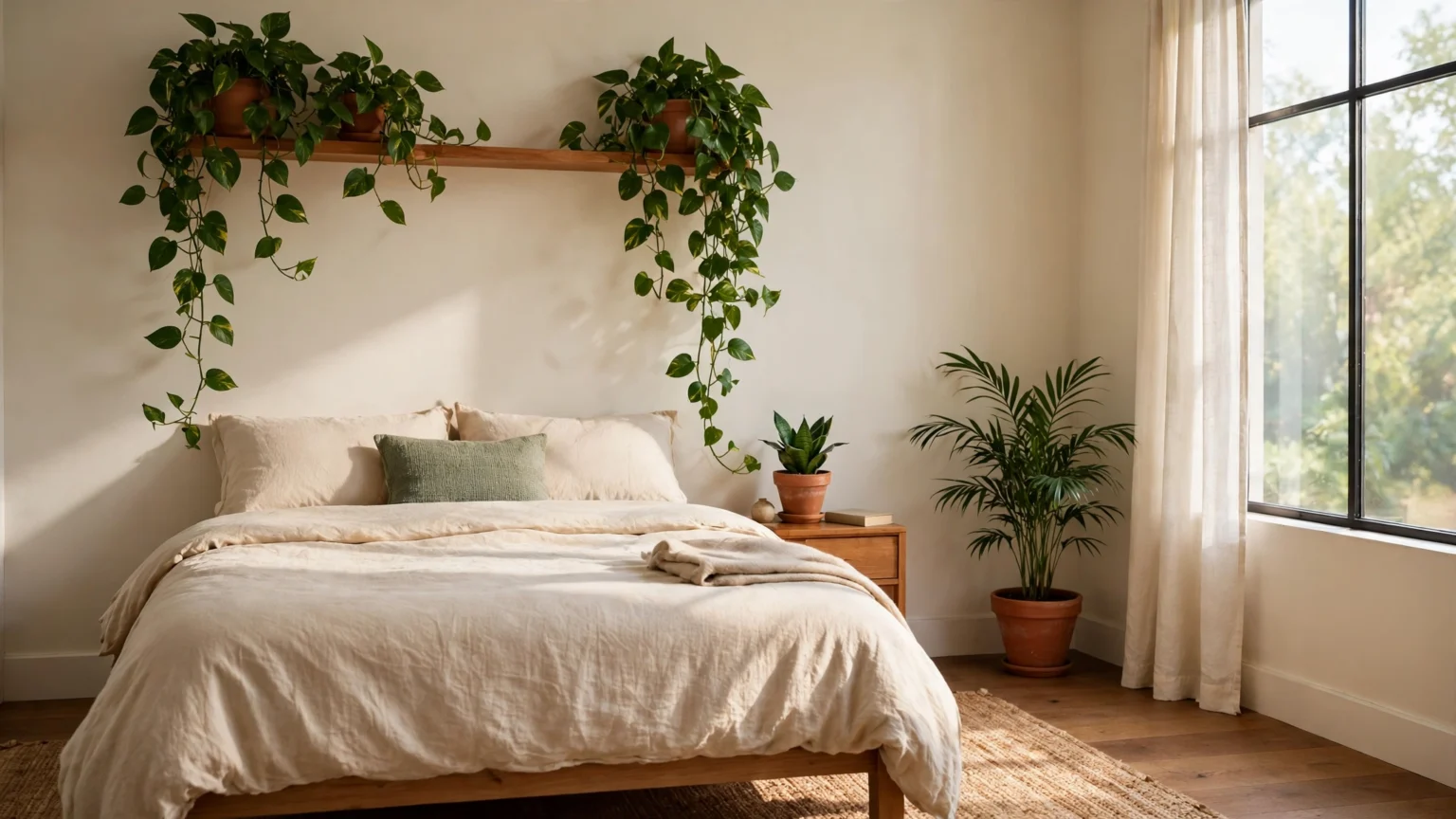
Your bedroom is 10 by 11 feet, the nightstand is 18 inches wide, and the only empty floor is a 2-by-2-foot corner that collects dust. These small bedroom plant decor ideas are built for exactly that room — not a big bright sunroom, but a rented one-bedroom apartment where every plant has to earn a spot the size of a book.
Picture the same room through the whole list: one window 3 feet wide, one dim corner, and a starter set of 3 plants in 4- to 6-inch pots for $100–$150 all in, pots and one hook included. The rule for the set is one watering check every 2 weeks — push a finger 2 inches into the soil, water only if it feels dry, and leave it alone if it still feels damp. Every idea below is judged against that same test: does it fit the spot, does it survive the light that spot actually gets, and does it stay small enough to leave room for your lamp, your phone, and a glass of water.
Choose by light first, then by budget — the bright-window ideas and the dim-corner ideas are marked in every entry, along with one honest weakness each.
Quick Tips Before You Start
1. A Dwarf Snake Plant on the Nightstand
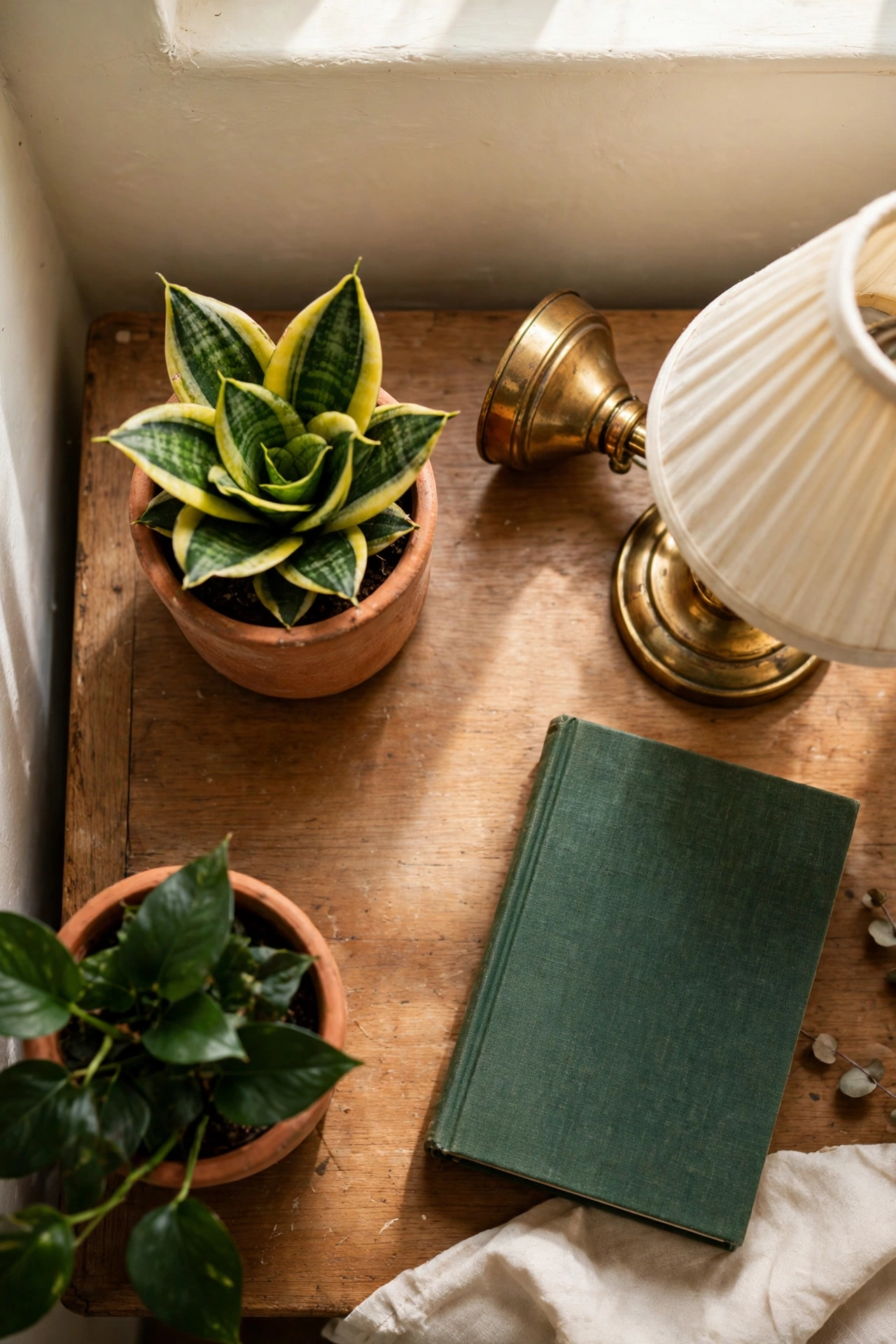
The dwarf snake plant is the only tall-looking plant that fits an 18-inch nightstand without stealing it. The ‘Hahnii’ type grows straight up and stops under 12 inches tall, so the pot stays 4 to 6 inches wide and your lamp, your phone, and a glass of water still fit beside it. A standard snake plant reaches 2 to 4 feet and belongs on the floor; the dwarf stays put on the nightstand for years.
It earns the spot because it asks for almost nothing. It grows in low to bright indirect light, it waits 2 to 4 weeks between waterings in spring and summer and 4 to 6 weeks in fall and winter, and dry bedroom air suits it fine. Its weakness is water, not drought: soggy soil rots the roots, so plant it in a gritty, fast-draining mix in a pot with a drainage hole and a saucer you empty after watering. Keep the leaves a few inches from the wall so air moves around them — leaves pressed against a wall brown at the tips. If a cat or dog shares your home, check that a plant is safe for pets before buying — snake plant is toxic to cats and dogs if chewed, so keep it on the nightstand, not on the floor where a pet can reach it.
Cost: $12–$18 plus a $10–$15 potTime: 15 minutes to potLight: Low to bright indirect
2. Golden Pothos Trailing from a Shelf Above the Bed
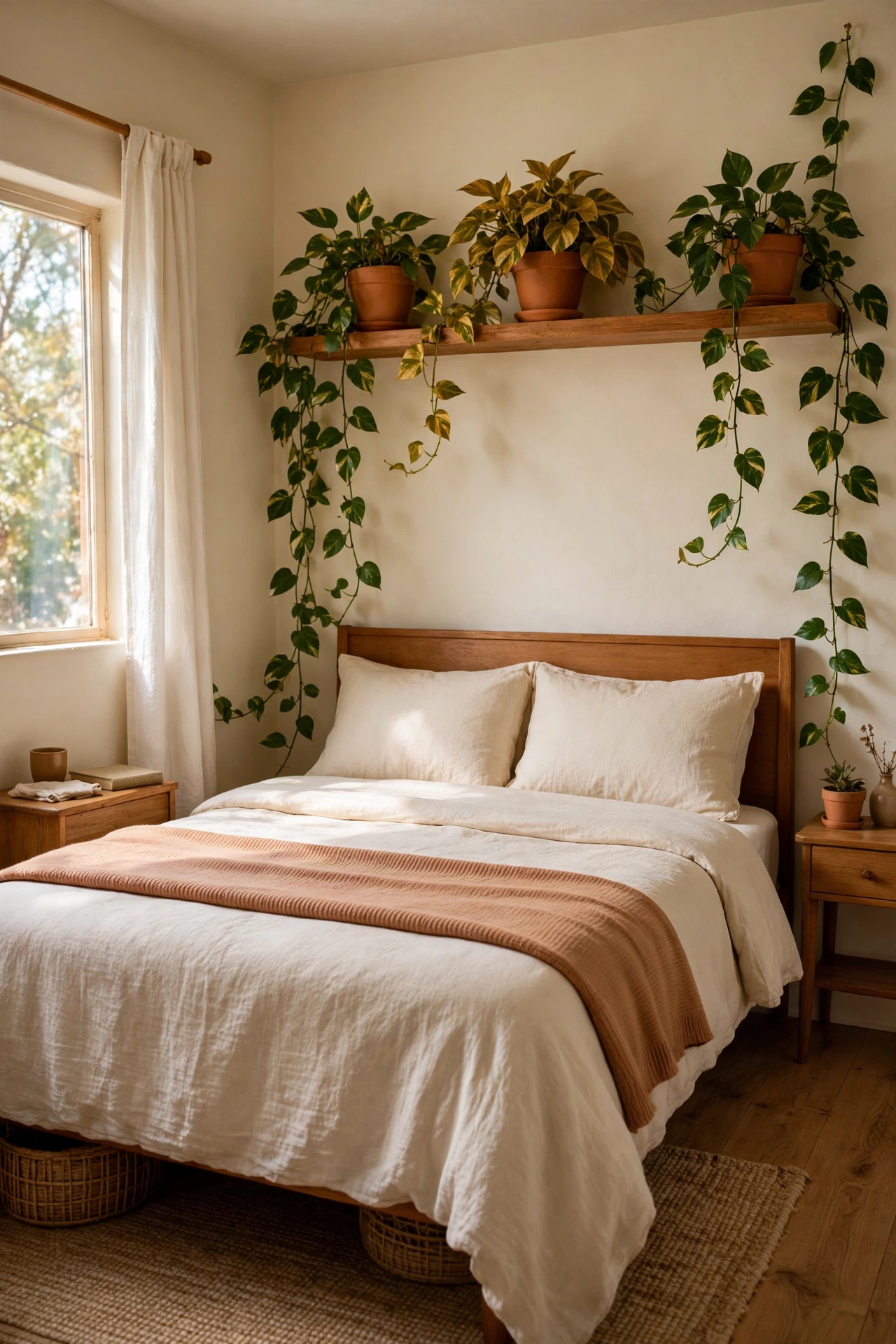
A golden pothos above the bed turns a blank wall into a green headboard and costs zero floor space, which is the whole trick in a 10-by-11-foot room. One plant in a 6-inch pot on a shelf 12 inches above the headboard sends vines down 3 feet or more in a single season, softening the hard line of the shelf and framing the bed without a single piece of furniture.
Hang the shelf first, then the plant. A floating shelf 24 inches long holds one 6-inch pot and leaves room for a book; fix it with anchors rated for the weight and follow the product’s instructions, since a shelf above a bed must never fall. Golden pothos wants medium indirect light and forgives low light better than most trailing plants — the plain ‘Golden’ type keeps its color in a dim room, while paler types need brighter light. Water when the top inch of soil feels dry, about every 1 to 2 weeks, and prune leggy stems in spring so the vines stay full near the pot instead of bare at the top. If a cat or dog shares your home, check that a plant is safe for pets before buying — pothos is toxic to cats and dogs if chewed, so keep the vines above chewing height and trim any stem that dangles within reach.
Cost: $15–$25 plus a $20–$30 shelfTime: 30 minutes to hangLight: Medium indirect, tolerates low
A pothos also tells you when it is thirsty: the leaves droop a little, then perk up within hours of a drink, which makes it a forgiving first trailing plant.
If the shelf sits more than 8 feet from the window, the light there counts as low — the pothos will survive it, but it will grow slowly and the gold in the leaves will fade toward plain green.
3. A Spider Plant in a Hanging Planter by the Window
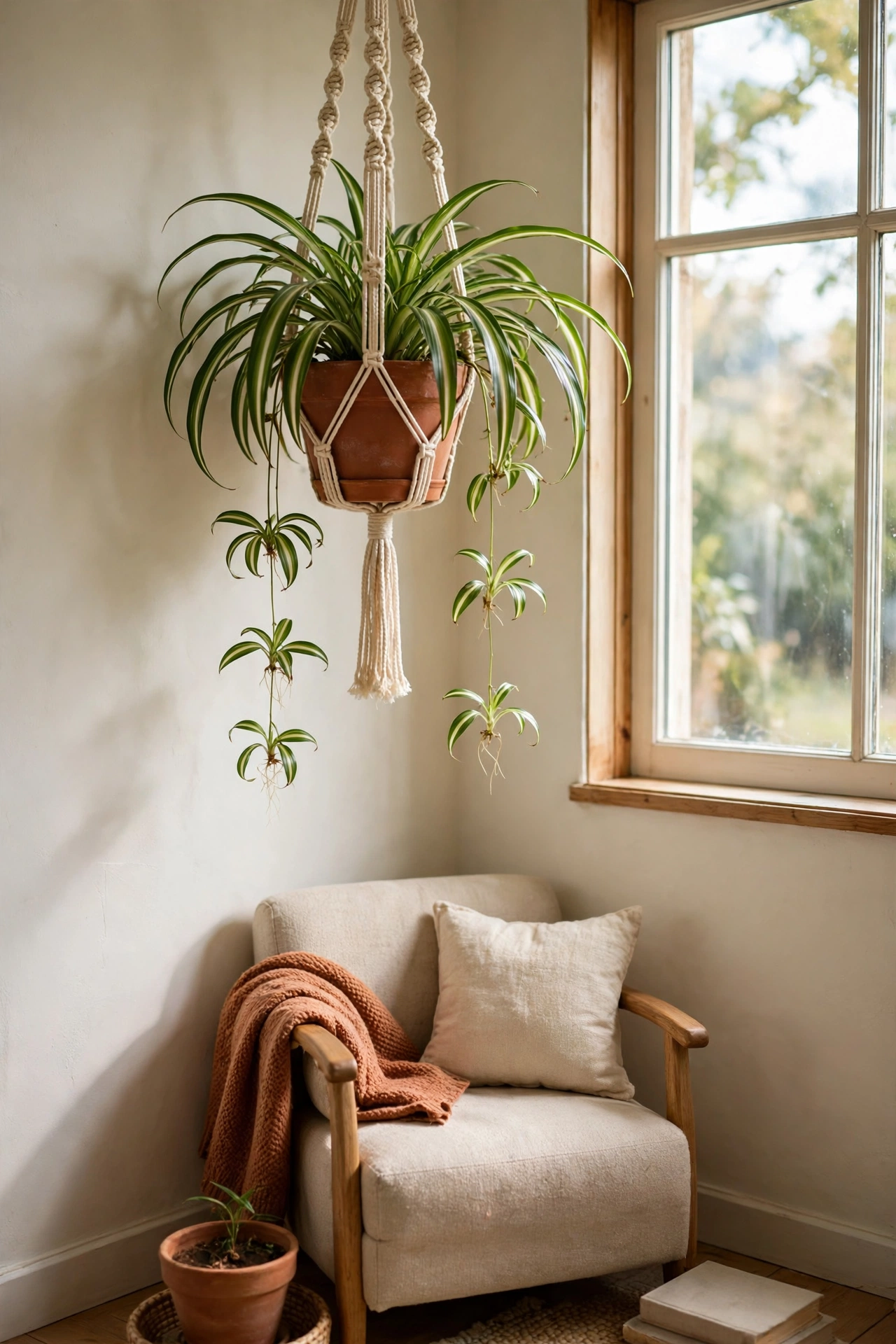
A spider plant in a hanger uses the air beside the window, which is the brightest empty space in a small bedroom and the one no furniture can claim. The plant grows in a tidy rosette about 1 foot wide, then sends out long stems with baby plantlets that dangle below the pot, so one plant fills a whole corner of sky without touching the floor or the nightstand.
Hang it near the window but not in front of it, at a height you can reach without standing on a chair — about eye level works for most people. A macrame hanger or a simple rope hanger holds a 6-inch pot, and a ceiling hook or wall bracket rated for the weight keeps it secure; check your lease before drilling, and use a removable hook only within its stated weight limit. Spider plant wants bright indirect light and water about every 1 to 2 weeks, when the top inch of soil feels dry. Brown leaf tips usually mean dry air or salts in tap water, not a dying plant — snip the brown tip off and water with room-temperature water that has sat out overnight. If a cat or dog shares your home, this is the easy one: spider plant is non-toxic to cats and dogs, so the dangling plantlets are safe even if a curious pet bats at them.
Cost: $18–$28 plus a $12–$20 hangerTime: 20 minutes to hangWater: Every 1 to 2 weeks
4. A Parlor Palm in the Tight Floor Corner
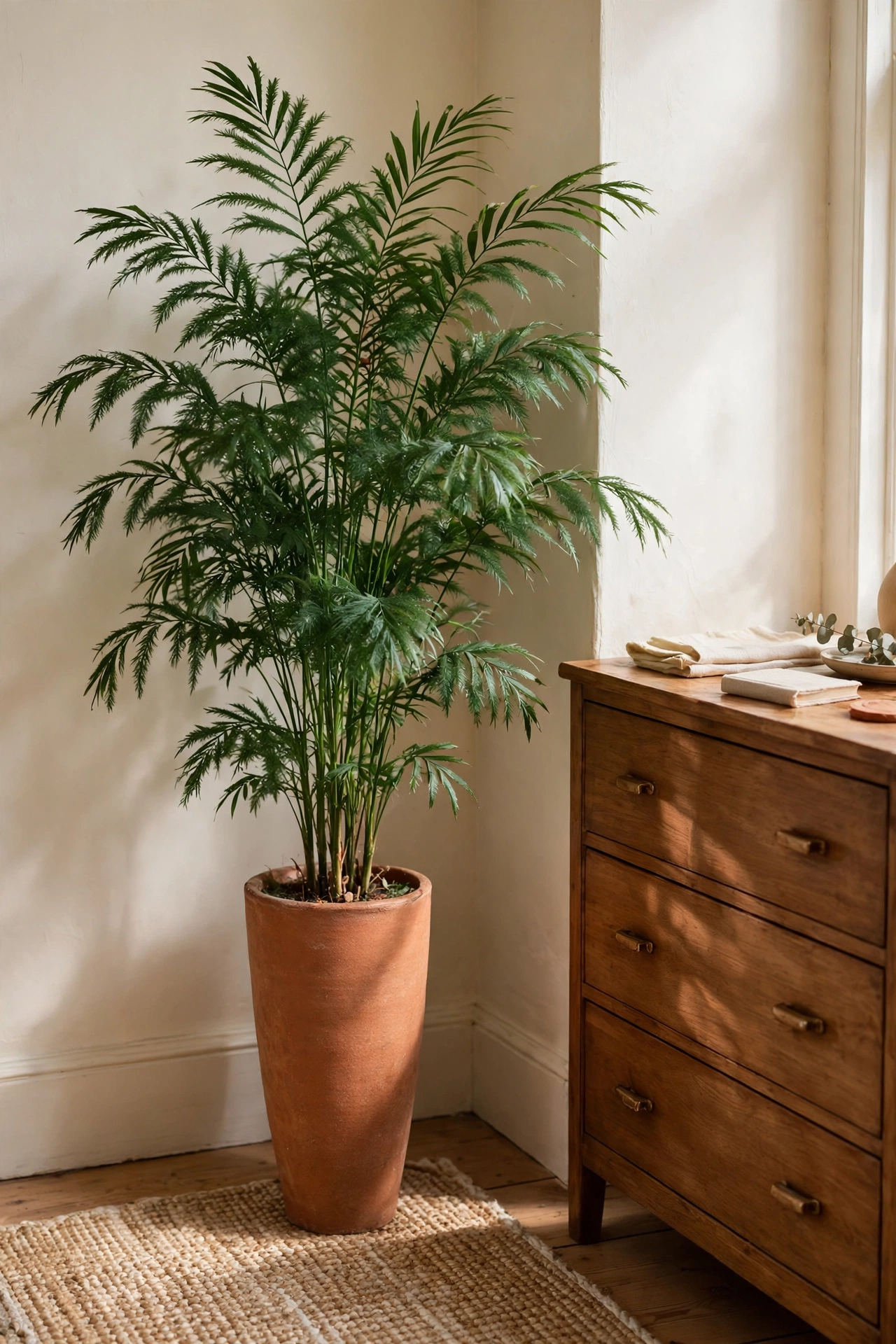
Every small bedroom has a dead corner, and one parlor palm fixes it better than three small pots ever will. Three small pots on the floor look like storage; one palm tall enough to stand beside the dresser looks deliberate. The parlor palm grows slowly to 2 to 2.5 feet tall in a 6-inch pot, with soft feathery fronds that fill the corner upward instead of outward, so it fits a 2-by-2-foot spot without crowding the walkway.
Pick a tall, narrow pot so the pot itself adds height, and leave a few inches of space on each side so air can move around the fronds — leaves pressed against two walls at once brown at the tips. Parlor palm wants low to medium light and water when the top inch of soil feels dry, about every 1 to 2 weeks. It grows slowly, which is a gift in a small room: it will not outgrow its corner in a year, and it needs repotting only every 2 to 3 years. If a cat or dog shares your home, this is the safest tall plant here: parlor palm is non-toxic to cats and dogs, so it can stand on the floor where pets walk past it every day.
Cost: $20–$30 plus a $15–$25 potTime: 10 minutes to placePets: Non-toxic
5. A ZZ Plant ‘Raven’ in the Dim Corner
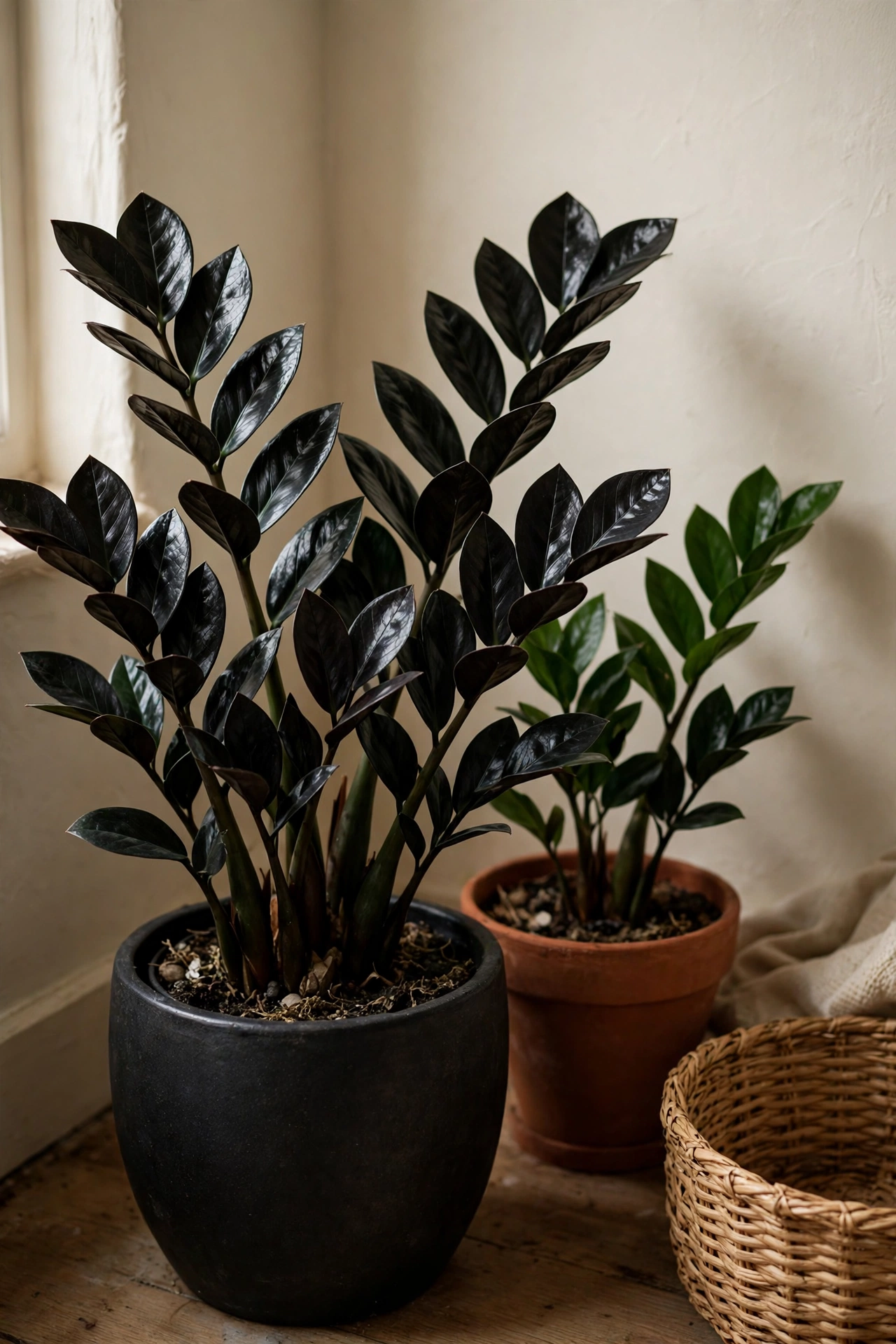
The dim corner 8 or more feet from the window is where most plants sulk, and it is exactly where the ZZ plant ‘Raven’ belongs. Its near-black, glossy leaves catch what little light the room has and bounce it around, so a dark corner looks brighter without a lamp — and the dark leaves stand out against pale walls in a way a green plant never does.
The ZZ plant stores water underground in thick rhizomes, which is why it needs water only about twice a month in summer and once a month in winter, and why it shrugs off the 2-week watering check this article is built on. It grows slowly to 2 to 3 feet tall, so it will not outgrow the corner in a year. Its weakness is the same as the snake plant’s: too much water. Yellow leaves and soft rhizomes mean the soil has stayed wet, not that the plant is thirsty — let the mix dry out completely before you water again, and use a free-draining mix with perlite or pumice in a pot with a drainage hole. Direct sun scalds the leaves, so keep it out of a harsh blast from a south-facing window. If a cat or dog shares your home, check that a plant is safe for pets before buying — ZZ plant is toxic to cats and dogs, so place it in the corner out of chewing reach and wash your hands after trimming.
Cost: $25–$40 plus a $12–$20 potTime: 15 minutes to potWater: Twice a month in summer
6. A Peperomia Trio on a Floating Shelf
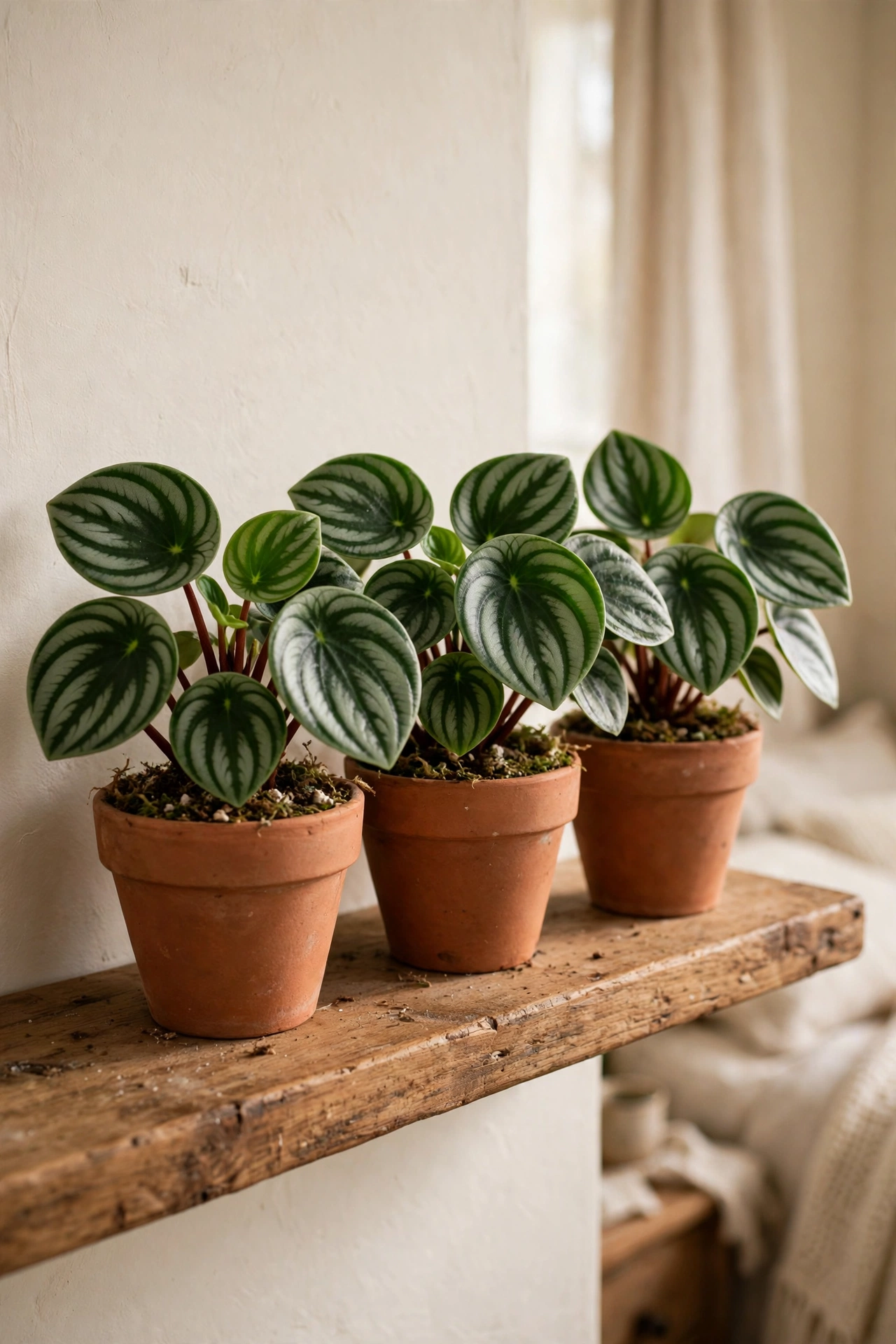
Three small peperomia plants on one floating shelf look intentional in a way that two never do, and the shelf itself costs no floor space at all. Peperomia stays 6 to 12 inches tall, with thick leaves that store water like a succulent, so each plant needs only a 4-inch pot — three pots in a row fit a shelf 24 inches long with breathing room between them.
Mix the leaf shapes for the best effect: one baby rubber plant with smooth round leaves, one ripple peperomia with textured leaves, and one watermelon peperomia with striped leaves. Same care, three looks, one shelf. Peperomia wants medium indirect light and water only when the top inch of soil feels dry, about every 1 to 2 weeks — overwatering is the one thing that kills it, so err on the dry side. A shelf 5 feet off the floor keeps the trio out of the way of elbows and bed-making, and a shelf bracket rated for the weight keeps it there. If a cat or dog shares your home, this trio is safe: peperomia is non-toxic to cats and dogs, so the low shelf is fine even within a pet’s reach.
Cost: $10–$15 each, $30–$45 for threeTime: 20 minutes to arrangePets: Non-toxic
7. A Cast Iron Plant Beside the Dresser
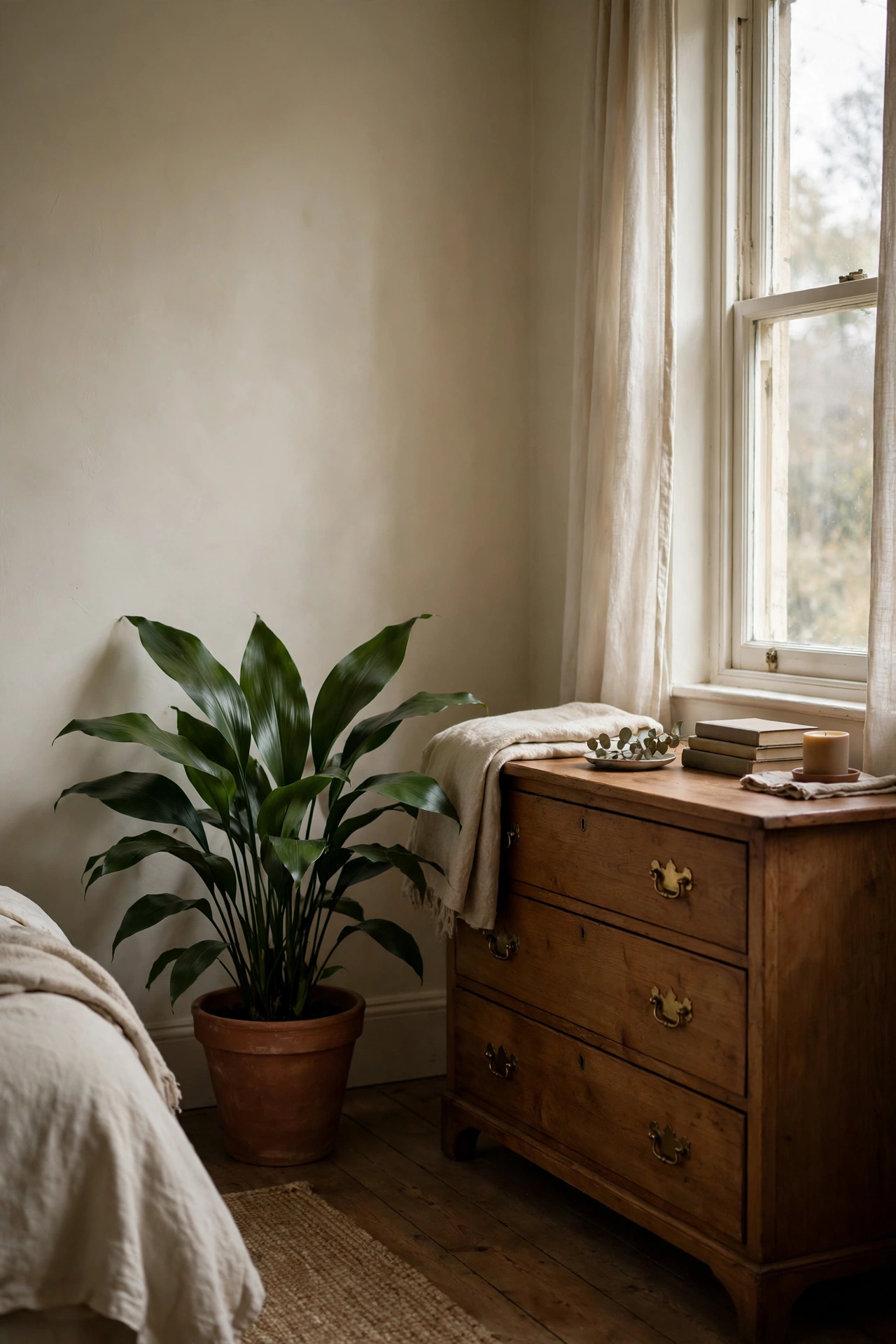
The cast iron plant is the answer for the darkest strip of floor in the room — the side of the dresser that never sees direct sun. It grows on Minnesota’s and Nebraska’s low-light lists for a reason: broad dark leaves that make the most of very little light, in a plant that grows slowly to about 2 feet tall and asks for water only when the top inch of soil feels dry, about every 2 to 3 weeks.
Its name is honest. It tolerates dry air, missed waterings, and the draft beside a door, and it keeps its shape with almost no attention — wipe the broad leaves once a month so they catch what light there is. A 1-gallon pot, about 6 to 8 inches wide, fits the 12-inch strip beside most dressers and is heavy enough that the plant will not tip when you open a drawer. If a cat or dog shares your home, this is the toughest safe pick: cast iron plant is non-toxic to cats and dogs, so the floor spot is fine even where pets sleep.
Cost: $25–$40 for a 1-gallon plantTime: 10 minutes to placeLight: Very low to medium
Three Costly Shortcuts
Mistake: Buying the biggest pot to “give it room.” Fix: Choose a pot only 1 to 2 inches wider than the one it came in. Why it matters: A pot that is too big holds wet soil around the roots for weeks.
Mistake: Watering on a schedule instead of checking the soil. Fix: Push a finger 2 inches into the mix first. Why it matters: This plant dies from too much water far more often than from too little.
Mistake: Pushing the pot tight into the corner. Fix: Leave a few inches of air on each side. Why it matters: Still air and leaves pressed against a wall invite brown tips and pests.
8. A Calathea on the Nightstand
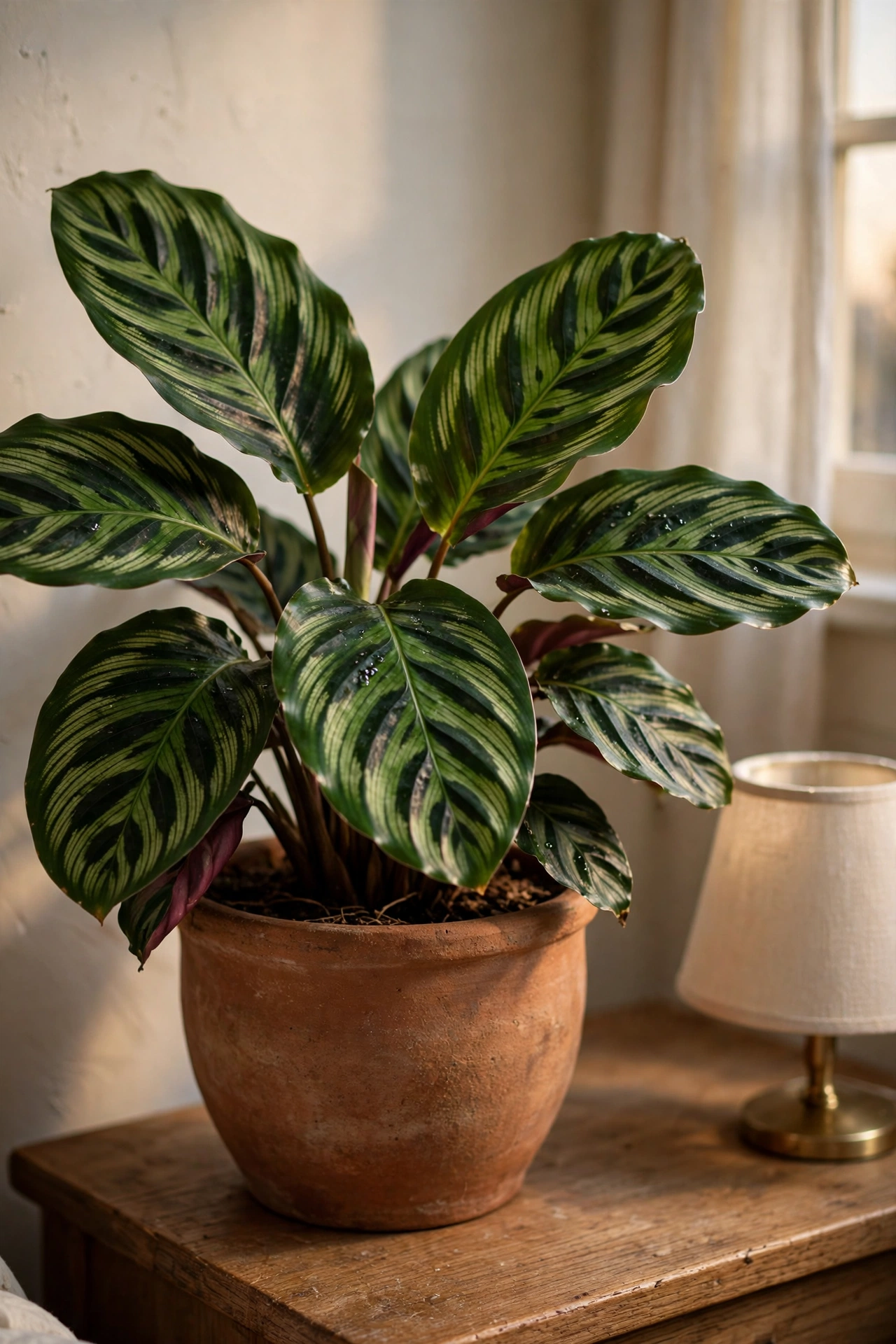
A calathea is the nightstand plant for a reader who wants pattern instead of plain green. Its leaves carry painted stripes and undersides in deep purple, and they fold upward at night and open again in the morning — a small daily show that costs nothing and needs no light to enjoy. A 6-inch pot fits the 18-inch nightstand next to a lamp, and the plant stays about 8 inches tall.
Calathea is honest about what it needs, and that is the trade-off. It wants low to medium light, never direct sun, and soil that stays lightly moist but never soggy — water when the top inch feels dry, about every 1 to 2 weeks, and skip the schedule if the soil still feels damp. Brown leaf edges usually mean dry air or salts in tap water, so set the pot on a shallow tray of pebbles and water, and let tap water sit out overnight before you use it. If a cat or dog shares your home, this is a safe nightstand pick: calathea is non-toxic to cats and dogs, so it can sit within a pet’s reach without worry.
Cost: $20–$35 plus a $10–$15 potTime: 15 minutes to potWater: Every 1 to 2 weeks
9. A String of Hearts from the Curtain Rod
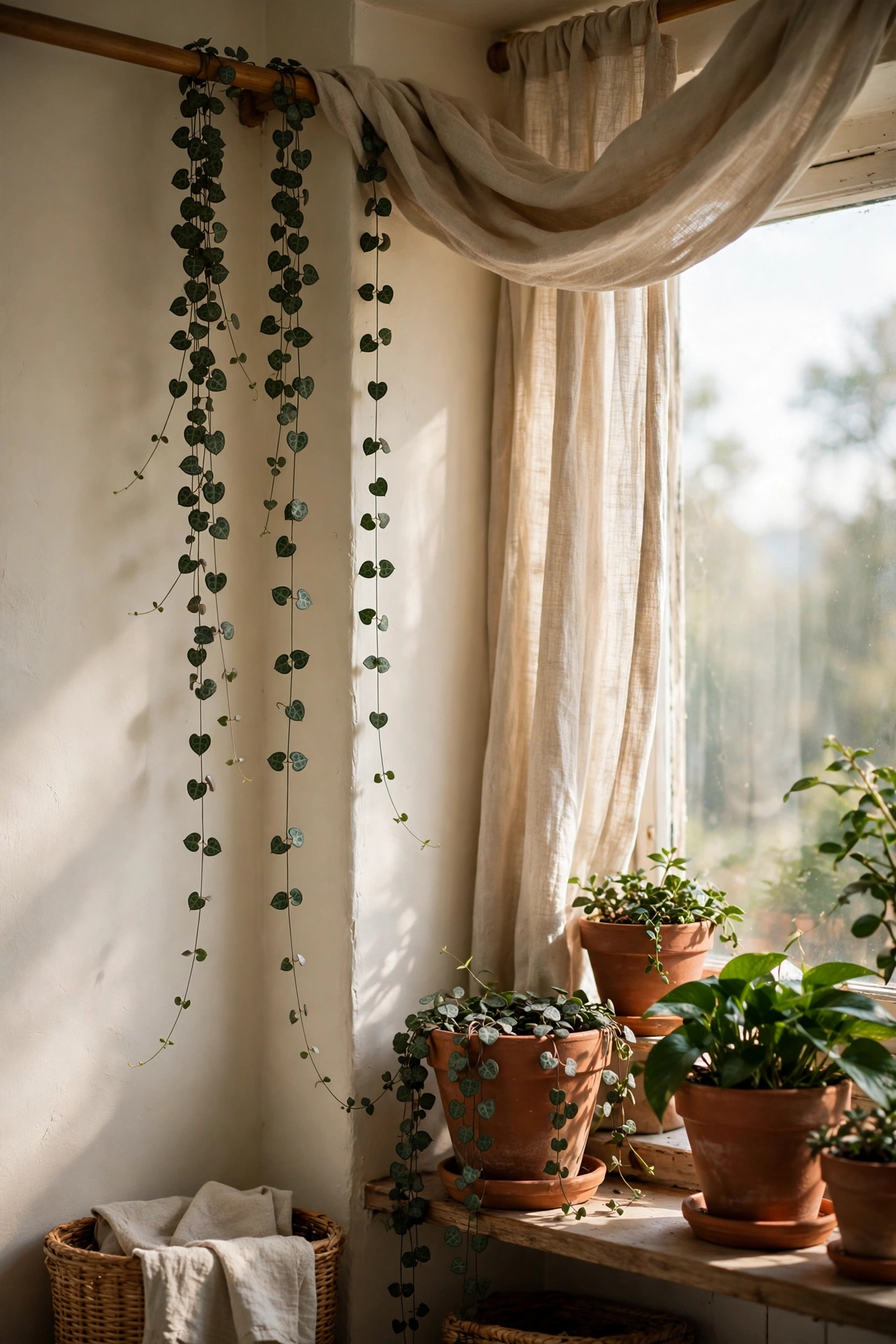
A string of hearts hung from the curtain rod turns the window itself into the display, and it is the finest trailing plant in this list — tiny heart-shaped leaves on thin stems that fall 3 to 4 feet in soft strands instead of heavy vines. One 4-inch pot on a small hook at the end of the rod frames the window without blocking the light, and it costs zero floor space and zero shelf space.
The plant wants bright indirect light, so the rod beside the window is the right home — a dark corner will thin the strands out. Water about every 2 weeks, when the top inch of soil feels dry, and let the soil dry a little more in winter. The stems are delicate, so hang the pot where nobody brushes past it on the way to the closet, and trim a strand that grows too long to keep the plant full at the top. If a cat or dog shares your home, this is a safe trailing pick: string of hearts is non-toxic to cats and dogs, so the strands can hang within a pet’s reach without worry.
Cost: $15–$25 plus a $8–$12 hookTime: 10 minutes to hangLight: Bright indirect
10. A Small Succulent Row on the Windowsill
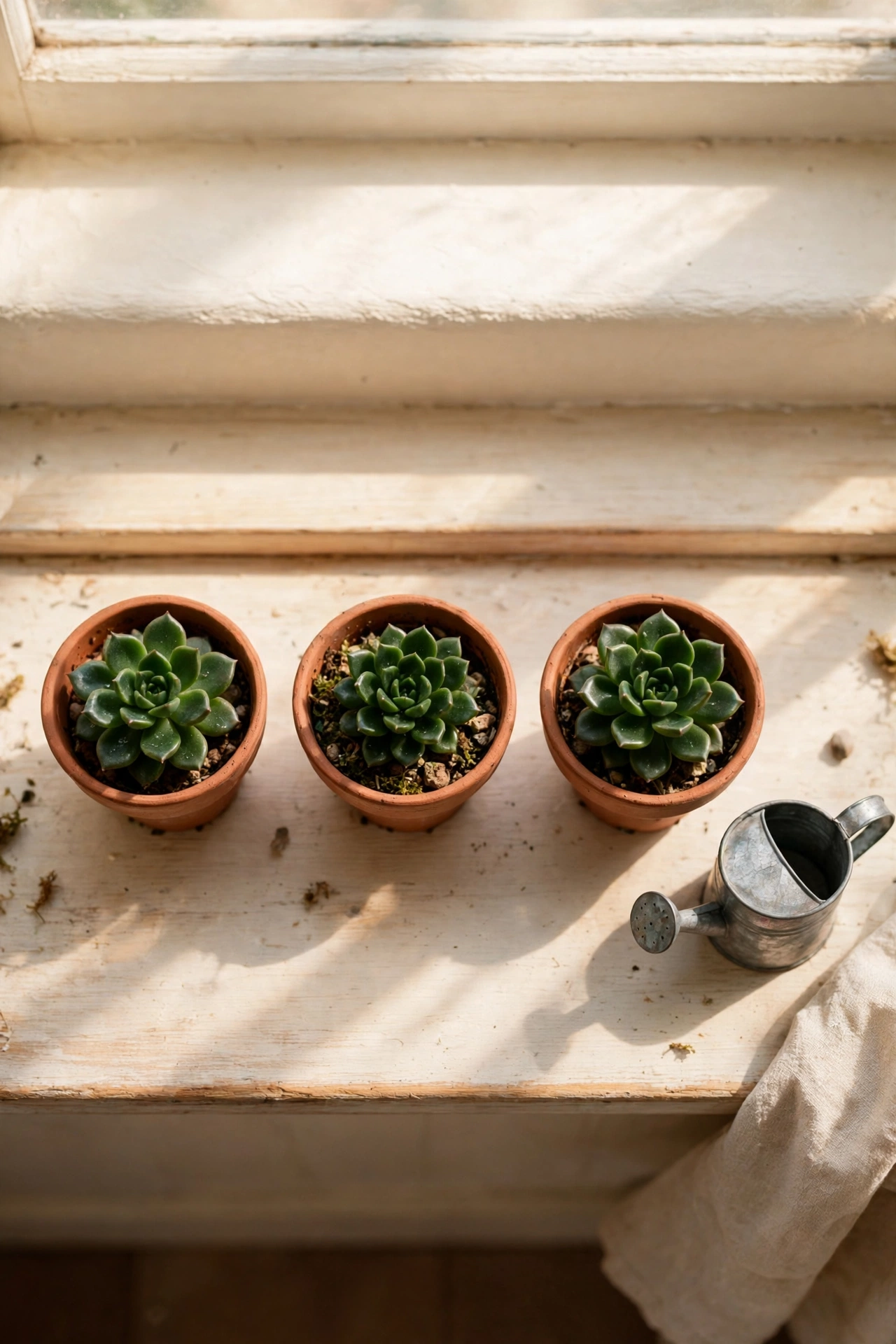
The windowsill is the brightest spot in the bedroom and the only one that costs nothing to use, so it deserves a row built for it. Three small succulents in 2-inch terracotta pots — an echeveria, a haworthia, and a burro’s tail — line up along a 3-foot sill with room to spare, and each one stays under 6 inches tall.
Succulents are the one idea here that must have the bright spot. They need 4 or more hours of direct sun a day, and a dim corner will stretch them tall and pale within weeks. Water only when the soil is completely dry, about every 2 to 3 weeks, and use a gritty, fast-draining mix in pots with drainage holes — standing water rots a succulent faster than drought ever will. Terracotta helps, because the clay dries out between waterings. If a cat or dog shares your home, check that a plant is safe for pets before buying — haworthia is non-toxic, while jade is toxic to cats and dogs, so skip the jade on a low sill a pet can reach and keep the row to the safe picks.
Cost: $5–$8 each, $15–$24 for threeTime: 15 minutes to arrangeLight: 4+ hours of direct sun
Frequently Asked Questions
How many plants fit in a small bedroom?
Three plants are enough for a 10-by-11-foot bedroom: one on the nightstand, one trailing from a shelf or hook, and one on the floor in the corner. That starter set costs $100–$150 all in, and it leaves the walkway clear and the nightstand usable. Add a fourth only when the first three have lived happily for two months.
Which bedroom plant is safest if I have a cat or dog?
Spider plant, parlor palm, cast iron plant, calathea, peperomia, and string of hearts are all non-toxic to cats and dogs. Snake plant, ZZ plant, and pothos are toxic if chewed, so keep those on a nightstand or a high shelf, out of chewing reach. Check that a plant is safe for pets before buying if a cat or dog shares your home.
Can plants live in a bedroom corner with no direct sun?
Yes, if the corner still gets some daylight — if you can read there without a lamp in daytime, a snake plant, ZZ plant, or cast iron plant can live there. A corner with no window light at all will wear any plant down over time, and no plant lives in a room with no light at all without a grow light.
What size pot fits on a nightstand?
A pot 4 to 6 inches wide, with a plant under 12 inches tall. That leaves room on an 18-inch nightstand for a lamp, a phone, and a glass of water. A bigger pot eats the space you need at night and gets knocked over in the dark.
How often should I water bedroom plants?
Check the soil every 2 weeks: push a finger 2 inches into the mix, water only if it feels dry, and leave it alone if it still feels damp. Most plants in this list drink every 1 to 2 weeks, the ZZ plant and the succulents every 2 to 4 weeks. Overwatering kills bedroom plants far more often than drought does.
Small Bedroom Plant Decor Ideas: Pick by Light, Then by Budget
Start with the light you actually have, not the light you wish you had. The windowsill takes the succulents, the shelf above the bed takes the pothos, and the dim corner takes the ZZ plant or the cast iron plant — and the nightstand takes one small plant in a 4- to 6-inch pot, never two. That is the whole system: one plant per spot, each matched to its light, for a starter set of 3 plants and $100–$150 all in. Once the bedroom feels finished, the same small-space thinking works in the rest of the apartment — these small apartment decorating ideas that feel expensive show how to stretch the look room by room without stretching the budget.
Buy the nightstand plant first, because you see it first thing in the morning and last thing at night, and it teaches you the 2-week watering check faster than any other plant. When it has lived happily for two months, add the trailing plant, then the floor plant — and keep the small bedroom plant decor ideas you skipped as a list for the next room, not as a reason to crowd this one.