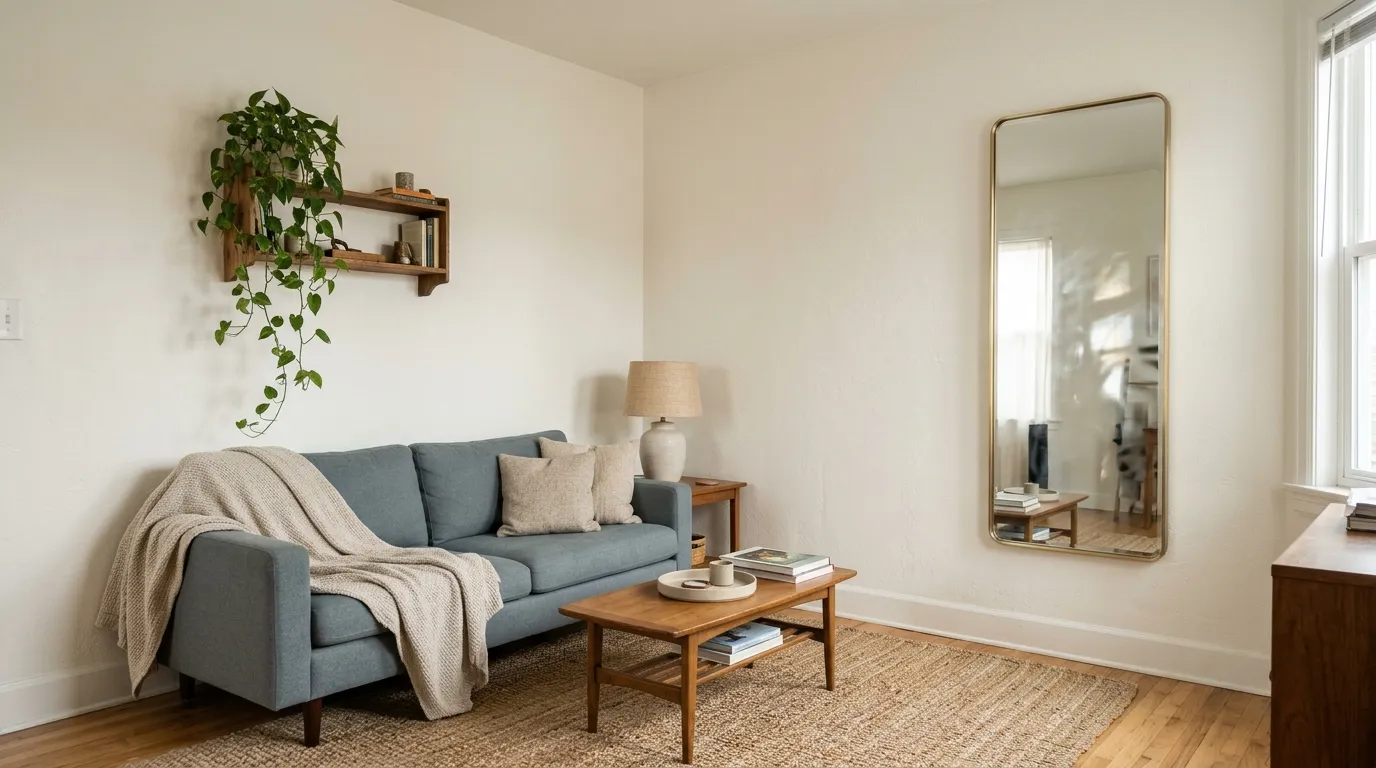

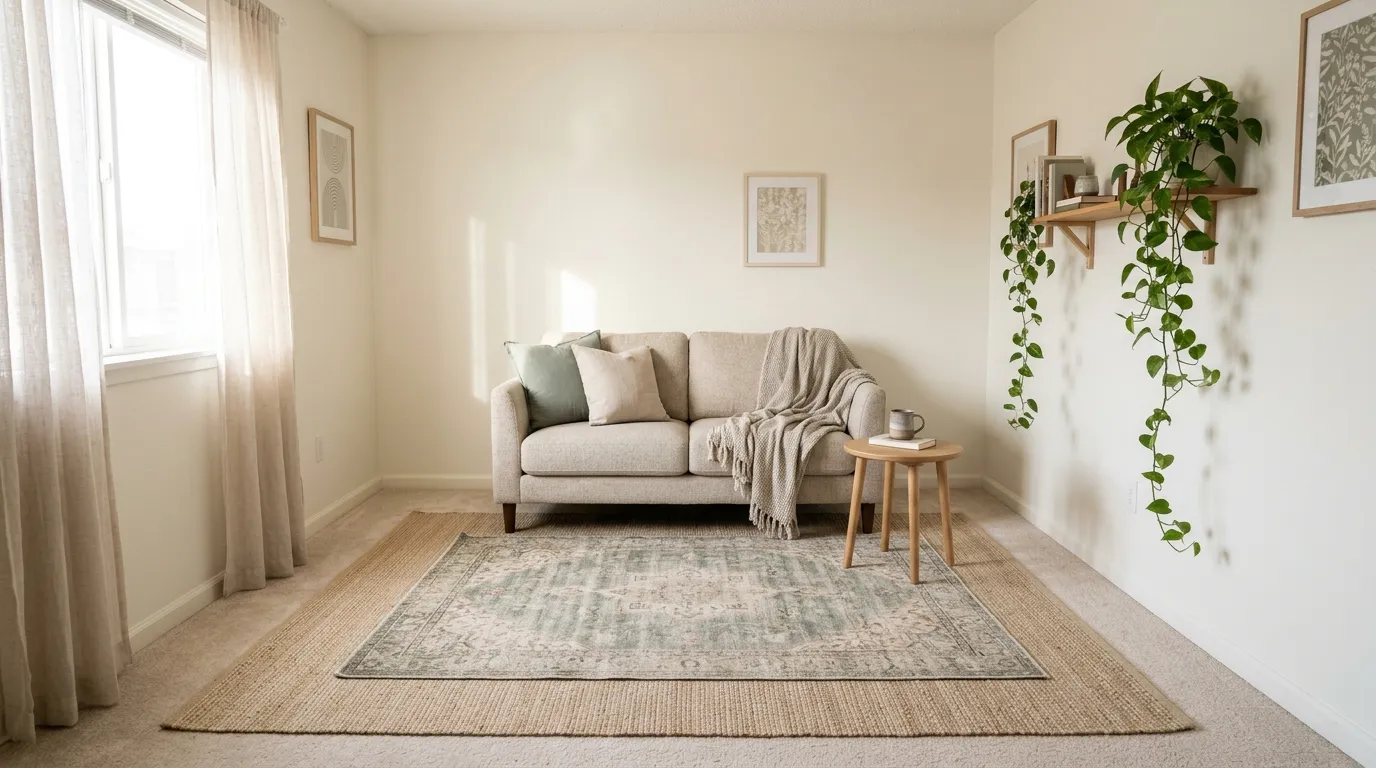
You sign the lease, carry in the last box, and then you notice it: beige carpet with a faded path to the door and a dark patch near the window. Ripping it out isn’t an option, but you can cover rental carpet with rugs and make the floor look like a choice instead of a leftover.
What you need is a plan, not just a rug. The right fit, the right weave, and a pad that keeps everything flat decide whether the cover-up looks intentional or like a bath mat lost in a field of beige.
I’d walk through this in eight steps, in the order I’d do them. None of them need tools, and every one of them can be undone when you move out.
Before You Start: Materials and Time
- Time: a weekend afternoon, plus shopping time
- Difficulty: easy
- Budget level: budget-friendly to mid-range, depending on how much floor you cover
- Caution level: take care (rolled rugs are heavy, and loose edges can trip you)
What You’ll Need
- Tape measure
- Painter’s tape
- Vacuum
- Flat-weave or low-pile rug
- Non-slip pad made for rugs over carpet
- Phone for photos
1. Check Your Lease and Carpet
Before you buy anything, read what your lease says about floors and take a good look at the carpet itself. Most leases are fine with rugs, but some have rules about adhesives, moisture, or noise in apartment buildings, and it’s easier to learn that now than after a big rug arrives.
Walk the room and note what you’re hiding: stains, a worn path, a stale smell, loose seams, or just a color you can’t stand. Each problem points you toward a different rug and pad later on.
How to Do It
- Reread the flooring section of your lease, or ask your landlord if it’s unclear
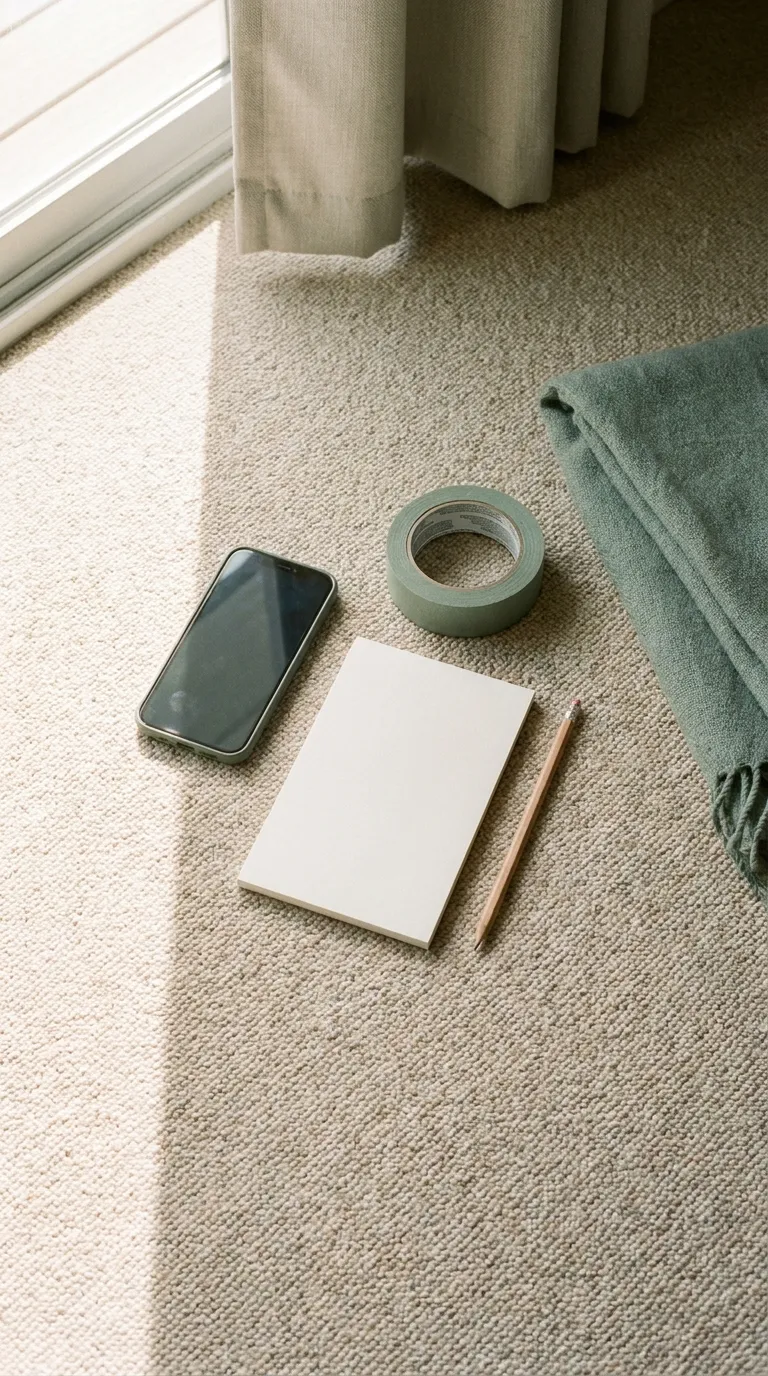
- Take dated photos of the carpet as it looks today, wide shots and close-ups
- Note every stain, worn path, and dent left by old furniture
- Check for loose seams or lifted edges that could catch a rug corner
- Mark problem spots with painter’s tape so you remember them while shopping
Why It Works
Photos protect your deposit, and a short list of problem spots keeps you from buying a rug that only hides half the trouble.
Common Mistakes to Avoid
- Skipping the lease and assuming rugs are always allowed
- Forgetting to photograph the carpet before covering it
- Hiding a damp or musty spot instead of mentioning it
A Simple Rule to Remember
Photograph first, buy second.
Renter Note
Check your lease before using any tape, adhesive, or rug grippers on the carpet. A rug can hide a stain, but it can’t fix moisture underneath, so tell your landlord about damp spots.
2. Measure the Room and Furniture
A rug that looks right in a shop can look tiny at home. Measuring first tells you how much carpet you can realistically cover and where your furniture will sit.
Measure the floor you want to hide, then the pieces that will rest on or near the rug. Write everything down in feet and inches so you can compare it with rug listings later.
How to Do It
- Measure the room’s length and width from wall to wall
- Measure the sofa, bed, or table that will sit on or near the rug
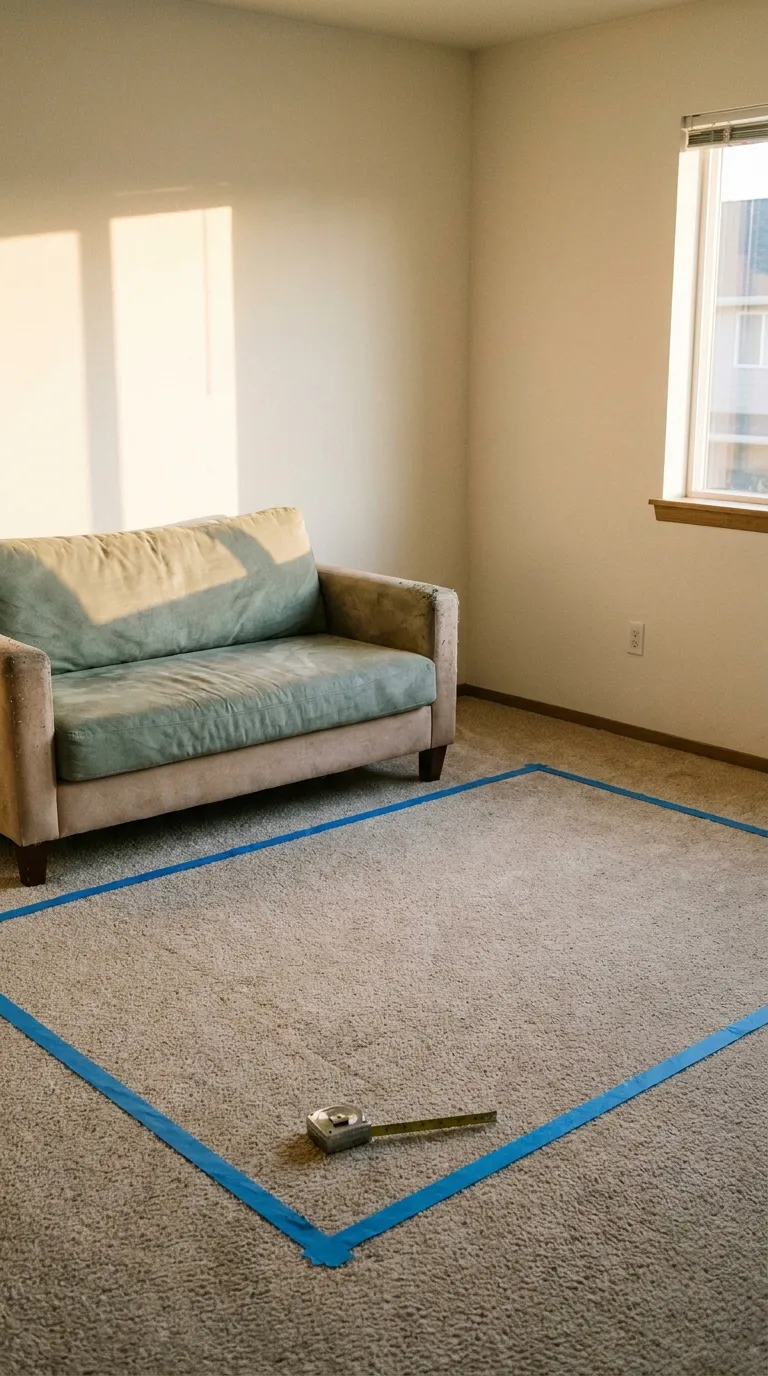
- Tape the rug’s outline on the carpet, testing the tape on a hidden spot first
- Open every door fully and check that it clears the taped outline
- Take a photo of the taped layout to compare with listings
Why It Works
Taping makes a rug’s footprint visible before you spend anything, so problems like a door catching the edge show up while they’re still free to fix.
Common Mistakes to Avoid
- Measuring only the open floor and ignoring where furniture will sit
- Forgetting door swing and floor vents
- Rounding measurements down instead of writing them exactly
A Simple Rule to Remember
Tape it out before you order it.
3. Pick a Rug That Fits
Fit matters more than pattern. A rug that’s too small leaves odd strips of carpet around it and makes the room feel chopped up, while one that fits makes the old carpet look like part of the plan.
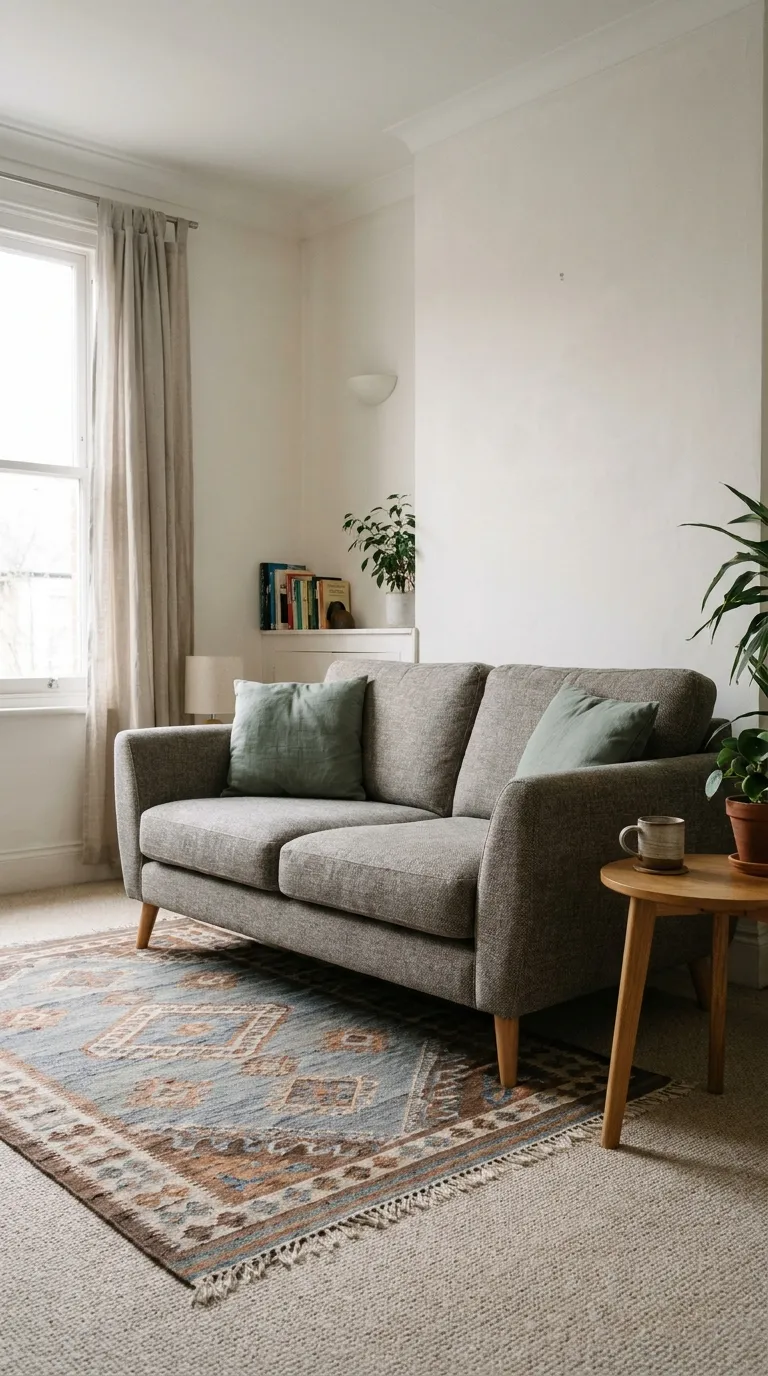
Before you shop, decide what size rug your room and furniture can handle. In a living room, the front legs of the sofa and chairs should rest on the rug. In a bedroom, the rug should extend past the sides of the bed so your feet land on it when you stand up.
How to Do It
- Decide the rug’s job: anchor one seating area or cover as much floor as possible
- Use your taped outline from step 2 as the target
- In a living room, put at least the front legs of every large piece on the rug
- In a bedroom, let the rug extend past both sides and the foot of the bed
- If you’re between two listed sizes, round up
Why It Works
When furniture straddles the rug’s edge, the room reads as one planned layout, and any carpet showing around the rug looks like a border instead of leftover floor.
Enter your room type and measurements below to see a standard fit you can compare with your taped outline.
Common Mistakes to Avoid
- Buying a small rug to save money and leaving furniture floating beside it
- Choosing by pattern before checking measurements
- Ordering a rug your door or stairwell can’t handle
A Simple Rule to Remember
When you’re between two sizes, go bigger, as long as the rug still clears doors and you can carry it in.
4. Choose a Flat or Low-Pile Rug
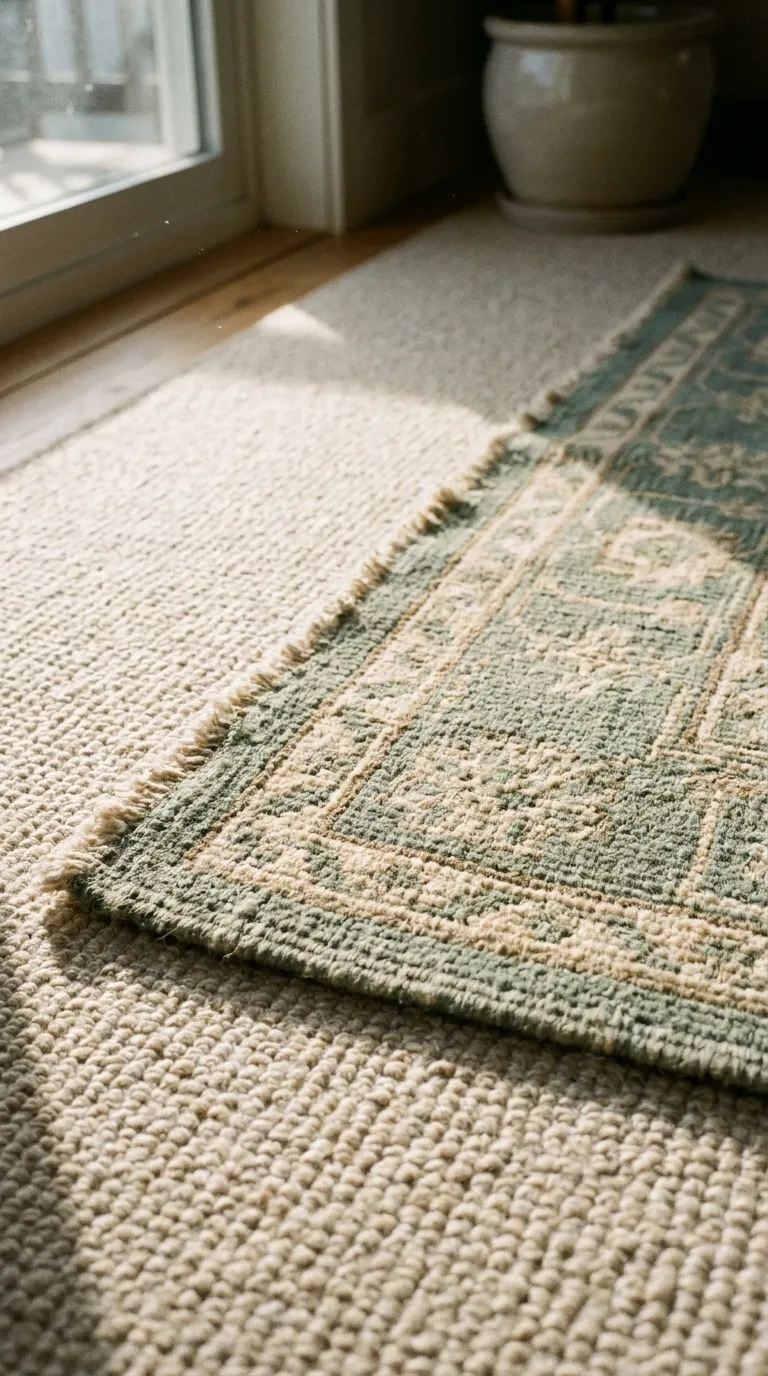
The rug’s construction decides how well it behaves over carpet. Thick, shaggy rugs sink into the carpet below and tend to shift, curl, and feel spongy underfoot, while flat-weave and low-pile rugs sit more steadily.
Color and pattern do the hiding. A busy pattern or a mid-tone color camouflages stains and worn paths better than a plain light rug, which can make flaws stand out. If your decor budget is limited, put it into one larger flat-weave rather than two small rugs.
How to Do It
- Pick a flat-weave, low-pile, or short-pile rug as your main choice
- Choose a pattern or mid-tone color that matches the stains or fading you want to hide
- Read the product description for pile height and materials
- Check the care label so you know how to spot-clean it
- Buy from a shop with a clear return policy in case the rug doesn’t sit right
Why It Works
A flat rug stays put and keeps its edges from curling, and a pattern breaks up the eye so stains blend in instead of standing out.
Common Mistakes to Avoid
- Choosing a thick shag because it looks cozy in product photos
- Picking a plain light rug to cover a dark stain
- Ignoring the care label until the first spill
A Simple Rule to Remember
Keep the bottom rug flat.
5. Prep Stains and Dents
Whatever is wrong with the carpet is still there under the rug, so a little prep goes a long way. You’re not repairing the carpet, only making sure nothing underneath lumps up, stays damp, or gets damaged.
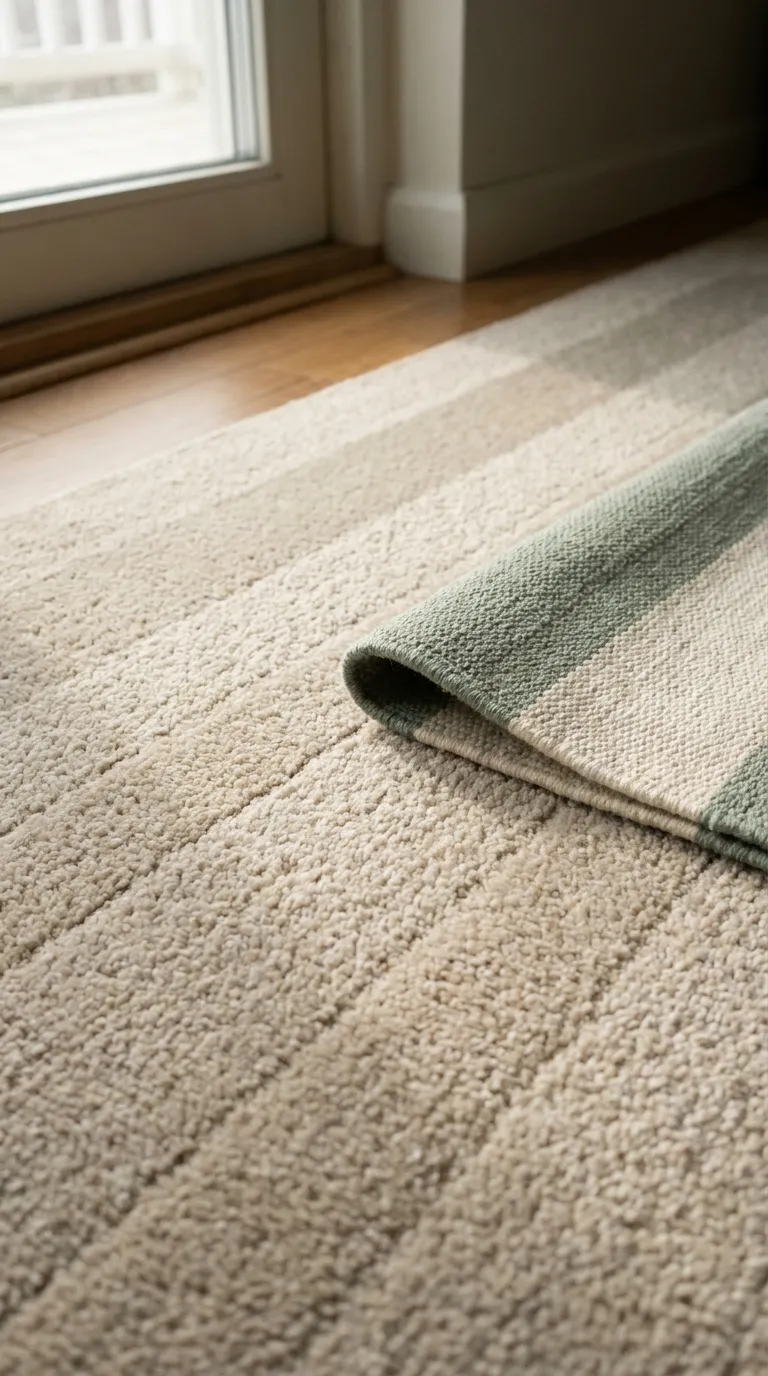
Vacuum first, because grit trapped between the rug and the carpet wears both. Then deal with dents and damp spots before anything goes down.
How to Do It
- Vacuum the carpet thoroughly, including edges and corners
- Spot-clean fresh marks with a cleaner that’s safe for your carpet, following the product label
- Let the area dry completely before covering it
- Gently brush furniture dents with a spoon or your fingers to lift the pile
- Press down any lifted seam, and tell your landlord if it keeps rising
Why It Works
Clean, dry carpet keeps the pad from trapping moisture or grit, and flat carpet keeps the rug from showing lumps.
Common Mistakes to Avoid
- Covering a damp spot, which can trap moisture and odors
- Scrubbing hard enough to fray the carpet
- Skipping the vacuum because the carpet looks clean enough
A Simple Rule to Remember
Clean and dry before covered.
Renter Note
Test any cleaner on a hidden corner first and keep your cleaning light. A bleached patch can count as damage when your landlord inspects the floor.
6. Add a Non-Slip Pad
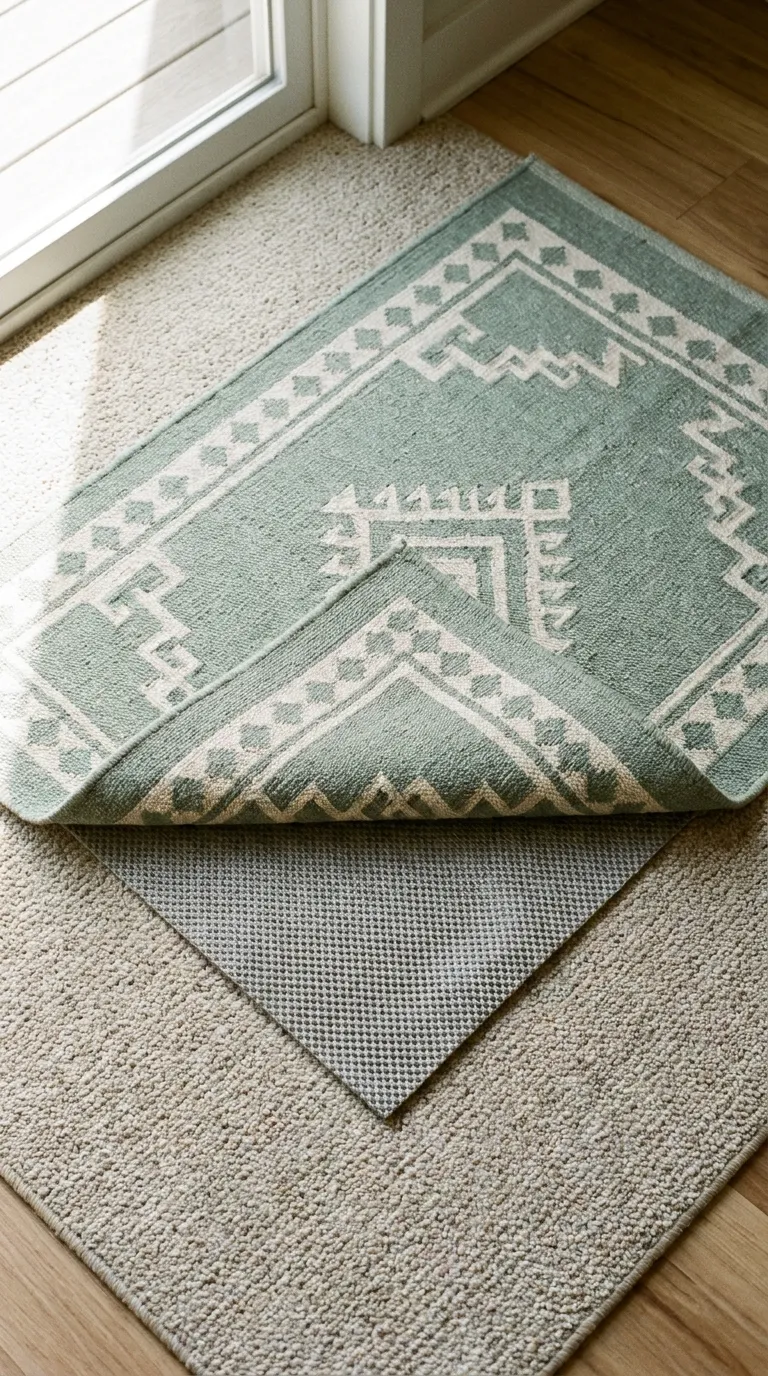
A rug laid on carpet slides in a way a rug on hardwood doesn’t. Two soft surfaces move against each other, so the top rug creeps and wrinkles over time. A pad made for use over carpet fixes that.
The pad also adds a little cushion and helps a thinner rug lie flat, which matters in a rental where you can’t fix the floor underneath.
How to Do It
- Look for a pad labeled for rugs over carpet
- Cut it about 1 inch smaller than the rug on every side so it never peeks out
- Lay the pad flat on the carpet, following the label for which side faces up
- Center the rug on top and smooth it from the middle outward
- Lift a corner after a day and check that nothing has shifted
Why It Works
The pad grips both surfaces, so the rug stays where you put it, and flat edges are less likely to catch a toe.
Common Mistakes to Avoid
- Skipping the pad because the rug feels heavy
- Cutting the pad larger than the rug
- Using a pad made only for hard floors
Renter Note
Skip double-sided carpet tape and adhesive grippers unless your lease and the product label say they’re safe on carpet. A plain loose pad is the safest renter choice because nothing is stuck to the floor.
7. Position the Rug With a Border
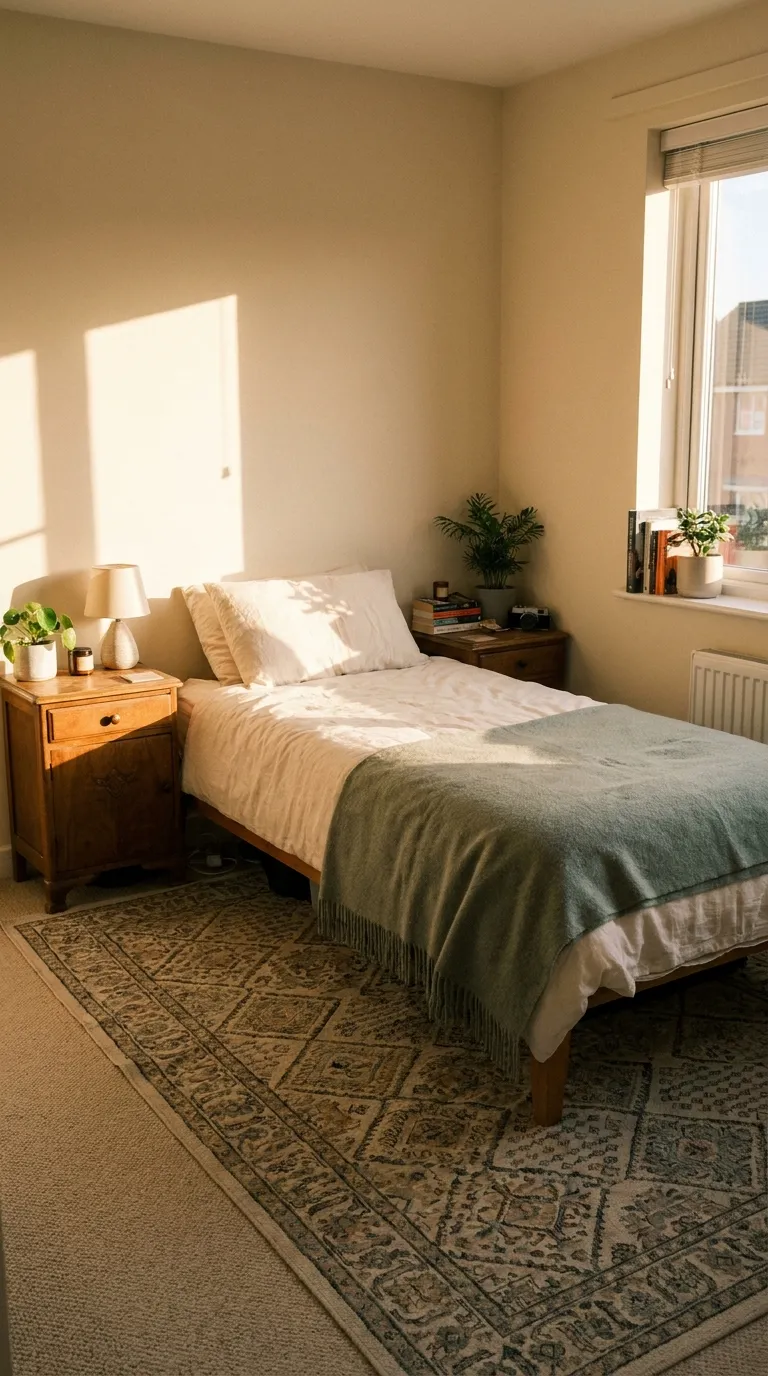
If your goal is to hide as much carpet as you can, aim for a rug that covers most of the floor and leaves a narrow, even border of carpet around it. A border looks like a choice. A rug floating in the middle of a big field of beige looks like a patch.
A simple way to get there is to subtract 2 to 3 feet from your room’s length and width, which leaves about 12 to 18 inches of carpet showing on each side. Bigger rugs cover more but cost more, weigh more, and can be hard to find for odd room sizes. In a large living room, full coverage may be out of reach, so use the layering in step 8 instead.
How to Do It
- Subtract 2 to 3 feet from the room’s length and width to find your target measurements
- Center the rug in the room, or under the main furniture group
- Measure the border on each side with a tape measure to confirm it’s even
- Check that the front legs of large furniture still rest on the rug
- Open every door and confirm it clears the rug’s edge
- Step back to the doorway and look for any crooked edge
Why It Works
An even border makes the rug look planned and keeps the eye on the rug instead of the carpet around it.
Try it: enter a rug length and width in feet and see whether the border lands in the 12 to 18 inch range.
Common Mistakes to Avoid
- Pushing the rug toward one wall so the border looks lopsided
- Leaving more than 18 inches of carpet showing in a small room, so the old carpet stays the main event
- Letting the rug touch the baseboard or block a door
A Simple Rule to Remember
12 to 18 inches of carpet on every side.
8. Layer Rugs and Keep Them Fresh
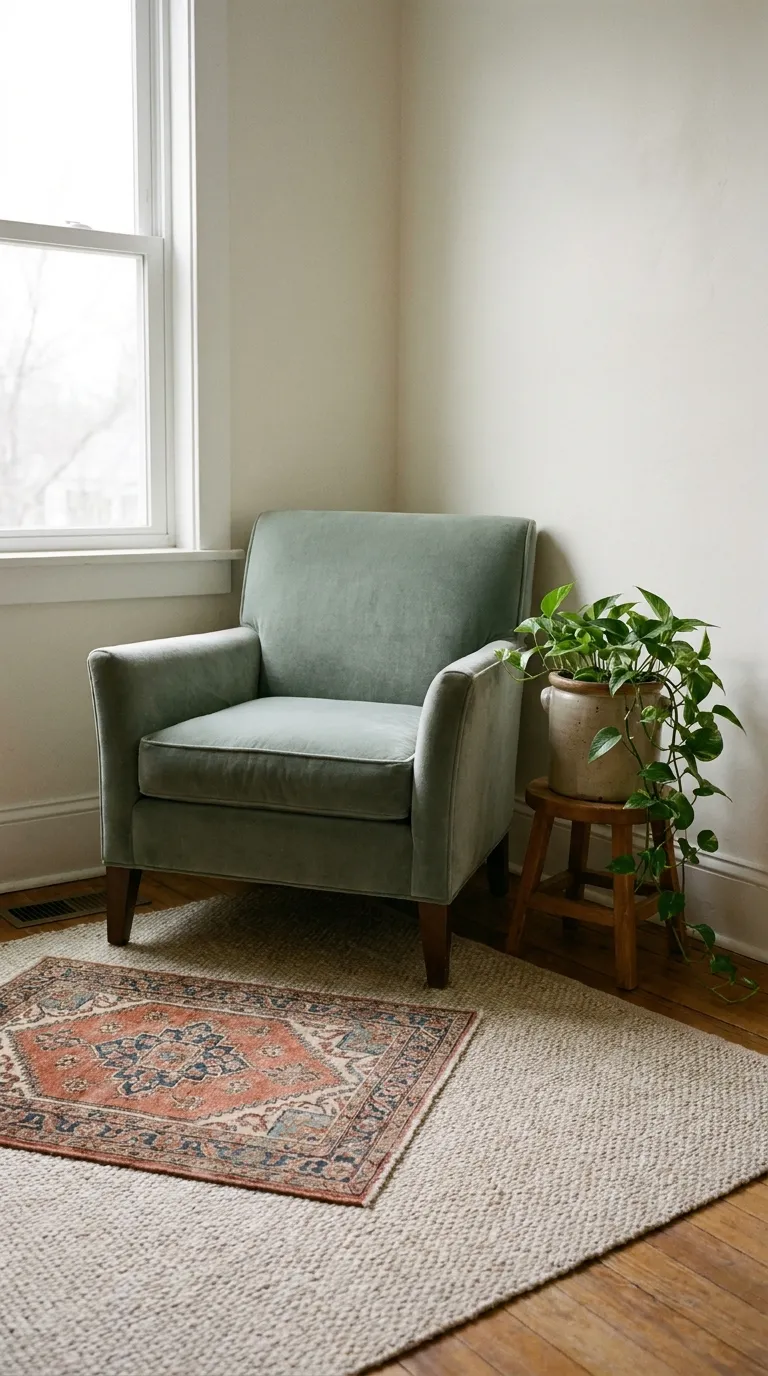
If you can’t find or afford a rug big enough for the whole room, layer a smaller rug over a larger flat base. The base covers most of the carpet, and the top rug adds color or texture and hides whatever the base can’t.
Then keep the setup clean. Dirt collects between the rug and the carpet, and a quick routine keeps both in good shape for your move-out check.
How to Do It
- Lay the large flat-weave base first, then set the smaller rug on top
- Offset the top rug slightly for a relaxed look, or center it for a tidy one
- Pick a top rug in a contrasting color or texture so the layers look deliberate
- Vacuum both rugs using the settings on the care label
- Lift the rugs and pad every few months to vacuum the carpet underneath
- Rotate the rugs now and then so wear spreads out
Why It Works
Layers add depth and cover more floor, and regular lifting keeps grit and moisture from building up where you can’t see it.
Common Mistakes to Avoid
- Layering two thick rugs that slide against each other
- Stacking a busy pattern over another busy pattern
- Never lifting the rugs, so dirt and moisture go unnoticed
A Simple Rule to Remember
Lift and vacuum underneath every few months.
Quick Step Cheat Sheet
Use this table when you’re standing in the shop or taping out the room.
| Step | Why It Works | Quick Fix |
|---|---|---|
| 1. Check Your Lease and Carpet | Protects your deposit | Photograph the carpet first |
| 2. Measure the Room and Furniture | Shows the real footprint | Tape the outline on the floor |
| 3. Pick a Rug That Fits | Furniture and rug read as one layout | Round up between sizes |
| 4. Choose a Flat or Low-Pile Rug | Stays put and hides flaws | Pick a mid-tone pattern |
| 5. Prep Stains and Dents | Nothing lumps or stays damp | Vacuum and let it dry |
| 6. Add a Non-Slip Pad | Grips carpet and rug | Cut it 1 inch smaller |
| 7. Position the Rug With a Border | Looks planned, not patched | Aim for 12 to 18 inches |
| 8. Layer Rugs and Keep Them Fresh | Adds depth, covers more floor | Lift and vacuum underneath |
The Principles Behind These Steps
Prepare Before You Buy
Reading the lease, photographing the carpet, and measuring cost nothing. They also prevent the two most common problems, a rug that doesn’t fit and a deposit dispute.
Cover Rental Carpet With Rugs in Order
Each step sets up the next one. Measurements guide the size, the size narrows the choices, and the pad and prep decide whether the rug stays flat. Skipping ahead usually means redoing something.
Test Small Before Committing
Test tape, cleaners, and pads on a hidden corner first. A small test is much cheaper than a mark you have to explain to your landlord.
Leave Room for Adjustments
Nothing here is permanent. Shift the rug a few inches, swap the top layer, or return a rug that doesn’t sit right. A floor you can rearrange is one of the real perks of renting.
Common Rug-Over-Carpet Mistakes Worth Skipping
Treating the Rug as a Repair
A rug hides damage, but it doesn’t fix it. Tell your landlord about real problems like damp spots or torn seams instead of covering them.
Buying Before Measuring
A rug that’s even a foot off can leave furniture floating or a door stuck. Tape the outline on the floor first.
Letting the Rug Wander
A rug without a pad creeps and bunches. Add a pad cut about 1 inch smaller than the rug.
Final Tips for Success
Keep Your Photos and Receipts
Save your move-in photos and your rug receipts together. If the rug doesn’t work out, you have a return path, and if your landlord asks about the carpet, you have proof of its starting condition.
Basics Worth Owning
- Tape measure
- Painter’s tape
- Rug pad cut to fit
- Vacuum with adjustable settings
- Soft brush or spoon for lifting dents
Plan for Move-Out Day
Roll the rug and pad separately, vacuum the carpet underneath, and take a fresh set of photos to compare with your move-in set. It takes ten minutes and makes the handover easy.
Conclusion
A tired carpet doesn’t have to decide how your place feels. With a few measurements, the right weave, and a pad underneath, you can cover rental carpet with rugs and end up with a floor that looks chosen.
Start with the lease and your photos, tape out the rug, and don’t be afraid to go one size bigger. Everything else is easy to adjust.
Save this guide for the next time you rearrange the room or move to a new rental.