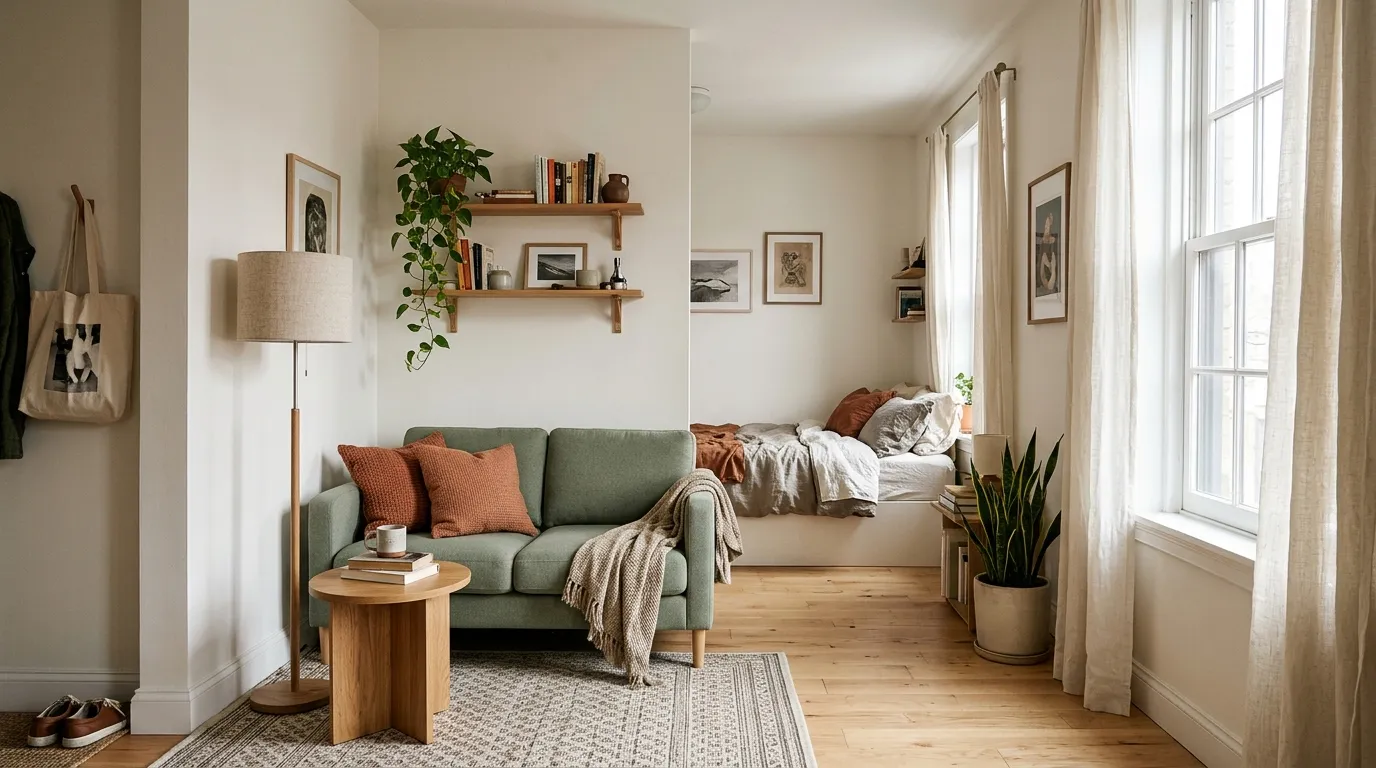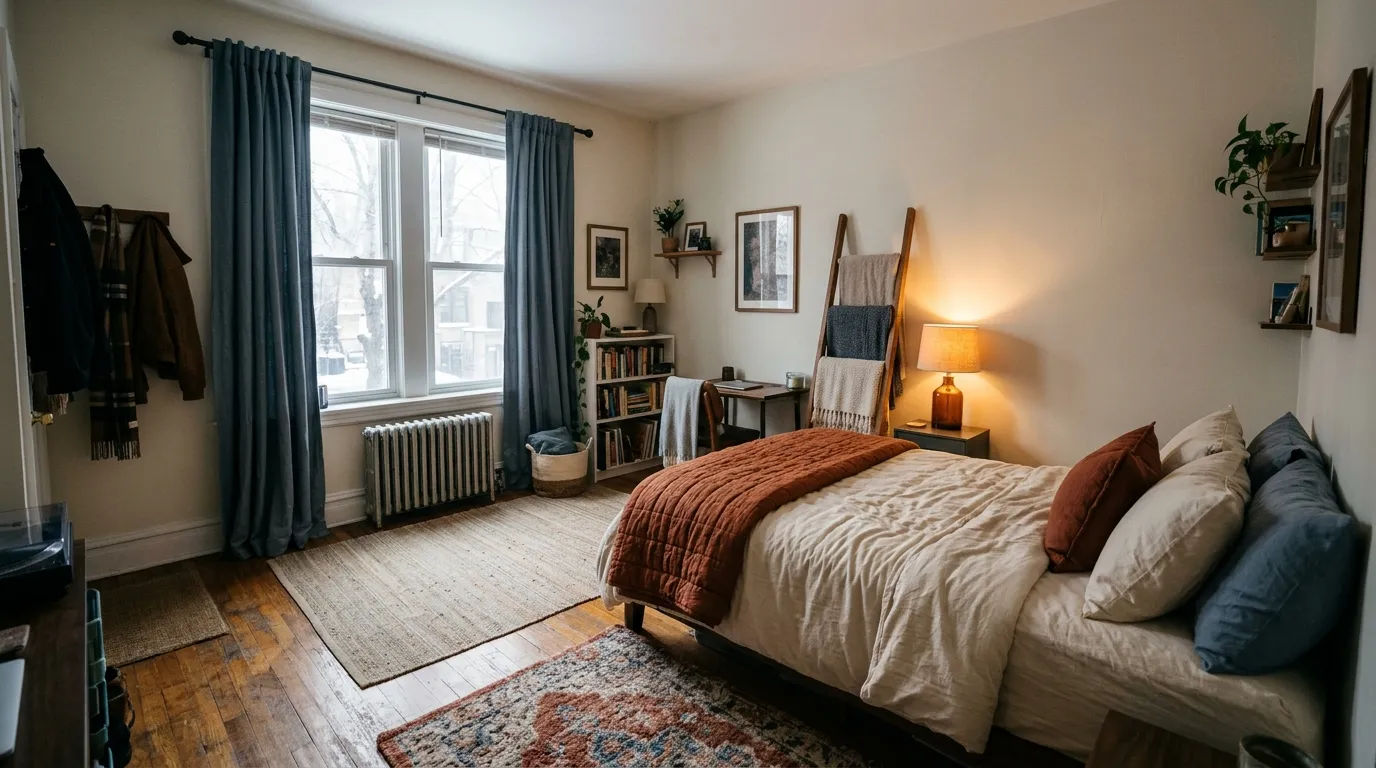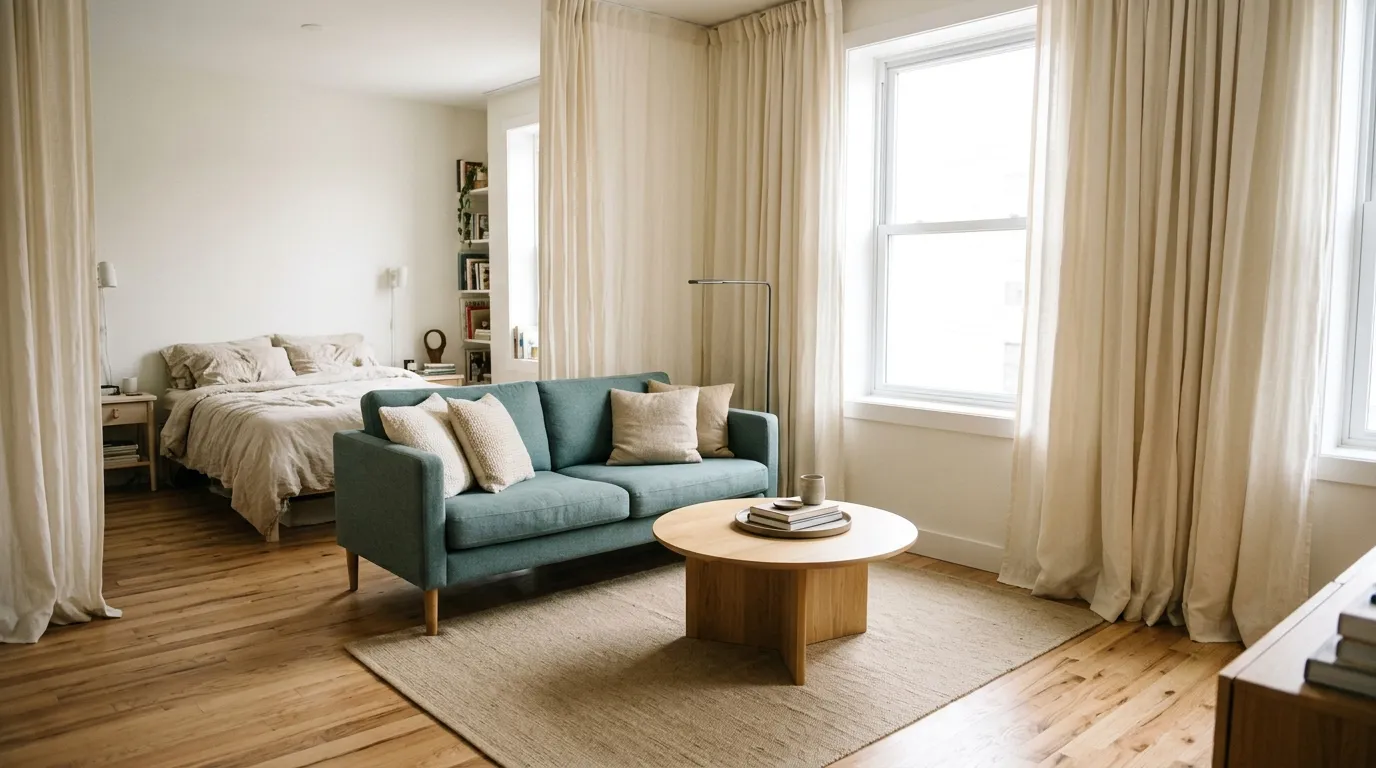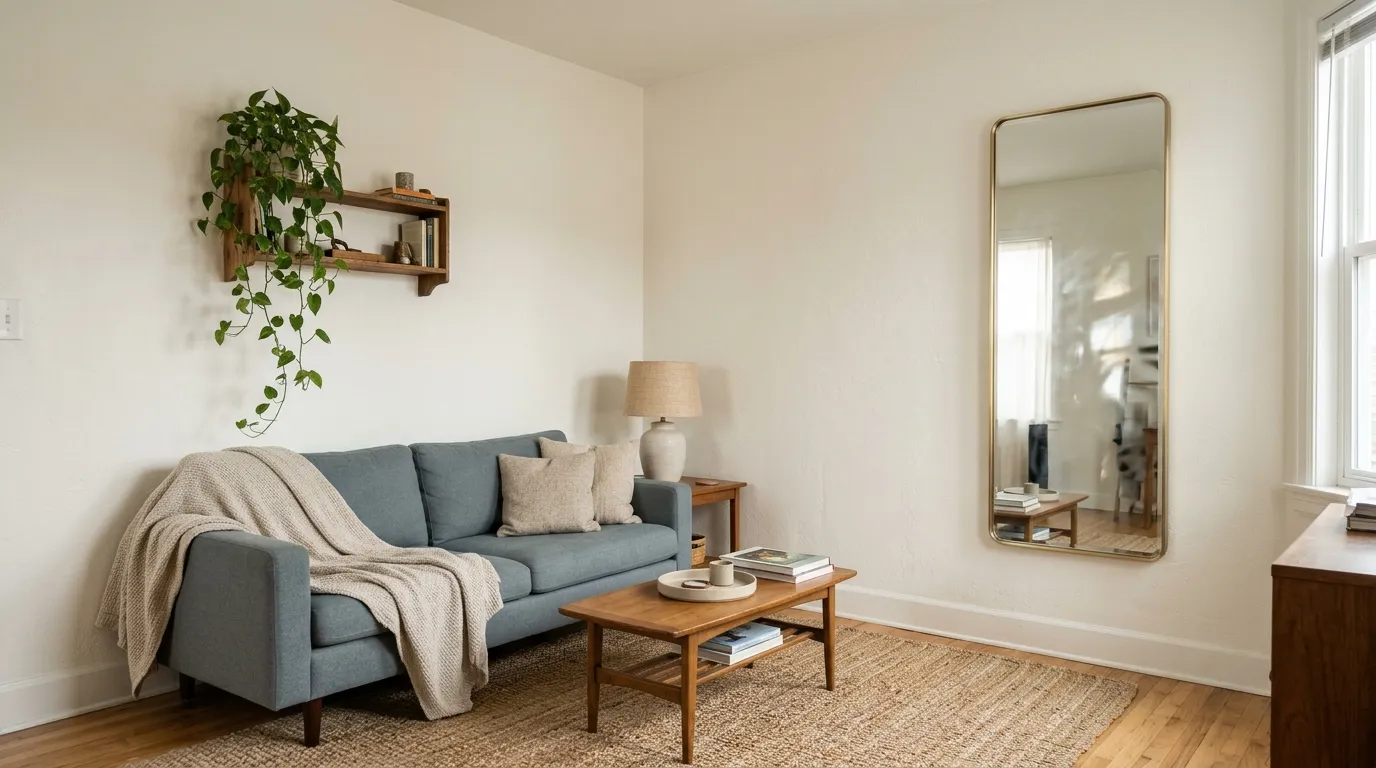

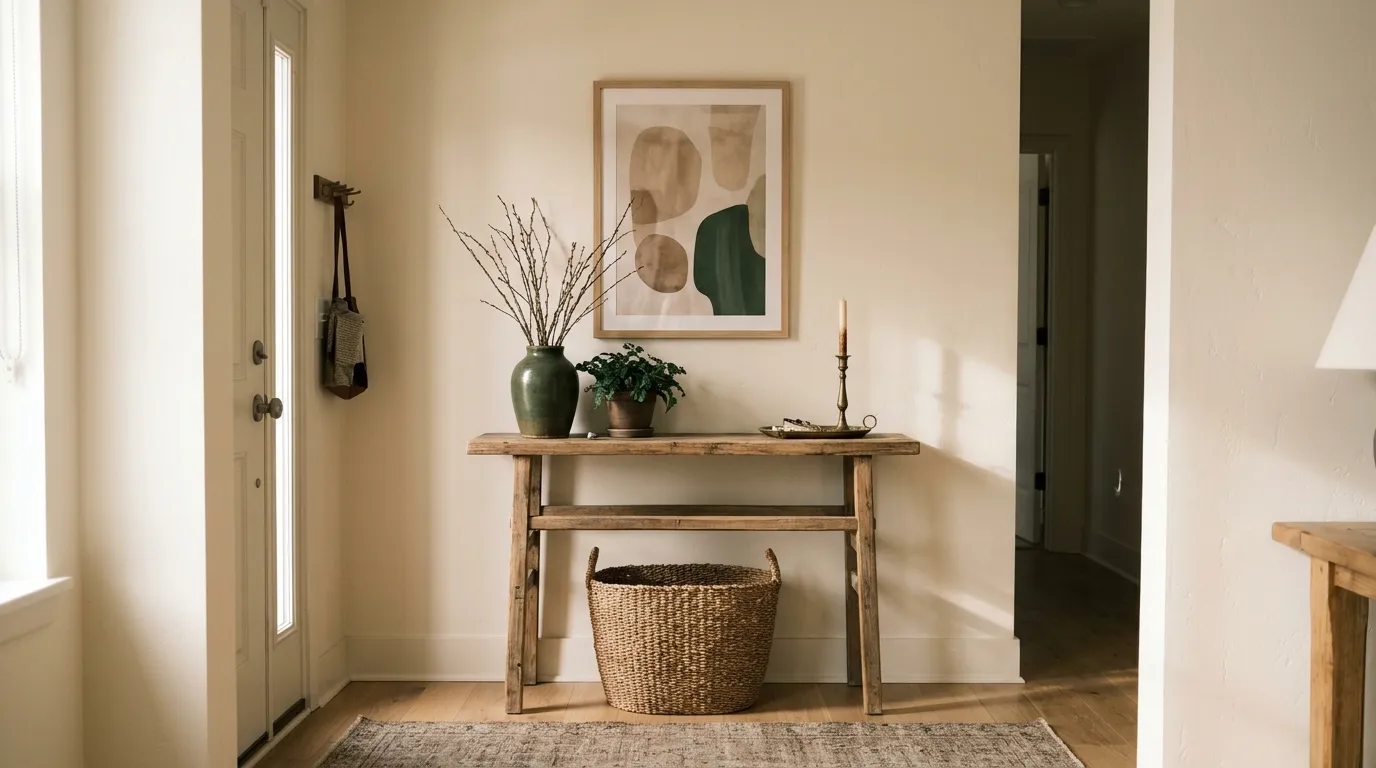
You walk into a thrift store with a loose idea of “something for the bookshelf,” leave with three mismatched candle holders, and the shelf at home still looks empty. Learning how to thrift home decor is less about luck and more about arriving with a plan.
What you need is a way to tell a good find from a bargain that never gets used: the right measurements, a spending limit, a short list, and a quick check for every piece before it reaches the register.
Here are eight steps I’d follow in order. Each one is short, and together they take the guesswork out of secondhand shopping.
Before You Start: Materials and Time
- Time: 30 minutes of planning, then 1–2 hours per shopping trip
- Difficulty: easy
- Budget level: budget-friendly
- Caution level: take care (cords, heavy items, and paint labels)
What You’ll Need
- Tape measure
- Phone for photos and notes
- Paint chip or fabric scrap of your main colors
- Small flashlight
- Reusable bags and a soft blanket for fragile finds
- Microfiber cloths and mild dish soap
- Sandpaper, primer, and paint (only for project pieces)
1. Measure Your Space First
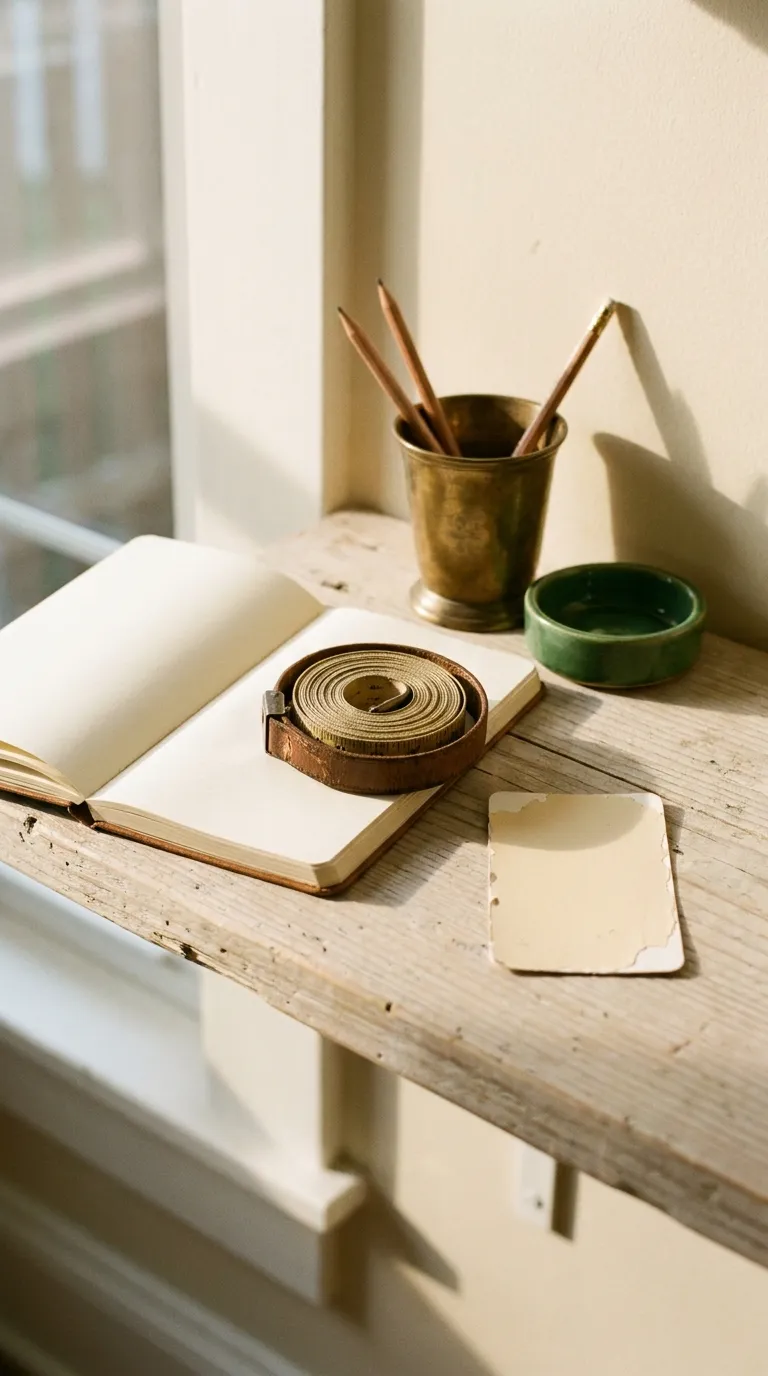
Most thrift regrets start with a piece that looked perfect under store lights and did not fit at home. Measuring first gives you a filter, so you can walk past the oversized console and head straight for the narrow shelf that fits the gap by your window. The trade-off is about 30 minutes of prep, which is far less hassle than owning something you can’t use.
Photos matter as much as numbers. A few pictures of the room, plus a small color reference like a paint chip or fabric scrap, let you judge a find in seconds instead of guessing from memory. Carry the references with you, because store lighting can be warmer or cooler than your home and change how a color reads.
How to Do It
- Measure the width, depth, and height of each spot you want to fill, and save the numbers in your phone
- Leave about 30 inches clear for walking paths when you plan for furniture
- Take one wide photo and one close photo of each spot in daylight
- Tuck a paint chip or fabric scrap into your bag
- Keep a tape measure with you on every trip
Why It Works
Numbers and photos turn “I like it” into “it fits and it matches.” You make the decision at the shelf, while the piece is still in your hands, instead of after you’ve carried it home and found out it’s a few inches too wide. That one habit prevents a lot of avoidable returns.
Common Mistakes to Avoid
- Trusting memory for sizes
- Forgetting to measure the doorway a piece must pass through
- Skipping a color reference
A Simple Rule to Remember
If you don’t have the measurements with you, don’t buy furniture.
2. Write a Short Wish List
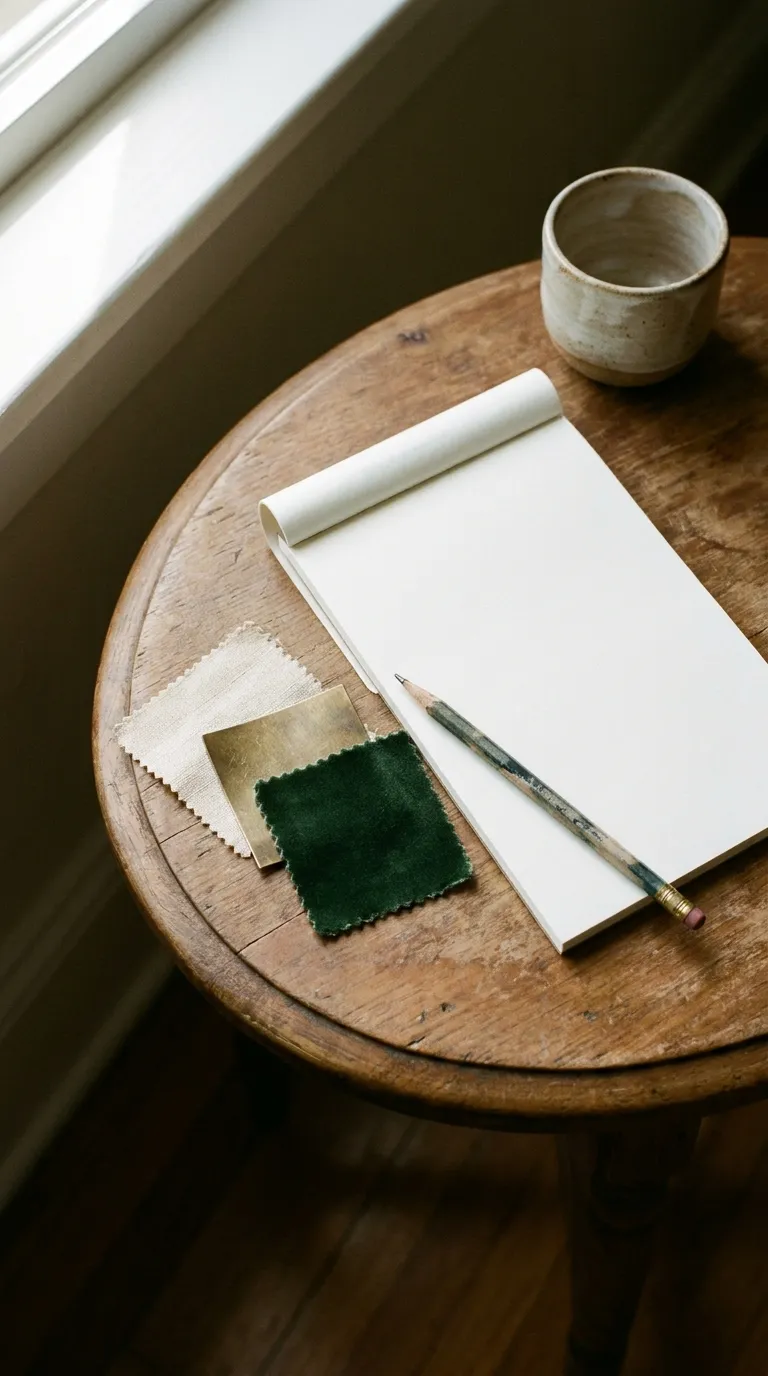
A wish list keeps you from buying whatever is shiny. Pick three to five items your space actually needs, such as a table lamp, a mirror, a set of frames, a vase, or a side table, and write down the size, color, and material you want for each. If you’re furnishing a place from scratch, run through a first apartment checklist first so the basics come before the extras.
A short list also gives you permission to say no, because a charming item that isn’t on it can wait. Add a couple of flexible slots like “one interesting object” or “something with texture,” since thrift shelves change often and a list with room to bend works better than one that names exact items. Leaving empty-handed some days is a good outcome, not a failed trip.
How to Do It
- Walk through each room and note one gap, such as dim lighting, a bare wall, or an empty shelf
- Rank the gaps from most to least noticeable
- Write a size range, a color family, and a material for each top item
- Add two flexible slots for unexpected finds
- Keep the list in your phone so it’s with you on every trip
Why It Works
A written list turns browsing into hunting. You compare every object against a specific need, which makes it easier to skip things that are only appealing in the moment. The flexible slots keep the plan from feeling rigid, so you can still say yes to a lucky find.
Common Mistakes to Avoid
- Making the list so strict that nothing matches
- Adding more than five priority items
- Treating the list as a rule instead of a guide
A Simple Rule to Remember
Write down three to five needs and leave two slots open for surprises.
3. Set a Spending Limit
A realistic home decor budget keeps secondhand shopping from turning into a pile of small impulse buys. Decide the total first, then split it across the items on your list, giving the biggest share to the piece you’ll see and use every day, like a lamp or a mirror. Smaller accents get whatever is left.
Thrift prices vary from shop to shop, so hold back a small buffer for a find you didn’t plan on, plus a little for cleaning supplies or paint. Without one, a great surprise forces you to walk away or skip something on your list. A limit can feel restrictive at first, but it’s what makes the pile at checkout look intentional.
How to Do It
- Choose a total you’re comfortable spending, and don’t go above it
- Split it across your wish list, with the largest share going to your daily-use piece
- Hold back a small buffer for surprises and cleaning supplies
- Note what you spend in your phone as you go
- Pause before any purchase that isn’t on the list, and decide at the end of the trip
Why It Works
A limit makes you compare items against each other instead of buying each one in isolation. It also makes walking away easier, since the number is already decided before you pick anything up. You end up with fewer, better pieces rather than a bag of maybes.
Common Mistakes to Avoid
- Spending the whole limit on the first good find
- Forgetting paint, hardware, or cleaning supplies
- Setting a limit but never tracking it
A Simple Rule to Remember
Give the biggest share to the piece you’ll see and use most.
Type in your total and choose a starting point to see how it could split across categories.
4. Choose the Right Shops
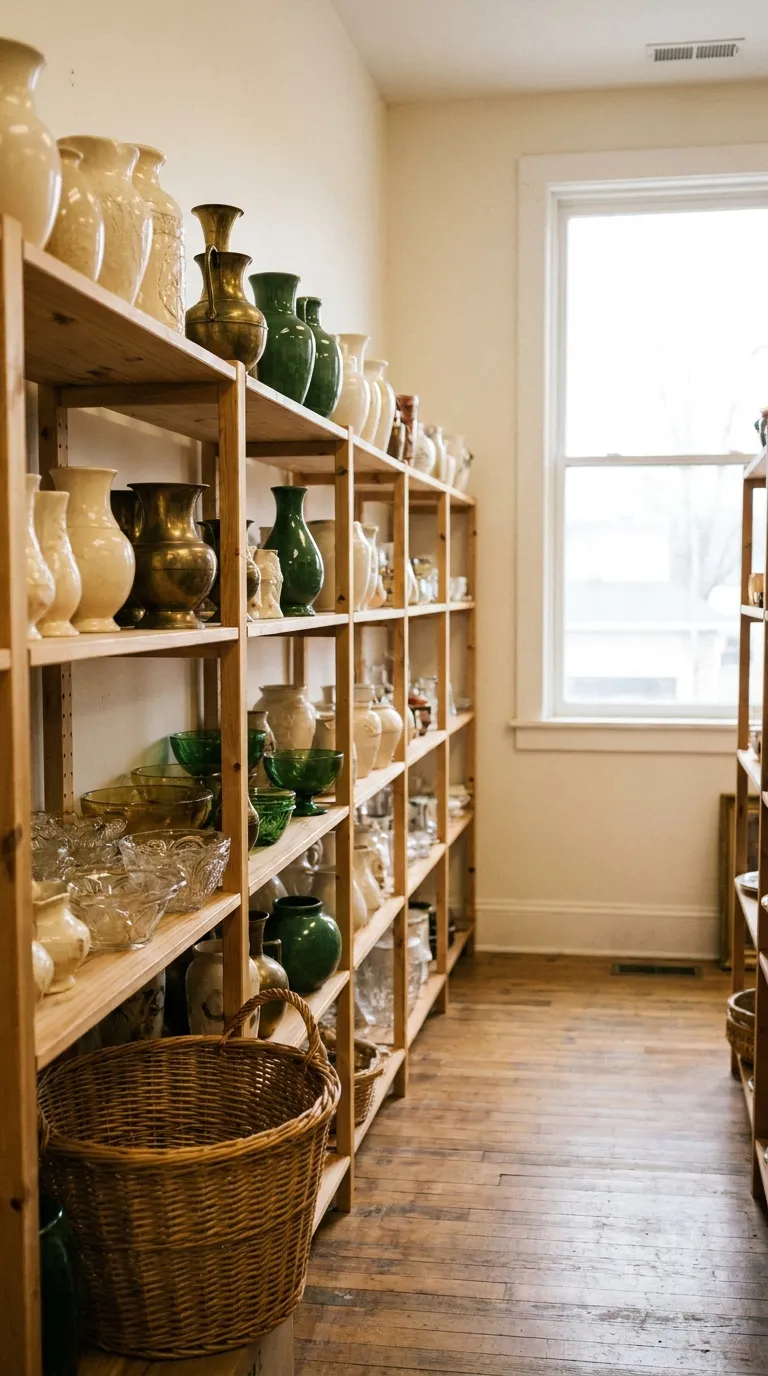
Different types of shops are good for different things, so match the store to the item. Here’s how the main options compare.
| Shop Type | Good For | Watch Out For |
|---|---|---|
| Thrift and charity shops | Mugs, vases, frames, baskets | Stock is hit or miss |
| Consignment shops | Lamps, mirrors, small furniture | Prices tend to run higher |
| Estate sales and flea markets | Glassware, solid wood, mirrors | Good pieces sell quickly |
| Online marketplaces | Larger furniture, sets | Condition shown only in photos |
Timing matters as much as the shop. Stock changes often, so short, regular visits usually beat one long trip, and it’s worth asking staff when new items go out. The trade-off is that frequent visits take more of your week, but each one costs little and leaves less room for regret.
How to Do It
- Match each item on your list to a shop type from the table
- Ask staff which days new items go out
- Visit on a regular schedule, even if it’s only for 20 minutes
- Scan the whole store before you pick anything up
- Check back corners and bottom shelves, which many shoppers skip
Why It Works
Each type of shop has its strengths, and going to the right one for each item saves time. It also raises your chances of finding something in good shape, because you’re looking where that item tends to turn up.
Common Mistakes to Avoid
- Visiting one shop once and giving up
- Browsing only the decor section and missing kitchen and furniture aisles
- Rushing a single big trip when stock changes often
A Simple Rule to Remember
Scan the whole store before you pick anything up.
5. Inspect Every Piece
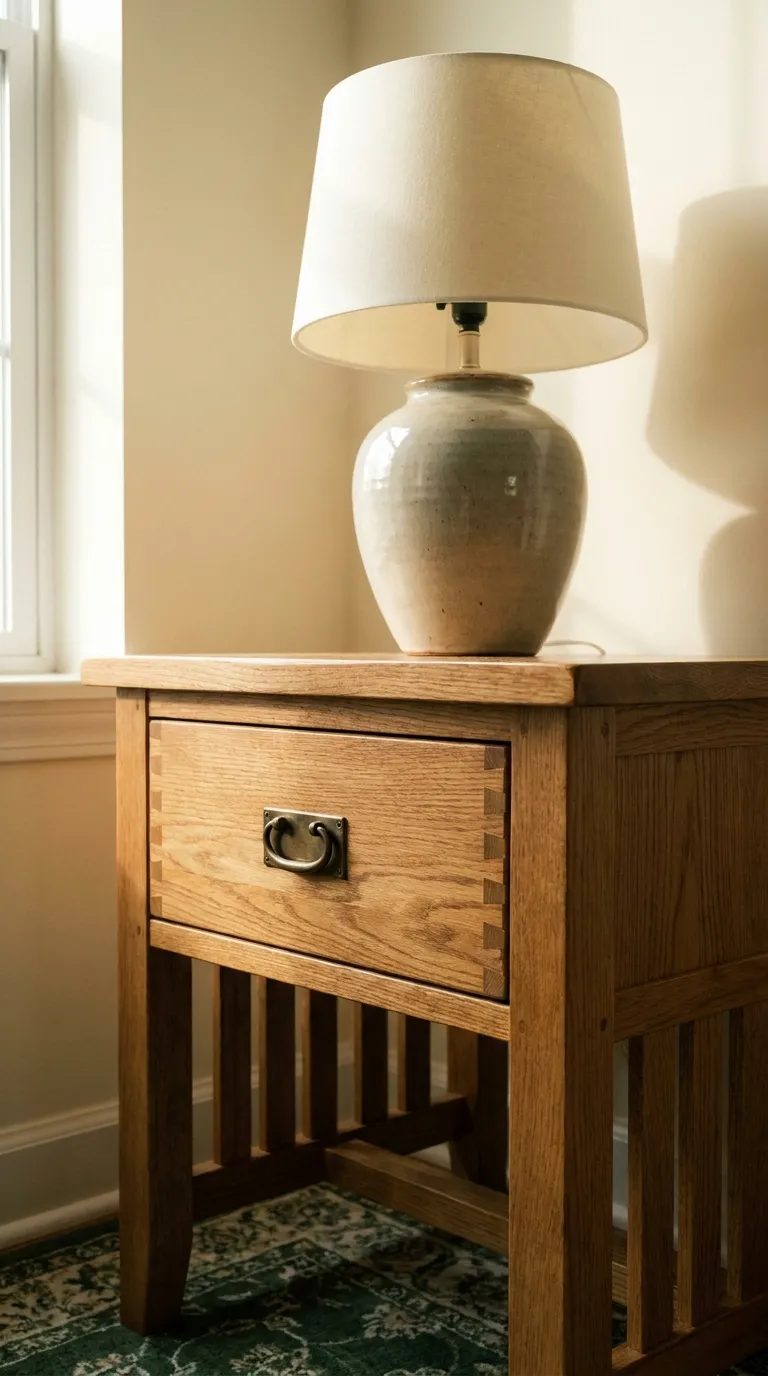
A quick inspection separates a good find from a project you’ll never finish. Give every piece a 60-second once-over: look at it, touch it, and smell it. Surface flaws like scuffs, faded finishes, and missing knobs are easy to fix, but structural problems rarely are.
Check the structure first. Push gently on furniture to see if it wobbles, open every drawer, and look underneath. Pass on deep cracks, wobble that won’t stop, strong musty or smoke smells, and frayed cords. If a lamp needs rewiring, leave it behind or hire a licensed electrician. You’ll leave some good-looking pieces on the shelf, and that’s the point of the check.
How to Do It
- Look over the whole piece in good light, using your phone flashlight for dark corners
- Push gently on furniture to test for wobble, and open every drawer
- Run a fingertip along the edges of glass and ceramics to find chips and hairline cracks
- Smell upholstered and wooden pieces, including the inside of drawers
- Check lamp cords for fraying and cracks, and look for a care label on fabric
Why It Works
A consistent routine keeps emotion out of the decision. You judge every piece on the same checks, so a pretty finish never hides a weak frame. Over a few trips, the routine gets fast enough that you barely notice it.
Common Mistakes to Avoid
- Falling for a finish and skipping the structure check
- Hoping a strong smell will fade at home
- Buying a lamp with a damaged cord and plugging it in as is
A Simple Rule to Remember
Surface flaws are fixable; structural flaws and strong odors are not.
Try it: look at each find and decide whether to keep it, fix it, or pass.
6. Look Past Dated Finishes
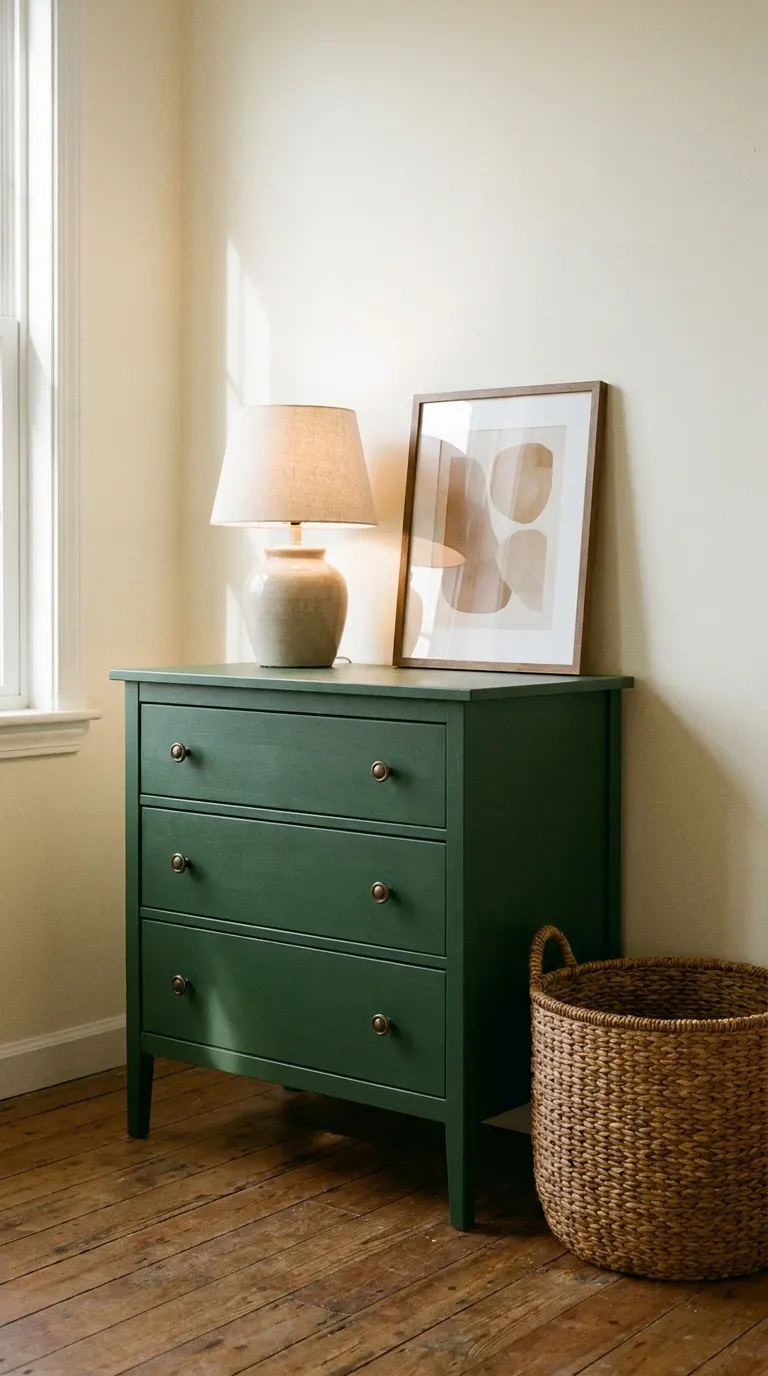
Thrift stores are full of pieces with good shapes and tired finishes, like a brass lamp with a yellowed shade or a wood frame with chipped gold paint. Look at the shape and the materials instead of the color. A sturdy form can take paint, a new shade, or fresh hardware.
Simple updates make the biggest difference: swap knobs, paint a frame, replace a lampshade, or refinish a worn top. Keep each project small enough to finish in one afternoon. The trade-off is time and a bit of mess, so only buy a project piece if you can name the update and have space to do it.
How to Do It
- Name the update before you buy: paint, new knobs, a new shade, or a fresh finish
- Picture the piece in your color palette using your phone photos
- Check that replacement parts, such as knobs or shades, come in standard sizes
- Sand lightly, wipe clean, and prime if the product label calls for it
- Paint in thin coats and let each coat dry fully
Renter Note
Check your lease before painting walls or swapping fixed hardware, and keep original knobs in a labeled bag so you can put them back. Movable furniture is the easier choice in a rental. Follow the product label and ventilate the room whenever you use paint or finish.
Why It Works
Paint and hardware change how a piece looks without changing how it’s built. You pay for good bones and add the style yourself, which is where thrifting stretches a limit the furthest.
Common Mistakes to Avoid
- Buying a project piece with no plan for it
- Skipping light sanding and primer when the label calls for them
- Painting in a closed room
A Simple Rule to Remember
If you can’t name the update in one sentence, leave it on the shelf.
7. Clean and Refresh Your Finds
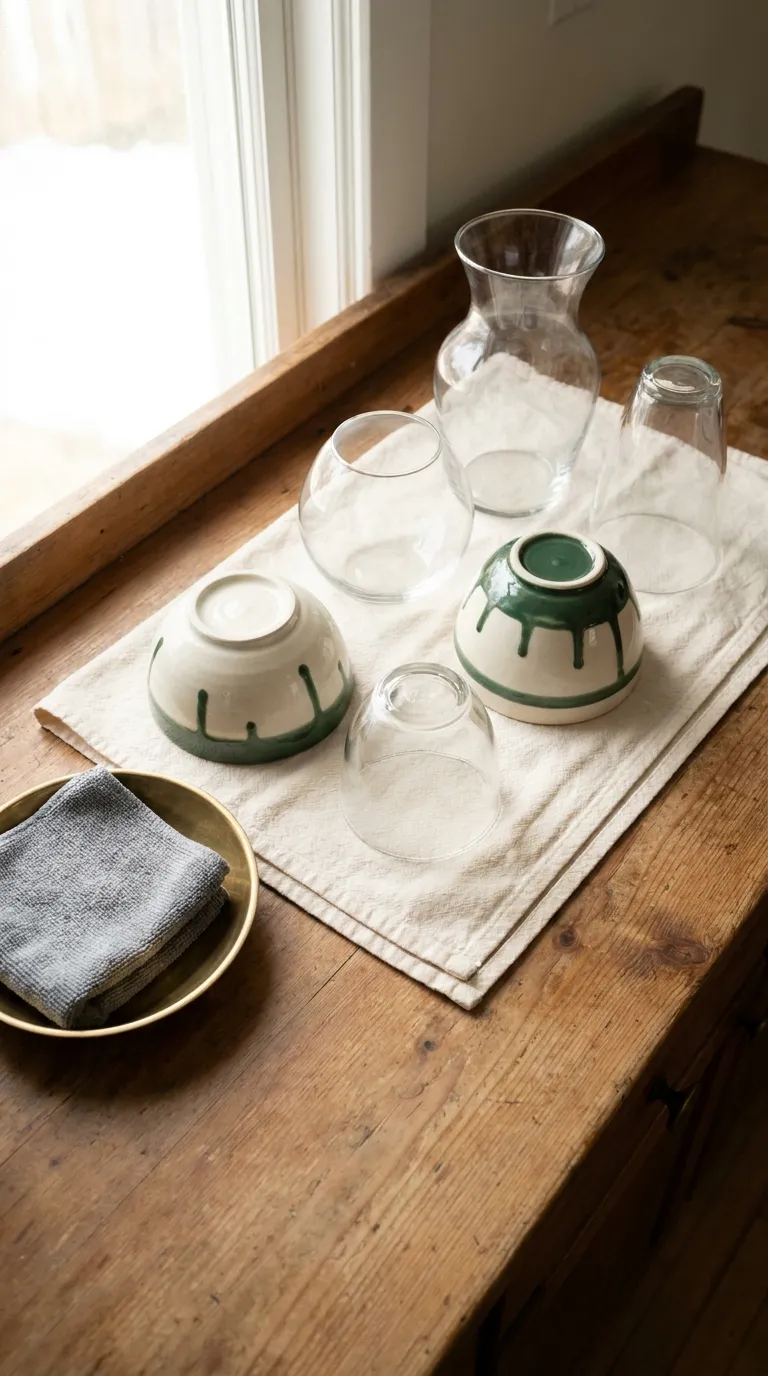
Secondhand pieces need a reset before they join your room. Wipe or wash everything before it touches your shelves, and check the care label or the material before choosing a method. Glass and glazed ceramic can usually handle mild soap and warm water, while wood, metal, and fabric need gentler care.
Cleaning is also when pieces start to look like yours: a wiped wooden surface, a fresh shade, or glass that sparkles again. The trade-off is one more step between buying and displaying, so set aside a corner of the room for pieces that are waiting to be cleaned or dried.
How to Do It
- Wipe every piece with a damp cloth before you place it in your room
- Wash glass and glazed ceramics with mild dish soap and warm water
- Clean wood with a lightly damp cloth, then dry it right away
- Spot-test any cleaner on a hidden area first
- Replace worn parts, such as a yellowed lampshade or missing felt pads, and let everything dry fully
Why It Works
Cleaning removes shop dust and odors, and it shows you the real condition of each piece. It also keeps secondhand items from looking secondhand beside the rest of your things. A few minutes at the sink can change how a piece reads on the shelf.
Common Mistakes to Avoid
- Soaking wood or glued pieces in water
- Using a strong cleaner without a spot test
- Displaying items before they’re fully dry
A Simple Rule to Remember
Spot-test any cleaner on a hidden area before you use it.
8. Style Finds with What You Own
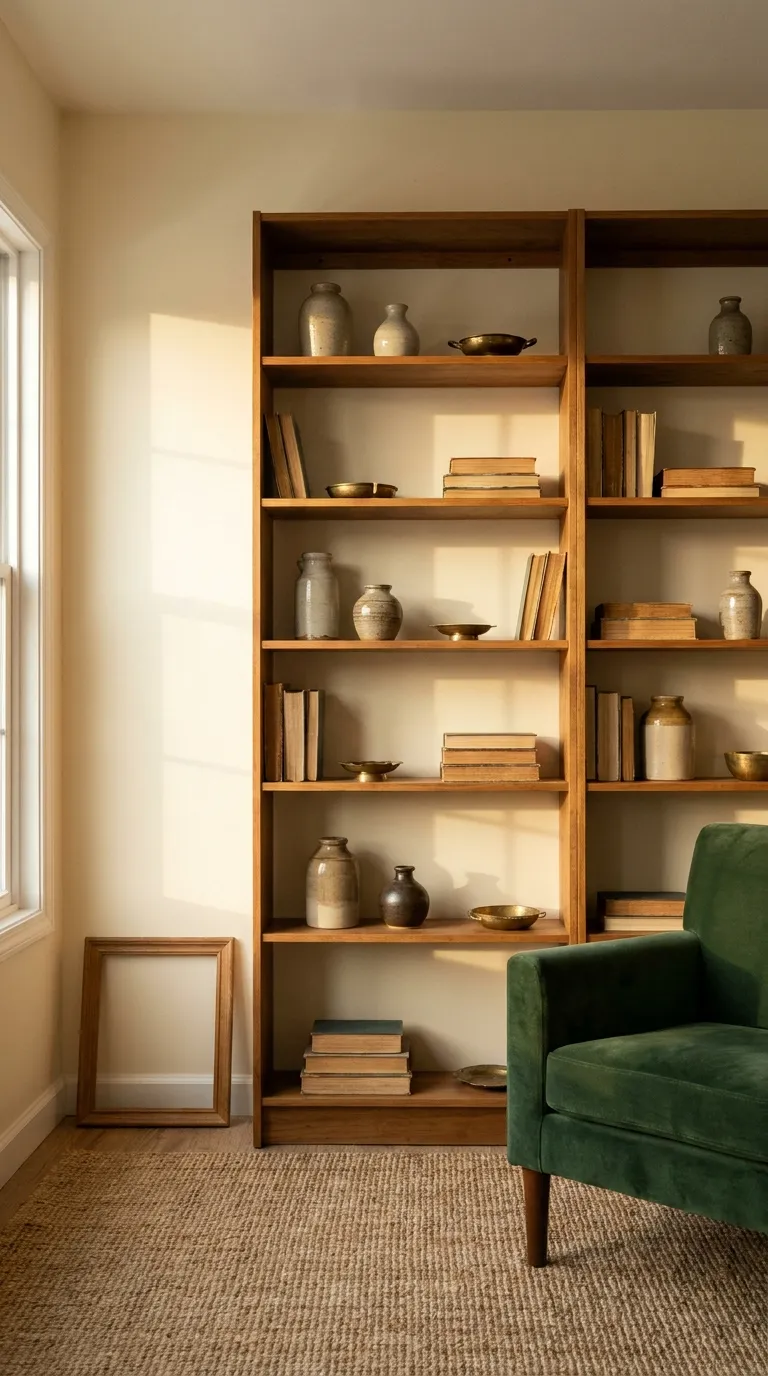
Thrifted pieces look best when they share something with what’s already in your room: a color, a material, or a shape. Group items in threes, and repeat one color in at least two places so the eye reads a pattern. Mixing old and new keeps a room from looking like it belongs to a single era.
Edit before you add. Set all your finds out, then remove one item from each group. You may not use everything you bought, but a calmer shelf looks more deliberate than a full one, and the extra piece can rotate in later.
How to Do It
- Group items in threes by color, material, or shape
- Vary heights within each group by using a stack of books or a small tray
- Repeat one color or material in at least two places in the room
- Leave some open space on each shelf so every piece can be seen
- Live with the arrangement for a few days, then remove one item from each group
Renter Note
Check your lease before drilling into walls, and use adhesive hooks only within their stated weight limit. For a heavy mirror or shelf, use anchors rated for its weight and follow the product’s instructions, or lean the piece against the wall instead.
Why It Works
Repetition ties unrelated pieces together, and varied heights guide the eye from one object to the next. Editing leaves each piece enough room to stand out, so your best finds get noticed.
Common Mistakes to Avoid
- Setting every find out at once
- Lining items up at the same height
- Hanging a heavy piece on a light hook
A Simple Rule to Remember
Group in threes, repeat one color twice, then remove one item.
Quick Step Cheat Sheet
Use this table as a fast reminder before each thrift trip.
| Step | Why It Works | Quick Fix |
|---|---|---|
| 1. Measure Your Space First | Fit and color checked at the shelf | Keep a tape measure in your bag |
| 2. Write a Short Wish List | Turns browsing into focused hunting | Keep two slots open for surprises |
| 3. Set a Spending Limit | Makes comparing and walking away easier | Hold back a small buffer |
| 4. Choose the Right Shops | Each shop type suits different items | Scan the whole store first |
| 5. Inspect Every Piece | Same checks keep emotion out | Pass on wobble, odors, frayed cords |
| 6. Look Past Dated Finishes | Good bones plus simple updates | Name the update in one sentence |
| 7. Clean and Refresh Your Finds | Reveals true condition, removes odors | Spot-test cleaners on a hidden area |
| 8. Style Finds with What You Own | Repetition ties mixed pieces together | Group in threes, then remove one |
The Principles Behind These Steps
Prepare Before You Shop
Measurements, a short list, and a spending limit all happen at home, where you can think clearly. The store is the wrong place to make those decisions, because everything there is designed to look good.
Work in Order
Each step feeds the next one. The list tells you which shops to visit, the inspection protects the limit, and cleaning and styling only matter for pieces that passed the earlier steps.
How to Thrift Home Decor on a Schedule
Short, regular visits beat a single marathon trip. Stock changes, your list can stay small, and you never have to buy something just because you won’t be back.
Test Small Before Committing
Bring home one or two pieces first and live with them for a few days. If they work, you’ll know what to look for next time, and if they don’t, you’ve lost very little.
Leave Room for Adjustments
A great find can change the plan, and that’s fine. Update your list, reshuffle your slots, and keep the measurements handy.
Common Thrifting Mistakes Worth Skipping
Buying Because It’s Cheap
A low tag doesn’t make a piece useful. Fix: ask whether it’s on your list, and if it isn’t, wait until the end of the trip to decide.
Skipping the Return Policy Check
Policies vary from shop to shop, and some sales are final. Fix: ask at the counter before you pay.
Ignoring Your Existing Colors
A beautiful piece can clash with everything you own. Fix: carry a paint chip or fabric scrap and hold it up to the find.
Final Tips for Success
Go With a Light Plan
You don’t need a perfect list. Three to five priorities and a clear limit are enough to keep you focused.
Keep a Thrift Kit Ready
A small bag with the basics means you’re always prepared to inspect and carry a find:
- Tape measure
- Small flashlight
- Reusable bags
- Soft blanket or towel for fragile pieces
- Microfiber cloth
- Paint chip or fabric scrap
Give Big Purchases a Pause
If a piece is large or hard to return, take a photo and step away for a few minutes. It may sell while you wait, and that’s a fair trade for avoiding a regret.
Count Empty-Handed Trips as Progress
Skipping the wrong piece protects your limit and your space. The right find is easier to spot when you’re not rushing.
Conclusion
Knowing how to thrift home decor means shopping with a plan: measure first, set a limit, check every piece, and style what you bring home with care.
None of it takes special skills. A tape measure, a short list, and a few minutes of inspection will do more for your space than a full cart ever could.
Pieces with a past can make a room feel collected rather than ordered from a single set, and you’ll know exactly why each one is there.
Save this guide for your next thrift trip, and keep it handy when you’re deciding what to bring home.