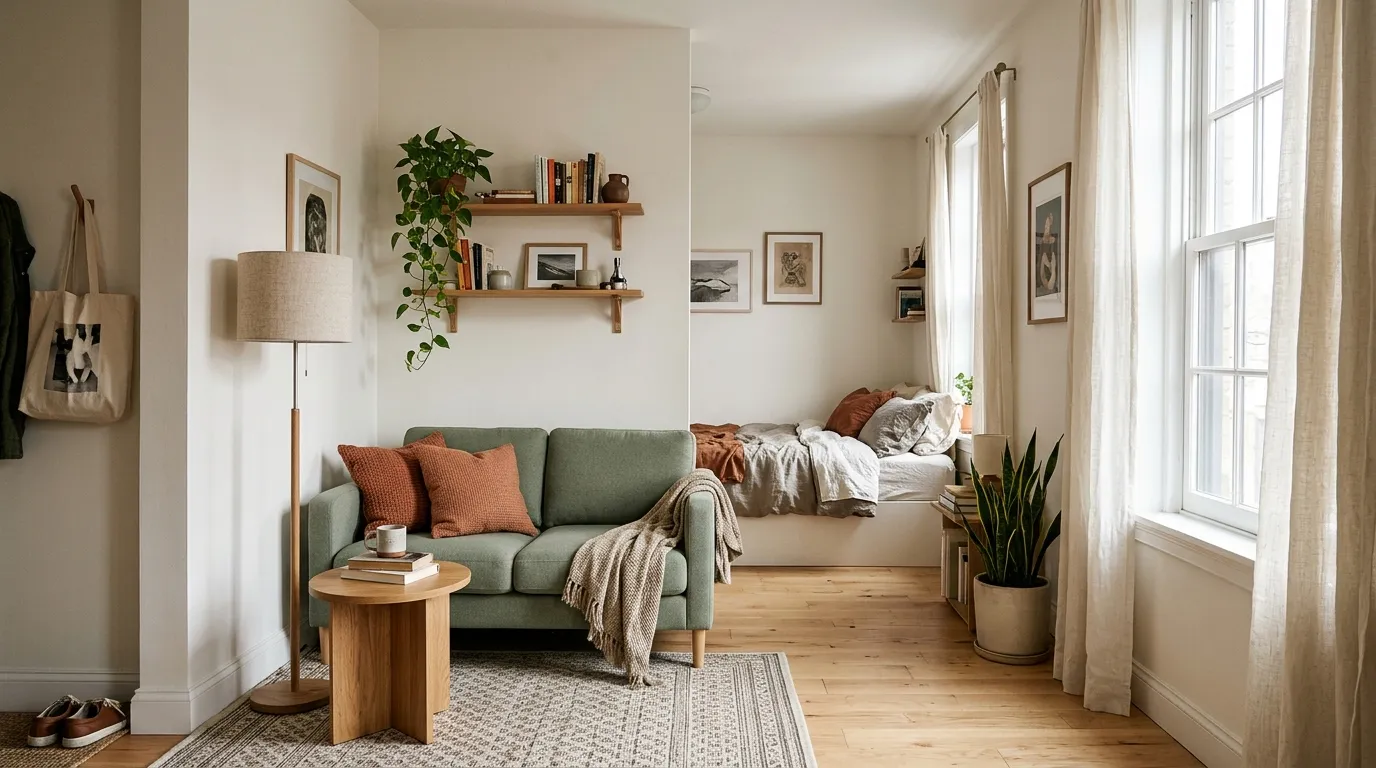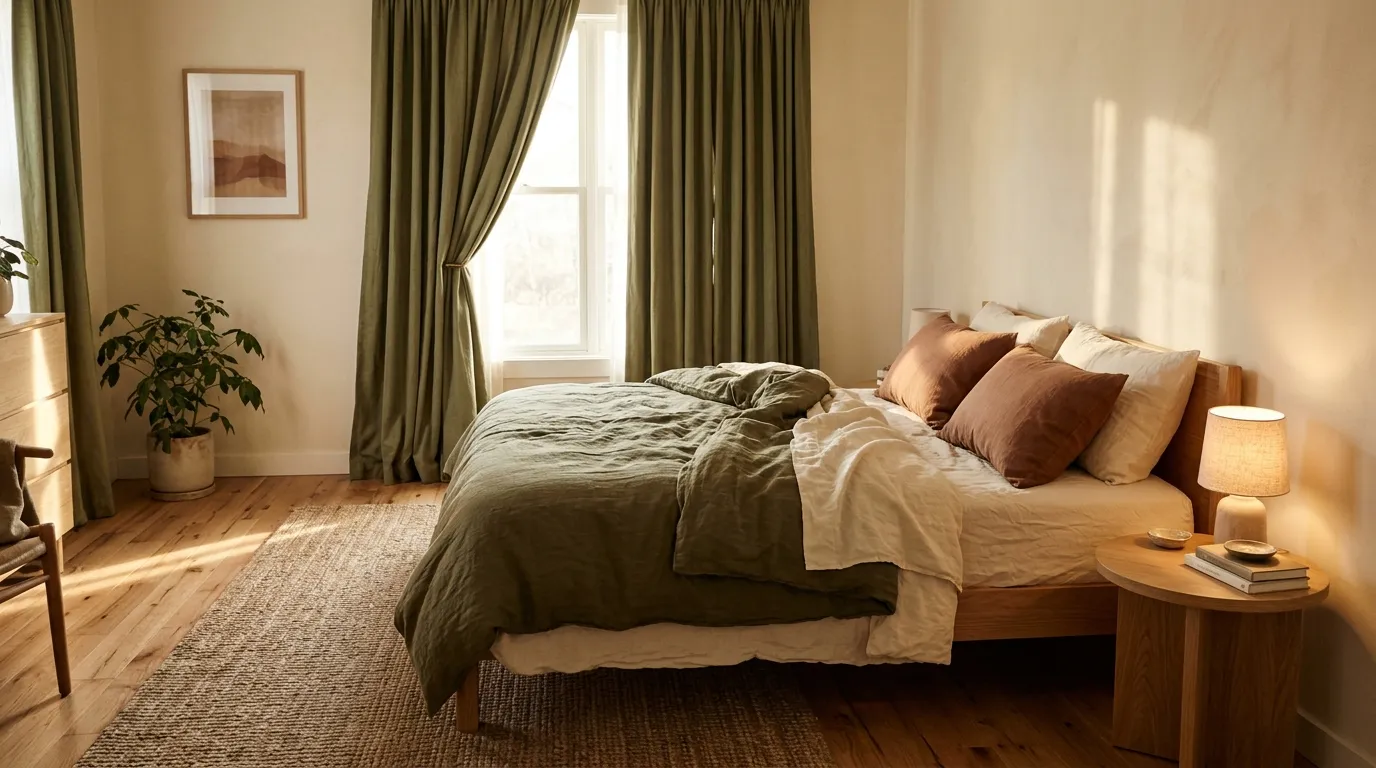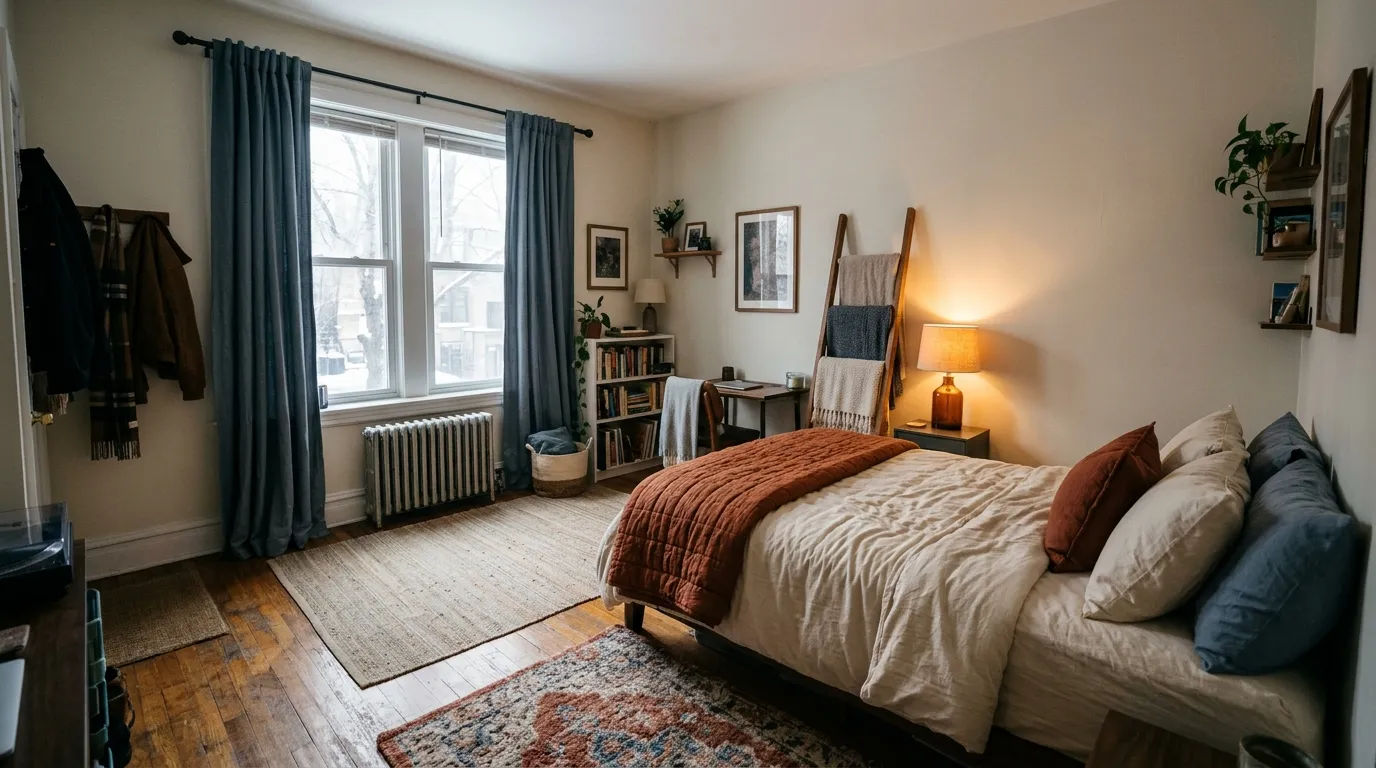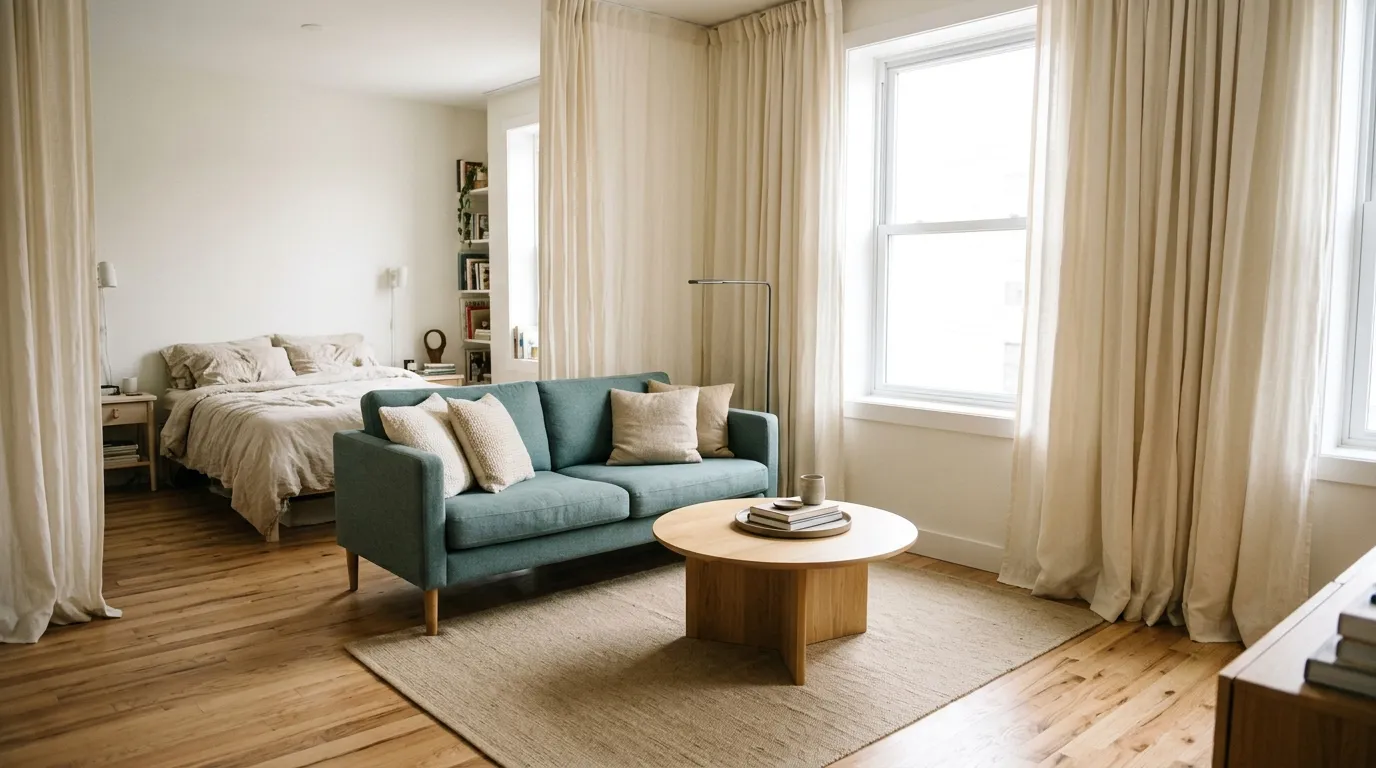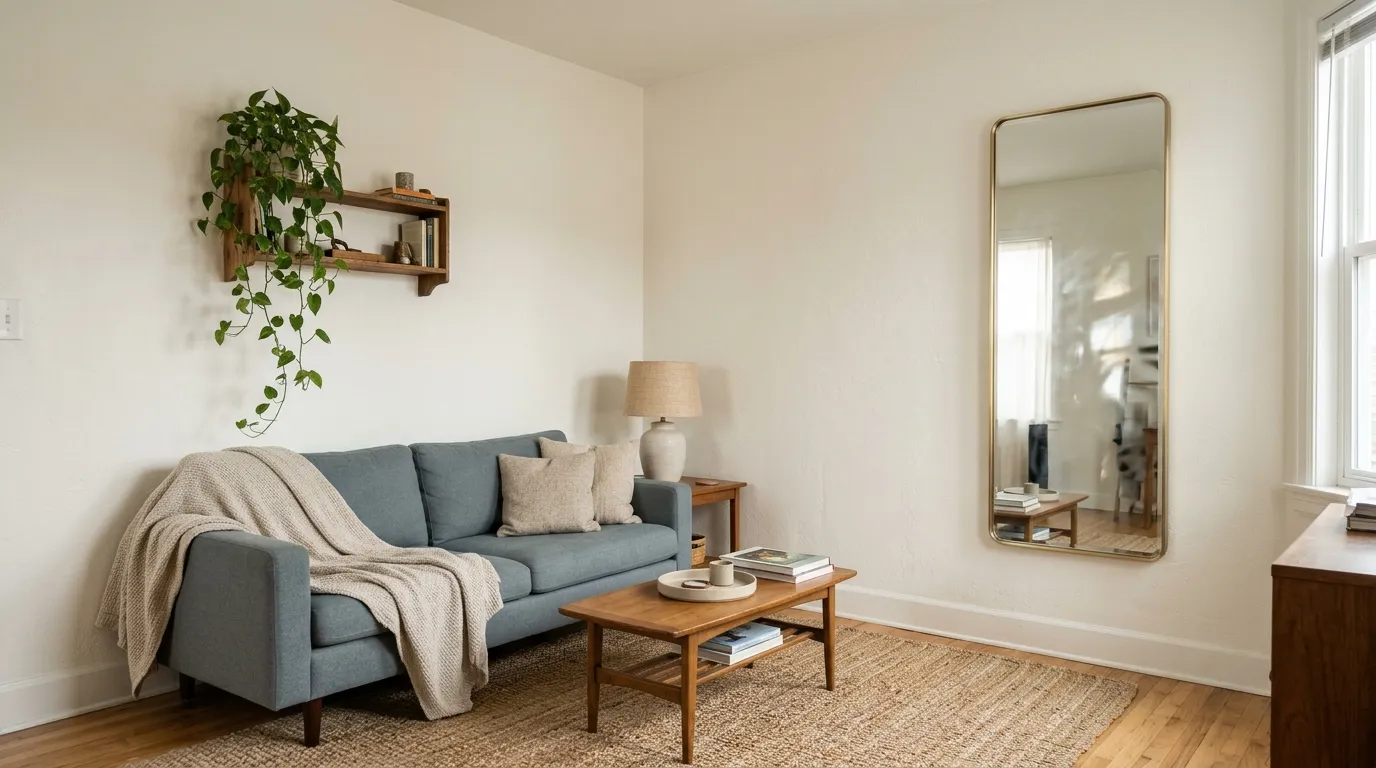

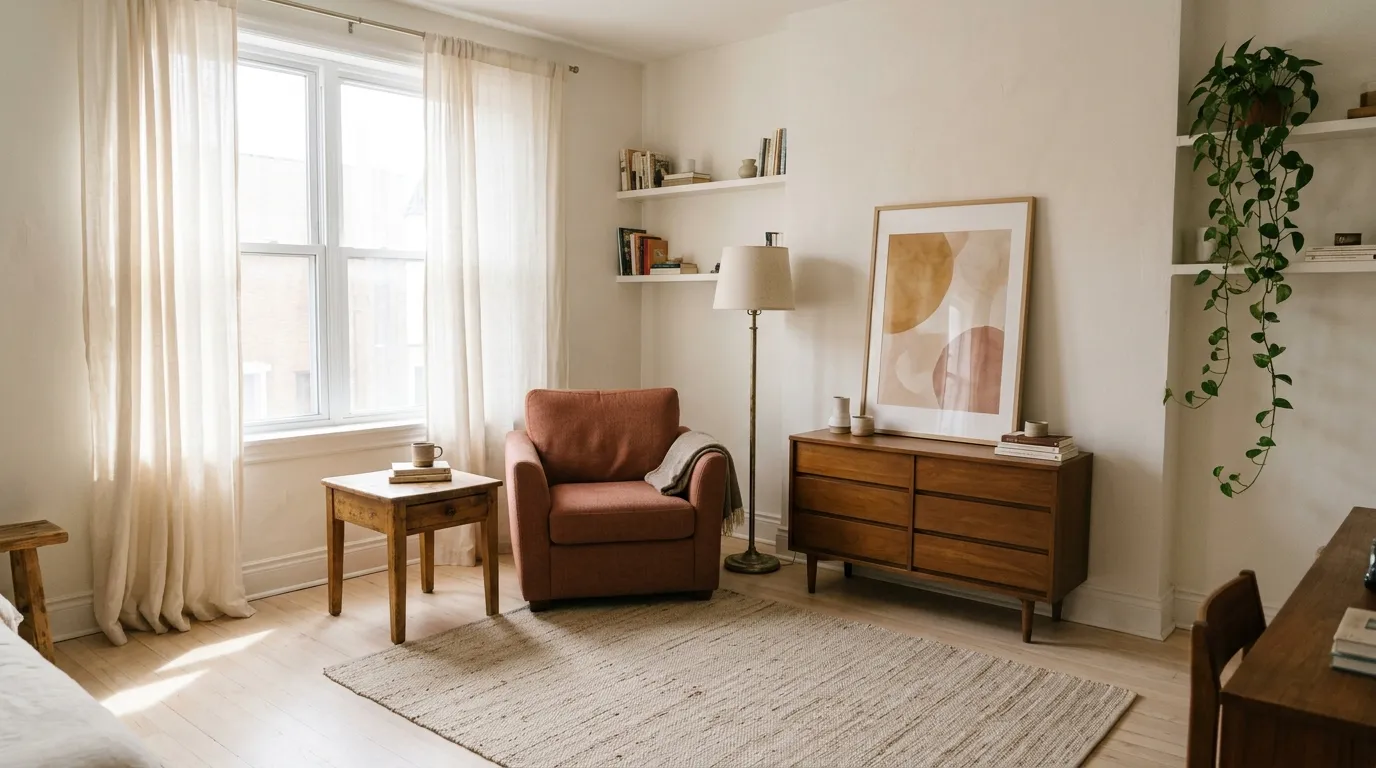
You carry in the last box, look around, and notice the apartment has walls, a floor, and one overhead light. It is no surprise that “decorate apartment on a budget” is such a common search, because an empty space like that can feel like a bill waiting to happen.
The good news is that a whole apartment does not need a whole shopping trip. With $500 and a clear order of spending, you can make each room feel finished without buying something just to fill a gap.
I’d treat this as eight small steps instead of one big project. Work through them in order, and stop spending the moment a room feels done.
Before You Start: Materials and Time
- Time: two to three weekends, mostly for hunting down secondhand pieces
- Difficulty: easy
- Budget level: budget-friendly
- Caution level: take care (check your lease before drilling or painting)
What You’ll Need
- Tape measure and a notepad
- Your phone for photos of each room
- Adhesive hooks and picture-hanging strips
- Access to thrift stores, flea markets, or online marketplaces
- Basic cleaning supplies for secondhand finds
1. Walk Through and List Needs
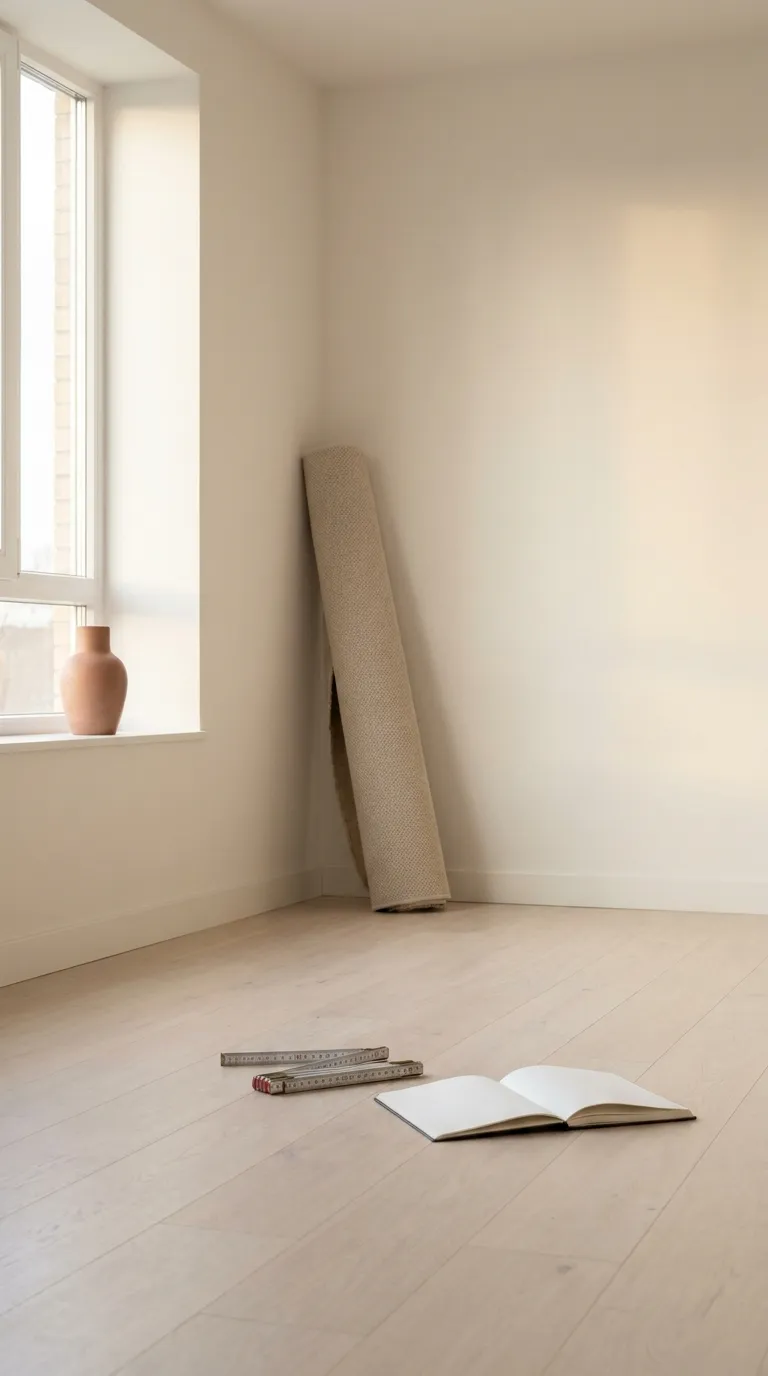
Before you spend anything, walk through every room with a tape measure and your phone. Write down what each room cannot do yet: nowhere to sit, no light after dark, no place to put a bag. Skipping this step is how people end up with six throw pillows and no spot to set down a cup of tea.
Then sort the list into needs and wants. A simple apartment checklist with one column for each keeps the list honest, and it keeps your total from disappearing on the first pretty thing you see. If a room already works for now, leave it off the list and move on.
How to Do It
- Walk every room and take one wide photo from the doorway.
- Measure the main wall, the open floor space, and each window you may cover.
- Write what each room cannot do yet, such as no reading light or no seat.
- Mark every item as a need or a want.
- Circle the three needs that bother you most each day.
Why It Works
A photo and a short list show what the room truly lacks, so you buy to solve problems instead of filling empty space. It also gives you numbers to carry into every shop.
Common Mistakes to Avoid
- Shopping before measuring
- Listing wants as needs
- Writing a list so long you never finish it
A Simple Rule to Remember
If an item does not solve a daily problem, it waits for the last round.
2. Split the Budget by Room
Now give your total a job in every room. Rooms you use daily, like the bedroom and the main living area, deserve the biggest shares, while a hallway or a bathroom can get very little. Finish the spaces you live in before the ones you only pass through.
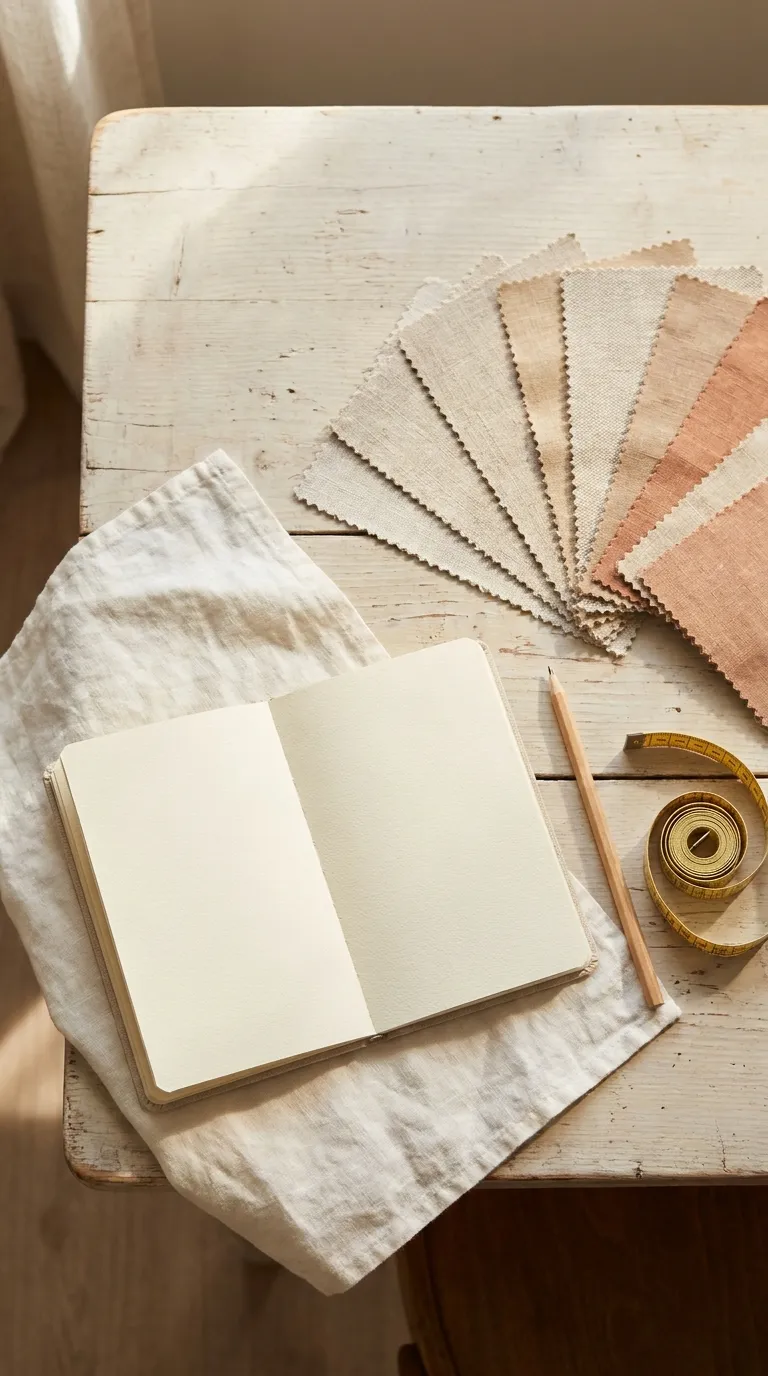
Writing a decor budget by room takes about ten minutes and prevents the most common problem: finishing one room and having nothing left for the others. Hold a small reserve back for surprises, like a lamp that needs a bulb or a rug that needs a pad.
Type in your total and pick a starting point to see how it could split across categories, then adjust the shares to match your rooms.
How to Do It
- Write your total at the top of a fresh page.
- List each room and rate it high, medium, or low for daily use.
- Give high-use rooms the largest shares and low-use rooms the smallest.
- Set aside a small reserve for surprises.
- Update the page each time you buy something.
Why It Works
Shares force you to decide where decor matters most before a shopping cart decides for you. A running total also makes impulse buys easier to spot.
Common Mistakes to Avoid
- Spending the whole total on the first room
- Skipping the reserve
- Forgetting extras like bulbs, hooks, and cleaning supplies
A Simple Rule to Remember
Spend the most where you sit, sleep, and spend the longest hours.
3. Buy Daily-Use Items First
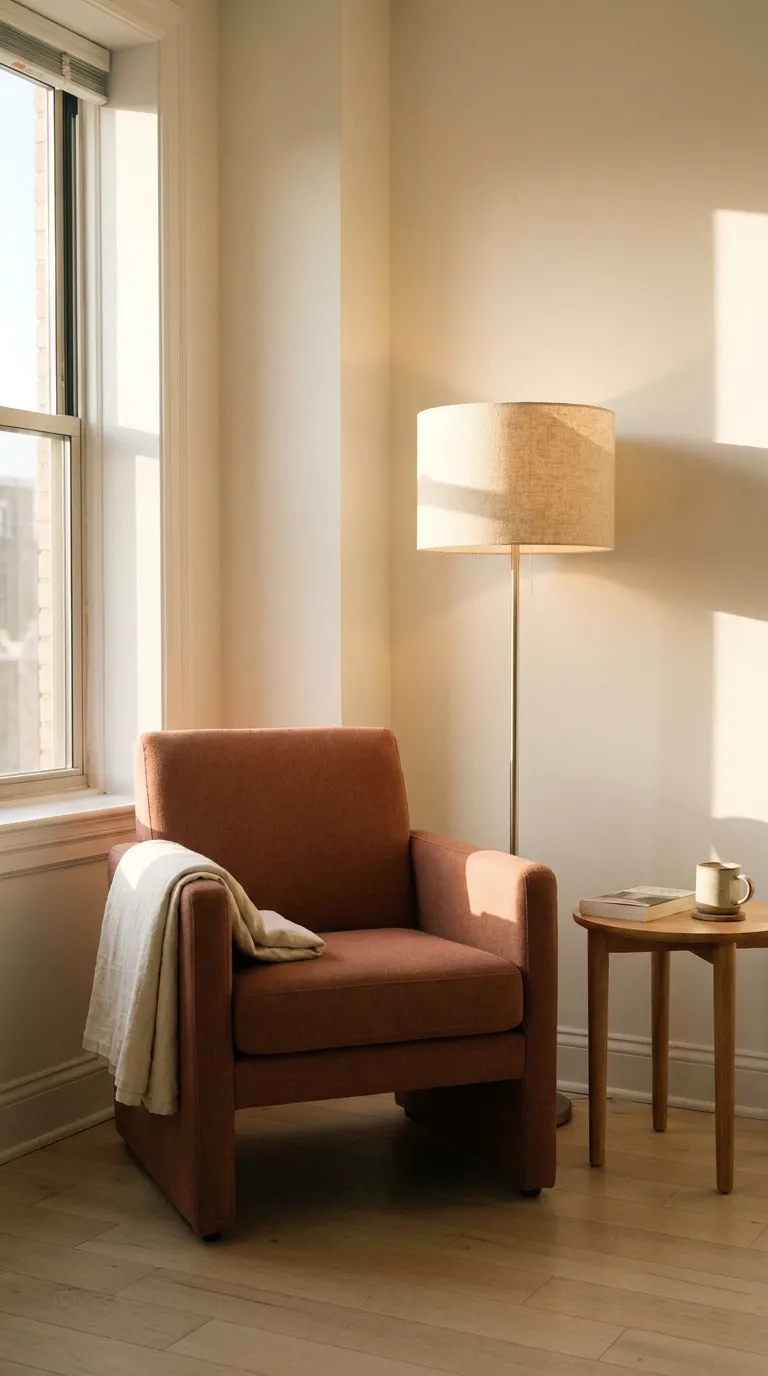
Spend in three rounds. Round 1 covers what you touch every day: bed linens, a lamp for a dark corner, and one comfortable seat. Round 2 covers big soft surfaces, like a rug and curtains. Round 3 covers finishing touches, such as wall art and small accents.
Order matters because a room with good light and a comfortable bed feels livable even when it is half empty, while a room full of accents and one bare bulb never does. If money runs short, you want it to run out during Round 3, not Round 1. The trade-off is patience: pretty accents have to wait.
Try it: tap each item to choose its round, then check your order.
How to Do It
- Pick the one lighting problem that bothers you most, such as a dark reading corner.
- Buy bed linens you like before any other textile.
- Add one comfortable seat for the main room.
- Check the wattage limit on each lamp’s label before choosing a bulb.
- Hold Round 2 and Round 3 until Round 1 is done.
Why It Works
Daily-use items change how the apartment feels every hour, so the first part of your total earns the most. A lit corner and a good bed make everything else look better.
Common Mistakes to Avoid
- Buying wall art before a lamp
- Relying only on the ceiling light
- Buying matching sets before you know your style
A Simple Rule to Remember
Light and sleep first, soft layers second, finishing touches last.
4. Thrift and Borrow Big Pieces
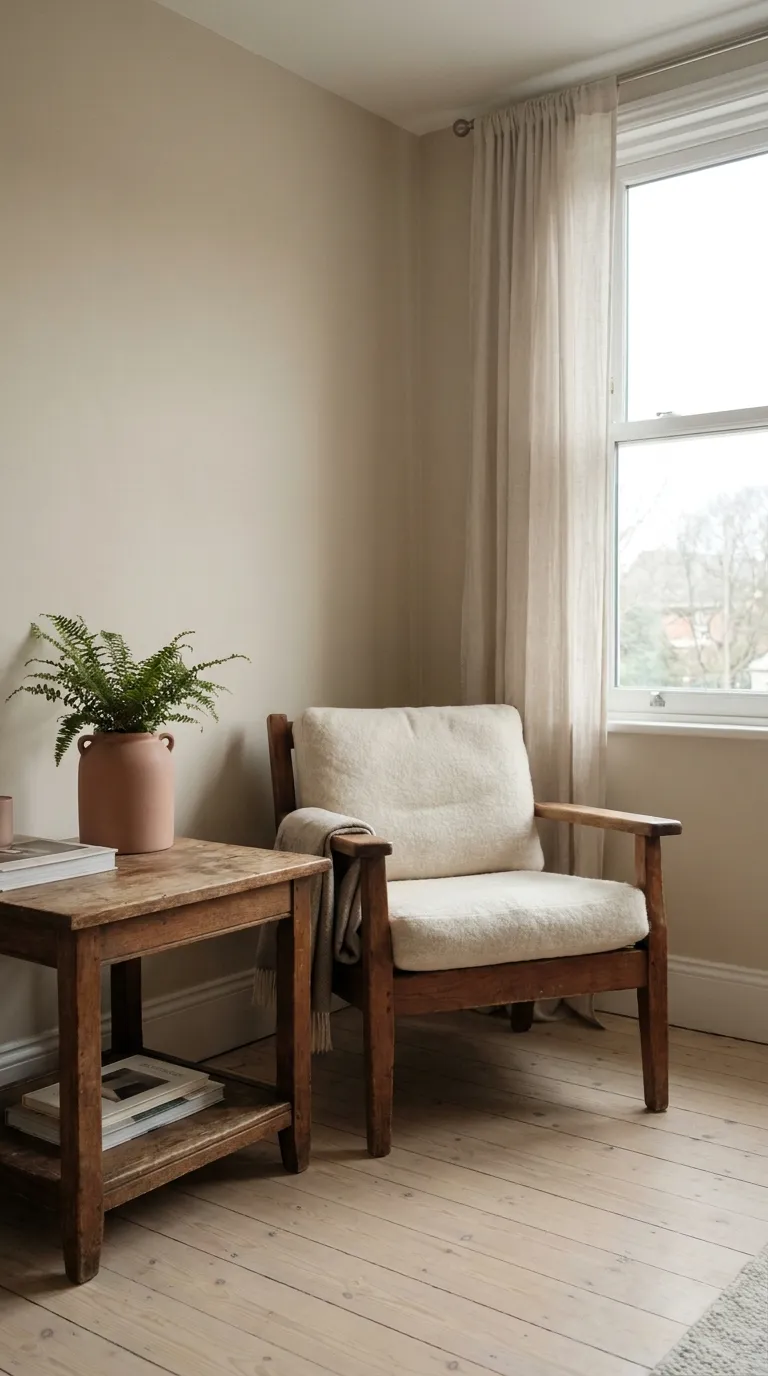
Furniture is where a small budget usually breaks, so shop in places where used pieces are common: thrift stores, flea markets, online marketplaces, and neighborhood swap groups. Borrowing a chair or side table from a friend for a few months also counts. A plain, sturdy piece is easy to style, while a trendy one rarely is.
The trade-off is time. Good secondhand pieces take a few weeks of watching listings and visiting shops, and some need a deep clean. If you need a sofa by Friday, this step may not work, so start with the pieces you can wait for.
How to Do It
- Carry your room measurements and a photo of the room when you shop.
- Check each piece for wobble, deep stains, strong smells, and signs of bugs.
- Sit in every chair and open every drawer before you commit.
- Measure the doorway and any stairs before you carry something home.
- Clean each piece as soon as it arrives, and check the care label first.
Why It Works
Used pieces with solid construction often last longer than cheap new ones, and a simple shape looks intentional once it sits beside a lamp and a throw.
Common Mistakes to Avoid
- Buying a piece before measuring the space
- Taking on a big repair project
- Ignoring upholstery that smells or looks worn through
A Simple Rule to Remember
If it wobbles in the shop, it will wobble at home.
5. Layer Rugs and Curtains
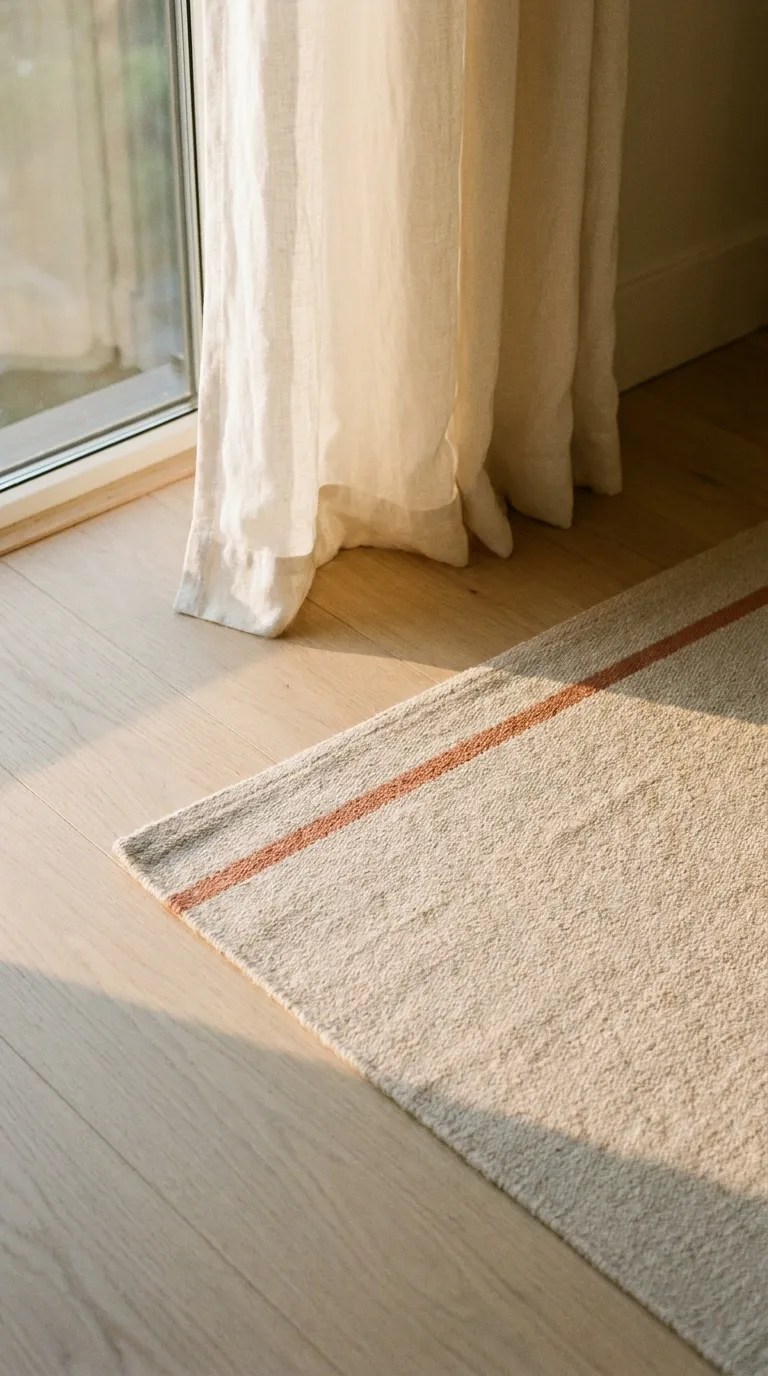
Round 2 gives the apartment its soft layers. A rug anchors the seating area, and curtains frame the window, add color, and make the room feel less echoey. Two textiles can change the mood of a room more than a dozen small accents.
Pick a rug big enough that at least the front legs of your sofa and chairs sit on it. If your floor is already carpeted, a smaller rug under the seating area still works, or you can skip it. Plain flat-weave rugs and neutral curtains are easier to find secondhand and easier to mix with later finds.
How to Do It
- Measure the seating area and choose a rug that fits under the front legs of the furniture.
- Add a rug pad if the rug slides.
- Hang the curtain rod 4 to 6 inches above the window frame.
- Extend the rod 4 to 6 inches past each side of the frame.
- Choose curtains long enough to skim the floor.
Why It Works
Hanging the rod high and wide makes the window look larger, and soft layers set your color palette in only two purchases.
Common Mistakes to Avoid
- Choosing a rug so small it floats in the middle of the room
- Hanging the rod right at the top of the window frame
- Picking busy patterns for both the rug and the curtains
A Simple Rule to Remember
Rod high, curtains long, and the rug under at least the front legs.
Renter Note
Check your lease before drilling bracket holes for a curtain rod. A tension rod works for light curtains, so follow the product’s weight limit.
6. Fill Walls With Art
Bare walls are the first thing people notice and the last thing most budgets cover, so give each room one wall to finish. One large piece or one tidy group makes a bigger impact than many small pieces scattered around.
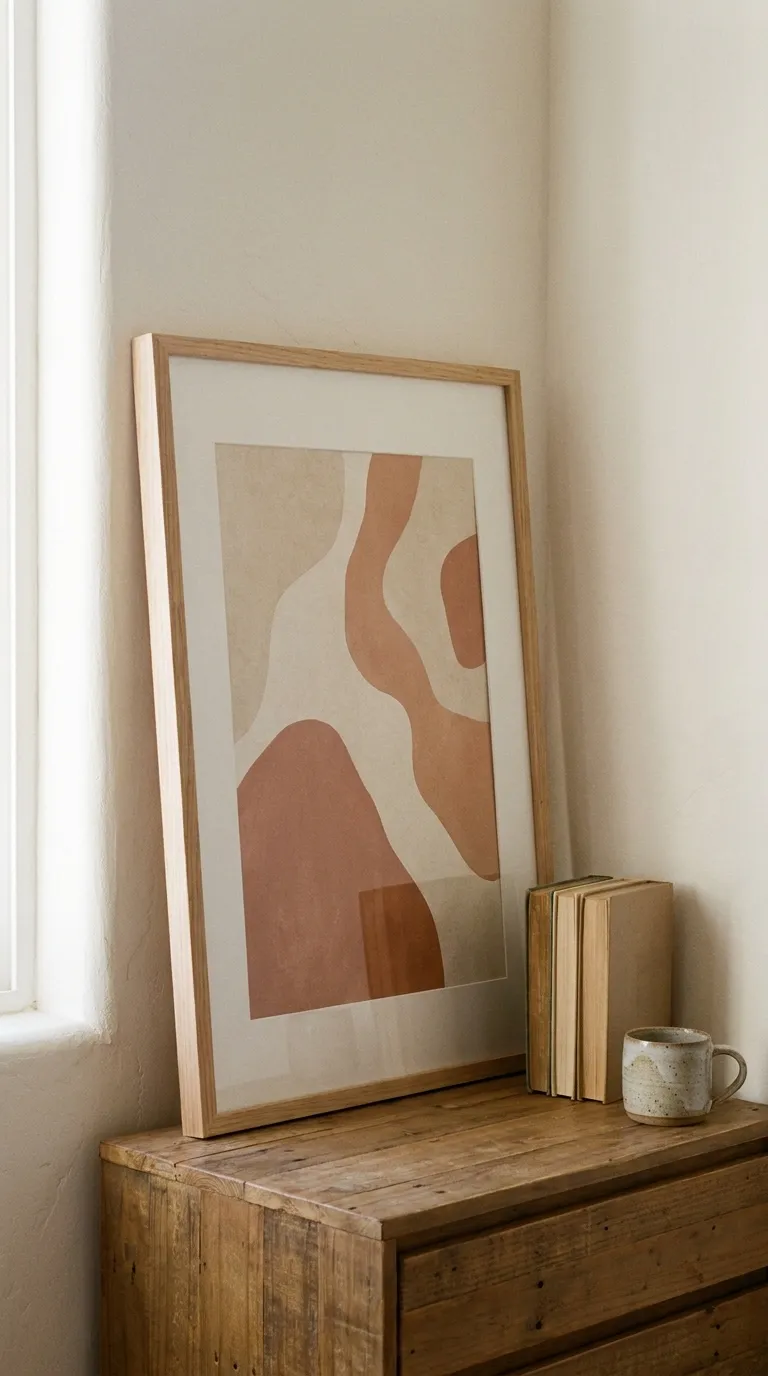
Thrifted frames, your own photos, and simple prints are all budget-friendly options. If you would rather not make holes, lean a large frame or mirror on a dresser or the floor. The trade-off is that leaned pieces take up floor space, so they work best in corners and along walls with no traffic.
How to Do It
- Pick one wall per room and ignore the rest for now.
- Choose frames that share one color, or use frames you already own.
- Lay the arrangement on the floor first and adjust the spacing.
- Hang the center about 57 inches from the floor.
- Use adhesive strips within their weight rating, or lean the piece on a dresser.
Why It Works
One composed wall feels intentional, while scattered pieces feel random. Hanging at eye level also keeps the art connected to the furniture below it.
Common Mistakes to Avoid
- Hanging art too high
- Buying many small pieces for one big wall
- Ignoring the weight limit on adhesive hooks
A Simple Rule to Remember
Center at 57 inches, and finish one wall at a time.
Renter Note
Check your lease before drilling or painting. For a heavy mirror, use anchors rated for its weight and follow the product’s instructions, or lean it securely instead.
7. Style Shelves and Surfaces
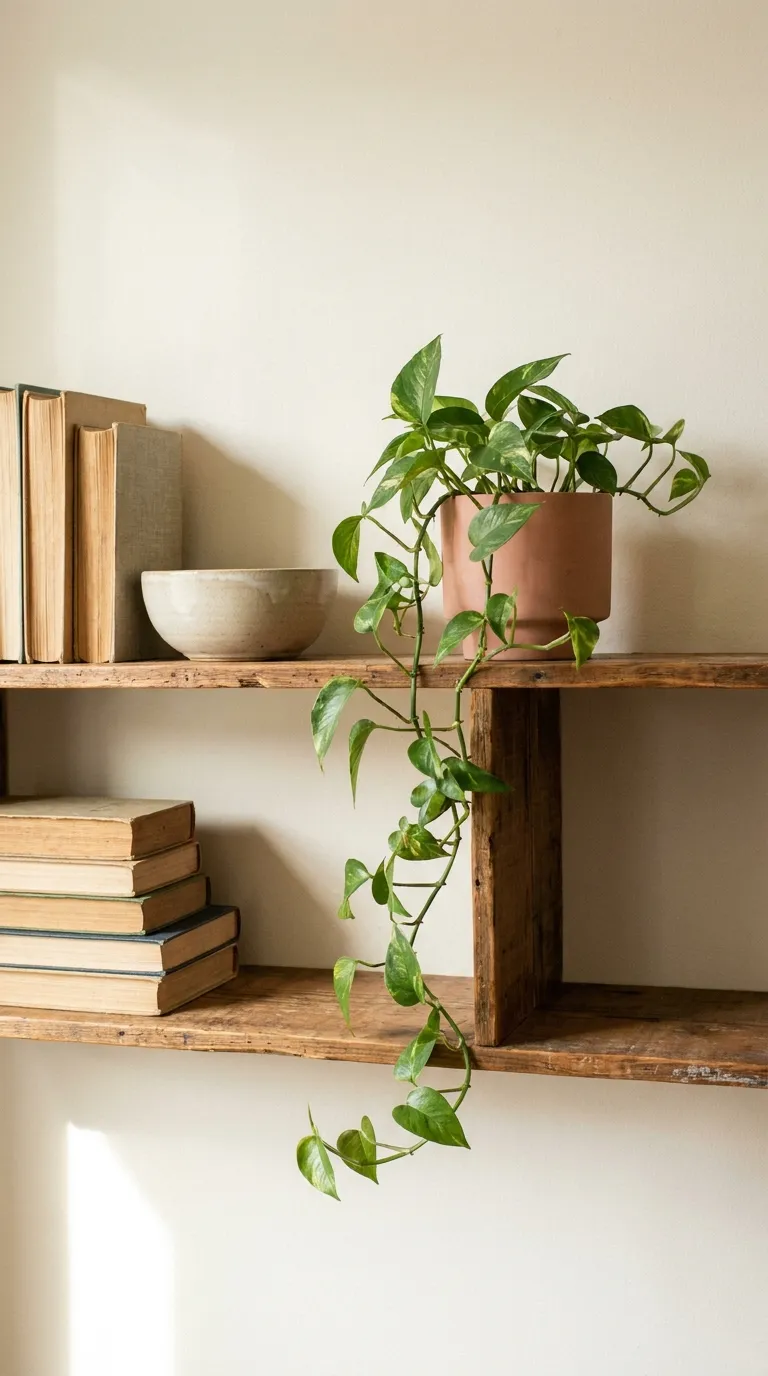
Round 3 is where the apartment starts to feel like yours. Shelves, side tables, and countertops are the easiest places to add small accents, and most of them can come from things you already own: books, a stoneware mug, a bowl, a small plant. Open space matters as much as the objects.
Group items in threes and vary their heights so the eye has somewhere to travel. The trade-off is restraint, because styling only works when you leave some surface free. If a shelf also holds daily items, like keys or mail, keep a tray for them and style around it.
How to Do It
- Clear the shelf or surface completely and wipe it down.
- Place the largest item first, such as a stack of books or a basket.
- Add a second item at a different height, like a small plant.
- Add one small object to make a group of three.
- Leave about a third of the surface empty.
Why It Works
Different heights guide the eye, and empty space keeps the surface feeling calm instead of crowded.
Common Mistakes to Avoid
- Filling every inch of a shelf
- Matching every object to the same color
- Buying accents before Round 1 and Round 2 are done
A Simple Rule to Remember
Groups of three, different heights, and one empty third.
If a pet could ever visit, check that a plant is safe for pets before buying it.
8. Hold Back and Adjust
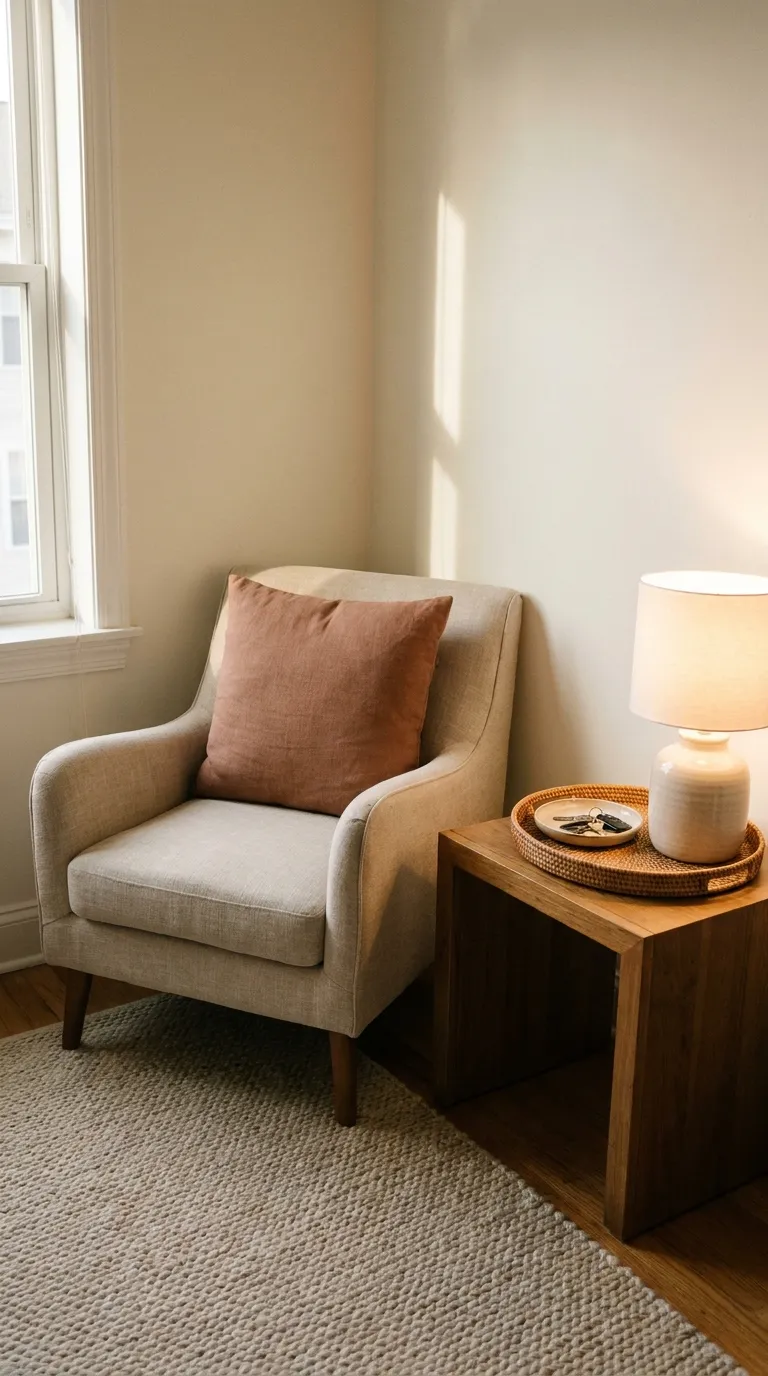
Live in the apartment for a full week before you spend your reserve. Gaps show up through use: a spot where your keys keep landing, a hallway that feels dark, a corner that collects bags. The reserve is for those problems, not for the next pretty thing you see online.
If waiting is hard, set a two-day rule for any purchase that was not on your list. The trade-off is that the apartment may look unfinished for a week or two, but rooms styled around real habits tend to need fewer changes later.
How to Do It
- Live in the apartment for a full week before spending the reserve.
- Note every spot that annoys you, such as nowhere to drop keys.
- Rank the notes by how often they bother you.
- Spend the reserve on the top one.
- Move things around once more, then stop when each room works.
Why It Works
Daily use shows what a room truly needs, so the last part of your total solves a real problem instead of adding clutter.
Common Mistakes to Avoid
- Spending the reserve in the first weekend
- Chasing a perfect look before the rooms are lived in
- Buying duplicates of things you already own
A Simple Rule to Remember
Wait a week before the last purchase.
Quick Step Cheat Sheet
Use this table as a quick refresher when you are standing in a shop or planning the next weekend.
| Step | Why It Works | Quick Fix |
|---|---|---|
| 1. Walk Through and List Needs | Shows what each room truly lacks | Photograph and measure every room |
| 2. Split the Budget by Room | Stops one room eating everything | Give daily-use rooms bigger shares |
| 3. Buy Daily-Use Items First | Light and sleep improve every hour | Buy lamp and linens first |
| 4. Thrift and Borrow Big Pieces | Solid used pieces last longer | Sit-test every seat |
| 5. Layer Rugs and Curtains | Soft layers set the mood | Hang the rod high and wide |
| 6. Fill Walls With Art | One finished wall feels intentional | Center art at 57 inches |
| 7. Style Shelves and Surfaces | Height and space calm the eye | Group in threes, leave a third empty |
| 8. Hold Back and Adjust | Real use shows real gaps | Wait a week before spending the reserve |
The Principles Behind These Steps
Prepare Before You Spend
Measurements, photos, and a short list make every later choice faster. When you shop with numbers in hand, you are far less likely to bring home a piece that does not fit.
Decorate Apartment on a Budget, One Round at a Time
Spending in three rounds protects the things you use daily. If the total runs short, it runs short during the finishing touches, which are the easiest part to postpone.
Test Small Before Committing
Try a lamp in the corner for a few evenings, or lean a frame on the wall before you hang it. Small tests are free, and they show you what works before you commit.
Leave Room for Adjustments
A room does not have to be finished in one weekend. Keeping a reserve and a week of waiting gives the apartment space to tell you what it needs.
Common Budget Decorating Mistakes Worth Skipping
Buying Everything in One Weekend
A big shopping trip feels productive, but you end up with pieces that do not fit the room. Spread purchases over a few weeks and let each round settle first.
Chasing a Matching Look
Everything bought new in the same color can feel flat. A mix of secondhand and new pieces in a shared palette looks more personal and costs less.
Overlooking What You Already Own
Move books, plants, and mugs around before buying accents. You may find the room already has what it needs.
Final Tips for Success
Keep a Running Total
Write down each purchase as you make it. Seeing the total shrink makes it easier to say no to the extras.
Shop With Photos and Measurements
Keep a note on your phone with room sizes, window widths, and wall photos. It saves return trips and prevents wrong-size buys.
Basics Worth Owning
- Tape measure
- Adhesive hooks and picture-hanging strips within their weight limit
- A warm bulb in each lamp
- Felt pads for furniture feet
- A small basket or tray for daily items
Let Rooms Finish at Different Speeds
Your bedroom may feel done before the living room does, and that is fine. Finish what you use most, then move on.
Conclusion
You do not need a huge total to make an apartment feel like home. You need a clear list, a plan for each room, and a willingness to buy in the right order.
The same idea sits behind every search for “decorate apartment on a budget”: the order of spending matters more than the amount. Daily-use items come first, soft layers second, and finishing touches last. Used pieces, leaned art, and styled shelves do much of the work.
Live in the space for a week, then spend what is left on the thing that bothers you most. Save this guide for the next time you rearrange a room or move into a new place.