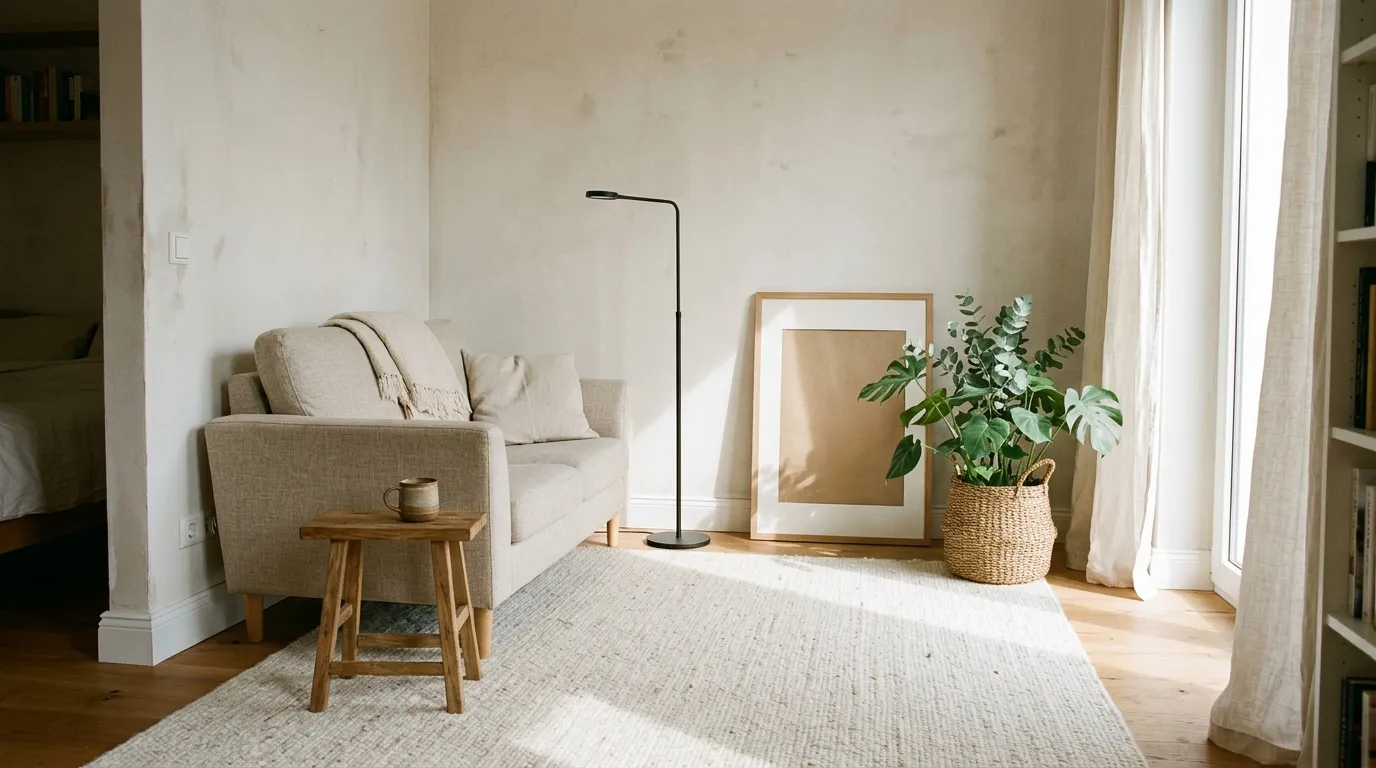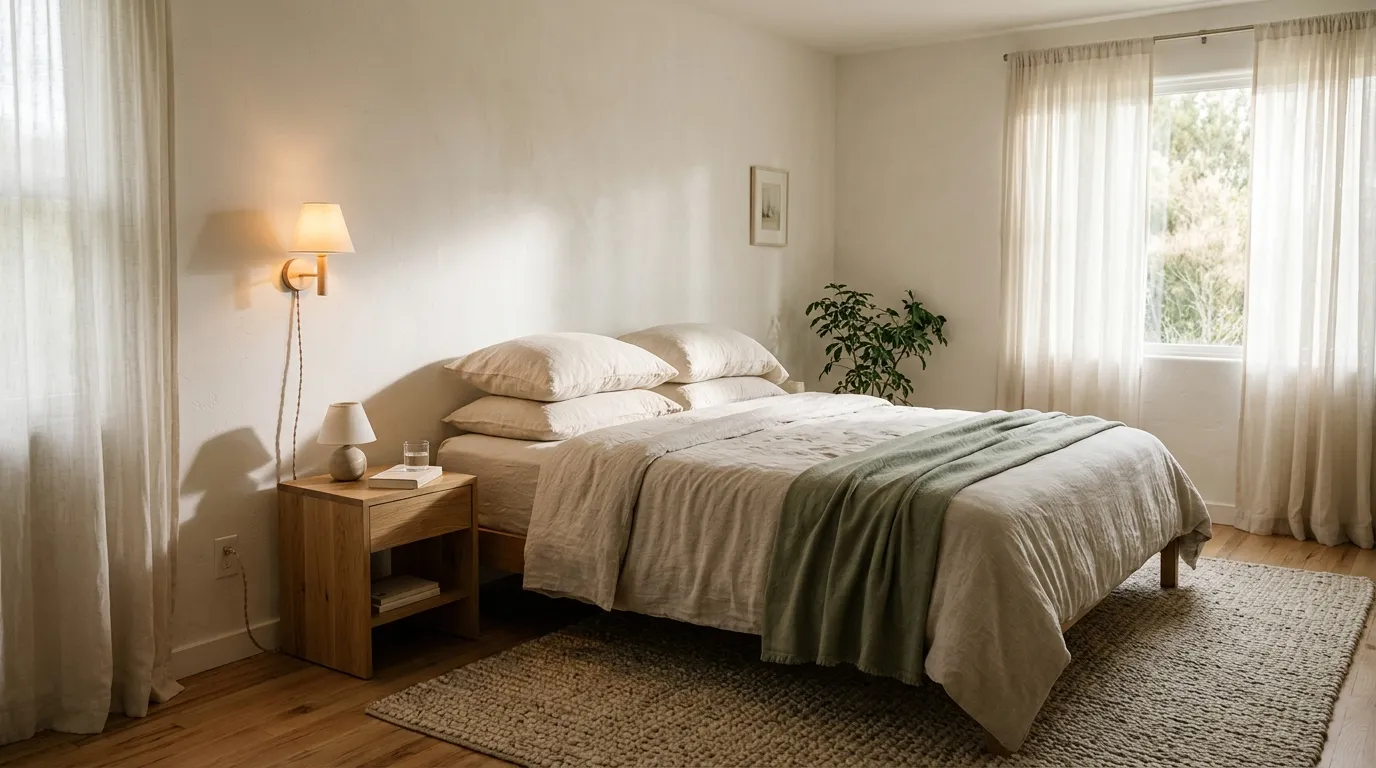


It is ten at night, and the bed you made this morning has slid into three half-matching layers: a cover one shade off from the sheets, a pillow from a different set, and an insert poking out of one corner. If you are shopping for the best bedding sets, this is usually the real problem. The pieces argue with each other far more often than any single piece is bad.
Aim for something simpler: a bed that looks settled after a minute of tidying, survives frequent laundering, and respects the size of your room. That starts with picking one lead piece and letting the rest follow it.
I’d read the 12 looks below as mini recipes rather than shopping lists. Each has a lead layer, support, and an accent, along with floor-space notes and a hint at where spending more is worth it.
1. Crisp Percale Morning Bed
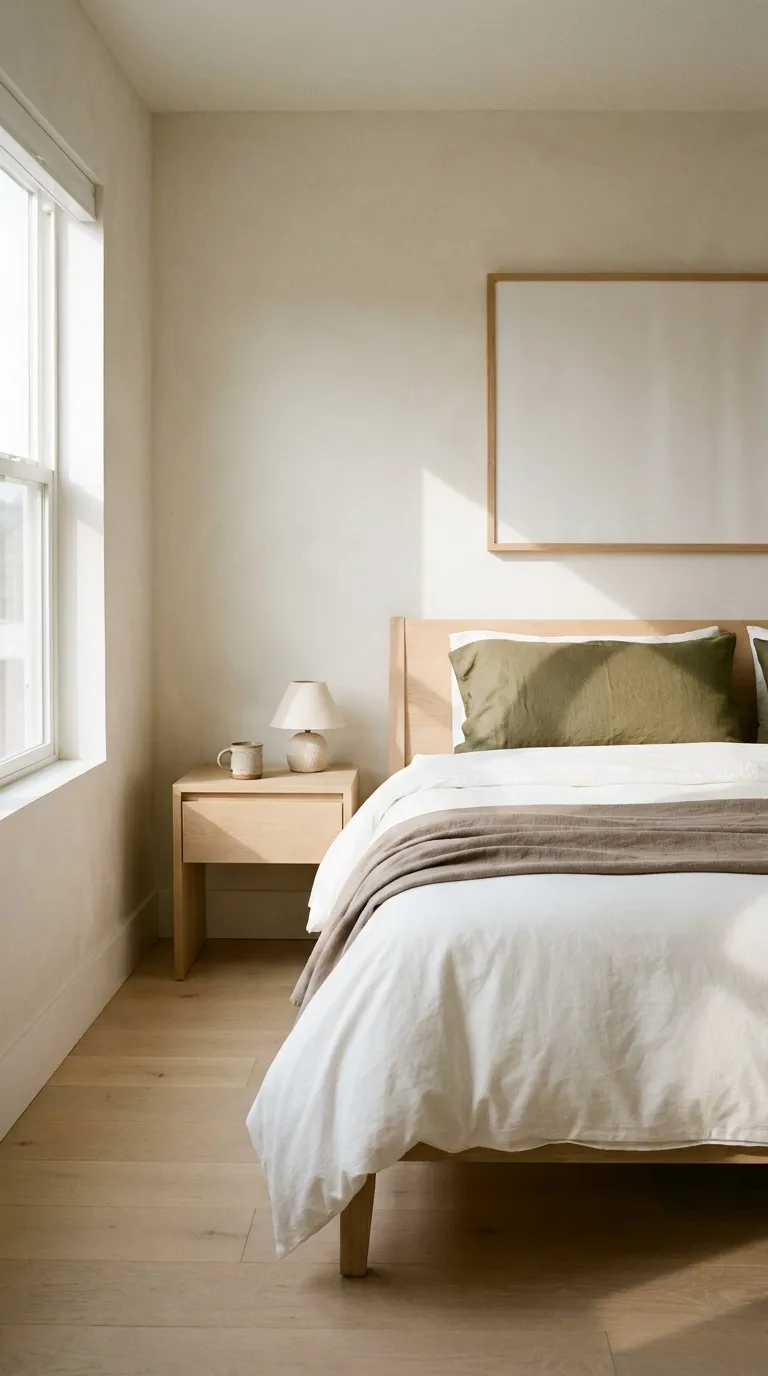
Some beds are meant to feel like a good hotel room: smooth, light, and quick to straighten. Percale has a matte, papery crispness that holds its shape, so one tug of the cover makes the bed look finished. It suits a bright room with very little clutter.
The Formula
- Anchor: a warm white percale duvet cover
- Support: percale sheets in the same white and a mushroom gray cotton blanket folded in half
- Accent: one olive green pillowcase on a single sleeping pillow
Why It Works
A crisp weave keeps clean lines, so the bed looks made even on a rushed morning. The price is a cool, slightly stiff hand at first, so if you want a soft, slouchy bed, the jersey look further down will suit you better.
Space Needed
Queen mattresses measure roughly 60 by 80 inches. Percale lies flat and adds almost no bulk, so a 24 inch strip of open floor beside the bed survives even with every layer on.
Save or Invest
- Save on: the olive pillowcase, since a single pop of color is cheap to change later
- Invest in: the sheets, since tightly woven cotton keeps its crispness through many washes
2. Ticking Stripe Weekend Bed
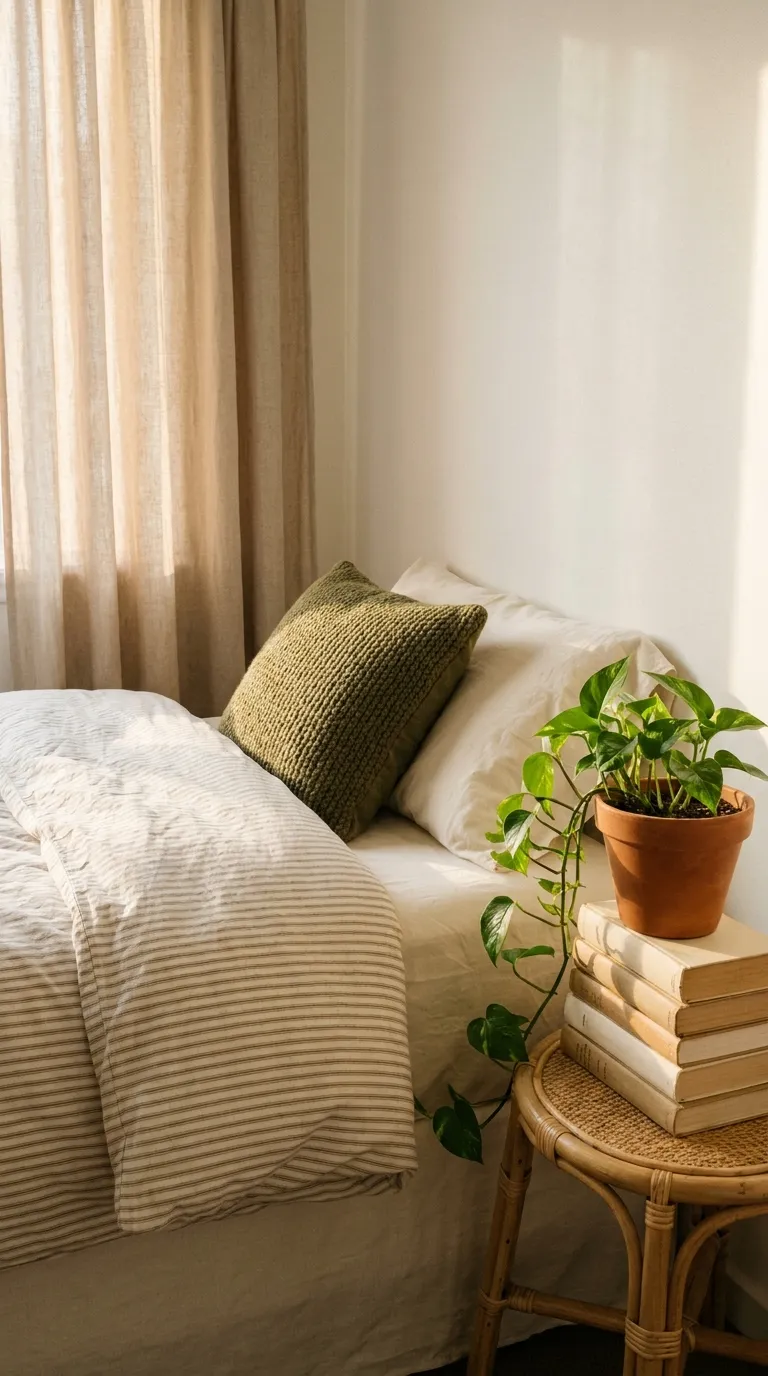
A bed with no pattern at all can feel a little blank. A narrow ticking stripe adds a quiet line of interest and hides small creases, which helps if you never iron. It has the feel of an old-fashioned mattress cover, only softer.
The Formula
- Anchor: a cream duvet cover with thin mushroom ticking stripes
- Support: plain cream sheets and two solid cream shams
- Accent: one small olive knit pillow
Why It Works
From across the room, thin stripes read as texture rather than print, so the bed feels detailed without getting loud. The catch is that stripes expose a twisted duvet insert, because the lines bend right along with it.
Space Needed
A full mattress runs about 54 by 75 inches, so the stripes cover just over 6 feet from pillow to foot. Laying them lengthwise stretches a short bed visually, and a pale rug at the foot gives the lines room to show.
Save or Invest
- Save on: the cream shams, since they hide behind the sleeping pillows and seldom get used hard
- Invest in: a cover with inside corner ties, since they hold the insert still so the stripes stay straight
3. Biscuit and Cocoa Sateen Bed
Gray bedding can look cold next to wood floors and warm lamps. Biscuit, a soft tan, makes a gentler base, and brown shades are easy to live with because they behave like neutrals. Sateen has a smooth, slightly glossy face that catches lamplight, so the bed looks rich without any pattern.

The Formula
- Anchor: a biscuit sateen duvet cover
- Support: cream sheets and two cream shams
- Accent: one cocoa brown pillow in a nubby weave
Why It Works
When you plan the color palette for this bed, aim for roughly 60 percent biscuit, 30 percent cream, and 10 percent cocoa, and keep the darkest shade to the smallest piece so the bed stays light. Sateen feels slick, though, so it is not for anyone who likes a matte, grippy surface.
Choose a starting color and a mood below to get a five-shade set you can tap to copy.
Space Needed
Sateen is heavy and slides lower than cotton of the same size. On a queen (roughly 60 by 80 inches) that extra drop reaches toward the floor, so give the nightstand a little breathing room.
Save or Invest
- Save on: the cocoa pillow, since a small dark piece is simple to replace if it stains
- Invest in: the cover, since a dense sateen weave usually holds its sheen longer (check the care label)
4. Washed Olive and Bone Bed
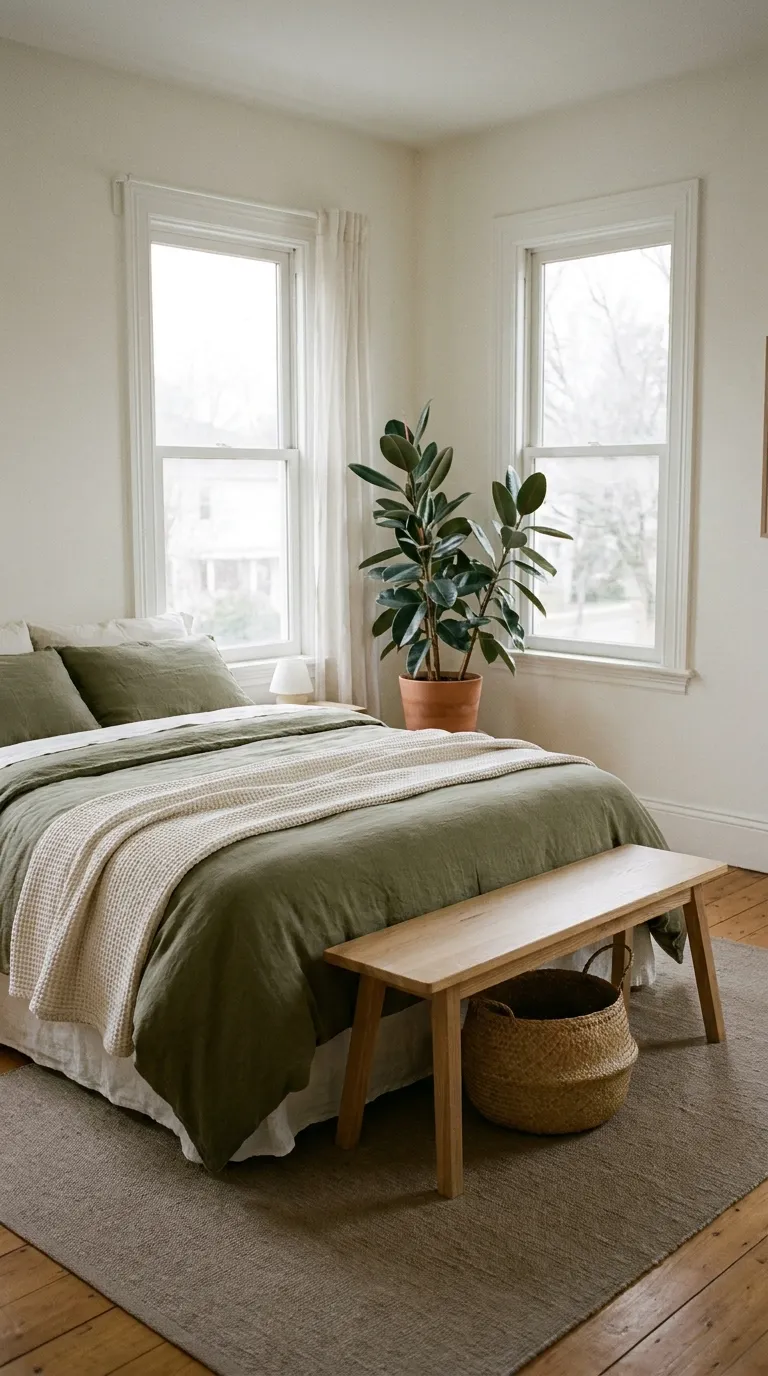
If you already own plants, a muted olive cover ties the bed to them without matching anything exactly. Washed cotton softens the color so it looks like worn canvas instead of bright green, and it never needs to look pressed. It is a calm choice for white or pale wood bedrooms.
The Formula
- Anchor: a washed cotton duvet cover in muted olive
- Support: bone white sheets and a bone waffle blanket
- Accent: one pillowcase with a thin cream stripe
Why It Works
Olive sits between a neutral and a color, so it quietly anchors the bed. In a dim room it can look muddy, so hold it up in daylight next to your walls before you commit and let the bone layers do the brightening.
Space Needed
Washed cotton hangs loose and can look bulkier than it is. On a queen (about 60 by 80 inches), buy the cover in the mattress’s own size so spare fabric doesn’t puddle on the floor, and leave a hand’s width before a side table.
Save or Invest
- Save on: the waffle blanket, since you can trade it for a lighter or heavier one by season
- Invest in: the olive cover, since garment-washed cotton softens evenly rather than blotching
5. Heather Jersey Lazy-Day Bed
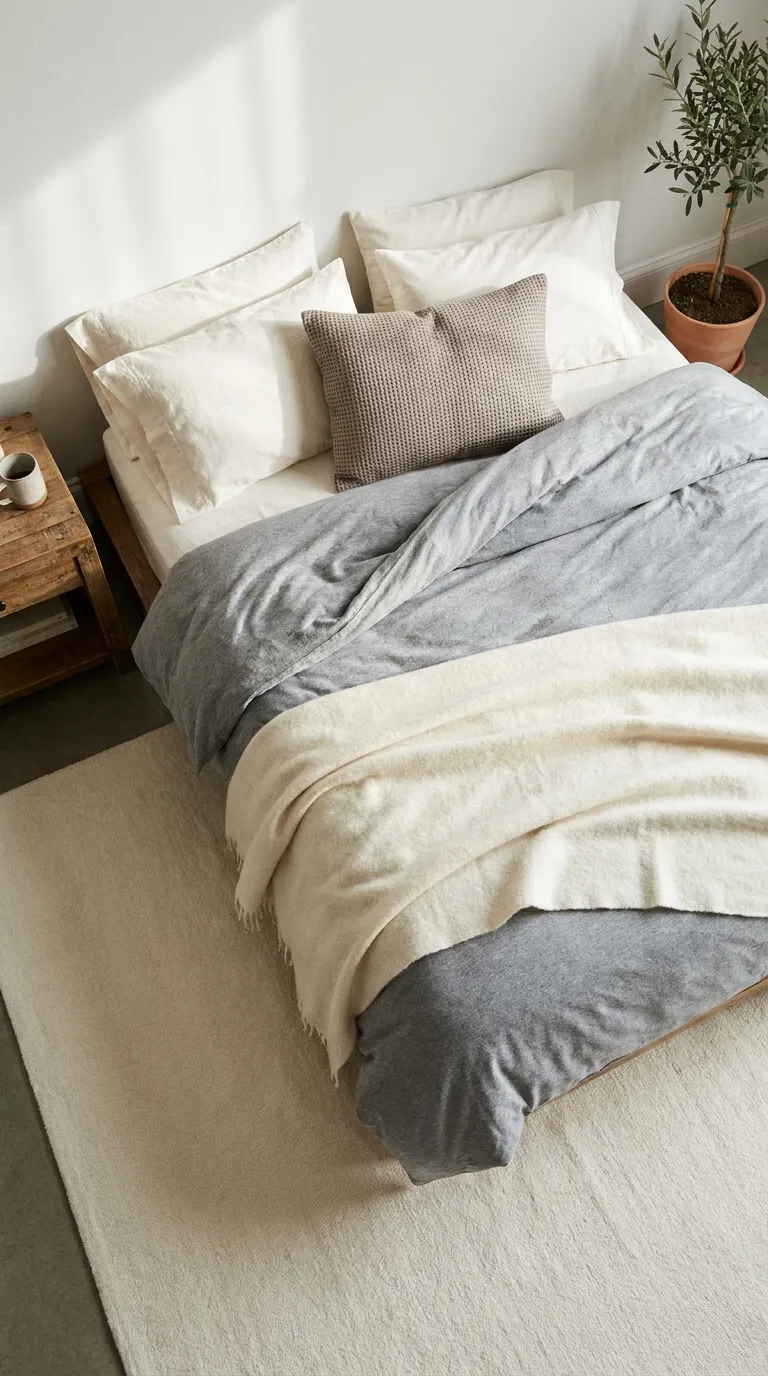
Some mornings you want the bed to feel like a favorite T-shirt. Jersey knit stretches and relaxes into a soft, slightly rumpled shape, so there is nothing to smooth or iron. It suits a low platform bed and a room that is already full of hard surfaces.
The Formula
- Anchor: a heather gray jersey knit duvet cover
- Support: warm white pillowcases and a thick ivory blanket
- Accent: one mushroom taupe pillow in a waffle texture
Why It Works
Knit fabric hides creases because it is meant to look soft and a little loose. Over time jersey can pill and stretch, so it fits everyday use better than a guest bed that has to look crisp.
Space Needed
Jersey hugs the mattress instead of puffing up. A full mattress runs about 54 by 75 inches, so a snug jersey cover keeps the walkway and the wall above a low bed clear.
Save or Invest
- Save on: the ivory blanket, since a plain layer swaps easily for another shade
- Invest in: a heavier knit for the cover, since thick jersey tends to pill later (check the care label)
6. Bouclé Cloud Layer Bed
Bouclé looks like a little cloud, but it is a lot of texture, so one piece is plenty. Set against a smooth cotton base, the looped surface becomes the part everyone notices. It works best in a room with mostly flat, hard surfaces.

The Formula
- Anchor: an ivory cotton duvet cover with a smooth finish
- Support: white sheets and a chunky bouclé throw folded lengthwise
- Accent: one round pillow in mushroom taupe
Why It Works
A smooth base calms the loops, so the bed looks plush instead of busy. Loops do snag on rings, zippers, and rough edges, so keep the throw away from them and check the care label before washing.
Space Needed
A throw folded lengthwise follows the 80-inch length of a queen mattress. Choose one narrow enough for the ivory cover to show on both sides, otherwise the bed becomes one fuzzy block.
Save or Invest
- Save on: the round pillow, since small accents are the easiest to swap out
- Invest in: the throw, since densely looped yarn snags less and keeps its shape
7. Pintuck and Matelassé Bed
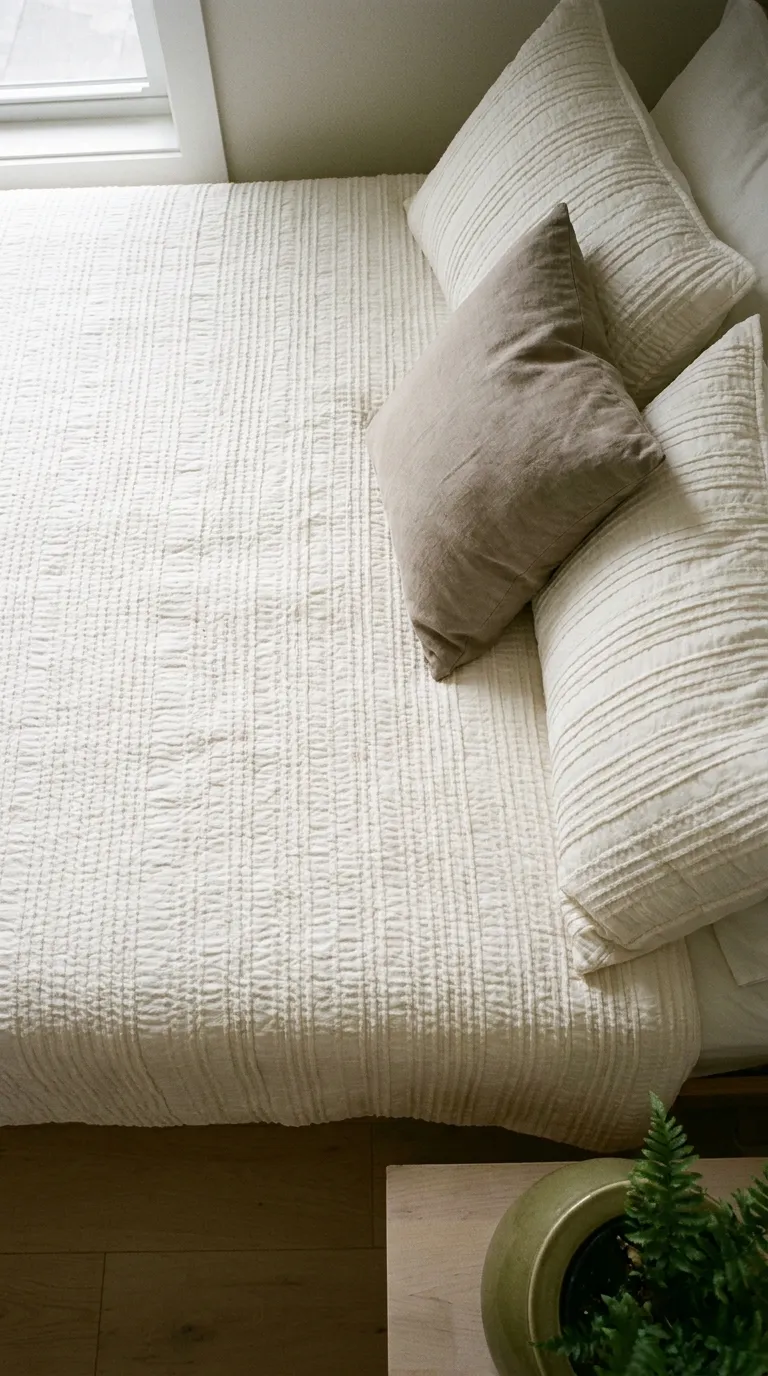
A bed can look expensive without a single color or print if the fabric itself has relief. Pintucks are narrow stitched pleats and matelassé is a woven, quilted-looking surface, and both catch light along their ridges. It is the quietest way to add depth.
The Formula
- Anchor: a warm white matelassé coverlet
- Support: plain warm white sheets and two pintuck shams
- Accent: one mushroom linen pillow
Why It Works
Raised ridges throw tiny shadows, so the bed looks layered even in one color. A coverlet is lighter than a comforter, so you will want a blanket underneath when the room cools.
Space Needed
For a drop of about 10 to 12 inches on each side, choose a coverlet 20 to 24 inches wider than the mattress. Here is how that works out for the three common sizes.
| Mattress | Mattress Width | Coverlet Width |
|---|---|---|
| Twin | 38 inches | 58 to 62 inches |
| Full | 54 inches | 74 to 78 inches |
| Queen | 60 inches | 80 to 84 inches |
Try it: pick a mattress, slide the cover width, and see how far the cover drops on each side.
Save or Invest
- Save on: the pintuck shams, since they stay behind the other pillows
- Invest in: the coverlet, since the entire look rests on its texture and drape
8. Plum and Putty Evening Bed
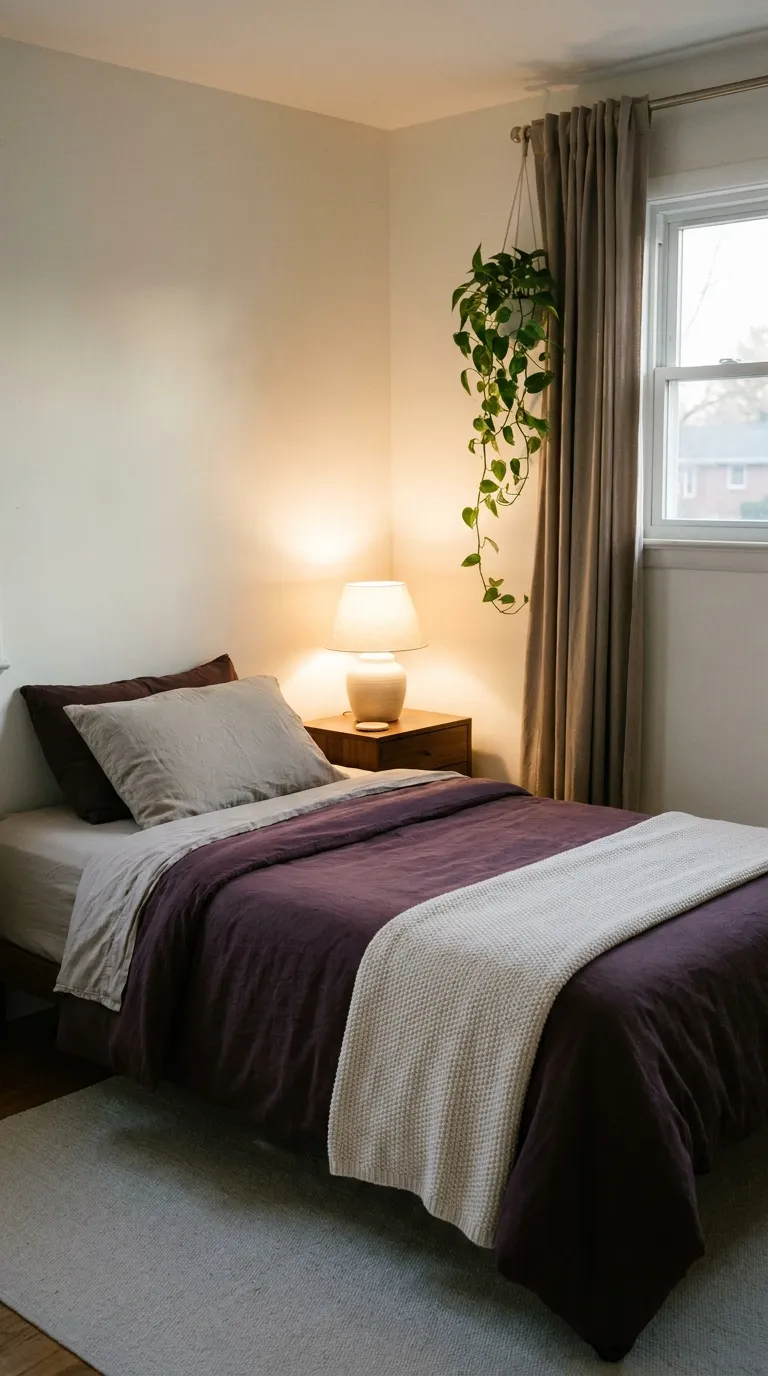
Dark bedding gets a reputation for making rooms feel heavy, but a deep plum balanced with soft putty reads closer to evening light than to a cave. It suits a bedroom with warm lamps, wood furniture, and a few pale surfaces.
The Formula
- Anchor: a deep plum brushed cotton duvet cover
- Support: putty colored sheets and a pale ivory knit blanket
- Accent: one putty linen pillow
Why It Works
The pale layers sit against the dark cover, so the bed has contrast instead of one dark block. Deep tones soak up light, so in a room with one small window, balance them with pale pillows and a light blanket rather than adding more dark.
Space Needed
A dark cover looks bigger than a pale one, even on a queen of roughly 60 by 80 inches. A pale rug beneath the bed keeps that dark mass from swallowing the floor.
Save or Invest
- Save on: the putty linen pillow, since a small accent is easy to replace when it gets marked
- Invest in: the plum cover, since deep dyes show wear first and a well-made cover holds its depth (check the care label)
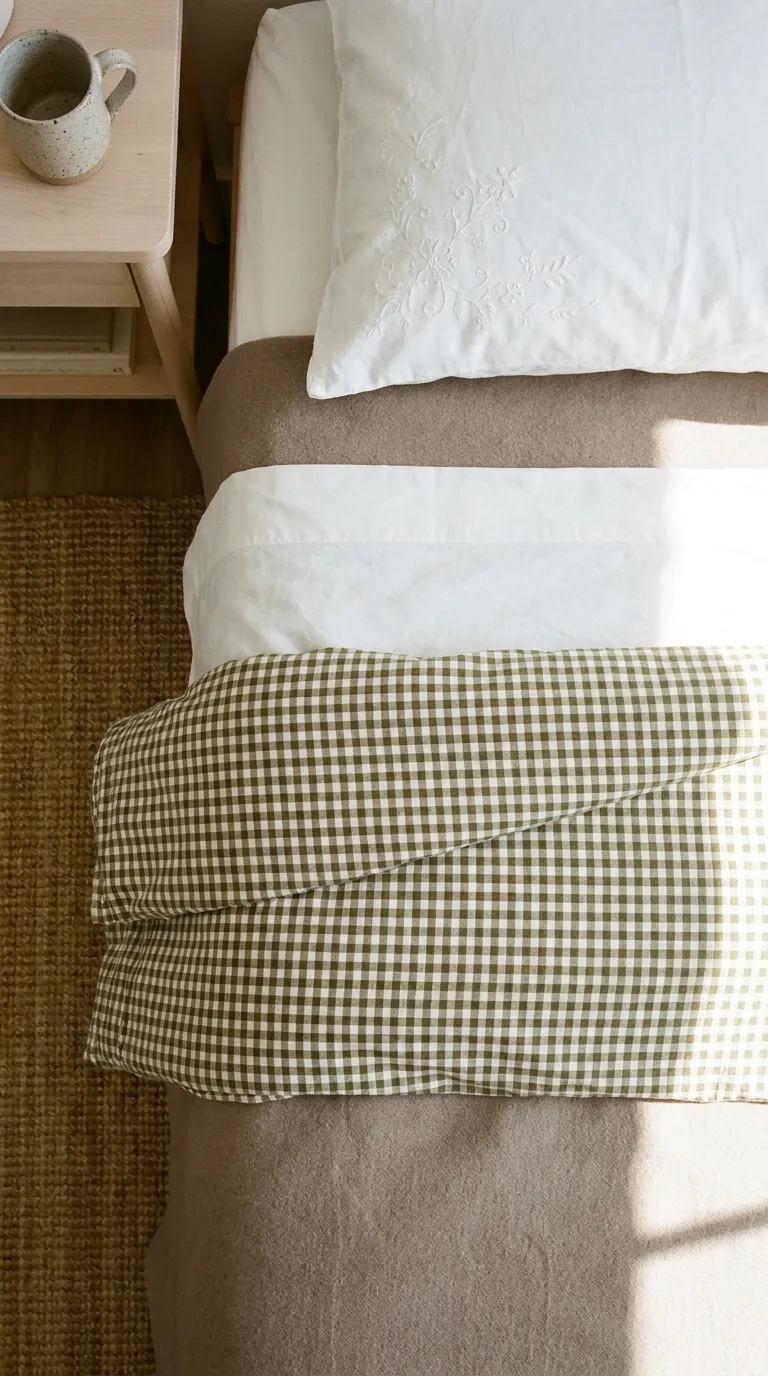
9. Small Gingham Cottage Bed
Gingham is the bedding pattern most people already trust. In a small check, olive and white blend together from a distance, so the bed feels friendly without getting loud. It suits a sunny rental bedroom with white walls and a few plants.
The Formula
- Anchor: a duvet cover in small olive and white gingham
- Support: plain white sheets and one solid mushroom blanket
- Accent: one pillow with simple white on white embroidery
Why It Works
A small check behaves like a neutral because the two colors blur together at a distance. It needs plain partners, so keep every other layer solid and let the check be the only print.
Space Needed
A queen mattress spreads about 60 by 80 inches of pattern in one spot. Keep the wall behind the bed and the rug below it plain so the check has no rivals.
Save or Invest
- Save on: the embroidered pillow, since a plain linen one gives a similar look
- Invest in: the cover, since a woven check holds its color better than a printed one
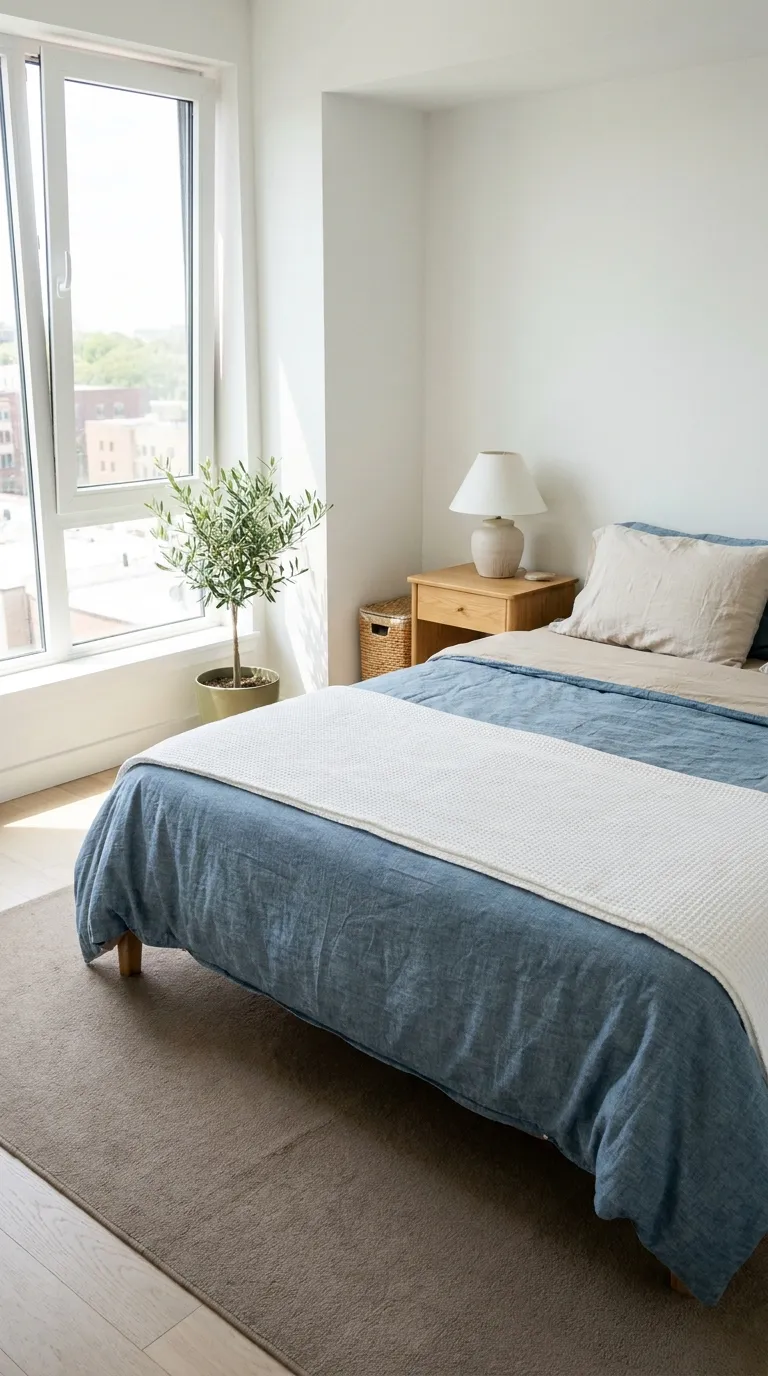
10. Chambray and Sand Bed
Chambray is a plain-weave cotton that looks like a worn denim shirt, blue but soft. Paired with sand instead of white, it feels warm rather than crisp. It suits a bedroom with white walls and a little wood.
The Formula
- Anchor: a faded blue chambray duvet cover
- Support: sand colored sheets and a white waffle blanket
- Accent: one unbleached linen pillow
Why It Works
Faded blue calms the bed while sand keeps it from feeling chilly. Cool colors feel colder in a room that gets little sun, so lean on the sand and white layers if that is yours.
Space Needed
Chambray is light, so a queen (about 60 by 80 inches) stays slim in a narrow room where a puffy comforter would spill into the walkway. Still, keep 24 inches open on the side you step out.
Save or Invest
- Save on: the linen pillow, since a basic one does the same work
- Invest in: the chambray cover, since the weave softens with every wash and carries the whole look
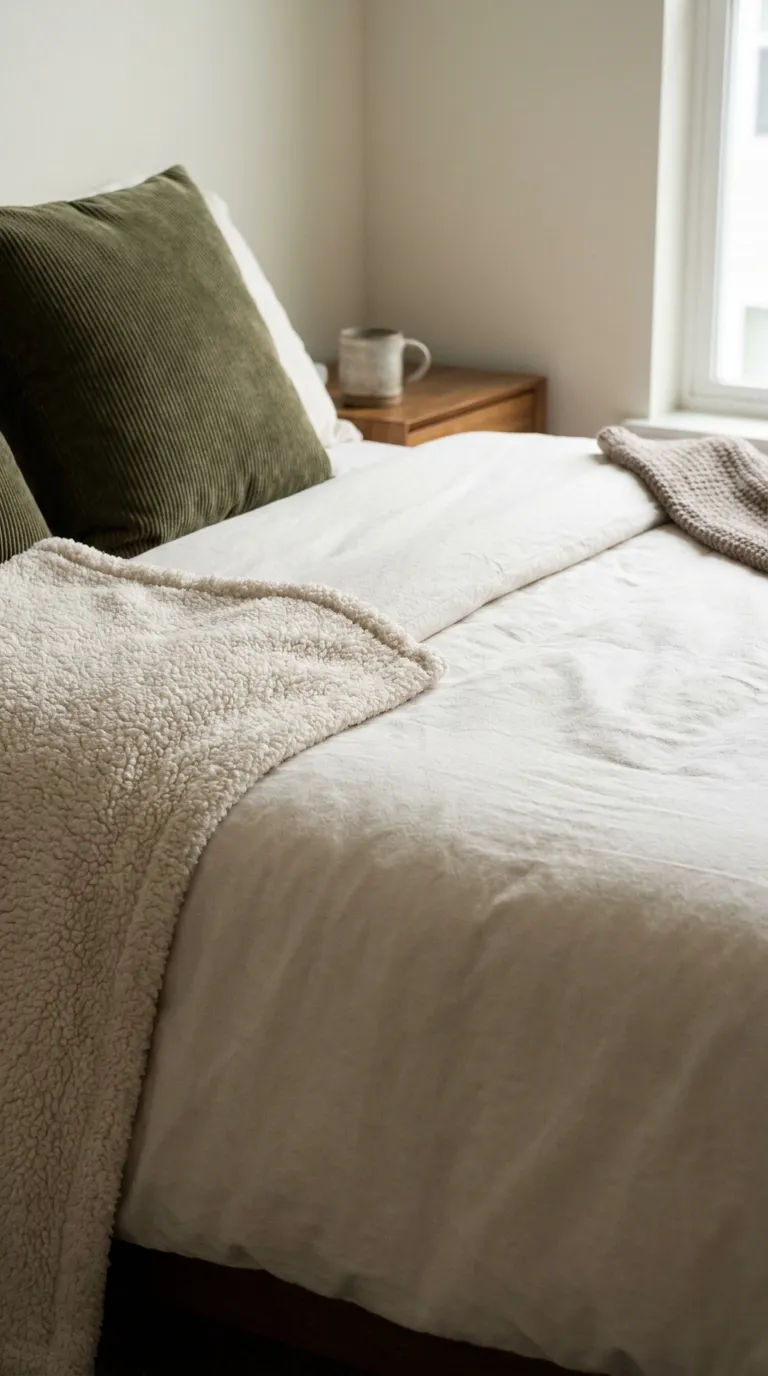
11. Sherpa and Brushed Cotton Winter Bed
When the room gets drafty, you want weight on the bed without a pile of mismatched layers. One smooth, brushed base and a single fuzzy layer on top does it. This is the look for the coldest weeks of the year.
The Formula
- Anchor: a warm white brushed cotton duvet cover
- Support: a sherpa lined throw folded in half over one side
- Accent: one olive corduroy pillow
Why It Works
A smooth cover next to a fuzzy throw gives contrast, so the bed feels deep with only two textures. Sherpa sheds a little and holds heat, so keep it to one layer and fold it away when the weather warms.
Space Needed
A queen bed is about 60 by 80 inches, but fuzzy layers add height instead of width. Measure from the top of the mattress to the underside of any sill or shelf behind the bed before you add a thick layer, and leave a few inches to spare.
Save or Invest
- Save on: the corduroy pillow, since you can retire it after one winter
- Invest in: the brushed cover, since a dense weave generally survives repeat washing better (check the care label)
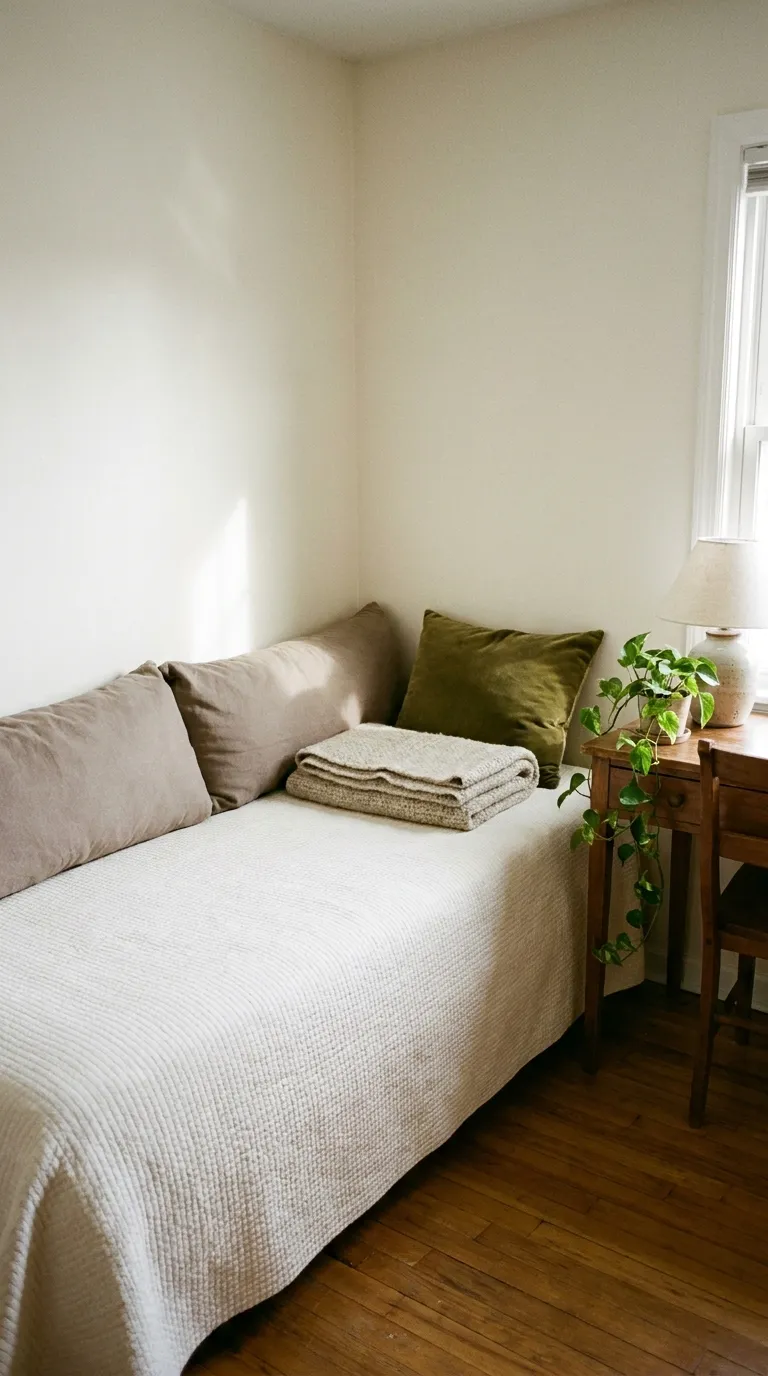
12. Twin Daybed Look for Tiny Rooms
In a tiny room, the bed often doubles as the sofa. A twin bed pushed lengthwise against a wall can read as a daybed if you give it a back and a tidy, tight cover. It suits studios, guest corners, and rooms shared with a desk.
The Formula
- Anchor: a warm white quilt sized to the twin mattress
- Support: two mushroom bolster pillows leaned against the wall and one folded blanket
- Accent: one olive pillow
Why It Works
Pillows against the wall turn the bed into seating, and a fitted quilt keeps the surface clean lined. Daily sitting rumples the look, so keep the pieces few enough to reset in under a minute.
Space Needed
A twin mattress measures about 38 by 75 inches, leaving far more floor than a queen would in the same room. Sketch your furniture layout before buying bolsters, so you can tell whether the long side can face open floor.
Save or Invest
- Save on: the olive pillow, since one small accent is easy to swap
- Invest in: a quilt that fits the mattress closely, since it doubles as the seat cover and takes the most wear
Quick Look Cheat Sheet
Here is every look in one grid, with its lead piece and a cheaper way in.
| Look | Anchor Piece | Budget Swap |
|---|---|---|
| Crisp Percale Morning Bed | Warm white percale duvet cover | Plain white cover, one olive pillowcase |
| Ticking Stripe Weekend Bed | Cream cover with mushroom stripes | Striped pillowcases on plain cream bedding |
| Biscuit and Cocoa Sateen Bed | Biscuit sateen duvet cover | Biscuit cover, one cocoa pillow |
| Washed Olive and Bone Bed | Muted olive washed cotton cover | Olive pillowcases on bone bedding |
| Heather Jersey Lazy-Day Bed | Heather gray jersey duvet cover | Jersey sheets with a gray throw |
| Bouclé Cloud Layer Bed | Ivory cotton duvet cover | One bouclé throw on plain bedding |
| Pintuck and Matelassé Bed | Warm white matelassé coverlet | Light white quilt, textured pillow |
| Plum and Putty Evening Bed | Deep plum brushed cotton cover | Plum throw on putty bedding |
| Small Gingham Cottage Bed | Olive and white gingham cover | Gingham pillowcase on plain white bedding |
| Chambray and Sand Bed | Faded blue chambray cover | Chambray pillowcase, sand sheets |
| Sherpa and Brushed Cotton Winter Bed | Warm white brushed cotton cover | Brushed sheets, one sherpa throw |
| Twin Daybed Look for Tiny Rooms | Warm white twin-size quilt | Quilt plus two bolster pillows |
The Formula Behind These Looks
All twelve beds share one skeleton. A few ideas sit underneath it, and they apply to any bed you build.
Settle the Lead Layer First
Whatever covers the most bed, usually the duvet cover or coverlet, sets the tone. Decide it first, because sheets, throws, and pillows are simple to match afterwards and hard to rescue if the big piece clashes.
What the Best Bedding Sets Have in Common
Boxed or assembled, the best bedding sets repeat a color or a fabric in two spots, like olive on a pillowcase and again on a small cushion. That echo reads as intent. With a boxed set the matching is done for you, while a mix needs the pieces lined up in daylight first.
Texture Before Print
Weave and knit can carry a bed on their own: waffle, bouclé, matelassé, jersey, sateen. Treat print as a seasoning, with one patterned piece at most, such as the gingham cover or a single striped pillowcase.
Size Every Layer to the Bed and the Room
Oversized comforters swamp a twin, while a skinny throw gets lost on a queen. Size each piece to the mattress, and in a small room go for fewer, lighter layers.
Common Bedding Set Mistakes Worth Skipping
Nearly everyone hits one of these at some point, and each has a quick fix.
Buying Before Measuring the Mattress
Too-short covers creep up the sides, while oversized ones puddle on the floor. Note the mattress width, length, and depth before shopping, and compare them with the size on the label.
Stacking Too Many Small Pillows
A pile of small cushions takes effort to move each night and buries the look you built. Stick to two sleeping pillows and no more than two accent pieces.
Letting Layers Crowd the Walkway
Chunky layers and a bench at the foot can quietly take over your route to the door. Before adding more, confirm 24 inches of open floor on the side where you get up.
Skipping the Care Label
Bedding can shrink or fade when it is washed the wrong way. Read the care label first and follow it.
Final Tips for Success
Shop in This Order
Buy the lead layer, then sheets, then the throw, then the accent. One piece at a time shows how each behaves in your light before the next purchase.
Basics Worth Owning
- A tape measure for the mattress
- A mattress protector
- A duvet insert weight that suits your winters
- A spare set of sheets in the same color
- Two sleeping pillows
- One throw you would happily leave out all year
Swap One Layer by Season
A lighter cover suits warm months, and brushed cotton or a sherpa throw suits cold ones. Often, switching only the lead layer or the throw is enough to make the room feel new.
Wash New Bedding First
Launder new bedding before the first night unless the label says not to, and follow its temperature advice. Two sets of sheets in rotation help each last longer.
Conclusion
A cozy bed is rarely a matter of owning more. One clear lead layer, a layer or two to support it, and a small detail you like is usually enough.
Even the best bedding sets only pay off when they suit your mattress, your light, and your laundry habits. Measure first, check colors in daylight, and read the label.
Choose the look that fits the room you already have, begin with the lead layer, and add the rest piece by piece.
Save this guide for the next time you rearrange the room or the season turns.