
Every time you drag a folding chair across a bare balcony floor, it scrapes, and the whole spot feels more like storage than somewhere to sit. Covering the concrete helps, but the artificial grass vs outdoor rug question is where a lot of people stall before they buy anything.
Nobody needs a huge balcony or a deep budget to sort this out. What helps is a floor that copes with your weather, suits how you really use the space, and stays on the right side of your lease.
I’ve split the choice into six criteria. For each one I’ll say which option wins, or admit when it truly depends on your balcony.
At a Glance
The table below gives you the overview, and then each of the six criteria gets its own verdict.
| Factor | Artificial Grass | Outdoor Rug |
|---|---|---|
| Size | Trimmed to the full floor | Sized for one seating zone |
| Upkeep | Sweep, rinse, peek underneath | Shake out, sweep, air dry |
| Flexibility | Mostly stays where it’s laid | Rolls up in a minute |
| Best for | Open, sunny, draining floors | Rentals and sheltered balconies |
Grass leans toward a balcony you’ll keep for years, while a rug leans toward a space you rent or might leave. Your own floor and lease still have the last word, so keep a tape measure close.
1. Rain, Sun, and Drainage
A balcony takes whatever the sky sends, and you can’t always rush out to rescue the floor. Before color or texture enters the picture, look at where rainwater actually goes and how many hours of sun or shade the floor gets.
Artificial Grass
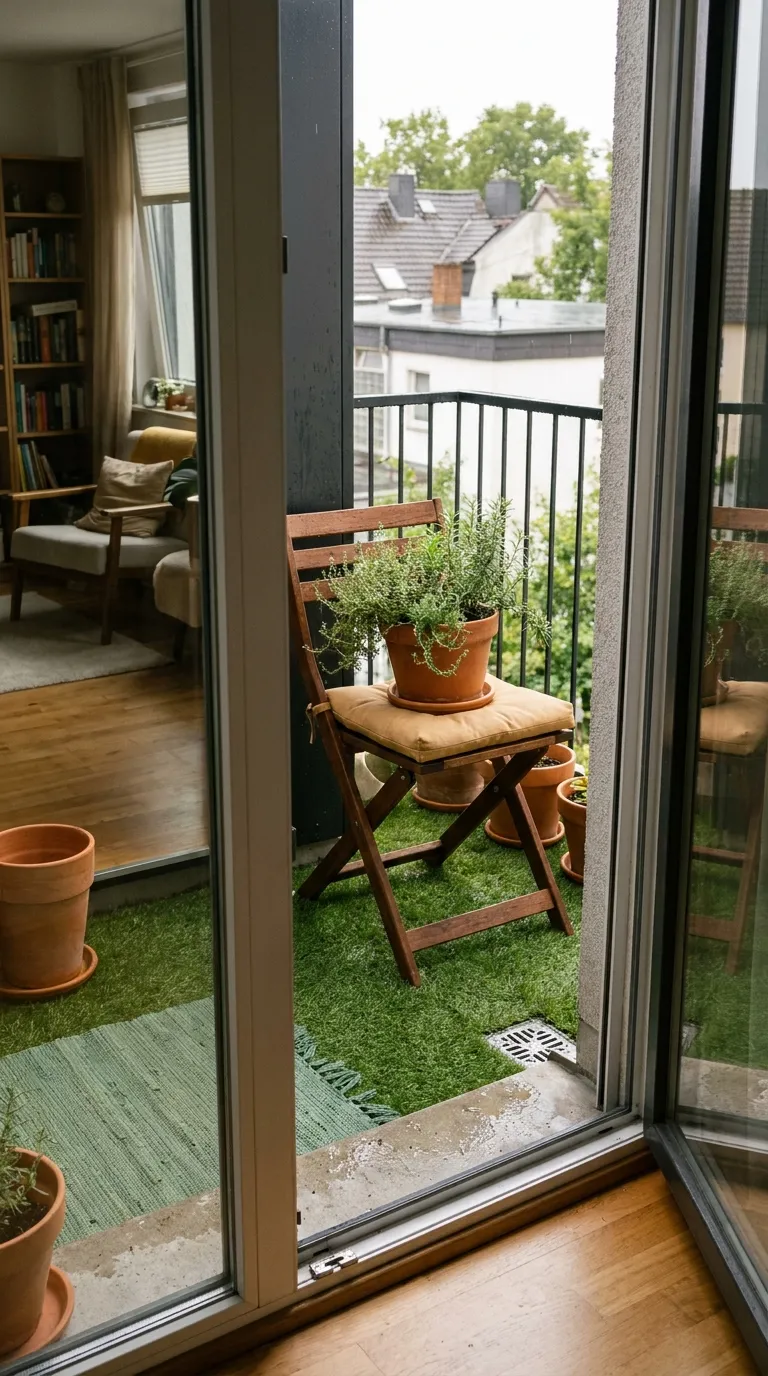
Most grass products are backed with perforations, so a shower can seep straight through. That only helps if the floor beneath slopes toward a drain, because water that can’t escape leaves the turf soggy. Peek under an edge after heavy rain and again when leaves start to fall, and follow the product’s care instructions.
Outdoor Rug
A rug soaks up water and dries slowly, especially in a shady corner. It suits a covered balcony, or one where you can lift it out of the way when a storm is coming. Look for a rug made for outdoor use, and read the care label before you reach for the hose.
Which Wins
It depends. An open balcony that sheds water quickly is grass territory, while a sheltered one, or any floor you can clear fast when clouds roll in, is rug territory.
Renter Note
Keep the drain opening clear whichever floor you pick, and read your lease or building rules before changing anything that affects where rainwater goes.
2. Floor Coverage and Odd Corners
Many balcony floors are long and skinny, with a drain, a door track, or a bend that makes them awkward to cover. How much floor each option hides changes how big the whole space feels, so grab a tape measure before you shop.
Artificial Grass
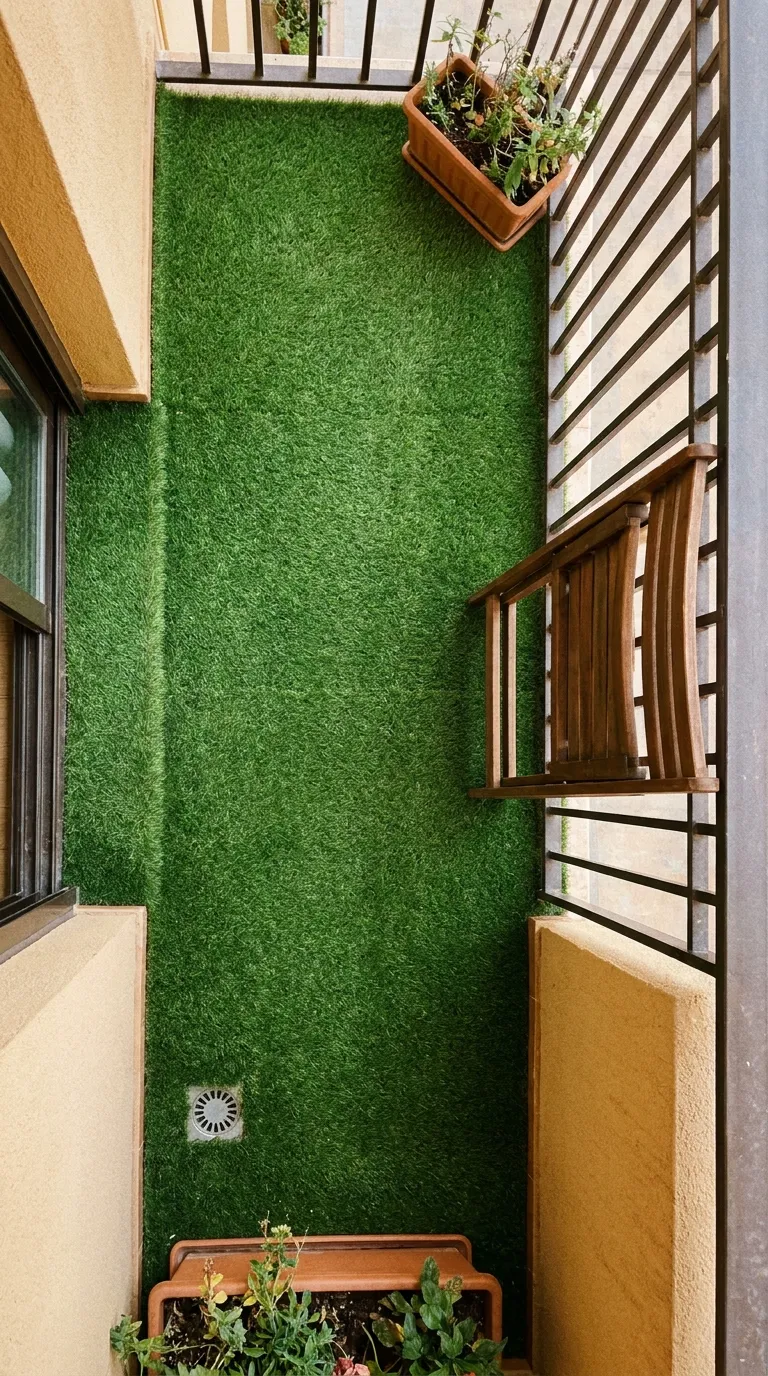
Turf gets trimmed to the shape of your floor, which lets it run wall to wall and follow a narrow strip or an L-shaped corner without gaps. Because every cut is final, mark your lines with a straightedge, use a sharp blade, and leave the drain opening uncovered.
Outdoor Rug
A rug marks out a zone instead of hiding the whole floor, which works well under one chair and a small table. To work out what size rug to buy, set your furniture where you want it, measure that footprint, and add a few inches on every side. The leftover bare floor then reads as a deliberate border. Rugs also come in shapes that follow a balcony’s proportions, from long runners to round ones, so a narrow floor isn’t a dealbreaker.
Which Wins
Grass is the pick if you want the whole floor to read as one calm surface. A rug is the pick if one chair-and-table corner is all you plan to use.
3. Setting It Down Without Tools
If you rent or don’t own a toolbox, the best floor is the one that goes down without drilling or fuss. How each option is installed also tells you how permanent it really is.
Artificial Grass
Tiles click together and simply rest on the floor, and rolls can be laid loose, so nothing needs drilling. The real work is trimming the edges, which calls for a sharp blade and a steady hand. Skip adhesive unless the product instructions approve it for your floor, and dab a small amount in a hidden corner before committing, because residue is hard to undo.
Outdoor Rug
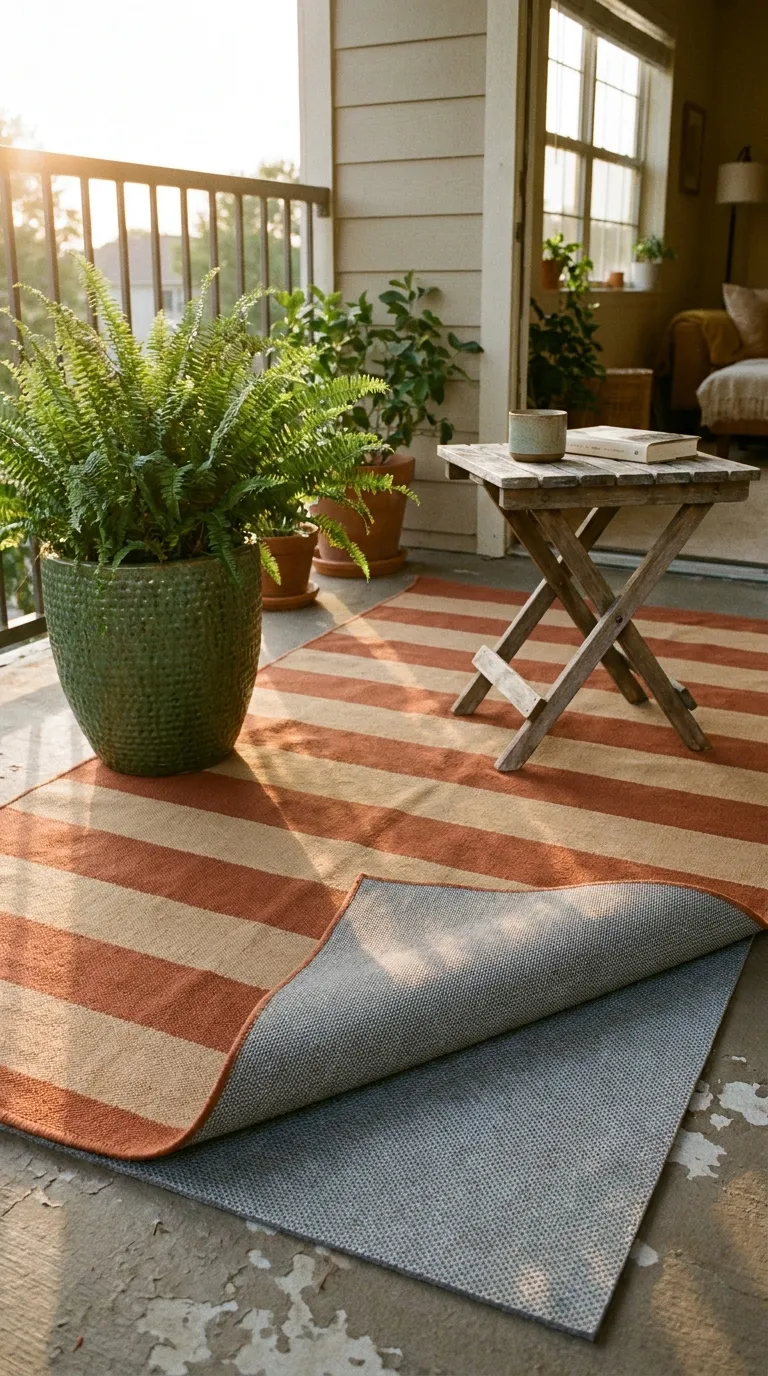
Setting up a rug takes about a minute and no tools: roll it out and straighten the edges. If wind tends to flip a corner, a grippy pad underneath and a heavy pot on one side usually keep it flat. A rug also lets you test a layout for a week before you decide where the furniture belongs.
Which Wins
The rug takes this one, because nothing needs cutting, gluing, or scraping off later, and you can rearrange it on a whim.
Renter Note
Read your lease before putting anything sticky on the floor, and a quick message to the landlord settles any gray areas.
4. When Your Lease Ends
Renting often means leaving long before a floor wears out. Ask now which option you could realistically carry to your next place, because a cover that only fits this balcony stops being useful the day your lease ends.
Artificial Grass
Tiles can be unclicked and stacked, and loose rolls can be lifted and rolled. A piece trimmed to this balcony’s outline, though, probably won’t match the next one, so grass makes more sense if you expect to stay for a good while.
Outdoor Rug
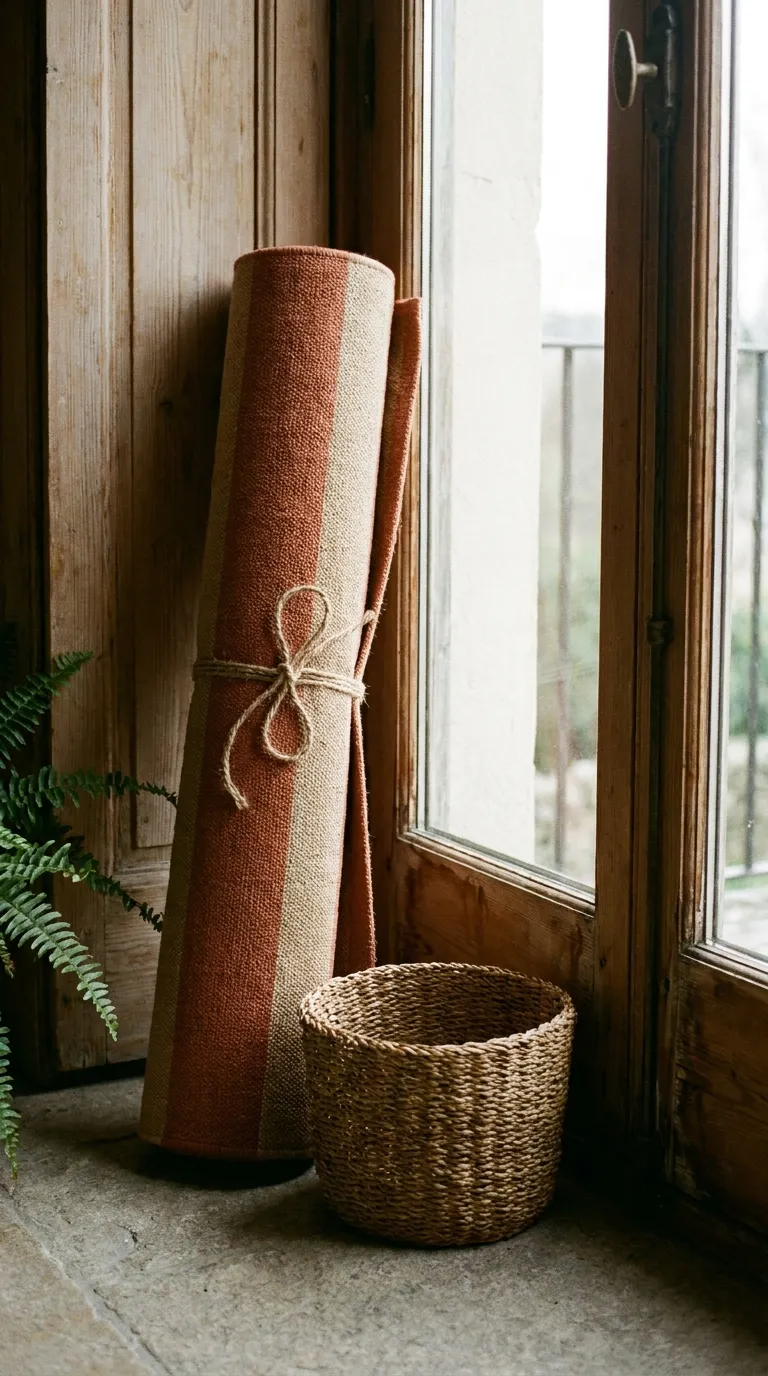
A rug simply rolls up and comes along, and it can work again in a smaller space or a different layout. Do a quick dry run of the route out of the building: a long, heavy roll can be awkward on stairs, so check if it fits through each doorway and turn before you buy.
Which Wins
The rug wins for anyone who might move soon. Grass only pulls ahead when you’re settled and the floor’s shape won’t change.
Renter Note
Before laying anything, photograph the bare floor from a few angles. Then scan your lease for any clause about leaving the balcony as you found it.
Try it: match the right floor to five balcony situations.
5. Weekly Upkeep
How often will you really haul out a broom or a hose? That answer matters, because a balcony only gets used if keeping it tidy takes less effort than skipping it.
Artificial Grass
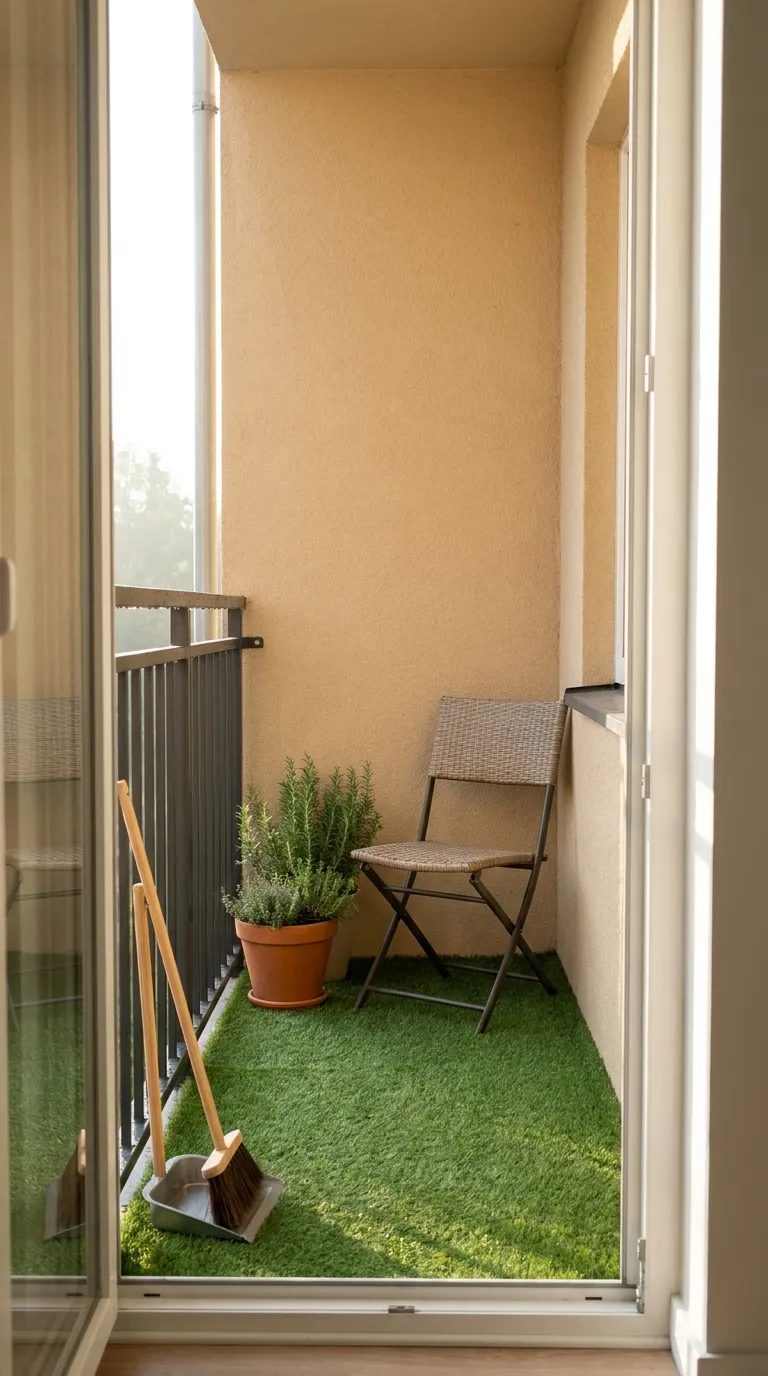
A broom or a gentle hose-down handles most dust, and fallen leaves lift off the top without snagging. Because there’s no weave to trap crumbs, a quick pass is usually enough between deeper cleans. The surface does best when water drains away beneath it, since a damp, covered floor can turn musty, so check the product’s care instructions for what cleaners are safe to use.
Outdoor Rug
Rugs ask for a three-step routine: lift, shake, and sweep the bare floor underneath. Then give it time to air out completely, because trapped moisture is what makes a rug smell. Light colors show soil quickly, while busy patterns hide it, and the care label tells you whether scrubbing or hosing is okay.
Which Wins
Grass comes out ahead on a floor that drains well, since a quick rinse does most of the work. A rug is fine if the lift-and-sweep routine doesn’t bother you, though anyone who dislikes bending to clean underneath will lean toward grass.
6. Comfort Underfoot and Under Furniture
On a small balcony the floor is also the surface you sit beside, set a mug on, and drag a chair across. Texture, warmth, and stability matter more than a product photo suggests.
Artificial Grass
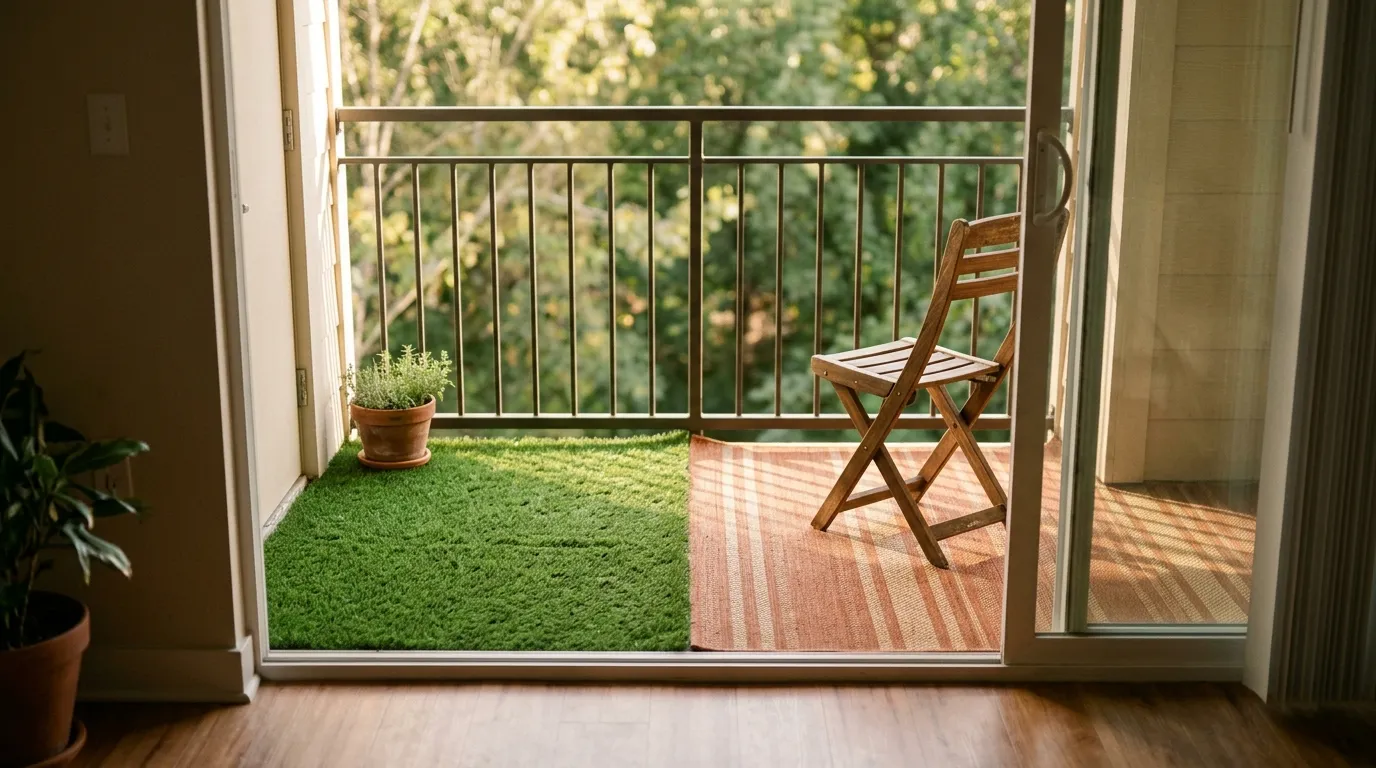
Turf brings instant green to a gray floor, and the view from your living room improves right away. It stays the same green all year, which suits a balcony you mostly look at from indoors. Expect an even, slightly bristly surface that can feel warm under a midday sun, so stand on a sample barefoot before cutting a full piece. A small folding chair and a pot of herbs look especially fresh against it.
Outdoor Rug
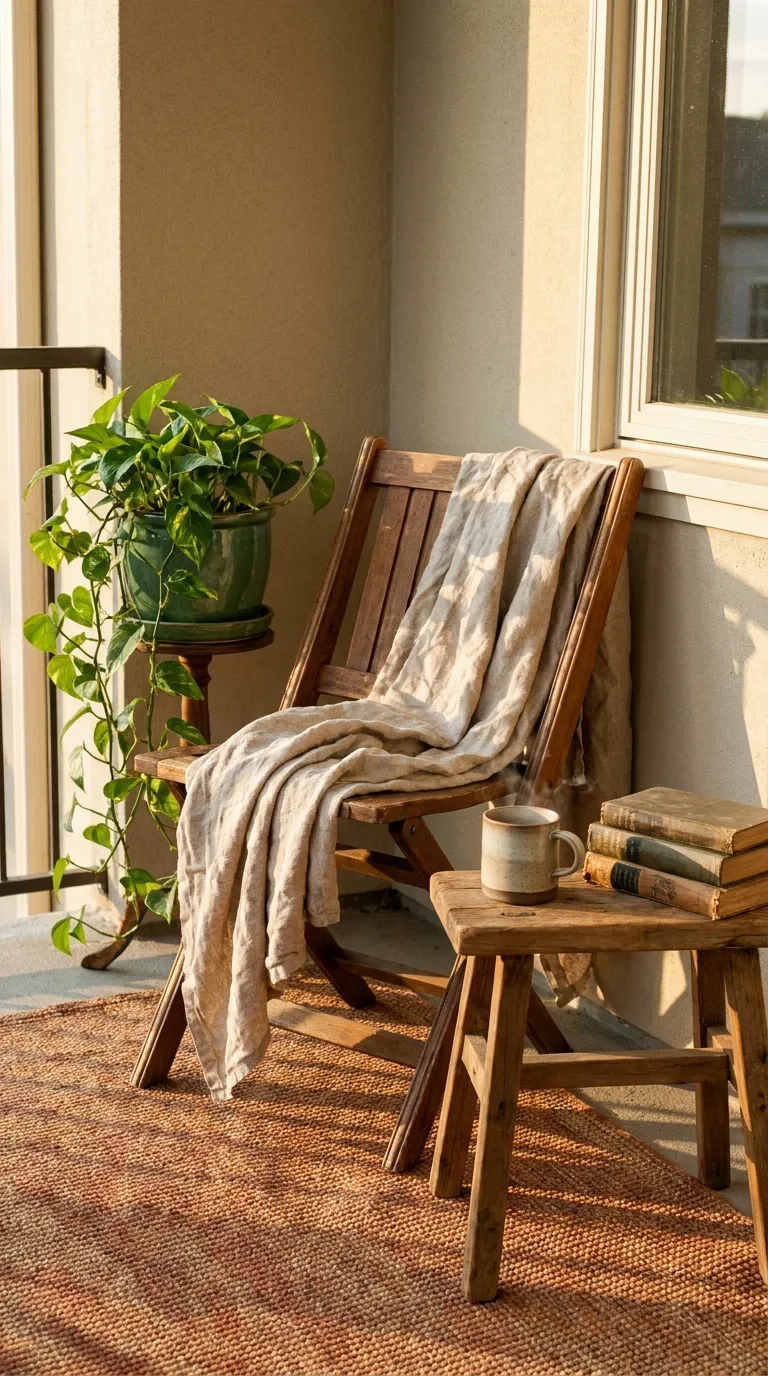
A rug adds a woven, indoor-style layer, and you can pick colors that echo your living room so the balcony feels like an extra room. The trade-off is that bare floor usually peeks out around the edges, and a thin rug with curling corners can catch a chair leg. Swapping to a lighter weave for summer and a heavier one for cooler months is easy.
Which Wins
It depends on the mood you want. Pick grass for a green, garden-like corner, or a rug for something softer that feels like part of the living room.
Quick Decision Cheat Sheet
Each row below repeats one verdict, so you can jump to the criteria that matter most in your own space.
| Criterion | Artificial Grass | Outdoor Rug | Better For |
|---|---|---|---|
| Rain, Sun, and Drainage | Needs a floor that drains | Better where it stays covered | Depends on shelter |
| Floor Coverage and Odd Corners | Wall to wall, trimmed to fit | Anchors one seating zone | Grass for full floors |
| Setting It Down Without Tools | Trim edges, skip glue | Roll out and done | Rug for renters |
| When Your Lease Ends | Cut shape may not travel | Rolls up and comes along | Rug for movers |
| Weekly Upkeep | Quick rinse if water drains | Shake out, air dry fully | Grass for low effort |
| Comfort Underfoot and Under Furniture | Green, even, firmer surface | Woven, soft, room-like | Depends on mood |
How to Decide in Five Minutes
Three quick checks usually make the answer obvious.
Sketch the Floor and Its Drain
On scrap paper, draw the balcony’s length and width, then mark the drain, the door track, and any corners. A simple, open rectangle that drains well suits grass, while a cluttered or tight floor often suits a rug that covers just the seating zone.
Look Ahead to Your Next Address
Ask yourself whether you expect to be here for years or only until the lease ends. If a move is even possible, lean toward whatever rolls up and travels with you.
Imagine an Ordinary Weekday Evening
Picture yourself stepping out after work with a drink or a book. If you’d rather not sweep or shake anything out, a surface that rinses quickly on a draining floor is worth a look. If you love a soft, styled corner, a rug fits that mood.
Who Should Choose What
Rules of thumb only go so far, so look for the situation below that sounds most like your own.
If Your Lease Rules Are Strict
An outdoor rug is the safer bet. Nothing gets drilled, trimmed, or glued, so the floor stays exactly as it was when you arrived.
If the Floor Is Open and Drains Freely
Go with artificial grass if you’re settled for a good while. It covers every inch and brings a garden mood, and your lease should still get a read before you cut anything.
If You Only Use One Corner of the Balcony
Choose an outdoor rug. There’s no reason to cover a whole floor when a chair, a small table, and a bit of border are all you need.
Final Tips for Success
Watch One Rainstorm First
Stand at the door during the next shower and watch how water moves across the bare floor. Where it pools or races toward the drain tells you more about grass than any product page will.
Artificial Grass vs Outdoor Rug When You Can’t Decide
If you’re still torn, put a small, easy-to-lift rug under your chair and leave the rest of the floor bare for a few weeks. You’ll learn what you actually use before committing to cover everything.
Small Balcony Basics Worth Owning
A few simple tools make either floor easier to live with:
- Tape measure
- Notebook for sketching the floor
- Hand broom and dustpan
- Non-slip rug pad
- Lightweight folding chair
- Small potted herb
If a pet could ever visit the balcony, check that a plant is safe for pets before buying.
Leave Room to Walk
Keep a clear lane from the door to your seat, and choose furniture light enough to shift when you clean. Open walking space makes either floor feel larger.
Conclusion
In the artificial grass vs outdoor rug debate, my pick for the most common situation, a rented balcony you might not keep for long, is the outdoor rug. Nothing gets cut, glued, or left behind, and it lifts out whenever the weather turns.
The exception is an open balcony that drains freely and that you expect to keep for years. There, grass covers every inch and gives you a green, garden feel that a rug can’t quite match.
Whichever way you lean, measure first, read your lease, and keep the drain clear. Those habits matter more than the material.
Save this guide so it’s handy the next time you rethink your balcony floor.